
SINGAPORE — Leaders in Asian policy, investment and business are increasingly stepping forward as active navigators of a more divided world, focused on building long-term strength rather than simply choosing sides between the United States and China.
That theme came through clearly at the Reuters NEXT Asia conference in Singapore, where representatives from governments, sovereign wealth funds and private equity firms made the case that geopolitical friction is no longer a passing disruption — it is now a permanent part of the global environment that requires lasting strategies, not quick fixes.
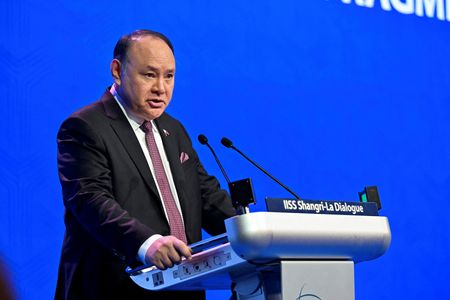
For Thailand, that translates into a more hands-on approach to foreign policy and investment — working pragmatically with a range of partners based on national interest rather than locking in with any single world power.
“We seek to be the trusted connector in this fragmented world,” said Thai Vice Finance Minister Santitarn Sathirathai.
He explained that Thailand’s goals go beyond simply attracting investment dollars. The country evaluates projects not based on where they come from, but on whether they bring technology transfers, quality jobs and stronger supply chains at home.
“There’ll be certain areas where it makes more sense to partner with certain groups,” he said.
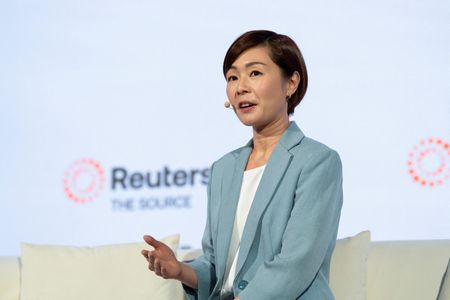
A similar mindset has taken hold among long-term investors. Hong Kong Investment Corporation Chief Executive Clara Chan said that in her view, geopolitical uncertainty actually creates openings for patient, long-term capital rather than simply acting as a roadblock.
“When you see uncertainties, challenges around the world … for long-term investors, patient capital like us, those could present pretty good opportunity,” she said.
Chan noted that the HKIC, founded four years ago, has now invested in more than 200 companies and continues to grow by using Hong Kong’s dual role as a gateway to mainland China and a global financial hub. She added that what investors truly care about most is policy clarity, long-term vision and a fair playing field — not geopolitical headlines.
The chief investment officer of Singapore state investor Temasek warned that investors need to accept they are working in “a world of uncertainty” driven by geopolitics, artificial intelligence, climate change and inflation. He cautioned that those who react to every new shock will “get whipsawed.”
Rohit Sipahimalani said the better approach is to build resilient portfolios around companies with large domestic markets, self-sufficient supply chains and strong technology capabilities that can hold up under geopolitical pressure.
“You can’t hedge all the uncertainty … you can’t afford to respond to every event that’s taking place,” he said.
Private equity investors largely agreed, arguing that U.S.-China tensions and broader global friction have become part of the new normal — and have actually made Asia more attractive, not less.
“Asia is going to have two-thirds of the middle class by 2030 and 60% of … the global growth is coming from Asia. So people are diversifying into the region,” said Stephanie Hui, Goldman Sachs’ head of Asia private equity.
Primavera Capital founder Fred Hu pointed out that Asia accounts for half of global GDP, roughly 40% of global trade and foreign direct investment, and remains the world’s essential manufacturing base — making the region “literally a sanctuary” in uncertain times.
“There’s been a war in the Americas, there’s been war in Europe, there’s been war in Middle East. Asia… we are very stable,” he said.
Bain Capital’s Satoshi Ueyama highlighted Asia’s diversity as one of its greatest assets, pointing to corporate reform efforts in Japan, demographic and infrastructure-driven expansion in India, ongoing innovation in China and Southeast Asia’s growing role in supply-chain restructuring.
“It continues to provide great opportunities,” he said.