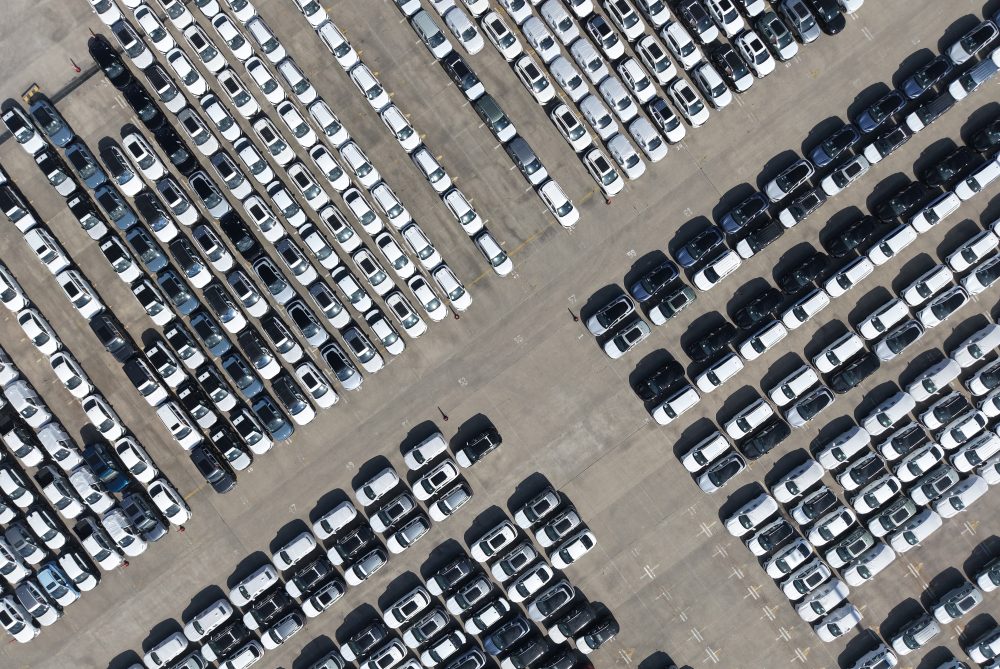

China’s passenger car exports saw a dramatic 80% increase in June compared to a year ago, with surging global demand for electric vehicles driving much of that growth — even as sales within the country fell by 26%.
For the first six months of this year, Chinese passenger vehicle exports climbed 72%, reaching more than 4.4 million units, according to data from the China Association of Automobile Manufacturers.
Despite the export boom, China’s home market remains larger overall. Domestic sales totaled nearly 8.3 million passenger cars from January through June, with roughly 1.5 million sold in June alone.
Last month, China shipped approximately 905,000 passenger cars to overseas buyers, an increase from the 809,000 exported in May.
The Chinese domestic auto market has been struggling under significant strain. Intense price competition among too many players, a prolonged downturn in the real estate sector squeezing household finances, and reduced government incentives for EV purchases have all combined to dampen consumer demand at home.
Consultancy AlixPartners has projected that sales of light vehicles — including passenger cars — in China will likely decline by around 10%. Part of the reason, analysts say, is that some potential buyers may be holding off, waiting for prices to drop even further before making a purchase.
Chinese automakers such as BYD have been aggressively expanding into international markets and establishing manufacturing facilities in key regions abroad. While this strategy can boost profitability, it has also created friction with trading partners.
Stephen Chan, an analyst at S&P Global Ratings, said China’s passenger car exports could grow anywhere from 30% to 50% for all of 2026 compared to the prior year. Auto industry analysts have also suggested that higher gasoline prices resulting from the Iran war could spark greater worldwide interest in electric vehicles.
AlixPartners recently projected that Chinese vehicle exports for 2026 could reach approximately 10 million units, up from around 7 million in 2025.
Chinese car brands are also making headway in Canada, which approved an annual import quota allowing 49,000 EVs from China to enter at a reduced tax rate. Industry watchers are now wondering whether that arrangement could open a path toward the U.S. market, where steep tariffs have largely shut out Chinese electric vehicles.
Last month, Sweden-based EV manufacturer Polestar — which is controlled by Chinese auto group Geely — announced that the U.S. Commerce Department has prohibited it from selling vehicles in the United States starting with the 2027 model year.
Wei Haigang, president of automaker GAC International, addressed the global push at an auto expo held in Hong Kong in June, saying that expanding beyond China’s borders has “become a necessity” for the country’s automakers. “In China’s highly competitive environment, companies that don’t venture overseas will face immense difficulties in surviving,” he said.