
THE HAGUE, Netherlands — Syria has had its voting rights restored by the world’s leading chemical weapons oversight organization, a move that recognizes Damascus’s willingness to work with inspectors and commit to eliminating hidden stockpiles of deadly weapons.
The executive council of the Organization for the Prohibition of Chemical Weapons, known as the OPCW, made the decision Thursday. It marks a significant shift in relations following the removal of former President Bashar Assad from power in 2024. Syria’s voting privileges had been stripped five years ago — the first time any member nation had faced such a penalty — as a consequence of the repeated use of toxic gas under Assad’s government.
That new spirit of cooperation has already yielded concrete results. In May, the OPCW revealed that dozens of chemical bombs and rockets left behind from the Assad era had been uncovered after previously undisclosed weapons sites were opened to international inspectors.
The executive council also gave the green light to plans for destroying a portion of those newly declared weapons at a facility in Al Qutayfah, located about 37 kilometers — roughly 23 miles — north of Syria’s capital. The materials slated for destruction include substances used in the production of a nerve agent.
OPCW Director-General Fernando Arias said in a statement that the decisions “reflect the tangible progress achieved through continued cooperation and constructive engagement between the Technical Secretariat and the Syrian Arab Republic,” with backing from other member nations.
The OPCW action comes just one day after U.S. officials announced that Washington intends to remove Syria from its list of countries designated as state sponsors of terrorism.
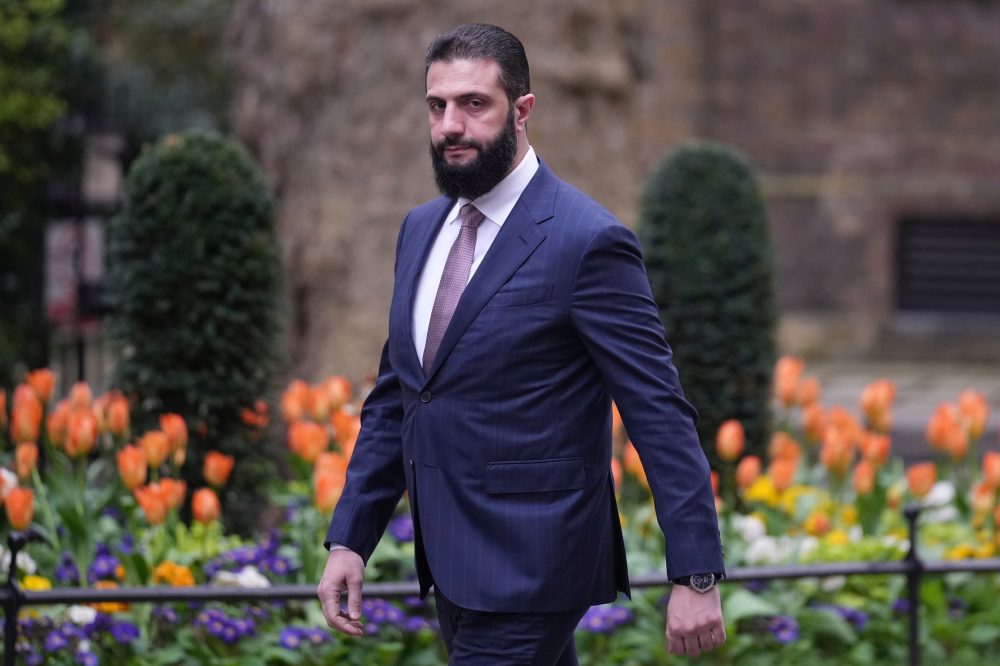
Syrian President Ahmad al-Sharaa, a former insurgent who commanded the offensive that toppled Assad, has made rebuilding Syria and repairing its long-damaged relationships with Western nations a central goal. He has also made a public pledge to eliminate any chemical weapons remaining from the Assad period.
Syria became a member of the OPCW in 2013 under significant pressure from Western governments in response to alleged poison gas attacks. At that time, Assad’s government acknowledged chemical weapons at 26 locations within the country. However, the watchdog organization has indicated it has reason to believe Syria may have had as many as 100 additional sites that were never disclosed.