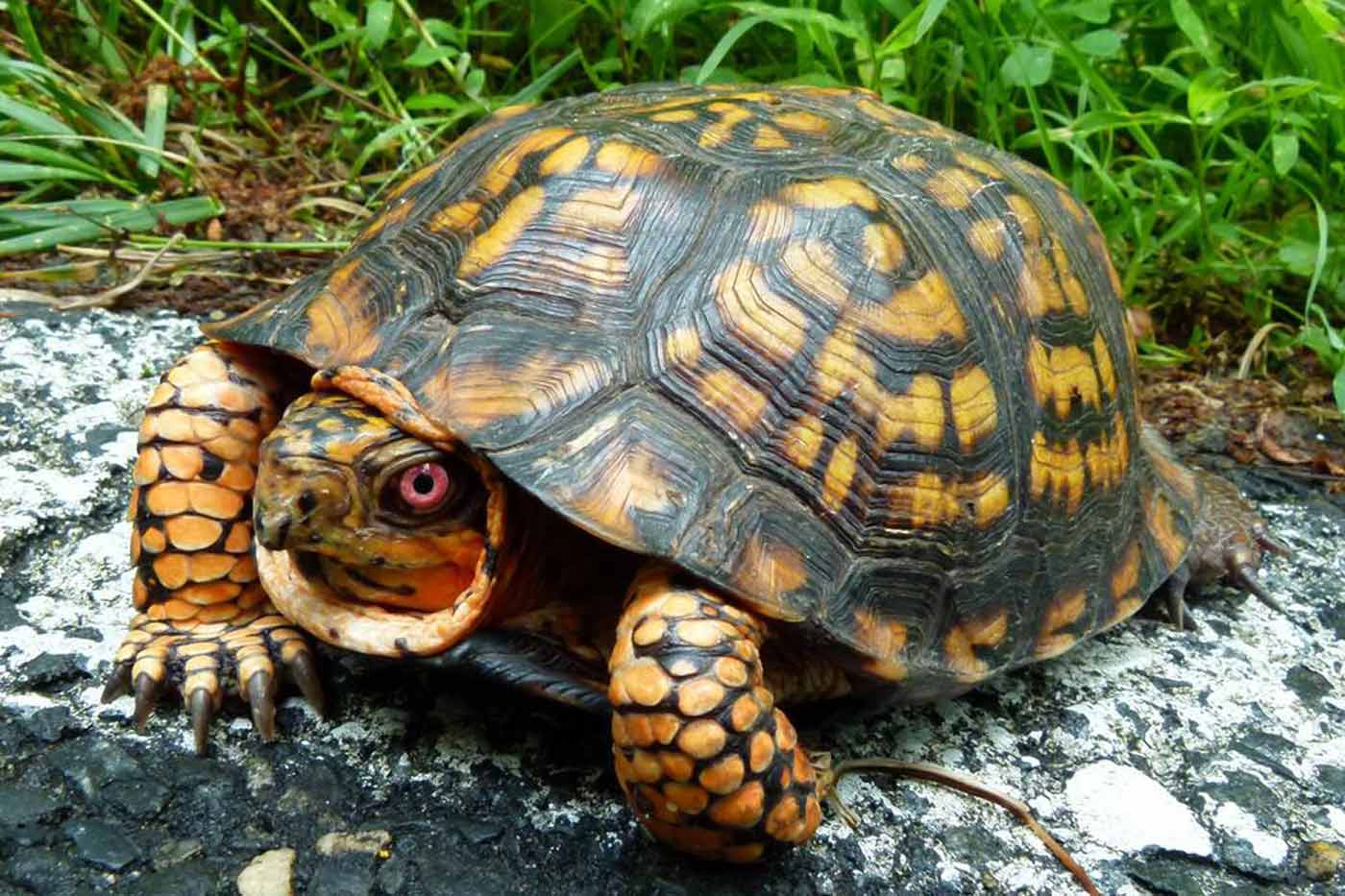

RICHMOND — A Virginia wildlife organization is calling on residents to report woodland box turtle sightings as part of a broader effort to understand and protect a species that has been quietly disappearing across the state.
The Virginia Herpetological Society says woodland box turtles are one of the most commonly spotted reptiles in the state, but conservationists are growing worried. According to the Virginia Department of Wildlife Resources, the woodland box turtle population has dropped an estimated 32% over the last 100 years, driven by habitat loss, deaths on roadways, and removal from the wild for the pet trade.
Matt Neff, president of the Virginia Herpetological Society, emphasized the value of everyday residents contributing to the effort. “Citizen science is so important,” he said. “By collecting this data, we can share important numbers and trends with state agencies and other organizations so they can use the information to guide conservation decisions.”
Woodland box turtles can thrive in a wide range of environments — from hardwood forests and pine flatwoods to maritime forests, hardwood swamps, and land bordering farms. However, ongoing development continues to break up the habitats these animals depend on.
John Kleopfer, the state herpetologist for the Virginia Department of Wildlife Resources, noted that the most severe losses have been concentrated in densely developed parts of the state. “As you would expect, declines are most notable in heavily urbanized areas such as in the Northern Virginia-D.C. metro, Central Virginia-Richmond metro and Southeastern Virginia-Tidewater,” he said.
One reason the species is particularly vulnerable is its limited range. Box turtles tend to spend the majority of their lives within a small area, and when roads or housing developments cut through that territory, populations can become cut off from each other. Adding to the concern, woodland box turtles typically need more than a decade to reach reproductive maturity, meaning the loss of even a few adult turtles can have lasting consequences for a local population.
The pet trade has also taken a toll. Thousands of box turtles have been taken from the wild over the years. In response, Virginia’s Department of Wildlife Resources prohibited private ownership of the native woodland box turtle in 2021.
Other groups are also stepping up. The Virginia Master Naturalist program has been working to protect box turtle populations, including a monitoring effort on the Northern Neck. Bob Dunstan, co-leader of the Virginia Master Naturalist Northern Neck project, shared that the group is pushing for new safety measures on local roads. “We have just put a request into VDOT to place seasonal turtle warning signs at three hot spot locations,” he said. “Something that has never been done before in Virginia.”
Anyone who spots a woodland box turtle and wants to contribute to conservation efforts can log their sighting at virginiaherpetologicalsociety.com.