
MANILA — The Philippines’ defense secretary fired back Thursday against claims made by Chinese scholars who argued that the country’s northernmost island-chain province rightfully belongs to Beijing, calling the assertions both “baseless” and “ludicrous.”
The controversy stems from a June 30 symposium where scholars from institutions including Nanjing University contended that Batanes — a Philippine island province — is a natural extension of Taiwan and should therefore be considered Chinese territory. A Chinese state-run news outlet, GDToday, reported on the symposium on July 2. Beijing has not formally taken that position.
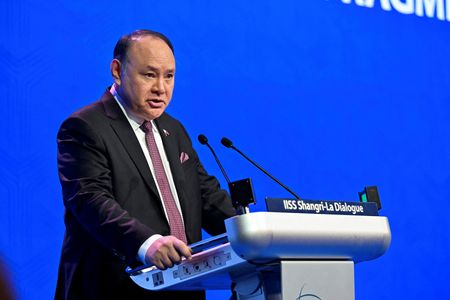
Defense Secretary Gilberto Teodoro told reporters he sees the scholars’ comments as a warning sign. “I view this, once again, as probably a signal of a preconceived intention,” he said.
“It is not far-fetched to think that this is already part of their plan. And it also validates what we have been saying that they have a plan to control the entire Pacific Ocean,” Teodoro continued.
He did not mince words about the validity of the claim. “What is this for, right? And we know this is baseless. This is nonsense. It is ludicrous,” he said. “So this is concerning, and it is something that must be challenged.” He did not elaborate further on what steps might be taken.
The Chinese embassy in Manila had not responded to a request for comment on Teodoro’s statements at the time of reporting.
Batanes is home to roughly 20,000 people and sits approximately 160 kilometers — about 100 miles — south of Taiwan along the Luzon Strait, a strategically significant waterway connecting the South China Sea and the Pacific Ocean. The province has grown in importance for regional security planning and has been the site of joint military exercises between Philippine and U.S. forces.
The scholars’ remarks arrive at a particularly sensitive time. The Philippines and Japan announced in May that they would begin formal negotiations to establish maritime boundaries for their exclusive economic zones and continental shelves under international law — a development that drew criticism from China.
Teodoro himself has previously been sanctioned by Beijing, along with his close relatives, over what China described as “erroneous remarks” about the country.
The broader backdrop involves China’s sweeping claims over nearly the entire South China Sea, a critical trade route through which more than $3 trillion in goods pass each year. An international arbitration ruling in 2016 found those claims to be invalid, though Beijing has refused to recognize the decision.