
Migrants who were deported from the United States and are now being held at a hotel in Equatorial Guinea say that at least one person suspected of carrying the Ebola virus was brought into the same facility — a claim backed up by lawyers representing the detainees, who spoke out Thursday.
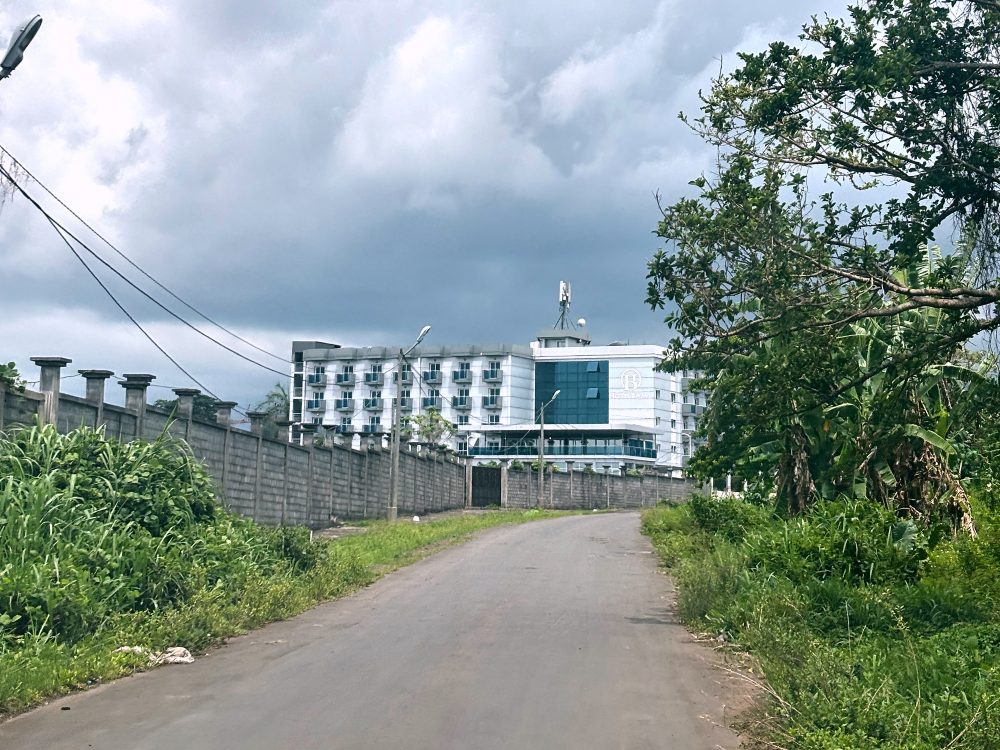
The hotel, located on a tropical island off the coast of the central African nation and owned by the country’s powerful President Teodoro Obiang Nguema Mbasogo, is currently housing 17 migrants from nations including Angola, Mauritania, and Ethiopia. Their detention stems from an arrangement made under the Trump administration as part of a broader effort to crack down on illegal immigration.
According to a statement from a coalition of international lawyers, as well as interviews with two of the detainees — who asked not to be identified out of fear of retaliation — a man believed to be infected with Ebola was brought to the hotel last week by medical workers dressed in hazmat suits. He was placed on a floor below where the migrants are being held.
Two deportees told The Associated Press that a doctor informed them in English that the individual was a suspected Ebola case and warned them to take precautions — but provided no additional details or protective supplies.
One detainee also reported that a woman was brought to the same quarantine floor on Sunday and was similarly identified by medical staff as a suspected Ebola patient.
The lawyers’ coalition said in a statement that they received “disturbing reports from multiple detained individuals that a person with a suspected case of Ebola was recently brought under quarantine into the same hotel complex where they are being held.”
The AP reviewed videos showing medical personnel dressed in full protective gear transporting patients to the hotel, which was previously used as an isolation facility during the Covid-19 pandemic.
“Things are getting worse every day,” one detainee said. “It’s very confusing, no one is coming to talk to us. No one is informing us of anything. The hygiene is unimaginable.”
Lawyers and detainees say that beyond those already present in the facility, no masks, disinfectants, or other basic protective items were distributed, and no steps were communicated to reduce the risk of exposure.
The central African nation of Congo is currently dealing with a rare Ebola strain that has killed more than 600 people since an outbreak was first announced in May. Cases have spread to neighboring Uganda, though no confirmed or even suspected cases have been reported in Equatorial Guinea, which does not share a border with Congo and sits roughly 1,885 miles — or about 1,425 kilometers — away.
The Trump administration has used a series of often-secret agreements to deport thousands of people it considers to be in the country illegally to nearly two dozen nations that are not their home countries, according to advocates. Immigration lawyers argue these third-country deportations serve as a legal workaround to send asylum seekers back to their countries of origin without directly doing so. Equatorial Guinea is among at least eight African nations that have entered into such agreements with the U.S.
A $7.5 million deal with Equatorial Guinea led President Obiang to convert a family-owned hotel in Malabo, on Bioko island, into a detention center. Currently, 4 women and 13 men are being held there, according to the lawyers’ coalition. All of them, the lawyers say, had received orders from U.S. judges that should have shielded them from removal to their home countries.
Earlier this month, rights attorneys filed a case against Equatorial Guinea before Africa’s leading human rights body, accusing the country of forcing U.S. deportees back to their home nations in violation of their legal rights.
The lawyers’ coalition also reported Thursday that they had received “multiple reports that individuals with serious medical conditions are being denied adequate medical care while detained in government custody.”
Equatorial Guinea ranks among the wealthiest nations in Africa due to its oil reserves, but U.S. officials say it is also plagued by widespread corruption and human rights abuses. Rights organizations and the U.S. State Department have accused the government of detaining, torturing, and even killing those who speak out against it. Despite this, U.S. businesses are the country’s largest foreign investors, and the U.S. government funds military training there.