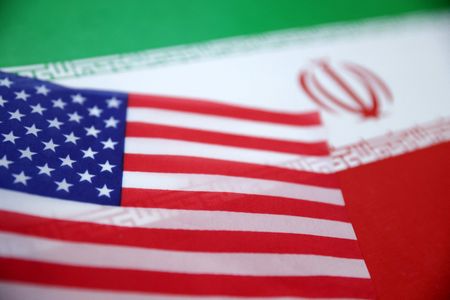
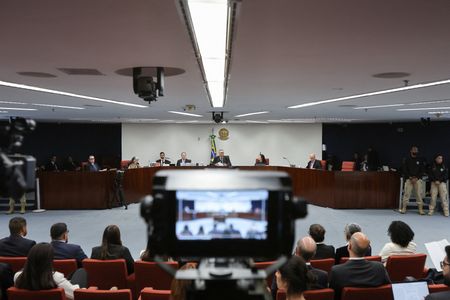
American and Iranian representatives engaged in indirect diplomatic discussions Thursday in Geneva, addressing Tehran’s nuclear program in what many consider a final opportunity for peaceful resolution before potential military action.
Special Middle East envoy Steve Witkoff conducted message exchanges with Iranian Foreign Minister Abbas Araghchi, working to persuade Iran to cease uranium enrichment activities that could lead to nuclear weapons development and to reduce or eliminate long-range missile production. President Trump’s son-in-law, Jared Kushner, participated in the discussions.
The diplomatic session continued for approximately three hours before American representatives departed the venue. According to Iranian state media, negotiations will continue following a recess.
These current negotiations represent a renewal of diplomatic efforts between Witkoff and Araghchi, who conducted several discussion rounds last year before talks broke down when Israel initiated military operations against Iran in June. Oman, the Arabian Peninsula nation that has historically facilitated communications between Iran and Western powers, is once again serving as mediator.
Iran insists the discussions should concentrate exclusively on nuclear matters, while America seeks complete cessation of Iranian uranium enrichment. However, Washington’s agenda extends beyond nuclear concerns to include ballistic missile capabilities, Tehran’s support for regional proxy groups, and additional security issues.
Military escalation remains a significant concern for regional stability. Iranian officials have declared that any American military strike would result in targeting all U.S. military installations throughout the Middle East, potentially endangering thousands of American military personnel. Tehran could also launch retaliatory attacks against Persian Gulf allies of America or Israel. Recent days have seen oil prices increase partly due to these escalating tensions.
The United States has deployed naval vessels and aircraft to the Middle East region as a show of force designed to encourage Iranian cooperation in reaching a diplomatic agreement.
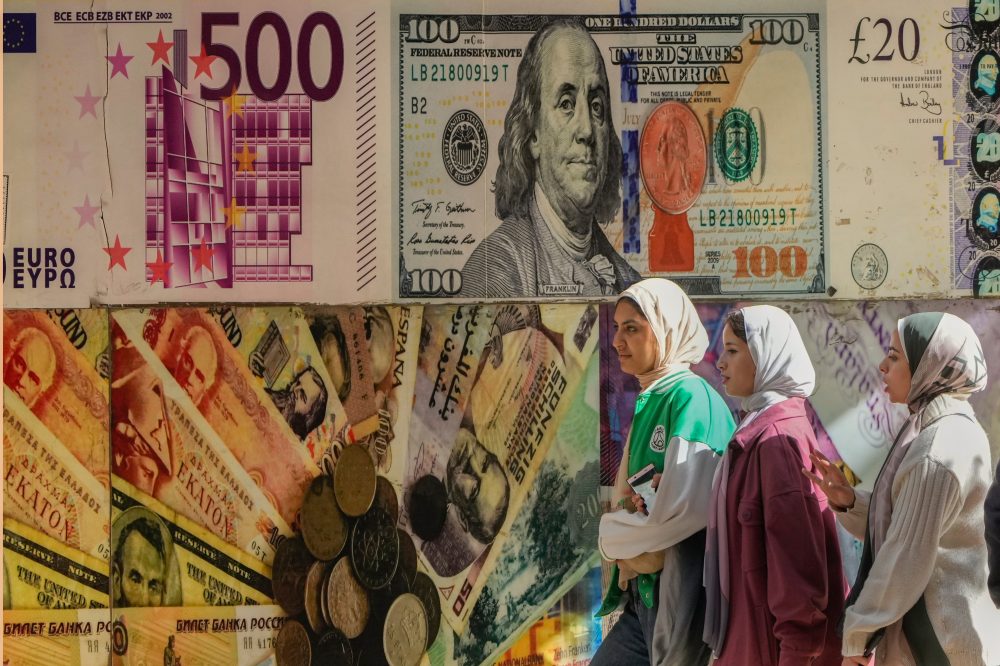
The International Monetary Fund announced Wednesday it will provide Egypt access to approximately $2.3 billion from a previously authorized loan package, recognizing the nation’s success in achieving economic stability and curbing inflation through comprehensive reform efforts.
According to the IMF’s Wednesday statement, the funding release comes after evaluating Egypt’s reform initiatives, which the organization says have generated “a broad-based economic recovery” in the Arab world’s most populated nation. The Fund reported Egypt’s gross domestic product expanded by 4.4% between 2024 and 2025.
Egypt’s original $3 billion emergency loan, granted in 2022, was expanded to $8 billion in 2024 as officials worked to address severe foreign currency shortages and runaway inflation that reached 38% in September 2023.
By January, inflation had dropped significantly to 11.9%, according to the Washington-based organization’s statement.
Egypt implemented several anti-inflation strategies, including allowing the Egyptian pound to float freely and raising interest rates.
Despite these gains, the IMF cautioned that advancement “has been uneven.” The Fund emphasized that excessive state control over the economy persists, stating that “decisive efforts to reduce the state’s footprint in the economy will be essential.”
Egypt’s financial struggles stem from multiple crises including the COVID-19 pandemic, consequences from Russia’s comprehensive attack on Ukraine, and the ongoing Israel-Hamas conflict in Gaza.
The situation worsened when Houthi militants from Yemen began targeting Red Sea shipping lanes, dramatically reducing Suez Canal income—a crucial source of foreign currency for Egypt. These attacks diverted maritime traffic around Africa’s southern tip instead of through the canal.
Government statistics show approximately 30% of Egypt’s population of over 108 million people live below the poverty threshold.
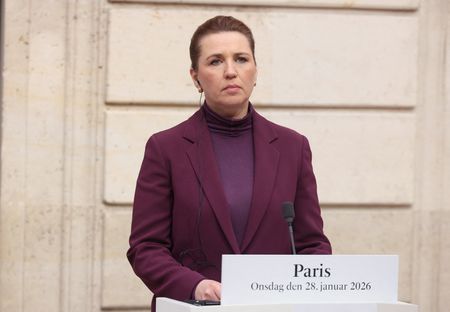
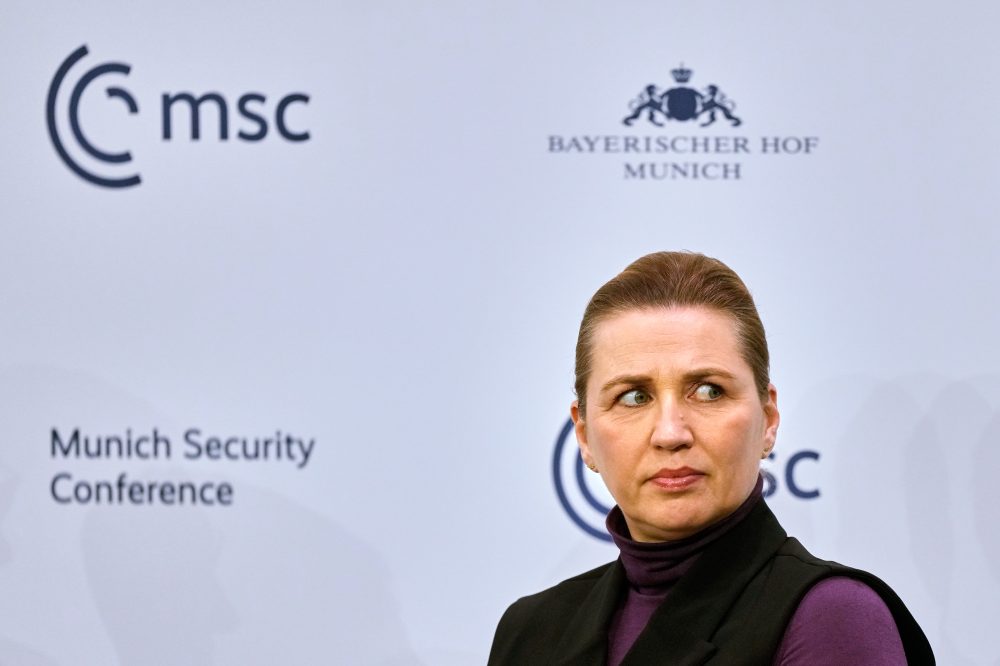
COPENHAGEN, Denmark — Denmark’s Prime Minister Mette Frederiksen revealed Thursday her decision to schedule parliamentary elections for March 24 in the Scandinavian nation.
The upcoming vote will decide the makeup of Denmark’s Folketing, the country’s parliament, for the following four-year period. The legislative body contains 179 members total — with 175 positions allocated to representatives from Denmark proper, while Greenland and the Faroe Islands, both semi-autonomous regions within the kingdom, each receive two seats.
While Denmark’s constitution requires parliamentary elections at minimum once every four years, the prime minister holds the authority to schedule them earlier. The most recent election took place November 1, 2022, leading to an unusual three-party governing alliance that spans both sides of the political spectrum.
Since mid-2019, Frederiksen, who belongs to the center-left Social Democratic party, has served as Denmark’s leader. Her current administration includes partnerships with Defense Minister Troels Lund Poulsen’s Liberal Party and the centrist Moderate party headed by Foreign Minister Lars Løkke Rasmussen, who previously held the prime minister position.
BOGOTA, Colombia — The United Nations issued a stark warning Thursday that Colombia faces the possibility of sliding back into the severe human rights crisis that plagued the country before a landmark 2016 peace agreement with its largest rebel organization brought improved security.
UN officials expressed concern that escalating violence in Colombia’s countryside could jeopardize the integrity of the nation’s approaching elections.
The UN’s yearly assessment of Colombia’s human rights landscape reveals a dramatic increase in assaults on rural populations by insurgent organizations and narcotics traffickers competing for control of areas once held by the Revolutionary Armed Forces of Colombia, which signed the peace accord with the government eight years ago.
The report documents an alarming 85% rise in forced displacement during 2025 compared to the previous year, with roughly 94,000 individuals compelled to abandon their communities.
Killings of human rights advocates climbed 9% over the past year, while armed organizations imposed 12% more lockdowns on rural settlements. These lockdowns prevent residents from hunting or working their land, while forcing schools and local businesses to close, severely disrupting civilian life.
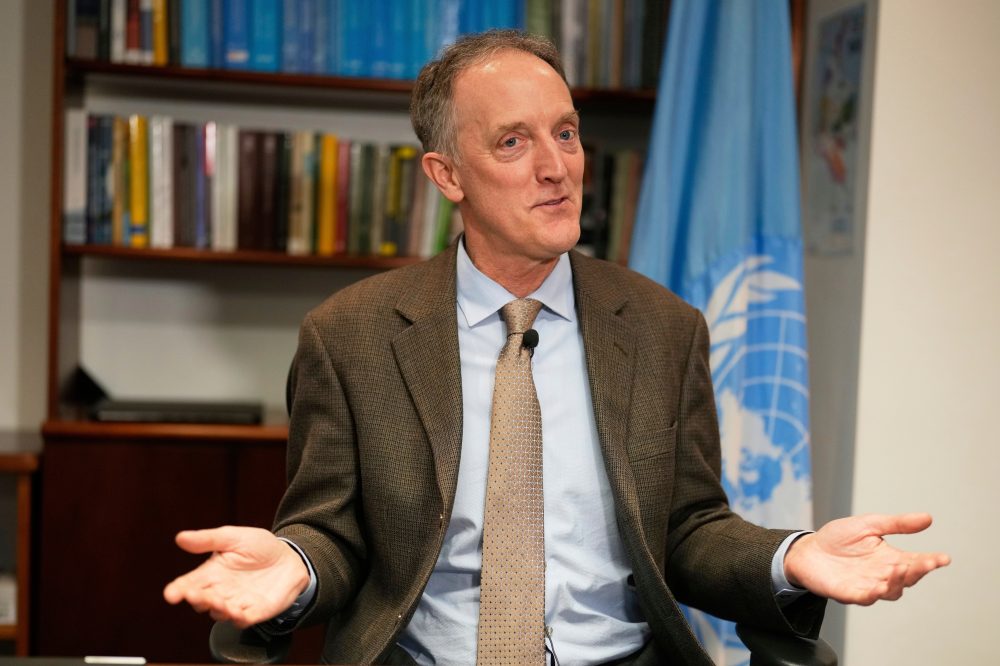
“This report is an early warning,” stated Scott Campbell, who serves as the Colombia representative for the United Nations High Commissioner for Human Rights. “There are a number of indicators that we are trying to draw attention to in order to prevent further degradation” of Colombia’s human rights conditions.
Though current human rights abuses don’t match the scale seen during Colombia’s most intense conflict with FARC rebels — when roughly 300,000 people annually fled violence — the assessment emphasizes that Colombia’s leadership must take stronger measures to shield civilians from unlawful armed organizations.
A continuing challenge involves illegal armed groups forcing children into their ranks, now utilizing social media networks to recruit young people.
While the UN documented 150 instances of forced child recruitment in 2025, officials believe this figure significantly underrepresents the actual scope, as many families fear reporting such cases due to potential reprisals.
The current government under left-leaning President Gustavo Petro, who previously belonged to Colombia’s M-19 guerrilla movement, has attempted to curb violence through peace talks with remaining rebel organizations under an approach called “total peace.”
However, the report observes that truces between Colombian authorities and insurgent groups have frequently failed to decrease attacks against civilians.
“We think it is very important that the government push for remedies to that,” Campbell noted.
With Colombia’s elections approaching, the assessment highlights dangerous conditions for political figures. The previous year saw 18 political leaders murdered and 126 attacks against political figures nationwide.
Last June, conservative presidential contender Miguel Uribe suffered a gunshot wound to the head during a campaign event in Bogota, representing the first assault on a Colombian presidential candidate in thirty years. Uribe succumbed to his injuries two months afterward.
“Violence and conflict, including the emergence of pre-electoral violence, have generated greater risks for the free and safe exercise of certain civil and political rights,” the assessment concluded.
Colombia will conduct congressional elections on March 8, with candidates vying for more than 300 legislative positions in both chambers.
Presidential elections will follow in May, with at least six candidates anticipated to compete.
To address Colombia’s human rights challenges, the report emphasizes that the incoming administration must prioritize complete execution of the 2016 FARC peace agreement.
While certain elements have been fulfilled — including FARC’s weapons surrender and establishing transitional justice mechanisms — other provisions remain incomplete.
These include establishing agricultural courts to handle land disputes and expanding programs designed to encourage farmers to abandon coca cultivation, cocaine’s primary ingredient.
“It’s crucially important at this juncture ahead of elections to make sure that the current government and the future government take concrete actions to make sure that Colombia moves forward,” Campbell emphasized.
He described the 2016 peace agreement as offering a “road map” toward a “Colombia of sustainable peace and respect for human rights.”
Nearly 8,000 migrants lost their lives or vanished while attempting treacherous journeys across dangerous routes worldwide in 2025, according to a United Nations agency that warns the actual number is probably much greater.
The International Organization for Migration released data Thursday showing that funding reductions have severely limited humanitarian organizations’ ability to monitor and document migrant deaths along routes including the Mediterranean Sea and Horn of Africa region.
As legal immigration options continue to diminish, more desperate individuals are turning to human smugglers for help, the organization explained. This trend comes as Europe, the United States, and other destinations increase border enforcement and pour resources into deterrence measures.
“The continued loss of life on migration routes is a global failure we cannot accept as normal,” IOM Director General Amy Pope said in a statement published on Thursday.
“These deaths are not inevitable. When safe pathways are out of reach, people are forced into dangerous journeys and into the hands of smugglers and traffickers. We must act now to expand safe and regular routes and ensure people in need can be protected, regardless of their status.”
While the documented fatalities dropped from approximately 9,200 in 2024 to 7,667 in 2025, this decrease doesn’t necessarily indicate improved safety. Instead, the IOM attributes the lower numbers to reduced irregular migration attempts, particularly throughout the Americas, combined with limited information access and budget constraints that have weakened death-tracking capabilities.
The Geneva-headquartered organization faces significant challenges after major U.S. funding reductions forced it to reduce or eliminate programs that directly support migrants.
Ocean crossings continue to represent the deadliest migration attempts, with the Mediterranean claiming at least 2,108 lives in 2025, while another 1,047 people died or disappeared along the Atlantic passage to Spain’s Canary Islands.
Asian routes accounted for approximately 3,000 migrant deaths, with more than half involving Afghan nationals. An additional 922 people perished while crossing from Yemen through the Horn of Africa toward Gulf States, marking a dramatic rise from the previous year. Ethiopian migrants comprised nearly all of these casualties, with many dying in three separate mass shipwrecks.
The deadly pattern has carried into 2026, with Mediterranean migrant deaths already reaching 606 by February 24, the IOM reported.
German Chancellor Friedrich Merz concluded his first official trip to China on Thursday, acknowledging positive diplomatic relations while expressing concerns about trade imbalances that have significantly impacted German markets.
During his two-day inaugural visit to the high-tech city of Hangzhou, Merz toured several facilities including Chinese robotics company Unitree, where robotic dancers greeted him, along with a Siemens Energy location and demonstrations of autonomous Mercedes-Benz vehicles.
While recognizing these as “impressive examples of good cooperation, technological development,” Merz emphasized that “difficult issues” required frank discussion between the two nations.
“Above all, there are issues relating to competition – China has high capacities, some of which are now also posing a problem for Europe because they far exceed market demand,” Merz stated during his visit.
The German leader announced plans for continued dialogue, saying “We will have to discuss this in detail after my visit.” He indicated that Economy Minister Katherina Reiche would also travel to China and confirmed that structured government-to-government meetings with Beijing would commence before next year begins.
China has consistently disputed European claims regarding overcapacity issues, dismissing such allegations as “entirely unfounded.” Chinese officials argue that their capabilities in sectors like renewable energy actually support shared objectives, including environmental sustainability efforts.
The economic relationship between Germany and China has undergone dramatic changes over recent years. While China remains Germany’s primary trading partner, the trade dynamics have shifted considerably in the past five years.
Chinese companies, benefiting from what German authorities believe is an artificially low yuan currency value, have eliminated Germany’s historical trade advantages. This has resulted in Germany facing a substantial trade gap with China approaching 90 billion euros ($106 billion) in 2025.
Merz’s China visit occurs as traditional German foreign policy approaches face challenges due to U.S. President Donald Trump’s more aggressive stance toward European allies. The chancellor is scheduled to travel to Washington next month.
Accompanied by a substantial group of German business representatives, Merz held meetings with Chinese President Xi Jinping and Premier Li Qiang on Wednesday. During these discussions, he committed to developing a “comprehensive strategic partnership” between the two countries.
However, his diplomatic mission, following similar visits by French President Emmanuel Macron and British Prime Minister Keir Starmer, could not mask the substantial challenges affecting China-Europe relations. Merz acknowledged that “numerous tasks” still required attention.
German business executives argue that Chinese companies’ excess production capacity, supported by currency advantages and restricted market access policies, has created unfair competitive conditions. China’s control over critical sectors including semiconductor manufacturing and rare earth materials has also created supply chain risks for Western companies.
Despite these concerns, the advanced technology capabilities of Chinese firms, their deep integration in global manufacturing networks, and China’s massive consumer market make the country an essential economic partner.
Chinese Premier Li assured Merz on Wednesday that China would consider “reasonable demands” from Western businesses. Regarding currency concerns, Beijing has described itself as a “responsible major country” and denied any intention to gain trade advantages through currency manipulation.
BRUSSELS — Belgian defense officials announced Thursday they will install a sophisticated air defense system at the Port of Antwerp following a string of unauthorized drone incidents that have raised serious security concerns.
Throughout the previous year, Belgium experienced numerous unauthorized drone flights that resulted in temporary closures of several airports and a military installation.
The port of Antwerp also witnessed several drone sightings hovering over sensitive locations, including nuclear facilities, the BASF chemical plant, and the Europa container terminal, sparking concerns about the security of vital industrial and energy infrastructure.
While a Defense Ministry representative confirmed the deployment plans initially reported by Belgian news outlets, they refused to share specific operational details for security purposes, noting that the system would be procured in the near future.
“An air-defence system is coming to the port of Antwerp. It’s a NASAMS type,” Antwerp mayor Bart De Wever announced during a Wednesday event at the port of Antwerp-Bruges, as reported by the Gazet van Antwerpen newspaper.
A port representative emphasized the facility’s critical role in the nation’s economy, stating: “Given the importance of our port as an economic engine of Belgium, it is essential that the port is protected and secured, both digitally and physically.”
The NASAMS defense platform is engineered to neutralize threats from unmanned aircraft, military jets, and other close-range airborne dangers.
A Washington-based national security research organization has uncovered what it describes as a widespread Chinese disinformation campaign using hundreds of fake social media accounts to interfere in elections and political discussions across multiple nations.
The Foundation for Defense of Democracy reports that 35 social media accounts on X, along with nine Tumblr channels, launched attacks against Japanese Prime Minister Sanae Takaichi during her February election victory. These accounts spread false corruption claims and depicted the conservative leader as an unstable, “cult-backed” figure pushing Japan toward military conflict, according to researcher Maria Riofrio from the foundation’s Center on Cyber and Technology Innovation.
The Japanese accounts represent just a fraction of a larger network comprising at least 327 fake profiles across various social media platforms. Since December, this network has promoted Beijing-friendly policies while attacking China’s critics and attempting to sway domestic politics in Japan, America, the Philippines, and Latin American countries, Riofrio’s analysis reveals.
A representative from Takaichi’s office confirmed awareness of suspicious foreign social media activity related to Japan’s elections.
“We consider this to be a national security threat that undermines the very foundations of democracy, including the fairness of elections and freedom of the press. We believe that countermeasures must be urgently prioritized,” the spokesperson stated.
Chinese Embassy spokesperson Liu Pengyu in Washington dismissed the foundation’s findings as baseless.
“The Chinese government consistently opposes and combats the use of fake accounts and other tactics to manipulate public opinion or spread disinformation,” Liu told Reuters. “We urge the relevant parties to stop making unfounded accusations and smearing others based on speculation.”
Riofrio connected this recent activity to ongoing Chinese information warfare operations that cybersecurity experts have labeled Spamouflage or Dragonbridge. While these posts typically receive minimal engagement, they still reach users’ feeds and operators manipulate algorithms to increase visibility. One anti-Takaichi post claiming cult connections garnered only two likes but accumulated over 1,000 views.
The researcher emphasized that this activity shows “China has the political will to interfere in Japanese elections and internal affairs,” while noting similar operations targeting other nations, including America.
The Foundation for Defense of Democracy describes itself as a Washington nonprofit dedicated to “strengthening U.S. national security and reducing or eliminating threats posed by adversaries and enemies of the United States and other free nations.”
Nearly half of the 327 identified accounts have targeted President Donald Trump, spreading claims that his drug and border enforcement policies have worsened America’s fentanyl problem, contradicting progress allegedly made under the Biden administration while deflecting responsibility from China.
During early February, six coordinated accounts with fewer than 10 followers each generated hundreds of interactions and nearly 18,000 views through synchronized anti-Trump messaging about fentanyl, according to the analysis.
One network account, FentanylFreeA, established in December 2025, appears designed to mimic the Drug Enforcement Administration’s Fentanyl Free America initiative, using similar branding and identical graphics while attacking both America and India as sources of fentanyl precursor chemicals.
Neither the White House nor the DEA provided responses to requests for comment.
Security experts say the Spamouflage or Dragonbridge operations have been active since 2017, consistently targeting global audiences.
A Google Threat Intelligence Group representative identified Dragonbridge as “the most prolific pro-PRC information operations operator” they monitor as of early 2026, citing “its massive scale and assertive narrative agenda.”
While traditionally focused on targeting America, overseas dissidents, government critics, and international NGOs, Dragonbridge has intensified its Asia-Pacific activities, the Google spokesperson noted, including attacks on Japanese political leadership, Japan-Taiwan diplomatic relations, Vietnam’s South China Sea policies, India, and Philippine government officials.
OpenAI reported Wednesday that it disrupted attempts by a Chinese law enforcement official in mid-October to coordinate a multi-phase information attack against Takaichi.
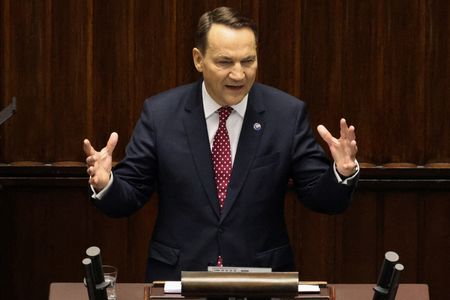
Poland’s Foreign Minister Radoslaw Sikorski delivered a pointed message to parliament Thursday, emphasizing that while his nation values its partnership with America, it refuses to be taken advantage of in the relationship.
Speaking to lawmakers in Warsaw, Sikorski acknowledged the United States as Poland’s primary military partner while addressing growing uncertainties about European security under President Donald Trump’s leadership.
“We look at the changes in the U.S. with understanding, but also concern,” Sikorski told lawmakers. “We have been and will continue to be a loyal ally of America. But we cannot be suckers.”
The foreign minister’s remarks illustrate the challenging position facing Prime Minister Donald Tusk’s European Union-friendly administration as they work to preserve vital Atlantic partnerships while Trump reshapes traditional security arrangements.
Sikorski emphasized the need for European nations to take greater responsibility for their own defense and stressed the importance of continental solidarity in facing threats.
“The threat to the sovereignty and security of the Republic of Poland comes from one direction – from the East, not the West… The hour has struck for Europe. Either we stand united, or we will be consumed by greater powers,” he declared.
The minister presented stark financial realities, estimating that protecting NATO’s eastern borders from potential Russian attack would require at least 1.2 trillion euros ($1.4 trillion) – twenty-four times Poland’s current defense spending. He argued this figure demonstrates that current aid to Ukraine costs far less than a potential conflict between Russia and NATO.
While Polish politicians across party lines view America as their nation’s key security guarantor, Tusk’s government has expressed criticism of Trump, contrasting sharply with the more supportive stance taken by Poland’s nationalist opposition and President Karol Nawrocki.
MOSCOW – Russian officials are expressing concern about rising tensions surrounding Cuba following a fatal maritime confrontation that left multiple people dead and injured.
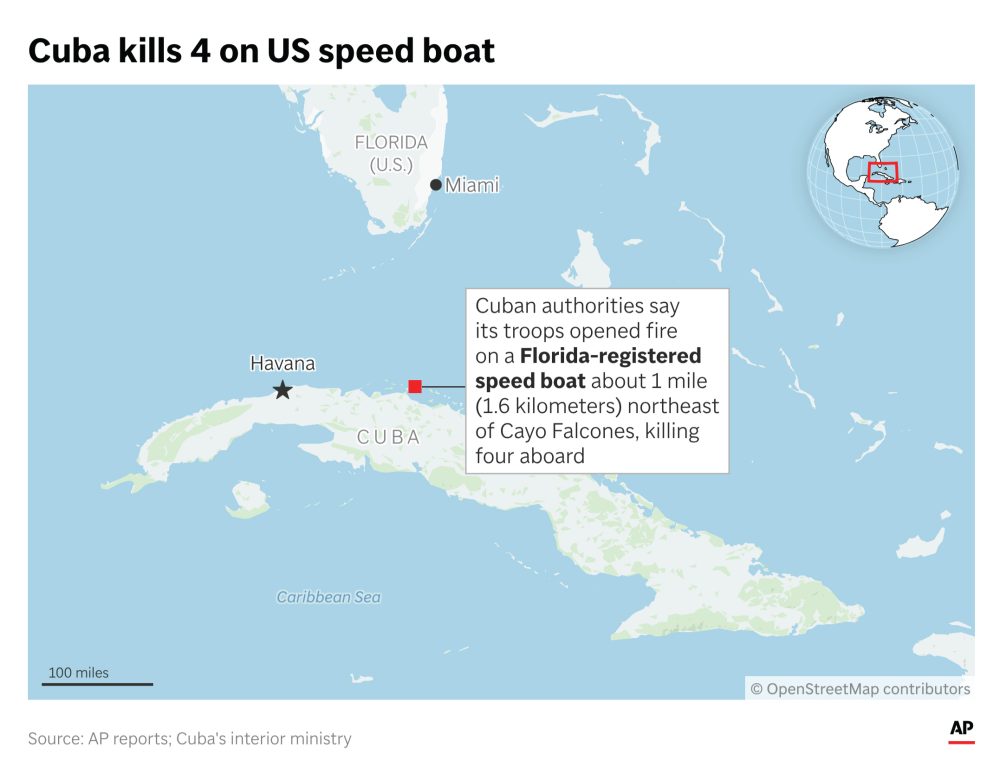
The deadly clash occurred Wednesday when Cuban military forces engaged a speedboat registered in Florida that had entered Cuban territorial waters. Four Cuban exiles were killed and six others sustained injuries during the encounter, which began when those aboard the vessel fired upon a Cuban patrol boat.
Moscow has characterized the incident as an “aggressive provocation by the United States” amid already strained relations between Russia and Washington.
During a press briefing Thursday, Kremlin spokesperson Dmitry Peskov emphasized the need to address the underlying issues facing Cuban citizens while urging all parties to exercise caution.
“The situation around Cuba, as we can see, is heating up. The main thing is the humanitarian component. All humanitarian issues concerning Cuban citizens must be resolved, and no one should create obstacles,” Peskov stated to members of the media.
The Russian official also stressed the importance of maintaining stability in the region, adding: “As for security around the island, it is, of course, very important that everyone remain restrained and refrain from any provocative actions.”
Peskov highlighted that addressing the socio-economic and humanitarian challenges facing the Cuban population should be the top priority moving forward.
KYIV, Ukraine — Ukrainian President Volodymyr Zelenskyy announced Thursday that Russia conducted an overnight assault using 420 drones and 39 missiles against his nation, coinciding with preparations for continued peace discussions between U.S. and Ukrainian representatives in Geneva as the conflict enters its fifth year.
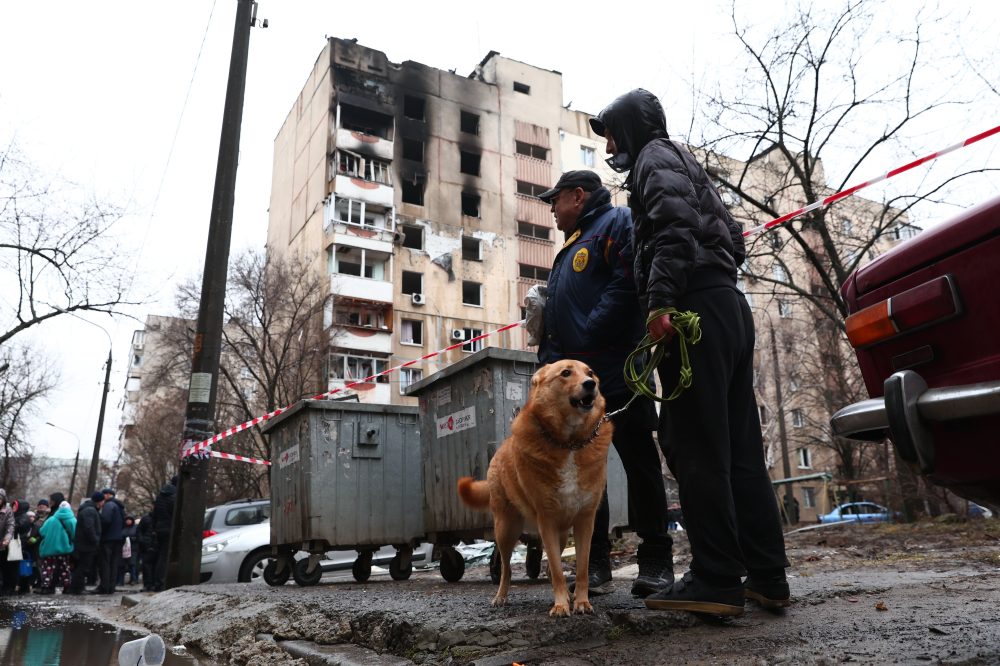
According to Zelenskyy, the overnight strike involved 11 ballistic missiles and focused on vital infrastructure and civilian neighborhoods throughout eight Ukrainian regions. Officials reported that dozens of individuals, including children, sustained injuries, though authorities have not yet released final casualty figures.
On Wednesday evening, Zelenskyy revealed he had conducted a telephone conversation with U.S. President Donald Trump, expressing gratitude for his “efforts and engagement” in advancing peace discussions.
The peace negotiations facilitated by the United States between Moscow and Kyiv remain ongoing but have reached an impasse regarding the status of Ukrainian territories that Russia has claimed.
Trump’s representatives Steve Witkoff and Jared Kushner, who had been addressing nuclear discussions with Iran in Geneva before focusing on the European conflict, were scheduled to meet with Rustem Umerov, Ukraine’s National Security and Defense Council chief. Both also participated in Trump’s conversation with Zelenskyy.
The United States continues working to maintain progress in its year-long effort to end hostilities and bridge the significant animosity between the opposing nations.
Officials from Ukraine and Europe have claimed that Russian President Vladimir Putin is pretending to engage in peace talks, hoping to dodge harsh U.S. actions like additional sanctions while continuing his military campaign.
According to Zelenskyy, Thursday’s discussions between American and Ukrainian representatives would focus on specifics of a potential post-conflict reconstruction plan for Ukraine and preparations for a possible three-way meeting with Moscow representatives, potentially scheduled for next week.
Zelenskyy also mentioned directing Umerov to explore options for a potential prisoner swap.
Vladimir Medinsky, who leads the Russian delegation in previous Ukrainian negotiations, announced Thursday that Russia had returned 1,000 bodies of deceased soldiers to Ukraine while receiving 35 bodies of its own fallen troops. He did not specify the timing of this exchange.
Zelenskyy reported that Russia targeted natural gas facilities in the Poltava region and power substations in the Kyiv and Dnipropetrovsk areas. Emergency response teams were deployed to five additional regions and the capital city.
According to Zelenskyy, Ukrainian air defense systems successfully intercepted the majority of Russian missiles, praising Western allies for providing additional air defense interceptors on schedule. Ukraine depends on international assistance to maintain its defense against Russia’s larger military forces.
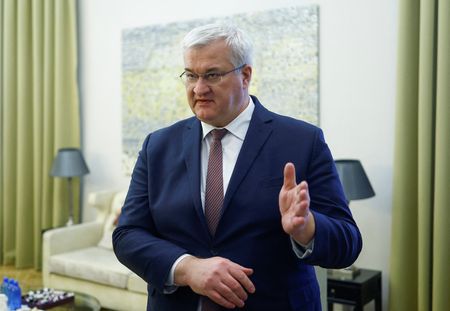
Ukrainian Foreign Minister Andrii Sybiha called on partner nations to increase military support.
“When the whole world demands Moscow to finally stop this senseless war, Putin bets on more terror, attacks and aggression,” Sybiha said in a post on the Ministry of Foreign Affairs website.
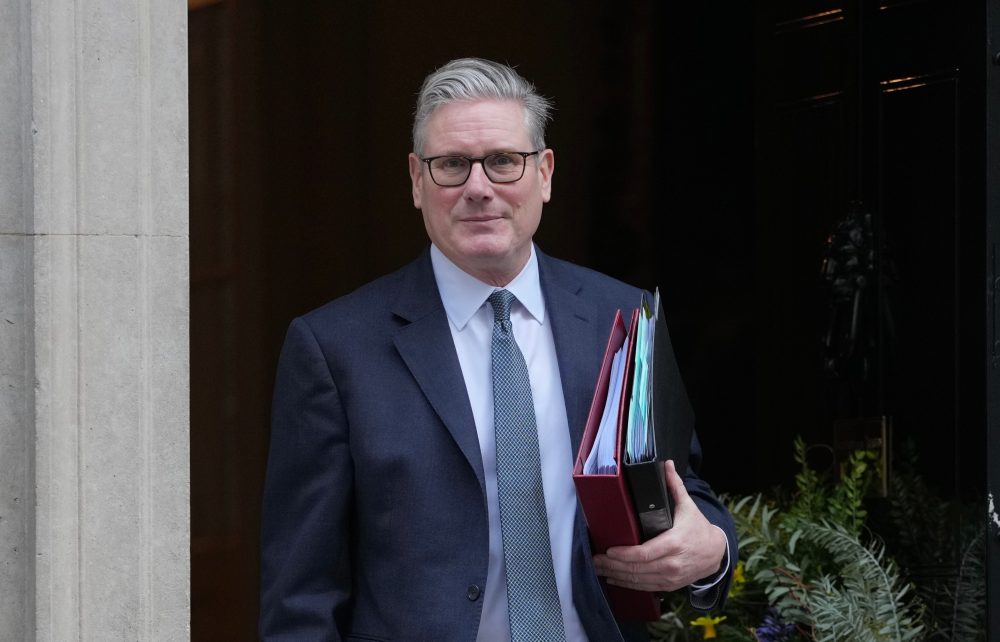
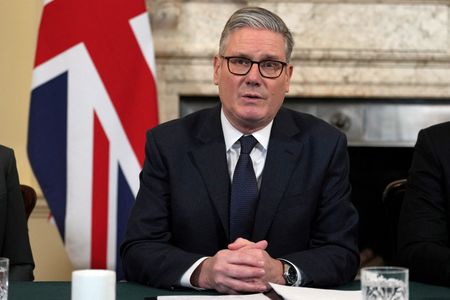
LONDON (AP) — Voters in northwest England cast ballots Thursday in a crucial special election that may shape the political fate of struggling Prime Minister Keir Starmer.
The parliamentary contest in Greater Manchester’s Gorton and Denton district features a tight three-way battle between Starmer’s center-left Labour Party, the Green Party focused on environmental issues, and the far-right Reform UK movement. While Labour representatives have dominated this region for nearly the entire past century, Starmer’s administration has watched its approval ratings nosedive since taking power in July 2024.
Polling data and wagering odds suggest an extremely competitive race among Labour’s local councilor Angeliki Stogia, Reform UK’s Matthew Goodwin — a former academic turned political commentator — and Green Party candidate Hannah Spencer, who works as a plumber.
Reform UK, the anti-immigration movement headed by longtime far-right figure Nigel Farage, controls merely eight seats in the 650-member House of Commons compared to Labour’s 404 seats. However, the party has consistently led nationwide surveys for months, surpassing both Labour and the primary opposition Conservative Party.
The Green Party holds four parliamentary seats but has broadened its platform under “eco-populist” leader Zack Polanski to address Palestinian solidarity and drug legalization alongside environmental priorities.
Representatives from both Labour and the Greens argue their party offers the best chance to prevent a Reform victory.
“Voting Green is the only way to ensure Reform don’t win,” Spencer declared.
Starmer framed voters’ decision as one where the choice “could not be more stark: unity or division.”
Reform leader Farage urged constituents to “vote Reform to ditch Starmer.”
Predicting the election’s winner proves challenging in this diverse constituency, triggered by the departure of the district’s previous Labour representative. The area encompasses traditional working-class communities — historically Labour strongholds now leaning toward Reform — alongside significant populations of university students and Muslim residents. Many feel alienated by Labour’s centrist direction under Starmer and the government’s perceived hesitation in condemning Israel’s military actions against Hamas in Gaza, creating opportunities for Green Party growth.
Voting concludes at 10 p.m. local time (2200GMT), with final tallies expected early Friday morning.
Starmer has faced numerous challenges since guiding Labour to an overwhelming electoral triumph in July 2024. He has struggled to fulfill promises of economic expansion, public service improvements, and cost-of-living relief. Despite pledging transparent governance following 14 years of Conservative rule marked by scandals and instability, his tenure has featured policy reversals and controversial decisions regarding welfare reductions and other unpopular measures.
Britain’s next nationwide election isn’t required until 2029, making internal party opposition Starmer’s primary concern.
A Labour victory in Gorton and Denton might provide Starmer temporary relief from party critics contemplating leadership changes. Starmer recently survived a close call earlier this month when party dissatisfaction peaked following revelations about convicted sex offender Jeffrey Epstein’s connections to Peter Mandelson, the veteran Labour figure Starmer selected as Britain’s ambassador to the United States.
A defeat would highlight Labour’s deep unpopularity and the significant challenges the party faces from political opponents across the spectrum.
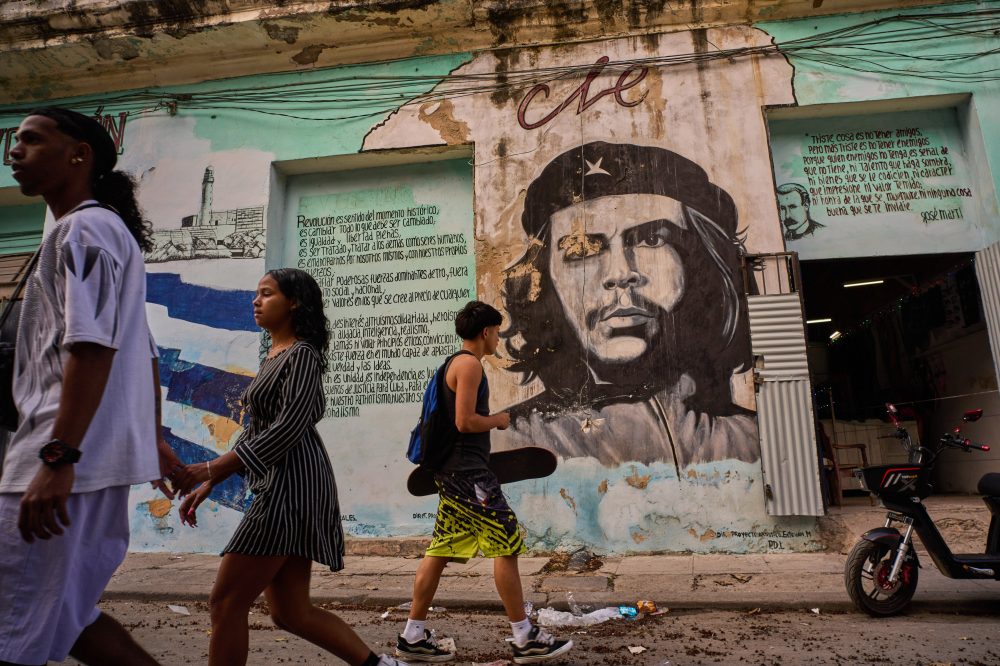
HAVANA (AP) — Cuban officials are providing glimpses into everyday life on the island as diplomatic tensions rise following a maritime confrontation involving armed individuals.
According to Havana authorities, the 10 individuals aboard a speedboat that engaged in gunfire with Cuban military personnel were Cuban nationals currently residing in the United States who allegedly attempted to illegally enter Cuban territory.
The incident has contributed to growing strain in U.S.-Cuba relations as both nations address the maritime security breach.
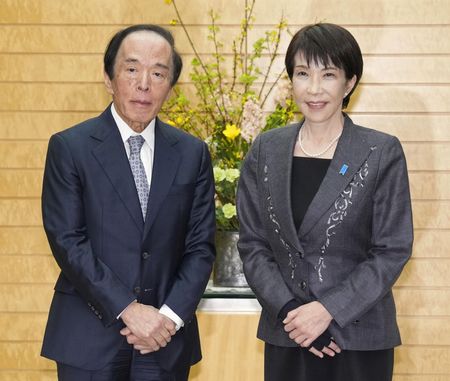
Japanese Prime Minister Sanae Takaichi has made her stance on interest rates crystal clear by selecting two academics who strongly favor keeping borrowing costs low to serve on the Bank of Japan’s governing board.
The Wednesday announcement of nominations for professors Toichiro Asada and Ayano Sato caught financial markets off guard, as many expected Takaichi’s administration would choose more centrist candidates. The yen dropped following the news.
According to two sources with knowledge of the situation, Takaichi kept her selections secret even from the Finance Ministry, which traditionally plays a role in vetting potential board members.
Though the central bank may continue raising rates in the near term, these appointments could have lasting effects on monetary policy battles that may stretch across years or even decades.
Market experts warn that Takaichi’s direct involvement in monetary policy decisions increases the likelihood she’ll appoint more stimulus-friendly members when two rate-hike supporters finish their terms next year.
Should the dovish prime minister remain in office long enough, she would also control the selection of new Bank of Japan leadership when Governor Kazuo Ueda and his deputies’ terms conclude in 2028 — potentially pressuring an institution that has faced political meddling previously.
“If the government tries to politicise the Bank of Japan then the same thing we’ve seen in the U.S. could happen in Japan, which is bond selling as well as currency selling,” warned Yusuke Miyairi, a foreign exchange strategist at Nomura Securities in London.
“I wouldn’t say BOJ independence is threatened at the moment, but the government is trying to have more power in the BOJ’s policy decisions,” Miyairi added, noting the selections reveal more about Takaichi’s monetary policy philosophy.
Both parliamentary chambers must approve the nominations before they take effect. While Takaichi’s ruling coalition controls the lower house, it needs opposition support in the upper chamber where it lacks a majority.
Asada, a scholar famous for championing massive economic stimulus measures, will replace dovish board member Asahi Noguchi at the end of March.
Sato, also an academic, has promoted the advantages of expansionary government spending and loose monetary policy. She’ll take over in June when Junko Nakagawa, viewed as neutral to slightly hawkish on rates, steps down.
Both candidates belong to a circle of economists who have pushed for the expansionary fiscal and monetary approaches now embraced by Takaichi, and maintain connections with dovish former Bank of Japan officials including former deputy governor Masazumi Wakatabe.
The new appointments won’t immediately impact the central bank’s short-term policy choices. Neither nominee will participate in March’s policy meeting.
As a newcomer, Asada likely won’t make waves at his first meeting on April 27-28, while Sato’s initial opportunity to vote will come during July’s rate review.
Former Bank of Japan official Nobuyasu Atago suggested the newcomers’ perspectives may evolve once they confront the realities of policy-making amid market volatility, economic uncertainty and unexpected crises.
“Once they join, the board members shed their ideologies and become more practical,” explained Atago, who worked as staff for a board member during his central bank tenure.
“BOJ staff would barrage them with briefings, which could be overwhelming for newcomer academics,” he noted. “I think yen moves matter far more than the Takaichi nominations.”
Board member Noguchi exemplifies this transformation — he joined as a strong advocate for aggressive monetary easing but changed course and supported the Bank of Japan’s last two rate increases.
Nevertheless, the new members will likely influence policy discussions by altering the board’s makeup, which has increasingly favored near-term rate hikes as the yen’s decline keeps food inflation persistently elevated.
Noguchi represents the final member of the once-powerful stimulus advocates who gained influence by providing theoretical support for former premier Shinzo Abe’s “Abenomics” economic policies.
Two hawkish board members, Naoki Tamura and Hajime Takata, have actively pushed for additional rate increases in the near future, with Takata unsuccessfully proposing rate hikes at January’s meeting for the second consecutive time.
While uncertainty remains about how the newcomers will position themselves, analysts believe the most significant impact stems from Takaichi’s clear dovish signal through these nominations.
The Nikkei newspaper reported, without identifying sources, that Takaichi expressed dissatisfaction with the Bank of Japan’s December rate increase to her associates, worrying about effects on home loan rates and business investment.
Given the substantial political momentum Takaichi gained from her party’s overwhelming election victory earlier this month, analysts suggest the central bank would struggle to implement rate hikes without administration approval.
“Up till now, the Takaichi administration didn’t send clear communication on its view on monetary policy,” observed Takahiro Otsuka, senior fixed income strategist at Mitsubishi UFJ Morgan Stanley Securities in Tokyo.
“This nomination is a message it is pursuing a high-pressure economy,” he said, emphasizing efforts to stimulate growth through inflation.
DAMASCUS — Syrian authorities and Druze militia groups completed their first prisoner swap on Thursday since violent sectarian fighting broke out last summer in the southern city of Sweida, according to the Syrian government’s local media office.
Damascus authorities released 61 detained Druze faction members who had been held at Adra Central Prison near the capital, while the Druze National Guard Forces freed 25 Syrian government officials in return, the media office reported.
International Committee of the Red Cross officials oversaw the prisoner exchange operation.
Violent sectarian fighting between Druze militants and Sunni Bedouin tribal groups began in Sweida last July. The conflict escalated when forces from the Islamist-controlled government deployed to the provincial capital to stop the violence in the predominantly Druze region.
Israel, which supports the Druze population, launched airstrikes against President Ahmed al-Sharaa’s administration during the fighting.
Officials declared a complete ceasefire later that month to end the bloodshed, which claimed hundreds of lives over several days of intense combat.
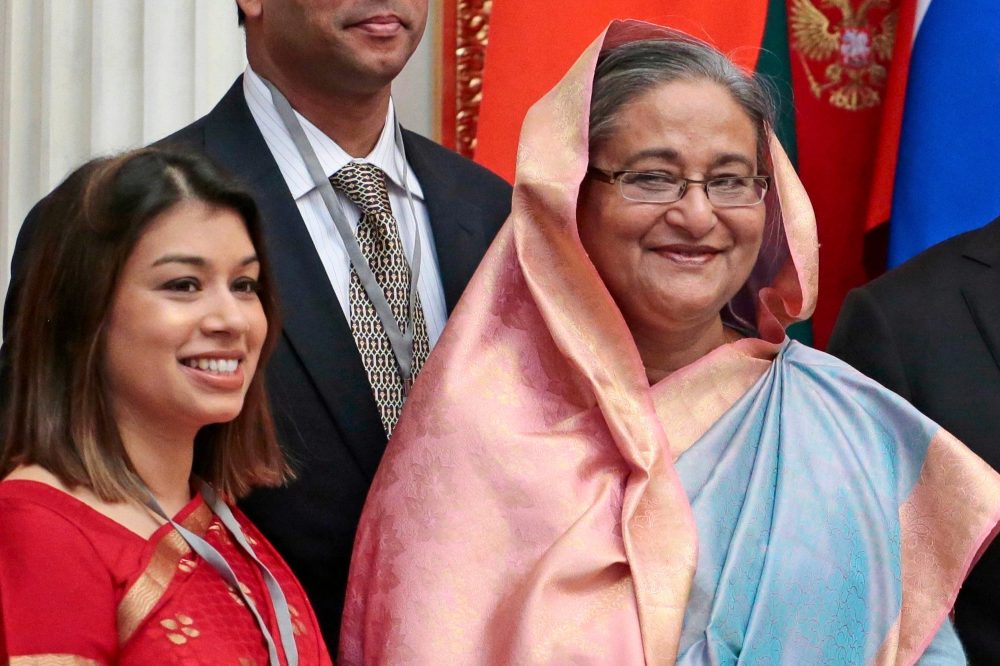
DHAKA, Bangladesh (AP) — Authorities in Bangladesh’s capital received judicial orders Thursday to pursue an Interpol red notice targeting a British parliamentarian facing corruption allegations tied to a private property development.
British MP Tulip Siddiq, who represents Hampstead and Highgate in London and previously held a ministerial position, now confronts corruption accusations from Bangladesh’s Anti-corruption Commission related to a real estate matter.
The lawmaker has already received a six-year prison sentence in Bangladesh across three separate corruption proceedings, all connected to her influential relative, former Prime Minister Sheikh Hasina. Student-led protests forced Hasina from power in 2024, ending her decade-and-a-half reign, with the former leader fleeing to India on Aug. 5, 2024.
Siddiq has dismissed all accusations against her, calling the court decisions a “complete farce,” while emphasizing her British citizenship rather than Bangladeshi nationality.
According to the commission, Siddiq leveraged her relationship with Hasina to sway the land allocation process for a private developer in Dhaka’s prestigious Gulshan district. The MP is Sheikh Hasina’s niece, being the daughter of Hasina’s sister Sheikh Rehana.
Dhaka Metropolitan Senior Special Judge Mohammed Sabbir Faiz granted the directive Thursday following a request from the anti-corruption agency.
The judicial decision followed Assistant Director A.K.M. Mortuza Ali Sagar’s application seeking the red notice through Interpol channels to enable Siddiq’s detention.
Siddiq had not responded to the Thursday developments by press time.
Last January, Siddiq stepped down from her role as a minister in Prime Minister Keir Starmer’s administration due to mounting pressure over her connections to Hasina. While stating she had been exonerated of any misconduct, Siddiq left her position as economic secretary to the Treasury, explaining the controversy had become “a distraction from the work of the government.”
Nobel Peace Prize winner Muhammad Yunus assumed interim leadership three days following Hasina’s removal and supervised elections held on Feb. 12. The current administration under Prime Minister Tarique Rahman, whose father was Hasina’s primary political opponent and former Prime Minister Khaleda Zia, has now assumed control.
GENEVA – Ukrainian representatives gathered with American officials Thursday in Geneva to plan for the massive task of rebuilding their war-torn nation, even as peace talks with Russia remain stalled.
The discussions involved US Special Envoy Steve Witkoff and Jared Kushner, son-in-law of President Donald Trump, who met with Ukrainian negotiators around midday. Officials indicated the Ukrainian team would not make public statements following the session.
These reconstruction conversations center on what’s being called a “prosperity package” – a comprehensive funding plan designed to restore Ukraine’s battered economy after years of devastating conflict.
Witkoff and Kushner also scheduled a separate meeting Thursday with Iranian Foreign Minister Abbas Araqchi, marking their third round of indirect discussions about Iran’s nuclear activities, with Oman serving as mediator.
President Volodymyr Zelenskiy held a phone conversation Wednesday with President Trump, where both leaders agreed that upcoming three-way negotiations with Russia in March should pave the way for a summit between the nations’ top leaders to address the most challenging remaining disputes.
“This is the only way to resolve all the complex and sensitive issues and finally end the war,” Zelenskiy stated following the call, which included participation from both Witkoff and Kushner.
Planning Ukraine’s reconstruction has emerged as a crucial component in broader diplomatic efforts to bring the conflict to a close, as the war marked its fifth anniversary this week.
Ukrainian officials are working to secure approximately $800 billion in combined public and private investment over the coming decade to restore their nation.
A fresh World Bank evaluation released Monday calculated that Ukraine’s economic recovery will require an estimated $588 billion, based on damage assessments from February 24, 2022, through the end of 2025.
American officials continue pushing Ukraine to find pathways toward ending what has become Europe’s largest military conflict since World War Two, though significant gaps remain between Moscow and Kyiv’s positions.
Representatives from Ukraine and Russia participated in US-facilitated discussions last week in Geneva – their third such meeting this year – but achieved no major progress on critical disagreements, particularly regarding territorial control.
Moscow demands that Ukraine surrender the remaining 20 percent of the industrial Donetsk region still under Ukrainian control, while Kyiv refuses to abandon territory that thousands of its citizens have died defending.
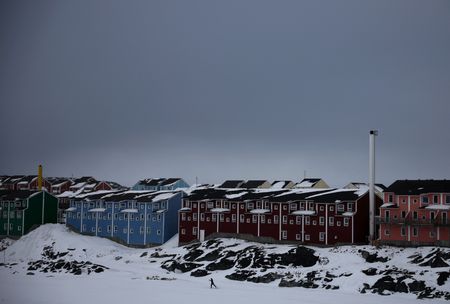
COPENHAGEN – A sudden flood of American buyers seeking real estate in Greenland’s capital city last year has accelerated efforts by territorial lawmakers to establish new foreign investment oversight rules, according to officials and sources close to the matter.
During January 2025, coinciding with President Donald Trump’s renewed push for greater influence over Greenland, legal professionals and property agents in Nuuk began fielding numerous inquiries from potential U.S. purchasers, six individuals with knowledge of the situation reported.
Previously, international buyers had demonstrated minimal interest in acquiring property within the community of 20,000 residents.
“The most aggressive ones wanted to buy everything available on the market,” a Nuuk-based lawyer said, requesting anonymity.
ECONOMIC NEEDS VERSUS POLITICAL CONCERNS
Trump’s focus on the Arctic territory has created a challenging situation for Greenland’s legislators, who must weigh their need for investment capital to revitalize a sluggish economy against concerns about U.S. investors who may harbor undisclosed political objectives.
The identity of these potential investors remained unclear, as did any possible connections to Trump’s Greenland initiative. The territory operates as a semi-autonomous region within Denmark’s kingdom.
However, this unexpected surge of interest concerned legislators, who worried that external purchasers might displace local residents from Nuuk’s already constrained housing supply, three sources indicated. By February 2025, Greenland’s administration had strengthened restrictions on international property acquisitions.
This housing market concern contributed to broader efforts to provide officials with mechanisms for examining the sources of incoming investment funds.
INVESTMENT OVERSIGHT LEGISLATION INTRODUCED IN OCTOBER
Foreign investment screening legislation, which had been under development for an extended period and officially presented to parliament in October, was originally designed partly to guard against unwelcome Chinese investment. However, three sources indicated the emphasis had changed following Trump’s renewed Greenland objectives.
“We are very interested in working with American investors, but not in a way where they try to push certain political goals,” MP Aqqalu Jerimiassen from the Atassut party, which belongs to Greenland’s ruling coalition, stated.
Greenland has consistently worked to broaden its economic base, primarily through pursuing mining sector investments. Nevertheless, insufficient infrastructure, including absent roadways linking the territory’s 72 communities, harsh weather conditions, and workforce shortages have hindered efforts to secure substantial international funding.
Denmark has provided additional funding for infrastructure and development programs, while the EU has suggested more than doubling its financial support. Despite these efforts, the Arctic territory’s economy continues to stagnate, with 2025 growth reaching only 0.2% alongside substantial public finance shortfalls.
MANDATORY REVIEW REQUIRED FOR KEY SECTORS
Initially discussed in November, the screening legislation is scheduled for additional debate in April and is anticipated to receive approval that month. The proposal requires international investors to reveal their funding sources and allows officials to deny transactions if investors’ political connections or intentions create concerns.
“If someone is working for Trump, we will find out with this screening law. This is about our own security,” Jerimiassen continued.
The proposed legislation avoids targeting particular nations but encourages collaboration with allies, suggesting American and European investors might encounter reduced scrutiny compared to Chinese counterparts. Nevertheless, it provides Greenland authority to examine foreign investments deemed security threats.
“The purpose of the law is to prevent foreign investments from posing a threat to Greenland’s security or public order,” the proposed legislation declares. Additionally, it aims to strengthen security for “Greenland and its allies, including NATO member states.”
International investments in essential infrastructure, information technology and classified data networks, natural resources and mining operations, hydroelectric power, and government-controlled enterprises would require mandatory review under the proposed regulations.
The legislation applies only to areas under Greenland’s authority and excludes U.S. military operations on the territory, which remain under Danish oversight.
China has stated it has no plans to compete for influence in Greenland.
TERRITORY REMAINS OPEN TO AMERICAN INVESTMENT, OFFICIAL SAYS
Last month, Drew Horn, a former senior official from Trump’s initial presidency, revealed plans for a multi-billion-dollar data center in Greenland – the type of development some legislators believe demonstrates the necessity for more comprehensive screening procedures.
Greenland’s administration reported it has not received applications or official requests regarding the proposal.
Horn, who currently operates an investment and consulting company, informed Reuters the project lacked political connections and expressed no concerns about meeting screening requirements in Greenland.
“Greenland wants American capital, but we fear hidden political motives behind certain U.S. private investors,” one parliamentary member said, speaking anonymously due to the matter’s sensitivity.
Discussions between Greenland and the United States regarding access and presence on the territory continue, with Trump maintaining demands for “total access” to the island.
Business Minister Naaja Nathanielsen informed Reuters the foreign investment screening legislation was not created in response to U.S. interest and that she remains receptive to American investment.
However, if U.S.-Greenland negotiations failed, she noted, “then of course we would need to reevaluate our position. But we are not there yet.”
Greenland’s housing ministry indicated property limitations implemented last year were precautionary measures not connected to specific information but designed to preserve control over Nuuk’s housing supply.
A massive defense partnership worth more than $35 billion has been established between South Korea and the United Arab Emirates following the signing of a formal cooperation agreement, according to a Seoul government official.
Kang Hoon-sik, serving as chief of staff to President Lee Jae Myung, announced the milestone agreement to news media upon his return from the UAE on Thursday. The presidential envoy detailed that the military collaboration will encompass multiple defense sectors including air defense systems, air force operations, and naval capabilities.
The memorandum of understanding represents one of the largest international defense partnerships in recent years, highlighting the growing strategic relationship between the two nations across various military technologies and systems.
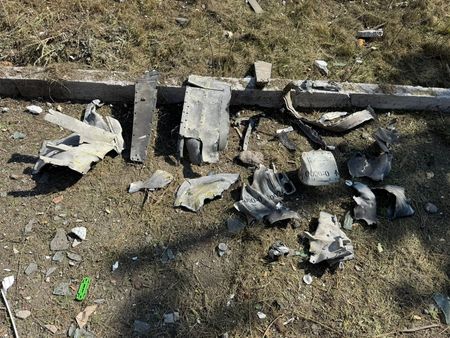
Photographic evidence has surfaced confirming that Russia has deployed a controversial nuclear-capable cruise missile in its war against Ukraine – the same weapon that prompted the United States to abandon a crucial nuclear arms control agreement during the Trump administration.
Military analysts examining missile debris fragments obtained by Ukrainian law enforcement agencies have verified Russia’s repeated use of the 9M729 cruise missile system. This marks the first visual confirmation of the weapon’s battlefield deployment.
The missile’s development originally caused President Trump to withdraw from the Intermediate-Range Nuclear Forces Treaty in 2019, a critical nuclear arms control framework from the Cold War era. Trump cited concerns that this ground-launched weapon could travel well beyond the treaty’s 500-kilometer distance restriction.
According to Ukraine’s General Prosecutor’s Office, one 9M729 missile launched by Russian forces on October 5 traveled more than 1,200 kilometers to reach its target.
Ukrainian Foreign Minister Andrii Sybiha and intelligence sources report that Moscow fired this missile system twice during 2022, followed by 23 additional launches between August and October of last year. These represent the weapon’s first documented combat applications anywhere in the world.
Law enforcement officials indicate Russia launched at least four more of these missiles at Ukrainian targets on February 17, marking previously unreported attacks. Additional strikes have occurred since October, according to the sources.
Jeffrey Lewis, a Distinguished Scholar of Global Security at Vermont’s Middlebury College, analyzed the debris images and concluded: “The images really do appear to show the 9M729. In addition to the markings, the debris are similar to other cruise missiles that are related to the 9M729.”
Defense intelligence specialists at Janes, a British-based company, determined there was strong probability the wreckage in the 10 photographs originated from the ground-launched 9M729 system.
Ukrainian law enforcement sources indicated the fragments were recovered across western Ukraine, including the Zhytomyr, Lviv, Khmelnytskyi and Vinnytsia regions.
Reuters was unable to independently confirm the exact locations and timing of when these fragment photographs were captured.
Several pieces display identifying marks, including one bearing serial number 0274 and others stamped with “9M729.” A Reuters journalist observed an additional fragment with the 9M729 marking, though Ukrainian officials requested it not be photographed for publication.
Russia’s Defense Ministry declined to provide comment regarding this report.
While Moscow has acknowledged the missile’s existence, Russian officials have disputed claims that it violated the 1987 treaty or possessed the range capabilities alleged by other nations.
The October 5 missile strike hit a residential home in Lapaiivka village near Lviv, killing five civilians. This attack occurred over 1,200 kilometers from the launch point, according to the Ukrainian General Prosecutor’s Office statement.
Ukrainian authorities are investigating the missile’s use across eight different regions throughout the country.
The original INF Treaty specifically prohibited ground-launched missiles exceeding 500 kilometers in range because their mobile launchers are more difficult to detect than aircraft or naval vessels carrying similar weapons, creating enhanced security threats.
Russia has also deployed the Oreshnik twice since November 2024 – a newly developed intermediate-range ballistic missile that would have similarly violated INF Treaty restrictions.
Both the 9M729 and Oreshnik systems can be equipped with either nuclear or conventional warheads, with ranges capable of reaching major European cities.
According to the Missile Threat database maintained by Washington’s Center for Strategic and International Studies, the 9M729 has an operational range of 2,500 kilometers.
Multiple NATO member countries in Europe are now pursuing acquisition or development of their own long-range strike capabilities to address the growing deterrence gap with Russia.
European governments have expressed growing concerns about America’s long-term commitment to continental defense, as Washington has indicated Europeans must assume primary responsibility for conventional military protection.
Last August, Russia announced it would eliminate all restrictions on deployment locations for intermediate-range missiles capable of carrying nuclear warheads.
Russia has launched thousands of drones and missiles against Ukraine since beginning its full-scale invasion nearly four years ago. Recent attacks have specifically targeted power generation and heating infrastructure during what has been Ukraine’s harshest winter of the conflict.
The strategic reasoning behind Russia’s decision to deploy the 9M729 system remains unclear.
Missile analyst Lewis expressed surprise that Russia would risk exposing sensitive military technology by using the nuclear-capable weapon in Ukraine, where military experts can analyze its combat effectiveness and examine recovered fragments.
“Russia may have a relatively small stockpile of sophisticated cruise missiles and so it’s willing to dip into its longer-range stockpile,” Lewis suggested.
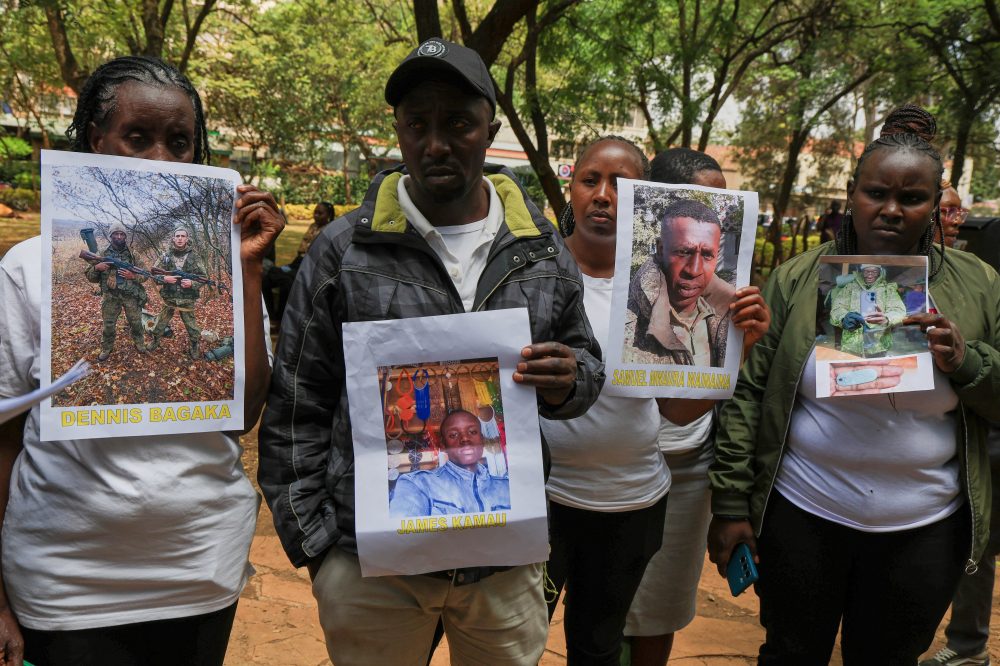
NAIROBI, Kenya — Kenyan authorities have captured a suspect believed to be behind a deceptive recruitment operation that promised skilled employment in Russia but instead sent workers to combat zones in Ukraine.
Law enforcement officials detained Festus Omwamba on human trafficking charges in Moyale, a northern border town near Ethiopia. According to police spokesman Michael Muchiri, Omwamba was attempting to flee the country after recently returning from Russia and will be transferred to Nairobi.
Three Kenyan victims who spoke with The Associated Press had previously identified Omwamba as a key figure in the recruitment scheme. He had disappeared from public view once families began demonstrating over missing and deceased relatives involved in the Ukraine conflict.
Last week, Kenya’s government revealed that recruitment operations had ensnared more than 1,000 citizens to serve in Russia’s military forces in Ukraine. Current estimates show 89 Kenyans remain in active combat, 39 are receiving medical treatment, 28 are unaccounted for, while others have managed to return home. Officials have confirmed at least one fatality.
Parliamentary majority leader Kimani Ichung’wah presented an intelligence briefing alleging coordination between Kenyan and Russian government representatives with fraudulent employment agencies to deceive potential recruits.
Russia’s diplomatic mission in Nairobi has rejected these claims, stating Thursday that no visas were granted to individuals planning to participate in the Ukraine conflict. The embassy added: “The Russian Federation does not preclude citizens of foreign countries from voluntarily enlisting in the armed forces.”
Kenya’s Foreign Minister Musalia Mudavadi announced on February 9 his intention to visit Russia for what he described as a “diplomatic approach to rein in any dubious entities that are taking advantage of anyone in this misadventure.”
Mudavadi confirmed that diplomatic efforts continue to free Kenyans detained in Ukrainian facilities and bring home those currently in Russia.
“You recall that even at the highest level, the president made an appeal that if indeed there are Kenyans who have found themselves on the wrong side of the law, the appeal was made to the Ukrainian government to look at how they can be processed and brought back,” the minister explained.
This arrest represents a significant breakthrough in government efforts to halt the recruitment of Kenyan citizens for the Ukraine war.
John Kamau, a recruit who fled the battlefield and found safety at Kenya’s Russian embassy before being repatriated, told the AP he encountered Omwamba at a Nairobi residence where prospective recruits waited for travel arrangements.
A second recruit, speaking anonymously due to safety concerns, described how Omwamba deliberately avoided written communication, preferring phone calls and face-to-face meetings with potential recruits.
This individual had enrolled believing he would work as a plumber in Russia, but upon arrival, authorities confiscated his passport and sent him to military training before battlefield deployment.
Multiple recruits confirmed that Omwamba managed their tourist visa paperwork and flight bookings, with the entire process from initial contact to departure taking approximately two weeks.
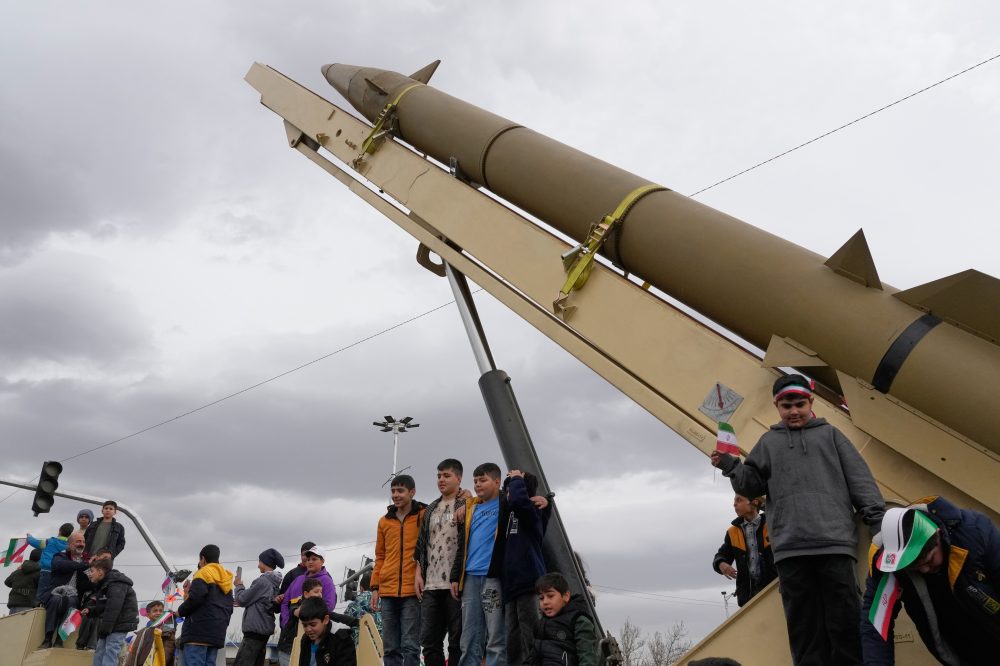
JERUSALEM (AP) — With American military forces building up across the Middle East, the Islamic Republic of Iran confronts the possibility of major military action from the globe’s strongest armed forces, with potential targets including leadership, military installations, nuclear facilities, and essential infrastructure.
Tehran’s military strength pales in comparison to U.S. capabilities and has been further diminished following Israel’s military campaign last year and domestic unrest. However, the nation retains the ability to cause significant harm to American troops and regional partners, particularly if regime survival becomes the primary concern.
Despite substantial losses sustained in June, Israeli intelligence indicates Iran maintains hundreds of missiles with the range to strike Israeli territory. The country possesses an even more extensive collection of shorter-range weaponry capable of reaching American military installations throughout Gulf nations and naval forces, which will soon include a second aircraft carrier group.
Tehran has repeatedly issued warnings about blocking the Strait of Hormuz, a crucial passage for international petroleum commerce, and asserted it achieved partial closure during recent military exercises.
Supreme Leader Ayatollah Ali Khamenei issued threats about destroying U.S. naval vessels, while senior government figures have declared that American aggression would trigger broader regional conflict. Iran’s United Nations representative Amir Saeid Iravani stated that “all bases, facilities and assets of the hostile force in the region” would become valid military objectives.
During the 12-day conflict in June, Israeli forces conducted extensive bombardments against Iran’s long-distance missile stockpiles, along with military commanders and nuclear infrastructure. American forces targeted Iran’s primary atomic facilities, with President Donald Trump declaring at that time they had been “obliterated.”
The full scope of destruction and subsequent reconstruction efforts remains unclear. Iranian forces maintained their missile and drone attacks against Israel throughout the hostilities, progressively penetrating the country’s advanced defensive systems.
Danny Citrinowicz, an Iranian affairs specialist at Israel’s Institute for National Security Studies, noted that Iran’s short-range missile capabilities remained mostly intact. This situation could encourage Iranian retaliation against the tens of thousands of American military personnel stationed in Qatar, Saudi Arabia, Jordan, the United Arab Emirates, and other regional locations.
“Iran may be weak. But it still has ways to inflict real pain on the United States — and much more incentive to try than it did before,” Nate Swanson, head of the Atlantic Council’s Iran Strategy Project, wrote in Foreign Affairs. “Iranian officials feel they need to give Trump a bloody nose or they will perpetually be at risk.”
Following the assassination of its leading military commander in 2020, Iran fired missiles at an American installation in Iraq and struck a U.S. facility in Qatar during the final stages of last year’s warfare. These attacks, which seemed deliberately signaled beforehand, resulted in property damage without casualties as warning systems and defensive measures activated successfully.
Tehran could execute operations beyond the immediate region. Intelligence agencies have linked the country to utilizing criminal organizations and militant factions for planning or executing attacks globally, targeting dissidents, Israelis, and Jewish communities.
Israeli military action last year eliminated multiple high-ranking officers and nuclear researchers, exposing significant security weaknesses. Trump previously claimed American intelligence had located Khamenei’s whereabouts, describing him as an “easy target.”
Following the recent apprehension of Venezuelan leader Nicolás Maduro, Trump might pursue targeted elimination operations designed to topple Iran’s multi-decade Shiite religious government, which he recently described as something that “would be the best thing that could happen.”
Iranian leadership has spent eight months addressing previous vulnerabilities and strengthening internal protection measures. Citrinowicz suggested contingency arrangements likely exist should Khamenei be eliminated. Instead of designating a single replacement, authority would probably transfer to a small governing body during active conflict.
Analysts believe the death of 86-year-old Khamenei, who has controlled Iran for more than thirty years, would not automatically destroy the Islamic Republic. Leadership might ultimately transfer to a trusted associate, similar to Venezuela’s transition, or to Iran’s Revolutionary Guard forces.
Regional allies express clear anxiety about widespread warfare, while Prime Minister Benjamin Netanyahu has promised severe retaliation for any Iranian assault on Israel.
Arab Gulf nations have historically regarded Iran with suspicion and depended on American protection, yet prefer avoiding military involvement. Saudi Arabia and the United Arab Emirates, hosting thousands of U.S. service members, have declared they would prohibit use of their airspace.
A Gulf diplomatic source revealed regional leadership maintains communication with both Iran and America to prevent warfare, cautioning about serious ramifications including petroleum price increases. The official requested anonymity when discussing these confidential negotiations.
Iran maintains its own partnerships, including Yemeni Houthi fighters, Iraqi militant organizations, Lebanon’s Hezbollah, and Hamas in Palestinian areas. However, this self-proclaimed Axis of Resistance experienced major defeats during fighting that spread throughout the region following Hamas’s October 2023 Gaza offensive.
Another nearby objective could enable Iran to cause broader economic damage.
Approximately twenty percent of global oil commerce travels through the Strait of Hormuz, located near Iranian coastline. The U.S. Navy maintains commitment to keeping this waterway accessible, but Iranian interference could disrupt commercial activity, similar to the Houthis’ successful Red Sea disruption over the past two years.
Iranian authorities have not directly threatened the strait during current tensions, but military forces achieved partial closure last week during training exercises, demonstrating potential vulnerability during wartime.
Additional vital petroleum infrastructure would fall within striking distance. In 2019, attacks on oil facilities temporarily reduced Saudi Arabia’s output by half. Yemen’s Houthis accepted responsibility, though American officials subsequently attributed blame to Iran.
After initially threatening military response to Iran’s suppression of demonstrators, Trump redirected focus toward the nuclear program, warning that “bad things” would occur without a negotiated agreement. Both parties plan another round of indirect discussions in Geneva on Thursday.
Iran has consistently maintained its atomic program serves peaceful purposes, while America and other nations have long suspected Tehran ultimately intends weapons development. After Trump abandoned a 2015 nuclear accord, Iran accelerated uranium enrichment activities, accumulating stockpiles of near-weapons grade material.
Iran’s largest facilities suffered American and Israeli strikes, causing considerable surface damage. Whether enriched uranium was relocated before attacks or stored underground remains unknown. Iran claims enrichment capabilities have been eliminated since then, while simultaneously preventing inspections.
Iran is still considered far from producing functional nuclear weapons, though radioactive materials could create hazards during extensive military strikes.
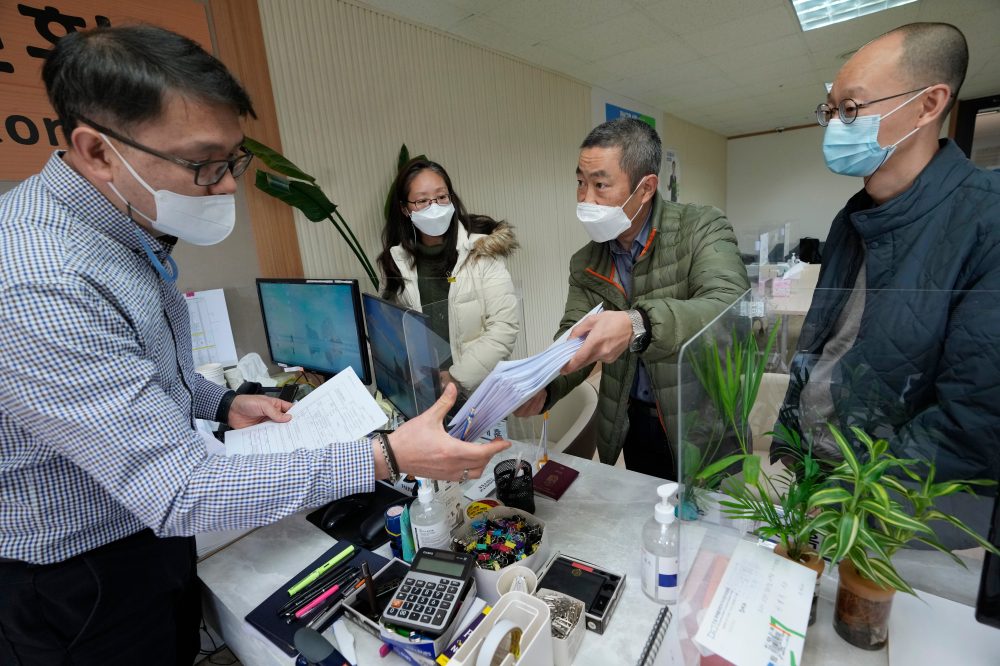
Spain’s ambitious plan to provide legal status to at least 500,000 undocumented immigrants is creating overwhelming pressure on government agencies and causing widespread concern among potential applicants, even before the program officially launches, according to union representatives, attorneys, and migrants interviewed by Reuters.
The mass legalization initiative, announced by Spanish officials last month, could face serious obstacles due to insufficient information and government funding, warn two individuals familiar with the program. This latest effort continues Spain’s welcoming immigration approach that economists say has fueled the country’s recent economic growth.
While Spanish authorities have indicated the program will operate from early April through June, they have released minimal details about how people can apply or what paperwork will be needed. The migration ministry’s website stated in January that no extra budget or personnel had been allocated to handle the anticipated flood of applications.
This uncertainty has created stress for both the immigrants hoping to gain legal status and the government workers at immigration facilities already dealing with months of accumulated cases.
“Our offices are completely jammed. If there are no more people, if there is no technological reinforcement, without more money, this is impossible,” said César Pérez, a union leader for Spain’s immigration officers.
Pérez informed Reuters that most of his fellow workers are still processing legal status requests that were filed in June 2025.
Spanish officials released a preliminary outline of the program last month. A confidential draft of the complete decree, dated February 18th and obtained by Reuters, indicated that “a specific, preferential and differentiated procedure” would be created for the legalization period but offered no specifics.
Spain’s ministries of Inclusion, Interior and Territorial Policy did not respond to detailed inquiries from Reuters. A representative from the ministry overseeing migration stated that the final decree remains under development.
‘CHAOS AT LAUNCH’
While other European nations are restricting their borders, Spain’s Socialist administration continues to support immigration, which economic experts say accounts for much of the nation’s rapid economic expansion over the past four years.
Earlier administrations, including conservative-led governments, have implemented several mass amnesty programs in recent decades. The most extensive occurred in 2005, when 570,000 individuals who could demonstrate formal employment contracts received legal status.
There’s a compelling reason for legalization: Spain requires approximately 2.4 million additional people contributing to social security over the coming decade to maintain its welfare system, based on government projections.
However, conflicts with smaller political parties have destroyed the current government’s majority in parliament’s lower chamber. The resulting political gridlock has blocked legislators from approving a budget since 2023 — limiting the government’s capacity to implement its new immigration agenda.
The absence of additional government funding for the 2026 program would represent a significant change from earlier mass legalizations. In 2005, 1,700 workers were brought on and 742 new information centers were created to support the existing system, according to research by scholar Claudia Finotelli.
To address this year’s anticipated shortfall, the government is exploring the possibility of enlisting non-profit organizations and labor unions to assist with processing applications, according to four sources knowledgeable about the situation.
Another possibility being discussed involves extending immigration offices’ operating hours, according to Perez, the union representative.
However, neither solution has been officially implemented, leaving administrators skeptical about whether the program will begin as scheduled.
“The government is optimistic, but coordinating everyone will not be easy. We can expect chaos at launch,” said a person involved in the migration ministry’s discussions.
DESPERATE MIGRANTS IN LIMBO
Immigrants have also been left in uncertainty.
They are lining up at immigration facilities seeking information about the program that staff members cannot yet provide, according to police and civil service unions.
Spanish officials have stated that immigrants with clean criminal backgrounds who have lived in Spain for five consecutive months or filed asylum claims before the end of 2025 may be eligible. However, they have not clarified what documentation will serve as acceptable evidence.
“It’s still not clear what requirements we’ll have to meet. I’m afraid they will ask for something I can’t provide,” said Iris Rocha, a 37-year-old Peruvian mother of two. She spoke to Reuters following a presentation by a local immigration-focused nonprofit organization in Barcelona, often the only resource available to migrants seeking more information.
Rocha, who stated she escaped Peru with her daughters in 2023 following life-threatening domestic violence, lost her temporary work authorization last year after her asylum request was rejected.
She explained that she requires legal documentation to find employment again.
“I would get my life back. Until then I have to survive,” Rocha said.
Spain’s immigration minister Elma Saiz informed reporters in January that applicants could work legally once they receive notification that their application is under review, which she said would occur within 15 days of submitting required documents.
Specialists remain doubtful, citing persistent delays in the immigration system. Spanish research institution Funcas reports that migrants currently spend an average of two to three years trying to obtain legal status, with roughly 840,000 undocumented immigrants working illegally while navigating the process.
“People become undocumented not because they don’t want to register, but because they can’t,” said Gabriela Domingo, a lawyer at migration consultancy Legalizados.
Some worried migrants are already paying middlemen to reserve April appointments at immigration offices, according to three attorneys.
This practice violates the law, and the government admitted in November 2025 that it resulted from a lack of available appointment times.
“People are selling appointments even though the start date is only a rumour, which shows the fear this process has instilled in migrants,” said Pilar Rodriguez, a lawyer for migrants advocacy organisation Aculco.
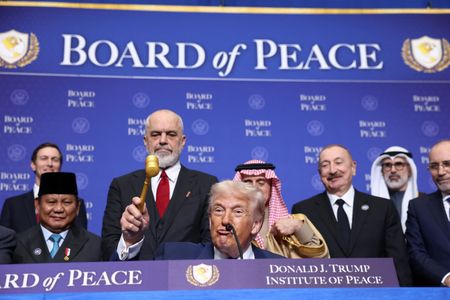
Russian officials expressed concerns Thursday about potential conflicts between President Donald Trump’s newly established Board of Peace and the United Nations Security Council, which has been the primary international peacekeeping body since World War II ended.
Trump initially introduced the peace board concept in September as part of his strategy to resolve the conflict between Israel and Gaza. He later broadened the board’s scope to address international conflicts worldwide, roles typically handled by UN mechanisms.
Among the UN Security Council’s five permanent members—the United States, Russia, China, Britain, and France—only America has participated in Trump’s new board.
Kirill Logvinov, who heads the Russian foreign ministry’s international organizations department, shared his concerns with the state news agency TASS, stating: “The charter of the Board of Peace defines itself as a new international structure designed to replace ‘mechanisms that have too often proved ineffective.’”
Logvinov noted that the board’s official mandate makes no reference to Gaza despite its origins in addressing that conflict.
“It is clear that this approach raises questions about how the Board of Peace will coexist with the United Nations and its Security Council, which is the only universally recognised body for maintaining international peace and security,” he explained.
The Russian official also highlighted that UN Secretary-General Antonio Guterres has not received invitations to any board meetings thus far.
According to its charter, the board commits to conducting “peace-building functions in accordance with international law.”
Trump serves as the board’s chairman and holds significant executive authority, including veto power over decisions and the ability to dismiss members, though some limitations apply.
The UN Security Council has maintained primary responsibility for global peace and security since its inaugural meeting in London in 1946, though it now operates from New York headquarters.
MOSCOW – The Kremlin accused Washington of deliberately provoking conflict after a deadly maritime confrontation near Cuba left four people dead on Wednesday, according to Russia’s state media outlet TASS.
The fatal encounter occurred when a speedboat registered in Florida entered Cuban territorial waters and engaged in gunfire with Cuban patrol vessels. Cuban military forces responded by opening fire, killing four Cuban exiles aboard the vessel and injuring six others during the Wednesday incident.
Maria Zakharova, who serves as Russia’s Foreign Ministry spokesperson, characterized the maritime clash as intentional American aggression designed to increase regional tensions.
“This is an aggressive provocation by the United States aimed at escalating the situation and detonating a conflict,” Zakharova stated, as reported by the Russian news agency.
The deadly confrontation comes during a period of increased strain between Washington and Havana, adding another layer of complexity to already tense U.S.-Cuba relations.
KYIV – Ukrainian officials reported that Russian forces conducted a widespread aerial bombardment during the overnight hours, leaving approximately 20 people wounded across the nation’s eastern and southern territories, according to local government statements released Thursday.
The assault involved both ballistic and cruise missile strikes targeting the capital city of Kyiv along with surrounding areas and the eastern city of Kharkiv, while unmanned aircraft struck the southern city of Zaporizhzhia.
Ukrainian officials have not yet revealed the total count of projectiles launched during the nighttime bombardment or identified the primary objectives of the strikes.
Over the past several months, Russian forces have concentrated their aerial campaigns on Ukraine’s electrical grid infrastructure, systematically destroying generating facilities and distribution networks, leaving vast areas without power for extended periods.
Kharkiv region sustained the heaviest casualties with at least 14 wounded civilians, including a child aged seven, according to regional Governor Oleh Syniehubov’s statement on the Telegram messaging platform. He reported that the city endured strikes from two missiles and 17 unmanned aircraft.
In Zaporizhzhia, Governor Ivan Fedorov confirmed that no fewer than seven residents suffered injuries during the nighttime bombardment. The drone strikes caused structural damage to 19 residential apartment complexes, while an additional 500 households lost heating services due to infrastructure destruction.
Fedorov shared images showing residential structures with gaping holes in exterior walls, completely destroyed private residences, and damaged commercial establishments.
Officials in Ukraine’s capital reported that multiple structures across three city districts sustained damage from debris created when air defense systems intercepted incoming missiles and drones.
Chinese military forces have been operating surveillance drones over the South China Sea while broadcasting deceptive identification signals, according to new analysis of flight tracking data reported by Reuters.
The large military drone has been conducting routine missions in recent months while transmitting fraudulent transponder codes that disguised it as various other aircraft, including a sanctioned cargo plane from Belarus and a British Typhoon fighter jet.
Defense experts and military officials analyzing these operations believe the flights mark a significant escalation in China’s gray-zone military tactics in the disputed waters and may represent preparation for potential invasion scenarios involving Taiwan.
Flight tracking data reveals that since August, no fewer than 23 missions have been recorded using the call sign YILO4200, identified as a Chinese military drone with extended flight capabilities. However, the aircraft broadcast registration codes belonging to completely different planes during these operations.
The drone’s typical flight routes originate from China’s Hainan province and head eastward toward the Philippines, passing near the contested Paracel Islands and along Vietnam’s coastline.
This represents the first comprehensive reporting on the scope and sophistication of these deceptive operations.
According to regional diplomatic sources, intelligence specialists, and security researchers who have examined the flight information, these missions demonstrate a new level of complexity in China’s expanding military presence throughout the South China Sea and around Taiwan. The operations involve real-time deployment of electronic warfare and deception techniques as China’s military works to enhance combat readiness.
While such masking techniques may not completely fool air traffic control systems or advanced military radar, they could create costly delays and confusion during actual conflict, hide sensitive intelligence gathering, or serve propaganda purposes, according to diplomatic and intelligence sources.
Ben Lewis, who founded the open-source intelligence platform PLATracker, said the operations were unprecedented.
“We’ve not seen anything like this before,” Lewis stated. “It’s … a kind of deception trial being carried out in real time using aircraft that are not exactly low profile. It does not appear to be at all accidental.”
China’s defense ministry has not responded to inquiries about these flights or their intended purpose.
The flights have primarily appeared on flight tracking systems as an Ilyushin-62 cargo aircraft operated by Belarus-based Rada Airlines, though they have also masqueraded as a Royal Air Force Typhoon, a North Korean Il-62 passenger aircraft, and an unidentified Gulfstream business jet.
Since mid-December, the drone designated YILO4200 has also conducted several missions in northwestern China, most recently on February 15 when it transmitted signals identifying it as an anonymous Pilatus PC-12 turboprop passenger plane.
Aircraft identification codes originate from a specialized 24-bit address system managed by the International Civil Aviation Authority. These numbers, transmitted through transponder systems, help determine an aircraft’s location, heading, and velocity.
Though each aircraft receives a unique address, these codes are publicly available, and aviation experts confirm that reprogramming a transponder to broadcast a different registration number is technically feasible.
The U.S. Office of Foreign Assets Control sanctioned Rada Airlines in August 2024 for transporting cargo to and from Africa that included Wagner Group personnel connected to Russian military operations, as well as involvement in illegal wildlife trafficking.
Flight data shows the actual Belarusian Il-62 aircraft remained active during this period using its legitimate call sign and was even airborne simultaneously with the Chinese drone that was impersonating it.
Rada Airlines has not responded to requests for comment, and Britain’s defense ministry declined to provide statements on the matter.
An International Civil Aviation Organization representative said the organization does not comment on issues or speculation regarding specific member nations.
Operating from Qionghai Boao International Airport in Hainan, the aircraft typically remained airborne for extended periods, flying distinctive star-shaped or hourglass patterns over identical areas repeatedly.
These flight characteristics match those commonly associated with large military drones conducting surveillance missions and covered strategically important sections of the South China Sea, including waters frequently used by submarines, according to intelligence analysts reviewing the data.
Chinese military forces typically operate their drones in “dark” mode, transmitting neither call signs nor registration identifiers.
Two missions among the 23 examined were particularly noteworthy: During one flight spanning August 5-6, the drone initially broadcast the RAF Typhoon’s identification code, then switched between three different aircraft signals over approximately 20 minutes before finally landing while transmitting the Rada Airlines identifier.
In another instance on November 18, the drone operated while impersonating the Belarusian aircraft at the same time the genuine Rada Il-62 departed from near Belarus bound for Tehran.
Alexander Neill, a Singapore-based security analyst, described the Hainan operations as representing a novel approach within China’s digital warfare capabilities designed to “muddy the waters” if regional tensions escalate into armed conflict.
“They don’t appear to be exercises as much as the kind of action the U.S. Indo-Pacific Command has described as rehearsals for a confrontation – anything the Chinese can do to sow confusion in the minds of their rivals is to their advantage,” Neill explained. Neill serves as a fellow at Hawaii’s Pacific Forum.
“The U.S. and its allies know that given the realities of highly automated conventional conflict, even milliseconds count along the kill chain of escalation.”
The Pentagon has not responded to requests for comment regarding the Chinese drone operations.
Lewis and three additional open-source intelligence analysts identified the YILO4200 call sign as belonging to an extended-range Wing Loong 2 unmanned aircraft, comparable to the U.S. Reaper drone with a 67-foot wingspan.
The Wing Loong primarily serves surveillance functions but can be configured for additional roles including command and control operations, precision missile attacks, and anti-submarine warfare.
State-connected Chengdu Aircraft Corporation, an AVIC subsidiary, manufactures the aircraft but declined to comment on the matter.
Flight tracking specialist Amelia Smith originally linked the Wing Loong 2 to the call sign through analysis of flight data, official press reports, and government announcements.
Lewis, Smith, and other intelligence analysts said it remains unclear which Chinese agency operates the aircraft from Boao Airport, which serves both commercial and military purposes.
Satellite imagery from July, September, and January obtained show large drones positioned on the airport’s tarmac alongside support facilities in a section currently undergoing expansion.
Ian Petchenik, communications director for Flightradar24, confirmed the tracking service had observed the Hainan flights and had not encountered similar activity previously, apart from apparent accidental miscoding, nonexistent addresses, or data corruption.
“Based on the flight patterns and the kind of usage of these 24-bit addresses, it doesn’t seem like it is a mistake in the programming of the transponders,” Petchenik stated.
It could not be determined whether the flights follow pre-programmed routes or receive ground-based control.
The flight paths traverse areas of significant naval activity, including waters south of Hainan near Chinese submarine installations and eastward toward the Bashi Channel between Taiwan and the Philippines – a critical passage point for China’s navy to reach the Pacific Ocean.
Security analyst Neill suggested the route patterns indicate preparation for operations over Taiwan.
When the 23 flight paths are mapped over Taiwan, they pass numerous military locations of strategic importance, concentrated around Taipei while also extending along the island’s southern coast. The eastward trajectories bring the aircraft near Japanese and U.S. military installations in Okinawa and other Ryukyu chain islands.
“It is a compelling image – extensive rehearsals across the South China Sea to be deployed over Taiwan’s key points,” Neill observed.
GENEVA (AP) — Iranian and American diplomats gathered Thursday in Geneva for nuclear discussions that many view as diplomacy’s final opportunity, as Washington has positioned naval vessels and military aircraft throughout the Middle East to apply pressure on Tehran for an agreement.
President Donald Trump seeks an agreement that would limit Iran’s nuclear capabilities, believing this moment presents an opening while Tehran faces domestic turmoil from widespread protests that occurred last month. Iran continues to assert its right to uranium enrichment, despite its nuclear infrastructure suffering significant damage after Trump authorized strikes on three Iranian nuclear facilities in June.
Should American military action occur, Iran has declared that all U.S. military installations across the Middle East would become legitimate targets, potentially endangering tens of thousands of American troops. Tehran has also issued threats against Israel following an intense 12-day conflict last year, raising concerns about another regional war erupting throughout the Middle East.
“There would be no victory for anybody — it would be a devastating war,” Iranian Foreign Minister Abbas Araghchi told India Today in an interview recorded Wednesday before his departure to Geneva.
“Since the Americans’ bases are scattered through different places in the region, then unfortunately perhaps the whole region would be engaged and be involved, so it is a very terrible scenario.”
Araghchi will once again negotiate with Steve Witkoff, a wealthy real estate mogul and Trump associate who functions as the president’s special Middle East representative. These two officials conducted several negotiating sessions last year that broke down after Israel initiated its military campaign against Iran in June. Oman, the sultanate positioned on the Arabian Peninsula’s eastern border that has historically facilitated communication between Iran and Western nations, is once again mediating these current discussions.
Trump is now demanding that Iran completely stop uranium enrichment activities, while also addressing Tehran’s ballistic missile development and its backing of regional militant organizations. Iran insists the negotiations must concentrate exclusively on nuclear matters.
Secretary of State Marco Rubio informed reporters Wednesday that Iran is “always trying to rebuild elements” of its nuclear program. He stated that Tehran currently isn’t enriching uranium, “but they’re trying to get to the point where they ultimately can.”
Iran claims it hasn’t conducted enrichment since June, yet has prevented International Atomic Energy Agency inspectors from accessing the facilities targeted in American bombings. Satellite imagery examined by The Associated Press has revealed ongoing activity at two of these locations, indicating Iran may be evaluating and possibly recovering materials from these sites.
Western nations and the IAEA maintain that Iran operated a nuclear weapons program until 2003. Prior to the June military action, Tehran had been enriching uranium to 60% purity levels — requiring only minor technical advancement to reach weapons-grade concentrations of 90%.
American intelligence services conclude that Iran hasn’t restarted a weapons program but has “undertaken activities that better position it to produce a nuclear device, if it chooses to do so.” Despite claiming their program serves peaceful purposes, Iranian leadership has made threats about pursuing nuclear weapons in recent years.
“The principle’s very simple: Iran cannot have a nuclear weapon,” Vice President JD Vance told reporters at the White House Wednesday.
Vance explained that Trump is “sending those negotiators to try to address that problem” and “wants to address that problem diplomatically.”
“But, of course, the president has other options as well,” Vance added.
Should these negotiations collapse, questions remain about when any potential military action might occur.
If military strikes aim to force Iranian concessions in nuclear talks, it remains unclear whether limited attacks would achieve this goal. If the objective involves removing Iran’s government, this would likely require America to commit to an extensive, prolonged military operation. No public evidence exists of planning for subsequent steps, including potential chaos within Iran.
Questions also surround how military action might affect the broader region. Tehran could strike back against Persian Gulf nations allied with America or target Israel. Oil prices have climbed recently partly due to these worries, with benchmark Brent crude reaching approximately $70 per barrel. During previous negotiations, Iran reported briefly stopping traffic through the Strait of Hormuz, the narrow waterway connecting the Persian Gulf through which one-fifth of global oil trade passes.
Satellite photographs taken Tuesday by Planet Labs PBC and reviewed by The Associated Press seemed to indicate that American naval vessels normally stationed in Bahrain, headquarters of the U.S. Navy’s 5th Fleet, had all deployed to sea. The 5th Fleet directed inquiries to U.S. Central Command, which refused to provide comment. Before Iran’s attack on Qatar in June, the 5th Fleet similarly dispersed its ships to sea as protection against possible assault.
PARIS – French President Emmanuel Macron plans to present his country’s updated nuclear strategy Monday, rejecting the idea of shared European nuclear control while explaining what France might provide to allies concerned about America’s nuclear protection under President Donald Trump.
While both France and Britain possess nuclear weapons, most European nations depend heavily on the United States for protection against potential threats — a cornerstone of transatlantic security for decades.
However, Trump’s closer ties with Russia regarding the Ukraine conflict and his tougher stance toward traditional partners — including threats to take control of Greenland, which belongs to NATO member Denmark — have unsettled European leaders.
German Chancellor Friedrich Merz announced in Munich earlier this month that Berlin had begun talks with France about creating a European nuclear deterrent. Macron described this as needing a “holistic approach of defence and security.”
Several other nations, including Nordic countries traditionally supportive of the US, have carefully shown interest in such discussions.
DOUBTS ABOUT FRANCE’S REACH
Behind closed doors, European officials wonder whether France’s nuclear arsenal can adequately defend the entire continent. Their concerns involve sharing costs, determining who would make launch decisions, and whether emphasizing nuclear weapons might reduce crucial investments in conventional military forces.
France allocates approximately 5.6 billion euros ($6.04 billion) annually to maintain its collection of 290 nuclear weapons launched from submarines and aircraft — ranking fourth globally in arsenal size.
NATO Secretary-General Mark Rutte told the European Parliament in January: “For Europe, if you really want to go it alone… you have to build up your own nuclear capability. That costs billions and billions of euros.”
“You would lose the ultimate guarantor of our freedom, which is the U.S. nuclear umbrella,” he added.
Expert analysis indicates the US maintains roughly 100 nuclear weapons across Belgium, Germany, Italy, the Netherlands and Turkey as part of NATO’s deterrent strategy.
During wartime, these non-nuclear nations’ air forces would deploy the American weapons under what’s called “nuclear sharing” policy.
US Undersecretary of Defence Elbridge Colby assured allies in Brussels this month that Washington will maintain its nuclear protection for Europe, despite investing over a trillion dollars in upgrading its own weapons systems.
French leadership emphasizes Paris doesn’t aim to replace American protection or challenge NATO’s role.
Etienne Marcuz from the FRS research institute explained in a recent analysis: “While U.S. nuclear forces’ primary mission is to target adversary nuclear arsenals, their French and British counterparts aim to inflict unacceptable damage on the political, military, and economic centres of potential adversaries.”
“This doctrine requires far fewer warheads to be credible,” he noted.
CLARIFYING FRANCE’S APPROACH
French authorities want Europeans to better grasp what France’s nuclear policy can and cannot deliver. However, Paris insists that financing its deterrent remains exclusively French to maintain complete national authority.
A fundamental aspect of France’s position involves “strategic ambiguity” about when nuclear weapons might be deployed and where French essential interests align with broader European security.
This lack of clarity troubles some partners.
“We first want to see what France has to offer… It’s not about having deterrence. It’s about how credible it is,” stated a senior eastern European diplomat.
Any expanded French nuclear role would require Europe to create long-range strike missiles exceeding 2,000 kilometers — technology currently unavailable.
Creating tactical nuclear weapons for battlefield use, rather than strategic weapons for long-distance strikes, appears even more unlikely.
Officials believe such development would raise serious concerns under nuclear non-proliferation agreements that European governments have long supported.
European Union foreign policy chief Kaja Kallas told Brussels reporters this month: “We understand where these discussions are coming from. They’re stemming from the fact that our transatlantic alliance is not what it used to be.”
“My personal view is that, you know, if we have more nuclear weapons all around the world, I don’t think we’re going to be in a more peaceful world,” she said.
MACRON’S NUCLEAR STRATEGY UPDATE
At France’s nuclear submarine facility in Brittany, Macron will present his traditional once-per-presidency nuclear doctrine briefing.
France’s approach seeks to maintain a small but effective arsenal capable of inflicting damage significant enough to prevent any initial attack.
“Just discussing alternatives is sending a message to Moscow,” observed a senior European official.
French officials provided no advance details about Macron’s address but noted the strategic environment has changed dramatically since his previous speech in 2020, pointing to Russia’s expanding arsenal and heightened nuclear threats following its 2022 Ukraine invasion.
France has consistently stated its essential interests include a European component. In 2020, Macron extended invitations to partners for strategic consultations — an offer that received limited interest then.
Officials confirmed one principle remains constant: only France’s president can authorize nuclear weapons use.
“It is the case and will remain so,” a French presidential adviser confirmed.
SEOUL, South Korea (AP) — A new Truth and Reconciliation Commission has begun operations in South Korea, with investigators focusing heavily on fraudulent practices that plagued the country’s international adoption system for decades.
This marks the third such commission in South Korea’s history, which started accepting cases on Thursday. The previous commission concluded its work in November, leaving over 2,100 complaints without resolution.
The newly formed panel will take on these outstanding cases, including 311 submissions from Korean adoptees living in Western nations. These cases were either postponed or given incomplete reviews when the second commission ended its groundbreaking adoption investigation in April of last year, after internal disagreements arose about which cases deserved recognition as problematic.
Adoption advocacy groups report significantly greater interest from adoptees this time around, with hundreds already requesting investigations. Many of these requests come from the United States, a group that was underrepresented in the prior inquiry despite American families being the primary recipients of Korean children throughout the past seventy years.
However, former investigators from the earlier commission warn that actual investigations may not begin for several months, potentially stretching into May or June. The government has not yet named a chairperson for the commission, which lacks organized investigative teams and will initially operate under civil servants responsible for receiving and cataloging cases.
The current commission operates under expanded authority granted by legislation passed in January, allowing it to examine additional government-linked human rights violations. These include civilian deaths during the Korean War period from 1950-53, suppression under military rule from the 1960s through 1980s, and long-term mistreatment of individuals in welfare institutions.
During its peak years, South Korea facilitated the placement of thousands of children annually with Western families, beginning in the 1970s and continuing into the early 2000s. The 1980s saw the highest numbers, averaging over 6,000 children per year. At that time, the nation operated under military leadership that viewed population expansion as detrimental to economic objectives, using international adoptions as a method to decrease domestic welfare obligations. This practice contributed to creating what may be the world’s largest population of international adoptees.
The previous adoption investigation was suspended in 2025 after nearly three years of case reviews spanning Europe, the United States, and Australia. During this period, the second commission validated human rights violations in only 56 out of 367 adoptee complaints.
Despite the limited number of confirmed cases, the commission produced an important preliminary report establishing government accountability for an international adoption system characterized by fraudulent practices and abuse. The report concluded that the program was motivated by cost-cutting measures and executed by private organizations that frequently falsified children’s histories and backgrounds.
This report contradicted the long-held belief in both South Korea and receiving Western countries that adoptions were primarily humanitarian efforts. The findings supported earlier investigative work conducted by The Associated Press.
The AP’s investigations, conducted in partnership with Frontline (PBS), utilized thousands of documents and numerous interviews to demonstrate how South Korean officials, Western governments, and adoption agencies collaborated to place approximately 200,000 Korean children with overseas families, despite ongoing evidence of corrupt and illegal procurement methods.
A Hong Kong court has imprisoned the 69-year-old father of a Washington-based democracy advocate for eight months after he attempted to access money from his daughter’s insurance plan, marking the first prosecution of a family member under Hong Kong’s domestic national security legislation.
Kwok Yin-sang was convicted earlier this month under the 2024 security statute, known locally as Article 23 legislation, for trying to handle financial assets of an “absconder.” His daughter, Anna Kwok, serves as executive director of the Washington-based Hong Kong Democracy Council and condemned her father’s conviction as “transnational repression.”
Hong Kong police have placed a bounty of 1 million Hong Kong dollars (approximately $127,900) on the younger Kwok’s capture and prohibited anyone from managing her financial assets. She is one of 34 individuals facing police rewards as part of what observers describe as a broader suppression of dissent following the large-scale anti-government demonstrations in 2019.
Officials claim she has called for foreign sanctions and blockades while conducting hostile activities against China and Hong Kong through meetings with international politicians and government representatives.
Following the ruling, Anna Kwok stated “my father was convicted simply for being my father,” describing his charges as based on “incoherent fiction.”
The elder Kwok had purchased the insurance plan for his daughter during her early childhood, with ownership transferring to her at age 18. This year, the father attempted to cancel the policy and retrieve approximately $11,000 in funds, according to court proceedings. He was taken into custody the same year on allegations of attempting to manage an “absconder’s” assets.
Acting principal magistrate Cheng Lim-chi delivered Thursday’s sentence. Kwok’s defense attorney had requested a 14-day jail term, contending that no proof existed showing his client planned to transfer the funds to his daughter.
While Kwok’s offense could have resulted in up to seven years imprisonment, his case was processed through magistrates’ courts, which typically impose sentences not exceeding two years.
Law enforcement has similarly issued rewards for other Hong Kong activists living abroad, including former pro-democracy legislators Nathan Law and Ted Hui. Both U.S. and U.K. governments have criticized these bounty programs.
In 2025, Washington imposed sanctions on six Chinese and Hong Kong officials it accused of participating in “transnational repression” and actions threatening the city’s autonomy. Beijing responded weeks later by announcing sanctions against U.S. officials, legislators, and NGO leaders it claimed have “performed poorly” regarding Hong Kong matters.
Both Hong Kong and Chinese authorities maintain that the 2024 legislation and a Beijing-implemented national security law from 2020 were essential for maintaining the city’s stability.
In Nepal’s capital city of Kathmandu, 21-year-old Rahul Pariyar practices attaching his safety harness to climbing ropes at a job preparation facility. These fundamental techniques will serve him well when he begins painting buildings and cleaning skyscrapers in the United Arab Emirates.
“I am not happy to leave my family back and go for work in a foreign country. But what to do?” Pariyar said while wearing his bright yellow safety helmet. He noted that workers in Dubai typically earn approximately four times the wages available in Nepal.
The mountainous country, situated between China and India, faces elections on March 5. These elections came about after unprecedented demonstrations led by young citizens who demanded change due to limited employment opportunities and widespread government corruption, ultimately forcing the elected leader to step down.
However, Pariyar expressed little interest in the political process, stating: “I am not interested in the upcoming elections. It does not pay my wages.”
According to World Bank statistics, Nepal’s jobless rate among young people stands at 20.6%, making it the worst performer across all South and Southeast Asian countries. This figure highlights how multiple administrations have failed to address the employment shortage.
Industry representatives report that approximately three million of Nepal’s 30 million citizens currently work in other countries, particularly in Middle Eastern nations. Many of these workers participated in last September’s uprising.
Data from the Rastriya Shramik Mahasangh Nepal (RSMN), a nationwide labor union organization, shows roughly 1,500 young Nepalis depart daily to find work abroad.
Mahesh Raj Dahal, who works at Motherland Overseas recruitment company where Pariyar receives training, observed: “Over the past six months the number of people going for work abroad has increased.”
“This is because of the political instability, lack of jobs in Nepal and low wages for workers,” Dahal explained.
This mass departure has devastated rural communities throughout Nepal’s remote areas, leaving behind primarily children and elderly residents while most working-age adults have migrated elsewhere.
During their campaigns, Nepal’s major political organizations pledge to address the worker outflow that started when the nation opened its economy in 1991, allowing private employment agencies to establish operations.
The migration surge intensified during subsequent years as Maoist rebels gained control over rural regions.
The Rastriya Swatantra Party (RSP), considered the leading contender due to prime ministerial candidate Balendra Shah’s popularity, has committed to establishing 1.2 million employment opportunities to decrease involuntary migration.
Meanwhile, the Nepali Congress, the nation’s most established political organization, claims it will produce 1.5 million jobs and cut worker emigration in half over the coming five years.
Yet widespread doubt exists about their ability to fulfill these commitments. Many young people hold Nepal’s political organizations responsible for insufficient development and employment, criticizing parties that have contributed to decades of uncertainty through constantly changing alliances and frequent elections.
Economist Keshav Acharya, formerly employed at Nepal’s central bank, explained: “Nepal was always an agricultural economy, and it directly shifted to the service sector. The politicians here bypassed the manufacturing sector, which created this crisis of jobs.”
“They come and make promises, but they hardly act on it,” Acharya added.
Multiple structural obstacles have hindered Nepal’s industrial development, including unstable policies, insufficient infrastructure, poor governance, and workforce skill gaps.
A World Bank analysis from last year stated: “The manufacturing sector, historically an engine of growth in other developing countries, has been on a constant decline.”
The report continued: “Increasing remittances have also not translated into significant job creation or higher productivity in key sectors.”
During the fiscal period ending July 15, 2024, overseas Nepali workers transferred 1.44 trillion rupees ($9.93 billion) back home, representing a 16.5% increase from the prior year and accounting for nearly 25% of Nepal’s total economic output, according to central bank records.
While Nepal’s service industries comprise more than half of its $42 billion economy, farming continues to provide employment for over 60% of workers in a country where approximately one-fifth of residents survive on less than $2 daily.
Astha Bhatta from Kathmandu’s Institute for Integrated Development Studies noted: “Even where people are counted as employed, a bigger problem is under-employment – wages that are not enough to sustain a decent living.”
“That gap between effort and earnings is a major reason why many people try to leave the country,” Bhatta said.
At Kathmandu’s primary international airport, 31-year-old Ramesh Bahadur B.K. Nimaile prepared for his departure to Romania for employment. As the oldest among six children, Nimaile supports his entire family and previously spent two years working construction in Dubai before returning due to harsh working conditions.
“Will this election give me a job? No, right? Inflation is soaring, everything is expensive,” he stated.
“I carry a family debt of over 2.5 million rupees ($17,200). What option do I really have except to migrate for work?” Nimaile asked.
HONG KONG – A Hong Kong judge handed down an eight-month prison term Thursday to a 69-year-old man whose daughter is a prominent democracy activist now living in the United States.
Kwok Yin-sang was convicted of violating Hong Kong’s national security law when he tried to cancel his daughter’s insurance policy and access the money. The court found him guilty earlier this month of “attempting to deal with, directly or indirectly, any funds or other financial assets or economic resources” that belonged to someone considered an “absconder” under local security laws.
This marks the first time anyone has been charged and found guilty of this particular violation. Kwok had entered a not guilty plea and chose not to take the stand during his trial.
His daughter, Anna Kwok, currently serves in a leadership role with the Hong Kong Democracy Council, an advocacy organization based in Washington. She is among 34 overseas activists that Hong Kong national security authorities are seeking to arrest.
Authorities have accused Anna Kwok of working with foreign powers against Hong Kong’s interests, and law enforcement has put up a reward of HK$1 million, equivalent to about $128,000, for information leading to her capture.
HONG KONG — Former media owner and pro-democracy activist Jimmy Lai scored an uncommon legal win Thursday when a Hong Kong appeals court reversed his fraud convictions, though the 78-year-old will remain behind bars serving a separate 20-year sentence.
Lai, who established the shuttered Apple Daily newspaper and has been a vocal opponent of China’s Communist leadership, received the two-decade prison term just weeks ago following his conviction under Beijing’s national security legislation.
His arrest occurred over five years ago as part of extensive government efforts to silence Hong Kong’s democracy movement leaders. International observers have condemned his treatment as an attack on press freedom, while local officials maintain his prosecution was unrelated to journalism.
Thursday’s overturned conviction stemmed from allegations that Lai’s consulting company improperly used office space leased by his media operations for publishing and printing activities.
In 2022, Lai received a sentence of five years and nine months after a court found him guilty on two fraud counts.
The original judge determined that Lai and co-defendant Wong Wai-keung had hidden the consulting firm’s use of the space, violating their lease terms. The judge stated Lai had used his news organization as cover and imposed a 2 million Hong Kong dollar fine ($257,000).
However, appellate judges determined prosecutors failed to demonstrate beyond reasonable doubt that the defendants made misleading statements, resulting in both convictions being dismissed.
Both defendants were absent from Thursday’s proceedings.
The decision may marginally reduce Lai’s overall prison time. Judges in his national security case permitted concurrent serving of sentences for only two years, with the remaining 18 years to follow completion of the fraud sentence.
The extended imprisonment has sparked worries that Lai may die in custody.
Lai’s family members have expressed optimism that President Donald Trump’s upcoming visit to Beijing might help secure their father’s freedom. Lai holds British citizenship. The White House has announced Trump will visit China from March 31 through April 2 to meet with President Xi Jinping.
British Foreign Secretary Yvette Cooper has stated that Lai was punished for exercising free speech rights and has urged Hong Kong officials to release him for humanitarian reasons.
Both Chinese and Hong Kong leadership have justified Lai’s national security conviction, claiming it demonstrates proper legal procedures. They maintain the security legislation is essential for maintaining regional stability.
A Hong Kong appeals court has reversed the fraud conviction of imprisoned pro-democracy media mogul Jimmy Lai, throwing out his nearly six-year prison sentence in a Thursday ruling.
Three appellate judges – Jeremy Poon, Anthea Pang, and Derek Pang – granted Lai’s appeal request along with that of a co-defendant in the case.
In their written decision, the justices stated: “The Court of Appeal gave them leave to appeal against their conviction, allowed their appeals, quashed the convictions and set aside the sentences.”
The media tycoon had received a sentence of five years and nine months behind bars in December 2022 after a lower court determined he violated lease agreements for Apple Daily’s office space. The court found Lai guilty of hiding the operations of a private firm called Dico Consultants Ltd within the newspaper’s building.
A second Next Digital company executive, 61-year-old Wong Wai-keung, had also been convicted on fraud charges and received a 21-month prison term.
The Treasury Department announced Wednesday that it will permit companies to seek authorization for reselling Venezuelan oil to Cuba, a policy change that could help address the Caribbean island’s severe fuel shortage crisis.
Cuba’s energy situation has deteriorated significantly since Washington assumed oversight of Venezuela’s oil exports in early January following the detention of Venezuelan President Nicolas Maduro. The halt in Venezuelan shipments has intensified Cuba’s energy emergency, affecting electricity production and fuel availability for transportation, residential use, and aviation.
For over two and a half decades, Venezuela served as Cuba’s primary source of crude oil and refined fuel through a partnership agreement that largely involved trading goods and services rather than cash payments. Mexico, which had stepped in as an alternative fuel supplier, has also stopped deliveries to Cuba since a shipment reached Havana in January, shipping records indicate.
Major international trading companies like Vitol and Trafigura manage most of Venezuela’s petroleum exports, shipping millions of barrels to destinations including the United States, Europe, and India, while storing additional supplies at Caribbean facilities for future sales.
President Donald Trump has stated that Venezuela’s partners who previously received oil through exchange agreements, debt settlements, and similar arrangements must now purchase shipments at current market rates. This requirement affects countries including China and Cuba.
Secretary of State Marco Rubio traveled to the Caribbean Wednesday to meet with regional officials who have expressed concerns that Cuba’s worsening humanitarian situation could create regional instability.
Despite this new authorization process, questions remain about Cuba’s ability to purchase oil without preferential payment terms. Given Cuba’s recent difficulties affording fuel on international markets, any purchases from traders would likely require standard business conditions including financial guarantees and immediate payment.
The Treasury Department’s new guidelines specify that approved transactions must “support the Cuban people, including the private sector,” covering commercial and humanitarian exports to Cuba. However, deals involving or benefiting Cuba’s military or other government agencies would not qualify for approval.
The Bureau of Industry and Security had earlier issued guidance permitting exports and re-exports of American gas and petroleum products to qualifying Cuban private sector businesses.
While Cuba’s government maintains control over fuel distribution and electrical power through state-owned enterprises, fuel users also include private airlines and other commercial entities.
Treasury officials noted that license applicants don’t require an existing U.S. business presence, and restrictions from a January license for general Venezuelan oil exports wouldn’t apply to Cuban transactions.
American pressure on both Venezuela and Cuba has resulted in multiple fuel shipments remaining undelivered since December, contributing to the island’s struggles with power outages and transportation fuel shortages.
One vessel connected to Cuba that loaded Venezuelan gasoline in early February at a facility run by state oil company PDVSA has remained anchored in Venezuelan waters this week awaiting departure clearance. The same ship had previously taken on Venezuelan jet fuel but returned that cargo, company records revealed.
No oil shipments have left Venezuela since January without Washington’s approval, as the U.S. now oversees the country’s export operations and revenue under an arrangement with interim President Delcy Rodriguez’s administration.
On Wednesday, the Hong Kong-registered tanker Sea Horse, carrying fuel potentially destined for Cuba, stopped moving in the Atlantic Ocean, according to vessel tracking information. The ship could have reached Cuba within days.
The tanker received its cargo through a ship-to-ship transfer in the Mediterranean, according to monitoring service TankerTrackers.com.
Hongkong Hangda Shipping LTD, identified in maritime records as the Sea Horse’s owner and operator, along with PDVSA, did not respond to requests for comment.
The militant group Hezbollah once operated across Syria like a powerful military force, with thousands of fighters, open supply routes, and visible bases that helped keep Bashar Assad’s government in power for years.
Today, Syrian officials say what remains of Hezbollah’s presence looks vastly different: small covert operations near Damascus using drones and Katyusha rockets, with weapons officials claim originated from Lebanon.
On February 1st, Syria’s new leadership announced they had broken up a cell suspected of firing rockets at the Mezzeh district and a nearby military airport. Hezbollah’s media office denied these accusations, stating the organization “has no presence or activity on Syrian soil” and rejecting any connections to armed groups in Syria.
This incident illustrates how the post-Assad period has transformed Hezbollah’s operations. Where the group previously supported Assad’s war efforts openly, it now faces allegations of conducting secretive missions using basic equipment.
Syria served as Hezbollah’s crucial land route to Iran’s weapons supply networks. That pathway is now being severed from several directions.
In early February, Lebanese military forces discovered their second major Hezbollah tunnel in southern Lebanon within two months, containing ammunition, missiles, and drones. A senior American official confirmed that US intelligence assisted in locating the site, with Admiral Brad Cooper of US Central Command commending the discovery.
Simultaneously, Lebanese forces shut down unauthorized border crossings in the northern Beqaa Valley, a region historically used for smuggling weapons and drugs. Military officials announced the closure of additional crossings as part of an expanded enforcement effort along the approximately 233-mile border.
The US Treasury also imposed sanctions on a Turkey-based company involved in transporting Iranian fertilizer through Oman and targeted a gold trading business created by Hezbollah’s financial division to convert organizational assets into cash for reconstruction efforts.
Brigadier General Fayez al-Asmar, speaking for the Syrian military, explained that the new government confronts challenges from multiple sources.
“There is no doubt that since the fall of the former Assad regime, the Syrian state has been facing overlapping security challenges from multiple directions that include Israel, ISIS, remnants of the former regime, and armed groups operating outside state control,” al-Asmar told The Media Line.
Defense expert David Des Roches emphasized that losing unrestricted land access through Syria represents one of Hezbollah’s most significant setbacks in the post-Assad era.
“Hezbollah has long operated as a ‘state within a state,’ and losing unimpeded land access across Syria is a major strategic blow,” Des Roches told The Media Line. “Without Syria as an open corridor, Hezbollah shifts from being an organized military force with reliable supply routes into something closer to a network dependent on smuggling and limited access.”
This transformation alters Hezbollah’s operational footprint even without eliminating it entirely. Power once demonstrated through visible deployments and established routes now operates through intermediaries, small cells, and unofficial border crossings that are simpler to deny and more difficult to verify.
Brigadier General (retired) Yossi Kuperwasser, director of the Jerusalem Institute for Strategy and Security and former Israeli intelligence official, noted that Hezbollah is attempting to recover from simultaneous setbacks, with Syria remaining part of that recovery effort.
“Hezbollah is trying to recover from the damage it has suffered—not only because of what is happening in Iran and Lebanon, but also because of what happened in Syria,” Kuperwasser told The Media Line. “They are trying to rebuild a presence, especially in the south, through smaller cells. But their achievements are limited, because Israel’s presence and readiness to act make it difficult for them.”
Kuperwasser explained that Hezbollah has preserved some operations near the Lebanese border and continues using smuggling networks for weapons transport. While Syrian authorities may interrupt some routes, he said, they cannot stop all of them.
“Hezbollah still manages activity in Syria near the Lebanese border,” he said. “They have been able to build cells that help smuggle weapons. Syrian authorities have tried to stop some of these efforts, but not all, and some smuggling continues successfully. It is not the strategic infrastructure it once was, but the network has not been fully dismantled.”
These evaluations help explain Israel’s expanded military stance in southern Syria in recent months. Israeli officials describe their presence near the Golan Heights and Mount Hermon as preventative measures designed to stop Hezbollah and other Iranian-supported groups from establishing positions near the border. Critics view this expanded presence less as temporary security measures and more as efforts to influence the post-Assad situation in Israel’s favor.
“Israel believes it needs a military presence to prevent Hezbollah and Iranian-backed cells from deploying in southern Syria,” Kuperwasser said. “Even if Syria’s new leadership appears pragmatic, Israel is cautious because many of its figures come from jihadist backgrounds. The US would prefer a solution that makes Israel’s presence unnecessary, but for now it understands Israel’s logic.”
Damascus is working to rebuild centralized governance after years of fragmentation, militia control, and competing armed networks.
Al-Asmar characterized the Mezzeh case as one aspect of a larger battle over who controls Syria’s security environment.
“In this environment, security agencies are watching closely for cells tied to external agendas that are trying to exploit Syria’s transition.”
A security official from the Syrian Interior Ministry reported that no additional Hezbollah cell activities have been uncovered or disrupted since the Mezzeh announcement.
“If any such activity is uncovered, it will be officially announced through statements issued by the Syrian Interior Ministry,” the security official said.
The source acknowledged the possibility of dormant cells that could remain inactive while waiting for changes in regional conditions. Such networks, the source added, might attempt to create instability if the US launches strikes against Iran.
Al-Asmar warned that the danger comes from networks that combine political objectives with smuggling and criminal financing, enabling external actors to maintain influence while the state attempts to regain control.
“By announcing this operation now, the Syrian state is sending a message domestically and internationally that it is regaining its capacity,” al-Asmar said. “The point is not only to stop a single cell, but to show that Damascus will not allow anyone—whoever they may be—to undermine national security, threaten neighboring countries, or destabilize social peace.”
Hezbollah has strong reasons to avoid confirming any of these allegations. Acknowledging a Syrian presence could force the new authorities into public confrontation and provide Israel with additional justification for military strikes. Within Lebanon, any admission would create difficulties while the group already faces pressure.
No official response came from Beirut. Writing in the Lebanese newspaper An-Nahar, columnist Rosanna Bou Mounsef observed that the party rejected any connection, claiming its name had been “dragged in arbitrarily.” Critics, she noted, view ongoing cross-border activities as either network reconstruction or a justification used by adversaries to portray Hezbollah as destabilizing.
Even analysts sympathetic to Hezbollah argue the group’s priorities have become more focused. Lebanese political analyst Rabih Ghosn said Hezbollah’s main Syrian interest is now stability.
“What matters to Hezbollah in Syria today is political and military stability,” Ghosn told The Media Line. “Hezbollah sees Syria’s unity under a centralized authority in Damascus as a priority at this stage, and believes that stability in Syria reflects positively on Lebanon.”
Ghosn maintained that the immediate threat from Hezbollah’s viewpoint is not Damascus asserting control but Israel expanding its military presence in the south.
“The main threat Hezbollah faces in Syria today is Israeli military expansion and the construction of bases, which we have seen in Mount Hermon and in areas adjacent to Daraa,” he said. “Political differences exist, but they do not amount to hostility.”
However, not all observers accept this interpretation. A report in the Beirut daily Al Joumhouria suggested Hezbollah was maneuvering to gain time, using concealment and delays until conditions improve, coordinating with Iran. The strategy reportedly included proposing to place weapons under supervisory oversight and promoting figures with stronger political profiles, moves intended to prevent Israeli military action and delay plans to restrict arms north of the Litani River.
Des Roches noted that Hezbollah’s limitations are also internal, influenced by pressure within Lebanon and the long-term costs of conflict.
“The loss of freedom of movement in Syria is extremely valuable for Israel, and extremely damaging for Hezbollah, because it limits how easily the group can move material across the region,” he said. Meanwhile, the US Treasury Department announced measures to disrupt what it described as two key mechanisms Hezbollah uses to maintain economic stability: generating revenue in coordination with Iran and exploiting Lebanon’s informal financial sector.
Within Lebanon, these pressures are tangible. Nearly 100,000 housing units were destroyed during the fighting with Israel. Hezbollah’s secretary general announced the organization would cover three months’ rent for displaced families, but the change from annual to quarterly payments indicates reduced capacity.
Residents in Shia areas have complained about unequal payments and lack of long-term guarantees. One resident of Beirut’s southern suburbs reported receiving $2,000 for four months, while a neighbor received $3,000 for six months, with no explanation for the difference. In Dahieh, rents now range from $300 to $600, often exceeding the official minimum wage of approximately $312.
In Taybeh, a south Lebanon border town located about 4 miles from the Israeli frontier, graffiti appeared on the municipality building demanding housing assistance “without favoritism.”
The danger in southern Syria is that each side’s protective measures become provocations to the other. Syria frames security operations as restoring sovereignty; Hezbollah interprets them as political targeting. Israel frames military activity as deterrence; Damascus sees it as violation. When Hezbollah moves to maintain a smuggling route, Israel treats it as confirmation that the threat persists.
Previously, Hezbollah and the Islamic Revolutionary Guard Corps operated storage facilities, missile infrastructure, and networks inside Syria with minimal interference. That access is no longer assured.
Hezbollah’s influence is neither completely eliminated nor fully restored. What remains operates more quietly: intermediaries instead of battalions, smuggling operations instead of convoys, small cells instead of bases. The old corridor may be disrupted, but the motivation to maintain networks persists.
“It forces Hezbollah to adapt to a much more limited and risky environment,” Des Roches said. “But history shows that tactical victories can create long-term consequences.”
The terrorist organization ISIS has broken nearly two years of silence from its top leadership, releasing a lengthy audio message that security analysts say demonstrates internal coordination rather than a resurgence of power.
On February 21, 2026, the extremist group published a 35-minute audio recording featuring spokesman Abu Hudhayfah al-Ansari. This marks the first significant communication from ISIS central command since their last major audio statement nearly two years ago.
The timing of this message is notable, as ISIS currently operates without any territorial control in Syria or Iraq, functioning instead through scattered insurgent cells while facing continuous counterterrorism operations throughout the region.
Security experts analyzing the recording suggest the communication represents an effort to maintain organizational structure and discipline within the group’s remaining network, rather than indicating preparations for renewed attempts at territorial expansion.
The message comes as the once-powerful terrorist organization continues to operate under sustained pressure from international counterterrorism efforts across the Middle East.
During a groundbreaking speech to Israel’s parliament on Wednesday, Indian Prime Minister Narendra Modi emphasized the need for global unity against terrorism while strengthening the strategic alliance between India and Israel. The address served as the highlight of Modi’s two-day diplomatic mission to Jerusalem, where he appeared alongside Israeli Prime Minister Benjamin Netanyahu.
Modi began his remarks by telling Israeli lawmakers, “I bring with me the greetings of 1.4 billion Indians and a message of friendship, respect and partnership.” The Indian leader noted the symbolic timing of his birth, which coincided with “the same day that India formally recognized Israel.” He expressed unwavering support for Israel following the Hamas attacks of October 7, stating, “We feel your pain. We share your grief. India stands with Israel firmly, with full conviction in this moment and beyond.”
The fight against terrorism dominated much of Modi’s address to the Knesset. “Nothing can justify terrorism,” Modi declared, calling for unified global efforts against extremist threats. He emphasized that “terror anywhere threatens peace everywhere,” drawing parallels between Israel’s security challenges and India’s own experiences, including the devastating 2008 Mumbai terrorist attacks. Modi described this as evidence of both nations’ unwavering stance against terrorism.
Looking toward future collaboration, Modi outlined an ambitious economic partnership vision. He characterized Israel as a crucial innovation ally and advocated for enhanced cooperation across multiple sectors including artificial intelligence, infrastructure development, environmental technology, and digital innovations. The Indian leader also endorsed progress on a Free Trade Agreement and expansion of joint initiatives through programs like the India-Middle East-Europe Economic Corridor.
Modi also touched on Middle East diplomacy, backing a UN Security Council-supported peace plan for Gaza and calling for discussions focused on “durable peace and regional stability.” His comments demonstrated India’s delicate balancing act between its historical support for Palestinian causes and its increasingly strong relationship with Israel, which has flourished since Modi’s historic 2017 visit.
Netanyahu welcomed Modi’s visit, praising India as a vital strategic partner and expressing enthusiasm for deeper defense and technology collaboration. The visit represents Israel’s efforts to build new strategic relationships beyond Europe and the United States, while India continues expanding its influence in Middle Eastern affairs through security alliances and commercial partnerships.
Modi’s opening day wrapped up with discussions centered on innovation and defense partnerships, with more meetings planned including a session with President Isaac Herzog before his departure on Thursday.
AKOBO, South Sudan — In a hospital bed in South Sudan’s northeastern region, 18-month-old Kool Gatyen Pajock received medical treatment as his grandmother Nyayual Chuol watched healthcare workers tend to his wounded legs.
According to Chuol, government soldiers shot the toddler and murdered his parents before she carried him 80 miles from their village to seek medical help in Akobo, near the Ethiopian border.
Their story represents just a fraction of the 280,000 individuals forced from their homes over the past two months due to escalating violence in Jonglei state between government military forces, called the South Sudan People’s Defense Forces, and opposition fighters from the Sudan People’s Liberation Movement In Opposition.
“I have nothing in my hand now to take care of this baby,” Chuol said. “I’m worried about my four children who ran in different directions when the attack took place. I don’t know where they are now.”
The current violence puts at risk a delicate peace accord established in 2018 following five years of civil warfare.
Under a 2020 power-sharing deal, opposition leader Riek Machar became first vice president serving with President Salva Kiir. However, Kiir detained Machar at his residence after fresh violence erupted in March. Authorities charged Machar with treason in September along with seven other opposition figures connected to an assault on government troops.
Tensions intensified in December when opposition fighters captured government positions in Jonglei. Since January, government forces have launched a counterattack using air strikes and ground operations, even while officially supporting the peace deal.
Beyond displacement, ordinary citizens have endured substantial casualties.
“People are still fearing that the government army may come and attack here,” Chuol said. “This is what is worrying me right now.”
Twenty-eight-year-old Nyankhiay Gatluak Jock fled her village of Walgak following a government assault in early February.
“They bombed us from the gunship helicopter, and after that the soldiers came with their cars and started shooting,” said Jock, who joined 42,000 displaced individuals seeking shelter in Akobo under United Nations Mission protection.
“We want to ask the president to tell his army to differentiate between the combatants and the civilians,” Jock said while nursing two children in a church where other displaced women and young people had gathered.
Following government forces’ bombing of a Doctors Without Borders medical facility on February 3rd, Nyaphan Nyang Lual traveled toward Akobo with her husband, daughter and one-month-old granddaughter. During their journey, gunmen killed her husband and kidnapped her daughter.
Lual arrived in Akobo with granddaughter Bhan Tut Mut but couldn’t locate food aid and feared for the infant who had developed severe diarrhea.
“We took her to the clinic but there is no medicine there, and I cannot afford to buy from the pharmacy,” Lual said.
Aid organizations have also suffered attacks. The United Nations Office for the Coordination of Humanitarian Affairs reported that 13 medical facilities in Jonglei were “looted or partially destroyed.” Accounts of extensive sexual violence have also surfaced.
Budget reductions and government limitations on relief organizations have created shortages of resources and supplies, according to aid workers who expressed frustration about their inability to provide adequate assistance.
“We have nothing … no feeding, no medication,” said Susan Tab, a reproductive health officer in Akobo with Nile Hope, a South Sudanese organization. “The only thing we can provide to help these displaced people is psychosocial support.”
UN humanitarian chief Tom Fletcher traveled to Akobo on February 21st as part of a tour through South Sudan’s conflict-affected regions.
With nearly three years of civil conflict in northern Sudan and fighting in neighboring Horn of Africa nations, Fletcher described South Sudan as “one of the most neglected crises in the world right now.”
“I want to make this crisis more visible to the public. And I want them to demand change. To demand funding. To demand political engagement to end this war,” Fletcher said.
Thousands of displaced women and children welcomed him in Akobo, though they remained uncertain about their safety and prospects. Some carried signs with handwritten pleas, including one with the stark message, “They killed everyone.”
CARACAS, Venezuela (AP) — In a surprising development, Venezuela’s chief prosecutor stepped down from his position Wednesday only to be immediately named as the country’s acting human rights ombudsman by lawmakers.
Tarek William Saab, who has served as a key figure in the government’s enforcement actions and maintained close ties to former President Nicolás Maduro, tendered his resignation to the National Assembly controlled by the ruling party without providing any explanation for his departure. Saab has overseen the prosecutor’s office since 2017, facing ongoing allegations of human rights abuses throughout his tenure.
The resignation marks another shift in government leadership following the dramatic January 3 arrest of Maduro by U.S. military forces in Caracas.
Lawmakers moved quickly to install Saab in the ombudsman position on an interim basis, where he will serve until a committee selects a permanent successor to Alfredo Ruiz. Ruiz, who had occupied the ombudsman role since 2017, stepped down citing “personal, family, and health reasons that I must attend to.” The ombudsman office focuses on promoting, defending and overseeing human rights protections.
These leadership changes come amid increased examination of both offices after acting President Delcy Rodríguez made decisions last month to free individuals imprisoned for political reasons and advance amnesty legislation, which became law last week.
Rodríguez’s actions have sparked small protests and public discussions that have highlighted issues including fabricated charges, delayed prosecutions and other mistreatment of actual and suspected government critics.
“His departure as Attorney General is promising but appointing him as Ombudsman is a slap in the face of victims,” stated Juanita Goebertus, Americas director at Human Rights Watch, regarding Saab’s transition. “Meaningful reform requires appointing a new attorney general who is independent, ceases to persecute dissent, and commits to ensuring that all political prisoners are released and amnestied.”
Saab has consistently rejected all allegations of misconduct. In defending his record Wednesday, he stated he carried out his duties “with integrity and honor” and “played the constitutional role of preserving peace and protecting the human rights of our people in a period of unimaginable aggression.”
Human rights organizations, including a United Nations Human Rights Council-supported panel, have documented the charges against Saab. In findings related to the 2024 presidential election, the panel criticized Saab’s efforts to “give a semblance of legality” to the severe violations that occurred following the voting.
“The role played by the Attorney General was most conspicuously evident during the crackdown after the announcement of the election results,” the panel’s findings stated. “Following the protests, the Attorney General led the State action that resulted in human rights violations, including mass arrests, under the guise of the executive’s narrative of fighting a ‘coup d’état’ and ‘fascism’.”
The teenage daughter of North Korean dictator Kim Jong Un made another prominent public appearance this week, attending a major military parade in Pyongyang alongside her father and top military officials.
State-controlled media released images Thursday showing Ju Ae, believed to be in her early teens, standing beside Kim Jong Un as they watched the Wednesday evening parade that concluded the ruling Workers’ Party Ninth Congress. Both father and daughter wore matching black leather coats as they observed the proceedings.
The photos, distributed by North Korea’s official KCNA news agency, depicted the young woman applauding the parade and watching military aircraft fly overhead with Kim and senior defense leaders.
While state media didn’t specify Ju Ae’s official role at the event, her prominent placement at one of North Korea’s most significant political gatherings has intensified discussions about potential leadership succession in the dynasty-based system.
South Korea’s National Intelligence Service recently informed legislators that there are indicators Ju Ae is contributing to policy discussions, suggesting she “was in the stage of being internally appointed successor.”
The teenager has become increasingly visible in North Korean state media over the last three years, beginning with her first public appearance in late 2022 when she joined her father at an intercontinental ballistic missile launch. At that time, official media referred to her as Kim’s “beloved” daughter.
Since then, she has been photographed at various high-profile events including weapons tests, military commemorations, and important state celebrations. She’s typically shown with long hair and wearing luxury leather jackets or fur-lined outerwear as the regime’s propaganda machine has gradually increased her public profile.
North Korean authorities have never officially disclosed Ju Ae’s exact age, though experts believe she was born in the early 2010s. Intelligence sources in South Korea identify her as the child of Kim Jong Un and his spouse Ri Sol Ju.
Her existence first became known internationally in 2013 when former NBA player Dennis Rodman mentioned meeting Kim’s “baby” daughter named Ju Ae during a visit to Pyongyang.
The young woman expanded her international presence last September when she accompanied Kim Jong Un on a trip to China, further fueling questions about her future role in the regime.
Little information is available about Kim Jong Un’s other children, if any exist.
GENEVA – American and Iranian diplomats will sit down for another round of nuclear negotiations Thursday in Geneva, as tensions escalate over Tehran’s atomic program and the possibility of military action looms large.
The diplomatic session represents the latest attempt to resolve a dispute that has persisted for decades, with Washington and its allies suspecting Iran of pursuing nuclear weapons capabilities through its uranium enrichment activities. Iranian leadership continues to reject these allegations.
Representing the United States will be Special Envoy Steve Witkoff alongside Jared Kushner, who serves as President Trump’s son-in-law, according to a U.S. official speaking to Reuters. They will engage in indirect discussions with Iran’s Foreign Minister Abbas Araqchi, with Oman’s Foreign Minister Badr Albusaidi serving as mediator, similar to last week’s Geneva meetings.
During his State of the Union address Tuesday, President Trump outlined his position on potential military action against Iran, expressing his preference for a diplomatic solution while firmly stating he would prevent Tehran from acquiring nuclear weapons.
Vice President JD Vance reinforced this stance Wednesday during a Fox News interview, declaring: “Iran can’t have a nuclear weapon. That would be the ultimate military objective, if that’s the route that (Trump) chose.”
The diplomatic efforts unfold against a backdrop of significant American military deployment throughout the Middle East, raising concerns about broader regional warfare. Last June, U.S. forces joined Israeli operations targeting Iranian nuclear facilities, prompting Tehran to promise severe retaliation for any future attacks.
Trump delivered an ultimatum on February 19, demanding Iran reach an agreement within 10-15 days or face what he described as “really bad things.”
Iranian Foreign Minister Araqchi responded Tuesday by expressing his nation’s commitment to securing a balanced and prompt agreement while maintaining Iran’s rights to peaceful nuclear technology. American officials view uranium enrichment within Iranian borders as a potential route to weapons development.
“A deal is within reach, but only if diplomacy is given priority,” Araqchi posted on social media platform X.
Recent reporting by Reuters indicates Tehran has proposed new compromises in exchange for sanctions relief and acknowledgment of its uranium enrichment rights, seeking to prevent American military strikes.
Despite these overtures, significant disagreements persist between both nations, particularly regarding the extent and timing of sanctions relief, according to a senior Iranian official who spoke with Reuters.
Iran’s Supreme Leader Ayatollah Ali Khamenei confronts perhaps the most serious challenge of his 36-year leadership, with the country’s economy buckling under intensified sanctions and facing renewed domestic protests after violent suppression of major demonstrations in January.
Rafael Grossi, who leads the International Atomic Energy Agency, is anticipated to participate in the Geneva discussions with representatives from both countries, mirroring his involvement in previous talks.
MANCHESTER, England – British Prime Minister Keir Starmer confronts a crucial political challenge Thursday as Manchester voters select a new member of Parliament in what polling indicates will be an extremely tight race among three parties.
The special election in the Gorton and Denton constituency pits Starmer’s Labour Party against the populist Reform UK movement and the environmentally-focused Green Party, with surveys showing all three competitors running neck-and-neck.
This electoral battle represents another hurdle for Starmer, whose leadership has come under scrutiny following multiple policy reversals and his controversial decision to name Labour veteran Peter Mandelson as Britain’s ambassador to the United States.
Starmer made an unexpected campaign visit to the region Monday, with his team emphasizing that voters face a clear decision between Labour and Reform UK, the party headed by Brexit champion Nigel Farage.
Labour officials have consistently argued that supporting the Green Party, which appeals to voters through progressive policies on economic relief and Gaza solidarity, essentially amounts to “a vote for Reform.”
Speaking before the election, Starmer characterized the decision as one that “could not be more stark,” stating: “Driving down the cost of living with Labour or driving a wedge between communities under Reform. Moving forwards together, or opening up anger and division that holds our country back.”
Labour secured this parliamentary seat comfortably during their overwhelming national victory in 2024, though the sitting representative announced his resignation last month.
Current polling data suggesting equal support among the three parties makes this the first significant electoral challenge for Starmer since facing criticism over the Mandelson appointment. Questions have emerged about Mandelson’s past connections to convicted sex offender Jeffrey Epstein, though Mandelson maintains his innocence of any misconduct.
This ambassadorial selection compounds a growing list of strategic errors and policy flip-flops that have not only questioned Starmer’s decision-making abilities but prompted some within his own party to demand his resignation.
The 63-year-old leader has pledged to continue in his role, though his standing in Gorton and Denton may have suffered after he reportedly prevented popular Manchester Mayor Andy Burnham from seeking Labour’s nomination in the district.
Labour instead selected Angeliki Stogia, a local council member, to compete against Reform’s Matt Goodwin, a professor and writer, along with Green Party candidate Hannah Spencer, also serving on the local council. The campaign has been characterized by mutual accusations of unfair tactics.
A defeat in this traditionally Labour stronghold would deliver another significant setback to Starmer, particularly if the Green Party emerges victorious.
However, Labour members of Parliament suggest such a loss might not prove devastating, pointing instead to May’s local government elections across England and regional assembly contests in Wales and Scotland as the more decisive evaluation of Starmer’s leadership.
GUADALAJARA, Mexico — Terror gripped Mexican citizens as they turned to their phones for updates following the death of the nation’s most notorious drug kingpin, only to encounter a torrent of fabricated social media content portraying widespread devastation.
Following a massive military operation on Sunday that resulted in the death of Nemesio Oseguera Cervantes, better known as “El Mencho,” his Jalisco New Generation Cartel unleashed brutal retaliation across approximately 20 states, claiming over 70 lives through roadblocks, bombings, and shootouts.
However, alongside legitimate reports of carnage and official shelter-in-place orders, the web became saturated with false information — including AI-created videos and photos intended to amplify terror, according to Mexican authorities.
“We didn’t know what was true and what was false,” expressed Victoria Elizabeth Peceril, 31, as she strolled through Guadalajara’s now-peaceful streets Wednesday with her three children. “We were really scared.”
Among the fabricated content was a doctored image supposedly showing an aircraft ablaze at Guadalajara’s airport, accompanied by false claims that armed groups had captured the facility and held tourists captive.
Government analysis revealed between 200 and 500 problematic and false posts circulated since Sunday’s military action, with as many as 30 garnering over 100,000 views each.
During President Claudia Sheinbaum’s Wednesday press conference, officials shared research from Tecnologico de Monterrey, a private institution, showing that 35% to 40% of these posts contained misleading context, at least 25% were deceptive, and nearly 25% involved AI manipulation or complete fabrication.
False narratives included claims that an American operative had killed Oseguera Cervantes by strangulation, that President Sheinbaum was concealing herself aboard a Pacific naval ship, and theories connecting the cartel leader’s death to former Venezuelan leader Nicolás Maduro’s potential capture.
The research institution stopped short of identifying the source behind this content creation.
“There was a lot of badly intentioned news Sunday, looking to generate terror,” Sheinbaum had stated the previous day.
Mexican communities frequently rely on messaging app groups and X platform accounts for local updates. In northern border regions controlled by criminal organizations, these communications often function like traffic advisories, alerting residents to criminal convoy locations for safety purposes.
Given the Jalisco organization’s history of dramatic violence — including destroying military aircraft and targeting Mexico City’s police leadership — social media claims of extreme cartel brutality seemed credible to many.
“At first, we believed everything,” admitted Nicolás Martín, 28, a Mexico City resident who was vacationing near Puerto Vallarta when the violence erupted. He described the circulated imagery as resembling “what you see in movies.”
Martín noted his surprise at the professional quality of early Sunday posts, including apparent drone recordings of explosions and fires in Puerto Vallarta. He observed that genuine footage from such chaotic moments would typically appear more unsteady and amateur.
According to Vanda Felbab-Brown, a Brookings Institution organized crime specialist from Washington, the Jalisco cartel may have orchestrated at least portions of the disinformation campaign.
This particular criminal organization has notably prioritized developing its digital capabilities among Mexico’s various crime groups.
“The criminals are becoming very tech-savvy,” Felbab-Brown observed.
“It was impressive to see the level of misinformation,” she continued, referencing the fake airport takeover images. She characterized these “impressive and sophisticated” posts as likely AI-generated content from Jalisco Nueva Generación-controlled chatbots.
These posts “certainly added to the aura of chaos and meltdown in Mexico,” Felbab-Brown concluded.
Despite efforts by Mexican officials and the U.S. Embassy to counter circulating falsehoods on Sunday, Sarai Olguín, a 22-year-old Guadalajara university student, found distinguishing truth from fiction challenging.
As she and neighbors sheltered indoors, friends forwarded videos and images discovered online. She partially credits these posts with keeping civilians off dangerous streets.
One message warned that “after a certain hour they were going to kill everyone,” she recalled. “In a way it’s good, because all of this false news helped take care of people even though they sowed immense fear.”
SEOUL, South Korea — During the conclusion of a major ruling party gathering, North Korean leader Kim Jong Un declared his nuclear-equipped nation has the capability to “completely destroy” South Korea should its security face threats, according to state media reports released Thursday. While maintaining his hardline stance against Seoul, Kim signaled potential openness to renewed discussions with Washington as he outlined policy objectives for the coming five years.
According to state media reports, Kim also emphasized expanding his military’s weapons capabilities, specifically calling for the creation of submarine-launched intercontinental ballistic missiles and a broader collection of tactical nuclear weapons, including artillery and short-range missiles designed to target South Korea.
The North Korean leader stated that his country’s rapid nuclear and missile development has “permanently cemented” its position as a nuclear weapons state, while demanding the United States abandon what he views as “hostile” policies toward his nation before any diplomatic talks can resume.
The Workers’ Party gathering, which started last Thursday in Pyongyang, occurs as Kim establishes a more aggressive regional stance, utilizing his growing nuclear military capabilities and strengthening ties with Moscow that have intensified tensions with both Washington and Seoul.
The Korean Central News Agency reported that North Korea conducted a military parade in the capital Wednesday as the congress concluded, marking Kim’s third such gathering after previous ones in 2016 and 2021.
Kim’s statements during the congress were widely expected, as he has adopted increasingly aggressive positions toward South Korea throughout 2024, abandoning the North’s historical pursuit of peaceful reunification between the divided Koreas and designating the South as a permanent adversary. However, analysts predicted Kim would maintain a more cautious approach toward Washington to keep future diplomatic possibilities alive, ultimately seeking sanctions relief and implicit acceptance as a nuclear state.
Kim has recently focused on strengthening ties with Russia, deploying thousands of soldiers and substantial military equipment to assist Moscow’s Ukraine conflict, likely receiving aid and military technology in return. Experts suggest maintaining flexibility makes strategic sense as the Ukraine war could conclude, potentially reducing North Korea’s value to Moscow.
In his congress summary, Kim stated his administration maintained the “toughest stance” toward Washington, but noted there was “no reason we cannot get along” with Americans if they abandoned their allegedly “hostile policy” toward the North. North Korea frequently uses this terminology to describe U.S.-led pressure and sanctions targeting Kim’s nuclear program. His remarks reflected North Korea’s established position demanding Washington drop denuclearization requirements before resuming negotiations.
North Korea has consistently refused Washington and Seoul’s diplomatic overtures aimed at dismantling its nuclear program, which stalled in 2019 after Kim’s second summit with then-U.S. President Donald Trump collapsed during his initial presidency.
The future of U.S.-North Korea relations “depends entirely on the U.S. attitude,” Kim stated. “Whether it’s peaceful coexistence or permanent confrontation, we are ready for either, and the choice is not ours to make.”
Extremist organizations with ties to al Qaeda and ISIS are dramatically escalating their violent campaigns along the borders of Niger, Benin and Nigeria, transforming previously quiet transit routes into dangerous war zones, a new study reveals.
Research from the Armed Conflict Location & Event Data (ACLED) project, released Thursday, shows that terror incidents involving Islamic extremist factions in this three-nation border region jumped 90% from 2024 to 2025, while fatalities more than doubled, surpassing 1,000 deaths as violence escalated.
The data highlights how jihadist organizations continue to gain ground throughout West Africa, despite more than ten years of efforts by regional governments and international military forces to stop their advancement.
According to the study, fighters connected to al Qaeda and ISIS have strengthened their foothold across Benin’s Alibori and Borgou departments, Niger’s Dosso region, and Nigeria’s Sokoto, Kebbi, Niger and Kwara states. These operations now demonstrate “continued spread, growing lethality, and rising risks to civilians,” the report stated.
Military officials from Nigeria and government representatives from Niger and Benin did not provide responses when contacted for comment.
Nigeria has been fighting Islamic insurgents for more than 15 years, primarily battling Boko Haram and Islamic State West Africa Province (ISWAP) in the country’s northeastern regions. However, cells affiliated with al Qaeda and ISIS have intensified their activities in northwestern areas, where extensive forest cover and limited government control provide ideal conditions for their operations.
West Africa is home to numerous jihadist factions, with many functioning under the broader organizations of al Qaeda-connected Jama’at Nusrat al-Islam wal-Muslimin (JNIM) or Islamic State in the Sahel Province (ISSP).
This territorial expansion has contributed to widespread political upheaval throughout the region. Military forces in Mali, Burkina Faso and Niger have overthrown governments since 2020, claiming that democratically elected leaders failed to address the growing violence. Military personnel who attempted an unsuccessful coup in Benin last December also cited security concerns as justification.
The United States conducted airstrikes in northwestern Nigeria in December and has started positioning a limited number of military personnel to provide training support for Nigerian forces confronting these militant groups.
Cooperation between regional governments has deteriorated in recent years as Niger, Burkina Faso and Mali—now controlled by military leadership—have pulled out of regional partnerships, making coordinated security efforts more difficult.
ACLED researchers noted that jihadist organizations have increased their public communications regarding activities in the tri-border area, potentially indicating rivalry between competing groups. This type of “outbidding,” according to the report, will likely lead to increased violence.
Limited government oversight and poorly secured borders have historically made frontier areas throughout the Sahel and coastal West Africa attractive targets for Islamic extremist groups looking to avoid security forces, resupply their fighters and gain control over local populations.
WASHINGTON – The Central Intelligence Agency has rolled out new Persian-language guidance on social media platforms, providing Iranians with secure methods to reach out to American intelligence officials.
This recruitment campaign unfolds as President Donald Trump has significantly increased U.S. military presence across the Middle East, positioning forces for potential strikes against Iran should nuclear negotiations scheduled for Thursday collapse without an agreement.
During his State of the Union address on Tuesday, Trump began building his argument for potential military intervention, declaring he would never permit the Islamic Republic – which he labeled as the globe’s leading terrorism supporter – to obtain nuclear weapons. Iranian officials continue to deny pursuing nuclear weapons capabilities.
The intelligence agency distributed its Persian-language instructions across multiple platforms on Tuesday, including X, Instagram, Facebook, Telegram and YouTube.
This latest outreach represents part of an ongoing CIA initiative targeting potential informants within Iran, China, North Korea and Russia.
The agency advised interested Iranians to “take appropriate action” for personal safety before making contact and warned against using workplace computers or personal mobile devices.
“Use a new, disposable device, if possible” and “be aware of your surroundings and who may be able to see your screen or activity,” the instructions stated, requesting that contacts share their locations, names, professional roles and “access to information or skills of interest to our agency.”
The guidance recommended using reliable Virtual Private Networks “not headquartered in Russia, Iran or China,” or utilizing the Tor Network, which provides data encryption and conceals users’ IP addresses.
CIA officials refused to provide additional comments. Iran’s United Nations representatives have not yet responded to requests for comment.
American negotiators Steve Witkoff and Jared Kushner are set to engage with Iranian representatives headed by Foreign Minister Abbas Araqchi in Geneva on Thursday for continued discussions regarding Tehran’s nuclear activities.
Trump has warned of military intervention should negotiations fail to produce results, or if Tehran proceeds with executing individuals detained during January’s nationwide anti-government protests.
Human rights organizations report that government forces killed thousands during their suppression of the demonstrations, marking Iran’s most severe internal upheaval since the 1979 Islamic Revolution.
Zambian officials have declined to move forward with a major health assistance agreement from the United States worth over $1 billion, stating Wednesday that portions of the deal conflict with their national priorities.
The comprehensive funding package was designed to address HIV, malaria, disease preparedness, and maternal health initiatives across a five-year period. Under the proposed terms, Zambia would have contributed approximately $340 million in matching funds during the same timeframe, according to draft documents obtained by Reuters.
Originally scheduled for completion in November, the agreement stalled when updated versions contained concerning provisions, according to a Zambian Health Ministry representative who spoke with Reuters Wednesday.
The problematic section “did not align with the position and interests of the government of Zambia… We have therefore requested further revisions to the content in question,” the official explained, though they would not specify the nature of the disputed content.
Last December, American officials announced they had reached “a plan that aims to unlock a substantial grant package of U.S. support in exchange for collaboration in the mining sector and clear business sector reforms” with Zambian leadership.
The African nation ranks as the continent’s second-largest copper producer behind the Democratic Republic of Congo, while also possessing significant deposits of cobalt, nickel, manganese, graphite, lithium and rare-earth materials.
When contacted this month, a State Department representative told Reuters via email that specific details of active diplomatic discussions would remain confidential. “Secretary [of State Marco] Rubio has consistently been clear that foreign assistance is not charity; it is designed to further the national interests of the United States,” the spokesperson stated.
Zambian authorities maintain the health agreement stands separate from resource extraction issues. “It has no relation whatsoever to minerals, mining, or any natural resources,” their spokesperson emphasized, adding they welcome productive discussions “but only within terms that are clear, mutually agreed upon, and fully aligned with Zambia’s national interests.”
Nevertheless, the draft documentation examined by Reuters indicates the arrangement would end and financial support would cease if both nations cannot reach consensus by April 1 regarding a “bilateral compact” that Secretary Rubio presented to Zambian President Hakainde Hichilema on November 17, 2025. Three informed sources confirmed this compact involves mining cooperation.
Public health organizations in both countries have raised objections to the proposed data-sharing components, which would extend for a decade, while expressing concern about the secretive nature of the discussions.
“The data sharing will be one way from Zambia to the U.S. and the information will benefit the U.S.,” explained Owen Mulenga, who works with the Treatment, Advocacy and Literacy Campaign, a local organization advocating for HIV/AIDS treatment access. “We need support from the U.S. but there should be transparency,” Mulenga told Reuters, noting widespread speculation about mining connections that government officials refuse to address with advocacy groups.
Asia Russell, who leads Health GAP, a worldwide HIV advocacy organization monitoring the negotiations, criticized the arrangement: “This deal would slash U.S. government funding to life-saving programs… while prioritizing the interests of mining corporations over the needs of Zambians with HIV.”
This development represents part of a broader shift in how the Trump administration structures international health assistance after dissolving its primary aid agency last year, reducing global funding and contracts, and implementing an “America First” approach to health diplomacy.
On the same day, Zimbabwe withdrew from its own $367 million agreement, citing data privacy issues and describing the terms as unfair. Kenya’s larger $1.6 billion arrangement with Washington remains on hold due to ongoing legal challenges, though Nigeria and Uganda have completed their agreements.
North Korean dictator Kim Jong Un declared that the future of diplomatic ties between Pyongyang and Washington rests completely on how the United States chooses to approach his regime, according to reports from state-controlled media KCNA released Thursday.
The hermit kingdom staged a military parade Wednesday evening as part of celebrations marking the conclusion of a significant party gathering, state media reported.
Kim brought North Korea’s Ninth Congress of the ruling Workers’ Party to a close on Wednesday, announcing that the assembly had established major policy objectives for the nuclear-armed nation over the coming half-decade.
According to KCNA, Kim stated: “We have a prospective plan to strengthen our national nuclear force, and will focus on projects to increase the number of nuclear weapons and expand nuclear operational means and space for use.”
The North Korean leader suggested diplomatic possibilities with Washington, telling state media: “If the U.S. withdraws its policy of confrontation with North Korea by respecting our country’s current status… there is no reason why we cannot get along well with the U.S.”
Kim has yet to respond to diplomatic approaches from U.S. President Donald Trump, despite the two leaders holding three face-to-face meetings during Trump’s previous presidency.
In stark contrast to his measured tone regarding America, Kim delivered harsh words about South Korea, branding it the “most hostile enemy” and dismissing any possibility of negotiations with Seoul. He warned that North Korea “can initiate arbitrary action” should South Korea engage in “obnoxious behaviour” while facing the nuclear-armed North.
Kim went further in his threats against the South, declaring that “South Korea’s complete collapse cannot be ruled out,” according to KCNA’s reporting.
WASHINGTON – Vice President JD Vance announced Wednesday that American intelligence has detected indicators suggesting Iran is working to restore its nuclear capabilities following strikes conducted by U.S.-led forces on Iranian nuclear facilities in June.
President Donald Trump has repeatedly stated that the June military operations successfully eliminated Iran’s nuclear infrastructure and has vowed to prevent Tehran from rebuilding the program.
“The principle is very simple: Iran cannot have a nuclear weapon,” Vance stated during a press briefing on Wednesday, speaking one day before scheduled diplomatic discussions in Geneva involving American and Iranian representatives.
According to Vance, U.S. representatives Steve Witkoff and Jared Kushner are set to conduct meetings with an Iranian delegation in Geneva on Thursday to determine if a diplomatic solution can be achieved, while American military forces maintain a substantial presence throughout the region.
Venezuela’s top prosecutor has stepped down from his position after nearly a decade of service, according to an announcement from the country’s National Assembly on Wednesday.
Attorney General Tarek Saab, 63, submitted his resignation letter along with the nation’s ombudsman, ending a tenure that began in 2017. During his time in office, Saab oversaw the government’s handling of significant corruption investigations and the detention of numerous opposition leaders and demonstrators, many of whom human rights organizations claim were wrongfully imprisoned.
The distinctive prosecutor, known for his extensive tattoos and background as a published poet, has consistently rejected claims that Venezuela detains political prisoners. In a recent interview with Reuters, Saab expressed optimism that a newly enacted amnesty law would create a “100% pacified” nation.
“I call them prisoners, I don’t give anything any additional label,” Saab stated to Reuters earlier this month. “They are detainees for actions that at the time were documented.”
These comments echoed previous statements Saab made in 2024, prior to mass arrests following protests surrounding a disputed presidential election that resulted in thousands of detentions.
Assembly secretary Maria Alejandra Hernandez formally announced the resignations during Wednesday’s session. “The National Assembly received communications addressed to lawmaker Jorge Rodriguez Gomez, president of this legislature, signed by: first, citizen Tarek William Saab, by which he submits his resignation from the post of Attorney General of the Republic; and second, citizen Alfredo Ruiz Angulo, by which he submits his resignation from the post of Ombudsman,” Hernandez stated.
Rodriguez, who is the brother of acting Venezuelan President Delcy Rodriguez, indicated that temporary officials will be appointed to fill both positions while permanent successors are selected. Saab did not respond to requests for comment regarding his departure.
NEW YORK – Federal officials are preventing Venezuela’s government from covering the legal costs for Nicolas Maduro as the ousted leader battles drug trafficking charges in a New York courtroom, according to his defense attorney.
Both Maduro and his spouse Cilia Flores entered not guilty pleas on January 5 to narcotics charges that could result in lengthy federal prison sentences. The pair remains in custody in New York while awaiting their trial proceedings.
Defense attorney Barry Pollack informed U.S. District Judge Alvin Hellerstein in court documents that Treasury officials initially approved an exemption to Venezuela sanctions on January 9, permitting the country to cover Maduro’s attorney fees. However, authorities withdrew that approval just hours afterward without providing any justification.
According to Pollack, “Venezuelan law and custom” requires the government to cover presidential and first lady expenses.
“The government of Venezuela has an obligation to pay Mr. Maduro’s fees, Mr. Maduro has a legitimate expectation that the government of Venezuela would do so, and Mr. Maduro cannot otherwise afford counsel,” Pollack stated in his February 20 letter that became public Wednesday.
Representatives from the Manhattan U.S. Attorney’s office handling the prosecution refused to provide comment. Treasury Department officials have not yet responded to inquiries about the matter.
American special operations forces apprehended Maduro and Flores during a nighttime operation in Caracas on January 3, culminating months of pressure from President Donald Trump’s administration demanding the socialist leader resign. Federal prosecutors allege Maduro misused his authority to assist drug trafficking operations throughout his 13-year rule.
Following Maduro’s arrest, former Vice President Delcy Rodriguez has assumed control of Venezuela’s government. During his January 5 court hearing, Maduro maintained his claim as the nation’s rightful president.
Pollack indicated that Flores may still be eligible to receive government funding for her legal representation. Her attorney Mark Donnelly has not yet commented on the situation.
Pollack gained prominence representing WikiLeaks founder Julian Assange, who admitted guilt to charges of conspiring to obtain and reveal classified military information.
Cuban authorities announced Wednesday that their military personnel fatally shot four individuals traveling on a speedboat registered in Florida after those aboard the vessel fired weapons at Cuban forces in territorial waters.
The Caribbean nation’s Interior Ministry released a brief statement regarding the deadly encounter, specifying that the confrontation took place approximately one mile northeast of Cayo Falcones along Cuba’s northern coastline.
Authorities have not confirmed whether any American citizens were among those on the watercraft.
While Cuban officials disclosed the vessel’s registration information, The Associated Press could not immediately confirm boat ownership details since Florida does not make watercraft registration records available to the public.
According to the ministry’s account, the incident resulted in injuries to one Cuban military member, four fatalities among the boat’s occupants, and six additional people wounded.
The purpose behind the boat’s presence in Cuban territorial waters remains unknown.
In their official statement, ministry representatives said Cuba’s administration was “safeguarding its sovereignty and ensuring stability in the region.”
U.S. Vice President JD Vance confirmed Wednesday evening that Secretary of State Marco Rubio had briefed him regarding the incident. Vance noted that the White House was keeping watch over developments but refused to share additional information.
“Hopefully it’s not as bad as we fear it could be,” Vance said.
Florida’s attorney general, James Uthmeier, announced he has directed prosecutors to collaborate with federal, state and law enforcement agencies to launch an investigation.
“The Cuban government cannot be trusted, and we will do everything in our power to hold these communists accountable,” he wrote on X.
Florida Representative Carlos A. Gimenez condemned the four deaths and labeled the Cuban administration as murderers.
“This regime must be relegated to the dust bin of history!” he wrote on X.
Confrontations between Cuba’s maritime forces and American-flagged speedboats operating in Cuban waters occur regularly, though recent incidents involving gunfire from passengers or resulting in deaths have not been documented.
Historically, some American-registered vessels have carried unspecified cargo toward the island nation or attempted to transport Cuban nationals illegally into United States territory.
U.S. Coast Guard representatives did not respond immediately to requests for information. Both the Pentagon and Department of Homeland Security referred inquiries to the State Department, which has not yet provided a response.
This confrontation unfolds amid escalating tensions between Washington and Havana following increased pressure from the Trump administration. The two nations previously worked together on anti-drug trafficking efforts and other criminal matters but have discontinued such cooperation.
France’s Culture Minister Rachida Dati has stepped down from her government role to dedicate her efforts to campaigning for mayor of Paris in the upcoming March 15 election.
Dati submitted her resignation letter to President Emmanuel Macron on Wednesday, according to her statements during a television interview with BFMTV.
The French president has accepted her departure from the cabinet position, his office confirmed.
“The head of state thanked her for the useful action she has carried out in service to the French people over the past two years and offered her his full support in the fight she is waging,” Macron’s office stated.
During her tenure as Culture Minister, Dati recently managed leadership transitions at the renowned Louvre Museum following several institutional challenges. Polling data from Ifop indicates she leads the mayoral race, though victory would likely require a runoff election scheduled for March 22.
A former Spanish military officer who orchestrated one of Europe’s most dramatic failed coups has passed away at the age of 93.
Antonio Tejero died Wednesday night in Alzira, a town in eastern Spain, according to a statement from legal representatives of his family.
Tejero became infamous for his role in leading approximately 200 armed civil guards in a brazen assault on Spain’s parliament building on February 23, 1981. The attack represented the final and most significant effort to derail Spain’s democratic transformation following the 1975 death of dictator Francisco Franco.
In a remarkable coincidence, Tejero’s death occurred on the exact same day Spanish authorities released previously classified government documents concerning the 1981 coup attempt.
The takeover ultimately collapsed when Spain’s then-King Juan Carlos I appeared on national television to condemn the action, urging military forces to reject the coup and honor the nation’s new constitution.
The dramatic 18-hour siege, during which Tejero and his fellow guards held parliament members and government ministers captive, remains etched in Spanish national memory. Television cameras captured the entire ordeal as it unfolded, allowing Spanish citizens to witness the crisis in real time.
Broadcast footage showed military personnel discharging weapons inside the parliamentary chamber while elected officials dove for cover beneath their desks.
Wearing the distinctive patent leather tricorn hat of Spain’s civil guard police force, Tejero brandished a pistol and commanded “Everyone, freeze!” as he took control of the building. The raiders disrupted proceedings as lawmakers were preparing to confirm Leopoldo Calvo-Sotelo as the country’s new prime minister.
Following his conviction for military rebellion, Tejero completed 15 years and nine months of a 30-year prison term.
Upon his release, he split his time between his hometown of Málaga in southern Spain and the capital city of Madrid, according to a 2011 report by Spanish newspaper El País.
Madrid law firm A. Cañizares Abogados announced Wednesday that Tejero died “peacefully, surrounded by his entire family and after receiving the holy sacraments.”
Cuban authorities announced that a deadly confrontation in territorial waters on Wednesday resulted in four fatalities and multiple injuries after a Florida-registered speedboat allegedly fired upon Cuban border patrol forces, prompting return gunfire from Cuban officials.
According to Cuba’s Interior Ministry, all four individuals who lost their lives were passengers on the Florida vessel, while six additional occupants sustained injuries. Cuban officials also reported that their border patrol commander was wounded during the exchange.
Cuban authorities stated that the injured individuals from the attacking vessel were transported for emergency medical care following the incident.
This deadly encounter occurs during a period of escalating friction between Cuba and the United States. The U.S. has imposed severe restrictions on oil deliveries to the Caribbean island, creating additional strain on Cuba’s Communist leadership. The situation became more complex following the January 3 capture of Venezuelan President Nicolas Maduro by American forces in Caracas, effectively removing one of Cuba’s most important regional allies.
In an official statement, Cuban officials declared: “Faced with the current challenges, Cuba reaffirms its commitment to protecting its territorial waters, based on the principle that national defense is a fundamental pillar for the Cuban state in safeguarding its sovereignty and stability in the region.”
PARIS – French Prime Minister Sebastien Lecornu’s administration weathered a parliamentary challenge Wednesday, defeating the first of two attempts to remove the government from power over controversial energy legislation.
The no-confidence measure, brought forward by the far-right National Rally party, secured support from 140 lawmakers but fell significantly short of the 289 votes required to succeed in ousting the government.
The political showdown stems from the administration’s decision to bypass the National Assembly and implement new energy regulations through executive decree, denying elected representatives their traditional final approval authority.
Parliamentary leaders are preparing for a second no-confidence vote, this one initiated by the hard-left France Unbowed party, which is anticipated to take place in the coming hours.
Lecornu’s administration operates without a clear parliamentary majority and has already weathered two previous attempts to remove it from office earlier this year, both triggered by the government’s decision to force through a delayed national budget without legislative approval.
PARIS – A new survey indicates French citizens have shifted their political concerns, with more voters now willing to block far-left parties from gaining power compared to far-right groups, marking a significant change in the country’s political landscape.
The Elabe polling firm found that approximately two-thirds of respondents would cast ballots against the hard-left France Unbowed (LFI) party in a runoff election, while only 45% said they would vote to prevent the far-right National Rally (RN) from taking office.
This change in public sentiment follows the recent death of 23-year-old far-right activist Quentin Deranque, who was allegedly killed by far-left extremists. The incident has deeply disturbed French society and turned public opinion against the LFI party. Seven individuals, including a staff member working for an LFI legislator, face formal charges in connection with Deranque’s death.
All accused individuals have rejected the charges against them, according to prosecutors.
The National Rally, historically associated with racist and antisemitic positions, has attempted to leverage concerns about far-left violence to build broader acceptance among mainstream voters. The party now holds the most seats in France’s parliament and is considered a strong contender for the 2027 presidential race.
Traditionally, the RN faced a strategy where opposing parties would unite in second-round elections to prevent their victory. Following the recent killing, RN officials have demanded that other parties establish a “sanitary cordon” against the LFI. The polling data suggests voters are responding to this appeal.
Former center-left President Francois Hollande has called for his Socialist Party to distance itself from LFI.
JOHANNESBURG — Eleven South African citizens touched down at King Shaka International Airport in Durban on Wednesday, immediately facing police interrogation after allegedly being recruited to battle for Russia in the Ukrainian conflict.
Upon their arrival, the men were escorted directly to the airport police station for questioning regarding their involvement in the war zone. Airport witnesses observed one individual being removed from the plane in a wheelchair, while his companions carried what appeared to be military-style duffel bags.
This homecoming increases the total count of returned South Africans to 15, though two individuals remain in Russia. President Cyril Ramaphosa announced Tuesday that one person continues receiving medical treatment at a Russian hospital, while another awaits completion of travel paperwork before departing.
According to Police Colonel Katlego Mogale, authorities launched an investigation last week focusing on violations of South African legislation that forbids citizens from participating in overseas military conflicts without government approval.
The probe has expanded to include five suspects connected to recruiting these men for Russian service, notably featuring Duduzile Zuma-Sambudla, daughter of former President Jacob Zuma. Despite denying any criminal activity, she stepped down from her parliamentary position following these allegations.
Reports indicate several recruits have family ties to the Zuma clan and were personally enlisted by Zuma-Sambudla herself.
December arrests resulted in five individuals facing recruitment-related charges, with their court appearances scheduled for April.
LIMA, Peru — Interim President José María Balcázar issued an emergency declaration Wednesday covering more than 700 districts throughout Peru as devastating rainfall, mudslides, and floods continue wreaking havoc across nearly half the nation’s territory.
The emergency order, which appeared in Peru’s official government publication, is designed to expedite financial assistance to local and regional governments as they work to protect critical infrastructure such as highways, bridges, electrical systems, and water supplies while safeguarding residents’ lives and well-being. The declaration encompasses districts spanning Peru’s Pacific coastline, Andean mountains, and Amazon rainforest regions.
Weather officials attribute the extreme conditions to the Coastal El Niño climate pattern, which has caused ocean temperatures to rise dramatically. While the rainfall has grown more intense recently, the new administration couldn’t act on emergency measures until this week. Balcázar’s cabinet members were only sworn into office Tuesday, concluding a ministerial vacancy that started February 17 when his predecessor José Jerí was ousted amid corruption and influence-peddling allegations.
Transportation officials reported Wednesday that approximately 580 miles of roadways have sustained damage across the country, with the worst destruction occurring in four regions experiencing the heaviest precipitation. These transportation arteries provide essential access for more than 500,000 people each week.
Government officials have revised the casualty count upward, confirming that 68 individuals have perished from weather-related incidents since December began. Recent fatalities include a father and his son who were killed by a mudslide in Arequipa, along with a Lima police officer who lost his life in the Rimac River while trying to save a dog caught in Andean floodwaters.
Weather experts say Pacific Ocean temperatures continue climbing, with the Coastal El Niño phenomenon anticipated to intensify somewhat during March. The elevated sea surface temperatures create excessive evaporation and produce torrential downpours while causing rivers to swell beyond their banks.
A Spanish Civil Guard officer whose dramatic attempt to overthrow democracy became one of the most memorable moments in modern European history has passed away at age 93.
Antonio Tejero died peacefully Wednesday in Alzira, Valencia, surrounded by family members and after receiving last rites, according to his family’s legal representatives at A. Cañizares Abogados.
Television cameras captured the shocking scene on February 23, 1981, when Tejero marched into Spain’s parliament chamber at 6:23 p.m. wearing his distinctive three-cornered hat and waving a handgun. He commanded legislators to remain quiet and drop to the ground as additional rebel guards entered with automatic weapons, firing shots into the air while terrified lawmakers cowered behind their desks.
The national television network RTVE recorded thirty minutes of the dramatic takeover before being forced to shut off their equipment. That footage, broadcast the following day and repeatedly over the years, became permanently etched in Spanish collective memory.
For approximately seventeen hours, Tejero and his followers kept parliament members captive, disrupting the ceremonial installation of Spain’s newly elected democratic leadership.
The conspirators sought to restore authoritarian rule, just five years after dictator Francisco Franco’s passing had opened the door to Spain’s first democratic elections in forty years.
This coup attempt represented a crucial test for Spain’s young democracy and its constitution, which had been established only three years prior. King Juan Carlos I strengthened his democratic credentials by swiftly condemning the uprising through a televised address backing the legitimate government.
Born April 30, 1932, in Malaga province to teacher Antonio Tejero Camacho and Dolores Molina Labrada, Tejero grew up in military surroundings that shaped his worldview. His family relocated to a military installation shortly before his birth, where they experienced the early years of Spain’s 1936-1939 civil conflict.
According to historian Roberto Muñoz Bolaños, this military upbringing instilled in young Tejero the fascist principles of Franco’s government: opposition to communism and liberalism, resistance to regional autonomy, and “most importantly, belief in military supremacy over civilian authority.”
At nineteen, Tejero entered Spain’s military academy and was placed in the Civil Guard, a military branch handling civilian law enforcement. His advancement through officer ranks came rapidly due to his ideological alignment with commanding officers.
Following Franco’s death, Tejero transformed from exemplary soldier to disruptive force as Franco supporters lost military influence. He attributed Spain’s problems to democratic governance.
Disciplinary actions became frequent for insubordination, and in 1977 he lost his command position at a Civil Guard facility in Malaga after blocking an approved public demonstration, claiming the date should honor a fallen Civil Guard member from Barcelona.
The emergence of the now-defunct Basque separatist organization ETA and perceived efforts to diminish military power motivated him to develop “Operation Galaxia” in 1978 with fellow officers. Their scheme involved seizing the Moncloa presidential palace in Madrid and holding the prime minister and cabinet members hostage.
However, one conspirator exposed the plot before execution. Tejero received a prison sentence of seven months and one day, as reported by ABC newspaper.
Upon his release, Tejero immediately began organizing the 1981 attempt that would make him infamous.
He gained support from Lieutenant General Jaime Milans del Bosch for the operation, with the condition they claim royal authorization. When Juan Carlos declined to endorse their actions and instead supported democratic institutions, the coup collapsed.
Tejero and Milans del Bosch faced trial as primary conspirators, receiving thirty-year sentences.
While imprisoned, he established a far-right political organization called Solidaridad Española, but managed only 28,451 votes – insufficient for parliamentary representation.
Muñoz Bolaños wrote in the academic publication Aportes that Tejero’s path “demonstrates, more clearly than any other military leader, how a segment of the armed forces failed to adjust to Spain’s transformations since the 1960s and grasp that democracy requires consensus, dialogue and acceptance of opposing viewpoints.”
“Such concepts remained incomprehensible to a military officer shaped by Francoist ideology,” the historian noted.
Released in 1996, Tejero spent his remaining years largely out of public view, reportedly supplementing his military pension by selling artwork to supporters, according to La Sexta television.
His rare public statements showed no remorse for his actions.
“It cost me my career and my freedom, but despite that I do not regret having tried,” Tejero told Alvaro Romero Ferreiro in an interview for the 2021 book “Tejero: Man of Honour.”
One notable recent appearance was witnessing Franco’s remains being moved to Mingorrubio cemetery near Madrid in 2019 after exhumation from the mausoleum the dictator had constructed for himself.
Tejero wed schoolteacher Carmen Diez Pereira, with whom he raised six children: Carmen, Dolores, Antonio, Elvira, Ramon and Juan. His son Ramon, a Catholic priest, conducted the religious service before Franco’s reburial.
At Franco’s daughter’s 2017 funeral, Tejero stated he continued praising Franco for providing Spain with “40 years of happiness.”
The bullet holes created by Tejero’s forces on February 23, 1981, remain visible in the parliamentary chamber’s ceiling today.
TEHRAN, Iran (AP) — Iranian families face a daily struggle at the grocery store as prices continue climbing sharply. Many citizens share images on social platforms showing their diminished shopping baskets as they battle to afford essential items for their households. This financial burden adds to existing concerns about potential military conflict with the United States and ongoing recovery from recent nationwide demonstrations.
“Everybody is under pressure: merchants, civil servants, laborers,” said Ebrahim Momeni, a 52-year-old retired civil servant. “The weaker class of people is being crushed.”
International sanctions and poor economic management have plagued Iran’s financial system for years.
The country saw temporary improvement following a 2015 nuclear agreement that removed numerous sanctions, but President Donald Trump pulled the United States out of that deal in 2018. After returning to office over a year ago, Trump reinstated his “maximum pressure” strategy, broadening sanctions targeting Iran’s banking system and oil exports. His administration added fresh sanctions Wednesday against 30 individuals and entities allegedly supporting Iran’s missile and drone manufacturing, plus illegal petroleum sales.
This pressure has sped up the collapse of Iran’s national currency, the rial. When the nuclear agreement was established in 2015, the rial exchanged at approximately 32,000 per dollar. By late December, it had fallen to 1.3 million per dollar. Wednesday saw it hit a record low of 1.65 million rials per dollar — worsened by concerns over potential U.S. military action.
Price increases have exceeded 46% compared to January last year. Financial experts caution that the rial’s rapid deterioration could create a destructive pattern of rising costs and diminished buying power. They predict Iran’s economy — already burdened by significant youth unemployment — will face substantial inflation for years ahead.
The currency’s dramatic decline helped spark demonstrations that started in late December at Tehran’s central marketplace before spreading across the nation.
Costs for daily necessities, including food and personal care items, are climbing rapidly.
Momeni reported earning approximately 700 million rial (roughly $540) monthly. Over just the past month, a kilogram of red meat jumped from 13 million rials ($10) to 22 million rials ($17). During the same timeframe, milk prices doubled from 520,000 rials to 1.1 million per liter, while pasta increased from 340,000 to 570,000 rials per box.
“Those with lower incomes and fixed salaries are suffering because of the price hikes,” said Farhad Panahirad, a 44-year-old taxi driver. He and his spouse together earn about 600 million rials monthly, he explained.
Multiple shoppers at Wednesday markets described their strategies for managing increasing financial strain — monitoring social media daily for current pricing information, or shopping during evening hours when some vendors reduce produce prices by half to clear inventory before spoilage.
With fears that U.S. strikes could happen without warning, Iranians are rushing to buy emergency provisions. This includes flashlights, portable gas stoves, and window tape for blast protection, according to a tool shop owner in central Iran who requested anonymity due to retaliation concerns.
Some attempt purchasing large quantities of beans, bread, rice and preserved foods despite elevated costs. “I am not happy to buy this much stuff, but my wife said we had to be prepared for uncertainty in the coming days,” said Saeed Ebrahimi, 43, an electrical technician and father of two.
Even household appliances like washing machines, vacuum cleaners, and refrigerators have seen prices double, Iranian media reports indicate.
Tehran economist Farbod Molavi noted in the independent Dona-e-Eghtesad publication that elevated prices stem from market uncertainty and increased raw material expenses. Iran faces both economic downturn and widespread joblessness, he noted.
Official unemployment reached around 7.8% in October, rising from 7.2% during the same 2024 period, with youth unemployment reaching 20%. Approximately 24 million citizens fall between ages 15 to 34, government data shows.
Recognizing public hardship, the government began distributing monthly payments of 10 million rials in January to roughly 70 million people, representing about 75% of the population, for food purchases. Officials have pledged to boost these payments if prices continue rising.
However, the economic pressure seems set to persist. Trump has warned of strikes against Iran unless it accepts a new agreement limiting its nuclear activities. He has assembled the region’s largest concentration of naval vessels and aircraft in decades. Both nations have completed two negotiation rounds recently, with a third scheduled for Thursday in Geneva.
Panahirad, the taxi driver, expressed doubt that negotiations will help those struggling to afford food. “(Trump) is bullying them, to some extent. After all, he is a superpower and says what he wishes must be done,” he said.
“Wherever you go now people are talking about war. If you go to a bakery to buy bread you see people talking about war,” said Momeni. “This state of limbo is worse than war.”
MEXICO CITY — Mexico’s national legislature has given final approval to a plan that will gradually shorten the country’s standard work week from 48 to 40 hours over the next several years.
The constitutional amendment, championed by President Claudia Sheinbaum, received overwhelming support in the lower house early Wednesday morning, passing by a margin of 411 to 58. The upper chamber had already given its endorsement earlier this month.
The legislation now moves to Mexico’s state-level assemblies for final ratification, where Sheinbaum’s political party holds commanding majorities.
Rather than an immediate change, the new work schedule will be phased in over four years, cutting two hours annually starting in 2027 until reaching the 40-hour target in 2030. Legislators chose to keep the current structure of one rest day for every six work days, turning down a proposal that would have mandated two weekly rest days.
Government estimates suggest the policy shift will directly impact 13.5 million Mexican workers, though some experts believe the actual number could be significantly higher.
“The gradual implementation should help businesses adjust without hitting their finances,” said Oscar Ocampo from the Mexican Institute for Competitiveness.
The reform will align Mexico with workplace standards already adopted across much of Latin America, Europe, and Asia, where some nations are even testing shortened four-day work schedules.
WASHINGTON — Days before critical nuclear negotiations are set to begin, the United States has levied fresh sanctions against Iran, targeting 30 individuals, businesses and vessels allegedly connected to the country’s weapons programs and illegal oil trade.
The penalties were announced Wednesday as President Donald Trump has deployed what officials describe as the most significant concentration of American naval and air power in the Middle East in recent decades, while maintaining the threat of military intervention to force Iran to abandon its nuclear ambitions.
Diplomatic talks involving U.S. representatives, including special envoy Steve Witkoff, and Iranian officials are planned for Thursday in Geneva, with Oman serving as an intermediary.
The Treasury Department’s Office of Foreign Assets Control rolled out restrictions against vessels it claims are part of Iran’s “shadow fleet” — aging tankers used to secretly transport oil for nations under heavy international sanctions.
The sanctions also strike at drone production facilities, notably Qods Aviation Industries, which according to Treasury officials has provided unmanned aircraft “to all branches of the Iranian military and buyers in Africa and Latin America.”
These financial restrictions block access to any American-held assets and prohibit U.S. businesses and individuals from conducting transactions with the sanctioned entities. However, their practical impact may be limited since many targets likely have minimal ties to American financial institutions.
“Treasury will continue to put maximum pressure on Iran to target the regime’s weapons capabilities and support for terrorism, which it has prioritized over the lives of the Iranian people,” Treasury Secretary Scott Bessent said in a statement.
The Trump administration maintains that Iran must be prevented from acquiring nuclear weapons capability, escalating pressure following American military strikes in June against three Iranian nuclear facilities.
Iranian officials have consistently stated their nuclear activities are for peaceful purposes. Prior to the June attacks, the nation had been processing uranium to 60% purity — just a technical step away from the 90% enrichment level needed for weapons.
“We wiped it out and they want to start all over again. And they’re at this moment again pursuing their sinister ambitions,” Trump said during his State of the Union speech Tuesday night. “We are in negotiations with them. They want to make a deal, but we haven’t heard those secret words: We will never have a nuclear weapon.”
Ukrainian officials revealed Wednesday that Russian forces have deceived more than 1,700 African citizens into joining their military campaign, according to Ukraine’s Foreign Minister Andrii Sybiha.
During a joint press conference with Ghana’s foreign minister in Kyiv, Sybiha disclosed that Ukrainian intelligence shows 1,780 African nationals are currently serving in Russia’s military ranks. These fighters represent citizens from 36 nations across the African continent.
“We clearly see that Russia is trying to drag African citizens into a deadly war,” Sybiha stated during the briefing. He indicated that Ukrainian officials are working with African governments to combat these recruitment schemes.
Ghana’s Foreign Minister Samuel Okudzeto Ablakwa described the African fighters as victims of elaborate deception, explaining they were targeted through dark web platforms with promises of legitimate employment opportunities.
“They have no security background. They have no military background. They have not been trained,” Ablakwa explained. “They were just lured and deceived, and then put on the frontlines.”
Russian officials have previously rejected allegations of illegally recruiting African nationals for military service. However, documented cases of African men being misled with job offers only to end up in combat zones have increased significantly in recent months, straining diplomatic relationships between Moscow and several African nations.
Ablakwa expressed Ghana’s support for Ukraine and advocated for a ceasefire to end the conflict, which reached its fourth anniversary on Tuesday. He also announced plans to request Ukrainian President Volodymyr Zelenskyy’s assistance in securing the release of two Ghanaian prisoners of war captured while fighting for Russian forces.
As Ghana prepares to lead the African Union next year, Ablakwa pledged to implement awareness campaigns designed to expose trafficking networks that deceive Africans into joining Russian military operations.
Armed militants carried out deadly coordinated strikes on two Nigerian villages Tuesday evening, leaving at least 25 people dead and multiple homes destroyed, according to local officials and witnesses.
The simultaneous assaults targeted Kirchinga village in Madagali district and Garaha in the neighboring Hong area, both located in Adamawa State in northeastern Nigeria. These communities sit along the borders of Sambisa Forest, a known stronghold for Boko Haram and Islamic State West Africa Province militants.
Village leader Abubakar Lawan Kanuri from Kirchinga explained to Reuters that the attackers wore military clothing when they arrived Tuesday night, causing residents to initially believe they were government troops conducting routine patrols. Following the assault on his community, authorities recovered 18 bodies.
The second attack in Garaha claimed seven lives when militants riding more than 50 motorcycles descended on the village and launched an assault on a nearby military installation, according to local resident Musa Isa, who said he “narrowly escaped” the violence.
Isa described how the attackers approached from multiple angles before striking the military facility, where they killed three soldiers. Four civilians attempting to flee were also shot dead, and militants set fire to a local school. Many survivors have since evacuated to Mubi, the closest major town.
Adamawa State’s Governor Ahmadu Umaru Fintiri issued a strong condemnation of the violence through his spokesperson, calling the incidents “cowardly acts of terrorism.” The governor pledged not to “let terrorists undermine our efforts to restore peace and stability” in the region.
These latest attacks underscore the persistent security threats facing northeastern Nigeria, which has remained the center of a 17-year Islamic extremist insurgency despite ongoing military operations aimed at restoring stability to the area.
Norway’s 89-year-old King Harald V will spend several additional days in a Spanish hospital while doctors treat a skin infection on his leg, according to his physician.
The monarch was hospitalized Tuesday evening while vacationing with Queen Sonja on Tenerife in Spain’s Canary Islands, just days after celebrating his 89th birthday. His personal physician, Bjørn Bendz, flew to the island Wednesday to oversee his care.
In a palace statement, Bendz reported that the king’s overall condition remains good and he is showing positive response to infection treatment. However, the doctor emphasized the need for continued hospital care over the coming days.
“It’s always serious when people nearing 90 are admitted for treatment to an infection,” Bendz explained, adding that medical staff want to thoroughly assess Harald’s health before release, “even though his condition is stable now.”
This marks another health challenge for the Norwegian ruler, who experienced medical issues during a 2022 vacation in Malaysia. During that trip, he required emergency pacemaker surgery and was transported back to Norway via medical aircraft for a permanent device.
Harald has served as Norway’s king since taking the throne in 1991. His current hospitalization occurs during a difficult period for Norway’s royal family.
Crown Princess Mette-Marit, wife of heir Crown Prince Haakon, has recently faced renewed questions about her past connections to convicted sex offender Jeffrey Epstein.
Additionally, Mette-Marit’s son from an earlier relationship is currently facing trial in Oslo on serious criminal charges, including allegations of rape.
TORONTO — Canadian officials announced Wednesday they will provide $8 million Canadian dollars (approximately $6.7 million USD) in humanitarian food assistance to Cuba, as the Caribbean nation grapples with a deepening fuel shortage that has disrupted oil deliveries due to U.S. economic pressure.
Canadian Foreign Affairs Minister Anita Anand stated she has not coordinated this aid decision with U.S. Secretary of State Marco Rubio or other American officials.
“This is Canadian foreign policy,” Anand explained. “We are focused on the humanitarian situation.”
The assistance will be distributed through United Nations organizations rather than directly to Cuban government officials.
For over a year, Global Affairs Canada has issued travel advisories warning of “shortages of basic necessities, including food, medicine and fuel” throughout most of Cuba.
The island nation is experiencing a worsening energy emergency that has intensified in recent weeks after oil deliveries from Venezuela, Cuba’s primary petroleum supplier, stopped when the U.S. took action against the South American nation in early January and detained its former leader. Mexico, another key oil provider, subsequently halted its shipments under American pressure.
Aviation fuel shortages on the island have forced Air Canada and other carriers to cancel flights to the Caribbean destination.
Cuban tourism depends heavily on Canadian visitors, and Canada ranks as the island’s second-largest source of foreign investment, especially in mining and tourism industries, according to Global Affairs Canada.
Mexico has dispatched a second round of humanitarian supplies to Cuba. Two Mexican naval ships carrying 1,193 tons of aid left the port of Veracruz on Tuesday and are scheduled to reach Cuba on Saturday, the Mexican Foreign Ministry reported.
The vessel Papaloapan is transporting 1,078 tons of beans and milk powder, while the Huasteco carries 92 tons of beans and 23 tons of additional food supplies. The remaining 23 tons of humanitarian goods were donated by various social groups with assistance from Mexico City’s government, according to ministry officials.
In February, Mexico delivered over 814 tons of food and hygiene items to Cuba while diplomatic discussions continued about restarting oil deliveries. These petroleum shipments ceased in mid-January, shortly before President Donald Trump announced a substantial strengthening of the economic embargo against Havana.
Cuba’s economic difficulties, ongoing since 2020, have been worsened by increased U.S. sanctions designed to pressure changes in the island’s government system. These restrictions have created critical supply shortages and widespread power outages that reached their worst point in early 2026.
Since Cuba only produces 40% of its fuel needs domestically, the nation remains extremely susceptible to external supply disruptions. Although strong allies including Russia and China have criticized the U.S. actions, their assistance has been mostly symbolic so far.
Secretary of State Marco Rubio touched down in the Caribbean nation of Saint Kitts and Nevis on Wednesday to meet with regional leaders expressing alarm over Cuba’s worsening conditions and potential regional fallout.
The discussions come as the Trump administration has cut off oil deliveries to Cuba, intensifying pressure on the island nation following the January 3 removal of Venezuelan President Nicolas Maduro, who had been a crucial Cuban supporter.
During his visit, Rubio participated in a private session with CARICOM, the 15-member Caribbean organization plus five associate members, and scheduled individual meetings with regional officials to address migration control and anti-drug trafficking efforts.
The Secretary’s Caribbean trip followed his attendance at the State of the Union address, where President Trump declared he was “restoring American security and dominance in the Western Hemisphere” and highlighted the military operation that captured Maduro while eliminating Cuban forces protecting him.
The administration has warned of potential tariff increases against countries that supply energy to Cuba, while encouraging Cuban leadership to negotiate an agreement that could prevent further humanitarian deterioration.
Prior to Rubio’s visit, Jamaica’s Prime Minister Andrew Holness urged CARICOM to coordinate a unified response to Cuba’s crisis. Though Cuba isn’t a CARICOM member, it maintains relationships with the organization and has historically provided medical professionals and educators to neighboring nations. The U.S. is also pressuring countries to end participation in Cuba’s medical exchange program, which generates revenue for the Cuban government.
“Humanitarian suffering serves no one. Apart from our fraternal care and solidarity with the Cuban people, it must be clear that a prolonged crisis in Cuba will not remain confined to Cuba. It will affect migration, security and economic security across the Caribbean basin,” Holness stated Tuesday, advocating for “constructive dialogue between Cuba and the United States aimed at de-escalation, reform and stability.”
Saint Kitts and Nevis Prime Minister Terrance Drew, hosting the gathering, emphasized CARICOM’s potential role as a mediator in Cuba’s future. “A destabilized Cuba will destabilize all of us,” Drew warned.
RIO DE JANEIRO – Brazil’s Supreme Court delivered unanimous guilty verdicts Wednesday against five men connected to the 2018 murder of human rights activist and city councilwoman Marielle Franco, along with her driver Anderson Gomes, in Rio de Janeiro.
The four-justice panel determined that former Representative Chiquinho Brazao and his brother Domingos Brazao, who served on Rio de Janeiro state’s audit court, masterminded Franco’s killing to prevent her and her political allies from interfering with their unlawful land acquisition operations.
Franco, a 38-year-old Black lesbian progressive politician from Rio’s impoverished neighborhoods, had become a prominent figure in Brazil’s Socialism and Liberty Party. Her assassination sent shockwaves through Rio de Janeiro and triggered national and international condemnation, even in a city accustomed to violent crime.
This verdict concludes an eight-year legal battle to hold accountable those responsible for Franco’s high-profile murder in a nation where many homicides remain unsolved.
The Brazao siblings, who wielded significant political influence in Rio de Janeiro, accumulated substantial wealth through fraudulent schemes that seized government property in the city’s western districts for private development ventures.
The court also found Rivaldo Barbosa, who headed Rio’s police force at the time, guilty of obstructing the investigation. Two additional defendants received convictions for participating in the criminal enterprise. Each of the five men maintained their innocence throughout the proceedings.
Franco and Gomes died in a hail of bullets while sitting in her vehicle following a community gathering on March 14, 2018. The gunmen responsible for the shooting, former police officers Ronnie Lessa and Elcio de Queiroz, admitted guilt and received lengthy prison terms.
Authorities apprehended the Brazao brothers in 2024 after Lessa identified them as the architects of the double homicide while cooperating with prosecutors under a plea agreement.
HARARE, Zimbabwe — America will terminate its health assistance program to Zimbabwe following the breakdown of negotiations over a proposed funding agreement that Zimbabwe declined due to requirements for sharing confidential health information.
The termination leaves Zimbabwe without its largest health funding partner, creating uncertainty for HIV treatment programs and public health services in a nation where medical facilities often lack basic supplies and patients frequently purchase their own medications due to shortages.
Zimbabwe’s leadership stated the funding proposal included unacceptable conditions. Government spokesperson Nick Mangwana explained Wednesday that the decision stemmed from worries about data sharing requirements, fairness issues, national sovereignty, and America’s broader retreat from global health organizations.
According to Mangwana, the American proposal demanded “comprehensive access to Zimbabwe’s sensitive health data, including virus samples and epidemiological information from our citizens.”
Mangwana reported that President Emmerson Mnangagwa ordered the talks ended because America failed to provide “a corresponding guarantee of access to any medical innovations — such as vaccines, diagnostics, or treatments — that might result from that shared data.”
“The United States was not offering reciprocal sharing of its own epidemiological data with our health authorities,” Mangwana stated. “In essence, our nation would provide the raw materials for scientific discovery without any assurance that the end products would be accessible to our people should a future health crisis emerge.”
America had proposed $367 million across five years to fund Zimbabwe’s key health initiatives, covering HIV/AIDS treatment and prevention, tuberculosis, malaria, maternal and child health services, and disease outbreak readiness, according to the American embassy in Zimbabwe.
The arrangement would have marked the most significant potential health investment in Zimbabwe from any international ally, delivering “extraordinary benefits for Zimbabwean communities — especially the 1.2 million men, women, and children currently receiving HIV treatment through U.S.-supported programs,” stated U.S. ambassador Pamela Tremont on Tuesday.
“We will now turn to the difficult and regrettable task of winding down our health assistance in Zimbabwe,” Tremont declared, noting that Zimbabwe indicated readiness to manage its HIV response without external support. “We wish them well,” Tremont added.
America has served as Zimbabwe’s primary bilateral health funding source for years, contributing almost $2 billion in aid since 2006. The U.S. claims it “is directly responsible” for Zimbabwe’s achievement of United Nations HIV treatment, testing and viral suppression goals.
Zimbabwe recently began distributing lenacapavir, an innovative HIV prevention medication given twice yearly. The distribution received backing from the United States President’s Emergency Plan for AIDS Relief, known as PEPFAR, working with the Global Fund, creating questions about future program deliveries.
Zimbabwe’s College of Public Health Physicians has called for renewed discussions, emphasizing the necessity of continued American funding for “critical components” of Zimbabwe’s public health infrastructure.
“An abrupt discontinuation of such support could risk treatment interruption, increased transmission, the emergence of drug resistance, and additional strain on the health system,” the organization stated.
Zimbabwe, similar to other low-income nations, has struggled with reduced aid under President Donald Trump’s policies, though some programs persisted through PEPFAR. America also departed from the World Health Organization in January, reflecting a broader restructuring of global health involvement.
Under the current American approach, the Trump administration has pursued direct “America First” health funding agreements, replacing arrangements previously managed through the now-dissolved U.S. Agency for International Development.
The American embassy in Zimbabwe reported agreements exceeding $18 billion signed with 16 African nations, though recipient countries would provide approximately $7.1 billion of this total as part of America’s push for nations to increase their own health sector investments.
Multiple countries have already joined the new agreements. Nigeria secured a deal emphasizing Christian-based medical facilities. Rwanda and Uganda have also signed contracts, while some agreements, including those with Rwanda and Côte d’Ivoire, feature provisions for private American sector investment.
In Kenya, an agreement signed in December faces delays after the High Court halted implementation pending a lawsuit filed by a consumer rights organization regarding data security concerns.
Zimbabwean officials condemned the bilateral approach as “a departure from the multilateral frameworks” and argued that virus data with pandemic potential should be shared only through the WHO system.
“This system is designed to ensure that when a country contributes its data, the benefits — including vaccines and treatments — are shared equitably, not commercialized exclusively by those with the resources to develop them,” Mangwana explained.
The Australian foreign ministry announced Wednesday that it has ordered the families of its diplomatic personnel to evacuate from Israel and Lebanon due to worsening security conditions across the Middle East region.
Officials from Australia’s foreign ministry stated that the decision was made in response to the declining safety situation in both nations, prompting the precautionary measure to protect diplomatic family members.
The evacuation order affects relatives of Australian diplomatic staff currently stationed in the two Middle Eastern countries.
Pakistani authorities have intensified security operations and taken dozens of suspects into custody following concerns about potential retaliatory militant strikes after conducting weekend airstrikes across the border in Afghanistan, according to officials in Islamabad.
Junior Interior Minister Talal Chaudhry confirmed Wednesday that Pakistani forces remain on heightened alert status. “Our forces are on high-alert to combat any attacks,” Chaudhry stated to Reuters. “You know the militants always react whenever we go after their hideouts in Afghanistan.”
The weekend military operations targeted what Pakistani officials described as militant positions responsible for recent suicide bombings within Pakistan’s borders.
Pakistani leadership continues to hold the Afghan government accountable for providing sanctuary to extremist groups, while Kabul maintains its position that such militancy represents Pakistan’s domestic issue rather than cross-border terrorism.
Border tensions escalated Tuesday when Pakistani and Afghan military units engaged in gunfire exchanges, with both nations placing blame on the other for initiating hostilities.
Recent militant violence has included an assault on law enforcement in Kohat city within Pakistan’s northwestern Khyber Pakhtunkhwa province, resulting in seven deaths including five police officers and two civilians, plus a checkpoint suicide attack that claimed two police lives.
According to Chaudhry, these revenge attacks demonstrate Pakistan’s assertions about militant connections operating from Afghan territory. He noted that security forces have successfully prevented multiple planned attacks recently while apprehending various suspects, including Afghan nationals.
“Security forces have accelerated search and intelligence based operations and have arrested dozens of suspected militants, their handlers and their facilitators,” the minister explained.
Intelligence sources revealed that Pakistani security agencies have issued warnings regarding anticipated increases in terrorist activities throughout the country in upcoming days.
Potential targets identified in these alerts include metropolitan areas, commercial districts, security installations, and religious facilities, according to intelligence sources.
“We have been given a strong caution about more terror attacks in our official communications. In this regard, we have almost doubled our search operations across Pakistan,” an intelligence official reported.
A second intelligence operative expressed concerns that while Khyber Pakhtunkhwa and Balochistan provinces already face ongoing terrorist threats, “we fear that Afghanistan will retaliate against Pakistan through terror networks in Punjab and Sindh as well.”
Extremist violence represents an escalating challenge for Pakistan, with incident numbers climbing annually since 2022, based on data from Armed Conflict Location & Event Data (ACLED), an international monitoring group.
ACLED statistics indicate attacks within Pakistan surged nearly four times to 2,425 incidents in 2025 compared to 658 in 2022, while TTP-related attacks during the same timeframe increased more than seven-fold from 118 to 838.
SAO PAULO – A new survey released Wednesday reveals that Brazilian President Luiz Inacio Lula da Silva maintains his frontrunner status for October’s presidential election, but his once-commanding advantage has vanished in a potential second-round matchup against Senator Flavio Bolsonaro.
The AtlasIntel/Bloomberg survey indicates that in initial voting scenarios, the leftist incumbent would capture between 43% and 47% of ballots across five different simulated matchups. His right-wing opponent, Senator Bolsonaro, would secure between 33% and 40% across four separate scenarios.
However, the most striking finding emerges in a hypothetical runoff situation, where both candidates are essentially deadlocked – Lula at 46.2% and Flavio Bolsonaro at 46.3%. This represents a dramatic shift from January’s polling, which showed Lula ahead 49.2% to 44.9%, and an even steeper decline from his 12-percentage-point lead recorded in December.
While Lula would prevail against six other potential challengers, the survey shows he would narrowly lose to Sao Paulo Governor Tarcisio de Freitas in a head-to-head contest.
Financial markets have been closely monitoring these polling trends since December, when imprisoned former President Jair Bolsonaro endorsed his son Flavio. This announcement triggered a decline in Brazil’s currency and stock markets, as investors had anticipated the elder Bolsonaro would support a more business-friendly candidate like Freitas.
The 80-year-old Lula, who successfully defeated Jair Bolsonaro in 2022, is pursuing what would be his fourth non-consecutive presidential term. Under Brazil’s electoral system, any race where no candidate receives more than 50% of valid votes automatically triggers a runoff between the top two finishers – a scenario that has occurred in every presidential election since 2002.
The polling data comes from AtlasIntel’s survey of 4,986 respondents conducted between February 19-24, with a margin of error of one percentage point in either direction.
A construction company based in Gaza has been selected to develop a housing complex funded by the United Arab Emirates for tens of thousands of displaced Palestinians in territory currently controlled by Israeli forces, according to multiple sources familiar with the arrangement.
Four sources, including Israeli officials and Palestinian business leaders, identified the contractor as Masoud & Ali Contracting Co (MACC), a Gaza-based firm with decades of experience on major construction projects throughout Gaza and the West Bank.
The housing development represents an effort to begin rebuilding without waiting for Israeli forces to withdraw from Gaza, which is supposed to occur alongside Hamas disarmament in the next stage of President Trump’s ceasefire framework.
Using Palestinian workers for construction may help minimize local opposition to the project, though it’s uncertain whether significant numbers of Palestinians would choose to live or work in areas under Israeli control.
The UAE has not yet publicly announced the housing initiative, which some diplomatic sources have nicknamed “Emirates City.” Planning documents reviewed by Reuters show the development would be constructed near Rafah in southern Gaza, an area cleared and demolished by Israeli forces during the conflict with Hamas.
One Palestinian business source with inside knowledge of the plans said MACC would collaborate with two Egyptian companies on the project. He described the development as covering approximately 74 acres and designed to accommodate tens of thousands of residents in prefabricated trailer-style units arranged in multi-story configurations.
All sources requested anonymity when discussing plans that remain officially unannounced.
MACC representatives declined to provide comment. Israeli military officials did not respond immediately to requests for comment, and Hamas spokespeople also did not respond.
A UAE official avoided directly addressing the housing plans but stated the country remains “firmly committed to supporting all international relief and recovery efforts in Gaza, in close collaboration with partners, to ensure that life-saving assistance reaches those in need swiftly and effectively.”
Following the October ceasefire agreement between Israel and Hamas, Israeli forces maintain control over 53% of Gaza, where they have destroyed numerous structures and established military installations. Gaza’s population of over 2 million people is now mostly restricted to a narrow coastal area still under Hamas control, living primarily in temporary shelters and damaged structures.
Reconstruction efforts beginning in Rafah form a central component of Trump’s war-ending strategy, though other crucial elements remain unresolved, including Hamas disarmament and Israeli military withdrawal.
Trump’s initiative operates through his Board of Peace, an international leadership group that supervises a Gaza-focused body comprising officials and business leaders, plus a Palestinian technical committee intended to take over Gaza governance from Hamas.
At a Board of Peace gathering last week, the UAE committed $1.2 billion for Gaza assistance. However, the housing compound plans were not part of the reconstruction presentations at that conference.
A U.S. official previously confirmed to Reuters that the UAE is coordinating the housing initiative with Washington, the Board of Peace, and the Palestinian technical committee.
Since fighting began in October 2023, the UAE has emerged as one of Gaza’s largest donors, contributing nearly $3 billion in aid according to its foreign minister. The UAE developed strong ties with Israel after normalizing relations in 2020 through a U.S.-mediated agreement.
The Palestinian business source familiar with the compound planning explained that MACC and the two Egyptian firms received their contracts through a major Egyptian company, which he declined to name. This Egyptian company would receive payment from the UAE, he said.
Construction has not yet started, partly because Israeli authorities have not approved the compound’s blueprints, according to the source.
A Western diplomat briefed on the project said contractors were supposed to visit the construction site earlier this month, though it’s unclear whether that inspection occurred.
MACC’s website indicates the company has constructed desalination facilities, water pumping stations, solar energy installations, bridges and buildings throughout Gaza and the West Bank, working with funding partners including the World Bank and USAID.
Palestinian political analyst Reham Owda said hiring a Palestinian company instead of bringing in foreign workers would be “more acceptable to Gazans” because it would generate employment opportunities and respect local cultural considerations.
“It will gain wide acceptance because it will help solve the housing crisis, accelerate reconstruction, and employ Gaza’s workforce,” Owda explained.
BUDAPEST, Hungary — Hungary’s Prime Minister Viktor Orbán announced Wednesday that he’s deploying additional security personnel to protect vital energy infrastructure, alleging that Ukraine is deliberately targeting Hungary’s energy supply system.
The Hungarian government has recently blamed Kyiv for intentionally blocking Russian oil shipments through the Druzhba pipeline, which passes through Ukrainian territory. Ukraine has rejected these accusations, maintaining that the pipeline serving Hungarian and Slovakian refineries was damaged during a Russian drone strike.
Speaking in a social media video, Orbán — who maintains Europe’s strongest ties with Moscow among EU leaders — accused Ukraine of implementing “an oil blockade” to pressure Hungary. He claimed Hungarian intelligence agencies have evidence that Ukraine is “preparing further actions to disrupt the operation of Hungary’s energy system,” though he offered no supporting evidence or specifics.
“We will deploy soldiers and the necessary equipment to repel attacks near key energy facilities,” Orbán stated. “The police will patrol with increased forces around designated power plants, distribution stations and control centers.”
While most European nations have dramatically cut or completely eliminated Russian energy imports following Moscow’s February 24, 2022 invasion of Ukraine, Hungary and Slovakia — both EU and NATO allies — have continued and even expanded their Russian oil and gas purchases, securing temporary waivers from EU restrictions on Russian oil imports.
This past Sunday, Hungary threatened to obstruct a massive 90-billion euro ($106 billion) EU loan package for Kyiv, and on Monday blocked new EU sanctions targeting Russia. Orbán has pledged to oppose any additional EU support for Ukraine until oil deliveries restart.
The Druzhba pipeline has remained offline since January 27. Ukrainian authorities say repairs are dangerous and the pipeline cannot function safely while Russia continues attacking energy infrastructure.
Orbán also implemented a drone flight ban Wednesday in Szabolcs-Szatmár-Bereg County, which shares a border with Ukraine.
The Hungarian leader has consistently accused Ukraine of “blackmail” aimed at forcing him to abandon his anti-Ukrainian stance, and of attempting to inflate Hungary’s energy costs ahead of a crucial election.
Orbán, who returned to power in 2010, confronts his most serious political challenge in an April 12 election. The EU’s most tenured leader and his right-wing Fidesz party are behind in most independent surveys against rising center-right opponent Péter Magyar.
Simultaneously, Orbán has initiated an intensive anti-Ukraine media blitz depicting the war-torn nation as a fundamental threat to Hungary.
His party has promoted the narrative that an electoral defeat would result in the Tisza party pulling Hungary into Ukraine’s conflict, financially ruining the country and sending Hungarian youth to die in combat.
PARIS — The world’s most visited museum has selected a new leader following months of mounting pressure and institutional turmoil.
Officials announced Wednesday that Christophe Leribault will take the helm of the Louvre Museum, just hours after former director Laurence des Cars stepped down from her position. The administrative upheaval follows a devastating crown jewels theft in October valued at $102 million, along with numerous operational failures that have shaken public trust in France’s premier cultural institution.
The swift transition aims to bring stability to a museum plagued by an unprecedented series of problems: the massive theft, worker strikes, structural water damage, deteriorating facilities, and allegations of a suspected decade-long ticketing scam worth $12 million.
The directorial change also safeguards a politically significant initiative for French President Emmanuel Macron, who has positioned the Louvre’s comprehensive renovation as a cornerstone cultural achievement as his presidency nears its conclusion next year.
Government officials have positioned Leribault as the stabilizing force needed for the troubled institution, tasking him with overseeing both security improvements and comprehensive modernization efforts.
Leribault brings extensive credentials as an 18th-century art expert who received his education at the École du Louvre. His career includes leadership roles at France’s most prominent cultural institutions, such as the Petit Palais and the Musée d’Orsay.
Most recently, he managed operations at Versailles, one of France’s largest heritage destinations, handling substantial visitor volumes and overseeing an annual operating budget of approximately $200 million.
His professional background positions him as an ideal candidate for this crisis period: an experienced curator and administrator well-versed in France’s museum infrastructure and accustomed to public attention, massive crowds, and the complexities of state-run cultural operations.
Des Cars held special significance beyond typical museum leadership. Her 2021 appointment marked a historic milestone as the first female director in the Louvre’s history — representing a meaningful shift at a palace originally constructed for monarchs.
Many within France’s cultural community viewed her departure as finally addressing questions that had persisted since the theft: how could such a significant security failure occur at one of the nation’s most important cultural symbols without senior leadership being held accountable?
Macron’s administration characterized her resignation as “an act of responsibility,” while emphasizing the museum’s need for stability and renewed energy for security and modernization initiatives.
In a Tuesday interview with Le Figaro, des Cars explained that she had become a focal point for criticism and could no longer effectively lead the museum’s transformation under the current institutional circumstances.
While the $102 million jewelry heist served as the catalyst, it represented only part of a broader pattern of institutional challenges.
Worker unrest, water damage, aging infrastructure, and a separate ticketing fraud investigation had already created an impression that the famous institution was losing control of fundamental operations.
A spontaneous employee strike in June left tourists stranded outside the iconic glass pyramid entrance, revealing staff frustrations over excessive crowding, insufficient personnel, and poor working conditions.
In a rare media appearance with The Associated Press just days before des Cars’ resignation, the museum’s second-in-command, general administrator Kim Pham, described fraud at an institution of this magnitude as “statistically inevitable,” while acknowledging operational deficiencies and confirming that oversight measures had been strengthened.
Pham highlighted the facility’s enormous scope: 86,000 square meters of space, 35,000 artworks on public display, and approximately 9 million annual visitors.
Museum officials and others in France’s cultural sector privately acknowledge a more fundamental reality: historic stone structures inevitably develop leaks.
The Louvre represents this challenge on an enormous scale — a medieval-to-contemporary palace complex situated in the heart of a bustling capital city, rather than an isolated facility on the periphery.
Pham articulated this challenge more diplomatically, characterizing the Louvre as a historic structure with “many historical layers” spanning back to the early 13th century.
The museum’s central Paris location creates additional pressures from tourism, traffic, numerous entry points, and constant wear from serving simultaneously as both historical monument and mass tourist destination.
As Macron approaches the conclusion of his presidency — his final term expires next year — the Louvre renovation has emerged as his defining cultural legacy project, comparable to the major museum and monument initiatives that often define French presidential legacies.
He unveiled the “Louvre New Renaissance” initiative in January 2025, a project now projected to cost approximately $1.36 billion, according to French government auditors.
The plan encompasses a new entrance adjacent to the Seine River, expanded underground facilities, and a dedicated “Mona Lisa” gallery with scheduled access to reduce crowding around the famous painting and improve visitor circulation.
French presidents traditionally become associated with significant cultural projects — Pompidou with the Centre Pompidou, Mitterrand with the national library, Chirac with the Quai Branly museum.
The Louvre renovation represents Macron’s contribution to this presidential tradition.
This connection explains why some cultural observers openly questioned why des Cars didn’t depart immediately in October following the heist, despite reportedly offering her resignation: Macron had invested so heavily in the Louvre initiative that an immediate leadership departure risked creating an impression that his primary cultural project was failing.
The central issue remains security implementation, and progress has been insufficient and too slow.
French government auditor reports indicate the Louvre’s security improvements won’t be finished until 2032, according to French media coverage, with shockingly fewer than 40% of museum galleries currently equipped with surveillance cameras.
Some tangible improvements have been implemented since the theft occurred.
Additional security measures, including intrusion detection systems and vehicle barriers, were installed by late 2025.
Des Cars also informed legislators in November that the Louvre would deploy 100 exterior cameras by the end of 2026 and enhance coordination with law enforcement, including establishing an advanced police station within the Louvre complex.
PORT-AU-PRINCE, Haiti — Dawn breaks over a scene of cautious renewal as several women unfold weathered beach umbrellas in central Port-au-Prince, checking their surroundings before setting up produce stands.
An unusual calm has settled over Carrefour Aéroport, the well-known crossroads in Haiti’s capital that previously thrived with busy traffic and trade before hundreds of gang members invaded the location in early March 2024 during an extraordinary surge of violence.
The criminals destroyed shops, murdered innocent people, and burned down a police station while officers escaped.
Following the assault, criminal groups sucked the vitality from Carrefour Aéroport for almost two years.
In December, Haitian law enforcement launched a continuous offensive against the criminal organizations to push them from the territory, supported by a private security company and Kenyan officers leading a United Nations-backed operation that is now concluding.
Recapturing Carrefour Aéroport represents “probably one of the very first tangible messages sent by the authorities that, ‘yes, we can take back the territory of … no man’s land,’” stated Romain Le Cour, director of the Haiti Observatory at the Global Initiative Against Transnational Organized Crime.
The development offers a preview of potential outcomes throughout Port-au-Prince following attacks by the influential gang alliance Viv Ansanm, which started targeting neighborhoods and crucial government facilities in February 2024. These assaults forced the main international airport to close and ultimately caused former Prime Minister Ariel Henry to step down.
“It is a sign of hope,” Le Cour stated. “It sends the message that this is doable.”
On February 7, Haitian officials ceremoniously reopened a refurbished police station at Carrefour Aéroport amid great celebration in a capital where criminal groups control 90% of the territory.
Interested spectators observed, with one person applauding as heavily protected officers entered their restored facility almost two years after gangs had burned it down.
“Life is timidly returning to normal,” Jacques Ader, a police commissioner, told reporters.
Following the reopening, street merchants and operators of vibrant buses called tap taps have begun returning to the location.
“Small businesses are recovering,” said Jean-Remy Laveau, a 35-year-old motorcycle taxi driver who previously operated in the area before criminal groups took control.
“It will be good for me, more activities, more money more work. I’ll be able to better feed my two kids and my wife,” he said.
Mario Volcy, a 44-year-old tap tap operator, was also anxious to resume work. On a recent morning, he highlighted the vans and large buses moving through the area for the first time since early 2024.
He urged the government to prosecute those responsible for the violence and assist those harmed by it.
“All victims should receive support from the state,” he said as he ended the conversation quickly, noting with a grin that his tap tap was packed. “I have to go now!”
He departed with a Bible on his dashboard and his tap tap displaying “God is my guide” along its side.
Not everyone is celebrating Carrefour Aéroport’s revival.
Gaspar Caseus, 49, expressed continued frustration because gangs still dominate the primary highway to southern Haiti. He urged officials to regain control of other major crossroads.
“I need to be able to move south,” he said. “That is where I pick up coal to bring back to the city for sale.”
“Things changed after the attack,” he continued. “It destroyed my life. It forced my family to move. I look like a beggar. I was able to eat whenever I felt like it. Now, I eat only if something comes around or a good friend remembers me.”
Caseus mentioned hearing radio reports that additional assistance would arrive in April, when a gang-suppression force is scheduled to replace the current UN-backed mission that is ending due to insufficient funding and staffing.
“As long as I am alive,” he said, “someday, things will change for the better.”
Recently, 32-year-old Antoinette Desulmon put on a large hat to shield herself from the sun and arranged mangoes, oranges, tomatoes, and peppers, hoping someone at Carrefour Aéroport would purchase from her.
She observed police patrolling in an armored vehicle and noted the station had reopened, but worried the tranquility might be temporary.
“Fear is with me every second,” she said. “I am here selling, but my head is somewhere else.”
Desulmon’s partner disappeared two years ago; she suspects he fell victim to gang violence.
“I miss him a lot,” she said, expressing concern for her two children living in temporary housing with a cousin, among the 1.4 million Haitians forced from their homes by gang violence.
Desulmon explained she had no alternative but to resume selling produce to support her two children and cousin.
“My heart is broken,” she said. “The depression is real.”
Surrounding her, only the police station has been reconstructed. Numerous burned homes remain destroyed while businesses and schools stay closed.
Le Cour, the Haiti specialist, predicted it would likely require time before Carrefour Aéroport returns to its former bustling activity of street vendors, auto parts shops, and restaurants serving morning coffee to commuters and local soup called bouillon at lunch.
He expressed optimism that the incoming gang-suppression force would reclaim additional territory.
However, significant challenges persist even if successful.
“We’re missing the other side of the equation, which is, what do you do with gang members? What’s the plan for the day after you retake the territory?” Le Cour questioned. “Are you able to rebuild the territory? Are you able to bring people back in?”
Iranian leadership delivered a sharp response Wednesday to President Trump’s diplomatic pressure campaign, just one day before high-stakes nuclear negotiations scheduled in Geneva, with officials denouncing his statements as “big lies” while simultaneously expressing hope that “honorable diplomacy” could produce an agreement.
These defiant comments from two Iranian representatives come at a time when the United States has positioned its most substantial naval and air force presence in the Middle East in recent decades, as part of Trump’s strategy to secure a nuclear deal while Iran faces internal challenges from widespread domestic unrest that erupted last month.
Should these diplomatic efforts collapse, Trump has repeatedly issued warnings of potential military strikes against Iran — a prospect that has regional powers concerned about the possibility of a broader Middle Eastern conflict.
Stock market futures showed positive movement Wednesday morning, with S&P 500 and Dow Jones futures each gaining 0.3%, while Nasdaq futures advanced 0.5% ahead of market opening.
During Tuesday evening’s address, Trump highlighted employment figures, manufacturing growth, and economic performance he claims is more robust than many Americans recognize. However, he avoided extensive discussion of cost-of-living concerns, despite surveys indicating his economic management and everyday financial issues have become increasingly problematic for his administration.
Market watchers are paying close attention to upcoming quarterly earnings from semiconductor leader Nvidia, expected later today. This financial report could significantly impact volatile markets as investors evaluate whether enormous investments in artificial intelligence technology will deliver expected returns.
Expectations remain extremely high for Nvidia’s results covering the company’s fiscal period from November through January, given that the company’s processors have become fundamental components for AI development.
Dr. Casey Means, a health advocate and author connected to Health Secretary Robert F. Kennedy Jr.’s Make America Healthy Again initiative, will face Senate health committee questioning Wednesday as she pursues confirmation as the nation’s surgeon general.
The Washington confirmation session was postponed from last October when Means went into labor on her scheduled appearance date. The 38-year-old candidate will have the chance to outline her approach to combating chronic illness by targeting underlying causes through nutrition and lifestyle modifications — a philosophy that aligns with the health department’s current emphasis on proper nutrition as midterm elections approach.
However, Means will probably encounter challenging inquiries regarding her credentials and possible financial conflicts. The Stanford-trained doctor’s frustration with conventional medical practice led her toward promoting various products, sometimes without revealing her potential financial interests.
The Central Intelligence Agency reached out to prospective Iranian sources Tuesday, publishing Farsi-language guidance on secure methods for contacting the American intelligence service.
This outreach represents the most recent in a series of recruitment efforts conducted in Farsi, Korean, Russian, and Mandarin languages, offering protected communication channels with the CIA. Tuesday’s Farsi message on X, Instagram, and YouTube arrives during particularly strained U.S.-Iran relations and amid fresh Iranian domestic protests.
Demonstrating continued Iranian unrest, university students staged anti-government demonstrations in Tehran on Monday.
“Hello. The Central Intelligence Agency hears you and wants to help,” the agency stated in the message, according to an English translation. “Here are some tips on how to make a secure virtual call with us.”
The Farsi post accumulated millions of views within hours of publication.
Trump’s Tuesday speech served as a celebration of his early second-term accomplishments, as he highlighted domestic economic revival alongside international diplomatic changes. Trump will have his first chance to present this midterm message later this week during a Texas visit, where Latino voters whose support helped secure his 2024 reelection victory demonstrated his success in transforming the Republican voter base.
The White House seeks to promote this message to a broader public that remains largely dissatisfied with Trump’s presidential performance, while potential Middle Eastern military action threatens to divert attention from his domestic agenda.
Nevertheless, the economic growth and national security themes Trump emphasized during his 108-minute Tuesday address will form the foundation of the campaign message he and fellow Republicans plan to present to voters this November.
The Pentagon is assembling the most extensive American military presence in the Middle East in decades, featuring two aircraft carrier battle groups, as President Trump considers potential military action against Iran if nuclear program discussions fail.
“It’s proven to be, over the years, not easy to make a meaningful deal with Iran, and we have to make a meaningful deal,” Trump said last week. “Otherwise bad things happen.”
Trump will likely have numerous military choices available, potentially including targeted strikes on Iranian air defense systems or operations aimed at Supreme Leader Ayatollah Ali Khamenei, according to defense analysts. However, they caution that Iran might respond more aggressively than it did following previous American or Israeli attacks, potentially endangering American personnel and triggering regional warfare.
“It will be very hard for the Trump administration to do a one-and-done kind of attack in Iran this time around,” said Ali Vaez, an Iran expert at the International Crisis Group. “Because the Iranians would respond in a way that would make all-out conflict inevitable.”
Iranian officials responded defiantly Wednesday to President Trump’s pressure tactics before Thursday’s critical Geneva discussions regarding Tehran’s nuclear program, fluctuating between denouncing his comments as “big lies” and suggesting negotiations might produce an agreement through “honorable diplomacy.”
These statements from Iranian representatives precede Thursday’s talks as America has deployed its largest Middle Eastern military force in decades, supporting Trump’s negotiation strategy while Iran confronts domestic challenges following last month’s nationwide demonstrations.
If diplomatic efforts fail, Trump has repeatedly warned of potential Iranian attacks — a scenario Middle Eastern nations worry could escalate into regional warfare as tensions from the extended Israel-Hamas conflict continue. Iran has already declared all American military installations in the Middle East would be considered valid targets, potentially endangering tens of thousands of U.S. service members stationed throughout the region.
BERLIN – German foreign ministry officials issued a public appeal Wednesday for Iran to abandon its pursuit of nuclear weapons capabilities and participate meaningfully in nuclear negotiations set to begin Thursday in Geneva.
A spokesperson from Germany’s foreign office also called on Tehran to limit its ballistic missile development and end activities that create instability throughout the Middle East region.
“We expect Iran to seize the opportunity to engage constructively in the (Geneva) talks,” the spokesperson stated.
According to a senior U.S. official who spoke Monday, the Geneva negotiations will feature American representatives Steve Witkoff and Jared Kushner conducting discussions with Iran’s diplomatic team.
BERLIN – German officials unveiled a comprehensive plan Wednesday to overhaul the country’s security infrastructure and incorporate artificial intelligence tools in their battle against organized criminal networks responsible for billions in economic losses.
The initiative, announced jointly by Germany’s finance, interior, and justice departments, focuses on upgrading the nation’s customs service and federal criminal police force (BKA) through enhanced legal authority, advanced technology, and expanded personnel.
Data from the BKA indicates that organized criminal activity represents a major threat to Germany’s domestic security, generating approximately 2.64 billion euros in economic harm during 2024 alone.
“We are ensuring that the investigating authorities hit the perpetrators where it hurts most: their money,” stated Finance Minister Lars Klingbeil.
The comprehensive strategy emphasizes faster seizure of questionable assets, encompassing currency, high-end vehicles, and real estate properties linked to criminal enterprises.
Interior Minister Alexander Dobrindt announced that the BKA will receive additional personnel, expanded authority, and stronger enforcement capabilities. The proposal includes establishing shared data analysis facilities and collaborative investigation units between customs officials and the BKA to address money laundering schemes and narcotics operations.
According to Klingbeil, customs agents and BKA investigators will gain mutual access to their respective databases while utilizing artificial intelligence technology to identify suspects and process vast amounts of investigative material.
Germany’s policing structure divides responsibilities between local forces handling routine law enforcement under individual state regulations and federal agencies managing border security, railway protection, and aviation safety.
The BKA serves as the country’s primary federal investigation unit, addressing severe and organized criminal activity spanning multiple states or international boundaries, frequently coordinating complex cross-border cases.
Justice Minister Stefanie Hubig emphasized that organized crime erodes public confidence in legal institutions and cannot be permitted to succeed, stressing the importance of rapid identification, prosecution, and punishment of offenders.
BKA statistics reveal that illegal narcotics trafficking comprised 40% of organized crime cases in 2024, representing 259 of 650 total proceedings, while money laundering appeared in 146 cases involving approximately 230 million euros in total value.
Italian authorities have taken control of food delivery company Deliveroo’s operations in the country following accusations of widespread worker exploitation, according to court documents released Wednesday.
Milan prosecutors appointed a court-supervised administrator to oversee the company’s Italian branch and launched an investigation into its chief executive. The move aims to address alleged violations of labor laws and improve working conditions for delivery drivers.
Deliveroo, which was purchased by U.S.-based DoorDash for approximately $3.92 billion last year, has not yet responded to requests for comment regarding the legal action.
The crackdown follows similar enforcement measures taken against Spanish delivery service Glovo’s Italian operations just two weeks earlier, highlighting growing scrutiny of the gig economy sector.
Court documents reveal that Deliveroo employed roughly 3,000 delivery drivers in the Milan region and approximately 20,000 across Italy. Prosecutors argue these workers, known as “riders,” were classified as independent contractors despite functioning as employees under company control through digital platform management.
According to the 60-page legal filing, delivery drivers earned between $3.53 and $4.71 per delivery while covering their own transportation and equipment costs. Italian statistics show the poverty threshold stands at about $860 monthly for single individuals and $1,435 for couples.
Investigators found that some workers earned up to 90% below poverty-level wages compared to standard employment contracts in the industry.
The legal documents include sworn statements from 54 workers, predominantly immigrants from Pakistan and Nigeria. These individuals reported working 10 to 17 hours daily, seven days per week, earning barely enough to afford shared housing, basic food, and small remittances to family members abroad.
“Investigations reveal genuine labor exploitation occurring over multiple years affecting a substantial number of workers receiving compensation completely inadequate for their work output,” prosecutors stated in their findings.
“This unlawful practice must cease immediately, particularly given the significant worker population surviving on sub-poverty wages,” the document continued.
This enforcement action represents part of Italy’s broader three-year campaign targeting labor violations across multiple industries throughout the country.
A senior Iranian official who narrowly escaped death when Israeli forces struck his Tehran residence has returned to a pivotal position in the country’s defense leadership during one of its most challenging periods.
Ali Shamkhani, 70, was pulled from the debris of his destroyed home following the June 2025 attack and has now been named to head Iran’s newly formed Defense Council by Supreme Leader Ayatollah Ali Khamenei.
“Bastards, I am alive,” Shamkhani declared in an October interview with Iranian filmmaker Javad Mogouei, describing his close call with death and referencing the classic 1973 prison break movie Papillon.
The appointment places Shamkhani back at the heart of Iran’s military decision-making as the nation faces mounting pressure from the United States. His new role involves coordinating Iran’s wartime strategy while American warships in nearby waters threaten fresh airstrikes if diplomatic talks fail to reach a nuclear agreement.
During his State of the Union address Tuesday, President Donald Trump outlined his rationale for potential military action against Iran, declaring he would not permit what he called the world’s leading terrorism sponsor to obtain nuclear weapons.
Iranian officials reject terrorism allegations and maintain their nuclear program serves peaceful purposes, though Western nations and Israel suspect weapons development.
In a January 2026 social media post, Shamkhani warned that any American military action would trigger immediate and massive retaliation. “A ‘limited strike’ is an illusion. Any military action by U.S. – from any origin and any level – will be considered the start of war, and its response will be immediate, all out, and unprecedented, targeting heart of Tel Aviv and all those supporting the aggressor,” he wrote.
The veteran military leader earned his credentials during the brutal 1980-1988 conflict with Iraq, when Iran’s newly established Islamic Republic fought for its survival. Since leaving the Supreme National Security Council in 2023, he has served as a political counselor to Khamenei.
For ten years, Shamkhani directed the security council through major events including Iran’s 2015 nuclear agreement with world powers and America’s 2018 withdrawal from that deal, experiences that deepened his distrust of such arrangements.
Born in 1955 to an Arab family in Khuzestan province’s oil region, Shamkhani advanced through Revolutionary Guard leadership during the Iran-Iraq conflict, initially commanding forces in his home province where the heaviest fighting occurred.
By 1982, he served as second-in-command to Revolutionary Guard chief Mohsen Rezaei, a fellow Khuzestan native and former anti-shah activist from the 1970s. Before the war concluded, he led the Guards’ ground troops while simultaneously holding a cabinet position.
Supreme Leader Khamenei transferred him to the conventional navy in 1989 after U.S. forces had severely damaged that branch. Within twelve months, he commanded both regular and Revolutionary Guard naval forces, implementing unconventional maritime strategies to counter technologically superior opponents.
Shamkhani’s career has included significant diplomatic assignments alongside his security duties.
Serving as defense minister under reformist President Mohammad Khatami from 1997 to 2005, he conducted the first visit to Saudi Arabia by an Iranian defense official since the 1979 revolution, helping reduce tensions between the regional competitors.
More recently, he spearheaded Chinese-mediated negotiations that restored diplomatic relations with Saudi Arabia in 2023, ending an eight-year break that began when Iranian demonstrators attacked the Saudi embassy in Tehran.
His appointments typically occur when Tehran seeks engagement with opponents while maintaining a strong stance.
This approach was evident during nuclear negotiations under President Hassan Rouhani, when Shamkhani helped implement the 2015 agreement and managed its collapse after American withdrawal.
Rouhani eventually regretted selecting Shamkhani, believing he backed legislative measures that strengthened Iran’s negotiating stance by requiring increased uranium enrichment.
In his October 2025 interview, Shamkhani suggested Iran should have pursued nuclear weapons in the 1990s, comments reflecting his focus on deterrence following major air attacks by Israel and the U.S. during last year’s 12-day conflict.
The official has faced sanctions and corruption allegations regarding his family’s business activities. The U.S. Treasury sanctioned him in 2020 and targeted his son Mohammad Hossein in 2025 for operating ships that transport banned oil from Iran and Russia to international customers.
Treasury officials describe the Shamkhani family’s “shipping empire” as generating enormous wealth while helping Iran evade U.S. sanctions.
Shamkhani has not publicly addressed corruption claims.
His daughter Fatemeh sparked controversy in 2025 when video of her wearing a revealing dress at an expensive wedding circulated widely, prompting criticism about elite privilege and highlighting conflicts between the government’s conservative values and the lifestyles of those in power.
Military officials in Guinea have announced they are holding 16 soldiers from Sierra Leone, claiming the troops illegally entered their territory and erected the Sierra Leonean flag on Guinean land.
This latest incident adds to border tensions that have persisted between these neighboring West African nations for more than 20 years, dating back to Sierra Leone’s civil conflict from 1991 to 2002. During that war, Sierra Leone requested Guinea’s military assistance to protect its eastern frontier, but Guinean forces never fully departed when the fighting ended.
According to a statement released late Tuesday by Guinea’s Ministry of National Defense, the Sierra Leonean troops entered the Koudaya district in Faranah, a border area, without proper authorization. Officials said the soldiers “set up a tent and raised their national flag” in the disputed territory. Guinea’s military also confiscated the soldiers’ gear and provisions.
Sierra Leone’s government reported earlier on Tuesday that multiple members of a security team, including one officer, were taken into custody on Monday while constructing bricks for a border checkpoint in Kalieyereh, located in Falaba district.
Tensions between the countries flared again last year when Guinea’s military forces moved into a mineral-rich border community claimed by Sierra Leone.
Ukrainian President Volodymyr Zelenskyy announced Wednesday that his nation’s representatives will sit down with Trump administration officials in Geneva this Thursday as part of ongoing diplomatic efforts involving Russia.
Ukraine’s National Security and Defense Council Secretary Rustem Umerov is scheduled to conduct discussions with President Donald Trump’s special envoy Steve Witkoff and Trump’s son-in-law Jared Kushner, according to Zelenskyy’s remarks to media representatives. Press secretary Diana Davytian confirmed the Geneva location for these talks.
The Swiss capital will simultaneously host nuclear negotiations between the United States and Iran on the same day.
American diplomatic initiatives have previously facilitated discussions between Russian and Ukrainian representatives in both Abu Dhabi and Geneva during this year, though these sessions have failed to resolve fundamental disagreements as Russia’s comprehensive assault on Ukraine approaches its fifth year.
According to Zelenskyy, Thursday’s discussions will focus on specifics regarding Ukraine’s potential reconstruction following the conflict and will prepare for an anticipated three-party meeting including Moscow representatives. He also revealed that he has instructed Umerov to explore possibilities for exchanging prisoners.
The Ukrainian leader expressed his desire for the Russian talks to occur within the next week.
During Tuesday’s observance of the fourth anniversary of Russia’s invasion, Zelenskyy maintained a resolute position, emphasizing that Russia has failed to conquer Ukraine or crush Ukrainian resolve, despite possessing superior military resources and conducting extensive bombardments of civilian targets.
Recent months have seen Ukrainian military forces successfully repel Russian troops at various points along the approximately 1,250-kilometer (750-mile) battle line in the country’s eastern regions, according to the Institute for the Study of War.
The Washington-based research organization described these “significant gains” as the most substantial since 2024, although they are unlikely to develop into major offensive operations due to Ukraine’s personnel shortages. Nevertheless, these advances will probably interfere with Russian plans for spring and summer military campaigns.
Ukraine has maintained its nearly daily long-distance drone campaigns targeting military and supporting infrastructure locations within Russian territory.
According to Kyiv’s top representative in Washington, the U.S. State Department has communicated concerns regarding Ukraine’s recent strikes on the Russian Black Sea port of Novorossiysk, which have affected American petroleum interests in Kazakhstan.
In the early hours of Wednesday, a Ukrainian drone strike on the Dorogobuzh fertilizer facility in Russia’s western Smolensk region resulted in four worker fatalities and injured ten others, according to Governor Vasily Anokhin, who reported that the attack ignited a fire at the installation.
Ukrainian officials reported that Russia launched 115 attack drones during overnight operations.
In a community within the southern Zaporizhzhia region, a strike resulted in four deaths and injured one child, Ukraine’s State Emergency Service reported.
PARIS — Paris’s famous Louvre Museum, which houses Leonardo da Vinci’s “Mona Lisa,” has appointed a new director to navigate the institution through a period of significant turmoil. Christophe Leribault, an experienced art historian and museum administrator, will assume leadership of the world’s most visited museum as it grapples with serious challenges following October’s audacious theft of French crown jewels.
Government spokesperson Maud Bregeon made the announcement Wednesday. Leribault will replace Laurence des Cars, who stepped down from her position on Tuesday.
The incoming director faces substantial obstacles in restoring stability to the renowned institution.
October’s bold theft during museum hours ranks among the most notorious art crimes in recent decades and revealed serious vulnerabilities in the landmark’s security systems.
The historic former royal residence has been plagued by numerous additional issues that paint a troubling picture of a beloved cultural treasure in decline.
These problems encompass a ruptured water pipe close to the “Mona Lisa,” flooding that harmed irreplaceable manuscripts, deteriorating infrastructure, employee strikes protesting visitor overcrowding, insufficient staffing levels, and increased admission costs for most international tourists.
Calls for management changes intensified recently when officials disclosed a suspected ticketing scam operation connected to the museum that may have operated for ten years, potentially defrauding the Louvre of 10 million euros ($11.8 million).
Leribault comes with impressive credentials, having successfully managed the Palace of Versailles, another internationally famous French cultural site and major tourist destination, while overseeing an annual operating budget of approximately 170 million euros ($200 million).
Zimbabwe has walked away from negotiations for a substantial $367 million health partnership with the United States, expressing alarm over requirements to share confidential medical information in exchange for American financial assistance. A government official described the proposed deal as fundamentally unfair on Wednesday.
“At its core, the arrangement was asymmetrical. Zimbabwe was being asked to share its biological resources and data over an extended period, with no corresponding guarantee of access to any medical innovations — such as vaccines, diagnostics, or treatments — that might result from that shared data,” government spokesperson Nick Mangwana said in a statement.
According to Mangwana, the United States was unwilling to provide reciprocal access to its own disease surveillance information.
The American embassy in Harare confirmed that Washington will now begin terminating its health programs in the southern African nation.
The proposed five-year bilateral health Memorandum of Understanding would have allocated $367 million to Zimbabwe for programs addressing HIV/AIDS care and prevention, tuberculosis, malaria, maternal and child health services, and emergency disease response capabilities.
“We will now turn to the difficult and regrettable task of winding down our health assistance in Zimbabwe,” U.S. Ambassador to Zimbabwe Pamela Tremont said.
The Zimbabwean official criticized the American proposal for imposing excessive conditions on the financial aid.
“When financial assistance is contingent upon concessions that touch upon national security, data sovereignty, or access to strategic resources, it fundamentally alters the nature of the relationship from one of partnership to one of unequal exchange. This we cannot accept.”
Mangwana declined to identify the specific strategic resources referenced in his statement.
On the same day, Zimbabwe, which produces valuable minerals including gold, platinum and lithium, announced an immediate halt to all exports of unprocessed minerals and lithium concentrates.
This development follows a similar situation in Kenya, where a court halted a health funding agreement exceeding $1.6 billion between that government and the United States late last year. The suspension came after a consumer advocacy organization filed legal challenges over potential risks to citizens’ medical data privacy.
“This growing continental reflection should not be misconstrued as anti-American sentiment,” Mangwana said. “On the contrary, it is a sign of Africa’s maturation as a geopolitical actor, one that seeks partnerships based on equality rather than patronage.”
Ukrainian President Volodymyr Zelenskyy announced Wednesday that his nation’s diplomatic team will sit down with American officials Thursday to hash out plans for rebuilding Ukraine after the war ends.
Speaking to journalists through a WhatsApp media session, Zelenskyy revealed that the discussions will center around what he called a “prosperity package” designed to help Ukraine recover from years of conflict.
The meeting in Geneva will bring together Ukraine’s top negotiator, Rustem Umerov, who serves as secretary of the National Security and Defence Council, with U.S. special envoy Steve Witkoff and Jared Kushner, son-in-law to the American president.
“First, it will be a bilateral meeting with the American side. The first question is the prosperity package, which is the package for Ukraine’s recovery, and they will discuss the details,” Zelenskyy explained to reporters.
The Ukrainian leader also indicated that Thursday’s talks would lay groundwork for a three-way meeting potentially including Russian representatives, which Kiev hopes to arrange for early March.
Rebuilding Ukraine has emerged as a central issue in broader discussions about ending the conflict, which has now stretched into its fifth year. The war’s destruction from aerial bombardments and ground fighting has left the country facing massive reconstruction needs.
Ukrainian leadership is seeking approximately $800 billion in combined public and private investment over the next decade to restore their nation. A recent World Bank analysis released Monday put the reconstruction price tag at $588 billion, based on damage assessments from February 2022 through the end of 2025.
Ukraine is positioning itself as an attractive investment opportunity for when it joins the European Union, though any significant funding commitments hinge on achieving a ceasefire and peace agreement that remain out of reach.
Earlier diplomatic efforts this month saw Ukrainian and Russian representatives hold their third U.S.-facilitated meeting of the year, but those talks produced no major progress on core disputes, particularly regarding territorial issues.
Zelenskyy also mentioned that Thursday’s discussions would address arrangements for prisoner exchanges between Ukraine and Russia.
Polish law enforcement officials have arrested six people accused of attempting to illegally transport specialized equipment to Russia that could be used in military drone production, according to prosecutors in Warsaw.
The group consisted of four individuals from Belarus and two Polish citizens who were taken into custody on February 18th. Authorities say they were trying to smuggle machinery designed to automate the manufacturing of integrated circuits, which are essential components in combat drone assembly.
Polish officials have repeatedly cautioned about efforts by Russia and Belarus to undermine nations supporting Ukraine since Moscow’s invasion began on February 24, 2022.
The equipment in question falls under international sanctions and has strategic military significance, prosecutors explained on Wednesday. The suspects allegedly planned to transport the machinery through Belarus as part of their smuggling operation.
“Violation of the provisions of the sanctions act is classified as a crime, punishable by imprisonment for a period of no less than three years,” prosecutors said in a statement.
Three of the accused have been ordered to remain in jail for three months while awaiting trial, while the other three were released under police monitoring with bail conditions and travel restrictions preventing them from leaving Poland.
According to prosecutors, intervention by officers from Poland’s National Revenue Administration successfully prevented the smuggling attempt. “Earlier actions by officers of the National Revenue Administration helped thwart an attempt to smuggle a machine, which contributed to the disruption of potential supplies of military equipment to the troops of the Russian Federation operating in eastern Ukraine,” prosecutors said.
Turkish officials are developing contingency plans to safeguard their nation’s interests should military conflict erupt between Iran and the United States, according to a diplomatic source who spoke with Reuters on Wednesday.
The two nations have returned to diplomatic talks this month even as Washington continues strengthening its military presence across the Middle East. While Iran has warned it would target American military installations in the region if attacked, Tehran’s foreign minister indicated Tuesday that an agreement with the U.S. could be “within reach” through diplomatic channels.
As a NATO ally sharing its eastern border with Iran, Turkey has consistently opposed military action against its neighbor and advocates for regional stability. Turkish leadership has maintained communication with both nations in efforts to reduce tensions and push for diplomatic solutions.
“Naturally, all aspects of the measures that could be taken in the event of a negative development are being evaluated,” the diplomatic source stated, requesting anonymity.
“All scenarios are being considered; and steps that can be taken to ensure the safety of our citizens are being worked on,” the official explained, while emphasizing that any actions that would “violate Iran’s sovereignty” were “out of the question.”
The source declined to specify which particular measures Turkish authorities are reviewing.
Turkish officials also refuted earlier media claims suggesting the country intended to cross into Iranian territory to prevent a possible refugee crisis, with the presidency’s disinformation office issuing a denial of such reports.
BANGKOK – Thailand took a significant step toward forming its new government Wednesday as election officials validated the results for nearly 400 seats in parliament following this month’s nationwide voting.
The election commission confirmed 396 constituency positions within the 500-seat lower house, officials announced. Another 104 seats remain pending confirmation, with 100 of those being party-list positions that a commission source indicated would likely receive approval next week.
Under Thailand’s parliamentary system, the new legislature must assemble within two weeks once at least 475 seats – representing 95 percent of the total – receive official certification. Following that assembly, lawmakers will choose a prime minister who will then establish the new government.
Early returns from election night indicated that Prime Minister Anutin Charnvirakul’s Bhumjaithai Party captured the largest number of seats, with the People’s Party and Pheu Thai party finishing second and third respectively.
Bhumjaithai leadership has announced plans to partner with the third-place Pheu Thai party in forming a coalition government, along with several smaller political parties. This proposed alliance would control an estimated 286 parliamentary seats.
However, the election process has faced some challenges, with several complaints filed regarding potential voting irregularities that could result in legal proceedings against the election commission.
SYDNEY – The head of Australia’s central bank acknowledged Wednesday that determining monetary policy has become increasingly challenging as the nation’s economy hovers near equilibrium while dealing with elevated inflation rates that aren’t accelerating further.
Reserve Bank of Australia Governor Michele Bullock made these remarks during a university dinner event in Melbourne, emphasizing that a patient approach to policy decisions is essential.
Her comments followed the release of January inflation figures that once again exceeded expectations, prompting financial markets to increase speculation about a potential interest rate increase in May following this month’s adjustment.
DUBAI, United Arab Emirates (AP) — Iranian leadership struck back Wednesday at President Donald Trump’s confrontational approach before Thursday’s pivotal nuclear discussions in Geneva, dismissing his statements as falsehoods while suggesting diplomatic solutions remain possible through what they termed “honorable diplomacy.”
These comments from Iranian officials arrive as the United States has positioned its most substantial collection of military aircraft and naval vessels in the Middle East region in recent decades, reflecting Trump’s strategy to secure an agreement while Iran faces domestic turmoil following last month’s widespread civil unrest.
Should these diplomatic efforts collapse, Trump has repeatedly warned of potential military strikes against Iran — a prospect that regional powers worry could escalate into broader Middle Eastern warfare while tensions from the prolonged Israel-Hamas conflict continue. Iran has already declared that any American military installations throughout the Middle East would be viewed as valid targets, potentially endangering tens of thousands of U.S. military personnel stationed across the region. Analysis of satellite imagery by The Associated Press reveals that American naval vessels normally stationed in Bahrain have apparently moved to open waters.
During Tuesday evening’s State of the Union address, Trump addressed Iran and the upcoming nuclear discussions.
“They’ve already developed missiles that can threaten Europe and our bases overseas, and they’re working to build missiles that will soon reach the United States of America,” Trump said. “They were warned to make no future attempts to rebuild their weapons program, and in particular nuclear weapons, yet they continue. They’re starting it all over.”
Earlier satellite analysis conducted by the AP revealed Iran has begun reconstructing missile manufacturing facilities and conducting activities at three nuclear locations targeted by U.S. forces in June. Iran consistently claims its nuclear activities serve peaceful purposes. Western nations and the International Atomic Energy Agency assert Iran operated a nuclear weapons program through 2003. Before the June military action, Iran had been processing uranium to 60% enrichment levels — just one technical step below the 90% concentration needed for weapons.
In response to Trump’s remarks, Iranian Foreign Ministry spokesman Esmail Baghaei drew parallels between the president and Joseph Goebbels, Hitler’s propaganda chief. He charged Trump and his team with orchestrating a “disinformation & misinformation campaign” targeting Iran.
“Whatever they’re alleging in regards to Iran’s nuclear program, Iran’s ballistic missiles, and the number of casualties during January’s unrest is simply the repetition of ‘big lies,’” Baghaei wrote on X.
Trump claimed during his address that at least 32,000 people died in the protests, a figure at the higher end of activist estimates. The U.S.-based Human Rights Activist News Agency has documented over 7,000 deaths but believes actual casualties are significantly higher. Iran’s government, which historically minimizes casualty figures from civil unrest, provided its sole official count on January 21, reporting 3,117 fatalities.
Parliament Speaker Mohammad Bagher Qalibaf offered the U.S. a choice between diplomatic engagement or facing Iranian retaliation.
“If you choose the table of diplomacy — a diplomacy in which the dignity of the Iranian nation and mutual interests are respected — we will also be at that table,” Qalibaf said, according to the semiofficial Student News Network, a media outlet believed to be close to the all-volunteer Basij force of Iran’s paramilitary Revolutionary Guard.
“But if you decide to repeat past experiences through deception, lies, flawed analysis and false information, and launch an attack in the midst of negotiations, you will undoubtedly taste the firm blow of the Iranian nation and the country’s defensive forces.”
Iranian and American representatives are scheduled to convene Thursday in Geneva for their third negotiating session under Omani mediation, with Oman historically serving as a diplomatic bridge between Tehran and Western powers.
If diplomatic efforts fail, questions remain about the timing of potential military action, along with its scope and objectives.
American officials have not clarified the objectives of possible military intervention. Should the aim be pressuring Iran toward nuclear concessions, limited strikes may prove ineffective. If the goal involves regime change, this would likely require extensive, prolonged military commitment. No public evidence suggests planning for post-conflict scenarios, including potential Iranian instability.
The current state of Iran’s nuclear capabilities remains unclear. Trump previously claimed American attacks “obliterated” the program. Now, eliminating whatever nuclear infrastructure remains appears to be a renewed administration priority. IAEA inspectors have been denied access to verify what facilities still exist.
Regional implications of military action also remain uncertain. Tehran could target American-allied Gulf nations or Israel in retaliation. Oil markets have already risen partly due to these concerns.
Tuesday satellite imagery from Planet Labs PBC analyzed by the AP showed American vessels normally based in Bahrain, headquarters of the Navy’s 5th Fleet, positioned at sea. The 5th Fleet directed inquiries to U.S. Central Command, which did not immediately respond. Prior to Iran’s June attack on Qatar, the 5th Fleet similarly dispersed its ships to avoid potential strikes.
MOSCOW – Alphabet Inc., the parent company of Google, has been ordered to pay more than 22 million roubles (approximately $288,000) by a Russian court for making virtual private network applications available through its Google Play store, according to Wednesday reports from state news agency TASS.
These VPN applications serve as digital tools that allow Russian citizens to circumvent government-imposed blocks and access international technology platforms and online content that Moscow has either banned or placed under restrictions.
A credible polling organization revealed Wednesday that Hungary’s center-right opposition Tisza party has expanded its advantage over Prime Minister Viktor Orban’s ruling Fidesz party in February, as the country approaches crucial April 12 elections where the longtime leader seeks another term.
The veteran nationalist politician, who has maintained control for 16 years, now confronts his most formidable electoral challenge in a parliamentary contest that could significantly impact both Hungary and broader European far-right political movements.
The survey results indicate Fidesz continues to lose support while Tisza attracts more voters, even as the government has introduced several popular policy measures following three years of economic decline.
According to polling firm Median, whose findings appeared on news site hvg.hu, Tisza has expanded its margin over Fidesz to 20 percentage points among committed voters, growing from a 12-point advantage recorded in January’s poll.
The party founded by former government official Peter Magyar in 2024 now commands 55% support from decided voters, an increase from 51% the previous month.
Meanwhile, Fidesz backing declined to 35% from 39% recorded one month earlier, based on the survey conducted from February 18 through 23.
Among all citizens surveyed, Tisza received support from 42% while Fidesz garnered backing from 31%.
Median pollsters noted that Tisza “has made up for its loss of momentum in the autumn and is once again leading Fidesz with a confidence similar to that of last summer.”
Beyond these two major parties, only the far-right Our Homeland (Mi Hazank) organization appears positioned to secure parliamentary representation, earning 6% support among decided voters compared to 5% in January, according to Median. Political parties require at least 5% to obtain legislative seats.
Median maintains one of Hungary’s strongest records for accurate election predictions, correctly forecasting Orban’s overwhelming triumph in the previous election four years earlier, though it somewhat overestimated opposition performance.
Although most surveys indicate Tisza holds the lead, Fidesz references polls suggesting it remains on track for victory, though critics argue these studies primarily come from organizations with financial or personal connections to the governing party.
During a recent campaign event in Sumeg, Orban stated that polling data suggests Fidesz could prevail in 65-70 of Hungary’s 106 individual districts, down from 87 four years prior, but sufficient to maintain governmental control.
Hungary’s legislative body consists of 199 members, with 93 chosen from party lists and 106 elected directly from local constituencies.
MEXICO CITY – Mexican lawmakers have given their approval to legislation that will gradually shorten the country’s standard work week from 48 hours to 40 hours by the year 2030.
The Chamber of Deputies passed the measure on Tuesday evening with overwhelming support, as 469 representatives backed the proposal while no lawmakers cast opposing votes.
The legislation had already gained approval from Mexico’s Senate earlier this month, where President Claudia Sheinbaum’s Morena party maintains strong control.
While opposition legislators initially raised objections to the proposal, they ultimately joined with the ruling party to support the reform following a marathon legislative session that stretched beyond 10 hours.
The measure represents the culmination of years of negotiations between government officials and private sector representatives. Sheinbaum formally presented the legislation in December, outlining a plan to reduce working hours by two hours annually until reaching the 40-hour target in 2030. Officials estimate the change will impact approximately 13.4 million Mexican workers.
Despite the legislative victory, labor organizations have criticized the reform as insufficient, arguing it falls short of addressing broader worker protection issues.
JAKARTA, Indonesia — An American man has returned to the United States following his release from an Indonesian prison where he served 11 years for the calculated killing of his girlfriend’s mother on the vacation island of Bali.
Tommy Schaefer received an 18-year prison term for the 2014 killing of Sheila von Wiese-Mack, who was the mother of his girlfriend Heather Mack. The crime occurred during a high-end vacation and became widely known as the Bali ‘suitcase murder.’
According to Felucia Sengky Ratna, who heads the Bali Regional Office of the Directorate General of Immigration, Schaefer was sent back to America from Bali International Airport on Tuesday night following the completion of his sentence, which was reduced due to multiple good behavior credits.
Authorities discovered the severely beaten remains of 62-year-old von Wiese-Mack, a well-to-do Chicago socialite, stuffed inside a taxi’s trunk at the exclusive St. Regis Bali Resort in August 2014.
Both Heather Mack, who was nearly 19 years old and several weeks into her pregnancy when the murder occurred, and Schaefer, then 21, were taken into custody on the island one day after investigators found the victim’s body.
Mack completed seven years of her 10-year Indonesian prison term for her role in her mother’s death before being sent back to the United States in October 2021.
Following her return to America, she received an additional 26-year federal prison sentence in Chicago this past January after entering a guilty plea for her participation in murdering her mother and concealing the corpse in luggage during their island getaway.
Swiss citizens will head to the polls next month to decide whether to dramatically reduce government funding for their national broadcasting service, in a vote that reflects growing global tensions between conservative politicians and public media organizations.
The March 8 referendum would lower the mandatory annual fee that Swiss residents pay to support broadcaster SRG from 335 Swiss francs ($433) down to 200 francs. Conservative groups, including the right-wing Swiss People’s Party, are pushing the initiative as a way to reduce costs for households.
These supporters argue that younger generations have largely abandoned traditional television and radio in favor of social media platforms and streaming services, making the current fee structure outdated.
“SRG’s journalistic work has a political bias, a bias to the left,” stated Thomas Matter, a lawmaker with the Swiss People’s Party.
However, SRG disputes these accusations of political slant, pointing to research from the University of Zurich that concluded the broadcaster maintains political neutrality without favoring either conservative or liberal viewpoints.
Recent polling data from GFS Bern suggests the outcome remains uncertain, with 46% of voters supporting the cuts and 52% opposing them.
The broadcasting company operates an extensive network of 17 radio stations and seven television channels across Switzerland’s four official languages. Officials warn that reducing their annual 1.5 billion franc budget would essentially “end SRG” as it currently exists.
Economic analysts at BAK Economics project that approximately half of the broadcaster’s 5,479 employees could lose their jobs if voters approve the funding reduction. The company has already announced plans for workforce reductions and would face severe programming cuts.
This Swiss debate mirrors similar controversies affecting public broadcasters worldwide, as conservative political movements increasingly challenge these institutions.
In Britain, the BBC faces mounting pressure from politicians across the political spectrum who accuse it of bias. The Reform UK Party, currently leading in opinion polls, wants to eliminate the 174.50-pound ($235.33) television license fee that funds BBC operations.
Reform UK leader Nigel Farage has described the BBC as “institutionally biased” and advocates for significantly reducing its size and scope.
The BBC is also confronting a $10 billion legal challenge from U.S. President Donald Trump over edited footage that allegedly misrepresented his remarks about the January 2021 Capitol incident. While the BBC has issued an apology and acknowledged editorial misjudgment, it maintains the lawsuit lacks legal foundation.
Trump’s legal representatives claimed in December that the BBC “has a long pattern of deceiving its audience in coverage of President Trump, all in service of its own leftist political agenda.”
In May, Trump issued an executive order to eliminate funding for NPR and PBS, two American broadcasters that receive partial government support, targeting what his administration considers politically hostile institutions.
Similar movements have emerged in Germany and Austria, where far-right political parties are demanding the elimination of mandatory broadcasting fees while accusing state media of liberal bias.
Mark Eisenegger, a professor specializing in public discourse at Zurich University, describes these bias allegations as a standard strategy employed by populist and right-wing movements to undermine public broadcasting and create opportunities for their own media outlets.
“They see independent journalism as a threat,” Eisenegger explained.
Opposition campaigners in Switzerland are using posters warning that cutting SRG funding would allow the proliferation of “Russian lies” and “American fake news.”
Laura Zimmermann, who leads the campaign against the proposed cuts, emphasizes that SRG plays a crucial role in maintaining Swiss unity by broadcasting in all four national languages while serving as a safeguard against public misinformation.
“We’re living in an age of disinformation,” Zimmermann said. “It’s a vital part of our security.”