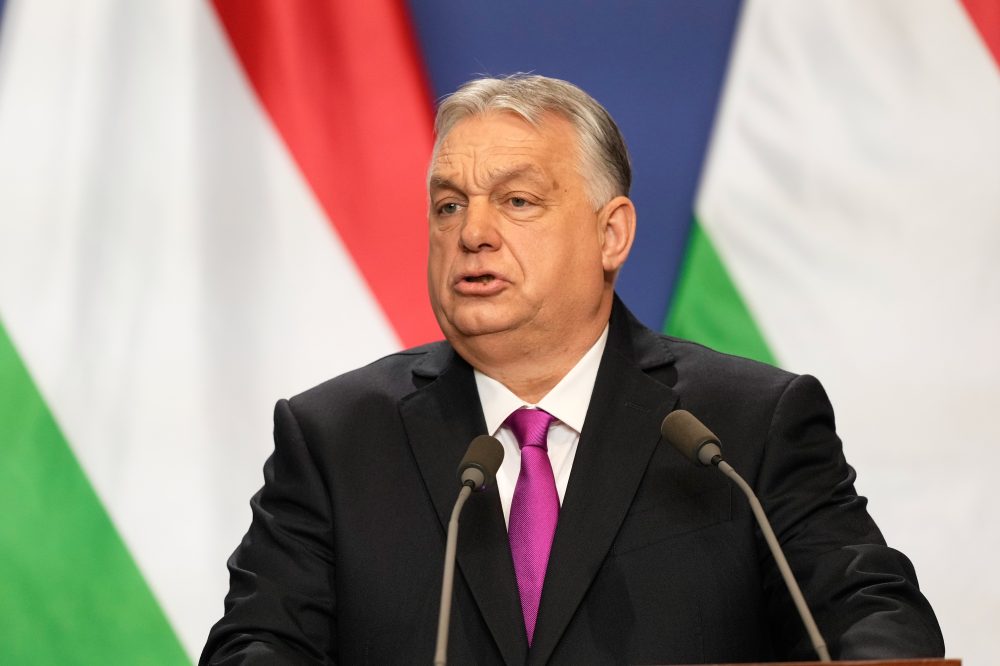

BUDAPEST, Hungary — Hungary’s Prime Minister Viktor Orbán announced Wednesday that he’s deploying additional security personnel to protect vital energy infrastructure, alleging that Ukraine is deliberately targeting Hungary’s energy supply system.
The Hungarian government has recently blamed Kyiv for intentionally blocking Russian oil shipments through the Druzhba pipeline, which passes through Ukrainian territory. Ukraine has rejected these accusations, maintaining that the pipeline serving Hungarian and Slovakian refineries was damaged during a Russian drone strike.
Speaking in a social media video, Orbán — who maintains Europe’s strongest ties with Moscow among EU leaders — accused Ukraine of implementing “an oil blockade” to pressure Hungary. He claimed Hungarian intelligence agencies have evidence that Ukraine is “preparing further actions to disrupt the operation of Hungary’s energy system,” though he offered no supporting evidence or specifics.
“We will deploy soldiers and the necessary equipment to repel attacks near key energy facilities,” Orbán stated. “The police will patrol with increased forces around designated power plants, distribution stations and control centers.”
While most European nations have dramatically cut or completely eliminated Russian energy imports following Moscow’s February 24, 2022 invasion of Ukraine, Hungary and Slovakia — both EU and NATO allies — have continued and even expanded their Russian oil and gas purchases, securing temporary waivers from EU restrictions on Russian oil imports.
This past Sunday, Hungary threatened to obstruct a massive 90-billion euro ($106 billion) EU loan package for Kyiv, and on Monday blocked new EU sanctions targeting Russia. Orbán has pledged to oppose any additional EU support for Ukraine until oil deliveries restart.
The Druzhba pipeline has remained offline since January 27. Ukrainian authorities say repairs are dangerous and the pipeline cannot function safely while Russia continues attacking energy infrastructure.
Orbán also implemented a drone flight ban Wednesday in Szabolcs-Szatmár-Bereg County, which shares a border with Ukraine.
The Hungarian leader has consistently accused Ukraine of “blackmail” aimed at forcing him to abandon his anti-Ukrainian stance, and of attempting to inflate Hungary’s energy costs ahead of a crucial election.
Orbán, who returned to power in 2010, confronts his most serious political challenge in an April 12 election. The EU’s most tenured leader and his right-wing Fidesz party are behind in most independent surveys against rising center-right opponent Péter Magyar.
Simultaneously, Orbán has initiated an intensive anti-Ukraine media blitz depicting the war-torn nation as a fundamental threat to Hungary.
His party has promoted the narrative that an electoral defeat would result in the Tisza party pulling Hungary into Ukraine’s conflict, financially ruining the country and sending Hungarian youth to die in combat.