
BERLIN – German officials unveiled a comprehensive plan Wednesday to overhaul the country’s security infrastructure and incorporate artificial intelligence tools in their battle against organized criminal networks responsible for billions in economic losses.
The initiative, announced jointly by Germany’s finance, interior, and justice departments, focuses on upgrading the nation’s customs service and federal criminal police force (BKA) through enhanced legal authority, advanced technology, and expanded personnel.
Data from the BKA indicates that organized criminal activity represents a major threat to Germany’s domestic security, generating approximately 2.64 billion euros in economic harm during 2024 alone.
“We are ensuring that the investigating authorities hit the perpetrators where it hurts most: their money,” stated Finance Minister Lars Klingbeil.
The comprehensive strategy emphasizes faster seizure of questionable assets, encompassing currency, high-end vehicles, and real estate properties linked to criminal enterprises.
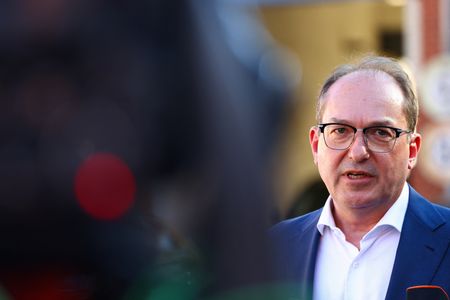
Interior Minister Alexander Dobrindt announced that the BKA will receive additional personnel, expanded authority, and stronger enforcement capabilities. The proposal includes establishing shared data analysis facilities and collaborative investigation units between customs officials and the BKA to address money laundering schemes and narcotics operations.
According to Klingbeil, customs agents and BKA investigators will gain mutual access to their respective databases while utilizing artificial intelligence technology to identify suspects and process vast amounts of investigative material.
Germany’s policing structure divides responsibilities between local forces handling routine law enforcement under individual state regulations and federal agencies managing border security, railway protection, and aviation safety.
The BKA serves as the country’s primary federal investigation unit, addressing severe and organized criminal activity spanning multiple states or international boundaries, frequently coordinating complex cross-border cases.
Justice Minister Stefanie Hubig emphasized that organized crime erodes public confidence in legal institutions and cannot be permitted to succeed, stressing the importance of rapid identification, prosecution, and punishment of offenders.
BKA statistics reveal that illegal narcotics trafficking comprised 40% of organized crime cases in 2024, representing 259 of 650 total proceedings, while money laundering appeared in 146 cases involving approximately 230 million euros in total value.