
Photographic evidence has surfaced confirming that Russia has deployed a controversial nuclear-capable cruise missile in its war against Ukraine – the same weapon that prompted the United States to abandon a crucial nuclear arms control agreement during the Trump administration.
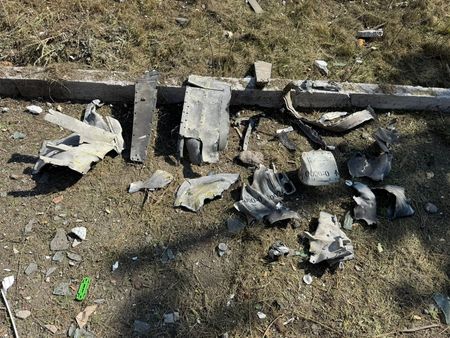
Military analysts examining missile debris fragments obtained by Ukrainian law enforcement agencies have verified Russia’s repeated use of the 9M729 cruise missile system. This marks the first visual confirmation of the weapon’s battlefield deployment.
The missile’s development originally caused President Trump to withdraw from the Intermediate-Range Nuclear Forces Treaty in 2019, a critical nuclear arms control framework from the Cold War era. Trump cited concerns that this ground-launched weapon could travel well beyond the treaty’s 500-kilometer distance restriction.
According to Ukraine’s General Prosecutor’s Office, one 9M729 missile launched by Russian forces on October 5 traveled more than 1,200 kilometers to reach its target.
Ukrainian Foreign Minister Andrii Sybiha and intelligence sources report that Moscow fired this missile system twice during 2022, followed by 23 additional launches between August and October of last year. These represent the weapon’s first documented combat applications anywhere in the world.
Law enforcement officials indicate Russia launched at least four more of these missiles at Ukrainian targets on February 17, marking previously unreported attacks. Additional strikes have occurred since October, according to the sources.
Jeffrey Lewis, a Distinguished Scholar of Global Security at Vermont’s Middlebury College, analyzed the debris images and concluded: “The images really do appear to show the 9M729. In addition to the markings, the debris are similar to other cruise missiles that are related to the 9M729.”
Defense intelligence specialists at Janes, a British-based company, determined there was strong probability the wreckage in the 10 photographs originated from the ground-launched 9M729 system.
Ukrainian law enforcement sources indicated the fragments were recovered across western Ukraine, including the Zhytomyr, Lviv, Khmelnytskyi and Vinnytsia regions.
Reuters was unable to independently confirm the exact locations and timing of when these fragment photographs were captured.
Several pieces display identifying marks, including one bearing serial number 0274 and others stamped with “9M729.” A Reuters journalist observed an additional fragment with the 9M729 marking, though Ukrainian officials requested it not be photographed for publication.
Russia’s Defense Ministry declined to provide comment regarding this report.
While Moscow has acknowledged the missile’s existence, Russian officials have disputed claims that it violated the 1987 treaty or possessed the range capabilities alleged by other nations.
The October 5 missile strike hit a residential home in Lapaiivka village near Lviv, killing five civilians. This attack occurred over 1,200 kilometers from the launch point, according to the Ukrainian General Prosecutor’s Office statement.
Ukrainian authorities are investigating the missile’s use across eight different regions throughout the country.
The original INF Treaty specifically prohibited ground-launched missiles exceeding 500 kilometers in range because their mobile launchers are more difficult to detect than aircraft or naval vessels carrying similar weapons, creating enhanced security threats.
Russia has also deployed the Oreshnik twice since November 2024 – a newly developed intermediate-range ballistic missile that would have similarly violated INF Treaty restrictions.
Both the 9M729 and Oreshnik systems can be equipped with either nuclear or conventional warheads, with ranges capable of reaching major European cities.
According to the Missile Threat database maintained by Washington’s Center for Strategic and International Studies, the 9M729 has an operational range of 2,500 kilometers.
Multiple NATO member countries in Europe are now pursuing acquisition or development of their own long-range strike capabilities to address the growing deterrence gap with Russia.
European governments have expressed growing concerns about America’s long-term commitment to continental defense, as Washington has indicated Europeans must assume primary responsibility for conventional military protection.
Last August, Russia announced it would eliminate all restrictions on deployment locations for intermediate-range missiles capable of carrying nuclear warheads.
Russia has launched thousands of drones and missiles against Ukraine since beginning its full-scale invasion nearly four years ago. Recent attacks have specifically targeted power generation and heating infrastructure during what has been Ukraine’s harshest winter of the conflict.
The strategic reasoning behind Russia’s decision to deploy the 9M729 system remains unclear.
Missile analyst Lewis expressed surprise that Russia would risk exposing sensitive military technology by using the nuclear-capable weapon in Ukraine, where military experts can analyze its combat effectiveness and examine recovered fragments.
“Russia may have a relatively small stockpile of sophisticated cruise missiles and so it’s willing to dip into its longer-range stockpile,” Lewis suggested.