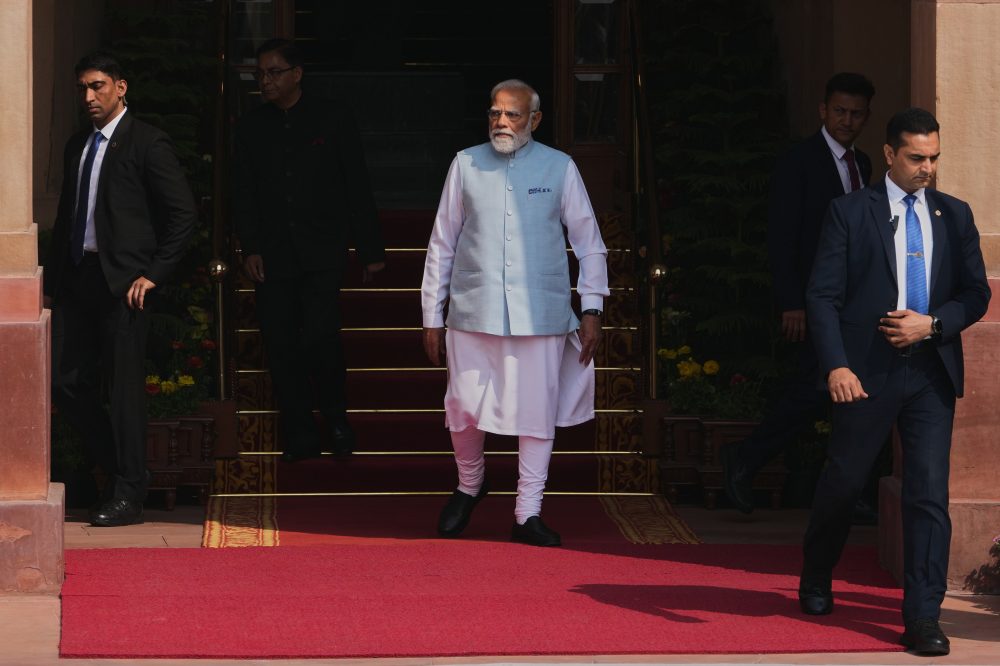
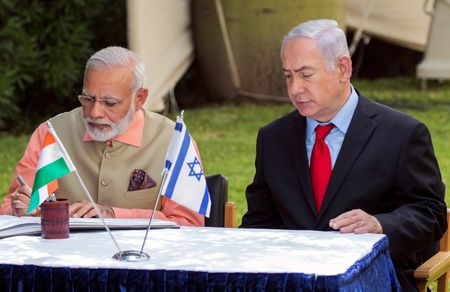
JERUSALEM — Indian Prime Minister Narendra Modi touched down in Israel Wednesday, launching a two-day diplomatic mission centered on expanding security, economic and technological partnerships between the two nations.
During his stay, Modi plans to conduct discussions with Israeli Prime Minister Benjamin Netanyahu and President Isaac Herzog, culminating in an address to the Israeli parliament Wednesday night.
“Our nations share a robust and multifaceted Strategic Partnership,” Modi posted on X. “Ties have significantly strengthened in the last few years.”
Netanyahu described their relationship as one between “personal friends” when announcing the visit earlier this week. The diplomatic engagement could provide Israel with valuable international backing at a time when relationships with numerous allies have grown strained following the Gaza conflict that erupted in October 2023.
Beyond diplomatic ties, India represents Israel’s second-largest Asian trading partner. Commerce between the two countries reached $3.62 billion during the 2025 fiscal year, based on data from India’s Ministry of Commerce and Industry.
This marks Modi’s second official journey to Israel, following his groundbreaking 2017 trip that made him the first Indian prime minister to visit the country. Netanyahu returned the gesture with his own visit to India in 2018.
During a Cabinet session Sunday, Netanyahu outlined that economic and security matters would dominate their discussions, along with technology sharing initiatives encompassing artificial intelligence and quantum computing.
“We are partners in innovation, security, and a shared strategic vision,” Netanyahu posted on X before Modi’s arrival. “Together, we are building an axis of nations committed to stability and progress.”
Modi’s close relationship with Israel represents a notable departure from India’s traditional foreign policy approach. Historically, India maintained strong support for Palestinian causes and delayed establishing complete diplomatic relations with Israel until 1992.
As a committed Hindu nationalist leader, Modi quickly demonstrated solidarity with Israel following the October 7, 2023 assault by Hamas militants, becoming among the first world leaders to offer support.
However, India joined over 100 nations earlier this month in criticizing Israel’s recent measures to expand control over the occupied West Bank while reducing the Palestinian Authority’s already limited authority.
BUDAPEST, Hungary — Hungary’s Prime Minister Viktor Orbán is betting his political future on a controversial strategy: convincing voters that Ukraine, not Hungary’s struggling economy, represents the biggest danger to their nation.
With his approval ratings slipping ahead of the April 12 election, the pro-Moscow leader has launched an extensive propaganda campaign warning Hungarians against joining the rest of Europe in backing Ukraine’s fight against Russian aggression. Orbán claims this support could drain Hungary’s finances and send Hungarian soldiers to die in combat.
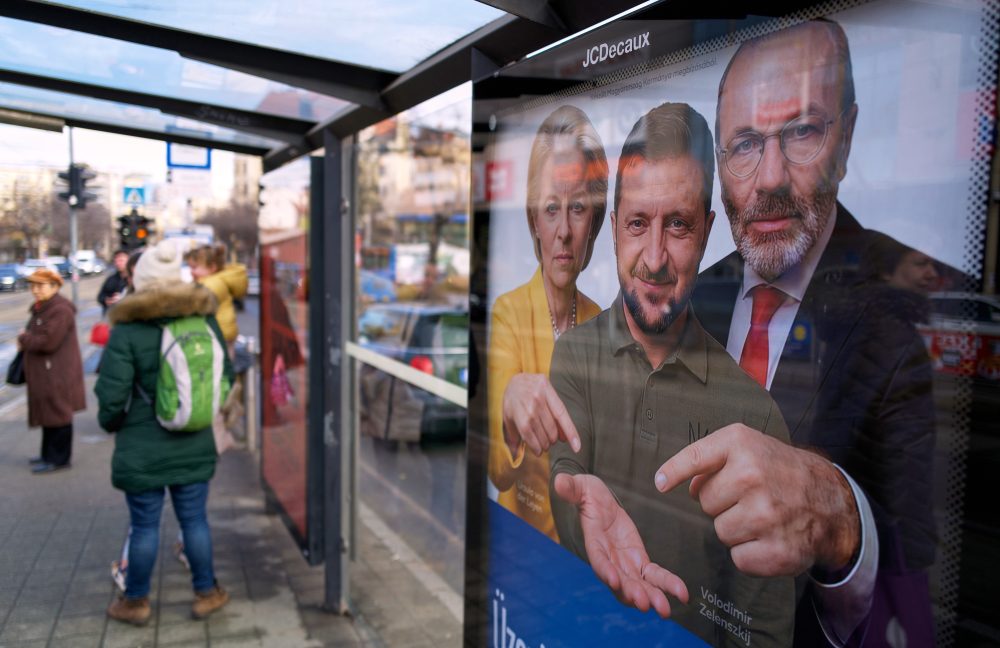
Across Hungary, government-funded billboards display computer-generated pictures of Ukrainian President Volodymyr Zelenskyy alongside European leaders, with Zelenskyy’s hand extended as though asking for cash. The imagery targets the European Union’s financial assistance to Ukraine as the conflict approaches its fifth year.
“Our message to Brussels: We won’t pay!” declare the state-sponsored advertisements.
The stakes of Hungary’s election became evident Monday when the country prevented new EU penalties against Russia after Moscow disrupted oil deliveries flowing through Ukraine. Orbán’s administration threatened to block additional pro-Ukraine measures until the energy supplies restart.
Among EU members, Orbán stands as Putin’s most reliable supporter. While the bloc’s other 26 countries have distanced themselves from Moscow since the February 24, 2022 invasion began, Hungary has strengthened its Russian ties.
Orbán defends his Putin relationship as practical, pointing to Hungary’s dependence on Russian energy imports. However, his anti-LGBTQ+ legislation, restrictions on journalists and civic groups, and branding of opponents as “foreign agents” mirror Putin’s authoritarian tactics, critics argue.
The election presents Orbán’s toughest political battle since returning to power in 2010. Independent surveys show the EU’s longest-serving leader and his Fidesz party losing ground to center-right newcomer Péter Magyar.
Magyar, a 44-year-old attorney who left Fidesz in 2024, has built his campaign around addressing inflation, strengthening public services, and fighting government corruption. The former party insider also pledges to restore Hungary’s Western partnerships and rebuild democratic institutions weakened during Orbán’s 16-year tenure.
Political scandals have boosted Magyar’s Tisza party, particularly public outrage over a presidential pardon granted to someone involved in child sexual abuse, forcing both the president and justice minister to step down.
Facing Magyar’s challenge, Orbán and Fidesz have shifted focus through a massive media blitz funded by taxpayers. Radio, television, and online advertisements accompany the billboard campaign, while a petition sent to every eligible voter claimed EU aid to Ukraine would devastate Hungary economically.
Additional advertisements, financed by a mysterious pro-government group connected to Fidesz, portray Magyar as Zelenskyy and EU manipulation, suggesting he would betray Hungarian interests and involve the country in warfare.
Hungary’s state media and government-friendly outlets echo these narratives, claiming Ukraine seeks to extend the deadly conflict that has claimed tens of thousands of lives, working with the EU to achieve this goal.
Orbán recently declared the EU, rather than Russia, poses Hungary’s greatest threat. He points to increased European defense budgets — driven by Russian aggression and American pressure for higher NATO spending — as proof the EU is preparing for war with Moscow and planning to force Hungarians into military service.
A disturbing AI-created video released by Fidesz on social media shows a young girl asking her sad mother in Hungarian: “Mommy, when is daddy coming home?”
The following scene depicts the fictional father — tied up, blindfolded, and kneeling in battlefield mud — being executed by a soldier. “We won’t allow others to decide on the fates of our families,” the voiceover states. “Let’s not take a risk. Fidesz is the safe choice.”
While some EU nations have suggested peacekeeping forces for Ukraine to oversee potential ceasefires, these troops wouldn’t engage in fighting, and participation would remain optional, explained András Rácz, a Russia specialist at the German Council on Foreign Relations.
Despite the misleading nature of many claims, Rácz noted that Fidesz has won two previous elections by stoking fears about opponents dragging Hungary into war.
“They are trying to max this out. They have nothing else,” Rácz observed. “Populists often try to define an enemy, often an imaginary one, and then offer protection to the society from that enemy. Ukraine has been ideal from this perspective.”
For years, Orbán has worked to undermine EU financial and military support for Ukraine while strongly opposing sanctions on Russian energy and officials.
Relations with Ukraine deteriorated recently when Russian oil shipments to Hungary stopped; Ukraine attributed the interruption to a Russian drone attack in late January that damaged pipeline infrastructure. Orbán characterized it as extortion.
His government responded last week by stopping diesel exports to Ukraine and threatening to reject a 90-billion-euro ($106-billion) EU loan package for Kyiv. Monday’s blocking of the 20th round of EU sanctions against Russia followed.
The anti-Ukraine messaging has found support among loyal Fidesz voters. Despite Tisza’s polling lead, victory remains uncertain.
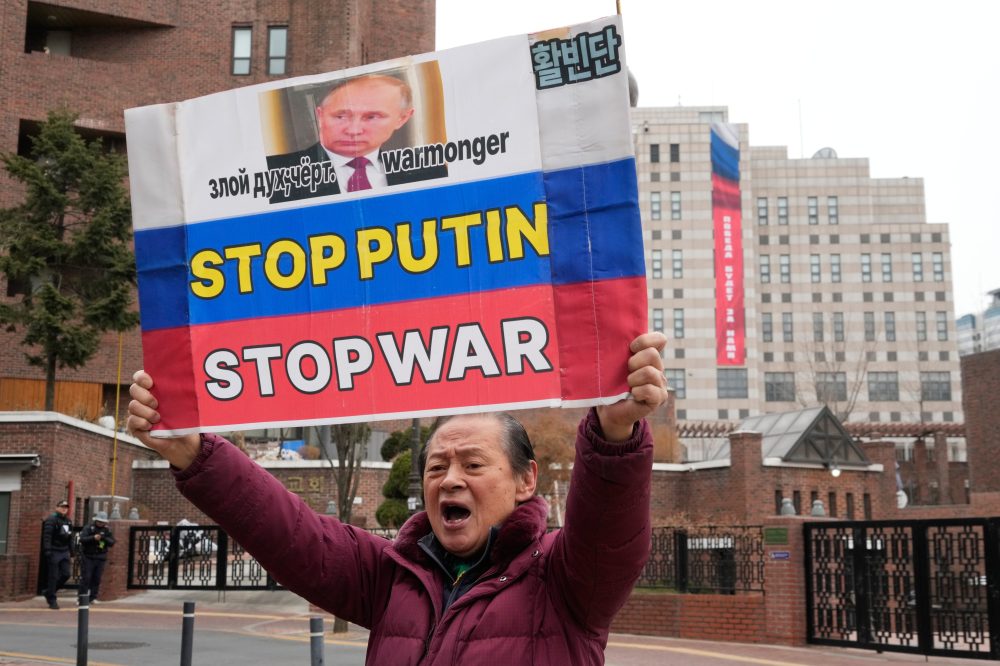
However, many Hungarians reject Orbán’s anti-Ukraine rhetoric. Sunday saw hundreds of Hungarians and Ukrainians, including many refugees, gather in central Budapest to mark the four-year anniversary of Russia’s invasion. Marching toward a protest at the Russian embassy, participants carried Ukrainian and Hungarian flags while chanting, “Stop Putin, stop the war!”
Budapest’s liberal mayor, Gergely Karácsony, told The Associated Press that Orbán’s messaging and policies represent “a betrayal not only of Ukraine, but of Hungary’s national interest.”
“I hope that this will go into history as a failed policy, but that history will also remember that there were some who stood up for what is right,” he stated.
Among the demonstrators was Ester Zhivatovska, a 19-year-old veterinary student from the Ukrainian port city of Odesa studying in Budapest. She called the billboards featuring her country’s president ridiculous.
“The main message of these billboards is that Ukraine will steal Hungarian money,” she said. “But come on, you’re using these AI images from the Hungarian budget to do what? To win elections.”
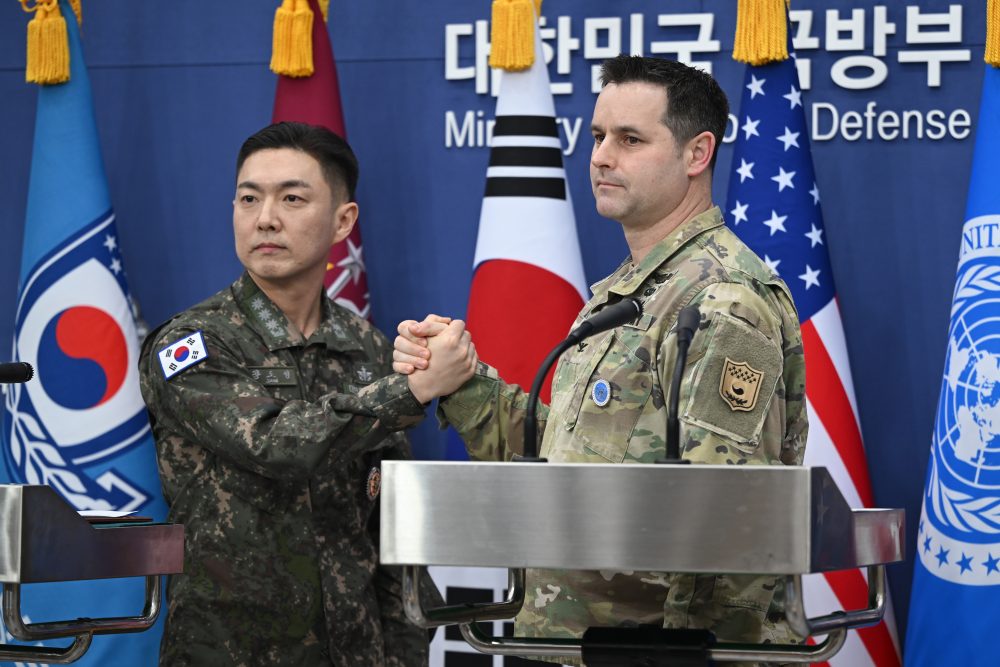
SEOUL, South Korea — American and South Korean military officials announced Wednesday they will move forward with their yearly spring training exercises in March, aimed at strengthening their joint defense capabilities while diplomatic relations with nuclear-armed North Korea remain at a standstill.
The Freedom Shield training exercises are scheduled to run from March 9-19, military officials confirmed.
Pyongyang has consistently characterized these allied military exercises as practice runs for invasion and has used them as justification to ramp up its own weapons testing and military displays. The allied nations maintain these training exercises are purely defensive.
The announcement comes during a significant political gathering in North Korea where dictator Kim Jong Un is anticipated to present his major domestic, international, and military objectives for the coming five years. So far, North Korean government media has not published any direct statements from Kim regarding relationships with Washington or Seoul during the ruling Workers’ Party congress that started last week.
Military experts believe Kim may use this congress to solidify his aggressive approach toward South Korea, repeat demands for Washington to abandon denuclearization requirements before resuming negotiations, and reveal plans to strengthen and merge his nuclear and traditional military forces, based on his recent public statements.
Freedom Shield represents one of two “command post” training programs the allies hold annually, with the second being Ulchi Freedom Shield in August. These exercises primarily use computer simulations to evaluate the allies’ combined operational readiness while incorporating new warfare scenarios and security threats.
The March training will include a field component called Warrior Shield designed to improve “training realism and combat readiness,” Col. Ryan Donald, public affairs director of U.S. Forces Korea, explained during a press briefing.
Neither South Korean nor American officials disclosed troop participation numbers for the exercises, though these events typically include thousands of military personnel.
Some observers suggest the allies may be looking to scale back these drills to encourage dialogue opportunities with North Korea.
South Korean President Lee Jae Myung, who holds liberal political views, has indicated interest in renewed inter-Korean cooperation, while some of his senior advisors have expressed optimism that President Donald Trump’s anticipated China visit in late March or April might create openings for renewed Washington-Pyongyang discussions.
Col. Jang Do-young, public affairs director for South Korea’s Joint Chiefs of Staff, stated the March exercises will exclude scenarios addressing potential North Korean nuclear attacks but will incorporate training focused on “deterring nuclear threats.” He noted that allies continue working out details for the field training component.
Kim’s nuclear weapons program has grown rapidly in recent years, now including systems that threaten American allies across Asia and intercontinental missiles potentially capable of reaching American territory, which has increased South Korea’s security worries while diplomatic efforts with Pyongyang remain stuck.
South Korea also faces challenges from escalating U.S.-China regional competition, leading Washington to push its ally to shoulder more defense responsibilities against North Korea as America shifts greater attention toward China.
North Korea has consistently refused Washington and Seoul’s appeals to restart diplomatic talks aimed at dismantling its nuclear program, which collapsed in 2019 after Kim’s second summit with Trump during the former president’s initial term ended unsuccessfully.
Kim has now prioritized Russia in his international strategy, deploying thousands of soldiers and substantial military equipment to assist Moscow’s Ukraine conflict, likely in return for assistance and military technology.
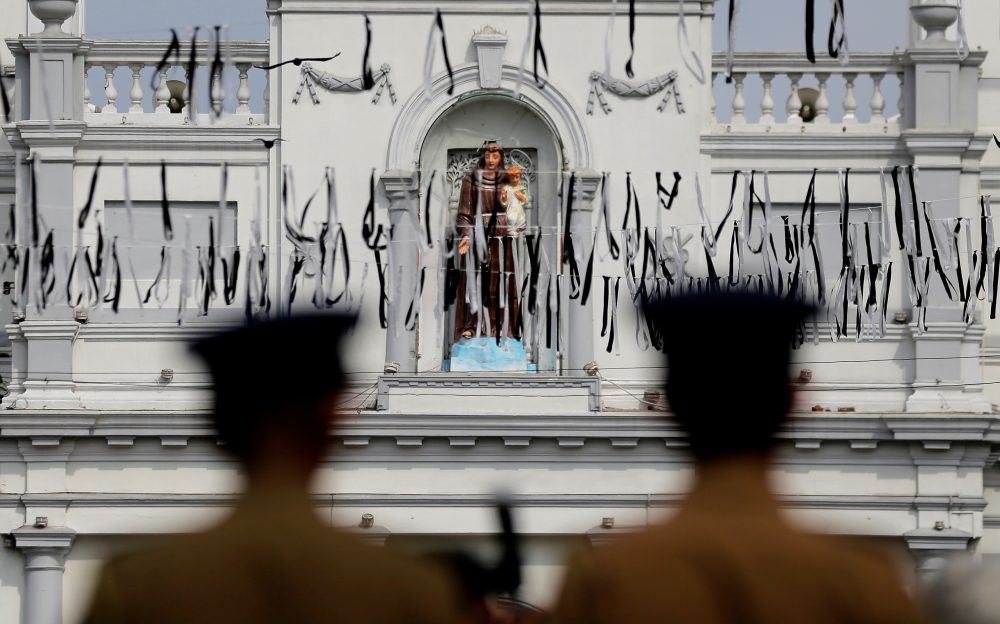
COLOMBO, Sri Lanka — Authorities in Sri Lanka have detained the nation’s former top intelligence official as part of an ongoing investigation into the devastating Easter Sunday bombings that claimed nearly 270 lives four years ago, according to law enforcement officials.
Retired army major general Suresh Salley was taken into custody Wednesday by Sri Lanka’s Criminal Investigation Department, police spokesman Fredrick Wootler confirmed.
The deadly assault occurred on April 21, 2019, when two extremist Islamic organizations executed six coordinated suicide bombings targeting Christian churches and upscale hotels frequented by tourists. Video evidence later revealed the perpetrators had sworn loyalty to the Islamic State organization.
The coordinated strikes devastated the island nation and brought back painful memories of the country’s brutal 26-year conflict with the Liberation Tigers of Tamil Eelam, commonly called the Tamil Tigers, who waged war to establish a separate homeland for Sri Lanka’s Tamil ethnic community.
Salley had earned widespread recognition as a military intelligence leader who played a crucial role in bringing the civil war to an end in 2009. According to Wootler, investigators are examining potential “links or lapses” involving Salley related to the 2019 terrorist attacks.
In the aftermath of the bombings, accusations emerged suggesting the perpetrators had connections to Sri Lanka’s intelligence apparatus.
A 2023 investigation by Britain’s Channel 4 featured testimony from an individual who claimed to have facilitated a meeting between Salley and a domestic organization called National Thowheed Jamath, which drew inspiration from the Islamic State. The alleged pre-attack meeting supposedly involved planning to destabilize Sri Lanka and help former President Gotabaya Rajapaksa secure victory in that year’s presidential contest.
The Channel 4 source, Azad Maulana, had previously served as a spokesman for a Tamil Tigers splinter faction that eventually became a government-supporting militia and assisted the Sinhalese-majority administration in defeating the separatist movement.
Maulana stated that upon viewing security footage from the bombing sites, he identified several attackers as individuals he had arranged to meet with Salley.
Sri Lanka’s defense ministry has categorically rejected any allegations of involvement in the attacks.
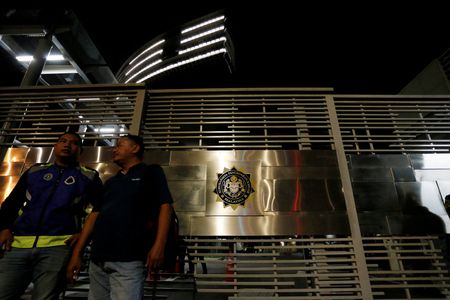
KUALA LUMPUR – A significant member of Malaysia’s governing coalition demanded Wednesday that authorities establish a royal commission to examine serious misconduct claims against the nation’s primary anti-corruption organization.
The Malaysian Anti-Corruption Commission and its leadership have faced intense public criticism after numerous news outlets this month published reports alleging wrongdoing and violations of public service regulations, along with other serious charges.
A Bloomberg investigation claimed MACC personnel were assisting business groups in taking over companies through questionable means. Reuters could not independently confirm these findings, which were based on internal documentation and witness interviews.
The anti-corruption agency dismissed the claims as “baseless,” stating Tuesday that the accusations represented an effort to undermine their corporate investigations and enforcement activities.
Nevertheless, the Democratic Action Party, a crucial component of Prime Minister Anwar Ibrahim’s government, announced it would advocate for a formal investigation into these allegations, describing the MACC’s rejection as “insufficient.”
“There must be an inquiry into the allegations made and that inquiry ought to be by way of an RCI equipped with all those powers necessary to ensure an effective and transparent probe into the matter,” stated DAP national chairman Gobind Singh Deo, who also serves as a cabinet minister, in Wednesday’s announcement.
Transport Minister Anthony Loke, who leads the DAP, indicated he would recommend creating the royal commission during Friday’s cabinet session, according to local news reports from Tuesday.
Representatives for Prime Minister Anwar did not immediately provide comment when contacted.
Officials previously established a special investigative committee this month to examine the MACC chief after a different media investigation alleged violations of shareholding regulations.
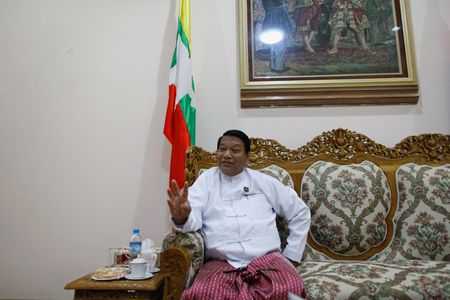
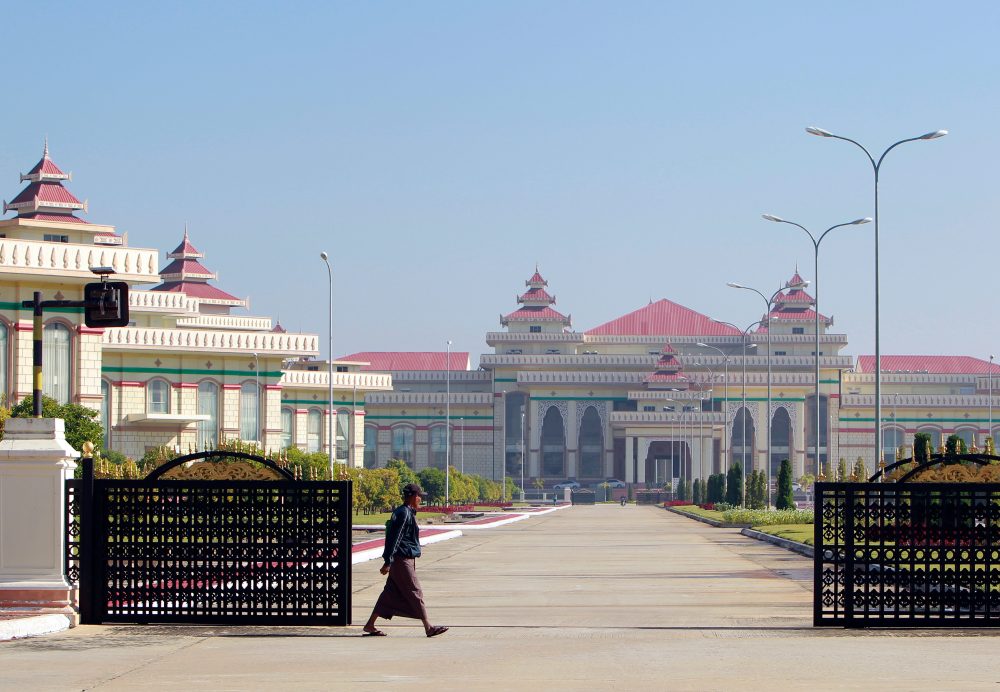
Sources within Myanmar’s ruling party reveal that a former military commander is expected to assume the influential position of parliament speaker, potentially strengthening the armed forces’ hold on power as the nation transitions away from direct military rule.
The military junta that has governed Myanmar since seizing control in 2021 plans to officially transfer authority when the new parliament convenes next month. However, top military officials are anticipated to maintain significant political influence following the Union Solidarity and Development Party’s overwhelming electoral victory. The USDP, established by the military in 2010, dominated the recent elections.
According to three USDP insiders who spoke with Reuters, party chairman Khin Yi, a former brigadier general and ex-police chief, is expected to secure the crucial lower house speaker position.
This role would grant him authority over presidential elections, legislative processes, budget approvals, and major government appointments.
The USDP has not provided any official response regarding Khin Yi’s potential appointment.
The anonymous sources, who requested confidentiality due to the sensitive nature of the matter, indicated that former generals with strong connections to junta leader Min Aung Hlaing will likely assume the first and second vice presidential positions.
“Since there are high-ranking former military officers within the party, understanding their roles, the highest possible position for him would likely be the speaker of the lower house,” one source explained regarding Khin Yi’s expected role.
Myanmar operates under a distinctive power-sharing arrangement that reserves 25% of legislative positions for military personnel, who have controlled the country for five out of the last six decades. The military also maintains control over defense, border affairs, and interior ministries.
The USDP secured 81% of contested seats in both parliamentary chambers during the recent election, which was marked by minimal voter participation, ongoing civil conflict, and absence of credible opposition candidates. This victory effectively places the legislature under military influence.
Additionally, authorities plan to establish a new five-member Union Consultative Council to supervise both military and civilian administrative functions.
Political observers suggest this structure will enable Min Aung Hlaing to pursue the presidency while retaining his military command.
Independent political analyst Htin Kyaw Aye notes that the speaker position, previously held by prominent political figures, carries more substantial influence than the vice presidency, which is largely ceremonial despite its prestige.
“This is a position with a high capacity for influence and action,” he explained. “If one cannot be president, the position of speaker of the Hluttaw (parliament) is the one that allows for the greatest exercise of power.”
An incoming USDP legislator confirmed that details about key appointments remain strictly confidential, known only to the party’s inner circle.
Two party members who attended a recent USDP gathering reported that Khin Yi, who previously served as immigration minister, was informally approached about accepting the vice presidency but indicated his preference for a parliamentary leadership role.
“He said, ‘What is certain is that I think I will be leading in the legislative sectors of one of the houses of parliament’,” one source quoted Khin Yi as stating during the meeting.
Military leaders from the United States and South Korea announced Wednesday that the two nations will hold their major annual joint training exercise, Freedom Shield, from March 9 through March 19.
Defense officials described the yearly military exercise as “defensive in nature” during a briefing, although this characterization has not stopped North Korea from consistently criticizing these training operations as preparation for an attack.
The upcoming drills will also help advance ongoing efforts to transition wartime military command from American forces to South Korean control, according to military leaders from both countries.
Previous training exercises, including the 2023 version, included comprehensive multi-domain and command center exercises designed to enhance military readiness for this transition.
South Korea has set a goal to assume full wartime military command from the United States before President Lee Jae Myung completes his presidential term in 2030.
Military officials from both nations confirmed that next month’s joint training will include practice scenarios addressing North Korea’s nuclear weapons capabilities.
While President Lee has attempted to rebuild damaged diplomatic relations with North Korea, Pyongyang has rejected these diplomatic overtures.
South Korean news outlets had earlier reported that Seoul suggested reducing the scope of field training components of Freedom Shield to support diplomatic engagement, but the United States opposed these changes.
Military officials confirmed to Reuters that discussions about modifying the field exercises remain active and will continue until the final moments before the drills begin.
Meanwhile, North Korea is currently conducting the ruling Workers’ Party’s Ninth Congress, its most significant political gathering, which military experts believe may end with a parade in Pyongyang displaying the country’s newest military equipment.
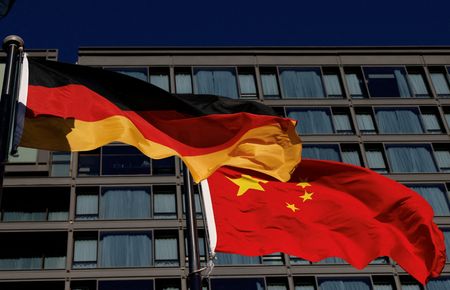
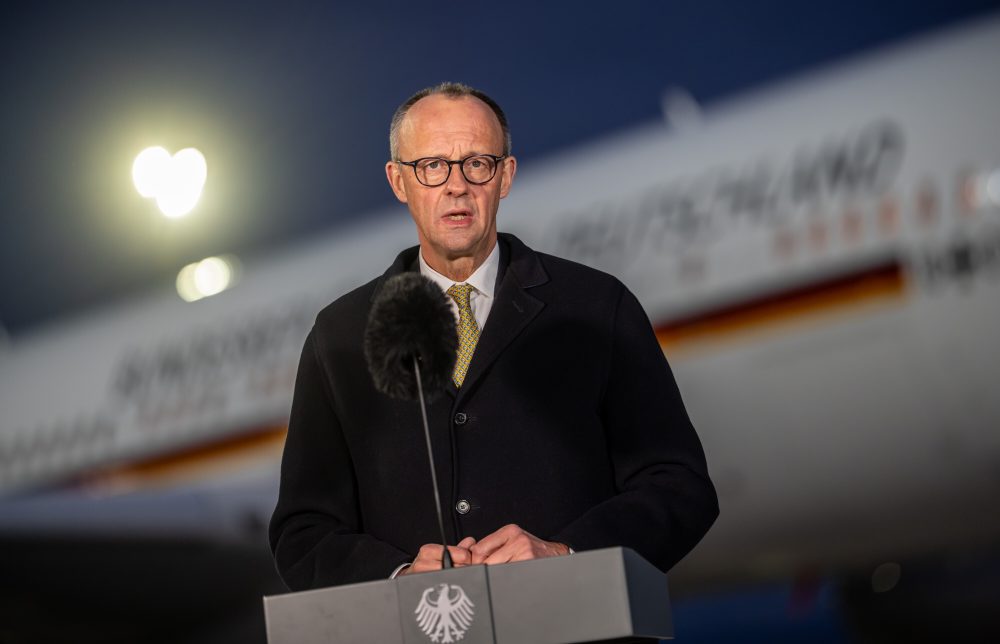
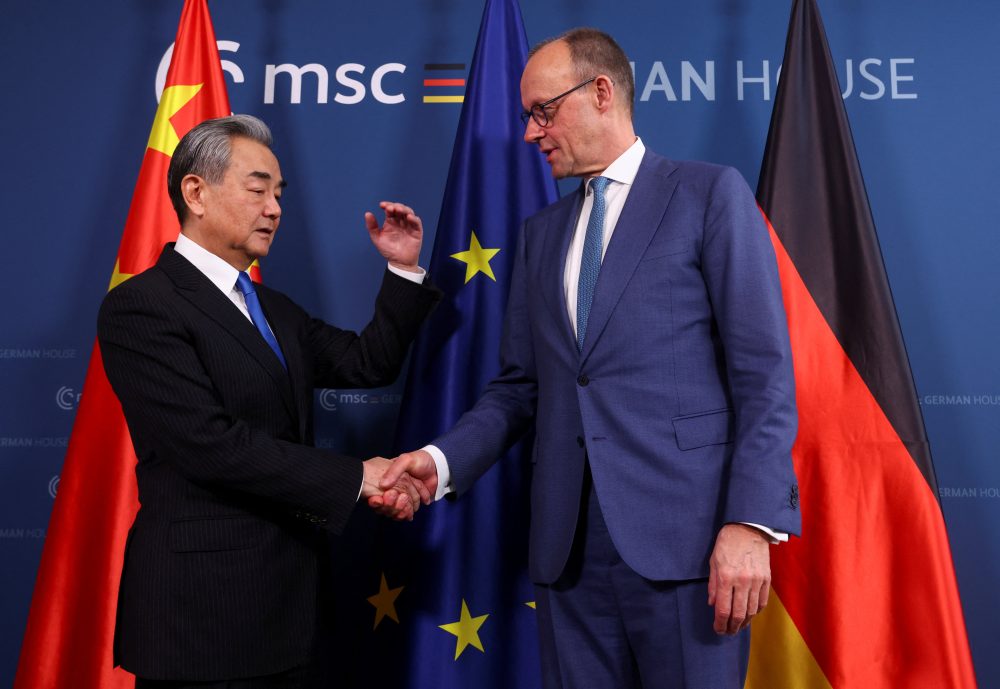
German Chancellor Friedrich Merz arrived in Beijing Wednesday for high-level discussions with Chinese Premier Li Qiang, focusing on improving economic relations between the two nations amid growing trade tensions.
During their meeting, Merz stressed Germany’s commitment to strengthening business ties with China, which became Germany’s top trading partner last year. However, he also highlighted the importance of creating more balanced and transparent cooperation moving forward.
“We have very specific concerns regarding our cooperation, which we want to improve and make fair,” Merz stated during the discussions. The chancellor faces the challenging task of restructuring an economic partnership that has become increasingly disadvantageous for German businesses.
Premier Li responded by urging both nations to collaborate in protecting global free trade and multilateral cooperation, appearing to reference the trade disputes initiated by U.S. President Donald Trump that have disrupted international commerce.
“China and Germany, as two of the world’s largest economies and major countries with important influence, should strengthen our confidence in cooperation, jointly safeguard multilateralism and free trade, and strive to build a more just and fair global governance system,” Li declared.
Beijing is positioning itself as a dependable economic ally compared to the United States, while European nations grapple with supply chain weaknesses and concerns about over-reliance on Chinese markets.
European Trade Commissioner Maroš Šefčovič warned the European Parliament Tuesday about troubling developments in China-Europe relations, including China’s increasing control over essential manufacturing industries, growing trade deficits, and declining market presence for European Union businesses in China.
This marks Merz’s inaugural trip to China, making him the most recent European leader attempting to rebuild relationships with Beijing, following similar visits by British Prime Minister Starmer and Canadian officials earlier this year.
The German delegation includes representatives from 30 major companies, featuring automotive giants Volkswagen and BMW, which are experiencing significant pressure from Chinese competitors. This competition has contributed to widening trade gaps that worry Berlin officials and fuel discussions about protective trade measures.
According to Rhodium Group analyst Noah Barkin, Germany’s manufacturing-focused economy has been especially affected by competition from Chinese producers.
China’s market appeal has shifted dramatically in recent years, as economic slowdowns have reduced consumer spending and excess manufacturing capacity has pushed Chinese companies to expand internationally.
Prior to the visit, Chinese government media highlighted opportunities for European-Chinese cooperation to provide stability while U.S. tariff policies disrupt global trade patterns.
The state-run Xinhua news agency referenced a German business survey showing that technological advances in China are benefiting German corporate headquarters.
The Global Times, a government-supported publication, suggested that China’s enormous market potential would overcome competitive concerns.
“Rhetoric such as ‘systemic rival’ and ‘de-risking’ has at times complicated Germany’s China policy,” the publication noted. “Yet the enthusiasm and actions of the German business community speak louder than political slogans.”
BEIJING — Chancellor Friedrich Merz of Germany touched down in Beijing Wednesday morning, launching an intensive two-day diplomatic mission aimed at securing better economic opportunities for German businesses and enlisting China’s support in ending the prolonged conflict between Russia and Ukraine.
The German leader landed under cloudy skies in China’s capital, marking his inaugural visit to the country since assuming office in May. Prior to his departure, Merz highlighted the significance of coordinating Germany’s approach to China within a broader European framework, pointing out the strategic timing of his visit following recent trips by French President Emmanuel Macron and British Prime Minister Keir Starmer, with U.S. President Donald Trump’s visit scheduled for early April.
“Our message from a European point of view is the same: We want partnership with China balanced, reliable, regulated and fair,” Merz said. “This is our offer. At the same time, it is what we also hope for and expect from the Chinese side.”
Since taking office, Merz has advocated for developing a more robust Europe, both in economic and defense capabilities, to navigate the shifting global landscape. European nations have faced challenges from Trump’s tariff policies and his calls for increased European self-reliance in security matters, along with his controversial demands regarding Greenland.
In his pre-departure statements, Merz acknowledged that despite existing tensions with China, “the big global political problems can no longer be tackled today without involving Beijing.” He emphasized the necessity of Chinese cooperation in addressing international crises, particularly the Ukraine situation, observing that “Beijing’s voice is heard, including in Moscow.”
European governments have expressed disappointment over China’s limited efforts to influence Russia toward ending the military action. Beijing has continued its commercial and diplomatic relationships with Russia while claiming neutrality in the conflict. Chinese Foreign Ministry spokesperson Mao Ning stated this week, “We hope all parties will seize the opportunity to reach a comprehensive, lasting and binding peace agreement.”
Merz joins a series of international leaders visiting Beijing as China seeks global allies to counter Trump’s tariff strategies and his challenges to established international institutions that have shaped post-World War II global relations.
“At a time when the world is experiencing turbulence and transformation, China and Germany, as major economies and advocates of multilateralism, share the responsibility to uphold the stability of global industrial and supply chains and oppose protectionism and economic coercion,” China’s official Xinhua News Agency said in a commentary.
Trade imbalances present a significant concern, with Germany’s purchases from China climbing 8.8% to 170.6 billion euros ($201 billion) in the past year, while German exports to China dropped 9.7% to 81.3 billion euros ($96 billion).
European officials are encouraging Chinese manufacturers to establish production facilities within their borders while simultaneously calling for China to address manufacturing overcapacity that has depressed prices in sectors like electric vehicles and solar energy equipment. They also seek the elimination of obstacles that foreign businesses encounter in the world’s second-largest economy.
“We also want to discuss how we can find a remedy, for example, where systemic overcapacities have arisen, where there are export restrictions and where there are access restrictions … that distort and prevent competition,” Merz said.
TOKYO — Japanese officials confirmed Wednesday that one of their citizens has been held in Iranian custody since late January, with Tokyo now calling for the person’s immediate freedom.
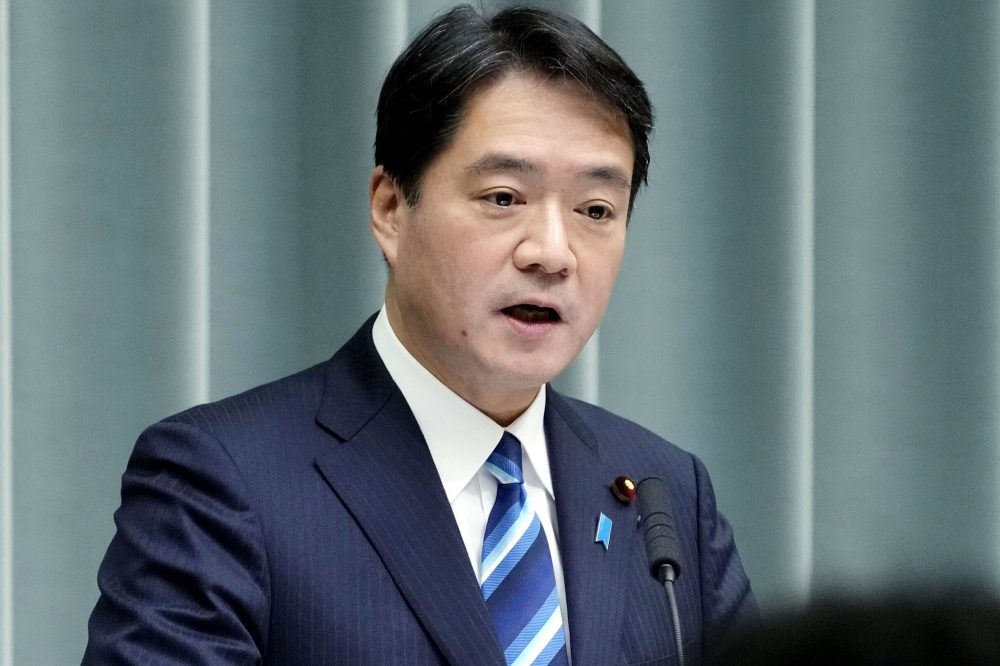
Deputy Chief Cabinet Secretary Masanao Ozaki acknowledged the detention during questioning about international media coverage of the situation, stating the Japanese citizen was taken into custody on January 20th. Ozaki declined to provide additional information about the case, referencing privacy concerns.
According to Ozaki, Japanese officials are maintaining communication with both the detained individual and their relatives while offering appropriate assistance.
Indian Prime Minister Narendra Modi touched down in Israel Wednesday for a crucial two-day diplomatic mission, as escalating military tensions between Washington and Tehran cast a shadow over the Middle East region.
This marks Modi’s return to Israel nearly nine years after making history as the first Indian prime minister to visit the country in 2017. During that groundbreaking trip, Modi and Israeli Prime Minister Benjamin Netanyahu famously walked barefoot together along a beach in Haifa’s northern port area.
The two leaders, who remain in office and consider themselves personal friends, plan to focus their discussions on artificial intelligence cooperation and defense partnerships. The timing coincides with Israel’s push to expand its military equipment exports globally.
According to an Israeli government representative, the visit will “pave the way for new partnerships and collaborations across many fields.” A foreign ministry spokesperson indicated that diplomatic relations between the nations stand ready for a major enhancement.
Modi’s itinerary includes addressing Israel’s parliament, known as the Knesset, and participating in a wreath-laying ceremony at Yad Vashem, the country’s primary Holocaust remembrance site.
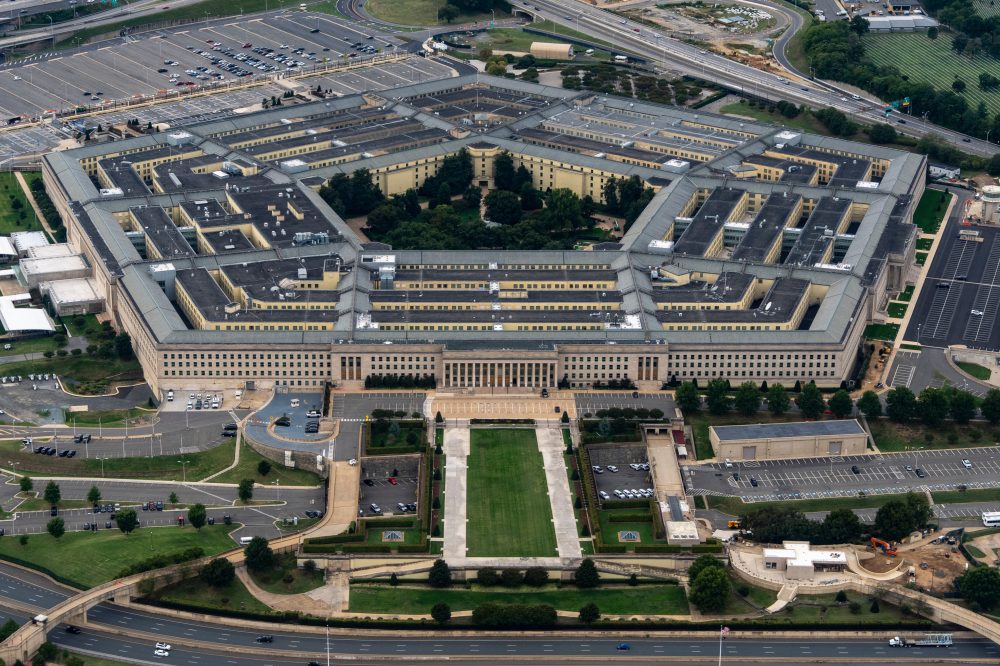
The diplomatic visit unfolds against a backdrop of mounting regional security concerns. The Pentagon has positioned substantial naval forces near Iran’s coastline in preparation for potential military action against the Islamic Republic, following stalled negotiations regarding Tehran’s nuclear development program. Additionally, an American aircraft carrier has been dispatched to the Mediterranean Sea, heading toward Israeli waters.
Any potential U.S. military action against Iran could trigger Iranian counterattacks against Israeli targets and American military installations throughout Gulf Arab nations. This scenario particularly concerns India, as millions of Indian workers in these countries send billions of dollars in remittances back home annually.
Kabir Taneja from the Observer Research Foundation, an Indian policy research organization, emphasized that New Delhi opposes regional conflict escalation.
“I’m sure those kind of messages have been delivered in the past and will be delivered during this visit as well,” Taneja stated.
Israeli foreign ministry officials confirmed that discussions with a “regional aspect” would likely occur throughout the visit.
During a recent cabinet session, Netanyahu characterized India as part of a future “axis” of allied nations united in opposing “the radical Shi’ite axis” and “the emerging radical Sunni axis.” Iran operates under a Shi’ite Muslim theocratic government system.
“(Our) cooperation can yield great results and, of course, ensure our resilience and our future,” Netanyahu declared.
However, Taneja noted that while India shows interest in purchasing Israeli military technology, New Delhi would likely resist joining any formal military alliance due to its traditional policy of international non-alignment.
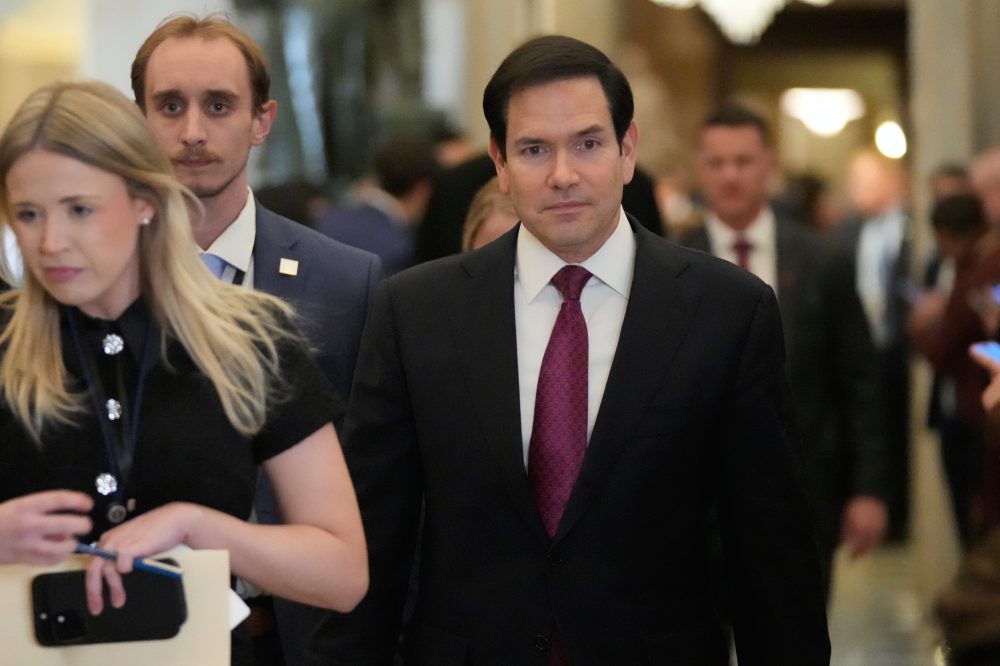
Secretary of State Marco Rubio arrived in St. Kitts and Nevis Wednesday to meet with Caribbean Community leaders who have voiced concerns about the direction of Trump administration policies affecting their region.
Rubio’s visit to the CARICOM summit follows last month’s military operation that resulted in the arrest of Venezuela’s former leader Nicolás Maduro, along with increased enforcement actions against alleged drug trafficking and heightened pressure on Cuba.
In Tuesday night’s State of the Union speech, President Trump described Maduro’s capture as “an absolutely colossal victory for the security of the United States. And it also opens up a bright new beginning for the people of Venezuela.”
The 15-member Caribbean bloc has convened to address urgent regional challenges as the Trump administration implements what it calls a modern version of the Monroe Doctrine to strengthen U.S. influence across the Western Hemisphere.
Trump stated his administration is “restoring American security and dominance in the Western Hemisphere, acting to secure our national interests and defend our country from violence, drugs, terrorism and foreign interference.”
Regional leaders have raised objections to several administration policies, including requirements that countries accept deportees from third nations, end Cuban medical programs, and limit ties with China.
St. Vincent and the Grenadines’ newly elected Prime Minister Godwin Friday expressed concerns similar to those heard from European officials, stating the Caribbean faces challenges “from inside and out. International rules and practices that we have become used to over the years have changed in troubling ways.”
During Tuesday’s opening session, St. Kitts and Nevis Prime Minister Terrance Drew, who chairs CARICOM, declared the region “stands at a decisive hour.”
“The global order is shifting,” Drew explained. “Supply chains remain uncertain, energy markets fluctuate and climate shocks intensify.”
Drew and other officials discussed shifting international dynamics and emphasized the need to address Cuba’s humanitarian crisis, a point also highlighted by Jamaican Prime Minister Andrew Holness.
“It must be clear that a prolonged crisis in Cuba will not remain confined to Cuba,” Holness cautioned. “It will affect migration, security and economic stability across the Caribbean basin.”
Holness affirmed that Jamaica “stands firmly for democracy” while also “supports constructive dialogue between Cuba and the U.S. aimed at de-escalation, reform and stability.”
Bahamian Foreign Minister Fred Mitchell told The Associated Press Tuesday before the summit that while he’s unsure which specific issues will arise in discussions with Rubio, he anticipates comprehensive talks about U.S.-Caribbean relations.
“It is about mutual respect and a rules-based order,” Mitchell explained. “Those are some of the things we would expect from the meeting, and we are also available for any private dialogue with Mr. Rubio.”
The State Department hasn’t disclosed which officials will meet with Rubio Wednesday, but indicated he plans to explore ways to enhance regional security, stability, trade and economic development through both group sessions and one-on-one meetings.
Caribbean leaders are also scheduled to address additional topics including security concerns, reparations, climate change, financing issues, and establishing a unified market system.
Rubio’s Caribbean trip occurs more than a month following Maduro’s capture by U.S. forces and his transfer to America to face drug trafficking allegations.
Since early September, U.S. operations have resulted in at least 151 deaths during strikes against small vessels suspected of drug smuggling. Monday’s most recent attack claimed three lives in Caribbean waters. U.S. officials have not released evidence confirming these boats were transporting narcotics.
Trinidad and Tobago Prime Minister Kamla Persad-Bissessar has consistently supported these operations. Tuesday she again expressed gratitude to Trump, Rubio and U.S. military forces “for standing firm against narcotrafficking” and for their assistance with national security issues.
“The crime is so bad, I cannot depend on just my military, my protective services,” she stated.
Cuba’s circumstances are anticipated to be a central focus during the CARICOM gathering.
Cuba’s U.N. resident coordinator Francisco Pichón informed AP Monday that the U.S. oil embargo is blocking humanitarian assistance from reaching communities still recovering from Hurricane Melissa, which hit eastern Cuba in late October as a Category 3 hurricane.
Pichón pointed out that the energy restrictions and fuel shortages “affect the entire logistics chain involved in being able to work in Cuba at this time, anywhere in the country.”
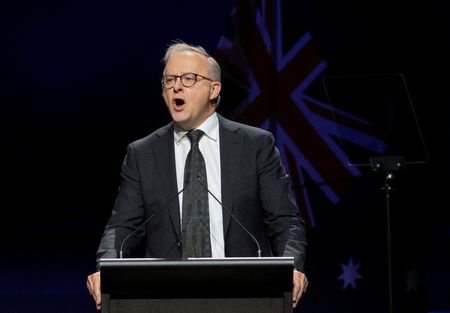
Australian Prime Minister Anthony Albanese spent several hours away from his official residence Tuesday evening after authorities received what turned out to be a false bomb threat targeting his Canberra home.
The Prime Minister was safely evacuated from The Lodge late Tuesday night as a security precaution. He was able to return home after investigators determined no suspicious materials were present on the property.
Law enforcement officials confirmed there is no continuing danger to public safety.
Speaking at a Melbourne event Wednesday, Albanese reflected on the incident and called for cooler heads to prevail across the country.
“I think it’s just a reminder, take every opportunity to tell people, turn the heat down for goodness sake,” Albanese stated.
“We can’t take these things for granted,” he added.
According to Australia’s public broadcaster ABC, the security threat was connected to Shen Yun, a traditional Chinese dance company that China has prohibited and which plans to tour Australia this month.
The threatening message was reportedly sent to local event organizers, falsely stating that explosive devices had been positioned near the Prime Minister’s home and would be set off if the dance company proceeded with their Australian shows, ABC reported.
Law enforcement representatives refused to provide details about where the threat originated.
The New York-headquartered Shen Yun organization has not yet provided a response to requests for comment.
On Wednesday morning, Albanese shared an Instagram post featuring his dog positioned near a doorway at The Lodge, along with a message expressing gratitude to police officers for their professional response.
Government statistics released Wednesday reveal that South Korea’s fertility rate has climbed for the second year in a row during 2025, offering hope that the nation may be emerging from a prolonged demographic decline that has persisted for nearly ten years.
The Ministry of Data and Statistics reported that South Korea’s total fertility rate – representing the average number of children a woman is projected to bear throughout her childbearing years – reached 0.80 in 2025, an increase from 0.75 recorded in 2024.
The Asian nation experienced a resurgence in births beginning in 2024, driven by post-pandemic recovery and government initiatives, following eight straight years of declining birth rates that culminated in the globe’s lowest fertility rate of 0.72 in 2023.
Statistical data shows 5.0 births per 1,000 residents in 2025, compared to 4.7 in 2024. This figure exceeds China’s 5.6 rate from last year, Taiwan’s 4.6, and Japan’s 5.7 in 2024, where declining trends persist.
The recovery rate has surpassed the government’s optimistic projections of 0.75 for 2025 and 0.80 for 2026, with forecasts suggesting the total fertility rate could exceed 1.0 per woman by 2031.
Marriage statistics, which typically predict birth trends with a one to two-year delay, increased 8.1% in 2025 following a record 14.8% surge in 2024.
“The biggest part is that marriages are increasing a lot accumulatively,” ministry official Park Hyun-jung explained during a press conference. She highlighted growth in the population of people in their thirties – the typical age for marriage and childbearing – along with shifting social perspectives.
Seoul experienced the most dramatic increase in births, with the capital’s fertility rate reaching 0.63, representing an 8.9% jump from 0.58 in 2024, despite remaining the nation’s lowest rate.
Hallym University sociology professor Shin Kyung-ah cautioned that the figures require deeper analysis due to statistical factors like demographic composition shifts influencing the increase.
“Still, it is meaningful as an indicator suggesting positive changes, which will, at least indirectly, also help make people become more positive about having a baby,” Shin commented.
A government survey conducted every two years in 2024 found that 52.5% of South Koreans held favorable views toward marriage, rising from 50.1% in 2022. Citizens indicated their ideal family size averaged 1.89 children.
Birth numbers increased 6.8% to 254,457 last year, representing the largest percentage growth since 2007, while deaths climbed 1.3% to 363,389, causing the population to contract naturally for the sixth straight year.
President Lee Jae Myung’s administration intends to develop a comprehensive five-year demographic policy plan this year, addressing concerns about economic disruption from rapid population aging.
Officials also plan to expand existing childbirth support policies implemented in recent years and introduce programs to recruit skilled international workers as the domestic workforce shrinks.
The nation’s potential economic growth rate, currently estimated at approximately 2% annually, has dropped six percentage points over the past three decades – a steeper decline than most major economies – and could fall to 0.6% between 2045-2049, according to central bank projections.
Credit rating agencies have warned that South Korea’s government finances face pressure from increasing social welfare costs. The country’s public pension system, ranking third globally with $1 trillion in assets, is projected to become insolvent by 2071.
President Lee has advocated for regional collaboration on demographic challenges and proposed hosting the Asia-Pacific Economic Cooperation group’s inaugural population policy forum in South Korea this year during last year’s summit.
During January visits to China and Japan, Lee secured separate agreements with President Xi Jinping and Prime Minister Sanae Takaichi to pursue joint efforts addressing aging populations.
Government projections from 2022 indicate South Korea’s current population of 51.8 million could decrease by nearly one-third to 36.2 million by 2072.
Japanese government officials announced Wednesday that one of their citizens has been held in Iranian custody and are pressing Tehran for the individual’s immediate freedom.
Deputy Chief Cabinet Secretary Masanao Ozaki revealed during his regular press conference that the detention occurred on January 20, though he declined to provide additional information about the circumstances or the identity of the person being held.
Japan has issued forceful appeals to Iranian officials for the prompt release of their detained citizen, according to Ozaki’s statements to reporters.
A respected Russian academic known for his expertise on North Korea was taken into custody by Latvian police while presenting a lecture, according to reports from Russian news outlets.
Andrei Lankov, who serves as a history professor at Seoul’s Kookmin University, verified to Russian business publication RBK that law enforcement officers interrupted his North Korea presentation and subsequently added him to the nation’s prohibited persons list. He was later transferred to immigration authorities, though the specific grounds for his arrest remain unclear. The incident was also covered by Russia’s Tass news service.
Speaking to RBK around 11 p.m. Moscow time, Lankov reported that he remained in detention, noting that legal representatives were handling his case while friends assisted with practical matters.
Representatives from Kookmin University in South Korea confirmed they were monitoring the developing situation involving their faculty member. Attempts to reach Lankov directly through his mobile phone were unsuccessful.
Born in what was then Leningrad (now St. Petersburg), Lankov spent considerable time in North Korea during the 1980s as part of an exchange program and has dedicated his academic career to studying the isolated nation. After working in South Korea and Australia during the 1990s, he relocated to Seoul in 2004 to begin his current teaching position. He maintains citizenship in both Russia and Australia.
The scholar has gained recognition for his pragmatic analysis of North Korea, frequently characterizing the regime as a calculating government that maximizes scarce resources while playing major world powers against each other for survival. He has also publicly criticized Russia’s military actions in Ukraine and Moscow’s deployment of North Korean forces in support of its military operations.
Earlier this year in April, a Moscow court allegedly imposed a fine of 10,000 rubles (approximately $130) on Lankov for participating in activities connected to an organization deemed “undesirable” by Russian authorities. At that time, Lankov informed RBK that journalists had been the source of his information about the legal proceedings.
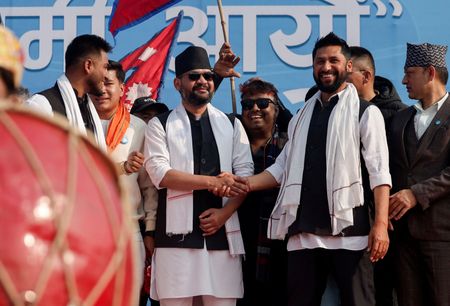
A former rapper who transitioned from music to politics is positioned to become Nepal’s next prime minister, marking a dramatic shift in the Himalayan nation’s political landscape.
Balendra Shah, widely recognized by his stage name ‘Balen,’ emerged as the leading candidate following Nepal’s youth uprising in September that resulted in 77 deaths and led to Prime Minister K.P. Sharma Oli’s resignation. The 35-year-old politician addressed his millions of social media followers with a direct message at the time.
“Dear Gen Z, the resignation of your killer has come,” Shah posted. “Now your generation will have to lead the country. Be prepared.”
The musician-turned-politician, who secured the mayor’s office in Nepal’s capital city Kathmandu during 2022, now leads polling projections for the March 5 general election. While Nepal lacks comprehensive polling data, four political experts and regional media outlets identify him as the top contender, potentially displacing the nation’s established political leadership.
“Balen Shah is so popular that now buses coming to Kathmandu have stickers on them saying, ‘Headed to Balen’s city’,” noted Bipin Adhikari, who specializes in constitutional law at Kathmandu University.
Shah’s potential victory would represent a remarkable transformation for someone who gained initial recognition through rap music that challenged Nepal’s power structure. His success could fundamentally alter the political dynamics of the small nation situated between China and India, which has traditionally been controlled by a few dominant parties.
The established parties include Oli’s Communist Party of Nepal (Unified Marxist–Leninist), which maintains closer ties to China, and the moderate Nepali Congress, which aligns more closely with India.
Shah’s Rastriya Swatantra Party (RSP) represents a centrist alternative that promises in its platform to pursue “balanced foreign relations” with both neighboring powers.
Much of Shah’s national popularity stems from his achievements as Kathmandu’s mayor, where he concentrated on enhancing city infrastructure, particularly waste management systems, while improving service delivery in areas like healthcare.
However, he has also drawn criticism, including from Human Rights Watch, for allegedly directing police to confiscate property belonging to street vendors and individuals without land ownership.
Shah, who stepped down from his mayoral position in January to pursue the national election, has not responded to interview requests or written questions from Reuters.
Distinguishing himself from Nepal’s traditional political establishment of older career politicians, Shah typically avoids conventional media outlets.
His extensive social media reach, encompassing more than 3.5 million followers across platforms like Facebook, allows him to communicate directly with Nepal’s younger population.
Shah’s recent Facebook activity features carefully selected campaign photographs, consistently showing him wearing his signature dark sunglasses and sporting a graying beard.
“What makes Balen special is that he stays connected with the youth through his short messages on social media, but it would not be a cakewalk for him after becoming prime minister,” observed independent political analyst Puranjan Acharya.
Shah grew up with a father who practiced traditional Ayurvedic medicine and a mother who managed their household. According to an associate, he developed an early interest in poetry that eventually led to his passion for rap music, drawing inspiration from American artists including Tupac Shakur and Curtis “50 Cent” Jackson.
Following his undergraduate civil engineering studies in Nepal, Shah pursued a master’s degree in structural engineering in southern India, having already established himself as a prominent rapper in his homeland.
His musical compositions, frequently targeting Nepal’s governing elite, resonated strongly with citizens in a nation where approximately 20% of the 30 million residents experience severe poverty.
Shah’s 2019 release “Balidan” – meaning sacrifice in Nepali – has accumulated over 12 million YouTube views and remains among his most recognized works.
The song’s verses include: “Let me speak, sir, it is not a crime, Let me open the mind, I am not a curse to the palace, My mind is not bad, it is not afraid to speak the truth.”
Shah officially entered political life by running as an independent candidate for Kathmandu mayor, campaigning under the motto “Time for change.” He secured victory with a substantial margin.
In December, Shah aligned with the RSP, headed by former television personality Rabi Lamichhane, accepting the party’s nomination for prime minister.
The RSP’s platform commits to generating 1.2 million employment opportunities and reducing forced migration, addressing widespread frustration over joblessness and inadequate wages that have driven millions of Nepalis to seek employment abroad.
Additional party promises include increasing Nepal’s per capita income from $1,447 to $3,000, expanding the national economy to $100 billion GDP, and establishing universal healthcare coverage – all targeted for completion within five years.
Political observers suggest that Shah’s potential national success will largely depend on his ability to assemble qualified personnel capable of reforming Nepal’s stagnant and corruption-plagued administrative structure.
“It needs a team, experts and support,” Acharya explained. “Under the existing state apparatus, he can’t perform and he will be finished like wood attacked by termites.”
European Union officials are sounding alarms about potential security threats following a massive breakout from a Syrian detention facility housing family members of Islamic State suspects.
A confidential EU document dated February 23 and obtained by Reuters indicates that most detainees have fled the al-Hol camp in northeastern Syria, with their current locations unknown.
“This raises concerns about how terrorist groups might seek to capitalise on the current situation to increase recruitment efforts among escapees,” the internal memo states.
The al-Hol facility, located close to Iraq’s border, served as a primary holding center for family members of suspected ISIS fighters captured during the American-supported military operations against the extremist organization in Syria.
The camp’s oversight shifted dramatically in January when forces loyal to Syrian President Ahmed al-Sharaa seized control from Kurdish-led Syrian Democratic Forces, who had maintained security at the site for years.
According to official records cited by Reuters, the facility housed 23,407 individuals on the day before the government takeover, including 6,280 foreign nationals representing over 40 countries.
Earlier this month, U.S. military forces completed transferring 5,700 male Islamic State fighters from Syrian prisons to Iraq, though this fell short of the originally planned 7,000 transfers, the EU document notes.
The European memo describes the transition as a “chaotic takeover” that “led to the collapse of security and services in the al-Hol camp, triggering the escape of a significant portion of its population.”
Both the United Nations refugee agency operating in Syria and Syrian government officials “have confirmed that an uncontrolled exodus has occurred over the past few weeks,” according to the document.
Syrian authorities have criticized the SDF for abandoning al-Hol on January 20 without proper coordination. The SDF maintains its forces were “compelled” to retreat from the camp to defend cities facing imminent threats.
A Syrian security official told Reuters that authorities are collaborating with international partners to establish a specialized unit to “pursue those who are wanted.”
Beyond al-Hol, the SDF had overseen multiple detention centers throughout northeastern Syria, including facilities holding thousands of Islamic State militants and a second camp at Roj housing additional jihadist family members.
The EU assessment suggests Damascus has “limited” capability to manage these installations and faces “significant operational challenges.” The memo indicates that recent developments have derailed the government’s plans to gradually close al-Hol camp, creating “grave security concerns.”
Combined, the al-Hol and Roj camps held approximately 25,000 people, mostly women and children, “with many of these being highly radicalised and living in degrading humanitarian and security conditions,” the European document states.
The SDF continues controlling the Roj facility for now. Last week, Kurdish forces released 34 Australian citizens from Roj, though they later returned. Australia has refused to assist Islamic State families seeking repatriation. The Roj camp also houses British-born Shamima Begum.
European officials express “reason for concern regarding the possible escape of families” from Roj once Syrian government forces assume control.
Neither Syria’s Information Ministry nor U.S. Central Command provided immediate responses to requests for comment.
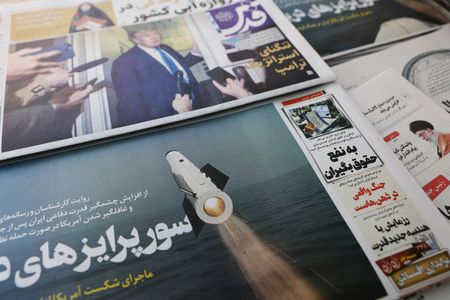
WASHINGTON — On Tuesday, the Central Intelligence Agency reached out directly to Iranian citizens, publishing detailed guidance in their native language on how to safely establish contact with American intelligence operatives while President Donald Trump weighs potential military action against the Islamic Republic.
This latest outreach represents part of an ongoing intelligence recruitment campaign that has targeted speakers of Farsi, Korean, Russian, and Mandarin with secure communication methods. Tuesday’s Farsi message, distributed across X, Instagram, and YouTube platforms, arrives during a particularly volatile period in American-Iranian diplomatic relations, while Iran’s religious leadership confronts fresh domestic unrest.
The United States has positioned its most substantial military presence in the Middle East region in decades amid escalating Iranian tensions. In January, Trump issued military threats following Tehran’s harsh response to nationwide demonstrations, before redirecting attention toward Iran’s controversial nuclear activities and demanding diplomatic negotiations. Additional nuclear discussions are scheduled for this week.
Demonstrating continued internal opposition, Iranian university students staged anti-government demonstrations in Tehran on Monday.
“Hello. The Central Intelligence Agency hears you and wants to help,” the intelligence service stated in the message, based on English translations. “Here are some tips on how to make a secure virtual call with us.”
The Persian-language content accumulated millions of views in mere hours following its release.
While the agency maintains secrecy regarding specifics about new contacts or intelligence sources generated from previous recruitment materials, Director John Ratcliffe has confirmed these efforts are producing results.
“Last year, CIA’s Mandarin video campaign reached many Chinese citizens, and we know there are many more searching for a way to improve their lives and change their country for the better,” Ratcliffe stated earlier this month during the release of a new Mandarin-language video.
The intelligence agency’s recommendations include utilizing virtual private networks, or VPNs, to bypass government internet censorship and monitoring systems, along with employing untraceable temporary devices. The CIA additionally advised prospective sources to utilize private browsing software and eliminate their internet activity records for protection.
The guidance details methods for contacting the CIA through its official website or via the darknet, an internet section accessible only through specialized anonymity tools. The CIA has published comparable instructions in Russian as well.
Iran’s United Nations Mission spokesperson has not yet responded to requests for comment regarding the new recruitment video.
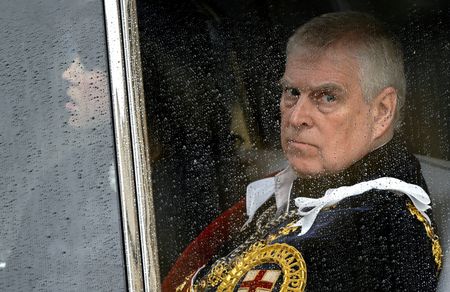
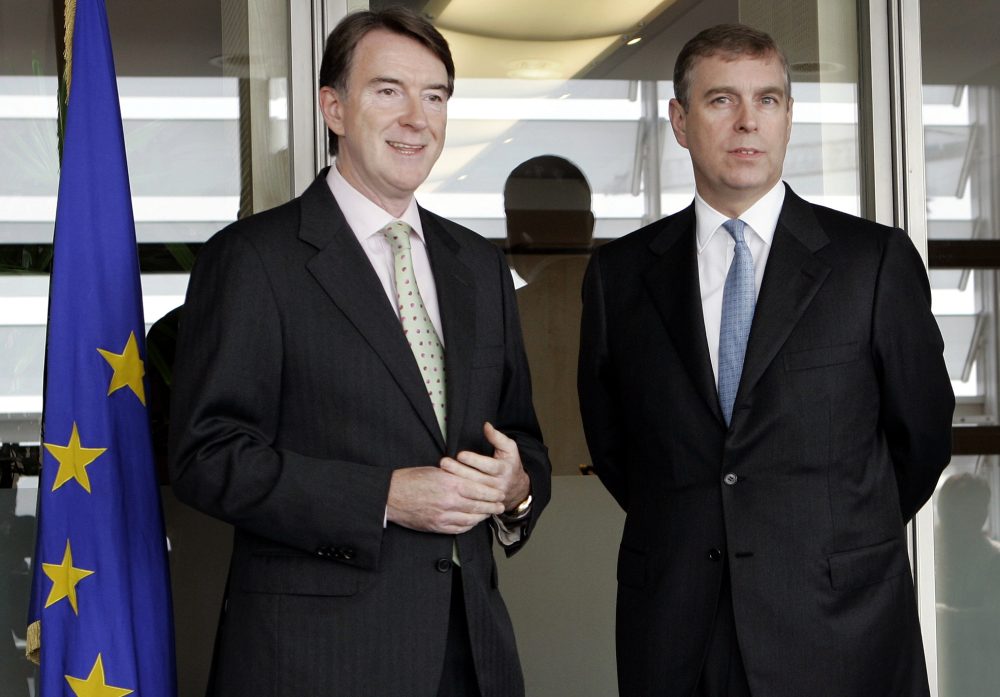
LONDON – British Prime Minister Keir Starmer’s administration announced Tuesday it will make public records connected to Andrew Mountbatten-Windsor’s selection as a trade representative, as questions mount about his relationship with convicted sex offender Jeffrey Epstein.
The decision comes after Mountbatten-Windsor’s arrest last week, which prompted several members of Parliament to question whether traditional rules protecting the royal family from legislative criticism should continue.
Mountbatten-Windsor, previously called Prince Andrew, became the first British royal family member arrested in over 300 years when police detained him on allegations of misconduct in public office.
He has consistently rejected any wrongdoing regarding Epstein and has expressed regret about their association.
During parliamentary discussions, junior trade minister Chris Bryant described Mountbatten-Windsor as engaging in “a constant self-aggrandising, self-enriching hustle” while serving as envoy.
Bryant characterized Mountbatten-Windsor as “a rude, arrogant and entitled man who could not distinguish between the public interest which he said he served, and his own private interest.”
The late Queen Elizabeth’s second son held the position of UK Special Representative for International Trade and Investment from 2001 through 2011, an unpaid position that enabled him to meet with top business leaders and government officials worldwide.
Law enforcement launched their investigation into Mountbatten-Windsor after the U.S. government released correspondence last month that seemingly demonstrated he had shared official documents with Epstein during his tenure as trade representative. Such sharing typically violates confidentiality protocols for trade envoys.
Opposition party legislators took turns condemning Mountbatten-Windsor, with at least four calling for an end to parliamentary traditions that shield royals from criticism.
“These arcane rules make a mockery of our democracy,” stated Brendan O’Hara, a Scottish National Party parliament member. “Nobody, regardless of rank or privilege, should or must be above the law.”
The House of Commons Speaker permitted lawmakers to debate the former prince because he no longer holds royal family status after losing his titles.
The Liberal Democrats pressured the government through an old parliamentary process called a humble address to force disclosure of all appointment-related documents.
Bryant announced the government’s support for the measure, which passed without opposition.
Attendance was light among both ruling Labour Party members and Conservative opposition representatives.
Bryant indicated he would work to expedite document release, though officials must verify it won’t compromise the ongoing police investigation.
Making these vetting records public could create embarrassment for officials who worked under then-Prime Minister Tony Blair when the appointment occurred, as well as British royal family members facing their most serious crisis in nine decades due to Mountbatten-Windsor’s Epstein connections.
Mountbatten-Windsor has remained silent since the U.S. government published over 3 million pages of Epstein-related documents. Epstein received a conviction for soliciting prostitution from a minor in 2008.
Those records indicated that in 2010, Mountbatten-Windsor sent Epstein official trip reports covering Vietnam, Singapore and other locations he had visited.
Consumer prices in Australia jumped beyond expectations during January, driven primarily by increases in housing and healthcare expenses, according to new government data released Wednesday.
The Australian Bureau of Statistics reported that monthly consumer prices climbed 0.4% compared to the previous month, while yearly inflation held steady at 3.8%. Economic analysts had predicted smaller increases of 0.3% monthly and 3.7% annually.
Core inflation measurements, which exclude volatile items, gained 0.3% for the month and accelerated to 3.4% annually, up from December’s 3.3% rate. This exceeded economist expectations of 3.3% and has prompted financial markets to increase bets on a possible interest rate increase by May.
The inflation data suggests Australia continues to grapple with persistent price pressures, particularly in essential sectors like housing and health services, potentially complicating the central bank’s monetary policy decisions moving forward.
TOKYO – Economic data released Wednesday revealed that Japan’s service sector pricing maintained steady growth at 2.6% year-over-year in January, matching the previous month’s performance and indicating that wage increases from a constrained labor market are continuing to fuel inflationary pressures throughout the nation’s economy.
The services producer price index, which measures what businesses charge one another for various services, showed identical growth rates for both December and January, according to information from the Bank of Japan.
Construction services and temporary staffing agencies were the primary drivers behind the price increases, the data indicated.
Japan’s central bank concluded its decade-long massive economic stimulus program last year and subsequently increased short-term borrowing rates to 0.75% in December, based on assessments that the country was approaching sustainable achievement of its 2% inflation goal.
Given that consumer price inflation has remained above 2% for almost four years running, monetary policy officials have indicated their willingness to continue raising interest rates if price growth persists alongside corresponding wage increases.
Central bank chief Kazuo Ueda has stated that monetary authorities will closely monitor whether expectations of consistent wage growth will encourage additional companies to transfer rising labor expenses to consumers, as they determine the timing for future interest rate increases.
AMSTERDAM – Dutch foreign ministry officials called in Iran’s ambassador on Tuesday to formally object to Iranian authorities confiscating luggage belonging to a Netherlands diplomat at Tehran’s airport last month.
According to a ministry statement, Iranian officials created a diplomatic crisis on January 28, 2026, when they compelled the Dutch representative to surrender his official diplomatic bags at the Tehran airport. Ministry officials called the action “unacceptable.”
Dutch authorities have made multiple requests for Iran to return the confiscated items immediately, though officials have not disclosed what the luggage contained. The formal summoning of Iran’s ambassador came after Iranian authorities published video of the airport incident on the internet.
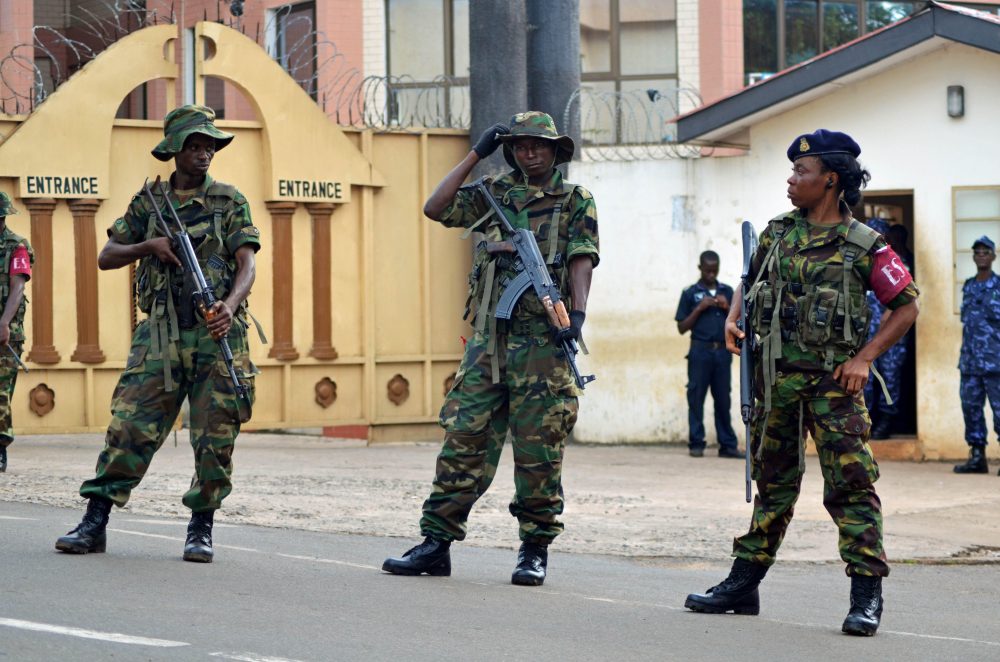
Sierra Leone’s government announced Tuesday that Guinea has detained multiple members of its security forces, marking another escalation in an ongoing territorial disagreement between the neighboring West African nations.
Officials from Guinea have not yet responded to requests for comment regarding the allegations.
The border conflict between these two countries has persisted since Sierra Leone’s civil war from 1991 to 2002, during which Guinea sent military forces to assist in fighting rebel groups.
According to a Tuesday social media post from Sierra Leone’s information ministry, military and police personnel were building a border checkpoint and additional structure in the frontier community of Kaliyereh on Monday when Guinea’s military forces entered the area.
The ministry’s statement indicated that Guinea’s forces detained “several members of the joint security team, including an officer” and confiscated weapons and military equipment.
“Government is actively engaging through established diplomatic and security channels to confirm their location and secure their safe and unconditional release,” the official statement declared.
Authorities have dispatched an investigative team to the region to examine the circumstances surrounding the incident.
The Central Intelligence Agency has released comprehensive instructions in the Persian language, providing Iranians with methods to safely reach out to American intelligence officials through encrypted digital channels. This outreach effort comes as Iran’s government continues its harsh response to domestic protesters and diplomatic relations between Iran and the United States remain strained.
Through a social media post on X, the intelligence agency announced its desire to establish safe communication lines with people living within Iran’s borders, stressing the critical importance of maintaining digital privacy and security. The agency’s message conveyed that the CIA “can hear your voice and wants to help you,” while providing readers with comprehensive security protocols aimed at avoiding detection by Iran’s government surveillance systems.
The intelligence organization strongly cautioned against utilizing personal computing devices or conventional telephone systems, instead recommending the acquisition of fresh, untraceable equipment that cannot be linked to the individual user. The agency also stressed the importance of maintaining awareness of one’s physical environment and being cautious of anyone who might observe their computer screens or track their digital activities.
To reduce the chances of digital detection, the CIA suggested utilizing third-party web browsers like Google Chrome, Safari, or Firefox instead of built-in device applications. The agency also recommended enabling Private Browsing or Incognito features, along with similar privacy settings, to prevent the storage of web browsing information.
The security instructions promoted the utilization of identity-concealing and censorship-circumventing tools, including the Tor browser for accessing the Dark Web, while cautioning that Iranian security and intelligence agencies likely monitor numerous websites. The CIA explained that it offers a protected, censorship-resistant communication method accessible through these specialized tools. The agency also recommended using virtual private networks (VPNs) to circumvent internet censorship and monitoring, and emphasized the importance of clearing browsing records and other digital evidence after establishing contact.
Based on the provided instructions, people attempting to contact the CIA were requested to provide detailed personal and work-related information. This includes their residential city and nation, complete name, professional role and position, along with describing their level of access to information or abilities that might interest the agency. The CIA also sought secure contact details to enable ongoing communication.
The security guidelines described several methods for contacting the agency, including through its official website and through the darknet, an internet section only accessible through special software created to hide users’ identities.
This message represents the most recent in a collection of CIA recruitment communications published in Persian, Korean, Russian, and Mandarin languages, all advertising what the agency calls secure communication pathways.
A group of 14 distinguished former cricket captains from around the world has penned an appeal to Pakistan’s government, calling for proper medical attention and family access for jailed former Prime Minister Imran Khan.
The international coalition includes notable names such as Greg Chappell of Australia, Sir Clive Lloyd, Mike Atherton, Allan Border, Michael Brierley, Ian Chappell, Belinda Clark, Sunil Gavaskar, David Gower, Kim Hughes, Nasser Hussain, Kapil Dev, Steve Waugh and John Wright.
Writing in ESPNcricinfo on February 23rd, Greg Chappell explained his motivation for organizing the letter after learning about his former colleague’s imprisonment and deteriorating health condition. Chappell described feeling obligated to take action for his longtime friend.
“To pierce the gathering gloom surrounding one of cricket’s greatest luminaries, I knew I had to assemble a chorus of voices, a collective of captains whose shared history could not be ignored amid the winds of political indifference,” Chappell wrote.
Reflecting on Khan’s character, Chappell added: “I remember him as a man of immense charisma and an even greater will. He was a leader who did not merely command his team; he inspired a nation.”
Chappell expressed alarm about current reports regarding Khan’s confinement and wellbeing. “Today, that vibrant, charismatic leader is confined to a space that reports suggest resembles a death row cell. Most distressing are the reports concerning his health,” he observed.
The former Australian captain emphasized the non-political nature of their request. “We urge the government of Pakistan to immediately provide Imran Khan with medical care from doctors of his choice, ensure humane conditions, including family visits, and grant him fair and transparent access to the legal process. These are not extremist demands; they are basic necessities of a civilized society.”
In his final thoughts, Chappell argued that Khan should receive the same fair treatment he always advocated for during his playing days. “We hope that the principles of decency will prevail and that our collective voice will ensure he is not forgotten in the darkness of a solitary cell. The game deserves no less, and future generations who look up to our legacy demand that we stand for what is right.”
Pakistan’s Minister of State for Interior Talal Chaudhry pushed back against the international appeal, stressing that athletic achievements don’t exempt anyone from legal consequences.
Chaudhry countered: “just as ball tampering and batting offenses are crimes in cricket, corruption is a crime if a captain becomes prime minister. They should have condemned that as well.” He continued, “They should have also expressed regret that he is currently convicted in a corruption case.”
The minister maintained that Khan’s health concerns had already been handled before the letter was drafted. Describing Khan as “the most looked-after prisoner in Pakistan’s history,” Chaudhry stated the Supreme Court had approved his care.
Regarding the request for Khan to select his own medical providers, Chaudhry responded: “Everything is according to the law; prisoners don’t get to choose.”
Chaudhry suggested the former cricket leaders should concentrate on human rights issues within their own nations instead of advocating for someone convicted of corruption.
Pakistani officials have continuously maintained that the former leader, who has been diagnosed with central retinal vein occlusion affecting his right eye, receives excellent prison facilities and prompt medical attention without any delays. Nevertheless, his relatives and political party have repeatedly rejected these assertions, expressing grave worries about his wellbeing.
Khan represents a remarkable transformation from sports hero to political figure, having guided Pakistan’s cricket team to their historic 1992 World Cup triumph.
His political career ended abruptly in 2021 when he lost power following a parliamentary vote of no confidence. He currently remains incarcerated on corruption allegations that he steadfastly rejects as politically driven attacks. Despite his Pakistan Tehreek-e-Insaf party winning the most seats in the 2024 general elections, they were denied the opportunity to establish a government.
DUBLIN – The Trump family has received the go-ahead from Irish authorities to construct a ballroom at their golf resort on Ireland’s western coastline, but there’s an unusual catch – they must develop a conservation strategy for a rare species of tiny snails living on the property.
Clare County Council granted approval Tuesday for the Trump International Golf Club in Doonbeg to move forward with their ballroom project, designed to accommodate 320 guests. Eric Trump previously described the planned facility to the Sunday Independent as what would be “the nicest ballroom in the country.”
The December application faced pushback from environmental advocates who demanded stronger protections for the Vertigo angustior snail, a rare species safeguarded under European Union habitat regulations designed to preserve endangered wildlife.
Local planners issued their approval with 14 stipulations, most notably requiring the golf resort to develop and submit a comprehensive plan for monitoring and protecting the snails before any construction begins.
The environmental group Friends of the Irish Environment had contested the proposal, contending that no new development permits should be issued until the resort complies with a court directive from the original 1999 course approval that mandated “maintenance or improving” conditions for the protected snail population.
However, several community organizations endorsed the ballroom project, highlighting the employment opportunities it could bring to the resort, which currently provides jobs for 300 workers during busy summer months. Many area residents have praised Trump for preserving their jobs when he purchased the struggling golf course in 2014.
Construction plans call for a 1,240 square meter ballroom, significantly smaller than the 8,360 square meter ballroom proposed for the White House. Trump lodged at the property, located 300 kilometers from Dublin, during his official Irish state visit in 2019.
When Trump assumed the presidency, he transferred the Trump Organization into a trust overseen by his children, though he continues as the beneficiary.
The golf resort faced a setback in 2020 when local authorities rejected their application to construct a seawall for coastal erosion protection, with planners expressing concerns about potential damage to the site’s sand dune ecosystem.
Newly released footage from 2022 reveals Hamas terrorists conducted detailed rehearsals for the October 7, 2023 attack more than a year before carrying out the deadly assault.
Israeli Channel 13 broadcast the video Monday, showing Hamas operatives engaged in strategic planning sessions and practice exercises that mirror the actual terrorist attack. The footage captures individuals in both civilian attire and military gear gathered around a conference table, including Izz al-Din al-Haddad, who now serves as Hamas’s leader in Gaza.
The broadcast combined this planning footage with previously obtained video of Hamas forces practicing a seaborne assault on Zikim Beach. Participants in the recording can be heard celebrating the training exercise and discussing their hopes that a real operation would lead to the release of imprisoned terrorists.
Audio from the video captures members of Hamas’s elite Nukhba Force coordinating from what appears to be a command center during the simulation. One operative is heard reporting over the phone: “They have destroyed two pieces of military equipment and killed four soldiers. The enemy is confused.”
The conversation continues with tactical updates: “The destruction was total? How many injured? Lightly? Can they be treated in the field? How many martyrs?” as commanders communicate with field units during the mock attack.
The recording was made during 2022 when Naftali Bennett and Yair Lapid led the Israeli government. Channel 13 has not disclosed how they obtained the footage.
This isn’t the first evidence of Hamas preparation for the attack to surface. Additional training videos have emerged previously, including propaganda footage released less than a month before October 7th showing terrorists practicing breaching replica border barriers, driving vehicles into simulated Israeli territory, and firing at human-shaped targets.
Iran’s top religious leader, Ayatollah Ali Khamenei, has given his endorsement to a new nuclear negotiation proposal crafted by Foreign Minister Abbas Araghchi, according to sources speaking to Channel 12. However, the document has yet to reach American officials.
The development comes after U.S. representatives Steve Witkoff and Jared Kushner asked for Iran’s response following last week’s diplomatic meetings in Geneva. American negotiators had expected to receive the proposal within several days, ahead of Thursday’s scheduled continuation of talks. U.S. officials have indicated that these upcoming discussions could be the last chance for a peaceful resolution, with military action being considered as an alternative, Channel 12 reported.
Iran’s Deputy Foreign Minister Majid Takht-Ravanchi expressed his country’s commitment to reaching a deal as negotiations prepare to restart in Geneva. “We are ready to reach an agreement as soon as possible. We will do whatever it takes to make this happen. We will enter the negotiating room in Geneva with complete honesty and good faith,” Takht-Ravanchi stated through Iranian government media.
The Iranian official also issued a warning about potential military consequences, saying “If there is an attack or aggression against Iran, we will respond according to our defense plans … A US attack on Iran is a real gamble.”
Foreign Minister Araghchi released his own statement indicating that Iran would proceed with discussions building on previous agreements, noting that talks would continue “with a determination to achieve a fair and equitable deal—in the shortest possible time.”
Araghchi emphasized that Iran “will under no circumstances ever develop a nuclear weapon,” while pushing back against requirements to abandon what he described as the nation’s entitlement to “peaceful nuclear technology.”
At the same time, the United States has been strengthening its military presence in the region. The Times of Israel confirmed that American F-22 stealth aircraft that left the United Kingdom have been stationed at an Israeli Air Force facility in southern Israel.
Eleven F-22 jets successfully departed from Royal Air Force Lakenheath in England, with one aircraft returning due to mechanical problems. These planes had been at the British base for several days following their arrival last week, reportedly delayed by refueling support complications.
This military positioning occurs as President Donald Trump considers authorizing strikes against Iran. Recent days have seen numerous American combat aircraft—including F-35s, F-22s, F-15s, and F-16s—moving toward the Middle East region, according to the Military Air Tracking Alliance.
Washington has issued an ultimatum to Baghdad, demanding Iraq establish a new government without Iranian interference by Friday or risk facing sanctions, according to reports from Saudi television network Al-Hadath.
The controversy revolves around Shi’ite political parties nominating former Prime Minister Nouri al-Maliki to return to power. Intelligence suggests al-Maliki maintains strong connections with Iran. President Donald Trump publicly rejected al-Maliki’s candidacy on Truth Social just days after the nomination was announced on January 27.
Saudi media reports indicate American officials have warned Iraqi leadership that missing this week’s deadline could result in punitive actions. Sources within Iraq confirm that Baghdad received an official communication stating that sanctions targeting specific individuals and organizations could be implemented if al-Maliki’s nomination moves forward.
Tom Barrack, the US envoy who took over Iraq responsibilities after Mark Savaya left in January, made public statements following discussions with current Iraqi Prime Minister Mohammed Shia’ al-Sudani. Barrack wrote on X: “Fruitful meeting with Prime Minister Mohammed Shia’ al-Sudani discussing continued Iraqi goals and objectives to build a sovereign, stable and prosperous future that aligns with a desire and plan for peace and prosperity in the region. The necessity of effective leadership that aligns itself with the policies and practices of further stabilization for Iraq and the Iraqi people is key to our mutual goals.”
Iraqi Foreign Minister Fuad Hussein stated that the Coordination Framework, the Shiite coalition supporting Maliki, continues backing his candidacy. During discussions in Baghdad with US envoy Barrack, Hussein stressed the significance of preserving dialogue and cooperation during the upcoming period until Iraq’s government formation concludes, according to a Foreign Ministry statement released through state news agency INA.
Middle East Broadcasting Networks reports that divisions exist within the Coordination Framework regarding whether to pursue Maliki’s nomination. Though al-Maliki wields considerable political power from his two previous terms leading the country, certain coalition members worry that pushing for his comeback might damage relationships with Washington when Iraq requires ongoing international support to address economic and security challenges.
Al-Maliki has dismissed suggestions that outside pressure should influence the decision. He has stated that any choice to step aside must originate from the Coordination Framework directly, maintaining that the prime minister position represents a political entitlement determined by parliamentary dynamics rather than foreign interference.
President Trump’s ambassador to France is creating diplomatic headaches in Paris after repeatedly skipping mandatory meetings with French government officials.
Charles Kushner, a real estate developer who took the ambassadorial post last summer, has disrupted traditional diplomatic relations between the United States and France through his unconventional approach to the role once filled by founding fathers Benjamin Franklin and Thomas Jefferson.
The 71-year-old businessman, who has no prior diplomatic background and served federal prison time for campaign finance violations and tax fraud before receiving a Trump pardon in 2020, made waves shortly after his arrival by penning a public letter to French President Emmanuel Macron criticizing France’s efforts to combat antisemitism.
Macron responded sharply to the ambassador’s public critique, calling Kushner’s remarks an “unacceptable statement for somebody who is supposed to be a diplomat.” When French officials summoned Kushner to the foreign ministry for an explanation, he failed to appear.
The ambassador again skipped a required meeting on Monday after the U.S. Embassy reposted social media comments from the State Department’s counterterrorism office regarding the death of a French far-right activist.
Following Monday’s absence, French diplomatic sources indicated Kushner would be prohibited from meeting with government officials. However, the situation shifted Tuesday when Kushner contacted Foreign Minister Jean-Noël Barrot by phone.
According to a source familiar with the conversation, Kushner “expressed his desire not to interfere in our public debate” during the call. The two officials agreed to schedule an in-person meeting in the coming days.
The U.S. Embassy released a statement describing the phone conversation as “frank and amicable,” with both sides “reaffirming their shared commitment to working together” on issues affecting both nations as they mark 250 years of diplomatic ties.
French legal scholar Julien Jeanneney, who specializes in American constitutional law, described the situation as a “power struggle” between Kushner and France’s foreign ministry that began with the ambassador’s antisemitism letter.
“The function of a diplomat is not to lecture the country where he is posted, at least not publicly,” Jeanneney explained. “Publishing such a letter goes against basic diplomatic customs. And not responding to the summons from the foreign minister is… a sign of defiance.”
Kushner’s behavior reflects a broader pattern among Trump’s European ambassadors, who the administration says are confronting Europe’s risk of “civilisational erasure.”
In Poland, Ambassador Tom Rose severed communication with the parliament speaker after failing to gain support for Trump’s Nobel Peace Prize candidacy. Meanwhile, Belgian officials summoned Ambassador Bill White over allegations of antisemitism related to restrictions on unauthorized circumcisions.
Tensions between Paris and the Trump administration extend beyond Kushner’s actions, encompassing disagreements on trade policies, European sovereignty, digital regulations, and free speech issues.
However, sources from both countries suggest Kushner’s primary motivation stems from his Orthodox Jewish faith and concerns about antisemitism rather than broader “Make America Great Again” objectives.
“I don’t see him with a MAGA cap,” observed Nicolas Conquer, who leads a Trump-inspired French policy organization and maintains contact with Kushner’s staff. “He is not the standard-bearer of MAGA in France.”
Philippe Karsenty, spokesperson for Comité Trump France who has met with Kushner multiple times, said the ambassador views antisemitism as a dangerous threat to democratic society that must be addressed urgently.
“It is about ensuring that France in 2026 is not France in 1939,” Karsenty stated.
American officials acknowledged that Kushner’s public letter created diplomatic friction but argued it prompted French authorities to take action. While antisemitic incidents reached unprecedented levels following the 2023 Gaza conflict, they decreased by 16% in the past year compared to 2024.
Both French and American officials noted that Kushner’s family connection to Trump – he is the father of Trump’s son-in-law Jared Kushner – provides diplomatic advantages, even though Macron typically communicates directly with Trump via mobile phone.
The ambassador speaks no French and has demonstrated little interest in learning the language, according to officials from both nations. He depends heavily on his chief of staff, Gabriel Scheinmann, who is fluent in French and skilled at navigating France’s political landscape.
Officials also noted Kushner’s unusual schedule, retiring early each evening and typically sending emails beginning around 4:30 a.m.
“He wakes up early, goes to bed early, does not host useless receptions,” Karsenty said. “He meets very few unnecessary people. He is not at an age to learn a language, and he did not come for that. He came to act.”
CARACAS, Venezuela — Venezuelan National Assembly officials reported Tuesday that more than 3,200 individuals have gained their complete freedom following the implementation of a new Amnesty Law just four days prior. The beneficiaries include both imprisoned individuals and those who had been living under house arrest or similar restrictions.
During a press briefing, National Assembly member Jorge Arreaza, who chairs the commission responsible for implementing the amnesty program, revealed that officials have processed 4,203 applications so far.
According to Arreaza’s breakdown of the approved cases, 3,052 individuals who had been living under house arrest or similar constraints have received complete freedom. An additional 179 people who were serving prison sentences have also been released.
Following the January 3rd arrest of former President Nicolás Maduro, the current administration pledged to free substantial numbers of detained individuals. Critics, including family members and human rights organizations, have expressed frustration with what they view as a sluggish release process and overly restrictive conditions imposed on those who have been freed.
The amnesty program does not extend to those found guilty of murder, narcotics trafficking, military insurrection, or severe human rights abuses.
However, Venezuelan prisoner advocacy organization Foro Penal reported Tuesday that they have confirmed just 91 “political releases” since the amnesty program began on February 20. The group has also requested reconsideration of 232 cases that were initially denied amnesty benefits, noting that approximately 600 individuals remain in custody.
British law enforcement officials announced Tuesday they have completed their search of Prince Andrew’s previous residence in southeastern England, following his detention last week on charges related to misconduct in public office.
The Duke of York’s Thursday arrest was connected to an ongoing investigation examining his relationship with deceased American sex offender Jeffrey Epstein.
Thames Valley Police Assistant Chief Constable Oliver Wright released a statement saying, “Officers have now left the location we have been searching in Berkshire. This concludes the search activity that commenced following our arrest of a man in his sixties from Norfolk on Thursday.”
Recently released Epstein files from the U.S. Justice Department last month contained documents suggesting that the monarch’s younger sibling may have shared classified government materials with the convicted financier during his tenure as a trade representative.
Prince Andrew has consistently maintained his innocence regarding any improper conduct connected to Epstein, though he has expressed regret about their association.
In a related development, London police announced Friday they are reaching out to former security personnel who previously served Prince Andrew, encouraging anyone with information about sexual offenses linked to Epstein to contact authorities.
Norway’s 89-year-old King Harald was admitted to a medical facility Tuesday while vacationing on the Spanish island of Tenerife, according to an announcement from the royal palace.
The monarch was hospitalized due to an infection and dehydration while enjoying a private getaway with Queen Sonja, palace officials confirmed. Despite his medical issues, the king’s condition is reported as stable and good.
Harald holds the distinction of being Europe’s eldest reigning monarch and has served as Norway’s ceremonial leader since taking the throne in 1991.
WASHINGTON — Ukraine’s top diplomat in Washington revealed Tuesday that American officials have complained about Ukrainian military strikes targeting a Russian Black Sea port, citing concerns over disrupted U.S. oil operations in Kazakhstan.
Ambassador Olga Stefanishyna made the disclosure on the fourth anniversary of Russia’s invasion of Ukraine, explaining that the State Department contacted Ukrainian officials about attacks on Novorossiysk port.
“This reach-out was not related to encouraging Ukraine from refraining to attack Russian military and energy infrastructure. It was related to the very fact that American economic interest was affected there,” Stefanishyna told reporters in Washington. “It did happen, and we have taken the note.”
The State Department did not immediately respond to a request for comment.
The Caspian Pipeline Consortium operates a pipeline from the Caspian coast in northwest Kazakhstan to the Novorossiysk port. The pipeline handles much of the crude exports from three major Kazakh fields in which major U.S. energy companies, Chevron and ExxonMobil, have stakes.
The G7 group of leading industrialized nations issued a leaders’ statement on Tuesday to mark the fourth anniversary of the war reaffirming their “unwavering support for Ukraine in defending its territorial integrity and right to exist, and its freedom, sovereignty and independence.” The statement also praised President Donald Trump’s efforts to negotiate a peace settlement between Russia and Ukraine.
The U.N. General Assembly also passed a resolution on Tuesday voicing support for Ukraine, but the U.S. was one of 51 countries that abstained.
During U.S.-brokered talks, Russian President Vladimir Putin has maintained maximalist demands, insisting Kyiv pull its forces from four Ukrainian regions that Moscow illegally annexed but never fully captured. Trump has argued it’s inevitable that Russia will win control of the Ukrainian territory and has pressured President Volodymyr Zelenskyy to make a deal to save lives.
Zelenskyy said his country has withstood the onslaught by Russia’s bigger and better equipped army, which over the past year of fighting captured just 0.79% of Ukraine’s territory, according to the Institute for the Study of War, a Washington-based think tank. Russia now holds nearly 20% of Ukraine.
Trump later on Tuesday will deliver the annual State of the Union address. Stefanishyna said she expects that Trump, who has made ending the war a priority, will touch on the conflict in the address, even though she did not expect major changes in his message.
“But at the same time, we want President Trump to hear us ahead of the speech that, you know, despite all the complexity and tragedy of what is happening in Ukraine, still Ukrainian people very much rely on his leadership,” she said.
Norway’s royal palace announced Tuesday that King Harald has been hospitalized during his winter holiday in Spain’s Canary Islands.
The 89-year-old monarch, who celebrated his birthday just this past Saturday, was taken to a medical facility in Tenerife Tuesday night. Palace officials stated he is receiving care for dehydration and an infection, though they did not provide specifics about the nature of the infection. According to the royal statement, Harald’s current condition is described as stable.
Palace representatives confirmed that the king’s personal doctor will make the journey to Tenerife to evaluate the situation firsthand. An official health update is expected to be released Wednesday following the physician’s assessment.
The royal couple had been enjoying their winter retreat on the Spanish island when the health issue arose. Harald has served as Norway’s reigning monarch for more than three decades, ascending to the throne in 1991.
CHANIA, Greece — Demonstrators took to the streets on the Greek island of Crete Tuesday evening after a massive US Navy aircraft carrier arrived as part of America’s expanding military presence in the Middle East.
The USS Gerald R. Ford, recognized as the globe’s most massive aircraft carrier, arrived Monday at the US naval facility in Souda Bay on Crete. The deployment comes as President Donald Trump has issued warnings about potential military strikes against Iran.
A peaceful demonstration took place in Chania, a port city located near the naval base, with support from Greece’s Communist Party. Demonstrators displayed individual signs that together spelled out “Killers” in English.
Middle East tensions have escalated once more, primarily due to disputes surrounding Iran’s nuclear ambitions.
Following almost two years of silence from its core leadership, the terrorist organization ISIS emerged with a lengthy audio statement on February 21, 2026, featuring a 35-minute address by spokesperson Abu Hudhayfah al-Ansari. This communication arrives as the extremist group has lost all territorial holdings in Syria and Iraq, now functioning through underground militant cells while facing continuous counterterrorism operations throughout the region.
The recording addresses Syria’s current political structure under Ahmed al-Sharaa, denouncing his administration as unlawful and inadequately Islamic, while positioning ISIS as the uncompromising option against what it characterizes as political corruption.
Current circumstances in northeastern Syria contribute additional security concerns to the broader regional picture. Detention centers housing ISIS prisoners have historically been managed by the Syrian Democratic Forces (SDF), which supervises a system of correctional facilities and holding areas containing thousands of suspected militants. International intelligence estimates from recent years suggest approximately 9,000 to 10,000 ISIS fighters remain in SDF detention, including roughly 2,000 foreign citizens from numerous nations.
Relatives of suspected combatants—primarily women and children—continue residing in facilities like al-Hol camp in northeastern Syria. This camp’s population has varied but typically maintains around 40,000 inhabitants according to recent reports, with several thousand international residents among them. Security evaluations by humanitarian and counterterrorism observers have consistently cautioned that these camps may function as environments for ongoing radicalization, recruitment, and internal control by extremist elements.
Regional instability in northeastern Syria has previously resulted in escape efforts and successful prison breaks. The most notable incident happened in January 2022, when ISIS militants assaulted Al-Hasakah Central Prison in Hasakah’s Ghuwayran district, sparking several days of combat and allowing hundreds of prisoners to escape before authorities regained control. While most were reportedly recaptured or eliminated, the event highlighted the fragility of detention systems in the area.
Security experts have consistently cautioned that northeastern Syria’s detention facilities function as both containment systems and potential strategic resources. This past January, Syrian military and intelligence services under President Ahmed al-Sharaa’s administration took control of multiple installations—including correctional facilities and camps—previously managed by the SDF, along with surrounding territories formerly controlled by the SDF.
This transition encompassed the detention center at al-Aqtan near Raqqa and regions surrounding al-Hol camp, which has housed tens of thousands of family members connected to suspected ISIS militants.
Additionally, Iraqi officials have verified the movement of certain suspected ISIS members from Syrian detention centers back into Iraqi custody, partly due to American pressure. Iraq has occasionally repatriated citizens for legal proceedings under its anti-terrorism legislation. Although these transfers reduce Syria’s detention responsibilities, they also reintroduce experienced operatives into Iraq’s legal and correctional systems, where overcrowding and prison radicalization remain documented issues.
Even a minor security breach could produce significant ramifications. Should only a small fraction of the estimated 9,000–10,000 detainees escape or receive inadequate monitoring following transfer, this could mean dozens or hundreds of individuals with previous operational training rejoining secret networks. Since ISIS currently operates through small-cell insurgency and decentralized violence rather than large-scale mobilization, the return of even several dozen trained operatives could increase attack risks in Syria, Iraq, or elsewhere.
The audio message also identifies Africa as the movement’s primary operational theater, presenting its African branches as proof of organizational strength while encouraging supporters to undertake hijra—a religiously motivated migration or relocation—to African strongholds instead of the Levant. The spokesman emphasizes internal discipline, security screening, and operational caution, suggesting concerns about infiltration and internal vulnerabilities. Despite broader regional conflicts, the audio does not extensively address Gaza or wider Middle Eastern tensions, instead concentrating on internal strengthening, African operations, and selective international incitement.
Within Syria, ISIS remnants remain concentrated in desert regions, where small units conduct ambushes, targeted killings, and quick-strike operations. In Iraq, the organization has adopted a low-level insurgency approach, depending on dormant cells and rural networks instead of open territorial governance. In Western nations, the group’s operational presence has diminished since its 2015–2017 height, though its propaganda continues encouraging inspired attacks executed by individuals or micro-cells operating independently.
Given this context, the recent audio message does not proclaim a territorial resurgence. Rather, it consistently references Syria and Iraq as historical strongholds, encourages renewed desert region activity, commends African affiliates, and demands attacks against what it terms “Crusader and Jewish targets.” The focus appears centered on unity, persistence, and symbolic continuity rather than territorial growth.
Daniele Garofalo, a specialist in extremist organizations, views the message as an internal strengthening initiative.
“I read it as a signal of command and control, not as a prelude to a new campaign,” he said. “After a two-year vacuum, the leadership needs to demonstrate that it still exists, that it leads, that it maintains narrative cohesion and internal discipline,” he told The Media Line.
He contended that the message’s format and approach suggest stabilization instead of escalation.
“It is consolidation. I do not see elements that indicate a credible reactivation of territorial control,” Garofalo explained. “The leadership uses Syria and Iraq as a symbolic center, but the operational objective is to keep clandestine networks, sleeper cells, and micro-local structures alive,” he added.
Garofalo indicated the message reflects a wider strategic approach.
“It confirms the line we have observed. Operational center of gravity in Africa, the Levant in a defensive and survival posture,” he said, adding that praise for African branches signals where the group currently shows operational momentum.
Regarding the international attack appeals, he emphasized that intention does not automatically create capability.
“When the central leadership is weak and the core theater is under pressure, incitement abroad becomes the most cost-effective instrument for generating strategic impact,” Garofalo said. “The more realistic risk is inspired violence—low cost and high visibility,” he added.
Lucas Webber, a senior research fellow at The Soufan Center, interprets the audio as a deliberate effort to display strength during regional changes.
“The 35-minute audio message represents a calculated effort to project resilience and reassert influence after a prolonged period of silence,” Webber told The Media Line. “It is designed to demonstrate organizational continuity and strategic relevance,” he added.
He highlighted the changing Syrian situation specifically.
“The Islamic State is attempting to exploit instability following the fall of the Assad regime, positioning itself as the uncompromising jihadist alternative to Syria’s new political order,” Webber explained. “It seeks to insert itself into an evolving landscape, even if territorially constrained,” he added.
Webber does not observe indications of returning to territorial administration.
“What we see here is a reaffirmation of the Islamic State’s insurgent model,” he said. “The group is emphasizing sustained insurgency and localized operations, not state-building,” he added.
Similar to Garofalo, Webber noted Africa’s prominent position in the group’s communication.
“The message devotes notable attention to African branches, positioning them as evidence of global continuity within a dispersed movement,” Webber said, describing this as a strategic recalibration rather than a rhetorical flourish.
Concerning Western target references, Webber stressed the decentralized approach.
“These appeals are consistent with the group’s longstanding strategy of inspiring decentralized violence,” he said. “They are less about directing complex external operations and more about sustaining the perception of global reach,” he added.
Overall, the February 21 message appears more as a carefully constructed statement of persistence than a declaration of revival. ISIS continues operating through insurgency in Syria and Iraq, derives operational energy from African regions, and depends on ideological messaging to project influence beyond its actual capabilities. The audio reinforces a pattern that has characterized the group since losing territory: adaptation through dispersion, narrative control, and opportunistic violence rather than centralized territorial administration.
College campuses across Iran have transformed into centers of resistance as students clash with government security forces following the reopening of universities after several weeks of shutdown. The return to classes on Saturday has reignited widespread demonstrations that Iranian authorities had hoped to suppress.
Government officials are expressing deep concern about the resurgence of campus activism, particularly as scattered protests continue in various cities alongside strikes and demonstrations over economic hardships and rising costs.
A student organizer from the University of Tehran spoke with The Media Line on Monday evening, explaining that Iranian leadership was caught off guard by the intensity of campus unrest. Despite the government’s violent crackdown that has resulted in thousands of deaths, implementation of martial law conditions, severe internet limitations, and intimidation of journalists, the reopening of educational institutions has created new flashpoints for confrontation between students and government forces.
The activist noted that current protest levels demonstrate an escalation beyond what occurred before January 8, when massive crowds took to the streets and faced gunfire from government troops.
When universities officially resumed operations on Saturday, February 21, students in Tehran and other cities immediately converted their campuses into zones of open defiance. Anti-government chants including calls for the death of Supreme Leader Khamenei and condemnation of the ruling system prompted immediate deployment of Basij militia forces by the Islamic Revolutionary Guard Corps, leading to violent confrontations.
In a surprising development, students at prestigious technical institutions like Amirkabir and Sharif universities began voicing support for the exiled Pahlavi royal family for the first time in Iranian academic history. This represents a dramatic shift, as universities have traditionally opposed both monarchical and Islamic rule since their establishment eight to nine decades ago.
Iranian higher education has a long history of political activism dating back to the 1970s, when campuses became breeding grounds for leftist revolutionary movements. The student movement gained particular significance after the December 7, 1953 incident known as ’16 Azar,’ when military forces killed three students during protests against US Vice President Richard Nixon’s visit, occurring months after the CIA-supported coup that removed Prime Minister Mohammad Mosaddegh.
Following the 1979 revolution, universities initially supported the uprising but gradually distanced themselves from Ayatollah Khomeini’s leadership as leftist groups gained influence. Khomeini viewed campuses as opposition strongholds and launched what became known as the ‘Cultural Revolution’ in spring 1980, during which hundreds of leftist students were killed, injured, or imprisoned, particularly members of the communist-affiliated ‘Pishgam’ organization.
After that assault, universities were shuttered and later reopened with strict ideological screening for both students and faculty, resulting in many being permanently barred from academic participation.
Despite mass executions in the 1980s and heavy campus security, student organizations gradually reemerged in the 1990s. A major incident occurred in 1999 when regime forces attacked Tehran University dormitories, sparking days of demonstrations and clashes in Tehran and other major cities.
Universities have remained central to protest movements through subsequent uprisings in 2009 and 2019, as well as the ‘Woman, Life, Freedom’ movement in 2022, despite ongoing arrests, suspensions, restrictions, and direct attacks resulting in student casualties.
The Islamic Republic had hoped that reopening universities with delayed semester starts and increased online coursework would normalize conditions, but within three days, campuses again became battlegrounds between regime opponents and Basij forces.
The emergence of pro-Pahlavi slogans, including chants of ‘This is the final battle, Pahlavi returns,’ marks a significant development. Support for exiled Crown Prince Reza Pahlavi appears to be gaining momentum among some students, building on widespread pro-Pahlavi demonstrations that occurred on January 8 and 9 following his call for protests.
Mohammad Reza, an electrical engineering student at Amirkabir University who participated in pro-monarchy chants, told The Media Line: ‘In my opinion, and in the view of many students who support Reza Pahlavi, he is the most qualified person under current conditions to lead the transition period with the least damage and with global support. Not everyone who supports him favors a monarchy, but I believe Reza Pahlavi, under whatever title, can play an effective role in Iran’s future economic and social development.’
When asked about anti-leftist slogans that have also emerged in university protests, Mohammad Reza responded: ‘Unfortunately, the left has not had a good record since the Woman, Life, Freedom revolution onward. It seems they focus more on fighting Reza Pahlavi and monarchism than on fighting the regime, and that is why students need to distinguish themselves from them.’
However, Azarmeher, a University of Tehran student representing leftist student groups, offered a different perspective to The Media Line: ‘Up until Monday, people—including students—were fighting together against the Islamic regime regardless of ideology or political orientation. When the enemy was firing barrages of bullets at us, they did not ask us which kind of leftist or which kind of rightist we were.’
Azarmeher continued: ‘But the dangerous game initiated by monarchist supporters has not only deepened divisions abroad and within the anti–Islamic Republic camp; it has also brought those divisions onto university campuses, pitting left-wing opposition students against right-wing opposition students. That is why some people, even without resorting to conspiracy theories, believe the Islamic Republic welcomes the rise of monarchist tendencies, because they serve to divide the public and the opposition.’
Despite these divisions, Azarmeher believes current social, political, and economic conditions, combined with the possibility of war, indicate that protests will intensify. She emphasized: ‘The Islamic Republic will be overthrown by a popular uprising. If revolutionary forces can assume leadership, a democratic Iranian republic led by women inside the country will offer a horizon of political and economic progress with the participation of all forces and groups, including ethnic and national communities, and unconditional freedom of expression.’
Some analysts suggest an ‘attritional revolution’ could paralyze and ultimately destroy the current regime in coming months, while certain student activists in Tehran believe the Islamic Republic may not survive even the next few months. By Monday evening, protests and clashes had spread from Tehran to universities nationwide.
The scale of potential student involvement today far exceeds that of the 1979 revolution. At that time, Iran had 22 universities with approximately 170,000 domestic students and 100,000 studying abroad. Today, the country has nearly 100 times more universities, with domestic student enrollment increased twentyfold.
Students now comprise about 4 percent of Iran’s population, compared to just half a percent during the previous revolution, when the majority of citizens were illiterate, deeply religious, and resided in small towns or rural areas.
Significant changes in urban life and the emergence of a powerful urban middle class, which has sometimes shifted toward conservative and far-right positions in efforts to escape Islamic Republic rule, represent additional factors that could shape Iran’s future. As one art student returning from Monday’s protests told The Media Line: ‘Left or right—what is certain and inevitable is the inevitable destruction of the Islamic Republic.’
LONDON — A prominent British political figure who previously served as the United Kingdom’s ambassador to the United States is facing a criminal investigation over allegations of misconduct connected to his relationship with deceased sex offender Jeffrey Epstein.
Peter Mandelson, a veteran statesman with decades of political experience, has become the subject of scrutiny that now threatens Prime Minister Keir Starmer’s leadership. Starmer had named Mandelson to the ambassadorial role despite receiving warnings about the diplomat’s connections to the disgraced financier.
The arrest occurred Monday when authorities detained Mandelson at his residence in an upscale London neighborhood near Regent’s Park. His detention followed by four days the arrest of former Prince Andrew on related charges, marking some of the most significant fallout from over 3 million pages of Epstein-related materials that the U.S. Justice Department made public last month.
Evidence suggests Mandelson may have shared confidential government intelligence with Epstein, whom he called his “best pal,” that could have affected financial markets during his tenure as a senior government minister in 2009.
Among the sensitive information allegedly shared was an internal government analysis exploring the potential sale of state assets to generate revenue for the UK following the 2008 financial crisis. Documents also indicate Mandelson promised to advocate within the government for reducing taxes on banking executive bonuses.
Financial records show Epstein potentially transferred $75,000 to either Mandelson or his spouse, Reinaldo Avila da Silva, during 2003 and 2004. Mandelson has stated he cannot remember receiving such payments, has challenged the legitimacy of the banking documents, and maintains the accusations are unfounded.
After spending more than nine hours in police custody, Mandelson was freed early Tuesday morning. While he has consistently rejected any wrongdoing and faces no formal charges, the investigation remains active.
Legal representatives for Mandelson announced Tuesday that their client had voluntarily committed to additional police interviews next month. They characterized his arrest as stemming from an “baseless suggestion” that he intended to leave the country.
“There is absolutely no truth whatsoever in any such suggestion,” stated the Mishcon De Reya law firm. “Peter Mandelson’s overriding priority is to cooperate with the police investigation, as he has done throughout this process, and to clear his name.”
For decades, Mandelson has remained a central figure within the center-left Labour Party, earning recognition as a masterful political strategist nicknamed the “Prince of Darkness” due to his calculated and aggressive approach.
He played a crucial role in returning Labour to government in 1997 under the “New Labour” banner led by Prime Minister Tony Blair, holding key positions through 2001. He returned to government service under Prime Minister Gordon Brown from 2008 to 2010, serving as the European Union’s trade commissioner during the interim period.
Financial and ethical controversies forced him to step down twice from Blair’s administration. While acknowledging errors in judgment, he maintained his innocence regarding any misconduct.
Starmer selected him for the Washington ambassadorship last year, citing his trade negotiation skills, and Mandelson successfully helped broker an agreement in May that protected Britain from some of President Donald Trump’s proposed tariffs.
However, Starmer dismissed Mandelson in September after email correspondence revealed he had continued his friendship with Epstein following Epstein’s 2008 conviction on charges involving sexual offenses against a minor.
The most recent document release prompted Mandelson to leave the Labour Party earlier this month to prevent “further embarrassment.” He subsequently resigned his position in the House of Lords days later.
Despite stepping down from the House of Lords, he retains his designation as Lord Mandelson.
Removing his title would require new legislation, an action not taken since World War I when several lords lost their titles for supporting Germany.
Global Counsel, the lobbying company he helped establish, entered a form of bankruptcy proceedings Friday after numerous clients severed relationships due to his Epstein connections.
Critics have demanded Starmer’s resignation over his decision to appoint Mandelson. Starmer barely survived a confidence challenge two weeks ago and has issued an apology, claiming Mandelson misrepresented his relationship with Epstein.
SAO PAULO (AP) — Devastating flooding across southeastern Brazil has claimed the lives of at least 23 people while leaving dozens unaccounted for in Minas Gerais state, authorities announced Tuesday. Weather experts are cautioning that additional rainfall is anticipated across the affected region over the coming days.
Heavy downpours started Monday, impacting the communities of Juiz de Fora and Uba, located approximately 310 kilometers (192 miles) north of Rio de Janeiro. The deluge compelled roughly 440 local residents to abandon their residences.
The firefighters department in Minas Gerais reports they are currently conducting search operations for nearly 45 individuals who have been unaccounted for since Monday evening. Department officials released footage displaying water-logged roadways in both Juiz de Fora and Uba, where flooding caused a local river to change its natural path.
Authorities have issued warnings urging citizens to avoid locations that may be susceptible to mudslides.
Brazilian President Luiz Inácio Lula da Silva announced through his social media platforms that security personnel are actively engaged in rescue operations and delivering emergency aid to communities impacted by the rainfall.
The nation’s weather service, Inmet, released a statement indicating additional precipitation is predicted for the area, which is situated near mountainous terrain, valleys and steep inclines.
Officials from Juiz de Fora City Hall reported in a statement that the municipality received twice the typical rainfall amount expected during February. Mayor Margarida Salomão previously confirmed that no fewer than 20 landslides have been documented.
American consular officials will make history this week by providing passport services directly within a West Bank settlement, marking an unprecedented step in U.S. diplomatic outreach to American citizens living in the disputed territory.
The U.S. Embassy in Jerusalem announced Tuesday that consular staff will offer routine passport assistance in Efrat on Friday, February 27. Efrat is a Jewish settlement located south of Bethlehem in territory that most international observers consider illegally occupied under laws governing military occupation.
“This is the first time we have provided consular services to a settlement in the West Bank,” an embassy representative confirmed. The official noted that comparable services are also being extended to American-Palestinian dual citizens throughout the West Bank.
The embassy stated on social media that as part of initiatives to “reach all Americans abroad,” consular officers would deliver these services in Efrat. Future plans include similar outreach to the Palestinian city of Ramallah, the settlement of Beitar Illit near Bethlehem, and Israeli cities like Haifa.
Tens of thousands of Americans holding dual Israeli citizenship currently reside in West Bank settlements, though the embassy lacks precise population data for Efrat specifically. These communities typically rely on passport services available at the Jerusalem embassy or Tel Aviv branch office.
The timing proves significant as Israeli Prime Minister Benjamin Netanyahu’s government recently enacted policies facilitating settler land acquisition in the West Bank. Palestinians have condemned these measures as “de facto annexation” of territory they envision for an independent state alongside Gaza and East Jerusalem.
Israel captured the West Bank during the 1967 Middle East conflict and cites religious and historical connections to the land. Netanyahu’s coalition government, which draws substantial support from settlement communities, includes members advocating for formal West Bank annexation.
President Donald Trump, while expressing strong support for Israel, has stated opposition to West Bank annexation. However, his administration has not implemented policies to restrict settlement construction, which advocacy organizations report has increased since he assumed office.
Currently, more than 500,000 Israeli settlers inhabit the West Bank, which houses 3 million Palestinians. Most settlements function as small, fenced communities with Israeli military protection, while much of the territory remains under Israeli military administration with limited Palestinian self-governance in certain areas managed by the Western-supported Palestinian Authority.
Iran’s top diplomat expressed optimism Tuesday about reaching an agreement with the United States, stating that a deal could be achieved if diplomatic solutions take precedence over other approaches.
Foreign Minister Abbas Araqchi made the statement ahead of planned discussions between the two nations scheduled for Thursday in Geneva, where American representatives Steve Witkoff and Jared Kushner are expected to meet with Iranian negotiators.
“We have a historic opportunity to strike an unprecedented agreement that addresses mutual concerns and achieves mutual interests,” Araqchi wrote on social media platform X.
The Iranian foreign minister indicated his country would approach the upcoming discussions “with a determination to achieve a fair and equitable deal in the shortest possible time.”
Deputy Foreign Minister Majid Takht-Ravanchi echoed this sentiment, telling state media that Iran was prepared to take necessary measures to secure an agreement with Washington.
“We are ready to reach an agreement as soon as possible. We will do whatever it takes to make this happen. We will enter the negotiating room in Geneva with complete honesty and good faith,” Takht-Ravanchi stated.
The negotiations resume after talks earlier this month occurred while the United States has been strengthening its military presence in the Middle East region. Iranian officials have warned they would target American military installations in the area if their country faces attack.
White House Press Secretary Karoline Leavitt responded Tuesday that President Trump prefers diplomatic solutions but remains prepared to authorize military action when needed.
According to a senior Iranian source who spoke with Reuters, Tehran is considering several nuclear-related concessions. These include shipping half of its most enriched uranium to other countries, reducing the concentration of remaining stockpiles, and participating in a regional uranium enrichment partnership.
In exchange, Iran seeks American acknowledgment of its rights to “peaceful nuclear enrichment” and the removal of economic penalties currently imposed on the country.
“If there is an attack or aggression against Iran, we will respond according to our defence plans… A U.S. attack on Iran is a real gamble,” Takht-Ravanchi warned.
Previous indirect negotiations between the countries last year failed to produce results, largely because Washington demanded Iran cease all uranium enrichment activities on its territory, viewing such operations as potential weapons development.
Iranian officials have consistently rejected accusations that they seek nuclear weapons capability.
Last June, American and Israeli forces targeted Iranian nuclear facilities, significantly reducing the country’s enrichment operations. President Trump later claimed key nuclear sites were “obliterated,” though Iran is believed to retain previously enriched uranium stockpiles that Washington wants eliminated.
PARIS – The French government announced Tuesday it will shut down four extremist political organizations in response to the recent death of a young activist that has highlighted the country’s growing political tensions.
Officials revealed during a presidential meeting that three far-right organizations and one far-left group will be dissolved, though they did not identify which specific groups would be targeted.
The announcement follows the February 14 death of 23-year-old Quentin Deranque, a far-right activist who died during a confrontation with suspected hard-left militants in the city of Lyon.
Deranque’s death has sent shockwaves throughout France, exposing the nation’s stark political polarization. Some observers have compared the incident to what they’re calling France’s “Charlie Kirk moment,” referencing the shooting of the American conservative activist last year.
This latest action continues France’s ongoing crackdown on extremist organizations. Government officials report that since 2016, authorities have dissolved 19 far-right groups and five far-left organizations across the country.
French security agencies have documented more than 5,000 individuals with ties to far-right and far-left extremist groups operating within the nation’s borders, according to government sources.
Four people died Tuesday morning when a military helicopter plummeted into a bustling marketplace in Iran’s Isfahan province, with authorities pointing to equipment failure as the cause of the tragic accident.
The aircraft went down at 9:09 a.m. local time, slamming into vendor stalls at a produce market as shoppers were beginning their daily routines, according to Iran’s Fars news agency. Both the pilot and co-pilot perished in the crash, along with two market vendors who were working at their stalls.
Emergency crews responded rapidly to the scene, with Ali Nasiri, who leads the provincial emergency medical services, confirming that four ambulances were sent immediately to help victims and secure the crash site.
Mansour Shishehforoush, who heads Isfahan’s crisis management department, told the state-run IRNA news agency that the helicopter suffered a “technical failure” before going down. Iranian officials have not yet released information about what type of helicopter was involved, what mission it was conducting, or which military facility it may have been operating from.
Military aircraft incidents occur regularly in Iran, where experts point to equipment shortages and maintenance difficulties as ongoing problems. The country’s air fleet includes a mix of older American-made aircraft acquired before the 1979 revolution, Russian-built planes, and domestically manufactured models. Safety concerns have intensified in recent years following multiple crashes involving both helicopters and fixed-wing military aircraft throughout the region.
Crash investigators are now working to analyze the wreckage and flight records to piece together exactly what led to the accident, while local officials work to clean up the market area and return operations to normal.
Sierra Leone’s government announced Tuesday that Guinea’s military has detained multiple members of its security forces, including an officer, after taking them across the international border.
The two West African nations have maintained a contentious border disagreement for over twenty years, dating back to Sierra Leone’s civil conflict from 1991 to 2002. During that war, Sierra Leone requested Guinea’s military assistance to protect its eastern frontier, but Guinean forces never fully departed when hostilities ended.
In the previous year, Guinea’s army moved into a mineral-rich border community within Sierra Leone, raising alarm among regional observers.
According to Sierra Leone’s official statement, Monday’s confrontation took place in Kalieyereh, a border community in the Falaba district. The detained security personnel, consisting of military and police members, were engaged in “making bricks for the construction of a border post and accommodation facility” when the incident occurred.
Guinea’s forces also confiscated weapons and ammunition from the captured security team, though Sierra Leone’s government did not specify the exact number of personnel taken into Guinea.
“The government is actively engaging through established diplomatic and security channels to confirm their location and secure their safe and unconditional release,” the official statement declared.
Guinea’s government has not yet responded to requests for comment regarding the incident.
Sierra Leone emphasized that its national flag flies over the town where Monday’s confrontation happened, and the area is internationally acknowledged as Sierra Leonean territory.
LONDON — Two prominent British figures with ties to deceased financier Jeffrey Epstein now find themselves facing potential charges under an ancient law that legal experts say desperately needs updating.
Andrew Mountbatten-Windsor, formerly known as Prince Andrew, and Peter Mandelson, who previously served as Britain’s ambassador to the United States, were taken into custody just days apart. Both are being investigated for misconduct in public office related to their connections with Epstein.
While neither man has been formally charged, their high-profile detentions have drawn attention to a centuries-old statute that critics describe as poorly defined and overly expansive.
Authorities haven’t revealed specifics about the questioning of either individual. However, recently declassified U.S. documents indicate both maintained close relationships with Epstein and potentially provided him with classified materials.
The released files indicate that Mountbatten-Windsor allegedly gave Epstein access to confidential trade intelligence and other sensitive documents during his tenure as Britain’s trade representative between 2001 and 2011.
Regarding Mandelson, the documentation suggests the seasoned Labour politician potentially disclosed an internal government analysis to Epstein and promised to advocate for reduced taxation on banking bonuses while serving as Business Secretary approximately 15 years ago.
Both individuals have previously rejected any allegations of wrongdoing and haven’t responded to these latest accusations.
England and Wales’ Crown Prosecution Service describes misconduct in public office as “serious willful abuse or neglect of the power or responsibilities of the public office held.” The statute requires establishing a clear connection between the misconduct and abuse of official duties.
Those convicted under this law face potential life imprisonment.
Legal authorities must examine all collected evidence to determine whether sufficient proof exists for misconduct charges in both situations.
Legal scholars note that securing convictions under this medieval-era statute presents significant challenges.
The law lacks a clear definition of “public officer.” Proving Mountbatten-Windsor held public office during his unpaid trade role — which only covered travel expenses — may prove especially challenging.
Prosecutors must then demonstrate that defendants deliberately failed to fulfill their obligations or intentionally engaged in misconduct.
The negligence or misconduct must be severe enough to constitute a breach of public confidence.
Additionally, the prosecution service states that actions must be considered “without reasonable excuse of justification.”
The Law Commission, an independent legal reform organization, criticizes the statute’s unclear language. For years, the commission has urged lawmakers to eliminate this law and create more precise offenses.
“The law is in need of reform, in order to ensure that public officials are appropriately held to account for misconduct committed in connection with their official duties,” the Law Commission states on its website.
The commission also notes that most prosecutions under this statute have targeted lower and mid-level personnel, including police and correctional officers, rather than high-ranking officials or elected leaders.
Both Mountbatten-Windsor and Mandelson were freed following police interviews.
Marcus Johnstone, managing director at PCD Solicitors — a firm not connected to these cases — believes formal charges against either individual are unlikely in the near future. He also suggests that even if convicted, neither would receive the maximum penalty.
“The threshold is high: conduct must be so far below acceptable standards that it affronts the office’s standing, is worthy of condemnation, and harms the public interest,” Johnstone explained. “Serious mistakes or simple negligence are insufficient.”
“Although an investigation is now taking place,” he continued, “we are still a long way away from a potential prosecution.”
PARIS — The head of Paris’s renowned Louvre Museum has officially stepped down following intense criticism over a brazen theft that saw criminals make off with French Crown jewels worth $102 million, according to an announcement from French President Emmanuel Macron’s office on Tuesday.
Presidential officials confirmed that Macron has accepted the resignation of Laurence des Cars, with the French leader commending her decision as “an act of responsibility at a time when the world’s largest museum needs calm and a strong new impetus to carry out major projects involving security upgrades, modernization” and other initiatives.
The audacious October robbery saw criminals successfully steal crown jewels valued at 88 million euros in under eight minutes during a weekend break-in at the planet’s most popular museum, sending shockwaves around the globe.
Des Cars had held the director position at the Louvre — considered among the most coveted roles in the museum industry — since 2021.
Following the theft, she immediately attempted to step down but was initially turned away by France’s culture minister.
“I saw a tragic, brutal, violent reality for the Louvre, and as the person in charge, after all the hard work done by the teams that day — it felt right to offer my resignation,” she explained in November.
The president expressed gratitude to des Cars “for her work and commitment” and indicated plans to offer her a different role centered on fostering collaboration between major museums worldwide, though the statement did not specify whether she has agreed to the new position.
Brazil’s highest court opened proceedings Tuesday in the assassination case of Rio de Janeiro councilwoman Marielle Franco, whose 2018 murder transformed the human rights advocate into an international icon of resistance.
Five individuals face charges before a panel of Supreme Court justices: former congressman Chiquinho Brazão, his brother Domingos Brazão who served on a Rio oversight body, assistant Robson Calixto Fonseca, police detective Rivaldo Barbosa, and ex-officer Ronald Paulo Alves Pereira.
The 38-year-old Black and bisexual politician died alongside her driver Anderson Gomes when gunmen opened fire on their vehicle. Franco had championed the rights of Brazil’s most vulnerable populations.
Much of the prosecution’s case stems from cooperation agreements with former officers Ronnie Lessa and Élcio Queiroz, who received prison sentences of 78 and 59 years respectively in October 2024 for carrying out the assassination.
Authorities apprehended the Brazão brothers in 2024, alleging they orchestrated the murder plot. Investigators have connected them to paramilitary militia organizations that frequently clashed with Franco’s advocacy work.
Former Justice Minister Ricardo Lewandowski revealed during the arrests that evidence indicated Chiquinho Brazão harbored particular anger over Franco’s proposed legislation regarding public housing land regulations.
Each defendant has maintained their innocence regarding any involvement in the councilwoman’s death.
Justice Alexandre de Moraes will open proceedings by presenting the case overview. The Attorney General’s office will then make their presentation, followed by defense arguments. The judicial panel expects to reach a verdict sometime between Tuesday night and Wednesday morning.
Crime analyst Chico Otávio, who authored a book examining Franco’s murder, noted the investigation heavily relied on testimony from cooperating witnesses. He observed the verdict comes as Brazil’s Supreme Court faces public criticism over other high-profile cases.
“A conviction will be sold to society as a victory against organized crime, but it is not quite that,” Otávio told The Associated Press.
“The same militia groups that could be behind Marielle’s killing are even more powerful now. They are spreading to more areas of the city. Society will get an answer about her death, but Brazil will continue to be very far from solving its organized crime problem.”
United Nations officials in Geneva issued a statement Monday demanding “justice and remedy for all victims of pervasive systemic racism, structural discrimination and violence in Brazil.”
“As we reach this long awaited stage of the judicial process, it is vital that fairness and transparency are upheld and that full justice prevails,” they said in a statement.
Marielle’s sister Anielle Franco, who serves as Brazil’s racial equality minister, emphasized Tuesday’s proceedings as crucial for the nation’s democratic institutions.
She wrote on social media that the assassination “opened wide a pattern of violence, racism and misogyny in our country.”
“We believe that the judiciary will act for justice and in favor of our people, making our democracy stronger,” she said. “We will never stop fighting for every voice that was knocked out.”
Humanitarian organizations are fighting back against an Israeli directive that threatens to shut down critical aid operations in Gaza within days.
A coalition of 37 international relief groups, including medical organization Doctors Without Borders and the Norwegian Refugee Council, has filed an emergency petition with Israel’s Supreme Court. The organizations were given a 60-day ultimatum in late December to cease their work in Gaza and the occupied West Bank unless they comply with new registration requirements, including disclosing employee information.
The humanitarian groups contend that revealing staff details would endanger their workers’ lives. The ongoing conflict in Gaza has already resulted in hundreds of casualties among aid personnel.
Israeli officials have previously stated that the registration process aims to prevent Palestinian militant groups from intercepting humanitarian supplies. However, aid organizations maintain that significant diversion of assistance has not occurred.
Israeli government representatives had not provided a response to requests for comment by press time.
On Sunday, seventeen relief organizations along with the Association of International Development Agencies submitted their joint legal challenge to Israel’s High Court of Justice. The groups warn that suspending their operations would create catastrophic humanitarian impacts, according to their official statement.
Israeli lawyer Yotam Ben-Hillel, who submitted the court filing, explained to media via video conference that the petition seeks elimination of the staff identification requirement and requests permission for deregistered organizations to continue their work while the case proceeds.
Several of the 37 affected organizations provide specialized emergency services, including mobile medical facilities, according to aid coordinators.
A United Nations coordination agency has cautioned that remaining authorized groups would only be able to address a small portion of the massive humanitarian needs in Gaza, where displaced populations and food shortages continue to be widespread problems.
Anne-Claire Yaeesh from the humanitarian group Humanity and Inclusion reported that their international personnel, who were training residents about unexploded bomb dangers, had to evacuate Gaza last week. She noted that replacement staff cannot be deployed because of their organization’s deregistered status.
Senegal’s government has taken steps to strengthen its anti-homosexuality laws, with Prime Minister Ousmane Sonko presenting new legislation to parliament on Tuesday that would significantly increase prison sentences for gay individuals in the West African country.
The proposed bill would raise the minimum prison term from the current one-year sentence to five years behind bars. Additionally, the legislation aims to expand what constitutes illegal behavior under existing laws that have prohibited homosexuality since Senegal gained independence from France in 1960. However, the crimes would remain classified as misdemeanors rather than being upgraded to more serious offenses.
“We can achieve the intended objectives without going so far as to elevate the acts” to the level of more serious crimes, Sonko explained.
According to advocacy organizations operating in Senegal, conditions for LGBTQ+ individuals have worsened significantly since 2018. These groups report that authorities have detained at least twelve people in recent weeks on charges related to homosexuality.
The proposed changes represent the fulfillment of a pledge Sonko made during his political campaign. The bill must now receive approval from the National Assembly, where Sonko’s PASTEF political party holds majority control.
LONDON — During a private tea meeting at Clarence House on Monday, Britain’s Queen Camilla expressed to French rape survivor Gisèle Pelicot that her memoir left her completely “speechless.” The symbolic encounter highlighted both women’s commitment to addressing sexual violence.
The 73-year-old Pelicot is wrapping up her British book tour promoting her memoir titled “A Hymn to Life: Shame Has to Change Sides,” which debuted Friday at London’s Royal Festival Hall. The launch event sold out completely, drawing over 2,000 attendees who heard readings from renowned actresses Kate Winslet, Kristin Scott Thomas, and Juliet Stevenson.
Queen Camilla received Pelicot and her companion Jean-Loup Agopian for approximately half an hour, communicating through a translator. The queen began their conversation in French, making a lighthearted comment about studying the language six decades earlier but having lost much of it since then.
Having devoted years to advocating against domestic violence and sexual assault, Camilla revealed she finished reading Pelicot’s book within just two days.
“I couldn’t put it down,” Camilla stated.
“I’ve met so many survivors of rape and sexual abuse I never thought I could be shocked by anything any more, but I was shocked at your case. It left me speechless,” she continued.
The timing of this meeting carries particular weight for the royal family, which continues facing examination regarding the Andrew-Epstein controversy — a situation that has reignited discussions about responsibility, privilege, and institutional responses to sexual abuse.
Given this context, royal watchers noted that Camilla’s public support of Pelicot sends a powerful message from a monarchy seeking to demonstrate clear moral leadership on violence against women.
Pelicot gained worldwide recognition as a symbol of strength after choosing to abandon her legal anonymity and proclaiming that shame should rest with perpetrators, not victims.
Her former husband Dominique Pelicot received a 20-year prison sentence for drugging and assaulting her, while also facilitating other men’s attacks on her unconscious body across nearly ten years.
Following a trial in Avignon that concluded in December 2024, fifty men received convictions for rape or related sexual crimes.
Throughout Monday’s conversation, Pelicot discussed drawing “incredible strength” from her supporters.
Camilla responded: “you have so much support.”
The queen had previously sent Pelicot a letter last year commending her “extraordinary dignity and courage” — correspondence that Pelicot now displays in a frame within her office.
Military forces from Pakistan and Afghanistan engaged in a border firefight on Tuesday, with officials from both nations pointing fingers at each other for sparking the confrontation that followed weekend airstrikes which have worsened diplomatic relations.
The armed clash represents the most recent escalation along the lengthy 2,600-kilometer border separating the two countries, where hostilities have intensified following Pakistan’s military strikes conducted over the weekend, putting at risk a delicate truce established after fatal confrontations in October.
According to Mosharraf Zaidi, who speaks for Pakistan’s prime minister, the ruling Afghan Taliban initiated what he called “unprovoked firing” in the Torkham and Tirah areas along the international boundary.
“Pakistan’s security forces responded immediately and effectively, silencing the Taliban aggression,” Zaidi stated, adding that any additional hostile actions would face “immediate and severe” consequences.
However, Afghan authorities presented a contradictory version of events, claiming Pakistani troops fired first and Afghan soldiers merely returned fire in response.
Zabihullah Noorani, who heads information and culture for Nangarhar province, reported the confrontation occurred in Shahkot area within Nazyan district, noting the battle has ceased without Afghan military losses.
Additionally, Mawlawi Wahidullah, speaking for an Afghan army unit overseeing eastern regional security, explained that border patrol troops near the Durand Line in Achin and Durbaba districts received incoming fire, emphasizing their response was defensive rather than aggressive.
Pakistan’s government stated its weekend aerial bombardments focused on facilities belonging to Tehreek-e-Taliban Pakistan (TTP) and Islamic State Khorasan Province located in eastern Afghanistan, with intelligence officials estimating 70 militant fatalities.
The United Nations Assistance Mission in Afghanistan reported receiving “credible reports” indicating no fewer than 13 civilians died with seven wounded in Nangarhar province. Taliban leadership claims higher casualty numbers, though Reuters was unable to confirm these statistics independently.
Pakistani officials maintain that TTP commanders conduct operations from Afghan soil, an allegation that Kabul continues to reject.
PARIS – France’s foreign minister has lifted restrictions on US Ambassador Charles Kushner after the diplomat reached out Tuesday to clarify his embassy’s controversial statements about French domestic politics, according to a ministerial source.
Foreign Minister Jean-Noel Barrot had prohibited Kushner from conducting meetings with French government officials on Monday evening following the embassy’s public commentary on the death of Quentin Deranque, a far-right activist killed in clashes with alleged radical left-wing protesters earlier this month.
The violent incident has sparked heated political tensions across France’s political landscape, occurring just over one year before the country’s presidential election.
The American Embassy in France, along with the State Department’s counterterrorism division, announced they were tracking the case and posted on social media platform X that “violent radical leftism was on the rise” and posed a threat to public safety.
French officials viewed the American statements as unwelcome meddling in France’s internal political matters. The diplomatic friction comes at a time when relationships between Washington and several European partners remain tense.
During his phone conversation with Barrot, Kushner clarified his position, according to the ministerial source. “The ambassador acknowledged this, expressed his intention not to interfere in our public debate, and reaffirmed the friendship between France and the United States,” the source reported.
The two diplomats have arranged to meet face-to-face in the near future to strengthen bilateral cooperation as both nations mark the 250th anniversary of their diplomatic relationship this year, the source added.
Officials did not specify whether Kushner, who is the father of former President Donald Trump’s son-in-law Jared Kushner, would immediately regain full access to other French government ministers.
MOGADISHU, Somalia (AP) — A catastrophic drought has pushed nearly 6.5 million Somalis to the brink of starvation, with the crisis worsening due to ongoing violence and reduced international funding, according to Tuesday announcements from Somalia’s federal government and United Nations agencies.
According to fresh findings from the Integrated Food Security Phase Classification report, approximately 6.5 million individuals are expected to experience crisis-level or emergency food shortages through the end of March.
The assessment also predicts that 1.84 million children younger than 5 years old will experience acute malnutrition throughout 2026, with close to 500,000 facing severe malnourishment.
Authorities attribute the declining food security conditions to water scarcity, violence, armed conflict, and unprecedented reductions in humanitarian aid tied to worldwide funding decreases.
The severe drought conditions, caused by below-normal precipitation levels, have resulted in extensive food shortages, failed harvests, dead livestock, rising food costs, and mass population displacement.
“The drought emergency in Somalia has deepened alarmingly, with soaring water prices, limited food supplies, dying livestock and very little humanitarian funding,” said George Conway, the U.N. humanitarian coordinator for Somalia.
Conway emphasized that immediate life-saving aid is crucial in the upcoming months, noting that no precipitation is anticipated before the primary rainy period from April through June.
Officials warn that even with normal rainfall during the coming wet season, approximately 5.5 million people will likely continue experiencing crisis-level conditions or worse through late 2026. They note that bouncing back from such extreme drought conditions requires considerable time.
Water scarcity continues to worsen across southern and central regions of Somalia, with little expectation for meaningful improvement even if future rainfall reaches typical amounts.
Between July and December, drought and armed conflict forced approximately 278,000 individuals from their homes, hampering farming activities, marketplace operations, and humanitarian aid distribution, based on United Nations figures.
“The severity of this drought is undeniable and deeply alarming,” said Mohamud Moallim Abdulle, commissioner of the Somalia Disaster Management Agency. He urged international allies, Somali communities abroad, private sector entities, and civil organizations to increase immediate assistance.
The United Nations and Somalia’s government have cautioned that major funding reductions have compelled humanitarian organizations to reduce or halt essential life-saving initiatives, including programs focused on food security, medical care, nutrition support, and clean water and sanitation services.
KINSHASA, Congo — Tensions in eastern Congo have intensified following the death of a high-ranking M23 rebel leader in a drone attack, according to United Nations officials and human rights organizations reporting Tuesday.
Willy Ngoma, a key spokesperson for the Rwanda-supported M23 movement who played a crucial role in the group’s eastern Congo operations, died in an early morning drone assault near Rubaya, a mining community in North Kivu province.
Both a local UN representative and a human rights coordinator in the region confirmed the incident to The Associated Press, requesting anonymity due to safety concerns.
Local residents informed the AP that the drone targeted a location that had recently become an M23 stronghold.
The longstanding regional conflict intensified significantly in January of last year when M23 fighters launched an unprecedented offensive, capturing the strategic cities of Goma and Bukavu while extending their territorial control across multiple communities in the war-torn area.
The identity of those responsible for the drone attack remains unknown. Although President Donald Trump and Qatar have led diplomatic efforts to restore peace, fighting has persisted in recent weeks between M23 forces and Congolese military units supported by local Wazalendo militia fighters.
Neither M23 representatives nor Congolese government officials have responded to requests for comment. Both sides have repeatedly blamed each other for breaking the terms of a ceasefire agreement brokered with assistance from international and regional mediators.
PARIS – The world’s seven leading democratic nations issued a joint declaration Tuesday expressing steadfast commitment to Ukraine’s sovereignty and territorial rights, marking exactly four years since Russia launched its military invasion.
The Group of Seven statement endorsed diplomatic efforts by President Trump to broker peace talks between the warring nations. “We express our continued support for President Trump’s efforts to achieve these objectives by initiating a peace process and bringing the parties to direct discussions. Europe has a leading role to play in this process, joined by other partners,” the leaders stated.
The declaration, which appears to have backing from Washington, emphasized that any lasting resolution must involve both countries working collaboratively. “We acknowledge that only Ukraine and Russia, working together in good faith negotiations, can reach a peace agreement,” according to the statement released from Paris.
The timing of the announcement coincides with the somber milestone of Russia’s February 24, 2022 invasion that launched the ongoing conflict.
DUBAI, United Arab Emirates (AP) — Iranian citizens are expressing deep concern as America positions unprecedented military strength throughout the Middle East, while diplomatic negotiations scheduled for Geneva this week represent what many consider a final opportunity for Iran’s leadership to reach an agreement with President Donald Trump.
Many describe feeling hopeless about their situation. Already weakened by years of economic sanctions that intensified after Trump pulled out of the international nuclear agreement in 2018, Iranians recently endured their nation’s most violent suppression of protesters in modern times, with security forces killing thousands and arresting tens of thousands more in January.
With Geneva negotiations set for Thursday, numerous citizens express fear about potential military conflict that could exceed the devastating Iran-Iraq war of the 1980s.
However, unlike that previous conflict which united Iranians in patriotic defense, the possibility of war with America has created deep divisions among citizens who range from steadfast government supporters to those believing their nation is fracturing.
“Every morning when I get up, my brain is full of chaos,” said Sepideh Bafarani, a 29-year-old woman who works in a woman’s clothing store. “It’s a possible war … and an ongoing bad economic situation.”
Rasool Razzaghi, a 54-year-old resident in Tehran, the Iranian capital, summed up the approaching talks with a similar concern.
“I predict that if both sides really mean what they are saying, a war will start,” he said.
Trump has spent recent weeks discussing an “armada” now positioned near Iran’s coastline, featuring the aircraft carrier USS Abraham Lincoln. Additionally, he has deployed the USS Gerald R. Ford, the globe’s largest aircraft carrier, from Caribbean waters toward Middle Eastern positions.
Analysis from Washington’s Center for Strategic and International Studies indicates at least 16 U.S. Navy vessels have been assembled in the region.
This deployment mirrors Operation Desert Fox from 1998, when American and British military forces conducted four days of bombing campaigns against Iraq due to Saddam Hussein’s failure to meet U.N. Security Council requirements regarding weapons inspections. Combined with carriers and ground-based aircraft in Jordan, the force includes stealth F-35 fighters and additional warplanes capable of executing significant strikes against Iran.
Iranian citizens have monitored this military concentration with increasing alarm, either by circumventing internet restrictions or accessing satellite news broadcasts. Meanwhile, Iranian state television continues broadcasting footage of domestic military exercises and officials promising massive retaliation against any American attack.
Tuesday reports from Iranian state TV described Revolutionary Guard exercises involving missile launches, drone flights, and coastal target practice, though specific timing and locations weren’t provided.
“I don’t know. I’m not so optimistic,” a passer-by told The Associated Press on Tuesday in Tehran, declining to give his name for fear of reprisals. “It’s not an equal situation. One side has entered the talks with a lot of power, it has lot of equipment. On the other hand, Iran is in a weak position. They want total surrender, but I think that’s not viable.”
Steve Witkoff, Trump’s billionaire associate now functioning as his Middle East envoy, has stated the president couldn’t understand why Iran “hadn’t capitulated” considering the forces positioned against it regionally and in Europe. Iranian Foreign Minister spokesman Esmail Baghaei rejected Witkoff’s remarks Monday, declaring “the word ‘capitulation’ does not exist in the Iranians’ dictionary.”
Beyond public rhetoric, uncertainty remains regarding what Iran might propose to Trump. Tehran maintains its intention to continue uranium enrichment, which Trump has consistently demanded must cease. Iran also refuses to negotiate regarding its ballistic missile program or regional proxy support, both additional Trump requirements.
Communication with Iranian citizens remains challenging as internet and phone services continue experiencing disruptions following last month’s nationwide demonstrations. Tehran residents often remain wary of speaking with journalists, frequently assuming all reporters work for the government. Iran’s theocracy maintains control over all domestic radio and television broadcasting.
Those willing to speak with AP repeatedly referenced the 1980s Iraq conflict, a traumatic experience for anyone old enough to remember.
“I remember many bad situations but even during Iran-Iraq war in 1980s it was not like this,” said Hassan Mirzaei, a 68-year-old taxi driver. “I am in shock without any hope — especially when there is word about war.”
He added: “I have two orphaned grandchildren, and I need to work to feed.”
“Everybody is worried because (of) the consequences of war with a country like America,” said the Tehran passer-by. “We once fought Iraq for eight years, but it was a country at the same level with us. Going to war with America, Israel and NATO will have very horrible and unpredictable consequences.”
“What can we do,” he added. “We can’t leave your country. We have no choice but to adapt.”
However, not all citizens oppose their government. Ami Mianji, a 33-year-old who runs an auto repair shop, described Iranians as a brave people who are not afraid of war.
“I do not care about threats by Trump and others, eventually Iranians will push back any warmonger,” Mianji said.
For many younger citizens, however, the recent protest crackdown has destroyed any remaining trust in their government.
“I have no hope,” said one student who spoke to the AP on condition of anonymity also fearing reprisals. “Iran is refusing to back down from its positions for sure, because if it does, it would have officially given up its 40-year-old ideology.”
“I have no hope,” he added. “The leaders of both countries speak often and none of them is willing to concede to reach a deal. So the likelihood for war is high.”
GENEVA – A coalition of Western nations stood in solidarity with Ukraine and denounced Russian military actions during a United Nations assembly in Geneva, marking four years since Russia’s military invasion began.
Ukrainian President Volodymyr Zelenskyy appealed to international partners from Kyiv to continue backing Ukraine, even as European allies remain split over implementing additional economic penalties against Moscow during anniversary observances.
Norway’s Foreign Minister Espen Barth Eide addressed a Human Rights Council side meeting attended by representatives from numerous nations including France, Britain, Canada, Japan and Peru, though the United States appeared absent from the gathering.
“What Russia has done and is doing in Ukraine right now is violating every principle in the book,” Eide declared to the assembly. “Everything the U.N. stands for is being violated,” he continued, concluding his remarks with “Glory to Ukraine!”
Moscow has offered multiple justifications for deploying military forces into its neighboring country, citing the need to “demilitarise” Ukraine and counter NATO’s eastward growth following the Soviet Union’s dissolution. Ukrainian officials and Western supporters reject claims they threaten Russia, instead accusing Moscow of attempting territorial seizure.
During a separate Conference on Disarmament session in Geneva, a collection of primarily European representatives exited the room while Russian Ambassador Gennady Gatilov delivered his address. The departing diplomats assembled outside the venue, displaying Ukraine’s flag and wearing ribbons in the nation’s blue and yellow colors.
UN General Assembly President Annalena Baerbock announced from New York that a resolution expressing alarm over Russia’s invasion and demanding an immediate ceasefire plus enduring peace agreement was being prepared.
Authorities in Uganda announced Tuesday that they have detained two women following allegations of public same-sex behavior, citing the nation’s strict anti-LGBTQ legislation passed last year.
The arrests took place February 18 in Arua city, located in Uganda’s northwestern region, according to official police statements. The detained individuals include a 22-year-old performer and her 21-year-old companion who is currently unemployed.
Law enforcement officials stated the women were “involved in queer and unusual acts believed to be sexual in nature, besides being allegedly seen openly kissing … in broad daylight,” with authorities claiming these alleged violations date back to last year.
Uganda’s parliament approved the Anti-Homosexuality Act in 2023, moving forward despite strong opposition from Western nations and human rights organizations both domestically and internationally.
Legal experts consider this legislation among the most severe anti-LGBTQ laws globally, establishing life imprisonment as punishment for same-sex relations while authorizing capital punishment for what the law defines as “aggravated” cases.
The law’s aggravated provisions apply to individuals with previous convictions, cases involving transmission of terminal diseases through same-sex contact, or intimate relations with minors, elderly individuals, or people with disabilities.
In a related development earlier this month, Ugandan judicial authorities dismissed charges against a man who had been the first person prosecuted under the aggravated homosexuality provisions, determining he was mentally incompetent due to extended pre-trial detention.
MOGADISHU – Somali authorities and United Nations officials announced Tuesday that approximately 6.5 million residents are experiencing severe hunger as the country’s devastating drought crisis continues to worsen.
The alarming announcement comes just days after the UN’s food assistance program warned that critical aid distributions could cease by April due to insufficient funding.
Somalia’s government officially declared a drought emergency in November following consecutive seasons of inadequate rainfall, a pattern that has also devastated neighboring nations throughout the region.
According to a joint declaration from Somalia’s administration and UN Somalia, children represent more than one-third of those suffering from severe malnutrition. The humanitarian disaster has displaced tens of thousands of families, many of whom have sought shelter in overcrowded camps throughout Mogadishu and other urban centers.
“The drought … has deepened alarmingly, with soaring water prices, limited food supplies, dying livestock, and very little humanitarian funding,” George Conway, the U.N.’s Humanitarian Coordinator for Somalia, said in a statement.
Hawo Abdi, who lost two children to disease after drought devastated her community in Somalia’s Bay region, described her desperate journey to the capital.
“When I saw that the suffering was getting worse, I fled my home and came to … Mogadishu,” she told Reuters from her shelter on the outskirts of the capital.
The World Food Programme reported last week that 4.4 million Somalis were experiencing acute hunger, while also announcing significant cuts to their assistance programs – reducing aid from 2.2 million recipients earlier this year to just over 600,000 people currently.
Officials have not clarified whether the updated 6.5 million figure represents a dramatic surge in those at risk or reflects different assessment methodologies.
The statistics released by Somalia’s government and the United Nations align with data published Tuesday by the Integrated Food Security Phase Classification, the international organization that establishes global standards for measuring food crisis severity.
Although anticipated rainfall between April and June may provide some relief, projections indicate that approximately 5.5 million people will continue facing crisis-level conditions or worse, with 1.6 million experiencing emergency-level hunger, according to the joint statement.
Abdiyo Ali, who was compelled to leave her agricultural land in the Lower Shabelle region, described the complete destruction of her livelihood.
“Our farms were destroyed, our livestock died, and water sources became too far away. We have nothing left to bring with us,” Ali told Reuters last week while preparing her food in a displaced people’s camp outside Mogadishu.
A prominent French politician with presidential ambitions has declared that America under Donald Trump’s leadership no longer serves as an ally to France and European nations, marking a sharp departure from decades of transatlantic partnership.
Raphael Glucksmann, who serves in the European Parliament and is considered a potential candidate for France’s 2027 presidential election, made the striking comments during a Tuesday interview with French television network LCI.
“For 80 long years, the United States was a strategic ally of European democracies. Today, this administration is no longer our ally,” Glucksmann stated during the broadcast.
The centre-left politician went further, condemning what he described as American meddling in European domestic matters. “We are not U.S. states, and therefore the U.S. administration cannot interfere in European internal affairs, and that’s what we must address,” he declared, urging European leadership to adopt an “extremely firm attitude toward the American administration.”
While Glucksmann didn’t specify particular instances of interference, diplomatic observers point to Trump’s renewed interest in gaining control over Greenland, a semi-autonomous region under Denmark’s authority, as a source of recent friction between Washington and European Union members.
French-American relations have faced additional strain across multiple areas, including trade disagreements, foreign policy differences, and varying approaches to the ongoing conflict in Ukraine.
The diplomatic temperature rose further on Monday when France limited U.S. Ambassador Charles Kushner’s access to French government officials. This action came after Kushner ignored a formal request to explain social media posts made by the American embassy regarding the death of a French far-right activist.
Though Glucksmann hasn’t formally declared his presidential intentions, political analysts view him as a strong contender within the moderate left coalition for the upcoming election cycle.
Recent polling data from November by Elabe showed Glucksmann capturing 11% support among potential voters, significantly outperforming Socialist Party leader Olivier Faure with twice his backing and surpassing former President François Hollande. However, he still trails behind far-right candidate Marine Le Pen, centrist politician Edouard Philippe, and far-left figure Jean-Luc Melenchon in voter preference surveys.
A separate October survey conducted by Toluna Harris indicated Glucksmann’s support ranging between 12% and 14%, matching Melenchon’s polling numbers during the same period.
MOSCOW – Russian President Vladimir Putin directed his country’s FSB security agency on Tuesday to enhance safeguards for Russia’s energy and transportation systems, citing Ukrainian strikes that he claimed were supported by Western intelligence agencies.
During remarks marking four years since the conflict began, Putin cautioned that Russia’s adversaries would face repercussions if they continue escalating tensions.
“They did not manage to inflict a strategic defeat on Russia on the battlefield, so the enemy is relying on individual and mass terror: this includes shelling cities, sabotaging infrastructure, and assassination attempts on government and military officials,” Putin stated while addressing FSB leadership.
“There is an absolute need to defeat Russia. They are looking for any way, anything at all. They will push themselves to some extreme point, and then they will regret it,” he added.
Throughout the ongoing conflict, Ukraine has launched numerous strikes against Russian oil storage facilities, refineries and maritime ports. Moscow has also blamed Ukraine for multiple killings of high-ranking military personnel.
During his televised address, Putin indicated that Russian energy pipelines beneath the Black Sea might become targets for attack.
The Russian leader issued a directive to “strengthen the anti-terrorist protection of energy and transport infrastructure and public gathering places, provide maximum coverage for critical facilities, and, if necessary, equip them with additional security measures.”
TEL AVIV, Israel — A coalition of seventeen humanitarian organizations filed an emergency legal challenge Tuesday with Israel’s Supreme Court, seeking to overturn a pending ban that would shut down their operations in Gaza and other Palestinian territories.
Israeli authorities plan to prohibit 37 humanitarian groups from operating after March 1 due to their refusal to follow newly implemented registration requirements. These regulations, announced in the previous year, mandate that organizations submit employee names and contact details, along with comprehensive information about their funding sources and operational activities. The humanitarian groups consider these demands intrusive and arbitrary, warning that the prohibition would severely impact vital assistance to Gaza’s war-torn population.
The organizations requested an emergency temporary injunction to suspend the ban pending a final court decision, according to their collective statement released Tuesday. Court documents show the Israeli government must provide its response by Wednesday afternoon.
The coalition warned that halting their work would result in “humanitarian collapse and irreparable harm” affecting hundreds of thousands of vulnerable people. They argue the ban breaches Israel’s legal duties as an occupying authority and demonstrates “extreme unreasonableness and lack of proportionality.”
COGAT, Israel’s military agency managing civilian matters in Gaza, maintains that the organizations facing license revocation account for less than 1% of total aid entering the territory. The agency stated that more than 20 organizations will maintain operations after meeting the new regulatory standards.
Government officials directed inquiries about the legal challenge to COGAT, which has not yet provided comment.
Organizations opposing compliance express concerns about how Israel might use their staff’s personal information, highlighting that hundreds of humanitarian workers have died in Israeli military strikes throughout the conflict.
Israeli officials reject claims of deliberately targeting aid organizations. In certain instances, they stated they were pursuing militants who had infiltrated these groups or were posing as humanitarian workers. In other cases, the military later acknowledged mistakes. Israel attributes civilian casualties to Hamas, whose October 7, 2023 assault sparked the current war, noting that Hamas fighters operate within heavily populated civilian areas.
Nearly all of Gaza’s 2 million inhabitants depend on humanitarian organizations for basic necessities including food, water, medical care, housing and other essential services following Israel’s two-year military campaign that devastated much of the region. Hundreds of thousands remain in temporary tent shelters, with reconstruction efforts not yet started despite a fragile ceasefire agreement reached in October.
International charitable organizations serve a crucial function working alongside United Nations agencies and other aid providers, according to Athena Rayburn, who leads AIDA, an umbrella group representing more than 100 organizations active in Palestinian areas. AIDA joined the 17 groups in filing the legal petition.
“This petition could protect this life saving work, and allow for more time to find resolution to this issue,” she said.
The legal filing contends that the new regulations breach international law, asserting that Israel, as an occupying force, must ensure food and medical supplies reach the population. It further argues that Israel lacks authority to close organizations in regions under Palestinian Authority control.
The prohibited organizations include prominent groups such as Doctors Without Borders, the Norwegian Refugee Council, Oxfam and Medical Aid for Palestinians, representing some of the most recognized among more than 100 independent aid groups operating in Gaza.
Doctors Without Borders ranks as the largest medical supply provider after UN agencies and the Red Cross. The organization, commonly known by its French initials MSF, reported being unable to import any supplies — including antibiotics, pain medications, anesthetics and wound care materials — since early January, shortly after the ban announcement.
“Patients with traumatic injuries, people requiring surgery, those with chronic illnesses, and vulnerable groups needing routine primary care are all at increased risk of not receiving the care they need,” said Dr. Adi Nadimpalli of MSF.
MSF maintains essential supply reserves lasting up to three months. While collaborating with the UN and other aid groups to transport supplies into Gaza, Nadimpalli noted pressure on licensed organizations to avoid bringing materials for unregistered groups.
Without adequate supply access, the organization may need to suspend or close its operations, including two Gaza field hospitals, he explained.
The new restrictions have also disrupted the group’s work in the Israeli-occupied West Bank, forcing them to terminate one project and scale back two others.
The UN humanitarian affairs office, known as OCHA, has not responded to questions about potential assistance to banned organizations for aid delivery.
Previously, Israel banned UNRWA, the UN agency for Palestinian refugees and Gaza’s primary aid provider, significantly limiting its operations. Israeli officials accused UNRWA of Hamas infiltration, charges the agency denies while emphasizing its extensive neutrality measures and quick action to remove any identified militants from its workforce.
South African President Cyril Ramaphosa announced Tuesday that 11 men from his country who were allegedly tricked into joining Russian forces in the Ukraine conflict will be coming home soon.
This development will increase the total count of returned South African citizens to 15, after four men landed in Johannesburg last week following months of combat duty in the Russia-Ukraine war zone.
According to officials, the men were misled into making the trip to Russia with promises they would undergo security-related job training.
Two additional South Africans are still in Russia – one receiving medical care in a hospital while the other is completing paperwork before his scheduled departure home, Ramaphosa explained. The president noted that these returns have been made possible through diplomatic negotiations following a pledge made by Russian President Vladimir Putin earlier this month.
“The South African government working closely with the Russian government has secured a safe return of the men. The investigation into the circumstances that led to the recruitment of these young men into mercenary activities is ongoing,” Ramaphosa said in a statement.
Authorities are currently investigating three individuals connected to recruiting these men for Russian service, including Duduzile Zuma-Sambudla, who is the daughter of former South African President Jacob Zuma.
While she has maintained her innocence regarding any misconduct, she stepped down from her position as a parliamentary member in South Africa after the allegations surfaced.
In December, South Africa’s administration reported receiving emergency calls from the men who claimed they were stuck in Ukraine’s war-ravaged Donbas region in the east.
The government stated that these men, ranging in age from 20 to 39 years old, had enlisted with mercenary groups after being promised well-paying job opportunities.
This situation mirrors similar cases involving African men being recruited for the Ukraine conflict, including more than 1,000 individuals from Kenya, based on an intelligence briefing given to Kenya’s parliament recently.
In recent weeks, numerous Kenyan families have appealed to their government to retrieve family members stuck in Russia, with some reportedly compelled to serve in combat zones while others are being held as prisoners of war in Ukraine.
Thulani Mahlangu, who serves as a spokesperson and is related to one of the four South Africans who returned last week, informed The Associated Press that the men have been allowed to go to their homes after police questioning.
South African law forbids citizens from participating in foreign military conflicts without official government approval.
“They were questioned for quite sometime when they arrived here in South Africa because there is still an investigation about how the ended up in Russia. But they were released after talking to the police,” said Mahlangu.
British Parliament members are set to hold an unprecedented debate Tuesday regarding demands for transparency involving a royal family member, as King Charles III’s brother faces mounting scrutiny over his connections to disgraced financier Jeffrey Epstein.
The House of Commons will examine a proposal demanding the disclosure of classified records concerning the appointment of the former Prince Andrew as Britain’s international trade representative in 2001.
Andrew Mountbatten-Windsor, who lost his royal title last year following revelations about his Epstein ties, was taken into custody last week on allegations of public office misconduct. Authorities suspect he may have provided confidential materials to Epstein while serving in his trade role. He was subsequently released pending further investigation without formal charges.
This parliamentary discussion represents a historic shift for the Commons, where longstanding traditions have prevented legislators from openly criticizing royal family members. Liberal Democrat leader Ed Davey, who proposed the motion, seeks to break this precedent.
“One thing the Liberal Democrats stand for is to hold the powerful to account,” Davey told the BBC. “And I think we’ve seen too often in the past that people, because of their title or their friend or whatever, have not been properly held to account.”
The proceedings occur as the U.S. Justice Department’s publication of extensive Epstein-related documentation reveals how the deceased financier leveraged relationships with wealthy, influential associates to build power and exploit young women. Britain has experienced particularly intense repercussions, with the controversy prompting examination of how authority operates among the aristocracy, high-ranking officials, and prominent business figures collectively known as “the Establishment.”
British authorities also detained Peter Mandelson, a former government official and ex-U.S. ambassador, Monday evening on similar public misconduct allegations involving suspected information sharing with Epstein. Following more than nine hours of interrogation, Mandelson was freed early Tuesday without charges as the investigation proceeds.
Neither Mountbatten-Windsor nor Mandelson has issued public statements regarding the ongoing investigations, though both have previously rejected any wrongdoing allegations. Epstein died in jail in 2019 awaiting sex trafficking trial.
Tuesday’s debate reflects an ongoing crisis for the House of Windsor that continues to intensify.
Buckingham Palace has attempted to shield the monarchy from scandal fallout by establishing clear separation between Mountbatten-Windsor and other royal family members. Beyond stripping his titles, Charles compelled his brother to vacate the 30-room property near Windsor Castle where he had resided without rent for over two decades.
However, these measures may prove insufficient to silence growing calls for reform. The most vocal criticism comes from Republic, an advocacy organization that has consistently pushed for replacing the monarchy with an elected leader.
Though Britain’s constitutional monarchy lacks direct political authority, it maintains substantial influence throughout British society. The monarch symbolizes national continuity while serving as head of state for Britain and 14 additional independent nations connected to the former British Empire. Active royal family members support this role through hundreds of annual public engagements, visiting charitable organizations, military installations, and community groups that continue seeking their presence.
Observers have drawn parallels between current royal pressures and 1936, when King Edward VIII abandoned the throne to wed American divorcée Wallis Simpson.
“Unlike the last significant family crisis of the modern monarchy, the abdication of 1936, this is not an immediate matter of constitutional crisis, yet its implications may well prove more significant for the monarchy, and so they should,” royal historian Anna Whitelock wrote this week in the Sunday Times newspaper. “It is the last of our public institutions to face the full glare of public scrutiny, with questions raised about its role, purpose, governance, financing and accountability.”
Pentagon officials announced Tuesday that American forces have intercepted a third oil tanker in the Indian Ocean following a lengthy pursuit that began in Caribbean waters, part of continuing operations to disrupt illegal Venezuelan oil trafficking.
The U.S. Southern Command reported through social media that military personnel conducted an overnight boarding of the tanker Bertha, describing the action as “a right-of-visit, maritime interdiction and boarding.”
According to the command’s statement, “The vessel was operating in defiance of President Trump’s established quarantine of sanctioned vessels in the Caribbean and attempted to evade. From the Caribbean to the Indian Ocean, we tracked it and stopped it.”
For years, Venezuela has operated under American oil sanctions, using a network of illegally flagged vessels to secretly transport crude oil into international markets. In December, President Trump implemented a quarantine targeting these sanctioned tankers to increase pressure on Venezuela’s former leader Nicolás Maduro, who was later captured in January during a U.S. military operation.
Treasury Department records show the Bertha operates under a Cook Islands flag and faces American sanctions due to connections with Iran.
Pentagon footage released publicly shows military helicopters approaching the oil tanker during the operation.
The current Republican administration has been confiscating these vessels as part of a comprehensive strategy to gain control over Venezuelan oil resources. Officials did not specify whether the Bertha has been officially seized and placed under American authority.
Maduro now faces charges in the United States for allegedly collaborating with drug trafficking organizations to smuggle thousands of tons of cocaine into American territory, though he has entered a not guilty plea.
Government forces in the Democratic Republic of Congo used a drone strike to kill a key rebel leader on Tuesday, according to multiple sources familiar with the incident.
Willy Ngoma, who served as the military spokesman for the M23 rebel organization, died in the attack that took place in the eastern region of the country. His death was confirmed by three separate officials: a regional diplomat, a high-ranking member of the M23 group, and a Western government adviser.
The targeted strike represents the latest development in the ongoing conflict between Congo’s military and the M23 rebel faction operating in the nation’s eastern territories.
A revolutionary court in Iran has sentenced a man to death for his alleged participation in January’s widespread protests, according to a family source who spoke with Reuters on Tuesday.
Mohammad Abbasi received the death penalty on charges of “enmity against god,” marking what is believed to be the first execution order directly tied to the massive demonstrations that swept the country earlier this year.
The January protests represented the most significant internal upheaval Iran has experienced since the Islamic Revolution took place in 1979. Authorities’ violent response to the demonstrations is believed to have resulted in thousands of deaths.
During the height of the unrest, President Donald Trump issued a warning to Iranian leadership, stating he might authorize military intervention if the regime proceeded with executing protesters.
Iranian judicial authorities have not yet made a public announcement regarding Abbasi’s sentence.
JOHANNESBURG – The South African government announced Tuesday that eleven citizens who were deceived into joining Russian military operations in Ukraine will soon be returning to their homeland, following four others who successfully made it back last week.
Two additional men remain in Russia, with one currently receiving medical treatment at a Moscow hospital, according to a statement from President Cyril Ramaphosa’s administration.
The situation involving these 17 South African nationals came to light in November when they contacted their government seeking assistance after becoming stranded in Ukraine’s Donbas region. Ramaphosa personally discussed their predicament during a telephone conversation with Russian President Vladimir Putin earlier this month.
This incident reflects a growing pattern of African citizens being deceived with job promises only to find themselves forced into combat roles on Ukraine’s battlefields, creating diplomatic friction between Russia and affected African nations.
Intelligence documents presented to Kenyan legislators last week revealed that over 1,000 Kenyan nationals may have been recruited to fight alongside Russian forces in Ukraine. Kenya’s foreign minister has announced plans to travel to Russia to address this concerning trend.
South Africa continues to pursue a neutral position regarding the Ukraine conflict while maintaining diplomatic relationships with Moscow through their shared membership in BRICS, which also includes Brazil, India, and China.
South African law prohibits citizens from providing military support to foreign nations or joining foreign armed forces without proper government authorization.
Russian forces currently occupy significant portions of the Donbas region, where intense combat has persisted since Russia’s invasion of Ukraine began four years ago.
GENEVA (AP) — Lebanon’s government is calling on the Iran-backed militant organization Hezbollah to stay out of any potential conflict between the United States and Iran, according to statements made Tuesday by Lebanon’s foreign minister who expressed worries about renewed hostilities with Israel.
During a meeting with journalists in Geneva, Foreign Minister Youssef Rajji revealed that Lebanese leadership has been cautioned that if another war breaks out between Israel and Hezbollah, Israeli forces would target civilian infrastructure throughout Lebanon more aggressively than during past confrontations.
These concerns arise as speculation grows about possible new U.S. military action against Iran. On Thursday, Iran conducted yearly joint military exercises with Russia while a second American aircraft carrier moved toward the Middle East region.
Washington and Tehran have both indicated their readiness for military confrontation should diplomatic efforts regarding Iran’s nuclear activities collapse.
According to Rajji, Lebanese officials have requested that Hezbollah, which has engaged in multiple conflicts with Israel including most recently in 2024, refrain from any actions that might create “bad situations” for Lebanon’s civilian population.
“Lebanon has received signs that the Israelis could strike civilian infrastructure and maybe the airport” in Beirut, Rajji stated while attending a Human Rights Council meeting in Geneva.
The Beirut airport escaped damage and continued operating during the 2024 Israel-Hezbollah conflict, but Israeli forces did target the facility during their monthlong 2006 war. Previous battles between Israel and Hezbollah have resulted in numerous Lebanese civilian casualties, injuries, and displacement.
One day following Hamas’s October 7, 2023 assault on southern Israel that sparked the Gaza war, Hezbollah began firing rockets into Israeli territory. What started as limited skirmishes grew into full-scale warfare by September 2024, when Israel commenced bombing campaigns that eliminated most of Hezbollah’s senior leadership, then launched a ground offensive that significantly damaged the organization before a U.S.-mediated ceasefire theoretically ended hostilities.
Since the November 2024 truce agreement, Israel has maintained almost daily strikes within Lebanon, claiming these operations prevent Hezbollah from regrouping.
Rajji indicated Lebanon is also requesting Western allies to persuade Israel against targeting civilian infrastructure should Hezbollah attack Israel, a crucial U.S. partner, following any American strikes on Iran.
His remarks follow Monday’s State Department announcement ordering non-essential diplomatic staff and their families to depart the U.S. Embassy in Beirut as Iran-related tensions escalate with the possibility of immediate military action.
Rajji stated he was unaware of other nations implementing similar protective measures to those taken by the United States in Lebanon.
For decades, Lebanon has experienced multiple Iran-connected retaliatory attacks on American facilities, interests, and personnel due to Tehran’s backing of and control over Hezbollah. The organization has been blamed for the devastating 1983 Marine barracks bombing in Beirut and a 1984 embassy annex attack.
Medical officials in Sudan report that deadly violence has claimed the lives of at least 28 people following an assault by paramilitary forces on a town in the country’s troubled Darfur region.
According to the Sudan Doctors Network, which monitors the nation’s continuing conflict, the Rapid Support Forces conducted a devastating raid on Monday in the town of Misteriha, located in North Darfur province.
The targeted community serves as a base of operations for Arab tribal leader Musa Hilal, who shares tribal connections with many RSF members as both belong to the Rizeigat Arab tribe.
Medical authorities report that 39 additional people sustained injuries during the violence, with 10 of the wounded being women.
The current conflict in Sudan began in 2023 when rising tensions between the nation’s military and the competing RSF broke into open warfare that started in the capital city of Khartoum before expanding across the country. The fighting has resulted in thousands of deaths, massive population displacement, disease outbreaks, and critical food shortages, with humanitarian workers often becoming targets.
The medical organization reported that RSF artillery strikes damaged the town’s medical facility on Monday, followed by physical attacks on healthcare workers and the detention of at least one staff member. The paramilitary group initiated their campaign against the town during the weekend using drone attacks that struck Hilal’s guest facility. Monday saw the launch of a comprehensive ground assault that resulted in the town’s capture.
The takeover of Misteriha strengthens RSF dominance throughout the Darfur region, though it threatens to intensify tribal conflicts in an area with a long history of violence and warfare.
British comedian and actor Russell Brand appeared in a London courtroom Tuesday where he entered not guilty pleas to additional charges of rape and sexual assault.
The 50-year-old performer now faces new allegations stemming from incidents that prosecutors say occurred in 2009, according to the Crown Prosecution Service. Brand denied these latest charges during his appearance at Southwark Crown Court.
These new allegations come on top of existing charges filed against Brand in April. Those earlier charges include two rape counts, two sexual assault counts, and one indecent assault count. Prosecutors allege those incidents involved four different women and took place from 1999 to 2005 in both London and the coastal English town of Bournemouth. Brand has also pleaded not guilty to those charges in previous court appearances.
The case is set to go to trial in June, with court officials estimating the proceedings will run four to five weeks.
Brand, who starred in “Get Him To The Greek,” gained fame through provocative comedy performances and public struggles with substance abuse. In recent years, he has stepped away from traditional entertainment and built an online audience through videos that blend wellness topics with conspiracy theories and discussions of his spiritual beliefs.
PESHAWAR, Pakistan — Five police officers lost their lives Tuesday when suspected militants carried out coordinated strikes against law enforcement vehicles in Pakistan’s northwestern region, according to local authorities.
The deadly sequence began when attackers targeted a police patrol in Kohat, located within Khyber Pakhtunkhwa province, resulting in one officer’s death. Police official Kamran Khan reported that when backup forces responded to the scene just minutes afterward, the militants struck again, claiming the lives of four additional officers.
While no organization has stepped forward to take credit for these seemingly orchestrated strikes, such incidents have become more frequent throughout Pakistan in recent months.
Pakistani President Asif Ali Zardari issued a statement denouncing the Kohat violence and extending his sympathies to the bereaved families.
These attacks come on the heels of Monday’s assault on a paramilitary facility in Karak, where militants deployed an explosive-laden drone that injured multiple officers. The perpetrators subsequently targeted two ambulances carrying the wounded personnel, murdering three officers and setting their remains on fire before escaping. Despite sustaining burn wounds, one ambulance driver managed to transport several injured officers to safety, while authorities later retrieved the victims’ remains.
Although no group has claimed responsibility for this week’s violence, investigators suspect the Pakistani Taliban, formally known as Tehrik-e-Taliban Pakistan or TTP. This organization operates independently from but maintains close ties with Afghanistan’s ruling Taliban. Pakistani officials have repeatedly accused the TTP of conducting operations from Afghan territory, allegations that both the group and Kabul’s government reject.
Pakistan’s armed forces announced they eliminated at least 70 militants during Sunday operations near the Afghan frontier, targeting bases used by Pakistani extremists allegedly responsible for recent domestic attacks.
PARIS — A diplomatic row between France and the United States has escalated after the French government announced it will deny access to American Ambassador Charles Kushner until he responds to an official diplomatic summons.
The conflict intensified Tuesday when French Foreign Minister Jean-Noël Barrot revealed that Kushner — father of former President Trump’s son-in-law Jared Kushner — had skipped a scheduled Monday meeting with French officials. The ambassador had been called in to explain controversial statements from the Trump administration regarding a recent incident in France.
The U.S. Embassy has not provided any response to multiple requests for comment from news outlets.
During an interview with France Info radio, Barrot characterized Kushner’s absence as unexpected and contrary to standard diplomatic practices, warning it would impact his effectiveness as an ambassador.
“It will, naturally, affect his capacity to exercise his mission in our country,” Barrot stated during the broadcast.
The foreign minister emphasized that Kushner “is bringing difficulties on himself. Because for an ambassador to be able to do his job he needs access to members of the government. That’s the basics.”
Barrot explained the diplomatic process, saying “There is nothing more usual than summoning an ambassador when explanations need to be made. When these explanations have taken place, then the U.S. ambassador in France will, naturally, regain access to members of the French government.”
The diplomatic crisis stems from social media posts by the Trump administration regarding the fatal assault of Quentin Deranque, a 23-year-old far-right activist. The student died from brain trauma after being attacked by a group during clashes between opposing political factions in Lyon earlier this month.
The State Department’s Counterterrorism Bureau posted on X that “violent radical leftism is on the rise and its role in Quentin Deranque’s death demonstrates the threat it poses to public safety.” The American Embassy in Paris shared an identical message translated into French.
French officials view these statements as inappropriate interference in domestic political matters. Barrot stressed the need for clarification from the ambassador.
“We must have an explanation with him,” the foreign minister declared. “We don’t accept that foreign countries can come and interfere, invite themselves, into the national political debate.”
Despite the diplomatic tension, Barrot insisted the ambassador’s actions should not damage overall relations between the two nations.
“Not showing up is his personal responsibility,” he explained. “It does not affect the relationship between France and the United States in any way.”
This marks the second time French authorities have summoned Kushner for diplomatic consultations. In August, Paris called him in over a letter he sent to French President Emmanuel Macron criticizing France’s efforts to address antisemitism. French officials deemed those allegations “unacceptable.”
During the previous incident, Kushner also declined to attend personally and instead sent his deputy to the meeting.
Leading American cruise companies are rerouting their vessels away from certain Mexican destinations following deadly confrontations between drug cartels and government forces that claimed nearly 60 lives.
The violence began after Mexican military forces conducted a raid that resulted in the death of notorious cartel boss Nemesio Oseguera, widely known by his alias “El Mencho.” The operation sparked retaliatory attacks across the country, with criminal organizations establishing more than 80 burning vehicle barricades spanning over a dozen Mexican states.
Government officials reported that the confrontations resulted in the deaths of at least 25 National Guard personnel and 34 individuals suspected of gang involvement during clashes that followed Sunday’s early morning military operation.
In response to the security situation, Norwegian Cruise Line Holdings announced that its vessel Norwegian Bliss, which carries 4,000 passengers, would cancel its scheduled Wednesday stop in Puerto Vallarta. The company stated that passengers would receive direct communication regarding any additional modifications to Mexican port visits.
Carnival Corporation also made adjustments to its sailing schedules. The company’s Royal Princess cruise ship avoided Puerto Vallarta on Monday, instead extending its stay in Cabo San Lucas by an additional night before proceeding to Mazatlán on Wednesday. Additionally, Carnival’s Holland America subsidiary redirected its Zuiderdam vessel away from Puerto Vallarta, substituting the port call with an extra day at sea.
Royal Caribbean has maintained its current itineraries without changes but indicated that both passengers and travel representatives would receive immediate notification if schedule modifications become necessary.
A comprehensive military corruption investigation in China is creating substantial weaknesses in the nation’s defense command structure and may be undermining the combat readiness of its modernizing military forces, according to a new report from a prominent defense research organization.
The International Institute for Strategic Studies (IISS), based in London, released findings Tuesday indicating that the anti-corruption campaign remains far from complete despite affecting China’s top Central Military Commission, regional theater commands, weapons acquisition programs, and military educational institutions.
According to the IISS annual Military Balance report, which serves as a crucial resource for defense analysts worldwide, the organizational impact is severe. “From an organisational perspective, until the vacancies are filled, the PLA is operating with serious deficiencies in its command structure,” the research institute stated.
Chinese defense officials have not yet provided a response to requests for comment regarding these findings.
The analysis follows recent disciplinary actions against China’s two most senior military leaders, marking the most significant military purges in recent decades. Zhang Youxia, a longtime military associate of President Xi Jinping, came under investigation in January, while He Weidong faced expulsion last October.
These investigations have dramatically reduced China’s primary military leadership council from seven members to only two individuals: President Xi, who serves as the commission’s chairman, and newly appointed vice chairman Zhang Shengmin.
The report suggests that if personnel advancement occurred through personal relationships rather than merit, if defective military equipment entered service due to procurement irregularities, and if overall military morale has suffered, then “the purge is almost certain to have a near-term impact.”
Despite these concerns, researchers characterized the disruptions as “temporary” and predicted that “modernisation is likely to continue apace.”
The study also highlighted China’s expanding and increasingly aggressive military presence throughout the Indo-Pacific region as it pursues territorial objectives and broader strategic goals, with particular emphasis on heightened military activity near Taiwan in 2025.
President Xi acknowledged the military investigation publicly during a virtual speech to Chinese armed forces earlier this month, describing the previous year as exceptional.
“The past year has been unusual and extraordinary,” Xi stated. “The People’s Army has deepened its political education, effectively addressed various risks and challenges, and undergone revolutionary forging in the fight against corruption.”
The IISS analysis also revealed that Chinese military expenditure increases continue to surpass those of other Asian nations amid worldwide growth in defense spending.
China now accounts for nearly 44% of total regional military spending in 2025, representing an increase from the 37% average recorded between 2010 and 2020.
MONTERREY, Mexico – Mexican criminal organizations launched a massive disinformation blitz across social media platforms following Sunday’s death of El Mencho, the nation’s most sought-after cartel boss, according to security researchers who tracked the coordinated propaganda effort.
While genuine violence erupted throughout Mexico as supporters of the Jalisco New Generation Cartel leader blocked highways, burned commercial buses and retail establishments, and targeted fuel stations in response to his death, the online narrative painted an even more catastrophic picture.
Fabricated reports circulated widely claiming armed assassins had seized control of Guadalajara’s airport, showing aircraft engulfed in flames on airport tarmacs. Doctored images depicted smoke rising from religious buildings and numerous structures in Puerto Vallarta, a destination favored by international visitors.
Reuters analysis confirmed these viral images, shared tens of thousands of times across platforms, were completely fabricated.
While false information commonly spreads following significant news developments, especially in the artificial intelligence era, security analysts noted the unprecedented velocity at which these particular falsehoods circulated – driven not only by unwitting social media users but deliberately by cartel operatives seeking to magnify the perceived scope and terror of their violent response.
“They are trying to show that the Mexican government doesn’t have control over the country,” explained Jane Esberg, an assistant professor at the University of Pennsylvania who researches Mexican criminal organizations’ social media tactics.
Esberg noted this approach serves to project nationwide cartel influence while obscuring the actual magnitude of violence confronting security personnel.
During Monday’s press briefing, Mexican Security Secretary Omar Garcia Harfuch confirmed authorities had pinpointed “various accounts” suspected of cartel connections and announced plans for comprehensive investigations to identify those with “direct relationships with an organized crime group.”
Garcia Harfuch distinguished between criminally-linked profiles and separate accounts “dedicated to spreading lies” without established connections to illegal organizations.
Mexican President Claudia Sheinbaum acknowledged authorities were moving rapidly to counter false information, stating “many, many fake news stories” emerged following El Mencho’s elimination.
Criminal organizations in Mexico have historically exploited social media for propaganda purposes, including defaming competitor groups and promoting community assistance programs like pandemic relief distribution efforts.
Traditional disinformation tactics employed by these groups relied on simpler methods – recycling older cartel footage or repurposing violent imagery from distant international conflicts, according to researchers.
However, artificial intelligence capabilities now allow these organizations to generate increasingly sophisticated fraudulent content.
The growing influence of narco influencers – social media figures who cultivate massive audiences while glamorizing and promoting organized criminal activity – has created additional propaganda channels in recent years.
Such misinformation operations prove especially harmful in Mexico, where violence prevents journalists from accessing certain regions to conduct ground-level reporting and distinguish truth from fabrication, Esberg observed.
She and fellow experts emphasized the challenge of definitively identifying which accounts or websites maintain cartel ties while disseminating false information.
Pablo Calderon, who teaches politics and international relations at Northeastern University London, explained cartels leverage social media to enhance their perceived image and influence while manipulating public perception through disinformation.
“Sunday was a good day for Mexican security forces,” Calderon stated. “But organized crime has been successful in shifting the narrative, away from the (military raid) to chaos.”
Japanese officials announced Tuesday they have formally requested that the United States honor their current trade agreement terms as President Trump rolls out a new tariff structure that could impact Japanese exports.
The request comes as Japan carefully navigates trade relations ahead of Prime Minister Sanae Takaichi’s planned visit to Washington next month. Officials worry that Trump’s latest tariff measures might increase costs for certain Japanese goods shipped to America.
During a Monday phone conversation, Japan’s trade minister and U.S. Commerce Secretary Howard Lutnick reaffirmed both nations’ commitment to implementing last year’s trade agreement “in good faith and without delay,” according to Japan’s trade ministry.
The new tariff situation emerged after the U.S. Supreme Court ruled Friday against Trump’s previous tariff structure under the International Emergency Economic Powers Act. In response, Trump implemented temporary 15% import duties on all countries using alternative legal authority.
Trump also issued warnings that nations abandoning their U.S. trade agreements would face even steeper penalties through other trade regulations.
Trade Minister Ryosei Akazawa explained during a Tuesday press conference that certain Japanese products currently enjoying reduced tariff rates might encounter higher fees if Trump’s new duties are added to existing charges. Ministry officials indicated that goods previously benefiting from tariffs below 15% under most favored nation terms could potentially face increased costs.
Akazawa emphasized that Japan has specifically asked for treatment matching the favorable terms established in last year’s bilateral agreement.
The July 2023 deal between Washington and Tokyo reduced automotive and other product tariffs to 15%, while Japan committed to a $550 billion investment and loan package for U.S. projects.
Japanese officials declined to comment directly on the Supreme Court’s decision, stating only that they would carefully review all aspects of the ruling.
Yoshinobu Tsutsui, who leads Japan’s largest business organization Keidanren, told media outlets the court decision “proved checks and balances are in effect” and represented a “positive for the economy overall.” However, he noted Trump’s new tariff policy creates additional uncertainty for business investment decisions, the Yomiuri newspaper reported.
Economic projections suggest significant benefits if the U.S. avoids implementing permanent replacement tariffs for the struck-down IEEPA measures. Nomura Research Institute economist Takahide Kiuchi estimates Japan’s real GDP could increase by 0.375% annually under such circumstances.
Last week, both countries announced the initial three U.S. projects worth $36 billion that Japan will finance, encompassing an oil export terminal, industrial diamond manufacturing facility, and natural gas power station.
“It’s not that Japan was forced into a loss-making agreement,” Akazawa stated, describing the tariffs-and-investment package as a “win-win deal” addressing mutual economic security concerns including reliance on Chinese rare earth materials. He confirmed no plans for additional U.S. trade negotiations.
Government sources familiar with the discussions revealed Tokyo will avoid seeking agreement modifications, fearing Trump might impose harsher industry-specific tariffs unaffected by the Supreme Court ruling, particularly targeting Japan’s crucial automotive sector.
With Takaichi’s late March Washington visit approaching—which Tokyo considers vital for security cooperation amid concerns like China’s export restrictions—Japan plans to maintain its current deal to preserve stable U.S. relations, sources indicated.
VIENNA – Both a 37-year-old Austrian mountaineer and state prosecutors have announced plans to challenge a court’s decision regarding his conviction for manslaughter in connection with his girlfriend’s fatal mountain climbing incident.
The tragic events unfolded in January of last year when the pair, known as Thomas P and Kerstin G, found themselves severely delayed while attempting to reach the peak of Grossglockner mountain during harsh winter conditions with freezing temperatures and strong winds.
After Kerstin G became too tired to continue the ascent, Thomas P made the decision to leave her behind while he sought assistance at a mountain shelter. However, he failed to properly communicate the emergency situation to mountain rescue authorities and ignored their subsequent phone calls and text messages. When rescue teams finally reached her location several hours later, she had already succumbed to the frigid conditions.
Last week, an Innsbruck court determined that Thomas P should have recognized much earlier that his companion lacked the ability to finish the dangerous climb. The judge emphasized that given his significantly greater mountaineering experience, he bore responsibility for her safety.
The court convicted him of causing Kerstin G’s death through severe negligence, resulting in a five-month suspended jail term plus financial penalties totaling 9,400 euros (approximately $11,100).
According to a Monday statement from the Innsbruck court, Thomas P’s legal representative has notified officials of plans to contest both the guilty verdict and the punishment, while the prosecutor’s office has indicated it will challenge the sentence as well.
The court noted that both parties have a four-week window to submit their formal written appeals once they receive the complete court decision, which has not yet been distributed.
LONDON – The British government announced Tuesday that major streaming platforms will face the same regulatory requirements as traditional television broadcasters, marking a significant shift in how online content is overseen.
Netflix, Amazon Prime Video, Disney+ and other streaming giants must now comply with identical content standards and accessibility requirements that apply to established broadcasters such as the BBC, according to the new policy.
Government data reveals that approximately two-thirds of British households maintain subscriptions to at least one major streaming platform, while 85% of residents utilize on-demand services monthly. In contrast, only 67% continue watching traditional live television programming.
The expanded regulatory framework will place these digital services under the authority of Ofcom, Britain’s broadcasting watchdog, with the goal of safeguarding viewers from potentially harmful material while guaranteeing access to features like closed captioning for disabled audiences.
Under the new requirements, streaming platforms serving more than 500,000 British subscribers must ensure news content meets accuracy and impartiality standards while protecting viewers from offensive or dangerous material.
Ofcom will gain authority to conduct investigations and impose penalties when violations of the broadcasting standards occur, officials stated.
MOSCOW – Russian officials announced Tuesday they have opened a criminal investigation targeting Telegram’s founder Pavel Durov, alleging the messaging platform has enabled terrorist activities.
According to the Kremlin, Russian authorities have documented numerous legal violations by the messaging service and are now taking action in response to what they describe as Telegram’s refusal to work with Russian officials.
The Federal Security Service (FSB) is leading the criminal probe into Durov on charges of “facilitation of terrorist activities,” state media outlets reported Tuesday.
The messaging platform, which enjoys widespread popularity throughout Russia and former Soviet nations, has recently pushed back against multiple Russian accusations. Officials have alleged the app serves as a safe haven for criminal operations and has been compromised by Western intelligence agencies as well as Ukrainian security services.
Telegram has denied these various allegations in recent days as tensions between the company and Russian authorities continue to escalate.
Iran appears to be on the verge of finalizing an agreement with China to acquire advanced anti-ship cruise missiles, according to six sources with knowledge of the ongoing discussions. The timing coincides with the United States positioning substantial naval assets near Iranian waters as tensions escalate in the region.
The proposed agreement involves China’s CM-302 missiles, with negotiations reportedly approaching completion, though sources indicate no timeline for delivery has been established. These supersonic weapons systems can strike targets from approximately 290 kilometers away and are engineered to avoid naval defense systems through low-altitude, high-speed flight patterns. Military analysts suggest these missiles would substantially boost Iran’s offensive capabilities and create new risks for American naval operations in the area.
Sources reveal that discussions between the two nations regarding these weapon systems started at least two years ago but gained momentum following the 12-day conflict between Israel and Iran last June. The information comes from three Iranian government-briefed officials and three security personnel. During final negotiations last summer, high-ranking Iranian military and government representatives visited China, including Deputy Defense Minister Massoud Oraei, according to two security sources. This visit had not been previously disclosed.
Danny Citrinowicz, a former Israeli intelligence operative who now researches Iran at Israel’s Institute for National Security Studies, emphasized the significance of such a development. “It’s a complete gamechanger if Iran has supersonic capability to attack ships in the area,” Citrinowicz stated. “These missiles are very difficult to intercept.”
Reuters was unable to confirm the quantity of missiles included in the potential agreement, the financial terms Iran has accepted, or whether China will proceed with the deal given current regional instability.
An Iranian foreign ministry representative told Reuters, “Iran has military and security agreements with its allies, and now is an appropriate time to make use of these agreements.”
When Reuters contacted China’s UN delegation for comment, they were directed to Beijing’s Foreign Ministry. Neither the foreign nor defense ministries responded to requests for statements.
The White House avoided directly commenting on the Iran-China missile negotiations when questioned by Reuters. A White House representative noted that President Donald Trump has made clear that “either we will make a deal or we will have to do something very tough like last time,” referencing the current Iranian standoff.
These weapons would represent some of the most sophisticated military equipment China has provided to Iran and would violate United Nations arms restrictions initially established in 2006. These sanctions were temporarily lifted in 2015 under a nuclear agreement with the U.S. and partner nations, then reinstated last September.
The prospective sale highlights strengthening military cooperation between China and Iran during a period of increased regional instability, creating challenges for U.S. efforts to limit Iran’s missile development and nuclear programs. This also demonstrates China’s increasing readiness to establish influence in a region historically controlled by American military presence.
China, Iran, and Russia conduct yearly joint naval training exercises. Last year, the U.S. Treasury Department imposed sanctions on multiple Chinese organizations for providing chemical materials to Iran’s Islamic Revolutionary Guard Corps for ballistic missile production. China disputed these claims, stating it was uninformed about the cited cases and maintains strict controls on dual-use product exports.
During Iranian President Masoud Pezeshkian’s attendance at a Beijing military parade in September, Chinese President Xi Jinping assured the Iranian leader that “China supports Iran in safeguarding sovereignty, territorial integrity and national dignity.”
On October 18, China joined Russia and Iran in a collective statement declaring their belief that the sanctions reimposition was unjustified.
One government-briefed official involved in the missile discussions observed, “Iran has become a battlefield between the U.S.” on one side and Russia and China on the other.
This development occurs as the United States deploys a massive naval presence within range of Iran, including the aircraft carrier USS Abraham Lincoln and its accompanying vessels. The USS Gerald R. Ford and its escort ships are also en route to the region. These two carriers combined can transport over 5,000 personnel and 150 aircraft.
Citrinowicz, the Israeli Iran expert, explained China’s strategic interests: “China does not want to see a pro-Western regime in Iran. That would be a threat to their interests. They are hoping that this regime will stay.”
On February 19, Trump announced he was allowing Iran 10 days to reach a nuclear program agreement or face military consequences. Reuters reported on February 13 that the U.S. is preparing for potential extended, multi-week operations against Iran should Trump authorize an attack.
According to Pieter Wezeman, a senior researcher at the Stockholm International Peace Research Institute, acquiring the CM-302 would substantially upgrade an Iranian weapons inventory weakened by last year’s conflict.
China’s state-controlled China Aerospace Science and Industry Corporation (CASIC) promotes the CM-302 as the globe’s premier anti-ship missile, claiming it can destroy aircraft carriers or destroyers. The system can be deployed from ships, aircraft, or mobile land-based platforms and can also engage terrestrial targets.
CASIC did not provide a response to comment requests.
Sources indicate Iran is simultaneously pursuing Chinese surface-to-air missile systems, portable air defense systems (MANPADS), anti-ballistic weapons, and anti-satellite capabilities.
While China served as Iran’s primary arms provider during the 1980s, major weapons transfers decreased by the late 1990s due to international pressure. Recently, U.S. officials have alleged that Chinese companies supplied missile-related components to Iran but have not publicly claimed complete missile system deliveries.
A medical transport flight carrying a critically injured patient crashed in a wooded area of eastern India on Monday, resulting in the deaths of all seven individuals aboard the aircraft.
The Beechcraft C90, operated by Redbird Airways Pvt. Ltd., went down shortly after departing from Ranchi, the state capital of Jharkhand, according to India’s civil aviation authority.
Among those killed were a severely burned patient being transported to New Delhi for specialized care, along with a physician, paramedic, and two relatives. The aircraft’s pilot and co-pilot also perished in the crash.
“All seven persons on board the air ambulance are dead and their bodies sent for postmortem,” senior local official Keerthishree G. told The Associated Press from the accident site Tuesday.
Investigators believe the aircraft may have encountered severe turbulence due to poor weather conditions, causing the crew to lose control of the plane.
The Aircraft Accident Investigation Bureau is sending a team to examine the wreckage and determine what led to the fatal crash, India’s aviation regulatory agency announced.
Witnesses in the area reported hearing a powerful blast followed by smoke billowing from the heavily wooded crash site, which prompted emergency responders to race to the location, local news outlets reported.
Medical flights are commonly utilized throughout India to move patients requiring urgent care from smaller communities to major hospitals in large cities.
This tragedy highlights ongoing safety challenges for aviation operations during severe weather, particularly in areas with difficult geographic conditions.
The incident occurred just weeks following another private aircraft accident in western India that claimed five lives, including a high-ranking government official.
NAIROBI – A group of more than 600 Kenyan nationals has filed legal action in their country’s High Court, demanding government assistance to escape what they describe as a human trafficking operation in Cambodia.
Court documents submitted Monday detail how the Kenyans were enticed to travel to Cambodia with promises of legitimate employment, only to find themselves imprisoned in a heavily secured facility surrounded by tall walls and razor wire.
According to the legal filing, the victims endured grueling 16-hour work shifts while trying to meet unrealistic quotas. The documents describe multiple instances of violence, including stabbings, with many injuries going without proper medical treatment.
While the court papers don’t specify the exact nature of the work, Cambodia has recently intensified efforts to shut down cybercrime operations that have become widespread across Southeast Asia in recent years.
The situation changed when Cambodian law enforcement conducted a raid on the compound, allowing the perpetrators to flee. The petitioners state they are “currently hounded in a local shelter in Cambodia,” facing food shortages and requiring immediate medical attention.
Through their legal representatives, the group is requesting emergency court orders that would require Kenya’s Ministry of Foreign Affairs and related government departments to provide diplomatic protection, issue temporary travel documentation, and arrange their return to Kenya.
The lawsuit references Kenya’s constitutional guarantees against forced labor and torture, asserting that the government has an obligation to safeguard its citizens when they are overseas.
Legal documents reveal that Cambodian officials have given the Kenyan group until February 28, 2026, to depart the country or face prosecution and potential jail time. The petitioners say they lack the financial means to purchase airline tickets back to Kenya.
When contacted for comment, a representative from Kenya’s foreign ministry indicated they had no knowledge of the situation. Cambodia’s interior ministry has not yet responded to requests for information.
The High Court is scheduled to consider the case on Tuesday.
Tehran and Washington are scheduled to conduct fresh negotiations in Geneva this Thursday regarding Iran’s nuclear activities.
The diplomatic meeting occurs while the United States has positioned its most extensive collection of military aircraft and warships in the Middle East region in decades, part of President Donald Trump’s strategy to pressure Iran into an agreement following widespread domestic unrest against the country’s religious leadership.
The following chronology outlines the escalating disputes surrounding Iran’s nuclear activities:
1967 — Tehran receives the Tehran Research Reactor from the United States through the “Atoms for Peace” initiative.
1979 — Shah Mohammad Reza Pahlavi, America’s ally who was terminally ill, escapes Iran amid growing public demonstrations. Ayatollah Ruhollah Khomeini returns to Tehran, leading the Islamic Revolution to victory. Iranian students capture the U.S. Embassy in Tehran, launching a 444-day hostage situation. International pressure causes Iran’s nuclear activities to become dormant.
August 2002 — Western spy agencies and an Iranian resistance organization expose Iran’s clandestine uranium enrichment operations at Natanz.
June 2003 — The United Kingdom, France, and Germany begin nuclear discussions with Iran.
October 2003 — Tehran halts uranium enrichment activities due to international pressure.
February 2006 — Following the election of hardline leader Mahmoud Ahmadinejad, Iran declares it will resume uranium enrichment. The UK, France, and Germany abandon the stalled diplomatic efforts.
June 2009 — Iran’s controversial presidential election results in Ahmadinejad’s reelection amid fraud claims, triggering demonstrations called the Green Movement and violent government suppression.
October 2009 — During Barack Obama’s presidency, America and Iran establish a covert communication channel through Oman.
July 2012 — American and Iranian representatives conduct secret direct meetings in Oman.
July 2015 — Global powers and Iran reveal a comprehensive nuclear deal restricting Tehran’s uranium enrichment in return for sanctions relief.
May 8, 2018 — Trump withdraws America from the nuclear deal unilaterally, labeling it the “worst deal ever.” He promises to negotiate better terms addressing Iran’s missile program and regional militia support, but no such discussions occur during his initial presidency.
May 8, 2019 — Iran declares it will begin withdrawing from the agreement. Regional attacks on land and sea attributed to Tehran subsequently occur.
Jan. 3, 2020 — An American drone attack in Baghdad eliminates Gen. Qassem Soleimani, who orchestrated Tehran’s regional proxy conflicts.
Jan. 8, 2020 — Iran retaliates for Soleimani’s death by launching missiles at Iraqi military installations housing thousands of American and Iraqi personnel. Over 100 U.S. soldiers sustain traumatic brain injuries, the Pentagon reports. While preparing for potential counterstrikes, Iran’s Revolutionary Guard accidentally shoots down a Ukrainian civilian aircraft departing Tehran’s airport, reportedly confusing it with an American cruise missile. All 176 passengers and crew perish.
July 2, 2020 — An unexplained blast destroys a centrifuge manufacturing facility at Iran’s Natanz nuclear site. Tehran accuses its enemy Israel of the sabotage.
April 6, 2021 — Under President Joe Biden, Iran and America begin indirect Vienna negotiations to restore the nuclear agreement. These discussions, along with talks involving European countries, fail to produce results.
April 11, 2021 — A second assault within twelve months targets Iran’s Natanz facility, again presumably executed by Israel.
April 16, 2021 — Iran starts enriching uranium to 60% purity — its highest level ever and approaching weapons-grade concentration of 90%.
Feb. 24, 2022 — Russia begins its comprehensive Ukraine invasion. Moscow eventually depends on Iranian explosive drones and missiles in the war.
July 17, 2022 — Kamal Kharrazi, an advisor to Iran’s supreme leader, states Iran possesses the technical ability to produce nuclear weapons but hasn’t decided to do so.
Oct. 7, 2023 — Hamas fighters from Gaza attack Israel, killing approximately 1,200 people and capturing 251 hostages, initiating the most severe Israel-Hamas conflict ever. Iran, which supplies Hamas with weapons, supports the militants. Regional tensions escalate.
Nov. 19, 2023 — Yemen’s Iranian-backed Houthi rebels capture the Galaxy Leader vessel, starting months of Red Sea shipping attacks that the U.S. Navy calls its most intense combat since World War II. The tactics mirror Iran’s previous methods.
April 14, 2024 — Iran conducts an unprecedented direct assault on Israel, launching over 300 missiles and attack drones. Israel, supported by a U.S.-led coalition, intercepts most incoming projectiles.
April 19, 2024 — A suspected Israeli attack targets an air defense system near an Isfahan airport in Iran.
July 31, 2024 — Hamas leader Ismail Haniyeh is killed during a Tehran visit following reformist President Masoud Pezeshkian’s inauguration. Israel later claims responsibility.
Sept. 27, 2024 — An Israeli strike eliminates Hezbollah leader Hassan Nasrallah in Lebanon.
Oct. 1, 2024 — Iran launches its second direct Israel attack, though a U.S.-led coalition and Israel intercept most missiles.
Oct. 16, 2024 — Israel eliminates Hamas leader Yahya Sinwar in Gaza.
Oct. 26, 2024 — Israel publicly attacks Iran for the first time, targeting air defenses and missile program facilities.
Jan. 20, 2025 — Trump begins his second presidential term.
Feb. 7, 2025 — Iran’s Supreme Leader Ayatollah Ali Khamenei calls proposed U.S. talks “not intelligent, wise or honorable.”
March 7, 2025 — Trump reveals he sent Khamenei a letter proposing a new nuclear agreement with Tehran.
March 15, 2025 — Trump orders intensive airstrikes against Yemen’s Houthi rebels, the final active members of Iran’s “Axis of Resistance.”
April 7, 2025 — Trump announces direct U.S.-Iran talks will occur in Oman. Iran confirms the meeting but describes them as indirect negotiations.
April 12, 2025 — The initial U.S.-Iran talks in Oman conclude with commitments for additional meetings after U.S. Middle East envoy Steve Witkoff and Iranian Foreign Minister Abbas Araghchi “briefly spoke” directly.
April 19, 2025 — The second negotiation round between America and Iran takes place in Rome.
April 26, 2025 — Iran and America meet again in Oman for their third session, now including expert-level discussions.
May 11, 2025 — A fourth round of U.S.-Iran negotiations occurs in Oman before Trump’s Middle East visit.
May 23, 2025 — The fifth round of talks happens in Rome, with Oman reporting “some but not conclusive progress.”
June 9, 2025 — Iran indicates it will reject a U.S. nuclear program proposal.
June 12, 2025 — The International Atomic Energy Agency’s Board of Governors determines Iran violates its nuclear commitments. Iran responds by announcing construction and activation of a third uranium enrichment facility.
June 13, 2025 — Israel begins its war against Iran, attacking nuclear facilities, military sites, and government installations over 12 days.
June 22, 2025 — America joins the conflict, striking three Iranian nuclear locations.
June 23, 2025 — Iran retaliates against the U.S. attack by targeting an American military base in Qatar, causing minor damage.
June 24, 2025 — Trump declares a ceasefire in the conflict.
July 25, 2025 — Iranian and European diplomats conduct nuclear program discussions in Istanbul.
Aug. 8, 2025 — France, Germany, and the UK warn Iran in correspondence that they will restore U.N. sanctions without a “satisfactory solution” to the nuclear dispute by August 31.
Aug. 28, 2025 — The three European nations announce they have initiated the “snapback” sanctions process against Iran.
Sept. 9, 2025 — Iran and the International Atomic Energy Agency agree on potential inspection procedures, though implementation questions persist.
Sept. 19, 2025 — The U.N. Security Council refuses to prevent “snapback” sanctions on Iran.
Sept. 26, 2025 — The U.N. Security Council rejects China and Russia’s final attempt to halt the “snapback.”
Sept. 28, 2025 — The United Nations reinstates “snapback” sanctions on Iran without last-minute diplomatic intervention.
Dec. 28, 2025 — Demonstrations erupt in two major Tehran markets after the Iranian rial drops to a historic low of 1.42 million rials per U.S. dollar, increasing inflation and raising prices for food and essential goods.
Jan. 3, 2026 — Khamenei declares “rioters must be put in their place,” interpreted as authorization for security forces to more aggressively suppress demonstrations.
Jan. 8, 2026 — Following Iran’s exiled crown prince’s appeal, masses of people shout from windows and join nationwide street protests. The government blocks internet access and international phone calls to isolate the 85 million population from external influence. Security forces kill thousands and detain tens of thousands during the subsequent crackdown.
Jan. 13, 2026 — Trump announces he has canceled meetings with Iranians and pledges unspecified “help is on its way.”
Jan. 26, 2026 — The USS Abraham Lincoln aircraft carrier and three escort vessels reach the Middle East amid Trump’s attack threats.
Feb. 3, 2026 — A U.S. Navy fighter destroys an Iranian drone approaching the Lincoln in the Arabian Sea. Iranian speedboats attempt to intercept a U.S.-flagged vessel in the Strait of Hormuz.
Feb. 6, 2026 — Iran and America conduct indirect nuclear discussions in Oman, with the U.S. Central Command chief also participating.
Feb. 17, 2026 — Iran and America hold Geneva talks while Tehran announces temporarily closing the Strait of Hormuz, the narrow Persian Gulf passage through which one-fifth of global oil trade flows.
Feb. 26, 2026 — Iran and America are scheduled for another Geneva negotiation round after America assembles its largest Middle East military aircraft deployment in decades.
Authorities took Peter Mandelson into custody on Monday, charging the former British ambassador to the United States with allegedly sharing classified materials with Jeffrey Epstein, the deceased sex trafficking convict.
The arrest marks a significant development in ongoing investigations related to Epstein’s network of contacts and potential misconduct by high-profile officials who had connections to the disgraced financier.
Tuesday represents the fourth anniversary of Russia’s comprehensive military assault on Ukraine, when forces attacked the nation from several fronts. On February 24, 2022, Russian President Vladimir Putin declared what he called a “special operation,” a military campaign that most analysts predicted would conclude rapidly with Ukraine’s surrender.
However, European leaders made the journey to Ukraine’s capital city Tuesday to demonstrate their continued backing of President Volodymyr Zelenskyy and Ukrainian citizens who continue their resistance.
Although Putin failed to secure the swift and decisive triumph he anticipated, casualties have mounted significantly for both nations. As Europe’s largest military conflict moves into its fifth year, no peace agreement appears imminent despite ongoing U.S. diplomatic initiatives throughout the previous year.
Over a dozen high-ranking European officials touched down in Kyiv Tuesday as a demonstration of solidarity. However, they arrived without two agreements they had intended to deliver to Kyiv — additional sanctions against Russia and a 90 billion euro financial package to support Ukraine’s military efforts over the coming two years.
Hungary, widely regarded as the European Union’s most Russia-friendly member state, prevented both measures from moving forward. This development illustrates the challenges in preserving unity as the conflict continues.
Zelenskyy noted that his nation has survived attacks from Russia’s larger and more advanced military forces, which during the previous year of combat seized only 0.79% of Ukrainian land, based on data from the Institute for the Study of War, a Washington-based research organization.
“Looking back at the beginning of the invasion and reflecting on today, we have every right to say: we have defended our independence, we have not lost our statehood; (Russian President Vladimir) Putin has not achieved his goals,” Zelenskyy said on social media.
“He has not broken Ukrainians; he has not won this war,” Zelenskyy also said.
KYIV, Ukraine — Over a dozen high-ranking European leaders descended on Ukraine’s capital Tuesday, demonstrating continental solidarity as the nation observed four years since Russia launched its comprehensive military assault — a somber milestone in a conflict that has claimed countless lives and heightened European concerns about Moscow’s broader territorial aspirations.
Ukrainian President Volodymyr Zelenskyy declared that his nation has successfully resisted Russia’s larger and more advanced military forces, which managed to capture merely 0.79% of Ukrainian territory over the previous year of combat, based on data from the Institute for the Study of War, a Washington research organization.
“Looking back at the beginning of the invasion and reflecting on today, we have every right to say: we have defended our independence, we have not lost our statehood,” Zelenskyy posted on social media, asserting that Russian President Vladimir Putin has “not achieved his goals.”
“He has not broken Ukrainians; he has not won this war,” Zelenskyy also said.
Nevertheless, as this grinding conflict of endurance moves into its fifth year, diplomatic efforts led by the United States to resolve Europe’s largest military confrontation since World War II seem no nearer to identifying compromises that could enable a peace agreement.
Peace talks remain deadlocked over the future of the Donbas region — eastern Ukraine’s manufacturing center that Russian forces largely control but haven’t completely conquered — and the framework for post-conflict security guarantees that Kyiv insists upon to prevent future Russian aggression.
Military casualties on both sides — including dead, wounded, and missing personnel — could total 2 million by spring, with Russia experiencing the highest military fatalities of any major nation in any war since World War II, according to estimates released last month by the Center for Strategic and International Studies.
European leaders view their own national security as intertwined with Ukraine’s fate given concerns about Putin’s expanded objectives and have insisted on participation in the current U.S.-mediated negotiations.
German Chancellor Friedrich Merz wrote on X that “for four years, every day and every night has been a nightmare for the Ukrainians — and not just for them, but for us all. Because war is back in Europe.”
“We will only end it by being strong together, because the fate of Ukraine is our fate,” he added.
The conflict has involved nations well beyond Ukraine’s borders, creating international implications, and threatened to exacerbate supply shortages, food insecurity, and political unrest in developing nations worldwide.
Although NATO member states have provided assistance to Ukraine, Russia has received support from North Korea through troops and artillery ammunition; Iran through drone capabilities; and China, which according to U.S. officials and experts has supplied manufacturing equipment and computer components.
Tuesday’s European delegation to Kyiv included European Council President Antonio Costa, European Commission President Ursula von der Leyen, and Finnish President Alexander Stubb, alongside seven prime ministers and three foreign ministers.
Given Ukraine’s inability to continue fighting Russia without international assistance, NATO nations are now supplying military support, acquiring American weaponry after the Trump administration changed previous Washington policy that had ceased arms deliveries to Kyiv.
The European Union has additionally provided financial assistance, though it has occasionally faced resistance from member nations Hungary and Slovakia.
British Armed Forces Minister Al Carns characterized Russia’s war against Ukraine as “the most defining conflict” in recent decades.
“I don’t think anyone of us would be able to guess (when the war started) the scale and size of what has taken place,” he said.
Reconstruction expenses for war-damaged Ukraine would total nearly $588 billion over the coming decade, according to joint estimates from the World Bank, European Commission, United Nations, and Ukrainian government.
This figure represents almost triple Ukraine’s estimated nominal GDP for the previous year, according to their Monday report.
Hong Kong authorities are voicing strong objections to Panama’s decision to take over two strategically important ports along the Panama Canal that had been managed by a Hong Kong-based corporation for more than 25 years.
Officials from Hong Kong’s Commerce and Economic Development Bureau announced Tuesday they have filed formal complaints with Panama’s diplomatic office, stating they expressed “strong opposition and dissatisfaction” while pledging to “staunchly support the legitimate rights and interests of Hong Kong corporations overseas.”
The facilities, positioned at both ends of the crucial shipping waterway, have been under the management of a CK Hutchison subsidiary since 1997 but became entangled in legal challenges amid escalating rivalry between the United States and China for regional dominance. The situation gained international spotlight when President Donald Trump claimed China was “running the Panama Canal.”
Panama’s administration assumed control of both port facilities Monday following a Supreme Court decision that invalidated legislation authorizing the operating agreement with Panama Ports Company, a CK Hutchison subsidiary. The court’s decision eliminated the legal foundation for the company’s port operations, prompting the firm to pursue arbitration against Panama.
Beijing also entered the dispute Tuesday, with Foreign Ministry spokesperson Mao Ning declaring at a regular press briefing: “China will firmly safeguard the company’s legitimate and lawful rights and interests.”
Panamanian officials have pledged to maintain uninterrupted canal operations.
A representative from Panama’s Maritime Authority stated during a news conference that the agency “took possession of its ports and will guarantee continuity of operations.” The official noted that leadership will approve temporary management arrangements lasting up to 18 months while permanent operators are chosen.
In a subsequent national television address, President José Raúl Mulino clarified that the action was not an appropriation of property, but the government would maintain port oversight “until their real value is determined for corresponding actions.” He emphasized that “everything done was not against anyone, but in compliance with the law,” addressing concerns raised by the company and Chinese officials.
The port facilities are scheduled for sale as part of an agreement between CK Hutchison and a purchasing consortium that includes Blackrock, following pressure from Trump last year to diminish Chinese involvement in the region.
German Chancellor Friedrich Merz arrives in China Wednesday for his inaugural official visit as leader, coming at a time when German businesses are under mounting competitive pressure from Chinese firms and President Trump’s policies are reshaping the global framework Europe has relied on since World War II.
The chancellor’s two-day diplomatic mission makes him the latest world leader to travel to Beijing in advance of Trump’s anticipated visit in approximately five weeks.
Beyond addressing Germany’s expanding trade imbalance with China, Merz plans to confront China’s support for Russia’s stance in the Ukrainian conflict, though officials don’t anticipate any shift in China’s position.
Beijing is working to gain international backing to counter Trump’s challenges to established global institutions and regulations, but Merz has expressed skepticism about China’s vision for reshaping international order in the 21st century. Diplomatic success may hinge on identifying modest areas of collaboration despite fundamental disagreements on major policy issues.
Chinese Foreign Ministry spokesperson Mao Ning stated Tuesday that “As the world’s second and third largest economies, sound China–Germany relations serve the interests of both sides and meet the expectations of the international community.”
She further emphasized that “the Ukraine crisis is not and should not become an issue between China and Europe.” China maintains what it calls “an objective and impartial position,” creating tension with Germany and most European nations.
Merz begins his visit Wednesday with discussions involving China’s Premier Li Qiang and top leader Xi Jinping, whose limited international travel requires foreign officials to come to Beijing for meetings. Thursday’s agenda includes touring a Mercedes-Benz manufacturing plant and traveling to Hangzhou, a technology hub housing e-commerce leader Alibaba and prominent robotics company Unitree Robotics.
The chancellor is accompanied by business executives seeking to boost sales opportunities. China has traditionally served as a crucial market for Germany’s robust manufacturing export sector. However, recent technological progress by Chinese corporations has created fierce competition, particularly in automotive manufacturing, where emerging electric vehicle producers are challenging established brands like Volkswagen.
Trade statistics from last year highlighted concerns about the economic relationship’s growing imbalance. German purchases from China increased 8.8% to 170.6 billion euros ($201 billion), helping Chinese producers compensate for reduced U.S. imports due to Trump’s tariff policies. Conversely, German sales to China dropped 9.7% to 81.3 billion euros.
This widening gap has intensified Germany’s ongoing pressure for China to lower trade restrictions and provide greater market access to international competitors.
Merz’s diplomatic mission comes after visits by French President Emmanuel Macron in December and leaders from Ireland, South Korea, Canada, Finland and Britain last month.
During a January speech to Germany’s parliament, Merz argued that Europe must “learn the language of power politics” to establish its position in an evolving global landscape and strengthen both economically and militarily. He noted that the changing international order creates opportunities for Europe, as democratic nations with expanding markets “seek what we have to offer them, namely partnerships on the basis of mutual respect, trust and reliability.”
Merz has also recently warned that Germany should maintain realistic expectations about China, stating the nation “asserts the claim to define a new multilateral order according to its own rules.”
Following this week’s China visit, Merz is scheduled to make his second Washington trip since assuming office in May.
While some nations — particularly Canada and the United Kingdom — are working to rebuild Chinese relations, Germany aims to preserve a partnership that has grown increasingly complex in recent years.
Germany continues to view China as an essential economic ally while simultaneously recognizing it as a rival. The government has pursued what officials call de-risking, working to decrease the nation’s reliance on China for export markets and critical materials like rare earth elements, which are essential for automotive, technology and defense sectors.
During a December Beijing visit, German Foreign Minister Johann Wadephul addressed his administration’s worries about Chinese government subsidies for specific industries, excessive manufacturing capacity driving exports, rare earth export limitations and the Russia-Ukraine conflict.
MELBOURNE, Australia (AP) — Australian officials launched a comprehensive federal investigation Tuesday examining the surge of antisemitic incidents nationwide following a December attack where two gunmen, reportedly motivated by the Islamic State, fatally shot 15 individuals during a Jewish community celebration in Sydney.
Last month, Prime Minister Anthony Albanese established Australia’s highest-level investigative body, called a royal commission, to examine the December 14 attack at Bondi Beach.
Police fatally shot suspected gunman Sajid Naveed during the incident. His son, Naveed Akram, now faces terrorism charges along with 15 murder counts and 40 attempted murder charges. Akram has not yet entered any plea.
Virginia Bell, the Royal Commissioner leading the Royal Commission on Antisemitism and Social Cohesion, emphasized her intention to prevent the inquiry’s findings from affecting Akram’s upcoming criminal case.
“One might expect a royal commission set up to inquire into an attack would lead evidence of it and of the heroism of those who sort to confront the shooters and of those who ran toward the gunfire to offer medical assistance to the wounded,” Bell stated during her opening remarks.
“The trial of that individual (Akram) will be the occasion to lead evidence of the attack. This commission must do its work without risking any prejudice to that criminal proceeding,” she continued.
These royal commissions possess the authority to jail witnesses who decline to participate and frequently request deadline extensions as additional evidence emerges.
Bell serves as the single commissioner overseeing a team that includes legal counsel, analysts, researchers and administrative personnel, according to Richard Lancaster, the Senior Counsel Assisting the Royal Commission. Lancaster’s responsibilities include guiding the investigation’s focus, presenting evidence to Bell, and conducting witness examinations.
Bell stressed that finishing her report by the attack’s one-year anniversary represents a “matter of critical importance.”
“This imposes a tight time frame and it’s going to impose limitations on how the commission approaches its terms of reference,” the former high court justice explained.
Bell recognized that other religious and ethnic communities beyond Jewish Australians face discrimination throughout the country.
“I expect that social cohesion will be advanced by measures that address discrimination against religious faiths, ethnicities and cultures generally,” Bell remarked. “Nonetheless, against the background of the massacre of innocent people who appear to have been targeted simply because they were Jewish, I trust everyone will appreciate why the focus of this commission will be on tackling antisemitism.”
Bell must deliver a preliminary report before April’s conclusion. This initial assessment will review coordination and information exchange between federal and state authorities, plus organizers of the targeted Hanukkah event. She will evaluate security protocols and determine whether intelligence and law enforcement performed at peak efficiency.
The commission must pinpoint weaknesses in legal and regulatory structures that could hinder law enforcement, border security, immigration and intelligence agencies from preventing and responding to similar attacks.
Bell will develop recommendations to assist law enforcement, border control, immigration and security personnel in combating antisemitism through initiatives like specialized training programs. The commission will study antisemitism’s characteristics and prevalence within institutions and communities, including contributing factors like extremism and radicalization.
Bell and her team will also assess security measures at Jewish religious sites, educational institutions, cultural centers and public gatherings.
Commission personnel have already distributed numerous document requests to government departments, with additional notices forthcoming, Lancaster noted, though public hearing schedules remain undetermined.
Albanese initially opposed demands from victims’ relatives, Jewish community leaders and opposition politicians to create a royal commission, contending it would delay providing necessary answers.
He instead selected former government official Dennis Richardson to review intelligence, security and law enforcement agency roles, plus potential procedural and legal failures contributing to the shooting. Richardson’s inquiry was scheduled to conclude in April.
Richardson’s investigation has now merged with the royal commission, and he has joined Bell’s team as special adviser.
Incidents of antisemitic and Islamophobic conduct have risen significantly throughout Australia since the Israel-Hamas conflict commenced in 2023.
Jewish Australians comprise under 120,000 individuals within the nation’s 28 million residents, with 85% concentrated in Sydney and Melbourne.
During 2024, Australian officials designated a special representative to address increasing antisemitism nationwide. Several months afterward, the government similarly appointed a special representative to fight Islamophobia.
KOHAT, Pakistan – Five law enforcement officers were killed Tuesday when armed attackers ambushed a police patrol in the northwestern Pakistani city of Kohat, according to local authorities.
A police spokesperson from Kohat reported that multiple gunmen carried out the assault, which claimed the lives of five officers including a high-ranking official. The attackers also set fire to the patrol vehicle following the deadly encounter.
“Several gunmen attacked a police patrol. A senior officer is among five policemen dead. They also burnt the vehicle,” the police spokesman stated. Kohat is located adjacent to Pakistan’s tribal regions that border Afghanistan.
The identities of the attackers remain unknown at this time.
TEHRAN, Iran (AP) — Four people lost their lives Tuesday when an Iranian military helicopter went down in a bustling produce market in the central part of the country.
The deadly incident occurred in Dorcheh, a town located approximately 205 miles south of Tehran in Isfahan province, according to Iranian state television. The region houses a significant Iranian air base and includes nuclear facilities that were targeted by U.S. forces during the Iran-Israel conflict in June.
State television confirmed the aircraft was conducting training exercises when it went down. Both the pilot and co-pilot perished in the accident, with footage revealing wreckage and smoke billowing from the marketplace.
Iran’s semi-official Fars news agency reported that two civilians at the market were also killed in the crash.
The tragedy represents Iran’s second aviation accident in under a week. An F-4 fighter aircraft went down near the western city of Hamedan, claiming the life of one pilot.
Such fatal incidents have become increasingly common in Iran. International sanctions have severely limited access to replacement parts for aircraft, forcing the nation to operate an outdated fleet of helicopters and planes for both military and civilian purposes.
Myanmar’s freshly elected legislative body is scheduled to hold its inaugural session next month, according to state media reports released Tuesday, following elections that opposition groups criticized as illegitimate.
The March 16 gathering will mark the first time lawmakers have met in over five years, dating back to when military forces overthrew the civilian government headed by Aung San Suu Kyi in 2021. That military takeover triggered widespread civil unrest and armed opposition that has since escalated into full-scale civil conflict.
This parliamentary session follows staged voting that took place during December and January across 263 of Myanmar’s 330 townships.
The military-supported Union Solidarity and Development Party, known as USDP, secured most legislative seats during the voting process. Myanmar’s previous governing party, the National League for Democracy, along with several other political organizations, refused to participate in elections they considered rigged.
While military authorities characterized the voting as a democratic restoration, opposition voices argue the elections were orchestrated to provide legal cover for military control following Suu Kyi’s removal in February 2021.
Government-controlled Myanma Alinn newspaper announced that the 440-member lower chamber will start proceedings March 16, while the 224-seat upper chamber will begin operations two days afterward in Naypyitaw, the nation’s capital. Regional assemblies numbering 14 will start meeting March 20, according to separate official statements.
The bicameral legislative body is theoretically designed to take over from the existing military administration, though this transition is unlikely to represent genuine civilian governance. Military forces and their political allies control most positions in both legislative chambers, guaranteeing continued army dominance.
Union Election Commission data shows the USDP captured 339 of 586 total parliamentary positions across both chambers. Combined with constitutionally guaranteed military seats numbering 166, these two groups control 505 positions — representing over 86% of the entire legislature. Twenty-one additional parties secured between one and 20 seats respectively.
Initial parliamentary duties will include selecting leadership for each chamber, followed by choosing a president and two deputy presidents.
Senior Gen. Min Aung Hlaing, who currently leads the military government, is anticipated to take the presidential role. However, constitutional provisions prevent simultaneous service as president and military commander-in-chief — Myanmar’s most influential position — creating uncertainty about whether he would abandon his military command.
Suu Kyi, the 80-year-old former national leader, remains imprisoned serving a 27-year sentence on charges considered fabricated and politically driven by most observers. Her political organization, which achieved overwhelming victories in both 2020 and 2015 elections, faced forced dissolution in 2023 after declining to comply with new military registration requirements.
Four people died Tuesday when an Iranian Army helicopter went down in a fruit market located in the central Isfahan province, according to state media reports.
The aircraft crashed in Dorcheh city, sparking a blaze that emergency responders were able to extinguish. Both the pilot and co-pilot were killed in the incident, along with two market vendors.
Aviation experts point to Iran’s troubled history with aircraft safety, noting frequent crashes involving planes purchased prior to the nation’s 1979 Islamic Revolution. Many of these older aircraft lack access to genuine replacement parts needed for proper upkeep.
This latest incident follows another recent crash just one week ago, when an American-made F-4 fighter jet belonging to Iran’s air force went down during a training exercise in Hamadan province’s western region, resulting in one pilot’s death.
On the fourth anniversary of Russia’s full-scale military assault, Ukrainian President Volodymyr Zelenskyy declared Tuesday that his nation has successfully maintained its sovereignty and vowed not to abandon the sacrifices of its citizens in pursuit of lasting peace.
Speaking from Kyiv, Zelenskyy stated: “Putin has not achieved his goals. He has not broken the Ukrainian people. He has not won this war. We have preserved Ukraine, and we will do everything to achieve peace. And to ensure justice.”
The Ukrainian leader is scheduled to host high-ranking European officials, including European Commission President Ursula von der Leyen, for commemorative events marking four years since Russia launched its invasion on February 24, 2022.
The conflict has become Europe’s most devastating war since World War II, claiming the lives of hundreds of thousands of military personnel from both nations. Russian attacks have resulted in the deaths of tens of thousands of Ukrainian civilians and caused widespread destruction across Ukrainian cities through continuous missile and drone bombardments.
Current diplomatic efforts led by the United States have reached an impasse due to disagreements over territorial control. Russian forces, which continue to make gradual advances, maintain their demand that Ukraine surrender the remaining 20% of the eastern Donetsk region, while Ukrainian leadership firmly rejects giving up territory that has cost thousands of lives to protect.
In his anniversary remarks, Zelenskyy emphasized: “We want peace. Strong, dignified, lasting peace.”
The president revealed his instructions to Ukraine’s diplomatic team, stating: “Do not nullify all these years, do not devalue all the struggle, courage, dignity, everything that Ukraine has gone through. We cannot, we must not, give it away, forget it, betray it.”
KHARKIV REGION, Ukraine – A Ukrainian tank commander recalls when armored warfare in the early days of Russia’s invasion resembled heavyweight fighters exchanging blows. Now, four years after the conflict began, Senior Sergeant Valentyn Bohdanov says those direct confrontations have become virtually extinct.
Compact yet lethal “first-person-view” drones have transformed Ukraine’s war zones, making movement extremely dangerous for armored units, according to Bohdanov of Ukraine’s 127th Separate Heavy Mechanised Kharkiv Brigade.
“They won’t enter an open field: they’ll be peppered by FPV drones and stronger ones,” the 36-year-old soldier, known by his call sign “Bodia,” explained.
Today, his T-72 tank – seized from Russian forces – sits concealed under camouflage netting in the snowy northeastern Kharkiv region, functioning essentially as stationary artillery rather than mobile armor.
Since joining the fight during Moscow’s February 2022 assault, Bohdanov has witnessed conventional warfare strategies completely overturned as advancing technology forces both armies to recalculate their battlefield approaches.
Countless precision drones, many priced at just a few hundred dollars each, patrol daily across an expanding “kill zone” spanning the 1,200-kilometer front line. These are accompanied by increasingly sophisticated drones with extended range capabilities and larger explosive payloads.
The constant aerial threat makes nearly all movement – whether troop changes, medical evacuations, or armored attacks – exponentially more dangerous.
According to a recent French Institute of International Relations study, drone-caused casualties surged from under 10% of total losses in 2022 to as high as 80% in the previous year, as much of the conflict evolved into an “air battle of mutual denial.”
The research characterized this transformation as part of “a new logic of warfare defined by speed of innovation, rapid adaptation, and seamless technological integration” that will incorporate emerging technologies like artificial intelligence.
Mobile anti-drone squads, similar to one Reuters observed near the contested eastern city of Kostiantynivka, have become standard operations.
These teams patrol highways covered with anti-drone mesh and scattered with burned vehicle wreckage, maintaining constant vigilance for aircraft ranging from small FPVs to massive long-range Shaheds. Their mission involves protecting supply lines essential for forces along front sections where Russian troops are gaining ground.
A drone-hunter known as “Marine” from the 93rd Mechanised Brigade described witnessing 54 drones targeting a single objective within 60 minutes.
“Three would circle, another would attack while the others join,” he recalled. “They’re in the air like that all the time, not letting anyone get away.”
Numerous soldiers who’ve experienced direct drone attacks describe feeling overwhelmed by FPV speed and maneuverability. Video footage of these strikes now floods social media platforms on both sides.
From a military hospital in northeastern Kharkiv, Andriy Meskov described returning from a mission when he and two colleagues faced drone attacks that pursued them while seeking shelter.
“We ran into a building, not really expecting that it would follow us,” said the 42-year-old, who operates drones for the 151st Separate Reconnaissance-Strike Battalion.
“The speed of a human being doesn’t compare to the speed of an FPV drone, so I didn’t even have time to pick up my rifle to shoot at it.”
Meskov suffered a shattered knee when a drone bounced off his helmet before detonating near his leg.
He was ultimately rescued using an unmanned ground vehicle. Such robotic systems are increasingly utilized for missions including supply delivery and casualty evacuation to reduce human losses.
These ground robots completed over 7,000 operations in January alone, Defense Minister Mykhailo Fedorov announced recently. Ukraine intends to increase their manufacturing and acquisition this year, he added.
Extended evacuation periods represent another potentially deadly result of the widening “kill zone.” Colonel Viacheslav Kurinnyi, 45, head physician at the Kharkiv hospital treating Meskov, reported that drone threats to vehicles have extended average medical evacuation times beyond three days.
This contradicts the established “golden hour” principle of battlefield medicine, he noted, referencing the crucial 60-minute period when immediate treatment can save a wounded soldier’s life.
Ukraine’s Western partners must understand these realities, Kurinnyi emphasized: “Any countries that are preparing for war at home need to realise that there will be no ‘golden hour.’ Maybe a ‘golden day’ if they’re lucky.”
His facility once treated a wounded soldier who had worn a tourniquet for over two months.
Standing beside his snow-covered tank, Commander Bohdanov believes such equipment is becoming obsolete and should be reduced in favor of extended-range artillery. His team remains willing to retrain for greater effectiveness, he noted.
Although tanks continue serving in urban combat or adverse weather, armor-led offensives have largely given way to small infantry operations, according to military expert Rob Lee from the Foreign Policy Research Institute.
However, dismissing tanks entirely may be premature. The rapid pace of technological change suggests tactics could shift again soon, Lee observed.
“Right now, the current role is diminished, and I think we’re waiting for the next technological breakthrough that will enable manoeuvring again,” he concluded.
WASHINGTON – President Donald Trump believes he merits the Nobel Peace Prize following his involvement in eight international disputes since assuming office in January. However, the root causes behind many of these conflicts persist, and violence has reignited in several areas, including the Democratic Republic of Congo and the Cambodia-Thailand border region.
Below is an examination of the international conflicts where Trump has played a mediating role:
ARMENIA AND AZERBAIJAN
On August 8, Trump facilitated a meeting between Armenian and Azerbaijani leaders, resulting in a joint statement committing both nations to pursue peaceful relations after decades of hostility dating back to the late 1980s.
“I got to know them through trade,” Trump explained during a subsequent radio appearance. “I was dealing with them a little bit, and I said, ‘Why you guys fighting?’ Then I said, ‘I’m not going to do a trade deal if you guys are going to fight. It’s crazy.’”
Both nations had agreed to a ceasefire in 2023. By March, they announced consensus on draft peace agreement language, though no formal signing has occurred.
The White House-facilitated declaration remains short of a binding peace treaty with enforceable legal obligations. Unresolved matters include whether Armenia must amend its constitution as part of any final agreement.
Both countries entered into economic partnerships with Washington, granting the United States development access to a crucial transit route through southern Armenia. The Trump administration highlighted this corridor’s potential for increased energy exports. Released documentation shows the corridor bears Trump’s name. Vice President JD Vance traveled to both nations in February, establishing a strategic partnership with Azerbaijan and finalizing a nuclear agreement with Armenia.
CAMBODIA AND THAILAND
Despite Trump’s earlier mediation efforts, tensions persist between Thailand and Cambodia under a fragile ceasefire arrangement.
The U.S. president helped bring Thailand to negotiations after longstanding disputes with Cambodia erupted into five days of military confrontation in July – the most lethal fighting between the nations in over ten years.
Trump contacted then-acting Thai Prime Minister Phumtham Wechayachai two days following the outbreak of border hostilities. He suspended trade agreements with both countries until the conflict ceased.
The president oversaw ceasefire agreement signing between the two nations in Malaysia during October, though this arrangement collapsed within weeks before a new truce took effect on December 27.
ISRAEL, IRAN AND THE PALESTINIAN TERRITORIES
Trump convened the inaugural meeting of his Board of Peace initiative on Thursday as part of efforts to broker an agreement ending Gaza conflict and facilitating reconstruction.
Israel and Hamas reached agreement in October on the initial phase of a Trump-mediated hostage release and ceasefire arrangement. Fighting has persisted despite this agreement.
Nevertheless, the deal represents significant progress toward ending a two-year Gaza war that has claimed over 67,000 Palestinian lives. Under the arrangement, Hamas released hostages captured during the deadly attacks that initiated the conflict. Both parties have repeatedly accused the other of truce violations.
Major disagreements remain between the sides, including Hamas disarmament, post-conflict Gaza governance, and the structure and authority of an international security presence in the territory.
The president continues working to expand the Abraham Accords, his first-term initiative designed to normalize diplomatic relationships between Israel and Arab states.
Trump initially pursued discussions with Iran regarding its nuclear program. Israel began aerial operations against Iran on June 13 and urged Trump’s participation. He joined the effort on June 22, targeting Iranian nuclear facilities, then pressured both Israel and Iran to accept a Qatar-mediated ceasefire.
Trump claimed at the time that Iran’s primary nuclear facilities were destroyed and challenged reports suggesting the program was merely delayed. Recently, however, Trump has issued threats to Iran concerning both its nuclear activities and human rights record. He has authorized substantial military buildup in the Middle East and preparations for potential extended air strikes against the country.
RWANDA AND DEMOCRATIC REPUBLIC OF THE CONGO
The Rwanda-supported M23 rebel organization conducted a rapid offensive this year and now controls more eastern Democratic Republic of Congo territory than previously. Recent territorial gains have raised concerns about expanded regional conflict spillover.
Following Trump’s pressure, Rwanda and Congo signed a U.S.-mediated peace accord on June 27. Implementation has not occurred.
Trump brought Congolese and Rwandan leaders to a December 4 Washington gathering at a peace institute his administration unofficially renamed to honor the U.S. president. There, they executed additional documents reaffirming commitment to Trump’s peace proposal.
Fighting has continued nonetheless. Congolese President Felix Tshisekedi has stated that Rwanda is breaching its commitments, as has U.S. Secretary of State Marco Rubio. Rwanda has consistently denied M23 support, though U.N. specialists and Congolese officials disagree. Qatar has facilitated separate negotiations between Congo and M23.
Meanwhile, a Congolese rebel coalition leader that includes M23 has declared a December critical minerals agreement between Congo and Washington unconstitutional, creating implementation uncertainty.
This insurgency represents the most recent chapter in a decades-long conflict rooted in the 1994 Rwandan genocide.
Trump has warned of “very severe penalties, financial and otherwise” for agreement violations. The U.S. seeks access to Congo’s extensive critical mineral resources as it competes with China for natural resource control.
INDIA AND PAKISTAN
U.S. officials feared escalation when nuclear-armed India and Pakistan clashed in May following an attack in India that Delhi attributed to Islamabad.
Working with Trump, Rubio and Vance encouraged Indian and Pakistani officials to reduce tensions.
A ceasefire was declared on May 10 after four days of combat. However, it resolved few fundamental issues dividing India and Pakistan, nations that have fought three major wars since 1947 independence from the United Kingdom.
Following the ceasefire, Trump said he used trade cut threats to secure the agreement. India disputed that U.S. pressure caused the truce or that trade considerations were involved.
EGYPT AND ETHIOPIA
Egypt and Ethiopia maintain a prolonged dispute over the Grand Ethiopian Renaissance Dam, which Cairo considers a national security concern and fears will threaten Nile River water access.
“We’re working on that one problem, but it’s going to get solved,” Trump stated in July.
White House spokeswoman Karoline Leavitt subsequently listed Egypt and Ethiopia among conflicts that “the president has now ended.”
Trump’s specific actions on this issue remain unclear, though he has expressed interest in bringing parties together for discussions. In public statements, Trump has largely supported Cairo’s position.
Ethiopian Prime Minister Abiy Ahmed opened the dam in September despite objections from Sudan and Egypt. Egyptian President Abdel Fattah al-Sisi has pledged to defend his nation’s interests.
SERBIA AND KOSOVO
Kosovo and Serbia maintain strained relations five years following agreements Trump negotiated with both countries during his first presidency to enhance economic connections.
Without offering evidence, Trump claimed in June he “stopped” war between the countries during his initial term and that “I will fix it, again,” in his second.
Kosovo declared independence in 2008, nearly a decade after NATO bombed Serbian forces to stop ethnic Albanian killings and expulsions during a 1998-1999 counter-insurgency conflict.
Serbia continues viewing Kosovo as integral territory. No peace agreement exists between the countries.
Kosovo Prime Minister Albin Kurti has sought to expand government authority over the north, where approximately 50,000 ethnic Serbs reside, many refusing to acknowledge Kosovo’s independence.
Kosovo President Vjosa Osmani said in July that during “the last few weeks,” Trump had prevented regional escalation. She provided no details, and Serbian President Aleksandar Vucic denied any impending escalation.
RUSSIA AND UKRAINE
Trump, who promised during his 2024 campaign to resolve the Ukraine war in one day, has thus far been unable to end the nearly four-year conflict that analysts estimate has caused over 1 million casualties.
“I thought this was going to be one of the easier ones,” Trump said on August 18. “It’s actually one of the most difficult.”
Trump’s peace strategy has varied from advocating for ceasefires to suggesting negotiations could continue amid ongoing combat. He imposed sanctions on Russia’s two largest oil companies in October.
Recently, Trump has attempted to pressure Ukrainian President Volodymyr Zelenskiy into accepting a war-ending agreement that European leaders worry would benefit Moscow and destabilize the continent. Recent discussions have shown minimal progress.
SOUTH KOREA AND NORTH KOREA
Trump has expressed desire to meet North Korean leader Kim Jong Un and pursue renewed peace efforts.
“We’ll come back, and we’ll, at some point in the not-too-distant future, meet with North Korea,” Trump told reporters during an October South Korea visit.
Trump and Kim conducted three summits during Trump’s 2017-2021 presidency. They also exchanged letters Trump described as “beautiful” before the unprecedented diplomatic initiative collapsed over U.S. demands for Kim’s nuclear weapons abandonment.
North Korea has advanced with larger ballistic missiles, expanded nuclear weapons facilities, and gained regional support in subsequent years. During his second term, Trump has acknowledged North Korea as a “nuclear power.”
Kim stated in September that talks with Washington were possible if it abandoned demands for his country’s nuclear disarmament. Trump agreed to support Seoul’s pursuit of nuclear-powered submarine capabilities for defense.
TAPALPA, Mexico — For decades, Maria Dolores Aguirre’s family has operated a corner shop in the picturesque mountain town of Tapalpa, relying on the steady stream of visitors drawn to its cobblestone streets in Jalisco state.
But everything changed when gunfire broke out and military helicopters circled overhead as Mexican forces killed the nation’s top drug kingpin just miles from her doorstep.
The 50-year-old shop owner now fears the violence will devastate her business and transform communities throughout western Mexico — from coastal resort areas to Guadalajara, which is set to host 2026 FIFA World Cup games this June.
“It’s going to affect us. It’s collateral damage,” Aguirre said. “The government is going to have to have a lot of security. … The entire world just saw what happened and, of course, people are going to think twice about coming.”
Battles between the Jalisco New Generation Cartel and Mexican military forces continued across multiple states Monday, intensifying concerns among residents like Aguirre about future violence.
Officials reported Monday that more than 70 people perished during the operation to apprehend Nemesio Oseguera Cervantes and the subsequent retaliation. The criminal boss, nicknamed “El Mencho,” headed the Jalisco New Generation Cartel, among Mexico’s most rapidly expanding drug organizations responsible for smuggling fentanyl, methamphetamine and cocaine into the United States while launching bold assaults on Mexican authorities.
The White House acknowledged providing intelligence assistance for the mission to capture the cartel chief and praised Mexico’s military for eliminating one of both nations’ most sought-after fugitives. U.S. officials had posted a $15 million bounty for information leading to “El Mencho’s” capture.
Oseguera Cervantes’ elimination occurred as Mexico’s administration has intensified its campaign against drug cartels to satisfy demands from U.S. President Donald Trump for a crackdown on criminal organizations, with Trump threatening additional tariffs or unilateral military intervention without visible progress.
Mexican officials hoped eliminating one of the world’s largest fentanyl suppliers would reduce that pressure, though many citizens remained anxious about the powerful cartel’s potential response.
The drug lord was killed following a gun battle with Mexican troops Sunday. Defense Secretary Gen. Ricardo Trevilla explained Monday that authorities had traced one of his girlfriends to his hiding place in Tapalpa. The cartel leader and two guards escaped into nearby woods where they sustained severe injuries during the firefight. They were captured and died while being transported to Mexico City, Trevilla reported.
Following the operation, anxiety spread throughout tourist destinations.
The Pacific coast resort of Puerto Vallarta also suffered from cartel revenge attacks, alarming vacationers.
Steve Perkins, 57, was vacationing in Puerto Vallarta with his wife Gayle and friends when explosions and dark smoke began appearing across the city Sunday morning from their hotel balcony.
Their departure to Broken Arrow, Oklahoma, was postponed when their Monday flight was cancelled and rescheduled for March 1.
Perkins and his spouse have made yearly trips to Puerto Vallarta since 2012 and previously felt secure, but not anymore. He stated they won’t be returning to Mexico.
“There’s a lot of Americans trapped here,” Perkins said.
In Tapalpa, Aguirre continued working alongside her son at the small neighborhood store her family has operated for five decades. The 15-year-old’s school was closed because of the violence.
Aguirre said it remained uncertain whether the military or the cartel controlled the surrounding region. She also wondered if this was an isolated incident or if more bloodshed would follow.
“We don’t know if these people (cartel leaders) are permanently here or not,” she said. “If they really did kill this leader, it could be that they fight between each other to win control or see who will lead it.”