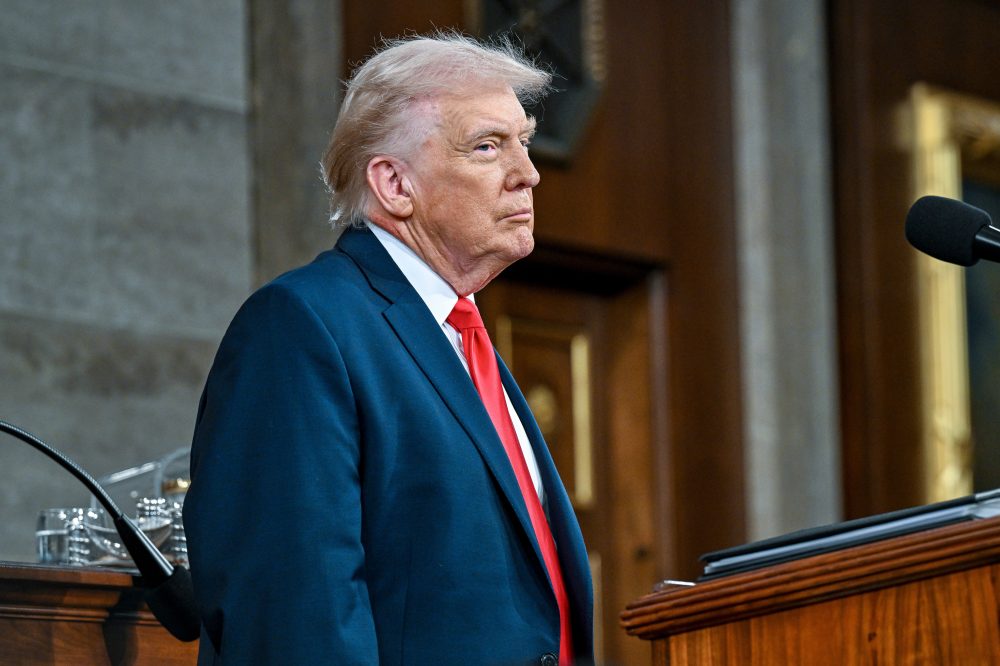

Iranian leadership delivered a sharp response Wednesday to President Trump’s diplomatic pressure campaign, just one day before high-stakes nuclear negotiations scheduled in Geneva, with officials denouncing his statements as “big lies” while simultaneously expressing hope that “honorable diplomacy” could produce an agreement.
These defiant comments from two Iranian representatives come at a time when the United States has positioned its most substantial naval and air force presence in the Middle East in recent decades, as part of Trump’s strategy to secure a nuclear deal while Iran faces internal challenges from widespread domestic unrest that erupted last month.
Should these diplomatic efforts collapse, Trump has repeatedly issued warnings of potential military strikes against Iran — a prospect that has regional powers concerned about the possibility of a broader Middle Eastern conflict.
Stock market futures showed positive movement Wednesday morning, with S&P 500 and Dow Jones futures each gaining 0.3%, while Nasdaq futures advanced 0.5% ahead of market opening.
During Tuesday evening’s address, Trump highlighted employment figures, manufacturing growth, and economic performance he claims is more robust than many Americans recognize. However, he avoided extensive discussion of cost-of-living concerns, despite surveys indicating his economic management and everyday financial issues have become increasingly problematic for his administration.
Market watchers are paying close attention to upcoming quarterly earnings from semiconductor leader Nvidia, expected later today. This financial report could significantly impact volatile markets as investors evaluate whether enormous investments in artificial intelligence technology will deliver expected returns.
Expectations remain extremely high for Nvidia’s results covering the company’s fiscal period from November through January, given that the company’s processors have become fundamental components for AI development.
Dr. Casey Means, a health advocate and author connected to Health Secretary Robert F. Kennedy Jr.’s Make America Healthy Again initiative, will face Senate health committee questioning Wednesday as she pursues confirmation as the nation’s surgeon general.
The Washington confirmation session was postponed from last October when Means went into labor on her scheduled appearance date. The 38-year-old candidate will have the chance to outline her approach to combating chronic illness by targeting underlying causes through nutrition and lifestyle modifications — a philosophy that aligns with the health department’s current emphasis on proper nutrition as midterm elections approach.
However, Means will probably encounter challenging inquiries regarding her credentials and possible financial conflicts. The Stanford-trained doctor’s frustration with conventional medical practice led her toward promoting various products, sometimes without revealing her potential financial interests.
The Central Intelligence Agency reached out to prospective Iranian sources Tuesday, publishing Farsi-language guidance on secure methods for contacting the American intelligence service.
This outreach represents the most recent in a series of recruitment efforts conducted in Farsi, Korean, Russian, and Mandarin languages, offering protected communication channels with the CIA. Tuesday’s Farsi message on X, Instagram, and YouTube arrives during particularly strained U.S.-Iran relations and amid fresh Iranian domestic protests.
Demonstrating continued Iranian unrest, university students staged anti-government demonstrations in Tehran on Monday.
“Hello. The Central Intelligence Agency hears you and wants to help,” the agency stated in the message, according to an English translation. “Here are some tips on how to make a secure virtual call with us.”
The Farsi post accumulated millions of views within hours of publication.
Trump’s Tuesday speech served as a celebration of his early second-term accomplishments, as he highlighted domestic economic revival alongside international diplomatic changes. Trump will have his first chance to present this midterm message later this week during a Texas visit, where Latino voters whose support helped secure his 2024 reelection victory demonstrated his success in transforming the Republican voter base.
The White House seeks to promote this message to a broader public that remains largely dissatisfied with Trump’s presidential performance, while potential Middle Eastern military action threatens to divert attention from his domestic agenda.
Nevertheless, the economic growth and national security themes Trump emphasized during his 108-minute Tuesday address will form the foundation of the campaign message he and fellow Republicans plan to present to voters this November.
The Pentagon is assembling the most extensive American military presence in the Middle East in decades, featuring two aircraft carrier battle groups, as President Trump considers potential military action against Iran if nuclear program discussions fail.
“It’s proven to be, over the years, not easy to make a meaningful deal with Iran, and we have to make a meaningful deal,” Trump said last week. “Otherwise bad things happen.”
Trump will likely have numerous military choices available, potentially including targeted strikes on Iranian air defense systems or operations aimed at Supreme Leader Ayatollah Ali Khamenei, according to defense analysts. However, they caution that Iran might respond more aggressively than it did following previous American or Israeli attacks, potentially endangering American personnel and triggering regional warfare.
“It will be very hard for the Trump administration to do a one-and-done kind of attack in Iran this time around,” said Ali Vaez, an Iran expert at the International Crisis Group. “Because the Iranians would respond in a way that would make all-out conflict inevitable.”
Iranian officials responded defiantly Wednesday to President Trump’s pressure tactics before Thursday’s critical Geneva discussions regarding Tehran’s nuclear program, fluctuating between denouncing his comments as “big lies” and suggesting negotiations might produce an agreement through “honorable diplomacy.”
These statements from Iranian representatives precede Thursday’s talks as America has deployed its largest Middle Eastern military force in decades, supporting Trump’s negotiation strategy while Iran confronts domestic challenges following last month’s nationwide demonstrations.
If diplomatic efforts fail, Trump has repeatedly warned of potential Iranian attacks — a scenario Middle Eastern nations worry could escalate into regional warfare as tensions from the extended Israel-Hamas conflict continue. Iran has already declared all American military installations in the Middle East would be considered valid targets, potentially endangering tens of thousands of U.S. service members stationed throughout the region.