
Swiss citizens will head to the polls next month to decide whether to dramatically reduce government funding for their national broadcasting service, in a vote that reflects growing global tensions between conservative politicians and public media organizations.
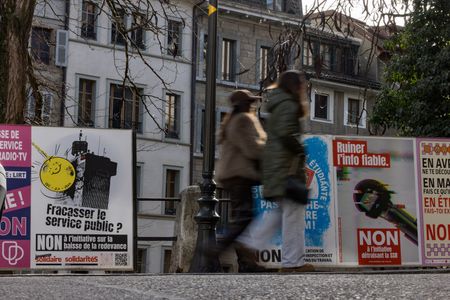
The March 8 referendum would lower the mandatory annual fee that Swiss residents pay to support broadcaster SRG from 335 Swiss francs ($433) down to 200 francs. Conservative groups, including the right-wing Swiss People’s Party, are pushing the initiative as a way to reduce costs for households.
These supporters argue that younger generations have largely abandoned traditional television and radio in favor of social media platforms and streaming services, making the current fee structure outdated.
“SRG’s journalistic work has a political bias, a bias to the left,” stated Thomas Matter, a lawmaker with the Swiss People’s Party.
However, SRG disputes these accusations of political slant, pointing to research from the University of Zurich that concluded the broadcaster maintains political neutrality without favoring either conservative or liberal viewpoints.
Recent polling data from GFS Bern suggests the outcome remains uncertain, with 46% of voters supporting the cuts and 52% opposing them.
The broadcasting company operates an extensive network of 17 radio stations and seven television channels across Switzerland’s four official languages. Officials warn that reducing their annual 1.5 billion franc budget would essentially “end SRG” as it currently exists.
Economic analysts at BAK Economics project that approximately half of the broadcaster’s 5,479 employees could lose their jobs if voters approve the funding reduction. The company has already announced plans for workforce reductions and would face severe programming cuts.
This Swiss debate mirrors similar controversies affecting public broadcasters worldwide, as conservative political movements increasingly challenge these institutions.
In Britain, the BBC faces mounting pressure from politicians across the political spectrum who accuse it of bias. The Reform UK Party, currently leading in opinion polls, wants to eliminate the 174.50-pound ($235.33) television license fee that funds BBC operations.
Reform UK leader Nigel Farage has described the BBC as “institutionally biased” and advocates for significantly reducing its size and scope.
The BBC is also confronting a $10 billion legal challenge from U.S. President Donald Trump over edited footage that allegedly misrepresented his remarks about the January 2021 Capitol incident. While the BBC has issued an apology and acknowledged editorial misjudgment, it maintains the lawsuit lacks legal foundation.
Trump’s legal representatives claimed in December that the BBC “has a long pattern of deceiving its audience in coverage of President Trump, all in service of its own leftist political agenda.”
In May, Trump issued an executive order to eliminate funding for NPR and PBS, two American broadcasters that receive partial government support, targeting what his administration considers politically hostile institutions.
Similar movements have emerged in Germany and Austria, where far-right political parties are demanding the elimination of mandatory broadcasting fees while accusing state media of liberal bias.
Mark Eisenegger, a professor specializing in public discourse at Zurich University, describes these bias allegations as a standard strategy employed by populist and right-wing movements to undermine public broadcasting and create opportunities for their own media outlets.
“They see independent journalism as a threat,” Eisenegger explained.
Opposition campaigners in Switzerland are using posters warning that cutting SRG funding would allow the proliferation of “Russian lies” and “American fake news.”
Laura Zimmermann, who leads the campaign against the proposed cuts, emphasizes that SRG plays a crucial role in maintaining Swiss unity by broadcasting in all four national languages while serving as a safeguard against public misinformation.
“We’re living in an age of disinformation,” Zimmermann said. “It’s a vital part of our security.”