
BOGOTA, Colombia — The United Nations issued a stark warning Thursday that Colombia faces the possibility of sliding back into the severe human rights crisis that plagued the country before a landmark 2016 peace agreement with its largest rebel organization brought improved security.
UN officials expressed concern that escalating violence in Colombia’s countryside could jeopardize the integrity of the nation’s approaching elections.
The UN’s yearly assessment of Colombia’s human rights landscape reveals a dramatic increase in assaults on rural populations by insurgent organizations and narcotics traffickers competing for control of areas once held by the Revolutionary Armed Forces of Colombia, which signed the peace accord with the government eight years ago.
The report documents an alarming 85% rise in forced displacement during 2025 compared to the previous year, with roughly 94,000 individuals compelled to abandon their communities.
Killings of human rights advocates climbed 9% over the past year, while armed organizations imposed 12% more lockdowns on rural settlements. These lockdowns prevent residents from hunting or working their land, while forcing schools and local businesses to close, severely disrupting civilian life.
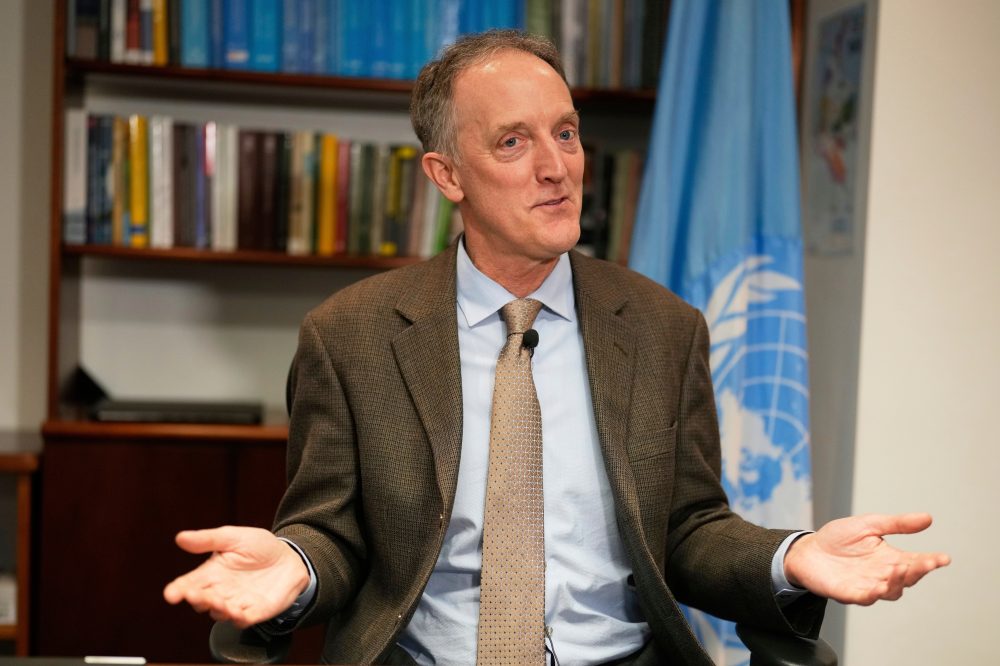
“This report is an early warning,” stated Scott Campbell, who serves as the Colombia representative for the United Nations High Commissioner for Human Rights. “There are a number of indicators that we are trying to draw attention to in order to prevent further degradation” of Colombia’s human rights conditions.
Though current human rights abuses don’t match the scale seen during Colombia’s most intense conflict with FARC rebels — when roughly 300,000 people annually fled violence — the assessment emphasizes that Colombia’s leadership must take stronger measures to shield civilians from unlawful armed organizations.
A continuing challenge involves illegal armed groups forcing children into their ranks, now utilizing social media networks to recruit young people.
While the UN documented 150 instances of forced child recruitment in 2025, officials believe this figure significantly underrepresents the actual scope, as many families fear reporting such cases due to potential reprisals.
The current government under left-leaning President Gustavo Petro, who previously belonged to Colombia’s M-19 guerrilla movement, has attempted to curb violence through peace talks with remaining rebel organizations under an approach called “total peace.”
However, the report observes that truces between Colombian authorities and insurgent groups have frequently failed to decrease attacks against civilians.
“We think it is very important that the government push for remedies to that,” Campbell noted.
With Colombia’s elections approaching, the assessment highlights dangerous conditions for political figures. The previous year saw 18 political leaders murdered and 126 attacks against political figures nationwide.
Last June, conservative presidential contender Miguel Uribe suffered a gunshot wound to the head during a campaign event in Bogota, representing the first assault on a Colombian presidential candidate in thirty years. Uribe succumbed to his injuries two months afterward.
“Violence and conflict, including the emergence of pre-electoral violence, have generated greater risks for the free and safe exercise of certain civil and political rights,” the assessment concluded.
Colombia will conduct congressional elections on March 8, with candidates vying for more than 300 legislative positions in both chambers.
Presidential elections will follow in May, with at least six candidates anticipated to compete.
To address Colombia’s human rights challenges, the report emphasizes that the incoming administration must prioritize complete execution of the 2016 FARC peace agreement.
While certain elements have been fulfilled — including FARC’s weapons surrender and establishing transitional justice mechanisms — other provisions remain incomplete.
These include establishing agricultural courts to handle land disputes and expanding programs designed to encourage farmers to abandon coca cultivation, cocaine’s primary ingredient.
“It’s crucially important at this juncture ahead of elections to make sure that the current government and the future government take concrete actions to make sure that Colombia moves forward,” Campbell emphasized.
He described the 2016 peace agreement as offering a “road map” toward a “Colombia of sustainable peace and respect for human rights.”