
DUBAI, United Arab Emirates (AP) — Iranian leadership struck back Wednesday at President Donald Trump’s confrontational approach before Thursday’s pivotal nuclear discussions in Geneva, dismissing his statements as falsehoods while suggesting diplomatic solutions remain possible through what they termed “honorable diplomacy.”
These comments from Iranian officials arrive as the United States has positioned its most substantial collection of military aircraft and naval vessels in the Middle East region in recent decades, reflecting Trump’s strategy to secure an agreement while Iran faces domestic turmoil following last month’s widespread civil unrest.
Should these diplomatic efforts collapse, Trump has repeatedly warned of potential military strikes against Iran — a prospect that regional powers worry could escalate into broader Middle Eastern warfare while tensions from the prolonged Israel-Hamas conflict continue. Iran has already declared that any American military installations throughout the Middle East would be viewed as valid targets, potentially endangering tens of thousands of U.S. military personnel stationed across the region. Analysis of satellite imagery by The Associated Press reveals that American naval vessels normally stationed in Bahrain have apparently moved to open waters.
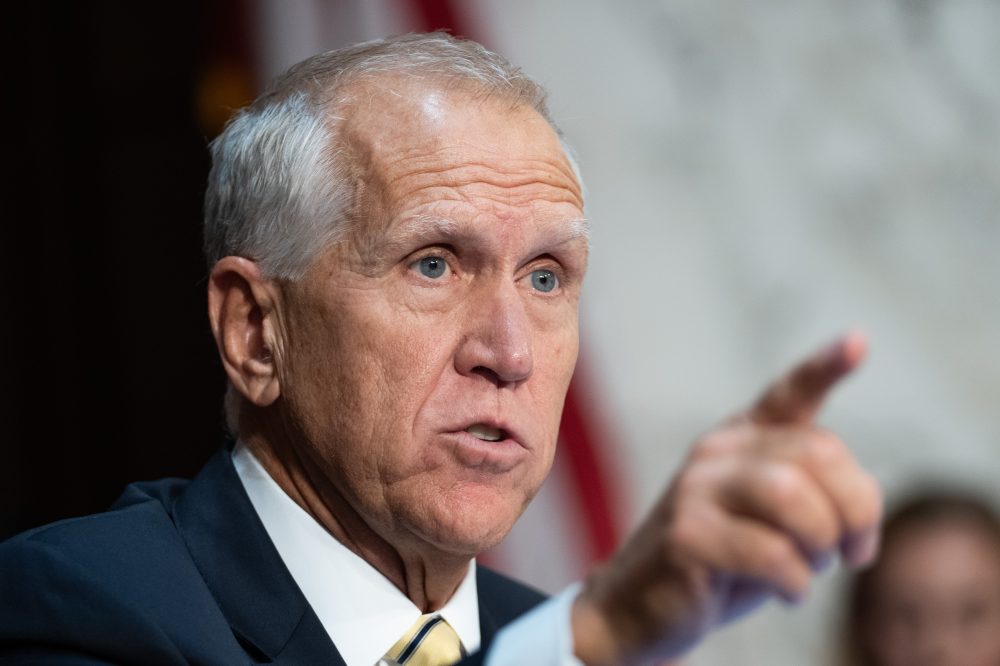
During Tuesday evening’s State of the Union address, Trump addressed Iran and the upcoming nuclear discussions.
“They’ve already developed missiles that can threaten Europe and our bases overseas, and they’re working to build missiles that will soon reach the United States of America,” Trump said. “They were warned to make no future attempts to rebuild their weapons program, and in particular nuclear weapons, yet they continue. They’re starting it all over.”
Earlier satellite analysis conducted by the AP revealed Iran has begun reconstructing missile manufacturing facilities and conducting activities at three nuclear locations targeted by U.S. forces in June. Iran consistently claims its nuclear activities serve peaceful purposes. Western nations and the International Atomic Energy Agency assert Iran operated a nuclear weapons program through 2003. Before the June military action, Iran had been processing uranium to 60% enrichment levels — just one technical step below the 90% concentration needed for weapons.
In response to Trump’s remarks, Iranian Foreign Ministry spokesman Esmail Baghaei drew parallels between the president and Joseph Goebbels, Hitler’s propaganda chief. He charged Trump and his team with orchestrating a “disinformation & misinformation campaign” targeting Iran.
“Whatever they’re alleging in regards to Iran’s nuclear program, Iran’s ballistic missiles, and the number of casualties during January’s unrest is simply the repetition of ‘big lies,’” Baghaei wrote on X.
Trump claimed during his address that at least 32,000 people died in the protests, a figure at the higher end of activist estimates. The U.S.-based Human Rights Activist News Agency has documented over 7,000 deaths but believes actual casualties are significantly higher. Iran’s government, which historically minimizes casualty figures from civil unrest, provided its sole official count on January 21, reporting 3,117 fatalities.
Parliament Speaker Mohammad Bagher Qalibaf offered the U.S. a choice between diplomatic engagement or facing Iranian retaliation.
“If you choose the table of diplomacy — a diplomacy in which the dignity of the Iranian nation and mutual interests are respected — we will also be at that table,” Qalibaf said, according to the semiofficial Student News Network, a media outlet believed to be close to the all-volunteer Basij force of Iran’s paramilitary Revolutionary Guard.
“But if you decide to repeat past experiences through deception, lies, flawed analysis and false information, and launch an attack in the midst of negotiations, you will undoubtedly taste the firm blow of the Iranian nation and the country’s defensive forces.”
Iranian and American representatives are scheduled to convene Thursday in Geneva for their third negotiating session under Omani mediation, with Oman historically serving as a diplomatic bridge between Tehran and Western powers.
If diplomatic efforts fail, questions remain about the timing of potential military action, along with its scope and objectives.
American officials have not clarified the objectives of possible military intervention. Should the aim be pressuring Iran toward nuclear concessions, limited strikes may prove ineffective. If the goal involves regime change, this would likely require extensive, prolonged military commitment. No public evidence suggests planning for post-conflict scenarios, including potential Iranian instability.
The current state of Iran’s nuclear capabilities remains unclear. Trump previously claimed American attacks “obliterated” the program. Now, eliminating whatever nuclear infrastructure remains appears to be a renewed administration priority. IAEA inspectors have been denied access to verify what facilities still exist.
Regional implications of military action also remain uncertain. Tehran could target American-allied Gulf nations or Israel in retaliation. Oil markets have already risen partly due to these concerns.
Tuesday satellite imagery from Planet Labs PBC analyzed by the AP showed American vessels normally based in Bahrain, headquarters of the Navy’s 5th Fleet, positioned at sea. The 5th Fleet directed inquiries to U.S. Central Command, which did not immediately respond. Prior to Iran’s June attack on Qatar, the 5th Fleet similarly dispersed its ships to avoid potential strikes.