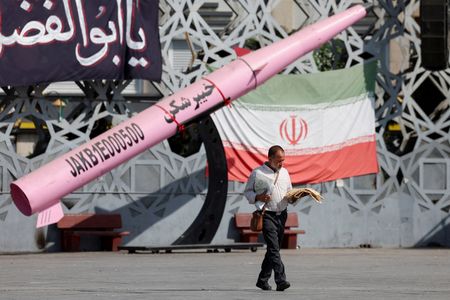

The ongoing U.S.-Israeli conflict with Iran has sent shockwaves through global aviation markets, with airline stocks across Asia taking a major hit as oil costs reach their highest levels since July 2022.
Fuel prices have surged dramatically, with crude oil climbing 20% during early Monday trading as concerns mount over supply disruptions and extended shipping delays caused by the escalating Middle Eastern crisis.
Travelers caught in the conflict zone are paying extraordinary amounts to flee the region, making last-minute airport runs, taking overland routes to safer transportation hubs, and in some cases requiring fighter jet escorts for commercial aircraft departures.
Regional airspace remains largely restricted due to missile and drone threats, forcing many passengers to seek private jet alternatives as charter services and limited commercial operations struggle to handle the evacuation of thousands of stranded travelers.
Flight tracking data from Cirium shows that over 37,000 flights serving Middle Eastern destinations have been grounded between February 28, when hostilities began, through March 8.
Aviation industry expert Brendan Sobie, based in Singapore, noted that airlines were already facing challenging conditions before this latest crisis due to political instability, economic pressures, and supply chain complications.
“Now that already high level of uncertainty has increased even further,” he said.
Major carriers saw significant stock declines Monday, with Qantas Airways, Air New Zealand, Cathay Pacific, Japan Airlines, Korean Air Lines, China Southern, and China Eastern all experiencing drops ranging from 4% to over 10%.
Aviation fuel represents airlines’ second-biggest operational cost after personnel expenses, typically consuming 20-25% of their operating budgets. While many Asian and European carriers maintain oil hedging strategies, most U.S. airlines abandoned this practice in recent decades.
“If crude is rising 20%, jet fuel is rising several times more as it is even more scarce, adding significant cost to operations together with crew resources which are stretched due to longer flying times when airspace is closed,” said Subhas Menon, head of the Association of Asia Pacific Airlines.
Australia has instructed family members of diplomatic personnel in the United Arab Emirates to evacuate following escalating violence that brought Iranian attacks to several Gulf cities and temporarily shut down Dubai International Airport on Saturday.
Oman’s Muscat International Airport has requested private jet operators limit “additional flights” to prioritize government and commercial services amid fresh airspace restrictions affecting regional travel recovery efforts, according to internal communications obtained by Reuters.
Turkish carriers including Turkish Airlines, AJet, Pegasus, and SunExpress have suspended all service to Iraq, Syria, Lebanon, and Jordan through March 13, Turkish Transport Minister Abdulkadir Uraloglu announced Sunday.
The U.S. State Department reported completing more than a dozen charter evacuation flights, removing thousands of American citizens from the Middle East since last week.
Air India has expanded its schedule with dozens of additional European and North American routes through March 18 to meet increased demand for direct services as Middle Eastern airspace closures eliminate connecting flight options.
Pilots interviewed by Reuters described mounting psychological pressure from managing multiple global conflict zones spanning Ukraine, Afghanistan, and Israel, forcing them to navigate increasingly restricted airspace while avoiding military drone activity.