
Nations worldwide worked frantically Wednesday to evacuate their citizens from Middle Eastern countries as expanding warfare continued to cause massive disruptions to international air travel.
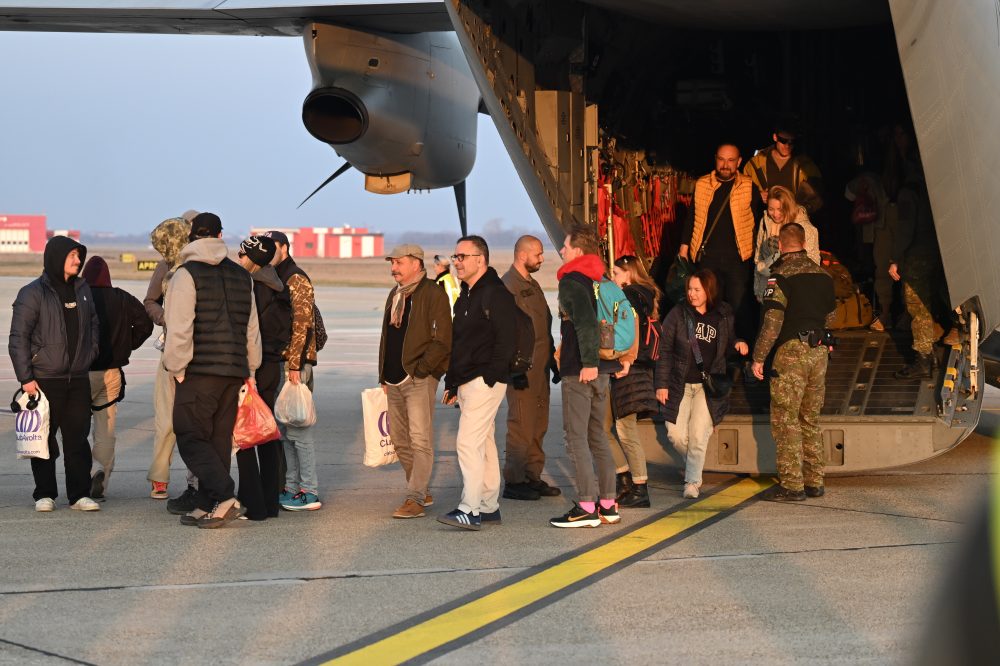
France successfully landed its first evacuation aircraft in Paris early Wednesday morning, bringing home citizens who had been retrieved from Oman and Egypt. Italian authorities also completed the evacuation of students from Dubai in the United Arab Emirates, marking early progress in international rescue efforts.
Despite these initial successes, aviation across the Middle East remained severely hampered. Closed airspace and flight restrictions throughout much of the Gulf region have left passengers stranded not only within the conflict zone but also in distant cities where connecting flights through major airline centers have been scrapped.
Aviation analytics company Cirium reports that over 20,000 flights out of more than 36,000 scheduled Middle East departures and arrivals have been scrapped since hostilities began through Wednesday. FlightAware data shows approximately 2,000 worldwide flight cancellations on Wednesday, an improvement from the roughly 3,150 cancellations recorded Monday.
Countries including Oman, Egypt, Saudi Arabia and Jordan have become crucial staging areas for evacuation operations bringing foreign nationals to safety.
French President Emmanuel Macron estimates approximately 400,000 French citizens are currently in conflict-affected Middle Eastern regions, whether as permanent residents or temporary visitors.
French Minister for Citizens Abroad Eleonore Caroit explained that roughly 100 spots on their initial rescue flight were designated for at-risk travelers, particularly families with young children, elderly individuals and people requiring medical care.
France planned two additional Wednesday evacuations — a military transport bringing 180 citizens from Abu Dhabi and a chartered aircraft carrying 205 people from Israel.
“Our goal is to help repatriate as quickly as possible the French people who wish to return,” Caroit stated during an interview with French broadcaster TF1.
Multiple other nations launched similar rescue operations.
The U.S. State Department pledged Wednesday via social media to assist in evacuating American citizens. Earlier this week, officials advised U.S. nationals to depart more than a dozen countries using whatever commercial travel remained available.
“Any American in the Middle East who wishes to leave: call the State Department and we will get your home,” the department posted, noting that 18,000 Americans had successfully returned to the United States, with 8,500 arriving Tuesday alone.
British officials announced a charter aircraft would depart Oman late Wednesday to transport some of the thousands of U.K. citizens in Gulf nations.
The U.K. Foreign Office reported that over 130,000 British nationals in the Middle East had registered with government authorities since Saturday’s conflict outbreak, though officials noted not everyone seeks to leave. Many are located in the UAE, and the government has discouraged attempts to travel overland to Oman.
Ireland’s foreign minister confirmed Emirates airline would operate a Dubai to Dublin flight Wednesday. Foreign Affairs Minister Helen McEntee estimated 22,000 to 23,000 Irish citizens were in the Middle East. Irish authorities also planned to charter an aircraft for approximately 280 people from Oman in coming days.
Norway’s Foreign Ministry announced it was deploying an “emergency team” to Dubai to support Norwegian Embassy personnel assisting an estimated 1,500 registered Norwegians in the city.
Italian student Valerio Schiavoi, who was attending a United Nations diplomatic simulation in Dubai through the World Students Connection Program, described how the situation changed dramatically when news of U.S.-Israeli airstrikes on Iran emerged Saturday.
“As soon as we leave the room, we start to hear the sounds of military planes and so on. And the panic starts a bit,” Schiavoi told Italian news agency LaPresse. “Through the window we could see missiles passing by and alarms kept sounding, but we didn’t know what to do.”
Some commercial carriers have restored limited service, with Etihad, Emirates and Virgin Atlantic scheduled to operate UAE-to-London flights Wednesday. However, numerous travelers continued struggling to secure passage home.
British Airways announced Wednesday that flights departing Thursday through Saturday from Muscat were completely booked.
“We fully understand this is a very difficult time for our customers,” the airline stated, promising to add extra flights “if we are able to.”
Li Qian, a 44-year-old visitor from Hangzhou, China, has been trapped in Abu Dhabi with her family after airspace closures canceled their return flight. She described receiving continuous missile warnings on her phone and witnessing smoke rising from areas they had previously toured.
“It was frightening … We just want to get home as soon as possible,” she explained, expressing concern about her mother’s blood pressure medication and her child’s school attendance.
Thousands of miles away on Indonesia’s resort island of Bali, approximately 6,000 people remained stranded after flights to Doha, Dubai and Abu Dhabi were canceled, according to local officials. Many affected travelers were European or American tourists attempting long-distance flights via those Middle Eastern airports.
Indonesian immigration officials issued emergency residence permits and waived overstay penalties for stranded foreign visitors.
Agnes Chen Pun, a Hong Kong resident who relocated with her family to Dubai last year, described difficulties finding airline tickets to exit the region. She initially moved to a Fujairah resort, then to a desert resort near Sharjah due to concerns about potential attacks and local fires.
“We were so nervous, so anxious,” said Chen, a partner at Asia Bankers Club, a Hong Kong- and Dubai-based investment firm.
She considered booking a 13-passenger private aircraft costing $268,000 but eventually obtained commercial tickets to Singapore for approximately $2,200 per person. Despite the disruption, Chen indicated she planned to return to the UAE once conditions stabilize.
“I think the scare, the fears, will be short-term,” she said.