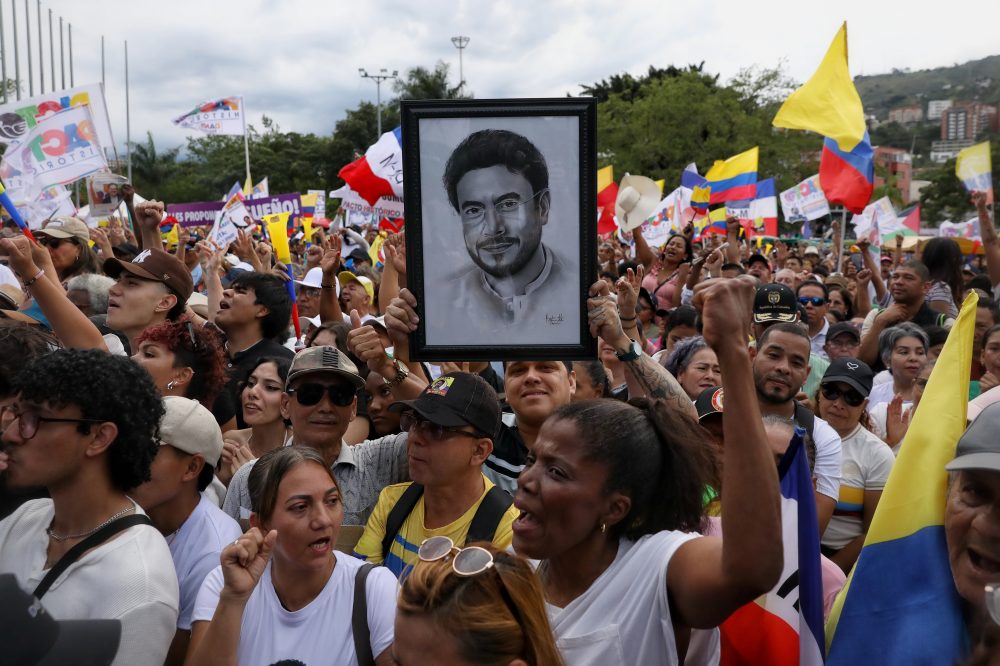

BOGOTA, Colombia — Voters across Colombia are participating in Sunday’s elections to choose new legislative representatives and determine presidential nominees from three major political coalitions in advance of the May presidential race.
Security concerns have prompted heightened vigilance throughout the South American nation, especially in countryside areas where illegal armed organizations maintain control.
Current President Gustavo Petro — Colombia’s first leftist president — has raised questions about the reliability of the nation’s voting technology, referencing the 2022 legislative contests when his Historic Pact coalition received an additional 390,000 votes after ballots were recounted. He credited the increase to election monitoring efforts.
The European Union sent 40 election monitors in early February and announced plans to expand their observer mission for Sunday’s legislative voting.
Over 3,000 individuals are competing for 285 seats in the legislature — 102 Senate positions and 183 House seats — with 41.2 million registered voters able to participate.
Sunday’s results will shape Colombia’s political environment for the next presidential administration.
Constitutional restrictions prevent Petro from seeking another consecutive term as president.
While Colombia’s existing legislature supported Petro’s pension and employment reforms, lawmakers blocked his healthcare and taxation proposals, creating frequent friction between the executive and legislative branches.
Conservative opposition groups are working to regain their position as the country’s leading political power. The Democratic Center, Colombia’s main opposition organization, remains under the guidance of former President Álvaro Uribe, who is rallying supporters to establish a strong legislative foundation before the presidential contest.
In addition to congressional races, Colombian citizens will select presidential nominees for the nation’s three primary political groups: centrist, center-left, and conservative. The victors of these “inter-party consultations,” which function like American primary contests, will advance to the presidential election beginning May 31.
Presidential contenders have traditionally utilized these primaries to measure their popularity before the initial voting round. This approach worked effectively four years ago for Petro, who strengthened his position by winning the left-wing primary with Francia Márquez, who later became his running mate.
Yet the two contenders currently ahead in polling — leftist Iván Cepeda from Petro’s party and far-right candidate Abelardo de la Espriella — have chosen not to enter the optional primaries.
Political expert Gabriel Cifuentes described the primaries as a risky proposition for participants, explaining that success on Sunday only matters if it shows sufficient strength to challenge frontrunners like Cepeda and de la Espriella.
More than 126,000 security personnel are scheduled for deployment nationwide during voting.