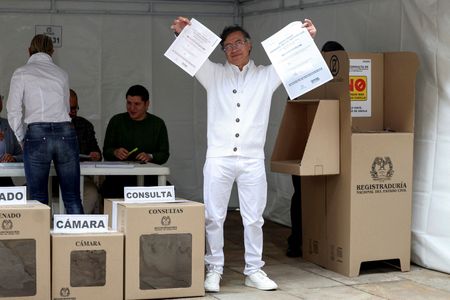

Colombian citizens went to voting stations Sunday to select their new legislative body and determine presidential nominees for the upcoming May election, in a process that will significantly influence the future president’s capacity to advance their political priorities.
More than 3,000 candidates competed for 102 Senate positions and 182 House positions, with political experts anticipating the results will be split among approximately two dozen political parties. This fragmentation will likely require the eventual president to build coalition partnerships to govern effectively.
Additionally, 41.2 million registered voters had the opportunity to participate in primary elections where right-wing, centrist, and left-wing parties selected their presidential nominees. Notable candidates including leftist Ivan Cepeda, conservative Abelardo De La Espriella, and moderate Sergio Fajardo chose not to take part in Sunday’s primary contests.
“It is very important to come and exercise the right to vote. The most important thing is for Colombia to decide its future and for the results to be respected,” said Federico Rodriguez, a 32-year-old business administrator, after voting in Bogota’s north.
“It is a source of pride that we can go out and exercise our right to vote and to democracy, but I also have uncertainty about the results, about knowing what Colombia’s future will be in the next four years,” said university student Isabella Suarez, 21.
Voting locations remained open from 8 a.m. local time until 4 p.m.
Current President Gustavo Petro, whose administration concludes in August, has raised concerns multiple times about the vote-counting technology planned for the elections, suggesting potential problems could occur. However, National Registrar Hernan Penagos has assured voters of the election’s integrity and confirmed that party representatives can monitor the software’s operations.
Defense Minister Pedro Sanchez announced this week that approximately 246,000 military personnel and police officers were deployed on heightened security status to guard against potential violence from criminal organizations that might attempt to interfere with voting or intimidate citizens into supporting specific candidates.