
Iran’s clerical leadership has appointed Mojtaba Khamenei, son of the recently killed Supreme Leader Ayatollah Ali Khamenei, to serve as the nation’s new top authority, according to Iranian media reports.
The Assembly of Experts made the announcement more than a week following the elder Khamenei’s death in an airstrike during ongoing U.S.-Israeli military operations against Iran. The 56-year-old cleric survived the same attacks that claimed his father’s life.
Council member Ayatollah Mohsen Heidari Alekasir explained in a Sunday video statement that their choice followed the late leader’s instructions to select someone “hated by the enemy.”
“Even the Great Satan (U.S.) has mentioned his name,” Heidari Alekasir commented, referencing President Donald Trump’s recent description of Mojtaba as an “unacceptable” selection.
The new supreme leader accumulated significant influence during his father’s reign, operating as an unofficial advisor with deep connections to Iran’s security apparatus and the extensive business networks they oversee. He has consistently opposed reform movements attempting to improve relations with Western nations seeking to limit Iran’s nuclear activities.
Mojtaba’s extensive relationships with the elite Revolutionary Guard Corps provide him substantial control throughout Iran’s political and military structures, with sources describing his role as his father’s primary “gatekeeper.”
“He has strong constituency and support within the IRGC, in particular amongst the younger radical generations,” explained Kasra Aarabi, who leads Revolutionary Guard research at United Against Nuclear Iran, a Washington-based policy group.
Iran’s supreme leader holds ultimate authority over all state matters, including international relations and nuclear policy. While Western governments seek to prevent Tehran from developing atomic weapons, Iranian officials maintain their nuclear program serves only peaceful civilian purposes.
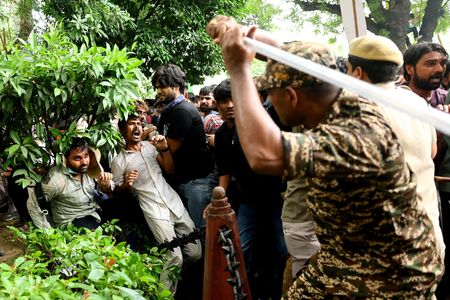
The new leader may encounter resistance from Iranian citizens who have demonstrated willingness to organize large-scale demonstrations demanding expanded freedoms, despite violent government suppression.
Born in 1969 in Mashhad, a sacred Shiite city, Mojtaba grew up while his father helped organize resistance against the Shah’s rule. During his youth, he participated in the Iran-Iraq conflict.
His religious education took place in Qom’s conservative seminaries, Iran’s primary center for Shiite theological studies, where he achieved the clerical designation of Hojjatoleslam.
Despite never holding an official government role, Mojtaba has attended loyalist gatherings but rarely makes public statements.
His informal influence has generated significant debate within Iran, as opponents reject any suggestion of hereditary rule in a nation that toppled a U.S.-supported monarchy in 1979.
The U.S. Treasury sanctioned Mojtaba in 2019, stating he acted for the supreme leader “in an official capacity despite never being elected or appointed to a government position” beyond his work in his father’s administration.
Treasury officials said the elder Khamenei had transferred certain duties to his son, who collaborated closely with Quds Force leadership and the Basij religious militia “to advance his father’s destabilising regional ambitions and oppressive domestic objectives.”
Protesters specifically targeted Mojtaba during 2022 demonstrations following a young woman’s death while in police custody after her arrest for allegedly violating the Islamic Republic’s mandatory dress requirements.
In 2024, a widely circulated video showed him announcing the halt of Islamic law classes he taught in Qom, sparking questions about his motivations.
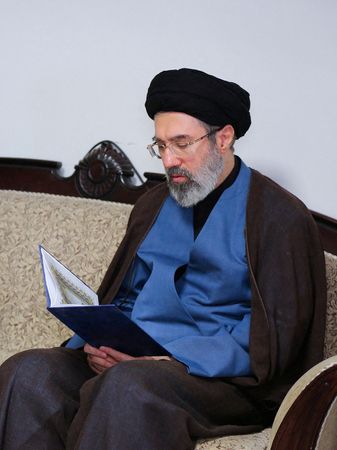
The new leader shares a striking physical resemblance with his father and wears the black turban of a sayyed, signifying his family’s claimed descent from Prophet Mohammad.
Opponents argue Mojtaba lacks sufficient religious qualifications for the supreme leadership role, noting that Hojjatoleslam ranks below Ayatollah, the title held by both his father and Islamic Republic founder Ruhollah Khomeini.
However, he remained a leading candidate, particularly after another potential successor, former President Ebrahim Raisi, perished in a 2024 helicopter accident.
A 2007 U.S. diplomatic document released by WikiLeaks quoted three Iranian contacts identifying Mojtaba as a key channel for accessing his father.
Many observers credit Mojtaba with orchestrating hardliner Mahmoud Ahmadinejad’s unexpected 2005 presidential victory.
He supported Ahmadinejad again during his controversial 2009 reelection, which triggered anti-government demonstrations that security forces, including the Basij, brutally crushed.
Moderate cleric Mehdi Karroubi, who competed in that election, sent a formal complaint to the elder Khamenei alleging Mojtaba’s improper support for Ahmadinejad, though Khamenei dismissed the claims.
Mojtaba’s wife, who died in the recent airstrikes, was the daughter of hardline former parliament speaker Gholamali Haddadadel.