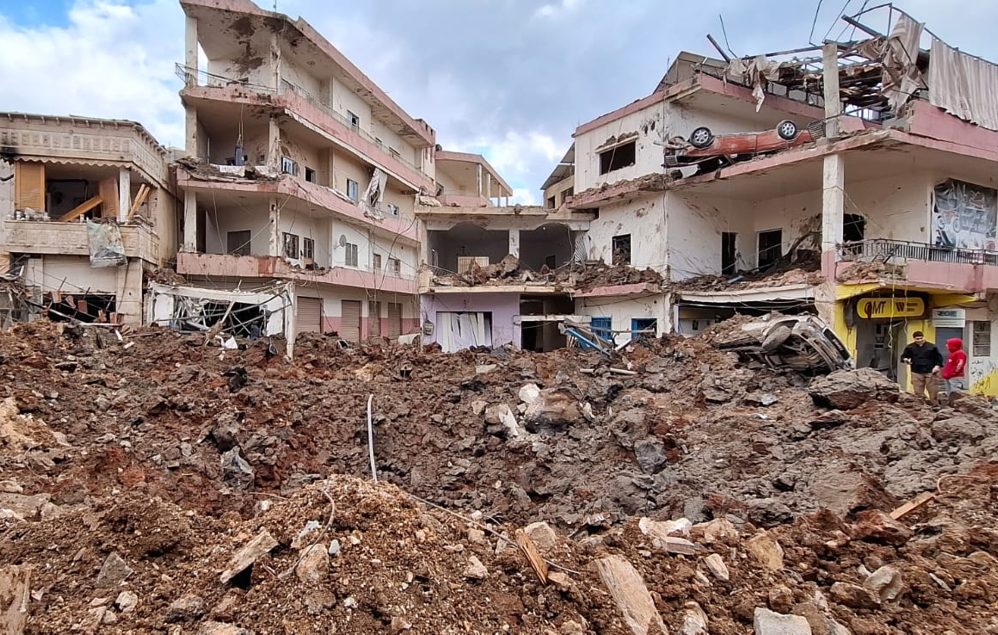

Military strikes expanded across the Middle East on Sunday as Israeli forces targeted oil storage facilities in Tehran and conducted operations in Lebanon, while Iranian forces struck a desalination plant in Bahrain, marking a dangerous escalation in the regional conflict.
Israeli Prime Minister Benjamin Netanyahu indicated the conflict would intensify, promising “many surprises” in upcoming military operations. The attacks marked the first time civilian industrial infrastructure has become a primary target in the ongoing war.
Tehran’s skyline filled with smoke Sunday morning following Israeli bombardments of oil facilities that created towering flames visible against the night sky in video footage. Iranian state media Fars reported that four oil storage sites and one production transfer facility were hit in Tehran and Alborz provinces, resulting in the deaths of four tanker truck operators.
The conflict, which began February 28 following joint American-Israeli military strikes against Iran, has resulted in significant casualties across the region. Officials report at least 1,230 deaths in Iran, more than 300 in Lebanon, and approximately a dozen fatalities in Israel.
Iranian President Masoud Pezeshkian issued warnings about escalating attacks on American positions throughout the Middle East as Washington and Tel Aviv continue their aerial campaign.
“When we are attacked, we have no choice but to respond. The more pressure they impose on us, the stronger our response will naturally be,” Pezeshkian stated in video remarks Sunday. “Our Iran, our country, will not bow easily in the face of bullying, oppression or aggression — and it never has.”
The Iranian leader’s comments appeared to reverse more diplomatic statements made Saturday, when he seemed to offer apologies to Gulf neighbors for attacks on their territory. Those conciliatory remarks were quickly contradicted by Iranian hardline officials.
Despite the tough rhetoric, Pezeshkian maintained Iran does not seek conflict with neighboring Arab nations, many of which house American military installations. “They are our brothers,” he declared, while accusing the United States of attempting to create divisions between regional countries. However, Iranian military actions have extended beyond American bases to target energy infrastructure, hotels, and populated areas.
In a significant development, Iranian forces targeted water desalination infrastructure in Bahrain, marking the first time an Arab nation has reported such attacks during the nine-day conflict. Missile fragments damaged a university building in Muharraq city and caused additional property damage, according to Bahrain’s Interior Ministry.
The targeting of desalination facilities raises serious concerns, as hundreds of these plants line the Persian Gulf coastline and provide essential drinking water for Arab countries in the arid region.
Earlier, Iranian Foreign Minister Abbas Araghchi claimed American airstrikes damaged an Iranian desalination facility on Qeshm Island, stating “the U.S. set this precedent, not Iran.” Such infrastructure is vital for providing drinking water in the desert regions surrounding the Gulf.
Israeli military officials confirmed Sunday they had attacked a fleet of F-14 fighter jets that Iran acquired from the United States before the 1979 revolution. The aircraft, stationed at Isfahan Airport south of Tehran, historically served as a cornerstone of Iranian air defense capabilities. Israeli forces also targeted radar systems and air defense installations, though they did not confirm whether the jets were destroyed.
A missile alert was activated Sunday morning in Dubai, United Arab Emirates, indicating the potential for expanded regional involvement in the conflict.