
A Lebanese resident who recently completed repairs on his war-damaged home now finds himself evacuated once again as renewed conflict strikes his border community.
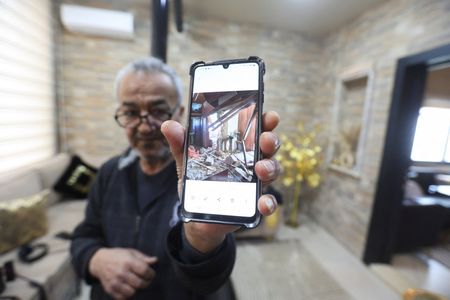
Hussain Khrais, 66, had recently finished showcasing his reconstructed residence in southern Lebanon, which he had restored following severe damage during 2024 fighting between Israeli forces and Hezbollah. However, fresh hostilities have put his property back in harm’s way.
Khrais evacuated from Khiyam, located approximately three miles from Israel’s border, when Israeli forces launched intensive aerial bombardments last week following rocket and drone attacks by the Iran-supported Hezbollah organization targeting Israeli territory.
“Is the house I worked so hard to build, or the business I started, still there? Or is it all gone?” Khrais said while speaking to Reuters from a family member’s residence near Beirut, where he and his relatives have taken shelter.
“The feeling is very, very upsetting, because we still don’t know if we’ll go back or not.”
This marks neither Khrais’ initial nor secondary displacement experience. Over the past forty years, the elderly man has been forced to relocate at least four separate times due to Israeli military operations and bombing campaigns, consistently returning to find his community destroyed before methodically reconstructing.
During the previous year, he invested several months and approximately $25,000 fixing destruction from the most recent Hezbollah-Israel warfare, which concluded fifteen months earlier. Hezbollah initiated attacks against Israel following joint U.S.-Israeli airstrikes on Iran conducted February 28.
“It really bothers me to think this is the life I’ve lived,” Khrais explained to Reuters. “Once again, displacement, return, rebuilding, restoration — then again displacement, return, rebuilding. What kind of life is that?”
Without assistance from Lebanon’s government and minimal aid from Hezbollah’s social services network, most Lebanese citizens whose properties suffered damage or destruction during 2024’s conflict have relied on personal finances for reconstruction efforts.
Rebuilding efforts have created enormous financial strain on impacted Lebanese households, who continue facing difficulties accessing bank savings following the nation’s 2019 economic crisis.
Two weeks prior, Khrais had expressed concerns to Reuters about potential renewed warfare. “I’m at an age where I can’t start all over again. That’s it,” he had stated.
The current conflict has delivered another devastating impact to Lebanese citizens. Approximately 300,000 individuals have been displaced during the past week due to Israeli bombardments and military evacuation directives, affecting roughly eight percent of Lebanese territory.
Khrais currently shares accommodations with about twenty other displaced family members, including some evacuated from Khiyam and others from Beirut’s southern neighborhoods, which have experienced heavy Israeli bombing.
He remains focused on television coverage, where news reports detail Israeli ground forces and armored vehicles advancing further into his hometown.
“I’ve been in Beirut for four days now, and these four days feel like 400 years,” Khrais stated.
He deeply longs for his residence.
“Maybe the thing I’m most attached to, is when I open the door to my children’s bedrooms and see the pictures of their children hanging on the walls,” he explained.
“That sight is worth the world’s treasures — to see my grandchildren’s pictures in Khiyam.”
Khrais lacks current information regarding his home’s condition. He maintains optimism but acknowledges that if destruction has occurred, he will respond as he always has.
“The big shock would be if I came back and didn’t find it. But my feeling says no, God willing, it will remain. And like I said, even if we don’t find the house, we’ll go back and rebuild,” he said.