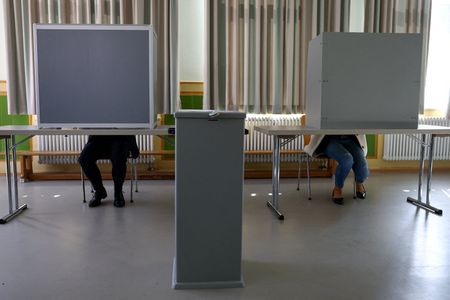

BERLIN – Germany’s Green Party claimed victory in Sunday’s state elections in Baden-Wuerttemberg, defeating Chancellor Friedrich Merz’s conservative party and positioning themselves to maintain their governing coalition, according to preliminary election results.
Early projections from public television network ARD placed the environmental party at the top with 32% of votes cast, while Merz’s Christian Democratic Union secured 29%. The far-right Alternative for Germany finished in third position with 17.5%, solidifying its role as the country’s primary opposition force beyond its traditional strongholds in former East Germany.
The Social Democrats, who partner with Merz’s party at the federal level, barely crossed the 5% minimum required for parliamentary representation, earning just 5.5% of votes and highlighting their continued decline in voter support.
This southwestern German state serves as headquarters for major automotive companies including Mercedes-Benz, Porsche, and Bosch, making it one of the nation’s wealthiest regions. However, the area’s car manufacturing sector faces mounting pressure from competitive Chinese electric vehicle producers, impacting the broader regional economy.
Green candidate Cem Ozdemir, seeking the state premier position, represents a moderate voice unlikely to challenge Merz significantly in the Bundesrat, Germany’s federal upper chamber where states hold representation. The Green-CDU partnership has governed Baden-Wuerttemberg for ten years.
These election outcomes underscore the difficulties facing Merz as his promised policy changes remain stalled and Germany’s economy continues its slow recovery following two years of recession. The Greens managed to overtake the Christian Democrats in polling as election day approached, despite initially trailing in the campaign.
The results may increase dissatisfaction among conservative party members already concerned about historically low approval numbers for Merz’s administration in Berlin.
Sunday’s contest marks the first of five state elections scheduled for this year. Rhineland-Palatinate voters will head to polls on March 22, with Berlin, Saxony-Anhalt, and Mecklenberg-Vorpommern following in September.