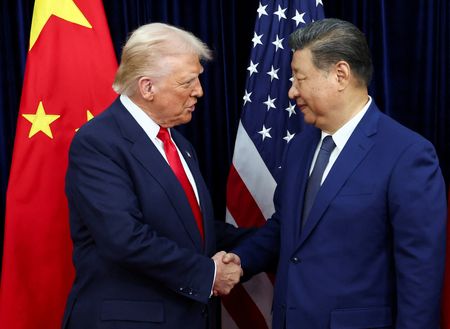

BEIJING/WASHINGTON, March 9 – The scheduled meeting between President Donald Trump and Chinese leader Xi Jinping later this month will likely focus on preserving economic stability rather than delivering major trade breakthroughs, according to five sources familiar with summit preparations.
Corporate executives from America have not yet organized the high-level business delegation that some had hoped to arrange for the visit. Meanwhile, Beijing appears unlikely to secure the investment protections it has been seeking for Chinese businesses operating in the United States.
Both nations are working to preserve the relative calm that has defined relations between the world’s two biggest economies since the end of last year, following a turbulent period characterized by Trump’s trade tariffs and China’s restrictions on rare earth mineral exports.
However, some American corporations had hoped Trump’s trip might accomplish more than just approving deals for Chinese purchases of soybeans and Boeing planes, which are already being discussed.
The upcoming summit – marking the first Trump-Xi encounter since their trade truce agreement in October – has been complicated by Chinese concerns over the Trump administration’s rushed planning process for what typically requires months of careful preparation, three sources with knowledge of the arrangements revealed.
Outstanding issues include Chinese investment clearances and the contentious matter of Trump’s tariffs, along with questions about whether the president will bring the type of prominent business delegation that leaders from Canada, Britain, and Germany recently included on their Chinese state visits.
“This feels like an ever-shrinking state visit. The ambition for what this trip will accomplish seems to be getting smaller by the day,” commented Ryan Hass, who directs the John L. Thornton China Center at the Brookings Institution.
The White House, Treasury Department, Office of the U.S. Trade Representative, and China’s commerce and foreign ministries did not provide responses to inquiries about summit expectations.
A U.S. official confirmed last month that Trump plans to visit China from March 31 through April 2. While China has not officially acknowledged the trip, its senior diplomat indicated Sunday that the meeting agenda was “on the table.”
“What is required is for both sides to make thorough preparations to create a conducive environment to manage existing differences,” Foreign Minister Wang Yi stated during a press conference alongside China’s annual parliamentary session in Beijing.
Washington only recently initiated working-level planning meetings across government agencies for the visit, providing minimal time for the highly choreographed state visit that Beijing typically expects, two sources indicated.
American officials regard this visit as one of four possible Trump-Xi meetings planned for this year. A Paris meeting this week between Bessent and Chinese Vice Premier He Lifeng will concentrate on potential outcomes for the Beijing summit, according to someone familiar with the developing preparations.
Trump’s Beijing ambassador, David Perdue, is advocating for a CEO delegation, and U.S. officials in China have made preliminary contact with companies, two sources reported.
However, the U.S. Trade Representative’s office, which has been leading Washington’s summit planning alongside Treasury, has shown reluctance to include CEOs in order to maintain focus on “managed trade,” three sources said.
The Trump administration could still organize a last-minute CEO delegation, three sources suggested. The China Development Forum, which annually attracts dozens of top American business leaders, is scheduled for the week before the summit.
To obtain Chinese investment approval in America, Beijing seeks security assurances, two sources explained, following the required sale of TikTok in the United States.
While Trump invited Chinese car manufacturers to establish U.S. factories in January, a U.S. official noted the president has not pursued an intensive campaign to secure Chinese investment commitments, unlike his approach with Japan, South Korea, and Taiwan.
Several Republican legislators have cautioned Treasury Secretary Scott Bessent against reducing restrictions on Chinese investment.
Tariffs continue to present a potential source of tension.
The U.S. Supreme Court invalidated a 10% fentanyl-related tariff that Trump had placed on China and other nations under emergency authority last month. The Trump administration has informed Beijing it plans to reinstate that tariff under different legal authority, a U.S. official revealed.
However, the summit’s goal is “not to fight about trade,” Trade Representative Jamieson Greer told ABC News last month.
“It’s to maintain stability, make sure that the Chinese are holding up their end of our deal and buying American agricultural products and Boeings and other things, and making sure they are sending us the rare earths that we need,” Greer explained.
One possible summit achievement could involve China’s agreement to purchase approximately 500 narrow-body aircraft from Boeing. Trump previously threatened export restrictions on Boeing components, creating difficulties for China.
Beijing is requesting U.S. concessions in exchange for the purchase, including guaranteed parts availability for multiple years, according to two sources briefed on the discussions. The aircraft deliveries would likely extend into the 2030s due to Boeing’s manufacturing schedule and existing order backlog.
White House officials might still choose to postpone the Boeing agreement to reduce concessions to Beijing and save some announcements for a future summit on American territory, one person knowledgeable about the discussions indicated.