
Thailand’s Cabinet voted Tuesday to cancel a maritime territorial agreement with Cambodia that had been in place since 2001, bringing an end to more than two decades of unsuccessful negotiations between the neighboring nations.
The memorandum of understanding was originally created to establish a peaceful process for settling competing claims over ocean boundaries and to create a joint framework for managing marine resources according to international standards. Despite five rounds of discussions spanning 23 years, the countries made no meaningful headway on the disputes.
Cambodia’s government expressed disappointment with Thailand’s Cabinet decision but indicated it would persist in seeking a resolution to the territorial disagreements.
The termination eliminates prospects that both nations had held for accessing potential offshore oil and natural gas deposits located in the contested waters. The decision becomes official only after Thailand delivers formal written notice to Cambodia.
Thailand’s move to abandon the pact follows a significant breakdown in diplomatic relations and military confrontations with Cambodia in the previous year. The nations engaged in armed conflicts over disputed land border areas during July and December, resulting in several dozen military and civilian deaths while forcing hundreds of thousands of residents to flee their homes.
Although a tentative ceasefire was established in late December, tensions persist with occasional incidents and substantial military deployments along the border.
The border violence sparked renewed focus on territorial protection and Thai sovereignty, elevating nationalist sentiment as a significant factor in domestic political discourse. Prime Minister Anutin Charnvirakul and his Bhumjaithai Party made canceling the maritime agreement a central campaign promise during this year’s elections.
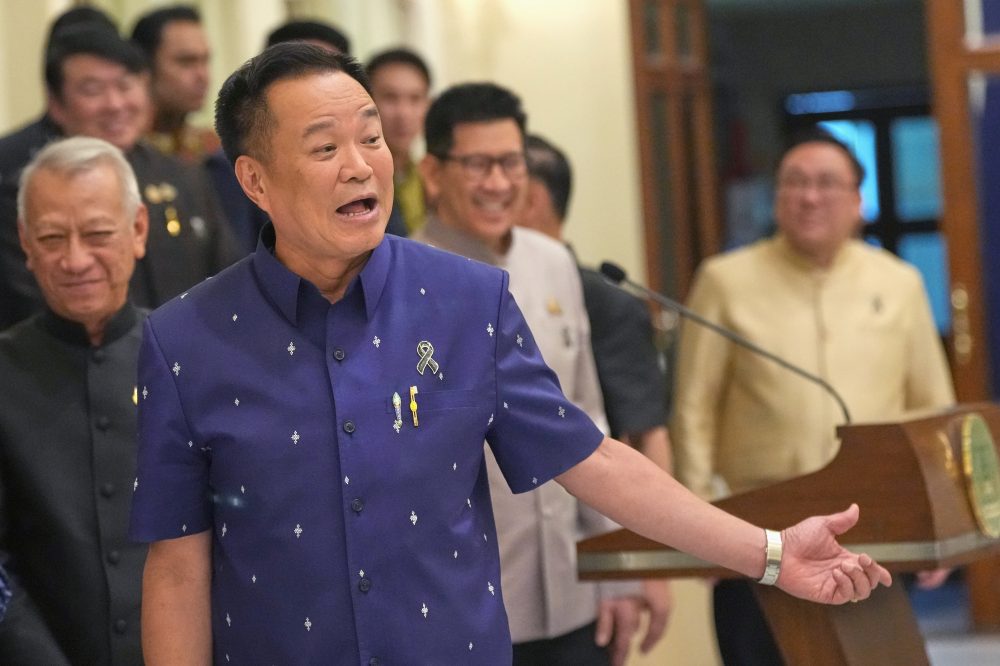
Following Tuesday’s Cabinet session, Anutin clarified that ending the memorandum bears no connection to current border tensions and stated that maritime territory discussions would likely continue through alternative channels, including the United Nations Convention on the Law of the Sea.
Thai government spokesperson Rachada Dhnadirek emphasized that the cancellation represents a modification of cooperative methods rather than an end to diplomatic relations or negotiations altogether.
She explained that Thailand plans to maintain dialogue with Cambodia while proposing a transition to U.N. Convention mechanisms, which offer more clarity and comprehensive systematic approaches for effectively resolving maritime disagreements.
Cambodia’s Foreign Minister Prak Sokhonn, speaking from the capital Phnom Penh, voiced disappointment and characterized Thailand’s action as “a departure from the spirit and political will that enabled our two countries to establish a framework for peacefully resolving these issues in accordance with international law.”
Prak Sokhonn announced that Cambodia would pursue mandatory conciliation through the U.N. framework, which “reaffirms its commitment to resolving maritime disputes peacefully and in accordance with international law.”
In a social media statement, Prime Minister Hun Manet wrote, “Cambodia’s decision reflects our sincere hope that both countries can reach a just and lasting solution in line with international law, allowing our peoples to live together in peace, stability, and harmony.”