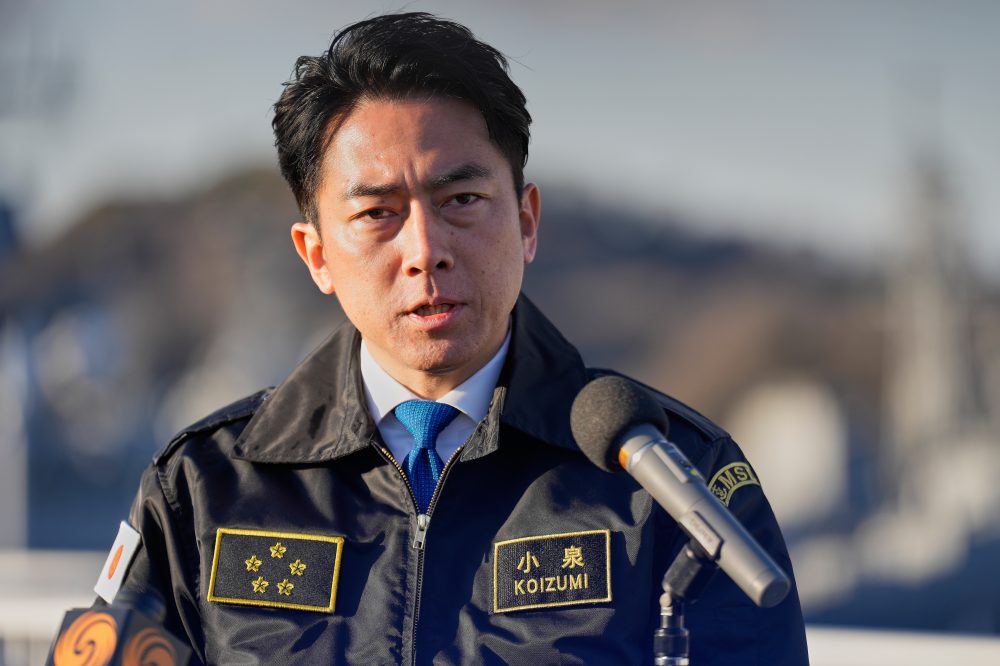

MANILA, Philippines — Japanese Defense Minister Shinjiro Koizumi arrived in the Philippines Tuesday for high-level discussions with President Ferdinand Marcos Jr. and to observe multinational military exercises aimed at strengthening defense partnerships between the two countries.
During his visit to Manila, Koizumi will meet with Marcos and Philippine Defense Secretary Gilberto Teodoro Jr. to discuss expanding military cooperation, including potential discussions about Japan providing used naval destroyers to the Philippines.
Both nations, which maintain defense treaties with the United States, established a mutual access agreement in 2024 that enables large-scale joint military training operations. This Reciprocal Access Agreement cleared the path for Japan to send 1,400 military personnel to participate regularly in exercises known as Balikatan.
The annual Balikatan exercises — meaning “shoulder-to-shoulder” in Tagalog — bring together American, Filipino and other allied forces to prepare for security challenges and counter China’s growing regional aggression.
Representatives from 16 nations, including India and Australia, are scheduled to travel Wednesday to Paoay in northwestern Philippines to observe a major Balikatan demonstration featuring coordinated firepower from Philippine, U.S., Japanese and Canadian forces targeting a vessel positioned approximately 25 miles offshore.
Japanese military units will launch two rounds of Type 88 missiles as part of efforts to destroy a decommissioned Philippine navy vessel from the World War II period, according to Philippine Marine Corps Col. Dennis Hernandez, who told The Associated Press that President Marcos will monitor the live-fire demonstration remotely from Manila.
Prior to arriving in the Philippines, Koizumi stopped in Jakarta, Indonesia, where he signed a defense cooperation pact Monday with Indonesian Defense Secretary Sjafrie Sjamsoeddin.
“As Japan faces the most severe and complex security environment in the postwar era, it is important to establish a multilayered network of allies and like-minded countries, while expanding it and strengthening the deterrence,” Koizumi stated during a recent Tokyo press briefing.
Japan has enhanced its military strike capabilities by acquiring long-range missile systems capable of hitting distant enemy positions, marking a significant departure from its post-World War II doctrine that restricted military action to defensive purposes only.
On April 21, Japan eliminated restrictions on exporting lethal military equipment, representing another substantial shift from its postwar pacifist stance as the country works to develop its defense manufacturing sector in response to increased Chinese military activity in the region. The Philippines shares similar concerns following escalating territorial disputes with Beijing in the South China Sea.
The policy change enables Japan to potentially provide the Philippines with up to six retired Abukuma-class destroyers, which could be deployed for patrol missions and monitoring air, surface and underwater threats, Hernandez explained, noting this topic may arise during Koizumi’s meetings with Philippine leadership. Specific terms of any potential transfer remain undisclosed.
While U.S. and Australian officials have praised Japan’s policy updates, China has expressed strong opposition to these changes.
Chinese Foreign Ministry spokesperson Guo Jiakun stated last month that the international community, including China, will “resolutely resist Japan’s reckless moves toward a new type of militarism.”