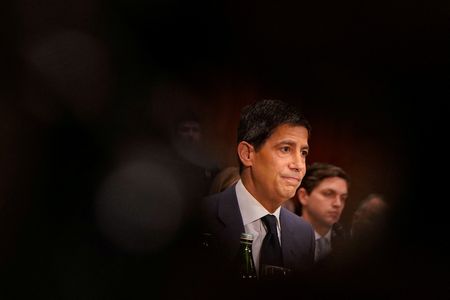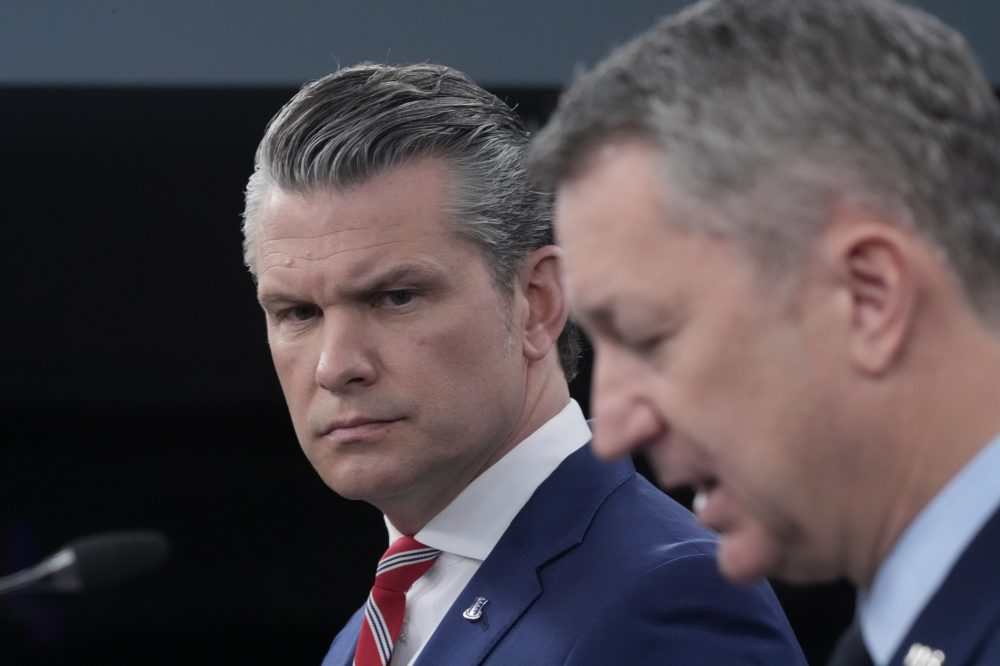

American military officials confirmed Tuesday that the fragile ceasefire with Iran continues despite escalating tensions in the crucial Strait of Hormuz shipping corridor. Defense Secretary Pete Hegseth and Joint Chiefs Chairman Dan Caine both stated that recent Iranian actions have not crossed the threshold to end the truce.
On Tuesday, US forces began escorting commercial vessels through the strategic waterway, successfully guiding two American-flagged cargo ships without incident. Chairman Caine revealed the operation involves guided-missile destroyers, over 100 aircraft, and 15,000 military personnel working to establish a safety corridor through the vital oil and gas transport route.
Defense Secretary Hegseth emphasized that American forces hope to peacefully assist more than 22,500 sailors stranded aboard over 1,550 ships in the Persian Gulf. “This is a temporary mission for us,” Hegseth stated. “We expect the world to step up.” Tehran has condemned the American escort mission as a violation of the ceasefire agreement.
The situation remains volatile with uncertain outcomes ahead. US Central Command reported that Iranian forces previously fired multiple cruise missiles, deployed drones, and sent small boats against civilian vessels under American military protection. American helicopters destroyed six small Iranian boats during these attacks, though officials rejected Iranian claims that US ships sustained damage.
Meanwhile, Secretary of State Marco Rubio plans to visit Rome and Vatican City this week, attempting to reduce growing friction between President Donald Trump and Pope Leo XIV. Trump has again criticized the pontiff, distorting the pope’s statements about the Iranian conflict and claiming he is “endangering a lot of Catholics.”
Recent developments include new strikes this year where Hegseth says American forces joined Israeli operations against Iranian nuclear facilities. Following last summer’s bombing campaign, the defense secretary explained that US participation continued because Iran’s “will was still there to seek a nuclear bomb.”
When questioned about intelligence assessments showing Iran’s nuclear weapon development timeline remains at 9 to 12 months despite Operation Midnight Hammer, Hegseth responded: “The obliteration of those facilities set back their program. Hopefully Iran chooses a deal that they give up those ambitions, give up those capabilities.”
Chairman Caine described Tuesday as a “quieter” day in the Strait while confirming that over 100 American military aircraft maintain round-the-clock patrols. He praised troops from the 82nd Airborne Division for utilizing “next generation tactical networks” to coordinate military operations seamlessly.
During a Pentagon briefing Tuesday, Caine explained that Iran’s recent aggressive actions fall short of “major combat operations,” meaning Tehran has not breached the delicate ceasefire in the Trump administration’s assessment.
“Since the ceasefire was announced, Iran has fired at commercial vessels nine times and seized two container ships, and they’ve attacked U.S. forces more than 10 times – all below the threshold of restarting major combat operations at this point,” Caine reported.
The administration has used the ceasefire to argue that the president does not need to provide formal congressional updates about the conflict under the War Powers Resolution, which typically mandates presidential reports on military activities 60 days after combat begins.
Trump continues criticizing Pope Leo XIV even as Rubio prepares for Vatican discussions intended to reduce tensions between Washington and the Holy See. In an interview with conservative host Hugh Hewitt, the president mischaracterized the pontiff’s concerns about the Iranian war, claiming Leo supports Tehran and threatens global security.
“The pope would rather talk about the fact that it’s OK for Iran to have a nuclear weapon,” Trump declared. “And I don’t think that’s very good. I think he’s endangering a lot of Catholics and a lot of people.”
Pope Leo has never endorsed Iranian nuclear weapons acquisition. Instead, he has advocated for increased peace negotiations, criticized warfare generally, and condemned Trump’s specific threats targeting civilian populations. The pope has stressed that his positions reflect biblical and church doctrine rather than political opposition to Trump.
The State Department announced Monday that Rubio, a Catholic who will have visited Italy or the Vatican at least three times as the Republican president’s chief diplomat, will be in Italy Thursday and Friday. Vatican officials confirmed Rubio will meet with Leo, the first American pope, on Thursday.
“Secretary Rubio will meet with Holy See leadership to discuss the situation in the Middle East and mutual interests in the Western Hemisphere,” the department explained. “Meetings with Italian counterparts will be focused on shared security interests and strategic alignment.”
Iran’s newest peace proposal demands the US lift sanctions, end the naval blockade, withdraw regional forces, and halt all hostilities including Israeli operations in Lebanon, according to semiofficial Nour News and Tasnim agencies connected to Iran’s security establishment.
Iranian officials said over the weekend they were examining the American response. Tehran claims its proposal excludes its nuclear program and enriched uranium stockpiles, which have been central to tensions with the US and Israel.
Iran seeks resolution of other issues within 30 days and aims to conclude the war rather than extend the ceasefire. Trump expressed skepticism over the weekend that the proposal would produce an agreement.
The waterway disruption has pressured European and Asian nations dependent on Persian Gulf oil and gas, driving prices higher far beyond the region. Since April 13, the US has maintained a naval blockade of Iranian ports, directing at least 49 commercial ships to reverse course according to Central Command. Washington has also warned shipping companies they could face sanctions for paying Iran transit fees through the strait.
The blockade has denied Tehran crucial oil revenue needed to support its struggling economy. American officials hope the blockade will compel Iran to make concessions in negotiations over its disputed nuclear program and other persistent issues.
The United Arab Emirates Defense Ministry reported its air defenses engaged 15 missiles and four drones launched by Iran. Fujairah emirate authorities said one drone ignited a fire at a major oil facility, injuring three Indian citizens. British military sources reported two cargo ships burning off the UAE coast.
Indian Prime Minister Narendra Modi condemned the attacks Tuesday, calling civilian and infrastructure targeting “unacceptable.” Modi posted on X that India maintains “firm solidarity” with the UAE and stressed the importance of safe, uninterrupted shipping through the Strait of Hormuz.
Tehran neither confirmed nor denied the attacks, but Iranian Foreign Minister Abbas Araghchi warned early Tuesday on X that both the US and UAE “should be wary of being dragged back into quagmire.”
Pakistan and Saudi Arabia denounced the strikes against the UAE, with Saudi condemnation coming despite increasingly tense relations between Riyadh and the UAE.
President Trump warned Sunday that Iranian efforts to block strait passage “will, unfortunately, have to be dealt with forcefully.” He described the American effort as “Project Freedom,” designed to help tens of thousands of stranded seafarers on hundreds of ships stuck in the Persian Gulf since fighting began.
The US-led Joint Maritime Information Center advised ships Monday to cross the strait through Omani waters, announcing establishment of an “enhanced security area.” Iran has declared the new American effort violates the fragile ceasefire that has lasted more than three weeks.
In a Tuesday X post, Iranian parliamentary speaker and chief negotiator Mohammad Bagher Qalibaf accused Washington of undermining Strait of Hormuz shipping security and warned of a developing “new equation.” He suggested Iran has not fully responded to American attempts to reopen the waterway, stating: “We know full well that the continuation of the status quo is intolerable for America; while we have not even begun yet.”
His statement made no reference to ongoing negotiations with the US conducted through Pakistani intermediaries. The Iranian conflict risked reigniting after America attempted to force open the Strait of Hormuz for commercial shipping, though the ceasefire appeared stable Tuesday despite UAE reports of Iranian missile and drone attacks.
American military officials reported two US-flagged merchant vessels successfully passed through the strait Monday during the operation’s first day, while US forces engaged Iranian units and sank six small boats targeting ships. Contradicting Washington’s account of destroying six boats, an Iranian military commander said two small civilian cargo vessels were hit Monday, killing five civilians, according to Iranian state television.