
WASHINGTON — Trump administration officials are intensifying diplomatic efforts to convince China to leverage its relationship with Iran to reopen the Strait of Hormuz, just days before a planned summit between President Donald Trump and Chinese President Xi Jinping in Beijing.
Secretary of State Marco Rubio urged Chinese leadership to take advantage of Iranian Foreign Minister Abbas Araghchi’s current visit to China to pressure Tehran into ending its blockade of the vital shipping corridor. Chinese Foreign Minister Wang Yi conducted meetings with Araghchi on Wednesday, according to reports from the official Xinhua news agency.
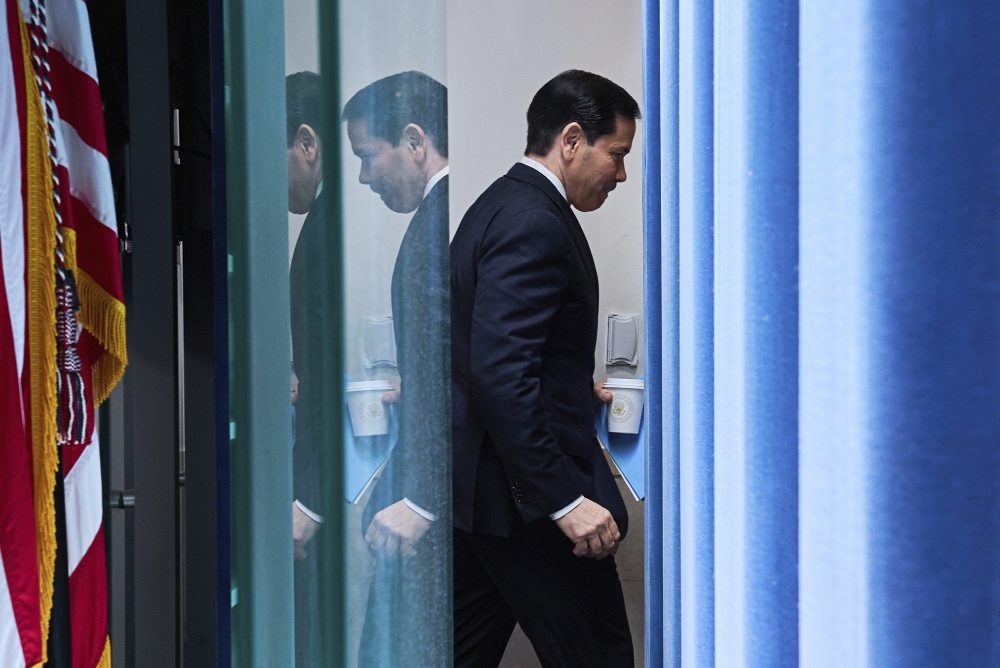
“I hope the Chinese tell him what he needs to be told,” Rubio stated during a White House briefing on Tuesday. “And that is that what you are doing in the strait is causing you to be globally isolated. You’re the bad guy in this.”
Rubio emphasized that China’s economy has suffered more severe consequences than America’s from Iran’s blockade of the waterway during the current two-month conflict. Beijing’s export-dependent economy relies heavily on shipping routes through the strait, while China imports approximately half of its crude oil and nearly one-third of its liquefied natural gas from Middle Eastern nations, based on data from China’s General Administration of Customs.
“It is in China’s interest that Iran stop closing the strait,” Rubio declared.
A diplomatic source revealed to The Associated Press on Tuesday that American officials have been working intensively to convince China not to veto the latest U.S.-sponsored resolution at the U.N. Security Council designed to reopen the strait and denounce Iran’s actions. The diplomat requested anonymity when discussing these sensitive negotiations.
China and Russia — both allies of Tehran on the Security Council — blocked a previous Hormuz-related resolution last month, arguing it was too extreme and failed to criticize U.S. and Israeli military actions that initiated the conflict.
Rubio’s diplomatic push toward China followed Treasury Secretary Scott Bessent’s announcement Monday that Iran would be a priority topic when Trump meets with Xi for the first presidential visit to China since Trump’s 2017 trip.
The strait’s closure has created massive disruptions across Asia, a situation that appears to have influenced China’s efforts to work with Pakistan in mediating a two-week ceasefire agreement.
Trump has acknowledged China’s role in encouraging Iran to accept a fragile ceasefire negotiated last month. Three diplomatic sources familiar with China’s behind-the-scenes involvement confirmed that Beijing, as Iran’s largest oil customer, utilized its economic leverage to bring Iranian negotiators back to the table when discussions stalled.
However, the Republican administration maintains that China could increase its involvement in reopening the crucial waterway.
“The threat of attacks from Iran has closed the strait — we are reopening it,” Bessent said during a Fox News interview. “So I would urge the Chinese to join us in supporting this international operation.”
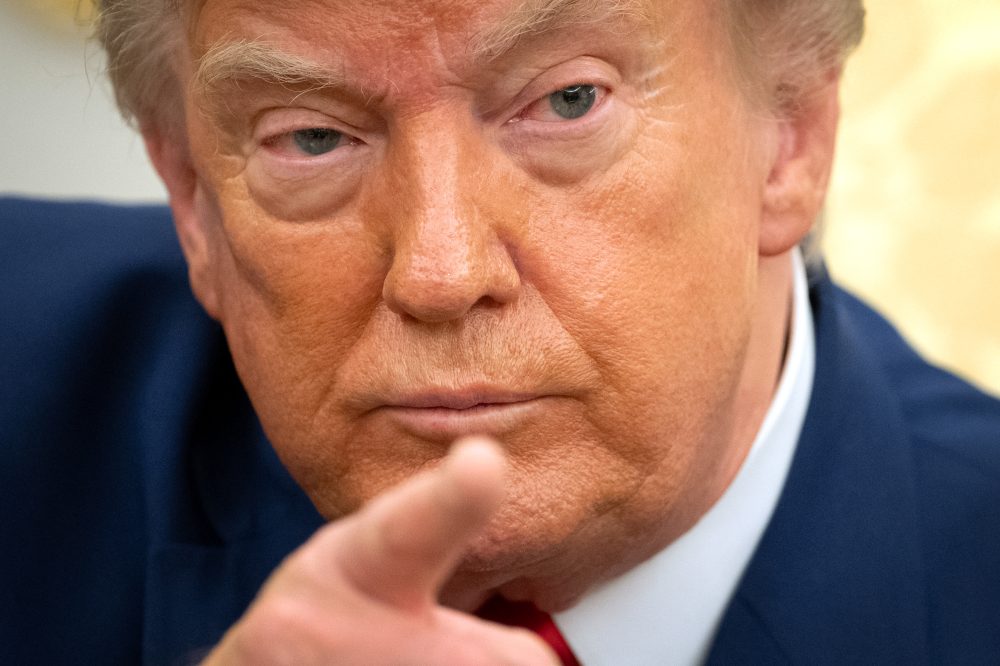
Trump adopted a more cautious tone regarding China’s relationship with Iran, telling reporters in the Oval Office on Tuesday that China hasn’t “challenged” him while he continues pressuring Iran to abandon its nuclear weapons development and reopen the strait. China, meanwhile, has criticized U.S. military operations against its economically isolated Middle Eastern partner.
“You know, in all fairness, he gets, like, 60% of his oil from Hormuz,” Trump said, somewhat overstating Xi and China’s reliance on Middle Eastern petroleum.
China has historically supported Iran’s ballistic missile capabilities and provided dual-use industrial equipment that can be utilized for missile manufacturing, according to U.S. government assessments.
Trump revealed last month that Xi had committed to halting weapons shipments to Iran amid reports that Beijing was considering arms transfers.
Shortly after Trump announced receiving written assurances from Xi, he told CNBC that American forces had seized a vessel carrying a “gift” from China destined for Iran. Trump provided no additional specifics about the incident.
The administration has also increased economic pressure on China, Iran’s primary trading partner, due to its connections with the Islamic Republic.
On April 24, the Treasury Department imposed sanctions on a major Chinese oil refinery and approximately 40 shipping companies and tankers involved in Iranian oil transportation. These sanctions block the companies from accessing the U.S. financial system and penalize anyone conducting business with them.
Chinese officials have indicated they plan to pressure the United States to reduce weapons sales to Taiwan, the self-governing island that China considers a breakaway province.
Rubio acknowledged that Taiwan would likely feature in discussions between the two leaders. “I think both countries understand that it is neither one of our interests to see anything destabilizing happen in that part of the world,” Rubio explained. “We don’t need any destabilizing events to occur with regards to Taiwan or anywhere in the Indo-Pacific. And I think that’s to the mutual benefit of both the United States and the Chinese.”
Trump announced a record-breaking $11.1 billion arms sale to Taiwan in December. Trump subsequently indicated he would address the arms sales with Xi — a suggestion that has concerned officials in Taipei.
During a recent phone conversation with Rubio, Chinese Foreign Minister Wang Yi encouraged the United States to “make the right choices” regarding Taiwan to preserve “stability” between the two nations, according to a Chinese Foreign Ministry statement.