
HARARE, Zimbabwe — Recent deadly disease outbreaks across Africa are spurring continental leaders to pursue greater independence from international health donors as global assistance has been cut in half during the past five years.
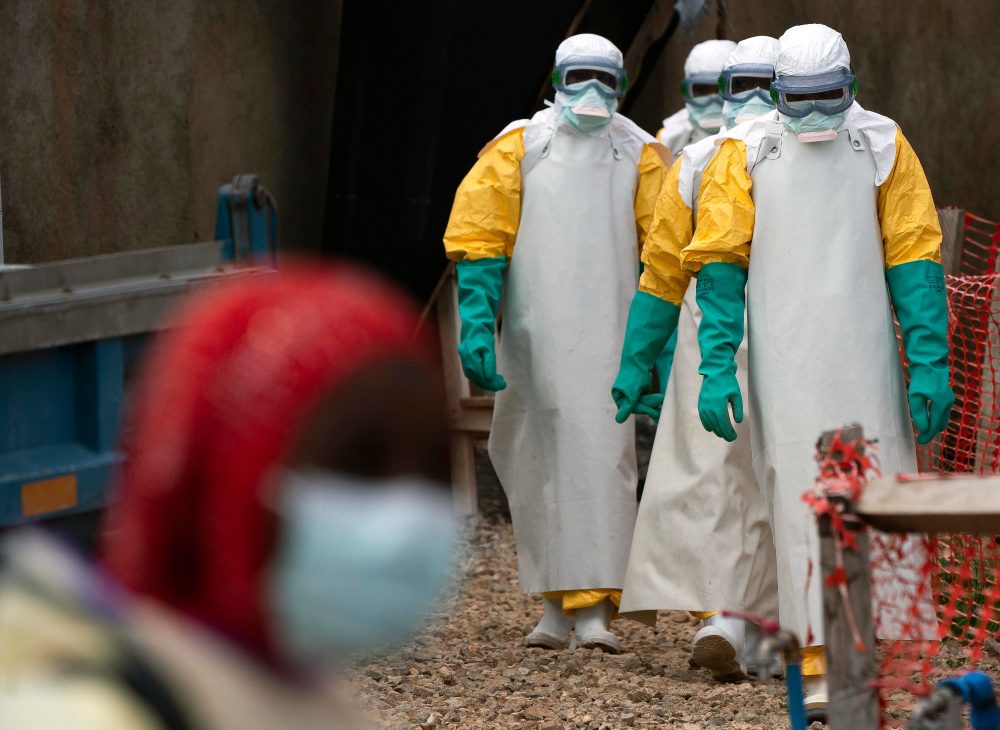
Declining aid exacerbated by policy changes is clashing with Africa’s rapidly expanding population exceeding 1.5 billion people. The latest Ebola outbreak involving a strain without approved treatments or vaccines follows closely after an unusual hantavirus outbreak aboard a cruise vessel that heightened continental health alerts.
Africa confronts “an equally dangerous threat” from funding shortfalls, according to Dr. Jean Kaseya, director-general of the Africa Centers for Disease Control and Prevention, who spoke while introducing an African health financing self-reliance program earlier this year.
“Every time we have an outbreak, many countries start to ask for partners because they don’t have in their budgets funding to respond, even to prepare for these outbreaks,” he stated during a briefing about the recent Ebola outbreak.
However, African nations recognize this dependency must end.
The Africa CDC describes the continent as currently experiencing “an unprecedented financing crisis.”
The organization reports that official development assistance has plummeted dramatically, declining from approximately $26 billion in 2021 to roughly $13 billion in 2025, as wealthy nations redirect focus toward broader geopolitical concerns like the Iran war and internal pressures.
For years, African leaders had promised to improve funding for their own healthcare systems, but these commitments stayed largely theoretical. A 2001 agreement called for countries to dedicate at least 15% of national budgets to health, yet among Africa’s 54 nations, only Rwanda, Botswana and Cape Verde remain on target.
“The conversation was somehow theoretical because the donor system was still functioning,” explained Dr. Alex Ajangba, a health financing expert and co-editor of the new African Journal of Health Economics, Systems and Policy. “But now that cushion is gone.”
He continued: “What we are seeing here is not a temporary dip of donor funding that we will recover from.”
Nations are speeding up efforts toward “health sovereignty,” with goals to fund and operate systems with significantly reduced dependence on external assistance.
Programs such as Ghana’s “Accra Reset” introduced in September, and the Africa Health Security and Sovereignty Agenda, endorsed by African leaders in February, seek to build long-term stability.
Health ministers are suggesting domestic approaches, including increased taxes on tobacco, alcohol and sugary beverages, combined procurement of medications to reduce expenses, expanding regional pharmaceutical and vaccine production and addressing system inefficiencies.
The urgency is clear. Africa purchases over 90% of its health supplies including vaccines and medications, while health crises — from mpox to cholera to Ebola — jumped from 153 outbreaks to 242 between 2022 and 2024, the Africa CDC reports. The organization aims for the continent to manufacture 60% of its vaccines by 2040.
“The word ‘health sovereignty’ has become a phrase that is used in almost every continental policy meeting right now,” Ajangba noted, cautioning it risks becoming merely a “slogan.”
Specialists say the continent possesses substantial wealth. Africa contains roughly 30% of global mineral reserves, including materials crucial to technology and renewable energy, yet much of this value disappears through unclear or weak agreements, illegal financial transfers, debt obligations and limited local mineral processing, with resources mainly exported unprocessed, Ajangba explained.
The continent loses approximately $40 billion yearly to illegal financial transfers in an extractive industry encompassing mining, gas and oil, the United Nations Economic Commission for Africa states.
Beyond addressing these challenges, another central element of African nations’ move away from aid dependence involves co-financing, demanding countries contribute more alongside donors.
Gavi, the global vaccine alliance, reports that lower-income countries provided a record $302 million toward vaccines in 2025, and roughly $1 billion during the past five years.
“This creates predictability,” Gavi chief executive Sania Nishtar told The Associated Press. “Reliance on aid for basic services does not.”
Yet the transition can generate controversy. The Trump administration has promoted co-financing as a central requirement of the “America First” health agreements it has established with nearly two dozen African nations. These arrangements reshape aid to Africa by demanding countries increase domestic spending within specified timeframes or risk losing support.
Some countries have refused the proposed agreements, angered by U.S. requests for health data sharing without guarantees that nations will gain any benefits from it. Others condemn suggested exchanges of health support for natural resources.
While most governments agree Africa needs to advance toward self-sufficiency, critics argue some of the U.S. conditions impose unrealistic demands on already stretched economies.
“They are being set up to fail,” said Asia Russell, executive director of Health GAP, an international advocacy group. “When an administration says, ‘If you don’t hit these numbers, you’re not going to get resources anymore,’ that is extremely serious.”
Many African countries face increasing debt pressures. Currently, about 40% spend more on debt than health.
“Many of these countries have huge debt service and other challenges,” said Jen Kates, a senior vice president at the nonprofit KFF, which focuses on health policy. “At the end of the day, it’s going to be people who live in those countries who will feel the effects.”
Africa’s debt has climbed to approximately $1.2 trillion, the African Export-Import Bank reports, creating harsh choices. Debt payments consume roughly 19% of government income in sub-Saharan African countries, United Nations data shows.