
KYIV, Ukraine — Ukrainian forces conducted one of their most extensive drone operations against Russia, resulting in at least four fatalities, including three deaths in the Moscow area, and injuring twelve others, according to Russian regional officials who reported the casualties Sunday. Aircraft debris scattered across Russia’s busiest airport but caused no structural harm.
Ukrainian President Volodymyr Zelenskyy acknowledged the aerial assault, declaring the operations “entirely justified.” Russia has consistently conducted comparable strikes against Ukraine’s capital and additional urban centers throughout the conflict, and a military analyst indicated the Ukrainian attacks seemed to be payback for recent Russian bombardments of Kyiv.
Russian aerial assaults on Ukraine during the night injured eight individuals, Ukrainian officials reported.
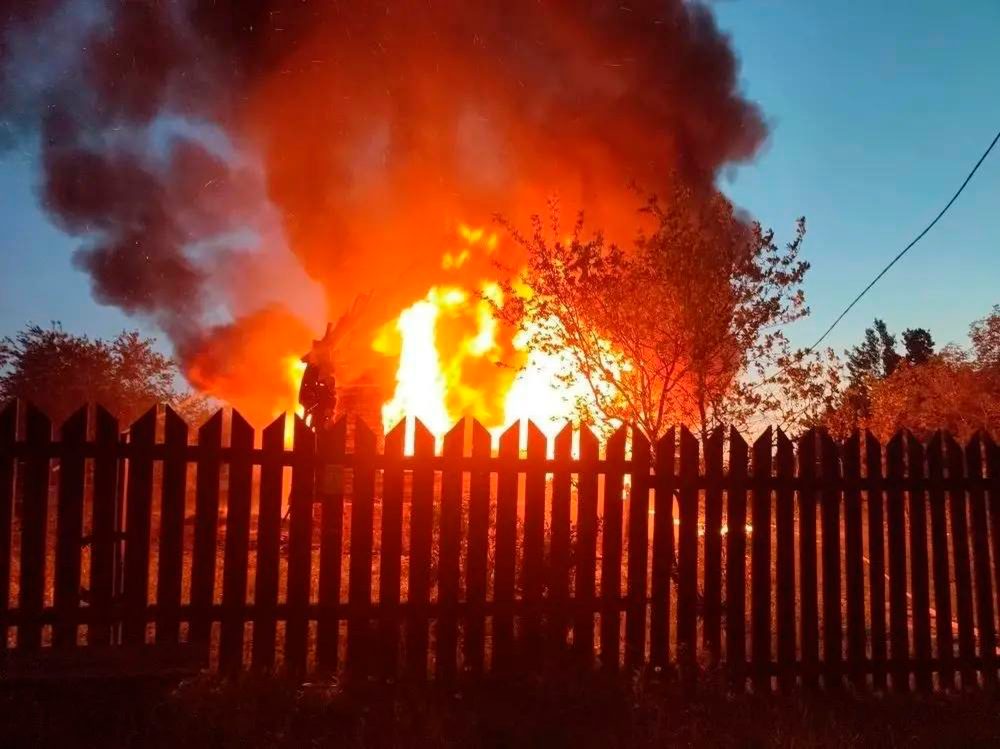
During Ukraine’s operations against Russia, a female civilian died when a drone struck her residence in Khimki, a Russian municipality located northwest of Moscow, while two males perished in Pogorelki village, situated 10 kilometers (6 miles) north of the capital, local Gov. Andrei Vorobyev confirmed.
Ukrainian aerial vehicles had also struck unspecified “infrastructure” and multiple residential towers, Vorobyev announced via social media platforms.
Another male fatality occurred when a drone impacted a truck in the Belgorod region, which shares a border with Ukraine, regional officials stated.
Within Moscow’s boundaries, no fewer than 12 individuals sustained injuries during the nocturnal assault, primarily around the entrance to the city’s petroleum refinery, mayor Sergei Sobyanin announced. Sobyanin confirmed that the refinery’s “technology” remained undamaged.
Russia’s busiest airport — Moscow’s Sheremetyevo — confirmed that aerial debris had landed within its perimeter without creating damage or disrupting flight operations.
Russian defensive systems intercepted 81 drones targeting Moscow during the overnight hours, state agency Tass reported, quoting Sobyanin, representing one of the most significant strikes against the city since Russia initiated a comprehensive invasion of Ukraine on Feb. 24, 2022.
Russian air defense forces eliminated 556 drones across Russia overnight, the nation’s defense ministry announced Sunday morning. Shortly past noon local time, officials reported that over 1,000 drones had been intercepted or disrupted within the preceding 24-hour period.
Zelenskyy stated that the drones had traveled more than 500 kilometers (310 miles) from Ukrainian soil, and that Ukraine was “overcoming” Russian air defense networks positioned in and surrounding the capital.
“Our responses to Russia’s prolongation of the war and attacks on our cities and communities are entirely justified. This time, Ukrainian long-distance sanctions have reached the Moscow region, and we are clearly telling the Russians: their state must end its war,” Zelenskyy said.
Nigel Gould Davies, senior fellow for Russia and Eurasia at the International Institute for Strategic Studies, a London-based think tank, stated that Ukraine’s massive strike seemed to be “the retaliation or revenge that President Zelenskyy promised after the fierce attacks that Russia carried out on Kyiv.”
Those bombardments occurred directly following the conclusion of a temporary ceasefire that permitted Russia to conduct its annual Victory Day parade on May 9 commemorating the Soviet victory over Nazi Germany during World War II.
“It brings home the fact Ukraine has the capacity to strike at very significant scale at or around the Russian capital,” bringing the conflict to Russians in a manner that would be “most unwelcome” to the Kremlin, Gould Davies told The Associated Press.
“There is no ongoing peace process to disrupt. What (the attack) is more likely to do is add to the darkening cloud of anxiety over Russia which has developed palpably over the last three or four months,” he said.
He referenced multiple contributing elements, including Russia’s recent battlefield setbacks, a worsening economic situation domestically, and the Kremlin’s escalating restrictions on the internet, including in Moscow and Russia’s second-largest city, St. Petersburg.
“The fact that Ukraine is reminding the Moscow population that it is vulnerable to these attacks is likely to intensify the mix of concerns now,” Gould Davies said. “I see no prospect though, in the shorter term, that even these factors together will induce Russia to consider the compromises that will be necessary for peace negotiations.”
Ukrainian aerial vehicles are also penetrating deeply into Russia to target petroleum facilities, creating smoke plumes visible from space and producing toxic precipitation at tourist locations along the Black Sea. The operations aim to reduce Moscow’s oil exports, a crucial funding source for Russia’s ongoing invasion of Ukraine.
Although their economic consequences remain uncertain — as rising oil prices from the Iran war, and related relaxation of U.S. sanctions, have helped refill the Kremlin’s treasury — the scope of the strikes and their environmental effects are bringing the conflict to ordinary Russians distant from the battle zones.
Russia launched strikes against Ukraine using 287 drones overnight into Sunday, with 279 intercepted or disrupted, the Ukrainian air force confirmed.
The bombardments injured 8 individuals in Ukraine’s central Dnipropetrovsk region: three in the regional capital of Dnipro, four in President Volodymyr Zelenskyy’s hometown of Kryvyi Rih, and one in the district of Synelkove, Ukraine’s state emergency service reported.
Housing structures sustained damage in all three areas, the service confirmed.