
Officials in Abu Dhabi confirmed Sunday that an unmanned aircraft attack triggered a blaze at a nuclear facility in the United Arab Emirates, occurring during a period when diplomatic efforts to resolve the U.S.-Israeli conflict with Iran have reached a standstill.
Authorities in the Emirates have not assigned responsibility for the assault, and no groups have stepped forward to claim involvement. Previously, the UAE has pointed fingers at Iran for targeting its energy infrastructure, describing such actions as an expansion of regional hostilities.
According to the Abu Dhabi Media Office, the unmanned aircraft struck an electrical generator positioned beyond the inner security boundary of the Barakah Nuclear Power Plant. Officials emphasized that radiation safety measures and facility operations remained uncompromised, with no personnel harmed in the incident.
The International Atomic Energy Agency announced it was monitoring the developments with close attention.
Since hostilities commenced with American and Israeli military actions against Iran on February 28, Iranian forces have consistently struck the UAE and additional Gulf nations that provide bases for U.S. military operations, targeting both civilian and energy-related facilities.
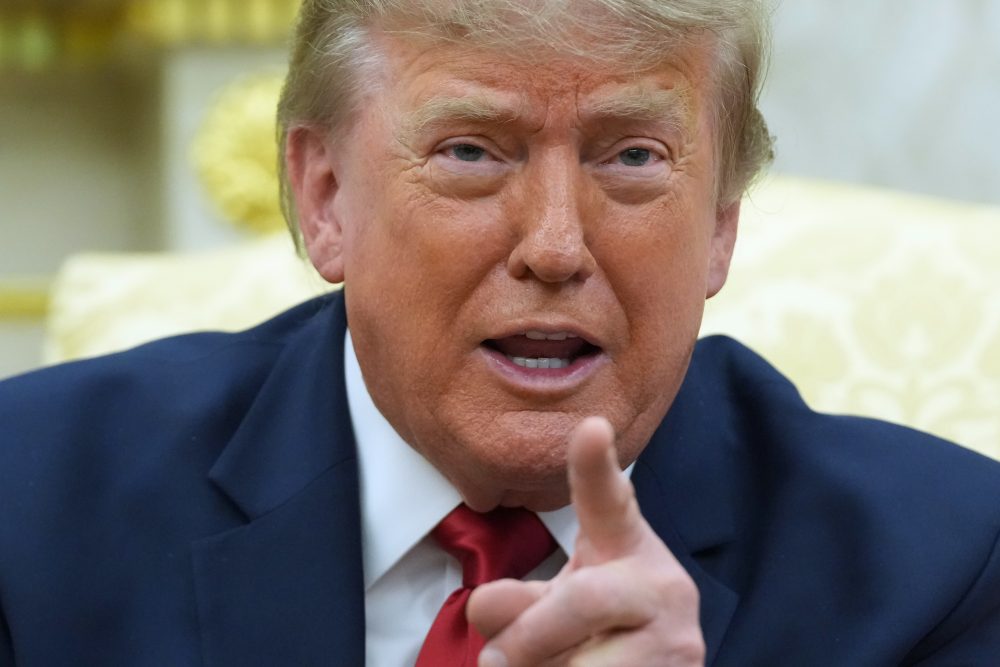
Iranian attacks on the UAE intensified earlier this month following President Donald Trump’s announcement of a naval operation aimed at reopening the Strait of Hormuz, which Trump called off after two days.
Despite more than five weeks passing since a fragile ceasefire became effective, American and Iranian positions remain significantly divided, even as diplomatic initiatives continue seeking to terminate the conflict and restore access to the strait, which serves as the globe’s most crucial shipping pathway for oil and gas.
The United States has insisted that Tehran abandon its nuclear program and release its grip on the strait. Iran has countered by demanding war reparations, termination of American port blockades, and cessation of combat across all theaters, including Lebanon, where Israeli forces are engaging Iran-supported Hezbollah.
Trump, who conducted discussions with Chinese President Xi Jinping this week without obtaining Chinese commitment to assist in conflict resolution, has warned of renewed military action should Iran reject a settlement.
Abolfazl Shekarchi, a senior spokesperson for the Iranian armed forces, declared Sunday that implementing Trump’s warnings would result in the U.S. facing “new, aggressive, and surprise scenarios, and sink into a self-made quagmire.”
Esmaeil Baqaei, Iranian foreign ministry spokesperson, accused the U.S. and Israel of attempting to transfer responsibility for energy market instability following their “unprovoked military aggression against Iran.”
The shipping disruptions through the Strait of Hormuz have created the most severe oil supply shortage in recorded history, driving up costs. America has established its own embargo of Iranian ports.
Ebrahim Azizi, who leads the Iranian parliament’s national security committee, announced Saturday that Tehran had developed a system for managing strait traffic along a specific corridor that would be revealed shortly.
The initial U.S. and Israeli airstrikes resulted in thousands of Iranian casualties. Additional thousands have perished in Lebanon during combat between Israeli forces and the Iran-backed organization Hezbollah.
On Friday, Israel and Lebanon reached agreement on a 45-day ceasefire extension, although the agreement has not prevented continued fighting.