
Following the collapse of the Assad government in December 2024, over 1.2 million Syrians have chosen to return home voluntarily from surrounding nations, data from Syria’s General Authority for Border Crossings and Customs shows. Yet for countless others still living in exile, the choice to go back involves weighing damaged infrastructure, unreliable services, limited employment opportunities, and established lives created during years away from their homeland.
Standing at a border checkpoint, Samer gripped his child’s hand as his wife observed their travel bags stacked near a waiting bus. His possessions were few: clothing, important papers, and cherished photos kept safe throughout years of displacement. The 35-year-old had chosen to leave Turkey after more than ten years to return to his northern Syrian hometown, understanding that his former home had changed and the life he once knew might be gone forever.
Speaking with The Media Line, he explained the choice wasn’t simple but followed years of feeling disconnected and emotionally unsettled. “Living in his homeland, even with hardship, seemed more bearable than remaining abroad indefinitely,” he said. However, he acknowledged concerns about Syria’s struggling economy, inadequate services, and challenges in providing for his children’s future.
Samer’s situation mirrors the complex decision confronting thousands of Syrians living in Turkey, Germany, Lebanon, the Netherlands, and other countries: determining whether returning home is truly feasible, or if years spent in exile have established lives that are either too secure or too intricate to abandon.
Mushir Al-Rimah, who leads the media department at Syria’s General Authority for Border Crossings and Customs, informed The Media Line that voluntary returns from nearby countries between the Assad regime’s fall in December 2024 and April 2026 totaled approximately 1.211 million individuals, with over 715,000 coming from Turkey.
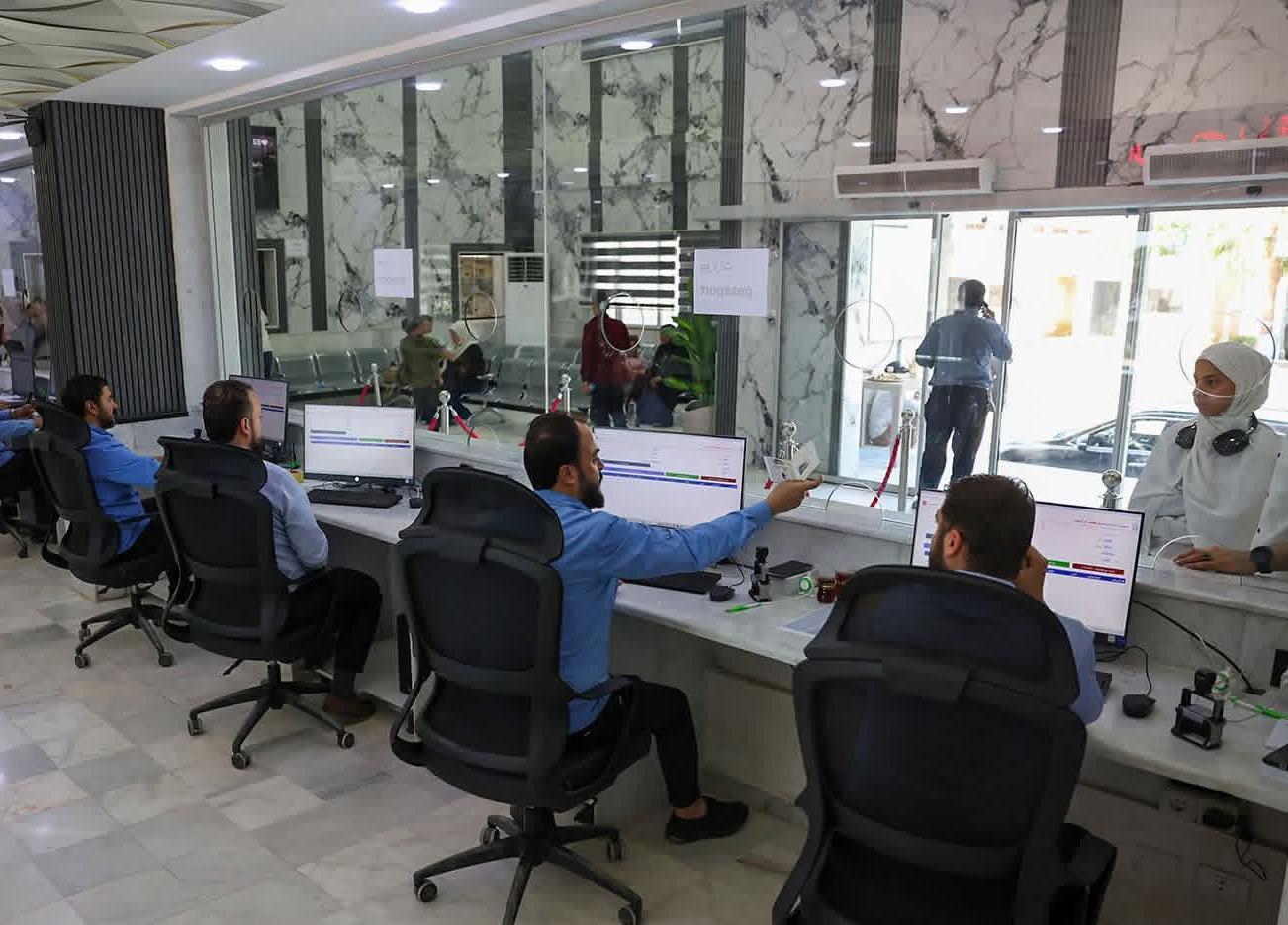
Al-Rimah explained that the authority has streamlined border crossing processes by reducing bureaucratic hurdles at checkpoints, accelerating documentation procedures, and offering traveler assistance. Around 120,000 individuals have voluntarily returned from Lebanon to Syria since the start of this year, he noted.
“The services provided include buses inside border crossings, medical points, ambulances when needed, and arrangements for transporting furniture and luggage, along with full customs exemptions, as part of efforts to encourage voluntary return and ease the burden on returnees,” Al-Rimah stated.
The United Nations High Commissioner for Refugees (UNHCR) calculated that 1,630,874 Syrian refugees had returned to Syria since December 8, 2024, through April 30, 2026, with numbers climbing to 1,645,180 by May 14. UNHCR explains their figure comes from cross-referencing various data sources, accounting for differences with the Syrian border authority’s administrative records.
Despite this wave of homecomings, millions of Syrians remain outside their country. UNHCR’s regional refugee data indicates approximately 4.7 million registered Syrian refugees in the area, including 2.87 million Syrians registered by Turkey’s government and 1.79 million registered with UNHCR across Egypt, Iraq, Jordan, and Lebanon, plus over 43,000 registered in North Africa. Lebanon presents a unique situation: UNHCR records about 490,000 registered Syrian refugees there, while Lebanese officials estimate the country houses roughly 1.12 million displaced Syrians. Germany and other European nations also shelter large Syrian populations, many having secured protection status, citizenship, employment, housing, and school enrollment for their children, creating vastly different considerations than refugees in neighboring countries face.
While the statistics are substantial, they don’t reveal the complete picture. International assessments have cautioned that returning individuals encounter damaged infrastructure, unreliable basic services, limited employment, and massive reconstruction costs. International refugee policy guidelines mandate that returns must be voluntary, safe, and dignified.
For numerous Syrians, the decision varies dramatically based on their exile location. Those in Turkey and Lebanon often encounter different pressures and motivations compared to Syrians who established lives in Europe, where citizenship, property ownership, healthcare access, education, and children’s integration can strongly outweigh emotional connections to Syria.
Hikmat Al-Hassan, 32, shared with The Media Line that his asylum years in Germany gradually transformed into a stable, integrated existence. He mastered German, finished vocational training, joined the workforce, purchased a home, and gained citizenship. His children attended German schools. Returning now, he explained, would mean abandoning stability constructed over many years, particularly when Germany’s healthcare and educational systems are challenging to compare with Syria’s present circumstances.
Souma Taha, 37, a Syrian journalist residing in Germany, expressed a comparable struggle. She informed The Media Line that her family has become completely established after years of employment and education, securing citizenship, and homeownership. She views leaving that stability as a significant risk, especially since healthcare and educational needs cannot easily be assured at equivalent levels within Syria.
“She said that the decision to return remains a complex mixture of emotion and belonging on one hand, and logic and stability on the other,” she noted.
For Syrians in Turkey, the attraction of home may be more powerful, but practical obstacles remain substantial. Ibrahim Badanjki, 29, who resides in Turkey, explained to The Media Line that while the desire to return persists, it encounters one significant barrier: housing. Numerous Syrian homes are destroyed or require extensive renovation, while property costs have increased beyond what many expatriates earning limited incomes can afford. Returning without secured housing, he said, is practically unfeasible, despite the psychological strain of exile.
Sobhi Al-Bassas, 36, who lives in the Netherlands, informed The Media Line that return is presently impossible because his home has been destroyed. He also mentioned security challenges, lack of employment opportunities, and absence of a stable environment. For the time being, he said, staying abroad represents the most practical choice.
Abdul Hay Al-Ahmad expressed that he has long been prepared to return but is awaiting improvements in services and education, particularly for children, to prevent the shock of an abrupt transition. His perspective demonstrates how return involves not just individual decisions but family considerations.
Raghad Suleiman, a Syrian woman who gained Turkish citizenship and married a Turkish citizen, outlined another complicated aspect: social integration and education. She told The Media Line that children raised in Turkey or Europe encounter difficulties with Arabic and adjusting to different educational systems, along with limited job opportunities and hiring favoritism within Syria.
Medical requirements can also complicate return decisions. Abdullah Janniyat, a Syrian living in Turkey, highlighted declining free support for prosthetics and increasing reliance on private facilities, making treatment a significant financial burden for many affected Syrians.
Some returnees have made the opposite decision despite these challenges. Malath Assaf, a young Syrian woman who returned from Turkey to Syria, said that years of displacement strengthened rather than diminished her connection to Syria, despite recognizing the country’s economic and living hardships. She told The Media Line that hope for a dignified return continues to exist, regardless of time passed.
Yasser Al-Hammadi, a Syrian who returned to northern Syria from Turkey following the Assad regime’s fall, shared a similar perspective focused on personal connection. He said he returned to Syria without regret, describing the decision as deeply personal and dependent on each person’s circumstances and sense of stability.
Collectively, these accounts demonstrate that returning to Syria is no longer simply an emotional decision. It involves balancing housing, employment, education, healthcare, security, social identity, and the stability many refugees established abroad during over a decade of conflict.
The Assad regime’s fall opened a door many refugees believed was permanently closed, but walking through it requires more than governmental change. For some, Syria remains home regardless of life’s difficulties. For others, return remains a delayed plan, awaiting a roof, a school, employment, dependable electricity, medical care, or sufficient confidence that going back won’t mean starting over completely.