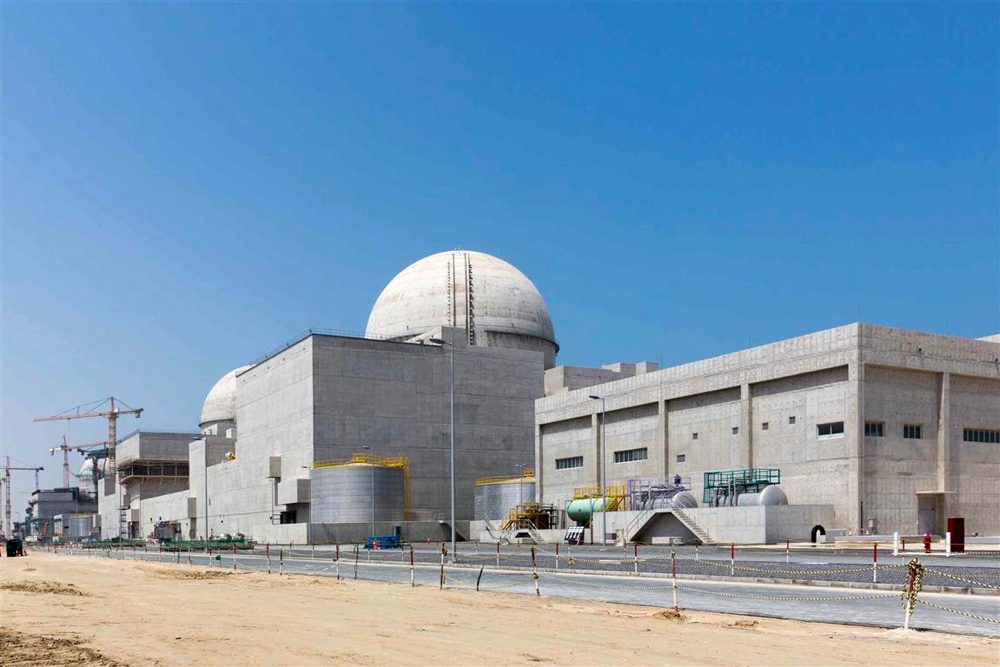

DUBAI, United Arab Emirates (AP) — An unmanned aircraft attack hit the United Arab Emirates’ Barakah nuclear facility on Sunday, igniting a blaze at an electrical generator located on the facility’s outer edge and adding fresh pressure to the fragile ceasefire in the Iran conflict.
Officials in Abu Dhabi, the UAE’s capital, reported that no group has stepped forward to take credit for the assault, which resulted in no radiation leakage or casualties. Iran quickly became the primary suspect, as the nation has grown more hostile toward the UAE in recent days while the country provided shelter to Israeli Iron Dome defense systems and military personnel during the conflict.
This incident occurs while Iran maintains its grip on the Strait of Hormuz, a crucial shipping route that carried one-fifth of global oil and natural gas before the war began, creating worldwide energy supply disruptions. The United States continues its blockade of Iranian ports in retaliation while efforts to strengthen the ceasefire have stalled.
U.S. President Donald Trump has indicated that fighting might restart, while Iranian state broadcasters have repeatedly shown news anchors wielding Kalashnikov-style weapons to mentally prepare citizens for potential warfare. Additionally, combat between Israel and Hezbollah in Lebanon has intensified recently, putting another ceasefire at risk.
The UAE constructed the $20 billion Barakah nuclear facility with South Korean assistance, bringing it online in 2020. This facility stands as the Arabian Peninsula’s first and sole nuclear power installation, capable of supplying one-fourth of the UAE’s total energy requirements across its seven emirates. It also represents the Arab world’s inaugural commercial nuclear power facility.
The UAE’s nuclear oversight body confirmed the blaze did not compromise plant security. “All units are operating as normal,” the organization posted on X.
The UAE’s official statement avoided assigning blame for the assault. The Vienna-headquartered International Atomic Energy Agency, serving as the United Nations’ nuclear oversight body, had not immediately provided comment when contacted.
Sunday’s attack represents the first occasion the four-unit Barakah facility has faced targeting during the Iran conflict. The installation is located in Abu Dhabi’s remote western desert region, close to the Saudi Arabian border. The UAE entered into a comprehensive agreement with the U.S. regarding the power facility, called a “123 agreement,” where it committed to abandoning domestic uranium processing and spent fuel handling to address proliferation concerns. The facility receives its uranium from international sources.
Nuclear facilities have increasingly become targets during recent conflicts, beginning with Russia’s comprehensive invasion of Ukraine in 2022. Throughout the Iran war, Tehran has repeatedly alleged attacks on its Bushehr nuclear installation, though no direct harm occurred to its Russian-operated reactor and no radiation escaped.
Multiple attacks have taken place around the Strait of Hormuz and Persian Gulf nations in recent weeks. Discussions between Iran and the U.S. have reached an impasse as the unstable ceasefire risks falling apart and returning the Middle East to active conflict, extending the global energy shortage caused by the fighting.
On Iranian state television, news anchors on no fewer than two networks appeared with weapons during live broadcasts.
During one show, Hossein Hosseini underwent basic weapon instruction from a Revolutionary Guard paramilitary member whose identity was concealed behind a mask. Following demonstrations on weapon preparation, Hosseini pretended to fire at the UAE’s flag.
On a different network, female anchor Mobina Nasiri explained that a weapon had been delivered to her from a rally in Tehran’s Vanak Square so she could broadcast while armed. She stated: “From this platform, I declare that I am ready to sacrifice my life for this country.”