
The opposition party in Cape Verde has successfully defeated the current ruling government in Sunday’s parliamentary elections, setting the stage for a return to power following a decade outside of government, according to preliminary vote tallies and party announcements released Monday.
The island nation in the Atlantic, consisting of 10 islands, has historically seen control shift back and forth between its two dominant political organizations: the Movement for Democracy (MpD), which has held power since 2016, and the African Party for the Independence of Cape Verde (PAICV).
Preliminary vote counts from the National Election Commission, covering 98.2% of voting locations, revealed PAICV captured 46.7% of votes, translating to 37 out of 72 parliamentary seats, while MpD secured 43.6%.
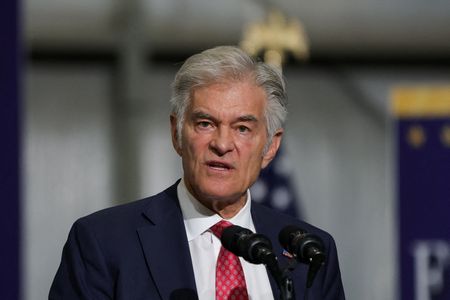
Francisco Carvalho, who leads PAICV, appears positioned to assume the role of prime minister following the current leader Ulisses Correia e Silva’s acknowledgment of electoral defeat in his initial post-election comments.
However, Correia e Silva noted uncertainty remained about whether PAICV had achieved a complete majority since ballot counting continued.
“The results, obviously, did not reach the level of our objectives, which were to win the elections, continue governing Cape Verde and move the country forward,” he said.
Carvalho celebrated the results as a mandate for transformation and stated voters had strongly endorsed his political agenda.
Carvalho, currently serving his second term as mayor of the capital, Praia, will now collaborate with President Jose Maria Neves, who also belongs to PAICV.
The nation functions under a combined presidential-parliamentary system, where the prime minister, chosen by the National Assembly, leads the government while the president maintains substantial authority including veto powers and serves as a mediator.