
ROME (AP) — A violent incident involving a vehicle and knife attack in Modena has sparked a national conversation about immigration integration in Italy, according to the country’s interior minister who spoke publicly Monday.
Interior Minister Matteo Piantedosi stated that while terrorism has been ruled out, the weekend attack cannot be viewed as simply an isolated incident, emphasizing it reveals significant issues with social integration and community distress.
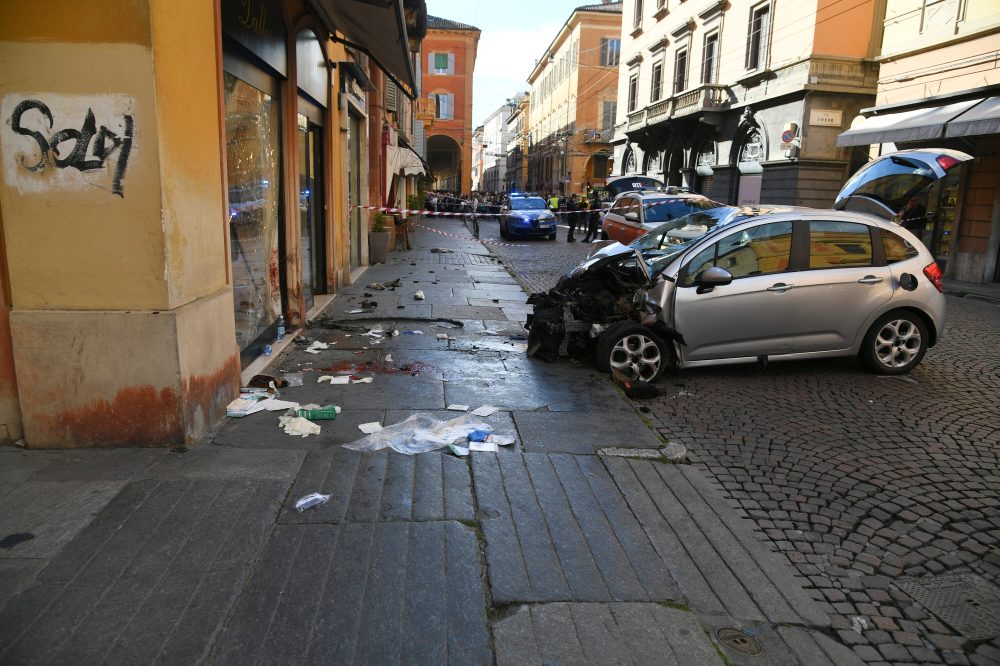
The violence occurred Saturday when a 31-year-old Italian citizen of Moroccan heritage drove his vehicle into pedestrians before crashing through a store window, injuring eight people with four in critical condition.
Law enforcement identified the suspect as Salim El Koudri, who officials say tried to escape on foot and used a knife to injure another person before being subdued by witnesses and arrested by police. He faces charges including massacre and aggravated injury, with a court decision on his detention expected Monday.
Speaking to Il Giornale newspaper, Piantedosi emphasized that investigators found no evidence of terrorist planning, instead pointing to what he called “a real and serious issue of social distress” combined with mental health problems.
“At this stage, there are no elements that correspond to the classic profile of a terrorist who plans violent actions,” Piantedosi said. “But all this cannot lead us to dismiss the attack as the act of an isolated madman.”
The minister characterized the civilian attack as “of absolute gravity,” stating it brings up “profound questions” regarding integration, identity and social marginalization, especially concerning some second-generation immigrants.
Local officials revealed that the suspect was born in Italy, attended university, had received a personality disorder diagnosis, and expressed dissatisfaction with his employment and social circumstances.
Piantedosi also referenced an email El Koudri had sent to his educational institution containing offensive remarks about Christians, though he later issued an apology, potentially indicating resentment connected to perceived unfair treatment.
“He may have been driven by resentment linked to a sense of having suffered discrimination,” Piantedosi said, while noting that investigators continue working to determine the complete motivation behind the violence.
The incident has intensified political discussions in Italy, where migration control and restrictions represent a central component of Premier Giorgia Meloni’s conservative political platform.
However, Piantedosi attempted to separate the Modena incident from the administration’s immigration policies, emphasizing the perpetrator’s citizenship status.
“We are working on repatriations of foreign nationals who commit crimes, but here we are talking about an Italian citizen,” he said in the interview. “This is something different.”
Nevertheless, the minister connected the event to wider integration difficulties, contending that legal documentation, citizenship or higher education do not automatically ensure successful community integration.
Piantedosi also cautioned against oversimplifying the situation by focusing exclusively on mental health aspects. Officials noted the man received treatment in 2022 for what they described as a schizoid disorder before discontinuing his care.
“It would be superficial to deny psychiatric discomfort, just as it would be to use it to avoid a broader reflection on social and cultural fragilities,” the minister said.
The violence prompted strong political responses throughout Italy. Deputy Premier Matteo Salvini, who leads the anti-immigration League party, called the suspect a “second-generation criminal” on social media, reiterating demands for tougher immigration policies.
Foreign Minister Antonio Tajani disputed that description, emphasizing that the man holds Italian citizenship rather than being a migrant. Tajani planned to visit Modena Monday to see the injured victims.
Opposition politicians also condemned efforts to use the attack for political gain, while local leaders rejected attempts to connect the violence with immigration issues.
The incident has also brought renewed attention to second-generation Italians — individuals born or raised in Italy to immigrant parents — who frequently become focal points in discussions about identity, citizenship and community integration.
Italy’s citizenship laws mean many such individuals do not receive automatic Italian recognition at birth and must pursue citizenship through application processes later. They often encounter integration-related pressures, including difficulties in education, job markets and social acceptance, despite being raised in Italy.
Modena Mayor Massimo Mezzetti dismissed broad generalizations about foreigners as “nonsense,” highlighting that two Egyptian migrants were among the people who helped restrain the attacker.
Thousands of community members assembled in Modena’s main Piazza Grande during the weekend to demonstrate support for the victims.
One woman continues to face life-threatening injuries from the crash, while other victims also suffered serious harm, according to officials.