
Supporters of Bolivia’s former President Evo Morales joined massive demonstrations Monday as the South American nation grapples with its most severe economic crisis in decades.
The protests and highway blockades, which began more than two weeks ago, represent the most significant threat yet to President Rodrigo Paz, Bolivia’s first conservative president following almost 20 years of socialist leadership.
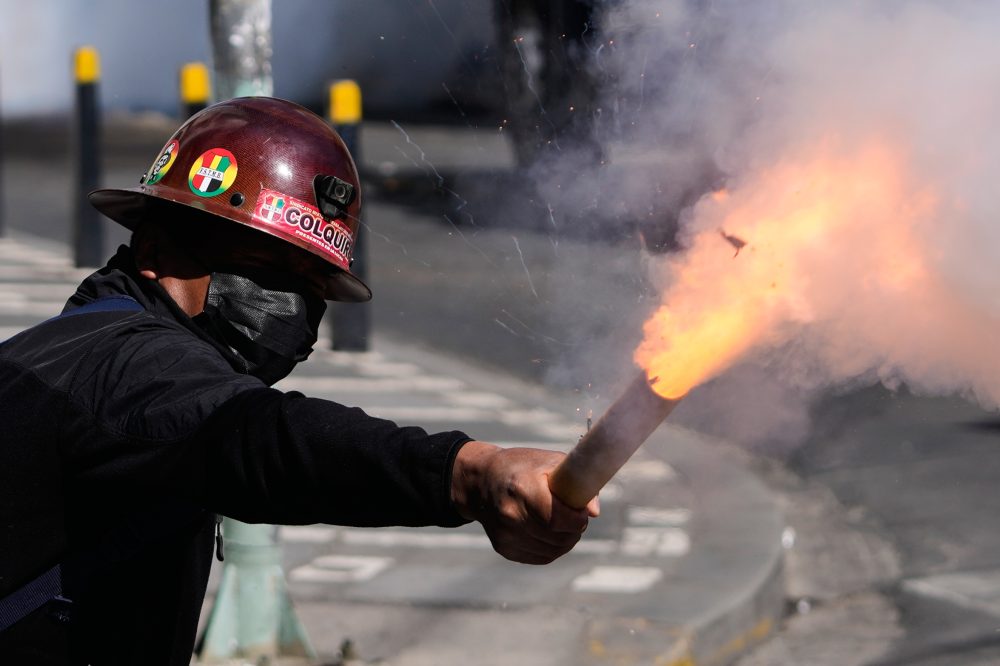
Following a six-day trek across the Andes mountains, thousands of Morales backers carrying dynamite sticks and slingshots arrived in the capital, where riot police awaited them. Explosions echoed through downtown La Paz as security forces responded with tear gas against demonstrators demanding the president step down just six months after taking office. “Homeland or death, we will win!” protesters shouted.
Paz assumed the presidency last year during a period when conservative leaders aligned with the Trump administration gained power across Latin America. Facing the country’s worst economic downturn in four decades, he has worked to address Bolivia’s fuel shortages, control its enormous budget deficit, and tackle the lack of U.S. dollars while managing powerful factions connected to Morales that threaten his administration.
Recently, his administration has negotiated agreements with protesting miners and educators who have agreed to halt their demonstrations.
Highway blockades have traditionally served as the primary tactic for social movements supporting Morales that say they speak for Bolivia’s predominantly rural Indigenous population. During the past 16 days, these roadblocks have trapped thousands of trucks on major routes, creating shortages of food, fuel and medical supplies in La Paz and other urban areas.
The administration sent police and military personnel throughout the nation over the weekend attempting to clear the blockades, resulting in an undetermined number of injuries and at least 90 arrests by Monday, the public prosecutor reported.
“They can march if it’s peaceful, but we will take action if they commit crimes,” Deputy Interior Minister Hernán Paredes stated Monday.
Paz claims Morales is directing the civil unrest to weaken his government.
Eight allied Latin American nations, spanning from Argentina to Panama, issued a collective statement last week condemning “any action aimed at destabilizing the democratic order.” The U.S. State Department joined the criticism Sunday, expressing support for Paz’s efforts “to restore order for the peace, security, and stability of the Bolivian people.”
Following Paz’s appeal, neighboring Argentina announced it would begin a week-long humanitarian airlift to help address shortages in the country.
Morales coordinated the recent march from his refuge in Bolivia’s isolated tropical region. He has remained hidden in the highlands for the past year and a half, avoiding an arrest warrant related to charges concerning his sexual relationship with a 15-year-old girl.
Morales maintains the allegations are politically motivated.