
A controversial gold mining operation in Brazil’s Amazon rainforest faces a crucial legal decision Wednesday, as a court in the nation’s capital determines which level of government holds authority over the project’s environmental approval process.
The judicial panel in Brasilia must decide whether Brazil’s federal government or the northern state of Para holds jurisdiction to issue environmental permits for the mining venture operated by Canadian firm Belo Sun.
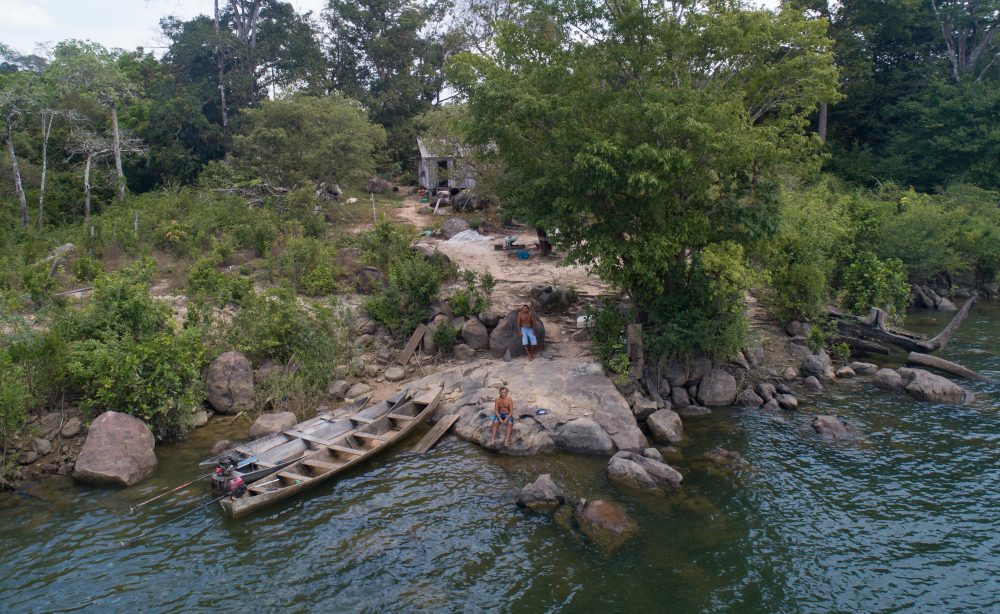
Since 2012, Belo Sun has worked to develop the Volta Grande gold extraction facility along the Xingu River in Para state. The proposed location sits approximately 20 kilometers (12.4 miles) from Belo Monte, ranked as the planet’s third-largest hydroelectric facility, whose operations have diminished river flow and significantly impacted nearby communities.
The Volta Grande operation would become the Brazilian Amazon’s largest gold mining facility.
Based on a 2015 feasibility analysis submitted by Belo Sun, the company plans to extract 3.52 million ounces of gold across 17 years, removing over 600 million tons of material. The mining site would span 24 square kilometers (9.2 square miles) and impact 125 hectares (309 acres) of Amazon rainforest.
A 2021 independent evaluation by researchers from the University of Sao Paulo and University of Amazonas determined the operation posed excessive risks and recommended rejection.
The assessment’s primary concern focused on the planned tailings dam, engineered to hold mining debris directly above a water channel near the Xingu River. Researchers warned that dam failure could rapidly release toxic materials into the river, endangering Indigenous and riverine populations along with the ecosystem.
The operation would also force relocation of 813 families, according to the Articulation of Indigenous Peoples of Brazil, or Apib. These communities, already severely impacted by droughts following the Belo Monte development, could experience additional hardship. The Belo Monte facility has decreased water flow in the Xingu River section where the Belo Sun operation is planned.
Using analysis from nonprofit Amazon Watch, prosecutors calculated the Volta Grande facility would generate approximately 3.7 million tons of carbon dioxide emissions, a greenhouse gas contributing to global warming. The calculation assumes one ton of carbon dioxide emissions per 28 grams of extracted gold.
The Volta Grande licensing process has encountered resistance from its inception.
In 2013, prosecutors moved to stop the process, pointing to inadequate consultation with affected Indigenous communities. In 2017, a complete federal court panel supported this position, mandating federal government approval and formal Indigenous community consultation before project advancement.
Nevertheless, in 2025, justices reversed that ruling and transferred licensing authority back to Para state. Prosecutors filed an appeal, contending the recent decision constituted a separate, new proceeding. The court will address the appeal Wednesday.
Last December, the Juruna and Arara Indigenous communities of the Xingu issued an open letter declaring they have never consented to the project, as mandated by the 2017 ruling. In a statement provided to The Associated Press, Belo Sun maintained it has conducted proper Indigenous consultation, following protocols established by affected communities and monitored by authorities.
Federal prosecutors contended that Brazil’s national government — rather than Para’s local government — should authorize the project given its nationwide implications. The operation would impact Indigenous territories, which falls under federal oversight, affect the Xingu River — a federal waterway — and further influence the Belo Monte hydropower facility, constructed by the federal government.
“From the start, as we did in Belo Monte, we have argued that the licensing falls under federal jurisdiction because it affects Indigenous lands and a federal river,” federal prosecutor Felício Pontes Jr., who is working on the case, said.
He noted that combined impacts with the hydroelectric facility represent a central concern. Brazilian courts have already established that Belo Monte’s effects exceeded initial projections.
In recent decisions, courts have mandated compensation for affected communities and required Norte Energia, the dam operating company, to supply clean water to families whose natural sources disappeared, as well as reassess water diversion from the Xingu River for turbine operations.
“This could create a major conflict if there isn’t a single authority licensing both projects, given the impacts one project has on the other,” the prosecutor said.
Should the court choose to transfer the case to federal oversight, the decision could nullify environmental permits issued in 2025 to Belo Sun by Para state. Regardless, parties may still pursue challenges. Additional lawsuits questioning the operation remain pending in courts.
Before the vote, Belo Sun announced initiation of new technical research for the Volta Grande operation. On May 12, the company reported hiring a mining consultancy to examine and update technical studies for the Installation License. The objective includes identifying enhancements, outlining updates to a definitive feasibility study and creating a phased project plan. Belo Sun anticipates completing this phase by the third quarter of 2026.
Belo Sun stated the Volta Grande facility remains subject to environmental licensing by appropriate regulatory and judicial authorities in Brazil.