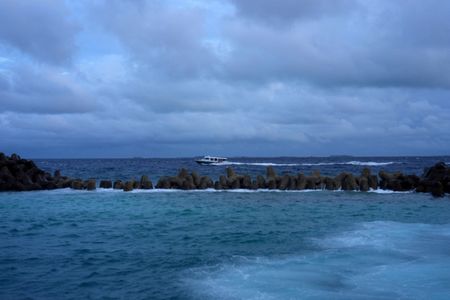

Officials in the Maldives are examining several potential causes behind the tragic deaths of five Italian researchers during a cave diving expedition last week, with authorities questioning whether the team went far deeper underwater than originally intended.
The diving team entered the underwater cave on Thursday under the leadership of Monica Montefalcone, a 51-year-old marine ecology professor from the University of Genoa who frequently conducted research dives in Maldivian waters. Among those who perished were her daughter and four other researchers, including a diving instructor whose remains were retrieved from 60 meters below the surface.
This incident represents the most fatal single diving accident in the nation’s recorded history.
Mohamed Hussain Shareef, the chief spokesperson for the Maldives president’s office, confirmed that officials had authorized the research team to study soft corals at the Devana Kandu location.
“What we didn’t know was that it was cave diving,” Shareef explained. “Because, as divers will tell you and appreciate, it’s a very different discipline with its own sets of challenges and risks involved, and particularly at that depth, there are any number of things that could have gone wrong.”
Carlo Sommacal, Montefalcone’s husband, defended his wife’s expertise in statements to Italian news outlets, emphasizing she would never have endangered her daughter or team members. He characterized her as “one of the best divers in the world” with approximately 5,000 dives to her credit, describing her as “always conscientious” and “never reckless.”
“I’m sorry, I wasn’t there and I’m no expert, and from what I’m seeing and reading, even the experts don’t have definite answers but are merely making hypotheses – lots of them,” he communicated to Reuters through WhatsApp.
Finnish diving specialists located the remaining four victims on Monday within the cave’s deepest third chamber, where they were found “pretty much together,” according to Shareef. Recovery operations are scheduled to retrieve two bodies on Tuesday and the remaining two on Wednesday.
The dangerous nature of these depths became tragically apparent when a Maldivian rescue diver also lost his life during body recovery attempts last week. The non-profit Divers Alert Network Europe, which is coordinating the recovery mission, reported that their expert divers required sophisticated technical equipment, including closed-circuit rebreathers that recycle exhaled air, to locate the victims on Monday.
Shafraz Naeem, a veteran Maldivian diver who has navigated the Devana Kandu cave system more than 30 times under deep-exploration permits and currently advises the nation’s defense forces and police, explained that the cave opening sits approximately 55 meters down, with sunlight penetrating only the initial chamber before complete darkness takes over.
Diving specialists explain that increasing depth creates higher pressure around divers, causing each breath to deliver greater oxygen quantities to the lungs and bloodstream, even when breathing standard air. When this oxygen exposure becomes excessive or prolonged, it can overstimulate the central nervous system and cause tissue damage.
“It is incredibly dangerous to conduct dives at these depths on compressed air,” Naeem warned. “Theoretically oxygen toxicity starts to occur on compressed air at about 55 meters. That is very risky and very dangerous. You never know when oxygen toxicity will hit you.”
However, Riccardo Gambacorta, who previously served as diving instructor for victim Muriel Oddenino, disputed the oxygen poisoning theory.
“My personal opinion is that an unexpected incident may have occurred underwater. They essentially did not anticipate a certain situation,” he stated.
The Italian research team that entered the caves Thursday consisted of Montefalcone’s daughter Giorgia Sommacal, biologist Federico Gualtieri, researcher Oddenino, and diving instructor Gianluca Benedetti, whose body was recovered that same evening. Benedetti had resided in the Maldives for seven years.
Shareef announced the suspension of the vessel used by the diving team “because the regulations here say that if you want to take divers on expeditions, you need a dive school permit, which they didn’t have, sadly.”
Abdul Muhsin Moosa, operator of the MV Duke of York, stated his vessel held authorization for recreational diving to depths of 30 meters maximum.
“We are sharing these details with the government, as well,” he noted, explaining that arriving divers received briefings about Maldivian recreational diving restrictions prohibiting descents beyond 30 meters.
For recreational dives within 30 meters, standard compressed air contains 21% oxygen and 79% nitrogen, but deeper expeditions require oxygen concentrations above 32%, according to diving experts. For depths approaching 50 meters, specialists recommend divers carry at least two cylinders of specialized breathing gas each.
Investigators have not yet determined whether strong underwater currents may have forced the divers below their intended depths.