
Kremlin leaders are finding it increasingly difficult to portray the ongoing Ukraine conflict — now entering its fifth year — as a far-off battle that doesn’t impact ordinary Russian citizens’ everyday lives.
Between frustrating online service outages and this month’s reduced Victory Day celebration, plus a major weekend drone strike in the Moscow area that left three dead, Russia’s comprehensive military campaign no longer appears to be a remote confrontation.
Ukrainian President Volodymyr Zelenskyy described the Moscow-area assault as rightful payback for the continuous and lethal Russian rocket and drone bombardments targeting Kyiv and other Ukrainian urban centers in recent days.
These escalating attacks occurred just days following statements from President Vladimir Putin and U.S. President Donald Trump indicating the Ukrainian conflict might be approaching its conclusion.
Russia’s Defense Ministry announced Sunday that its defensive systems intercepted 1,054 Ukrainian drones within a 24-hour period, marking one of the highest numbers the military has disclosed. Moscow Mayor Sergei Sobyanin stated that 81 drones were shot down by the capital’s defense systems between late Saturday and early Sunday morning.
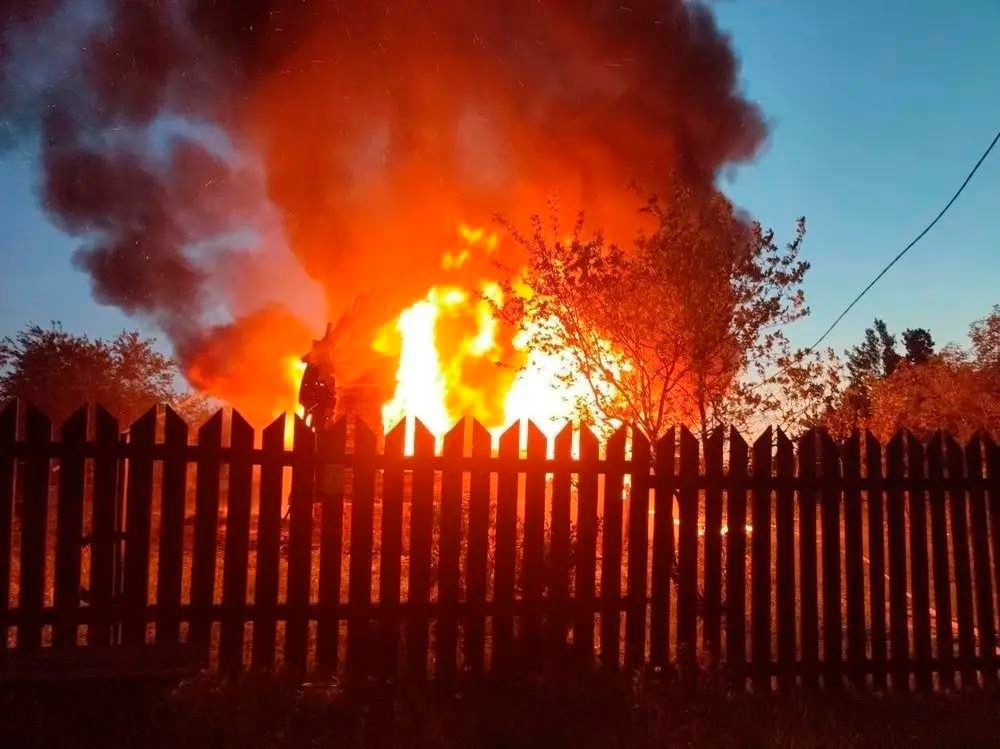
The bombardment resulted in three fatalities near Russia’s capital, wounded 12 additional people, caused damage to numerous residential buildings and completely destroyed several private residences.
One drone struck within a Moscow refinery’s boundaries but failed to halt operations, Sobyanin reported. A separate drone impacted an oil storage tank at a facility, sparking a fire that covered the surrounding area with dark smoke.
Multiple Moscow aviation hubs halted activities, causing dozens of flights to face delays or rerouting. One Ukrainian drone crashed within the capital’s Sheremetyevo airport property but caused no structural damage, officials reported.
Ukraine’s success in breaking through Moscow’s extensive air defense network demonstrated both the expansion of its drone fleet and improved operational strategies. Kyiv has consistently increased its drone operations, targeting power infrastructure and weapons manufacturing sites, though the capital has proven more challenging to reach.
“The Moscow region is the most heavily saturated with Russian air defense systems,” Zelenskyy stated during a national address, adding that “our long-range capabilities are significantly changing the situation — and, more broadly, the world’s perception of Russia’s war.”
The weekend Moscow strike represented a warranted reaction to “Russia’s prolongation of the war and attacks on our cities and communities,” Zelenskyy declared.
“We are clearly telling the Russians: Their state must end its war,” he stated in a social media message.
Last week’s most devastating attack in Ukraine claimed 24 lives when a Russian missile destroyed a nine-story residential building in Kyiv.
These strikes followed a short U.S.-mediated three-day truce that failed to stop the combat but created a break in long-distance attacks, permitting Moscow to conduct its yearly May 9 military demonstration honoring Nazi Germany’s World War II defeat.
Worries about Ukraine’s extended-range drone strikes prompted Russian officials to reduce the parade’s scale. Unlike previous years, no tanks, missiles or other military equipment rolled through Red Square.
Following the parade, Putin declared the Ukraine war was approaching its conclusion, though he provided no explanation or timeline. He has maintained his extensive conditions for ending the conflict, including Ukraine’s withdrawal from four regions Moscow has claimed but never completely controlled. Kyiv has refused this demand.
Trump also stated last week that the war’s end was “getting very close,” despite U.S. mediation efforts showing little meaningful advancement and being essentially paused since starting its conflict with Iran.
The Moscow attacks occur as tensions increase within Russia regarding the war’s mounting expenses and increasingly restrictive government measures that have reduced Putin’s historically strong approval ratings.
Certain military bloggers and social media personalities previously supportive of the Kremlin have begun openly challenging some governmental policies.
Government restrictions on mobile internet access and blocking widely-used messaging applications have created substantial business losses and daily disruptions for millions of Russians, generating public anger.
Officials justified these measures by citing the necessity to prevent Ukrainian drone attacks, some of which use mobile internet for navigation. Critics condemn the shutdowns as authorities’ latest effort to increase internet control.
Rising frustration over these limitations led citizens to submit petitions to presidential offices and attempt organizing demonstrations that were promptly prevented.
As tensions escalate, Putin begins a two-day China visit on Tuesday.
State television networks attempted to minimize the Moscow attacks, giving them only brief coverage on some broadcasts. They instead highlighted last week’s successful test of a new intercontinental ballistic missile designed as a crucial component of Russia’s nuclear arsenal.
Multiple war bloggers claimed the weekend attack revealed air defense weaknesses requiring immediate fixes. Some called for the Kremlin to intensify Ukrainian attacks and target its leadership.
“The time has come to hit the decision-making centers,” Alexander Kots of the daily Komsomolskaya Pravda wrote.
Pro-Kremlin political commentator Sergei Markov wrote about awakening to explosion sounds over the weekend as defense systems engaged the attacking drones. He accused Kyiv’s allies of assisting Ukraine’s drone production increase, claiming “it was Europe that tried to hit Moscow.”
“As long as Europe believes it’s safe, such attempts will continue,” Markov stated.
Russian hardliners have long pressed the Kremlin to retaliate against increasing Ukrainian attacks by targeting Kyiv’s European allies.
Last month, the Defense Ministry released a European factory list allegedly involved in producing drones and components for Ukraine. It cautioned that Russian attacks using European-manufactured drones carry “unpredictable consequences.”
When asked Sunday by a state TV commentator why Moscow accepts being “bitten” in this manner, Kremlin spokesman Dmitry Peskov replied that its nuclear deterrent aims to counter threats to Russia’s survival.