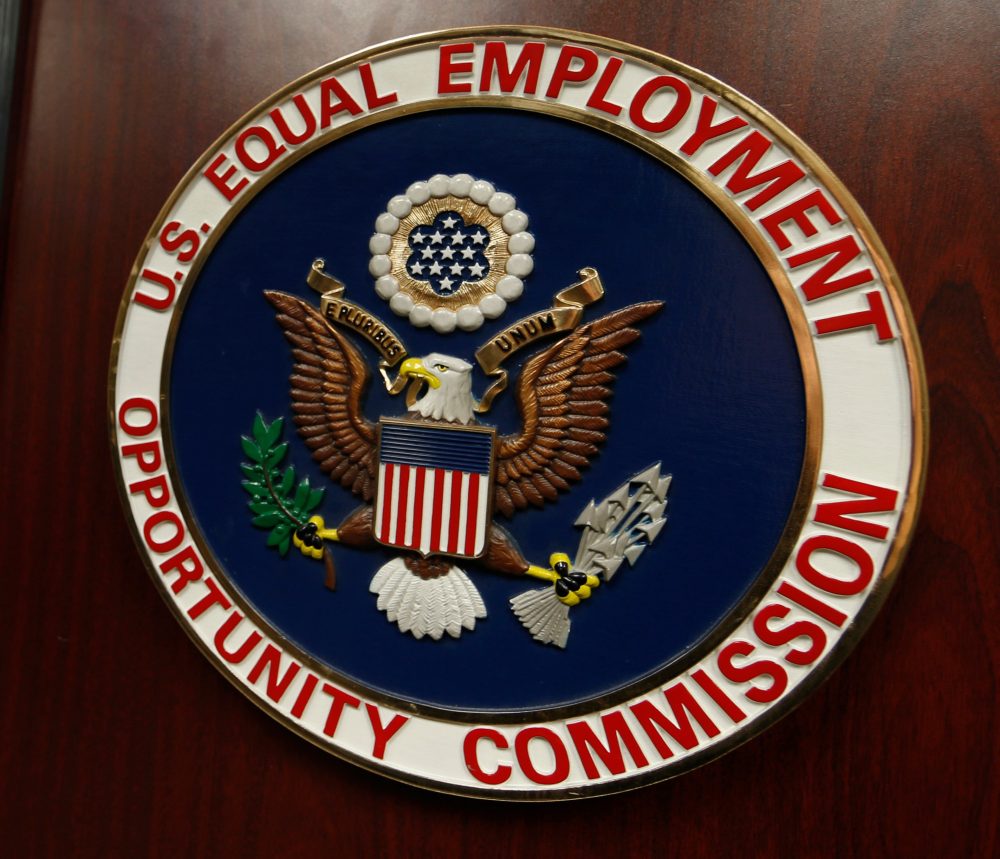

A federal judge has dismissed a lawsuit that accused the U.S. Equal Employment Opportunity Commission of unlawfully backing away from its duty to protect transgender workers from workplace discrimination.
Chief Maryland District Judge George L. Russell III threw out the case on Friday, determining that the court does not have jurisdiction to hear the complaint and that the plaintiff — FreeState Justice, a Maryland-based LGBTQ+ advocacy organization — does not have legal standing to bring the suit.
In a memorandum opinion issued Friday, Russell wrote: “While deeply troubling, the Court agrees with Defendants that the EEOC’s decision to alter its investigations of gender identity discrimination claims constitutes a discretionary decision over which the Court lacks authority to review.” Russell was nominated to the bench by President Barack Obama.
The EEOC, now led by Chair Andrea Lucas, a Republican, moved quickly to align with President Donald Trump’s January 2025 executive order declaring two unchangeable sexes. The agency, which is responsible for enforcing federal workplace discrimination laws, has significantly reduced protections for transgender employees — dropping lawsuits filed on their behalf and applying heightened scrutiny to incoming complaints tied to gender identity.
In July 2025, legal advocacy groups Democracy Forward and the National Women’s Law Center filed suit against the EEOC on behalf of FreeState Justice. The lawsuit argued that the agency’s so-called “Trans Exclusion Policy” violates a Supreme Court precedent, Title VII of the Civil Rights Act of 1964, the Fifth Amendment’s Equal Protection guarantee, and the Administrative Procedure Act.
Liz Theran, senior director of litigation for education and workplace justice at the National Women’s Law Center, said her organization is reviewing the ruling and “considering our options. Regardless of the outcome of this case, transgender people deserve workplaces free from discrimination, and we will continue fighting to ensure that federal civil rights protections apply to everyone they were designed to protect.”
Theran also stressed that “the EEOC exists because people who faced workplace discrimination often had nowhere else to turn. This agency is charged with enforcing civil rights laws and cannot single out workers it wants to protect. No one should lose access to federal protections because of who they are.”
The EEOC chose not to comment on the lawsuit and directed the Associated Press to the Department of Justice. The DOJ had not responded to a request for comment at the time of publication.
In its earlier motion to dismiss, filed October 15, the EEOC argued that “allowing FreeState’s suit would thrust this Court into the role of an overseer that micromanages the Commission’s enforcement process.” The agency compared the situation to a citizen trying to challenge law enforcement decisions, stating: “In the same way that a citizen cannot challenge the decision of the FBI or a U.S. Attorney to focus on certain kinds of crimes over others, FreeState cannot challenge the EEOC’s discretionary decisions about how to enforce federal antidiscrimination law.”
The ruling arrives during Pride Month, a time of global celebration that this year carries an undercurrent of resistance as the Trump administration continues to push policies that roll back transgender rights and limit recognition of diversity, equity, and inclusion efforts.