
Political advertising spending for November’s midterm elections is expected to reach an unprecedented $11.6 billion, setting a new benchmark for any election cycle, according to data released Thursday by advertising tracking company AdImpact.
This projection surpasses the previous high of $11.2 billion from the 2024 presidential election and significantly exceeds the $8.9 billion from the 2022 midterms. The figure also represents an increase from AdImpact’s September estimate of $10.8 billion.
With Republicans holding narrow control of both chambers of Congress, they face challenges from elevated cost of living concerns and President Donald Trump’s declining approval numbers. While Democrats appear positioned to regain House control, their Senate prospects remain more challenging. Campaign dollars are concentrating on the handful of competitive contests that will determine which party controls Congress.
AdImpact attributes the record-breaking spending forecast primarily to anticipated advertising surges in hotly contested Senate and gubernatorial battles across Ohio, Alaska, and Iowa, plus tight Senate competitions in Texas and Maine.
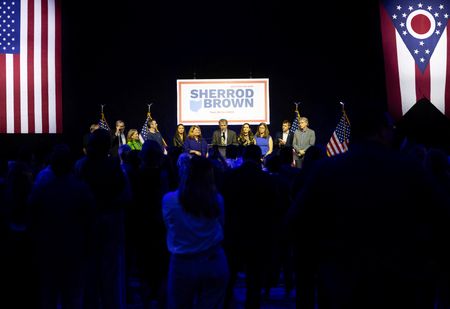
Ohio leads the spending surge with projected outlays now reaching $749 million, representing a $309 million jump from earlier predictions, according to AdImpact. The state features Democrat Sherrod Brown competing against Republican Senator Jon Husted alongside a competitive governor’s race.
Texas follows with the second-largest spending increase, where projections climbed $288 million to reach $850 million total. Maine rounds out the top increases with advertising expenditures now forecast at $491 million, up $185 million from previous estimates.
The Texas Senate race gained intensity after Attorney General Ken Paxton defeated four-term incumbent Senator John Cornyn in an expensive Republican primary last month. Paxton now faces Democratic state Representative James Talarico in what analysts expect could become one of history’s most costly political contests.
Maine’s Senate battle features Democratic newcomer Graham Platner, who has encountered criticism regarding past online content, a Nazi-associated tattoo, and accusations of inappropriate text messages to women. Platner is anticipated to challenge sitting Republican Senator Susan Collins in another potentially expensive showdown.