
WASHINGTON (AP) — When Minnesota Senator Tina Smith arrived in the Senate, the Democratic Party operated under very different principles.
Smith was named to her position in late 2017 as a replacement for Senator Al Franken, who stepped down after Democratic colleagues called for his departure following accusations of inappropriate physical contact. Her arrival coincided with the peak of the #MeToo era, when Democrats were forcing out their own members while highlighting the contrast with Republicans who continued supporting Donald Trump despite various scandals.
Almost ten years have passed, and Smith believes Democrats now have a more straightforward priority.
“Democrats want to win,” she said.
With the party working to gain control of both congressional chambers in upcoming midterm elections, Smith and fellow Democrats have thrown their support behind Maine Senate hopeful Graham Platner, even as controversies continue mounting around him. These include body art identified as Nazi imagery, inappropriate communications with women soon after his wedding, and accusations he denies involving confining a former partner in a room and forcibly twisting her arm. Platner secured an easy primary win this week after Governor Janet Mills ended her campaign.
The backing of Platner represents more than support for a single candidate. It demonstrates how the Democratic Party has become more willing to excuse conduct it previously might have considered unacceptable, instead evaluating candidates based on their ability to motivate voters and restore party control.
“Voters are looking for candidates that are speaking their language and talk about the things that matter to them,” Smith explained. “That’s the standard that we have to hit in order to win.”
This support emerges during a challenging period for Democrats, who hold minority status in both legislative chambers while Trump has returned to the presidency.
Following their comprehensive defeats in 2024, numerous Democrats maintained the party required broader appeal with reduced ideological requirements and greater accommodation for candidates and supporters who don’t align perfectly with the party’s established base.
However, this expansion has created challenging decisions about acceptable boundaries. In Virginia, Democrat Jay Jones secured the attorney general position after campaign-period reports revealed he had sent messages to a colleague suggesting the then-House speaker deserved “two bullets to the head.”
Party members also criticized Michigan Senate hopeful Abdul El-Sayed for participating in a campaign appearance with progressive content creator Hasan Piker. The 34-year-old streamer, who has 3.1 million Twitch followers and 1.8 million YouTube subscribers, has made numerous inflammatory statements, including claiming “America deserved 9/11.”
Platner’s campaign has emerged as perhaps the most obvious illustration. While certain Democrats consider his controversies disqualifying, others maintain that voters have made their selection.
“He won the nomination. That was the decision of Maine voters. And I respect that decision,” stated Senator Adam Schiff from California.
Arizona Senator Ruben Gallego, who has endorsed Platner, similarly believes the choice belongs to voters.
“It’s not up to the politicians to decide,” he stated.
Some Democrats view this transformation as wisdom gained during Trump’s presidency. Republicans maintained loyalty to Trump throughout scandals, impeachment proceedings, and criminal convictions, frequently without experiencing lasting electoral consequences. Many Democrats now contend voters prioritize whether candidates address their concerns over meeting conventional standards for personal behavior.
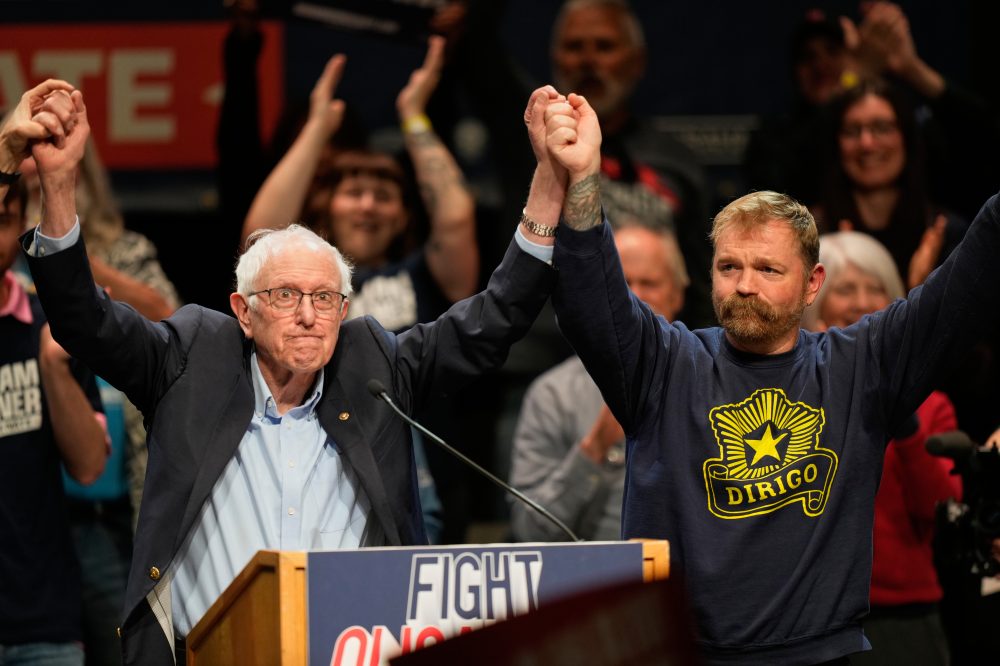
“I think what the people of this country and the people of Maine are interested in is how we’re going to have a government that represents all of us and addresses the many crises we face. Not the marriage problems of a campaign,” said Senator Bernie Sanders, who supported Platner early on.
Progressive activists who have consistently argued Democrats focus excessively on candidate oversight rather than channeling voter anger view Platner’s success as proof the party’s foundation desires change.
Maine resident Elizabeth Massey from Penobscot, who supports Platner, acknowledged taking the accusations seriously and remaining concerned about aspects of his history. However, she said his willingness to acknowledge mistakes and current national issues ultimately influenced her voting decision more.
“So do I care more about texts that he sent or the war in Iran and what that’s doing to gas prices?” Massey asked. “Pretty clearly the latter.”
Massey explained Platner’s attraction lies in his direct communication with voters about their concerns, not his lack of imperfections.
“He owns them. He has apologized for them,” she said regarding the allegations.
Additional supporters contend Republicans are applying standards to Platner they haven’t used with Trump.
“The Republicans don’t have much moral high ground to stand on when they’re criticizing him for what he’s done when Trump is a convicted felon,” said Annette Babcock from Platner’s hometown of Sullivan.
This acceptance of candidates with problematic backgrounds occurs as many Democrats express significant dissatisfaction with their party.
Approximately two-thirds of Democrats held “somewhat” or “very” positive opinions of their party in an April AP-NORC survey, dropping from 85% in September 2024. A separate AP-NORC poll from August 2025 found many Democrats characterizing their political party as “weak” or “ineffective.”
While Platner might energize core supporters, uncertainty remains about whether this will produce general election victories. Platner now confronts Republican Senator Susan Collins, among the GOP’s most enduring incumbents and a politician with extensive experience appealing to independent and crossover Democratic voters.
“The test is never going to be who wins the primary,” explained Michigan Senator Gary Peters, who directed Senate Democrats’ campaign operations in 2022 and 2024. “It’s going to be who wins the general election.”
Numerous Democrats have withheld enthusiastic endorsements of Platner’s candidacy.
This group includes New York Senator Kirsten Gillibrand, who chairs the Senate Democrats’ campaign committee and has concentrated primarily on defeating Collins rather than promoting Platner. Gillibrand helped spearhead the effort for Franken’s departure, declaring “enough is enough” and stating she believed his accusers.
Other Democrats have expressed more direct skepticism. Pennsylvania Senator John Fetterman and New Jersey Representative Josh Gottheimer have voiced opposition to Platner, while some legislators have provided only conditional support following his primary victory.
“Well, Maine supports him. So yes,” Senator Peter Welch from Vermont replied when questioned about his support for Platner.
Emily Cherniack, who serves as executive director of New Politics, an organization recruiting military veterans and public service leaders for political campaigns, said she has been “stunned” by some Democrats’ readiness to minimize allegations of aggressive and unstable behavior against Platner.
“Democrats are saying, we think it’s actually more important to win the majority and protect democracy, regardless of what he did. That to me is what the message is,” Cherniack explained.
“Just be honest and explicit about that choice.”