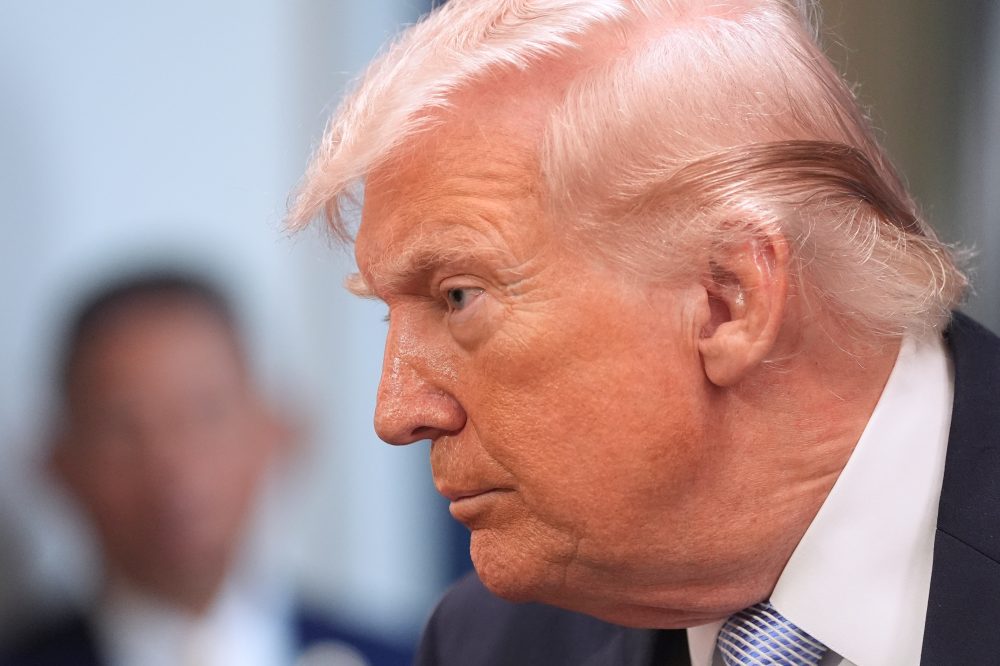
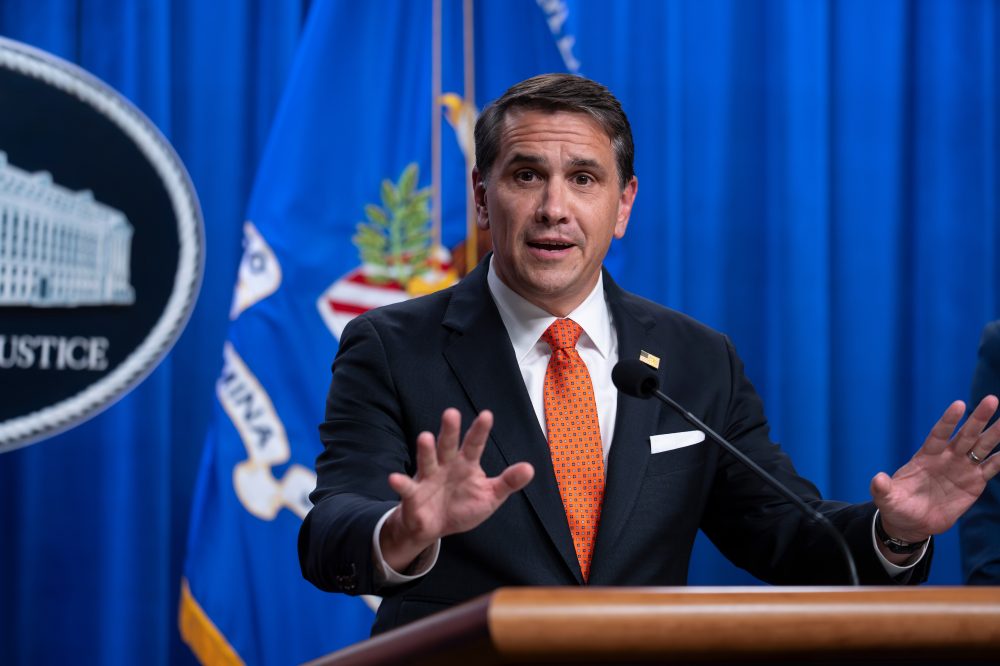
PHOENIX (AP) — On Friday, a federal judge issued a temporary order preventing Arizona from applying its gambling regulations to prediction market companies, following legal action by the Trump administration after state officials brought criminal charges claiming Kalshi operates an unlawful gambling business.
U.S. District Judge Michael Liburdi’s decision also suspends Arizona’s criminal proceedings against Kalshi, which had been set for an arraignment on Monday. Following the judge’s ruling, a state prosecutor confirmed the Monday hearing has been canceled.
Judge Liburdi indicated he would provide detailed reasoning for his decision in a written order expected to be issued Friday evening.
The federal Commodity Futures Trading Commission initiated legal action against Arizona following cease-and-desist orders issued to Kalshi by state gambling authorities and subsequent criminal charges filed against the prediction market company. The commission contended that Arizona was overstepping federal jurisdiction over national swaps market regulation.
Survivors of Jeffrey Epstein’s sexual abuse are divided over First Lady Melania Trump’s recent call for congressional action regarding the late financier’s criminal activities.
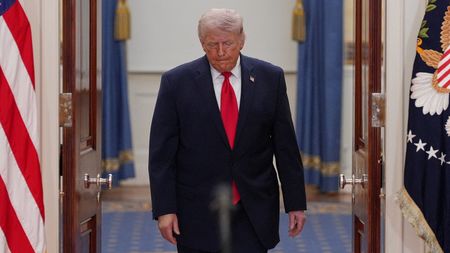
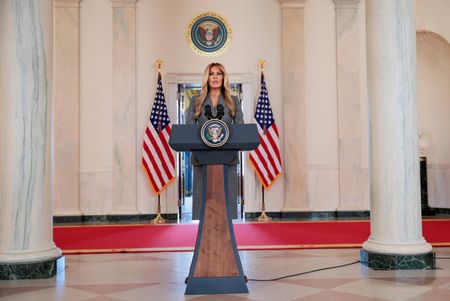
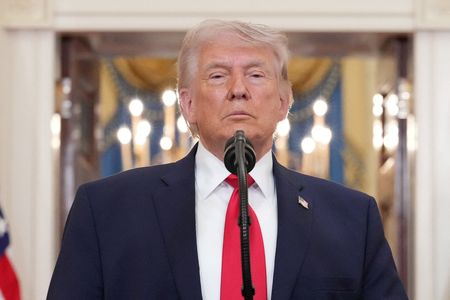
During a public address Thursday at the White House Grand Foyer, the First Lady distanced herself from Epstein while advocating for enhanced congressional oversight of his case. Trump explicitly stated she maintained no personal relationship with the convicted sex offender.
The First Lady’s statement has generated mixed reactions among those who suffered abuse at Epstein’s hands. While some survivors view her congressional hearing proposal as a positive step toward accountability, others remain skeptical about the motivations behind her public declaration.
Epstein died in federal custody in 2019 while awaiting trial on sex trafficking charges. His death sparked widespread controversy and conspiracy theories, with many demanding further investigation into his criminal network and associates.
The First Lady’s unexpected entry into the ongoing Epstein discourse represents a significant development in the case that has captivated public attention for years. Her call for congressional action could potentially reignite legislative interest in examining the circumstances surrounding Epstein’s crimes and connections.
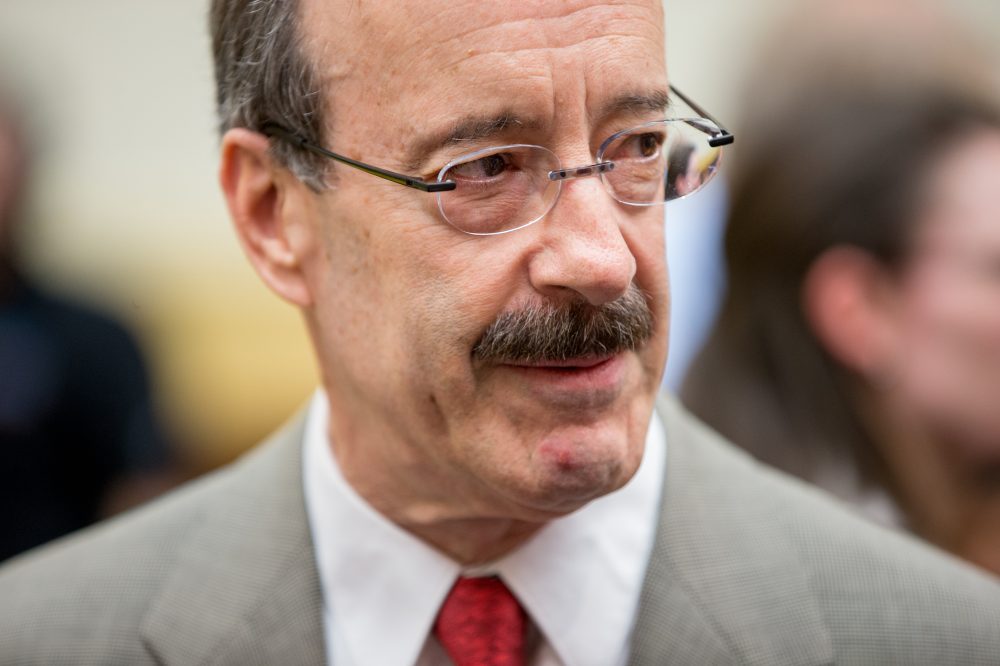
Eliot Engel, the longtime New York Democratic congressman who led the House Foreign Affairs Committee and influenced international policy for more than three decades, passed away Friday at age 79.
The former representative died at a hospital in the Bronx due to complications from Parkinson’s disease, his family announced.
“During his over 44 years in public service, Eliot Engel fought tirelessly for his constituents at home and for peace and security around the world,” his family stated.
Engel first entered Congress in 1988 after unseating a 10-term incumbent with a reform-focused campaign. His political career came full circle when he was defeated in a 2020 Democratic primary by Jamaal Bowman, marking a progressive victory over the establishment wing of the party.
Before his congressional career, Engel worked as an educator and served in the state Assembly. He gradually climbed the hierarchy of the House Foreign Affairs Committee until becoming its chairman in 2019. He championed Israel’s interests and became one of the earliest voices advocating for U.S. military action to support Kosovo during the 1990s conflict, when ethnic Albanians fought for independence from Serbia. NATO’s bombing campaign, led by the U.S. and U.K., ultimately paved the way for Kosovo’s independence nearly a decade later.
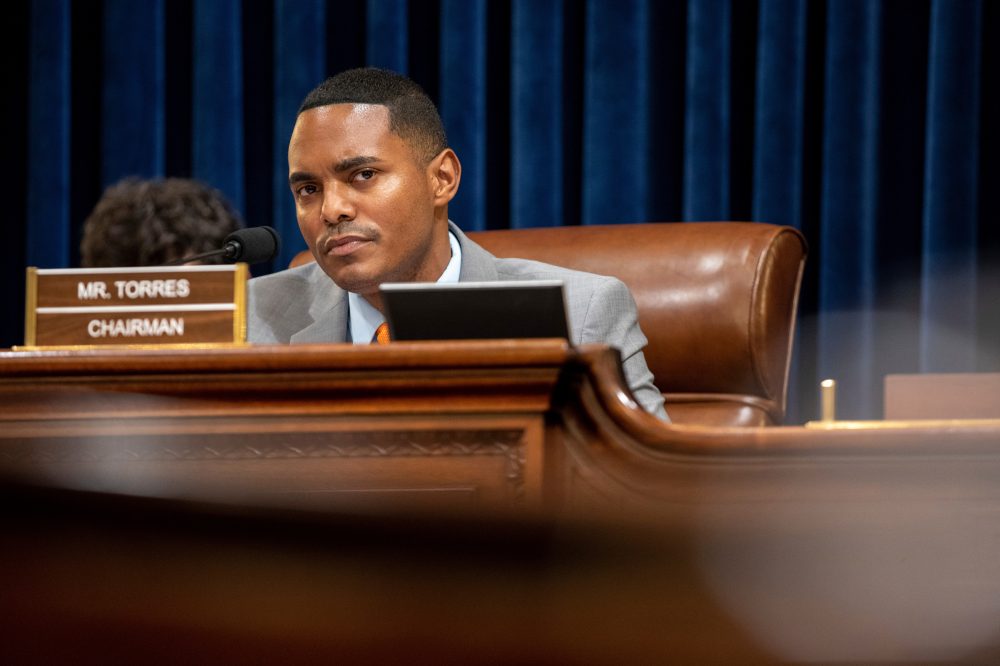
U.S. Rep. Richie Torres, also representing the Bronx, described Engel as “a fierce advocate for Kosovo and the Albanian community at a time when few others were paying attention.”
Among his legislative achievements, Engel co-negotiated the Harkin–Engel Protocol, a global accord designed to end the most severe forms of child labor on cocoa plantations across West Africa.
As Foreign Relations Committee chair, he oversaw the 2019-2020 impeachment investigation into President Trump regarding his attempts to pressure Ukrainian President Volodymyr Zelenskyy to investigate then-rival Joe Biden.
Following Trump’s impeachment and subsequent Senate acquittal in February 2020, Engel promised continued oversight, stating there were “a lot of unanswered questions that the American public deserves to know” answers to.
The coronavirus pandemic soon dominated headlines, along with criticism of Engel’s absence from his district, initially highlighted by The Atlantic magazine.
His political troubles intensified after a microphone captured him telling another Bronx official at a press conference: “If I didn’t have a primary, I wouldn’t care,” while trying to secure speaking time.
Throughout his tenure, Engel became famous for arriving hours early to claim an aisle seat for the State of the Union address, positioning himself to shake hands with the president on camera as the commander-in-chief walked to the podium.
However, Rep. George Latimer, the Democrat who now represents Engel’s former district, emphasized that “his legacy consists of hard work on issues and kindness to all.”
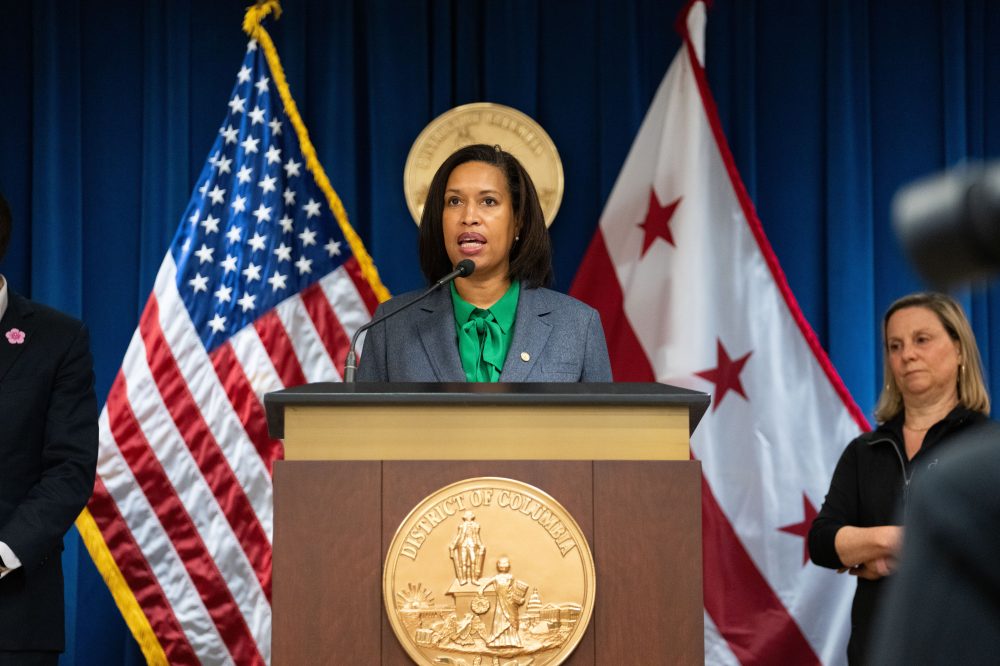
WASHINGTON (AP) — Mayor Muriel Bowser presented her final budget proposal on Friday before leaving office this year, outlining a $21.2 billion gross operating expenditure plan that’s expected to create significant debate among District Council members and on Capitol Hill, where GOP legislators have increasingly intervened in local matters.
The mayor’s financial plan prioritizes education and healthcare expenditures while reducing allocations in multiple sectors, including eliminating $127 million designated for upcoming union contract negotiations and salary increases for non-unionized municipal workers.
A significant aspect of the proposal involves reducing the general funds budget to $12.7 billion, representing a 3.3% decrease from 2026 levels. These general funds finance essential city operations. Bowser explained the reductions stem from declining revenues caused partly by federal employment cuts and increasing expenses, such as elevated Medicaid costs and higher administrative expenses for SNAP benefits due to federal law changes that transferred certain costs to state governments.
During her presentation to Council members, Bowser emphasized the city is “not broke” while describing what she characterized as three distinct phases of her leadership: periods of expansion, the COVID-19 economic crisis, and the post-pandemic recovery.
“We are adjusting to what DOGE has done to our workforce and commercial corridor,” she stated, referencing the Trump administration’s federal government downsizing efforts. She noted that increased expenses and reduced income have created an estimated budget shortfall requiring attention.
“I think we all have to be clear headed about where we are and what it will take to keep growing,” Bowser remarked. The mayor has led the city since 2015 and announced she won’t seek reelection this year.
Council members challenged Bowser and her team regarding proposed reductions, particularly criticizing cuts to programs designed to reduce childcare expenses in a city where families spend over $25,000 annually on average for infant care, according to Child Care Aware of America. The proposal would limit the District’s childcare subsidy program, which assists low-income families with care costs, to 6,000 children. Current subsidy recipients would maintain their benefits. The plan also eliminates a program that supplemented childcare worker wages, a pandemic-era initiative designed to attract and retain employees in a traditionally low-wage sector.
Council Chairman Phil Mendelson indicated the council would likely conduct a budget vote in June.
Washington’s financial planning has faced complications over recent years, including 2025 when the House approved federal funding legislation forcing the district to return to 2024 budget limits, effectively removing $1.1 billion from its balanced budget during the fiscal year.
The Department of Government Efficiency’s federal workforce restructuring significantly affected the Washington area. Terry Clower, who directs George Mason University’s Center for Regional Analysis, calculated that the region lost more than 50,000 positions. Clower explained these job losses extend beyond lost wages and income taxes, also impacting businesses serving those workers and creating additional revenue losses for local governments.
The D.C. Office of Revenue Analysis determined Washington experienced a net reduction of 22,000 federal positions with combined annual salaries exceeding $3 billion.
City Administrator Kevin Donahue identified revenue impacts from federal workforce reductions, primarily through the Department of Government Efficiency, which resulted in approximately $325 million in lost revenue from employment cuts and reduced consumer spending. These losses are projected to increase further in fiscal year 2027.
WASHINGTON — Former First Lady Melania Trump caught many off guard Thursday when she delivered an unexpected public statement rejecting any significant ties to Jeffrey Epstein, the late convicted sex trafficker, during a time when his case had largely disappeared from public discussion.
Speaking from prepared notes at the White House Thursday, Mrs. Trump declared she and her legal team were pushing back against “unfound and baseless lies” regarding her relationship with the deceased financier, who used his connections among wealthy and influential people to find victims and hide his criminal activities.
“The lies linking me with the disgraceful Jeffrey Epstein need to end today,” she declared. “The individuals lying about me are devoid of ethical standards, humility and respect. I do not object to their ignorance, but rather I reject their mean-spirited attempts to defame my reputation.”
Mrs. Trump declined to answer reporters’ questions following her remarks, leaving numerous unanswered questions about what motivated the statement.
The timing remains mysterious. Her husband, President Donald Trump, and his administration appeared to have finally moved beyond more than a year of Epstein-related controversy, particularly as the Iran conflict had dominated Washington’s attention.
The former first lady’s public comments will likely thrust the matter back into the political spotlight, even though the president has encouraged both the public and press to leave the case behind.
Mrs. Trump appeared to reference a short 2002 email with sender and receiver information redacted. The message opens with “Dear G!” and closes with “Love, Melania,” praising the recipient regarding a magazine piece about “JE.”
“I know you are very busy flying all over the world,” the email states. “How was Palm Beach? I cannot wait to go down. Give me a call when you are back in NY.”
This correspondence was sent during the same month New York Magazine published a profile of Epstein in which Trump described him as a “terrific guy.”
During Thursday’s statement, Mrs. Trump denied being friends with either Epstein or his associate and former romantic partner Ghislaine Maxwell, though she acknowledged moving in similar social circles throughout New York and Florida. She characterized an email response she sent to Maxwell as “casual correspondence” without providing additional details.
“My polite reply to her email doesn’t amount to anything more than a trivial note,” she stated.
Released documents also included an image from Epstein’s residence displaying multiple photographs arranged on furniture and stored in drawers. Within that image, tucked inside a drawer among other pictures, was a photo showing Donald Trump with Epstein, Melania Trump, and Maxwell.
Mrs. Trump highlighted Thursday that multiple people and organizations have issued apologies for their “lies about me.” Among her examples, the most recent occurred in October when book publisher HarperCollins UK apologized to the former first lady and removed sections from a publication that suggested Epstein facilitated her introduction to Donald Trump.
MS NOW journalist Jacqueline Alemany reported on social media Thursday that President Trump told her he was unaware of his wife’s planned statement regarding Epstein.
The White House press office has not responded to inquiries for comment.
Nick Clemens, speaking for Mrs. Trump, confirmed the West Wing knew in advance about her planned statement. However, he directed questions about whether officials knew the specific content of her remarks to the West Wing.
In recent weeks, President Trump’s public schedule has focused primarily on the Iran conflict.
The former first lady’s statement returned Epstein to public attention months following federal authorities’ release of millions of documents under the Epstein Files Transparency Act, legislation passed after sustained public and political pressure. The law mandates government disclosure of files related to the late financier and Maxwell.
Congressional members initially criticized the Justice Department for limited document releases, but officials explained additional time was necessary to examine newly discovered materials and protect sensitive victim information.
While several prominent European figures have faced consequences for Epstein associations, comparable prosecutions have not occurred in the United States.
Most significantly, Andrew Mountbatten-Windsor — formerly Britain’s Prince Andrew — was arrested in February following the latest document release. Mountbatten-Windsor’s name appeared repeatedly in the files, showing a close connection with Epstein.
However, his arrest was unrelated to sexual misconduct. Instead, he faces charges for allegedly sharing confidential trade information with Epstein.
Mrs. Trump urged Congress to conduct public hearings focused on Epstein’s crime survivors, providing opportunities to testify before lawmakers and have their accounts officially recorded.
“Each and every woman should have her day to tell her story in public if she wishes,” she said. “Then, and only then, we will have the truth.”
In an unusual move, former First Lady Melania Trump broke her typical silence Thursday to issue a public declaration distancing herself from Jeffrey Epstein while demanding Congressional investigations into the case.
Trump’s unexpected statement explicitly denied any personal relationship with the late financier and convicted sex offender, marking a rare instance of the former first lady addressing controversial topics publicly.
The announcement has generated divided responses among those who experienced abuse at Epstein’s hands, with survivors expressing varying perspectives on her decision to speak out and call for legislative action.
Fresh polling data from the Pew Research Center reveals a notable shift in Republican attitudes toward Israel, particularly among younger conservative voters, while President Donald Trump has launched sharp criticism against several prominent right-wing media figures.
The new survey indicates that while Republican support for Israel still outweighs opposition overall, there’s been a marked decline among younger party members. Among all Republicans and those who lean Republican, 58% maintain favorable views of Israel while 41% hold unfavorable opinions.
The generational divide within the party has become more pronounced, with 57% of Republicans between ages 18 and 49 now holding negative views of Israel, representing an increase from 50% the previous year. In contrast, Republicans aged 50 and above maintain predominantly positive attitudes toward the nation.
For context, Democratic opposition to Israel has grown even more dramatically, with 80% of Democrats and Democratic-leaning independents now viewing Israel unfavorably, jumping from 69% last year and 53% in 2022. Younger Democrats show slightly stronger negative sentiment than their older counterparts, with 47% expressing very unfavorable opinions compared to 39% of older Democrats.
Republican opinions on Israeli Prime Minister Benjamin Netanyahu have become evenly split, with 45% expressing significant or moderate confidence in his leadership while 44% report little to no confidence. The age gap persists here as well, with Republicans over 50 showing twice the confidence level in Netanyahu compared to younger Republicans—58% versus 30%.
Regarding Trump’s approach to US-Israel relations, approximately 73% of Republicans express confidence in his decision-making abilities, compared to just 16% of Democrats. However, younger Republicans show less enthusiasm, with only 52% of those under 30 expressing confidence, dramatically lower than the 93% confidence rate among Republicans 65 and older.
In a separate development, President Trump used his Truth Social platform to launch an extensive attack on conservative media personalities Tucker Carlson, Alex Jones, Candace Owens, and Megyn Kelly. These commentators, who previously backed Trump, have recently voiced opposition to his Iran war stance and Israel policies. Trump labeled them as “NUT JOBS, TROUBLEMAKERS,” ridiculed them for being “thrown off Television,” and declared they were no longer welcome on TV appearances.
The president alleged that these four media figures want Iran to develop nuclear weapons and suggested their criticisms stem from seeking “cheap publicity” for their podcast ventures. Trump dismissed suggestions of division within his MAGA movement, stating that anyone opposing him represents “the opposite of MAGA.”
Trump further claimed he could “get them on my side” at will but stated he refuses to take their calls when they attempt to contact him. He ended his statement by emphasizing that MAGA represents winning and strength, declaring “these people have no idea how to do that, BUT I DO.”
CHICAGO (AP) — A complex political dispute over whether Chicago public schools should close on May 1 is reaching a critical point, leaving hundreds of thousands of students and families uncertain about their plans.
The powerful Chicago Teachers Union, which supports Mayor Brandon Johnson, is pushing for educators to join protest activities in America’s third-largest city on May Day, aligning with global workers’ rights demonstrations. However, the recently appointed head of Chicago Public Schools has turned down the request to close schools.
This disagreement has left families of more than 315,000 students in limbo.
Workers’ rights demonstrations on May Day have traditionally been strong in Chicago, a city known for supporting organized labor. International Workers Day traces its origins back more than 100 years to a significant period in labor movement history.
Labor organizations across the United States are organizing a comprehensive boycott of work, commerce, and education this year to oppose the Trump administration’s policies. In various locations, including North Carolina, union groups are urging teachers to skip work on May 1.
The Chicago Teachers Union is calling for the country’s fourth-largest school system to eliminate classes entirely, claiming this would enable both educators and students to demonstrate during a period when public education faces challenges. Labor groups are pushing for increased educational funding, higher taxes on wealthy individuals, and an end to immigration enforcement operations.
Over 70% of the district’s student population comes from low-income households, with most students being Black or Latino.
“What our students need, and what history teaches us is the only thing that works, is educators, labor unions, and community groups standing together to defend each other and our democracy and demand that the government put our families over their fortunes,” the CTU said in a statement.
Earlier this week, Macquline King, the recently appointed district CEO, announced she had no intention of canceling classes.
“As a career educator, I believe every minute in the classroom is vital for our students,” she said in a statement, adding that the district’s school board could override her with a vote. Their next regular meeting is April 23.
The union plans to designate May 1 as a professional development day for educators, switching it with one originally scheduled for June 5, which marks the beginning of students’ summer vacation. The union has submitted a formal complaint regarding this issue.
The potential closure of more than 500 schools is causing significant problems for parents who are worried about securing childcare or canceling test preparation activities.
District research revealed that 113 schools, roughly 20% of all schools, had scheduled events for May 1, including educational trips, athletic competitions, and makeup sessions for Advanced Placement exams. An additional 100 schools reported having other events such as proms and senior recognition nights planned for that date, according to a document from King to board members that The Associated Press obtained.
“Disruptions would directly affect academic testing and key student milestones, particularly for graduating seniors and 8th graders with limited ability to recover or reschedule these experiences,” King wrote in the memo.
Mariam Hafezi, whose child attends middle school in northwest Chicago, expressed support for civic education and wouldn’t oppose student-organized walkouts. However, she pointed out that these demonstrations were being organized by adults.
“It is a teachable moment without them being outside of school,” she said. “It would be wiser to spend time in class explaining about the strike in general.”
The conflict over a single school day highlights a challenging situation for first-term Mayor Johnson and his potential reelection campaign in 2027.
Johnson endorses the May 1 demonstrations but has been less definitive publicly about whether schools should be closed. His office did not respond to an email on Friday.
As a former CTU organizer, Johnson won the 2023 election with union backing. This relationship has created friction, especially during last year’s contract discussions and the removal of former CEO Pedro Martinez.
Following a difficult search process for a replacement, the board selected King, someone already working within the district who had been serving as interim CEO. The board approved her three-year contract last week.
This disagreement has also provided insight into the politics of the city’s newest Democratic governing body. Chicago is transitioning from a mayor-appointed school board to a completely elected one this November.
The current 21-member board includes both elected and appointed members who frequently disagree.
“Calls to keep students out of school are reckless,” elected board member Jennifer Custer wrote on Facebook. “They hurt parents who work, disrupt classrooms, and set our kids back — all for politics.”
However, Emma Lozano, a veteran immigrant rights advocate appointed by Johnson, expressed a different view.
She believes students should participate in May 1 demonstrations, which have attracted hundreds of thousands of participants in Chicago in previous years.
“We don’t just get educated in the classroom,” she said. “We get educated in the world and have to learn how to fight for our rights.”
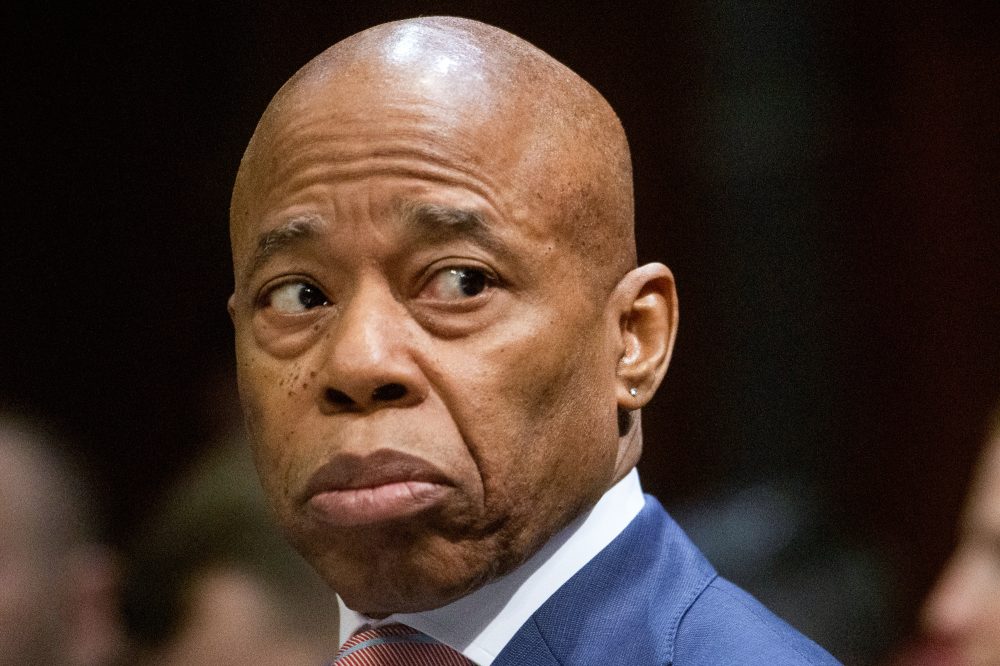
Former New York City Mayor Eric Adams revealed on Friday that he has obtained honorary citizenship from Albania, moving him closer to his frequently stated goal of pursuing life overseas after leaving politics.
Albania’s President Bajram Begaj granted the honorary citizenship to Adams, a Democrat, following a formal request, according to an official presidential decree.
Albanian media outlets first broke the story, which was subsequently verified by Adams’ representative, who noted that the former mayor has maintained strong ties with Albanian-American communities for years.
“The decision by the Republic of Albania to grant Mayor Adams citizenship reflects that enduring relationship and mutual respect,” spokesperson Todd Shapiro stated via text message, noting that this recognition “further strengthens the bond between New York and Albania.”
Adams, who previously referred to himself as an “international mayor,” has demonstrated ongoing interest in the small Balkan country. His grown son resided in Albania while participating in the nation’s equivalent of “American Idol,” and Adams himself visited the country in October during his final months as mayor.
During that visit, he explained his purpose was “to say hello to a friend and learn from a friend and build a relationship with a friendship that will not allow our oceans or seas to divide us.”
Adams’ specific plans for his new citizenship status remain unclear. However, he has consistently voiced aspirations to relocate far from New York City after his political career.
“When I retire from government, I’m going to live in Baku,” Adams declared during a 2018 Azerbaijan community event while serving as Brooklyn Borough President. Later, in a conversation with a Jewish media outlet, he mentioned wanting to spend his retirement in the Israeli-controlled Golan Heights.
During his mayoral tenure, Adams’ frequent international travel, particularly to Turkey, led to federal charges partly based on claims he accepted inappropriate travel perks from foreign contacts.
Adams rejected these accusations, and the Trump administration’s Justice Department subsequently dismissed the case. Adams later discussed potential ambassadorial positions with Trump officials, though no appointment occurred.
Following his unsuccessful reelection campaign, Adams took a four-day Albanian trip, where he met with Prime Minister Edi Rama, cabinet members, and business leaders. The Albanian government partially funded this journey.
Since departing office, Adams has been seen in Dubai and the Democratic Republic of Congo, though his current activities remain largely mysterious.
This January, he introduced a cryptocurrency that he claimed would combat antisemitism and “anti-Americanism,” but the venture faced criticism after losing substantial value.
Minnesota state officials have filed legal action against the Trump administration, accusing federal authorities of concealing evidence in connection with fatal shootings carried out by immigration enforcement officers in Minneapolis.
The lawsuit centers on incidents where Immigration and Customs Enforcement agents killed two American citizens, Alex Pretti and Renee Macklin Good, and wounded a Venezuelan individual during enforcement activities in the city.
State authorities claim the federal government is refusing to provide critical evidence and information about these shooting incidents, hampering their ability to conduct a thorough investigation into the deaths and injury that occurred during the immigration crackdown.
The legal challenge highlights growing tensions between state and federal officials over transparency and accountability in immigration enforcement operations that have resulted in civilian casualties.
WASHINGTON — Detailed designs for President Donald Trump’s proposed ceremonial arch in Washington D.C. were made public Friday, revealing an elaborate 250-foot monument topped with a golden winged statue carrying a torch and wearing a crown reminiscent of the Statue of Liberty.
According to the 12-page design document from the U.S. Commission on Fine Arts, the massive structure would feature two golden eagles positioned alongside the central figure, with four gilded lions standing guard at the base. The phrases “One Nation Under God” and “Liberty and Justice for All” would be etched in gold lettering on opposite sides of the monument.
The proposed location places the arch in a traffic circle linking Washington to northern Virginia, positioned between the Lincoln Memorial to the east and Arlington National Cemetery to the west.
Speaking about the project in February, Trump referenced historical attempts to construct such a monument in the capital, explaining that the nation originally pursued this type of structure two centuries ago. “It was interrupted by a thing called the Civil War, and so it never got built,” Trump said. “Then, they almost built something in 1902, but it never happened.”
The President has argued that Washington stands alone among major global capitals in lacking such a commemorative structure, emphasizing that other significant cities worldwide feature similar monuments.
President Donald Trump posted disturbing security camera footage on his Truth Social platform late Thursday, showing a fatal hammer attack at a Fort Myers gas station that he’s using to advance his mass deportation policies.
The suspect, 40-year-old Rolbert Joachin, faces murder charges for the April 2nd killing of a convenience store employee approximately 160 miles northwest of Miami. While Trump identified the man as Haitian, police and court documents don’t specify his nationality but note he required a Creole interpreter due to limited English proficiency.
Trump frequently uses immigration-related crimes to support his border policies and criticize Democrats, including former President Joe Biden, claiming they allow dangerous individuals into the country. Research indicates that undocumented immigrants commit violent, drug, and property crimes at lower rates than U.S.-born citizens.
“The video of her brutal slaying is one of the most vicious things you will ever see,” Trump wrote in his social media post, calling the suspect an “animal.”
The security footage, also posted by the Department of Homeland Security, shows the attacker first striking a black car with a hammer outside the Chevron station. When victim Nilufa Easmin, 51, emerges wearing black pants and a pink shirt to confront him, the man in yellow shirt and black shorts immediately strikes her head with the weapon.
The graphic video captures Easmin falling to the sidewalk near the store entrance, where the attacker continues hitting her head six times before stepping over her motionless body and leaving the scene.
According to a GoFundMe campaign organized by Samir Bahadur Syed from the Bangladesh Association of Southwest Florida, Easmin was “a devoted mother who worked tirelessly to provide for her two young daughters.”
Fort Myers officers responded to reports of the hammer attack and discovered the victim on the ground with severe head injuries and multiple wounds. They apprehended Joachin walking nearby shortly after the incident.
Police report that Joachin has admitted to the crime. He appeared in court Wednesday on murder and property damage charges, with arraignment scheduled for May 4th. His public defender has not responded to requests for comment.
Trump criticized Biden for allowing Joachin to remain in the United States under temporary protection. Kelly Walker, acting director of ICE’s Miami enforcement office, revealed Friday that Joachin arrived by boat near Key West in August 2022, was arrested, and received Temporary Protected Status in 2023, which was revoked this week.
The Trump administration strongly opposes Temporary Protected Status programs, which allow citizens from countries experiencing crisis or conflict to live and work in America temporarily. Republicans argue that Biden’s administration has overused TPS to permit hundreds of thousands to remain in the country inappropriately.
Multiple federal lawsuits challenge Trump’s attempts to end TPS for over one million people, including 350,000 Haitians. A federal appeals court upheld a lower court’s decision against terminating Haiti’s temporary status in March, and the Supreme Court will hear arguments on April 29th.
The Department of Homeland Security and Trump administration frequently publicize crimes involving immigrants and maintain a website tracking ICE arrests and related offenses. They regularly feature “Angel Families” who have lost relatives to crimes committed by immigrants.
ICE commemorated the first anniversary of reopening their victim assistance office Thursday, featuring emotional testimony from surviving family members.
WASHINGTON – Internal discussions at the White House revealed that President Trump’s administration contemplated having him deliver a nationally televised speech about the Iran ceasefire agreement on Tuesday, but senior staff ultimately advised against the prime-time address, according to three federal officials who spoke with Reuters.
The choice reflects the administration’s delicate approach – attempting to demonstrate early optimism about the agreement that paused hostilities and reopened the Strait of Hormuz while simultaneously acknowledging the deal’s uncertain future. These conversations about a potential presidential speech had not been publicly disclosed before.
With negotiations scheduled to commence Saturday in Islamabad, experts question whether the temporary halt in fighting will lead to a permanent resolution of the conflict.
Anonymous sources indicated that Trump was persuaded not to deliver the address. However, the White House disputed these claims in an official response, stating: “This is fake news. This was never even discussed with the president.”
The officials requested anonymity when describing private White House conversations.
Instead of a formal address, Trump revealed the ceasefire through a social media announcement just hours before Tuesday’s deadline, after which he had promised to obliterate Iran’s entire society.
This dramatic policy shift represented one of the most abrupt wartime reversals by any American commander-in-chief.
According to one source, Trump strongly insisted on delivering the televised remarks. Officials explained that while the speech was being considered, the White House abandoned the plan due to lingering uncertainties about the ceasefire terms.
Senior advisers were still analyzing the agreement’s components and felt they lacked sufficient information for a presidential address to the nation, sources revealed.
On April 1, Trump had delivered a 19-minute evening broadcast to Americans, firmly defending his war strategy and announcing plans for intensive strikes against Iran over the following two to three weeks. A subsequent address would have provided an opportunity to explain his strategic reversal.
A senior White House official confirmed internal conversations about Trump speaking to the nation Tuesday evening.
“There was chatter about it, but obviously it didn’t come to fruition, and we didn’t alert the networks or anything; it didn’t get that far,” the official explained to Reuters, though they did not verify that Trump was discouraged from giving the speech.
The ceasefire has suspended American and Israeli bombing campaigns against Iran. However, it has not lifted the Strait of Hormuz blockade, which has created unprecedented global energy supply disruptions, nor has it stopped the separate conflict between Israel and Iranian-supported Hezbollah forces in Lebanon.
The waterway remained closed Friday, and Israel exchanged gunfire with Hezbollah in Lebanon – two ongoing issues that both the United States and Iran characterized as breaches of their ceasefire agreement just before their initial peace discussions.
Trump has expressed his anger publicly, posting that Iran was violating the agreement and declaring Friday: “The only reason they are alive today is to negotiate!”
Nevertheless, both nations are dispatching senior negotiators to Islamabad for discussions beginning Saturday. Vice President JD Vance will head the American delegation and stated Friday that the United States was prepared to negotiate honestly.
“If they’re going to try to play us, then they’re going to find the negotiating team is not that receptive,” Vance warned.
Experts emphasize the minimal trust existing between both parties, noting that Trump’s Tuesday threat that “a whole civilization will die tonight” unless his conditions were satisfied may have caused additional damage.
During his previous presidency, Trump withdrew from a 2018 nuclear agreement his predecessor had negotiated with Iran, then bombed Iranian nuclear facilities during 2025 negotiations. Trump initiated the current war against Iran on February 28, despite mediator Oman expressing optimism for a diplomatic resolution.
“So there’s a baked-in lack of trust that is going to confound any diplomacy going forward,” explained Justin Logan, who directs defense and foreign policy studies at the Washington-based Cato Institute think tank.
Pentagon officials state that American and Israeli operations have severely damaged Iran’s military capabilities for a generation. Yet analysts believe Iran will likely emerge as a persistent, long-term challenge for Washington: a diminished opponent with more extreme leadership and hidden reserves of weapons-grade uranium.
Tehran has also proven its capacity to block the Strait of Hormuz, providing significant influence over international energy markets and regional competitors, experts note.
Federal immigration authorities have launched a comprehensive nationwide investigation targeting organized networks accused of helping expectant mothers from other countries fraudulently obtain visas to give birth in the United States, according to internal communications obtained by news outlets.
Immigration and Customs Enforcement distributed an internal message Thursday directing field agents across the nation to prioritize what the agency calls its “Birth Tourism Initiative.” The investigation seeks to identify and dismantle networks that allegedly assist pregnant foreign nationals in traveling to America specifically to secure U.S. citizenship for their newborns.
The enforcement action represents part of President Donald Trump’s broader immigration strategy following his return to office in January 2025, targeting both unauthorized border crossings and legal immigration pathways. The administration has pointed to birth tourism concerns as justification for its efforts to eliminate automatic citizenship for children born on American soil.
“Uninhibited birth tourism poses a tremendous cost to taxpayers and threatens our national security,” White House spokeswoman Anna Kelly said in a statement, adding that most nations do not provide automatic citizenship at birth.
Federal agencies including the Department of Homeland Security, ICE, and the Justice Department declined to provide additional details when contacted for comment.
While no federal statute explicitly prohibits birth tourism, regulations established during Trump’s previous presidency in 2020 forbid using temporary visitor and business visas primarily to secure American citizenship for babies. Individuals involved in such arrangements face potential prosecution for fraud and related criminal charges.
Official statistics tracking foreign nationals who travel to the United States specifically for childbirth purposes do not exist, nor are there verified calculations of associated taxpayer expenses.
The Center for Immigration Studies, an organization advocating for reduced immigration levels, published research in 2020 suggesting approximately 20,000 to 25,000 mothers engaged in birth tourism during a twelve-month span from 2016 to 2017.
With 3.6 million total births recorded in the United States during 2025, birth tourism cases likely constitute a small percentage of overall deliveries.
Republican lawmakers have cited birth tourism allegations as grounds for restricting access to American citizenship, which has traditionally been granted at birth under constitutional amendment provisions.
On his first day back in office, Trump signed an executive directive ordering federal agencies to stop recognizing citizenship for children born in America when neither parent holds U.S. citizenship or permanent residency status, marking a significant departure from established legal practice spanning more than 100 years.
Several federal judges have temporarily halted the executive order, pushing the matter to the Supreme Court, which heard oral arguments last week. U.S. Solicitor General D. John Sauer, speaking for the Trump administration, argued that automatic citizenship has fostered “a sprawling industry of birth tourism.”
Sauer contended that birthright citizenship guarantees have motivated thousands from “potentially hostile nations” to travel for childbirth, “creating a whole generation of American citizens abroad with no meaningful ties to the United States.”
The new ICE enforcement initiative, led by the agency’s Homeland Security Investigations division, focuses on uncovering fraudulent activities, though the potential scope of cases remains uncertain.
“HIS is advancing efforts to protect the integrity of U.S. immigration and identification systems, specifically targeting fraudulent activities associated with birth tourism schemes,” the internal communication stated. Officials indicated they would work to disrupt “fraud, financial crimes, and organized facilitation networks that exploit lawful immigration processes.”
Federal prosecutors previously pursued a significant birth tourism case in 2019, charging more than twelve individuals in connection with “birth houses” operating in Southern California that served wealthy Chinese clients.
In what ICE described as the first federal prosecution targeting birth tourism, Chinese national Dongyuan Li admitted guilt to federal charges related to the operation. She received a ten-month prison sentence and was released in December 2019.
Another Chinese national, Chao “Edwin” Chen, received a three-year prison sentence in 2020 but had already departed the United States for China before serving his term, according to ICE records.
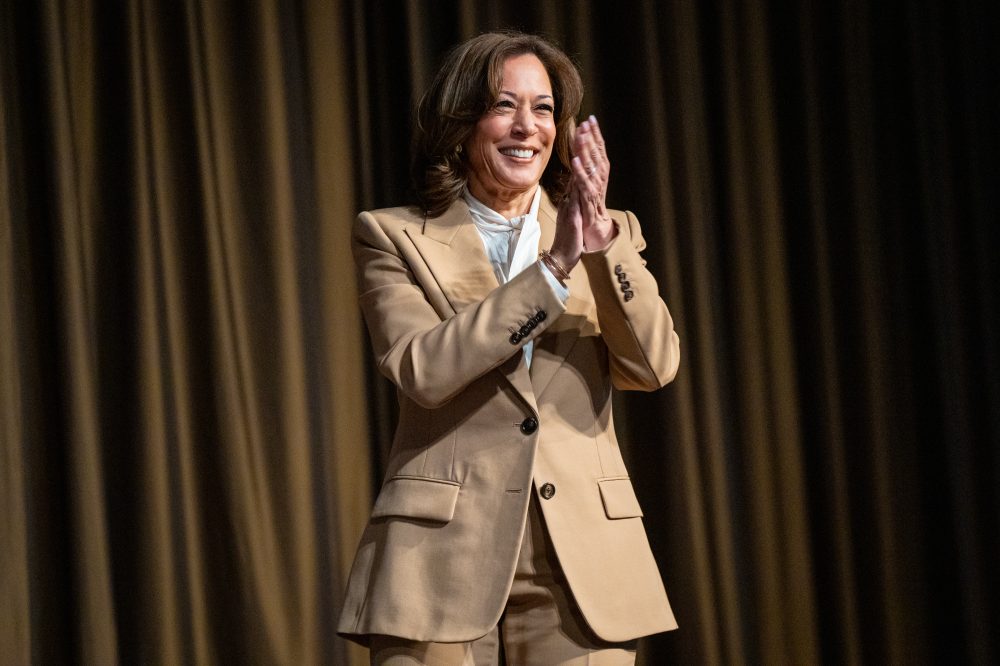
Former Vice President Kamala Harris revealed Friday that she’s contemplating another presidential campaign in 2028, telling attendees at a civil rights conference that the possibility remains on the table.
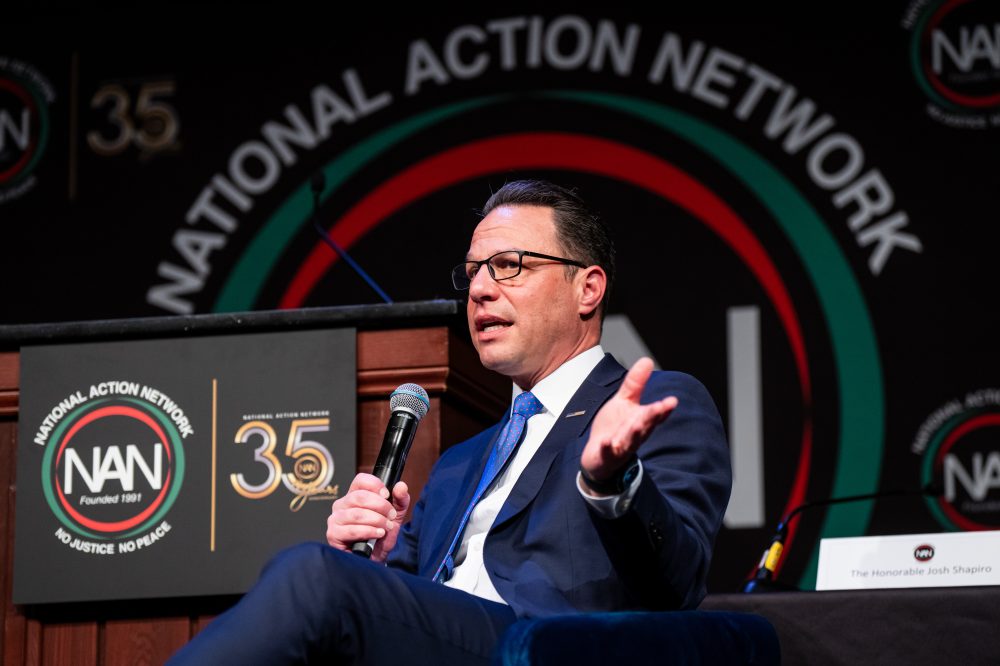
Speaking at the National Action Network gathering in New York City, an organization established by Reverend Al Sharpton, Harris responded to a direct question about her political future from Sharpton himself.
“I might, I might. I’m thinking about it, I’m thinking about it,” Harris responded, drawing enthusiastic applause from the audience.
The former vice president explained that any decision would depend on who could most effectively serve “the American people” in the nation’s highest office come 2028.
Harris, who previously held the role of vice president during Joe Biden’s administration, was defeated by Donald Trump in the 2024 election, losing both the popular vote and Electoral College. Her political background includes serving as a United States senator and California’s attorney general. She also mounted an unsuccessful campaign for the Democratic presidential nomination in 2020.
Any potential 2028 campaign could encounter obstacles, as recent surveys suggest Democratic voters are seeking fresh leadership following Harris’ electoral defeat against Trump.
The National Action Network event attracted numerous prospective Democratic contenders, including Pennsylvania’s Governor Josh Shapiro, former Transportation Secretary Pete Buttigieg, and Illinois Governor JB Pritzker, along with other political figures.
NEW YORK — The former Vice President received enthusiastic encouragement from African American activists Friday when she revealed she’s seriously weighing another White House campaign.
“I might. I am thinking about it,” Harris responded when Rev. Al Sharpton directly questioned whether she planned to seek the presidency in 2028.
The exchange occurred at the National Action Network’s yearly gathering, where over six potential Democratic candidates made appearances this week, seeking to build relationships with Black voters who represent a crucial Democratic constituency.
While the Democratic presidential primary cycle won’t officially launch until after this November’s midterm contests, the week’s events highlighted numerous Democrats already positioning themselves for what’s expected to be a competitive race.
Currently, no obvious frontrunner has emerged. However, one candidate clearly dominated at Sharpton’s event.
Harris, who made history as the first Black woman to serve as vice president and carried the Democratic ticket in 2024, was the only speaker to receive a standing ovation and drew the week’s largest audience. Attendees broke into her speech with calls of “Run again!”
Sharpton observed that Harris collected more ballots in her unsuccessful 2024 race than Democratic presidents Barack Obama and Bill Clinton had in their campaigns.
“Whatever she decides to do, she made a point in history,” Sharpton commented.
Since leaving office 15 months ago, Harris has previously hinted at another presidential campaign. She recently established a political action committee and has been traveling nationwide to campaign for Democratic candidates, particularly throughout Southern states.
However, some party members have turned their attention toward newer Democratic leadership following Harris’ challenges in the previous presidential election.
This week’s speaker roster included Pennsylvania Gov. Josh Shapiro, former Transportation Secretary Pete Buttigieg, Illinois Gov. JB Pritzker, Maryland Gov. Wes Moore, Kentucky Gov. Andy Beshear, Rep. Ro Khanna of California, and Arizona Sens. Mark Kelly and Ruben Gallego.
When Buttigieg took the stage after Harris departed, he faced lukewarm applause in a room that had emptied by half. While some audience members cheered his mentions of supporting federal employees and minority-owned businesses, many had left the packed venue following Harris’ remarks to attempt taking photos with the former vice president.
Like other potential 2028 candidates this week, Buttigieg dismissed questions about another presidential campaign with laughter.
Harris provided a more direct response.
She stated “I’m thinking about it” three times when Sharpton pressed her about pursuing the White House in 2028.
“I served for four years being a heartbeat away from the presidency of the United States. I spent countless hours in my West Wing office footsteps away from the Oval Office. I spent countless hours in the Oval Office and the situation room. I know what the job is, and I know what it requires,” Harris explained.
She added: “I am thinking about it in the context of who and where and how can the best job be done for the American people. That’s how I’m thinking about it. I’ll keep you posted.”
NEW YORK — Former Vice President Kamala Harris revealed Friday that she’s seriously weighing another White House campaign after supporters at a civil rights gathering urged her to seek the presidency once more.
When Rev. Al Sharpton posed the direct question about a 2028 run, Harris responded: “I might. I am thinking about it.”
The exchange occurred at the National Action Network’s yearly gathering, where over six potential Democratic candidates made appearances throughout the week, seeking to build relationships with Black voters who represent a crucial Democratic constituency.
While the Democratic presidential primary cycle won’t officially launch until after this year’s midterm elections, the convention highlighted how various party figures are already positioning themselves for what’s expected to be a competitive race.
Currently, no obvious frontrunner has emerged. However, Harris appeared to be the crowd favorite at Sharpton’s event.
The former vice president, who broke barriers as the first Black woman to hold that office and served as the 2024 Democratic presidential candidate, was the only speaker to receive a standing ovation and drew the week’s largest audience. Supporters interrupted her speech multiple times with calls of “Run again!”
Sharpton highlighted that Harris collected more votes in her unsuccessful 2024 race than former Democratic Presidents Barack Obama and Bill Clinton achieved in their campaigns.
“Whatever she decides to do, she made a point in history,” Sharpton remarked.
This isn’t the first time Harris has hinted at another presidential campaign since departing office 15 months ago. She recently established a political action committee and has been traveling nationwide to campaign for Democratic candidates, particularly in Southern states.
However, some party members are looking toward newer Democratic leadership following Harris’ challenges in the most recent presidential election.
This week’s speaker roster included Pennsylvania Governor Josh Shapiro, former Transportation Secretary Pete Buttigieg, Illinois Governor JB Pritzker, Maryland Governor Wes Moore, Kentucky Governor Andy Beshear, California Representative Ro Khanna, and Arizona Senators Mark Kelly and Ruben Gallego.
When Buttigieg took the stage after Harris departed, he spoke to lukewarm applause in a significantly emptied auditorium. While some attendees cheered his remarks about supporting federal employees and minority-owned businesses, many had left following Harris’ address to attempt photographs with the former vice president.
Like other potential 2028 candidates this week, Buttigieg dismissed questions about future presidential ambitions with humor.
Harris provided a more direct response.
She stated “I’m thinking about it” three separate times when Sharpton inquired about her 2028 intentions.
“I served for four years being a heartbeat away from the presidency of the United States. I spent countless hours in my West Wing office footsteps away from the Oval Office. I spent countless hours in the Oval Office and the situation room. I know what the job is, and I know what it requires,” Harris explained.
She added: “I am thinking about it in the context of who and where and how can the best job be done for the American people. That’s how I’m thinking about it. I’ll keep you posted.”
President Donald Trump’s backup strategy for implementing worldwide import taxes is facing another court battle as his signature economic initiative encounters continued legal resistance.
On Friday, the U.S. Court of International Trade in New York conducted oral arguments regarding Trump’s current tariff system, which he implemented after the Supreme Court rejected his original, more expansive tariff plan in February.
Trump initially attempted to establish global tariffs by citing the International Emergency Economic Powers Act of 1977, declaring the nation’s persistent trade deficit a national emergency to justify imposing substantial import taxes worldwide. His interpretation of this legislation was broad, allowing him to set tariffs of any amount, at any time, targeting any nation he chose.
However, the Supreme Court invalidated those tariffs on February 20, ruling that the emergency powers law did not grant authority to use tariffs as a response to national emergencies.
Following this setback, Trump turned to Section 122 of the Trade Act of 1974 as his backup plan. This provision permits presidents to establish worldwide tariffs up to 15% for a maximum of 150 days, requiring Congressional authorization for any extension. Trump immediately announced 10% tariffs under this authority and indicated he might increase them to the full 15%, though he has not yet done so. These current tariffs will end on July 24.
The legal dispute centers on whether Section 122’s language regarding “fundamental international payments problems” encompasses trade deficits — the difference between American exports and imports with other nations.
This trade provision was created during the monetary crises of the 1960s and 1970s, when the dollar was backed by gold. During that era, foreign countries were exchanging dollars for gold at fixed rates, threatening to destabilize American currency and create financial market turmoil. Since the gold standard no longer exists, opponents argue Section 122 has become outdated.
The situation presents complications for both sides. Trump’s own Justice Department previously filed court documents stating the president had to use emergency powers because Section 122 lacked “obvious application” to trade deficit issues, describing trade deficits as “conceptually distinct” from payment problems.
Conversely, the challengers face their own contradiction: the same trade court that is now hearing their case previously ruled that Trump could have used Section 122 to address trade deficits instead of emergency powers.
WASHINGTON – President Donald Trump encouraged Americans in February to enjoy their enhanced tax refunds, describing this year’s payments as “substantially greater than ever before” due to new individual tax relief measures enacted in 2025.
“Don’t spend all of this money in one place!” Trump posted on his Truth Social platform.
However, Americans are finding themselves doing exactly that, as rising fuel costs are consuming the majority of increased tax refunds resulting from new deductions on gratuities, Social Security benefits, overtime wages, vehicle loan interest, and state and local taxes included in last year’s GOP tax legislation.
Oil prices remained near $100 per barrel Friday despite an unstable ceasefire in the U.S.-Iran conflict, with the Strait of Hormuz still blocked ahead of diplomatic discussions in Islamabad. Even with potential reopening of the crucial waterway that carries roughly 20% of global oil supplies, fuel costs may continue climbing for months, according to Energy Information Administration projections showing Brent crude averaging $96 annually.
Energy analysts at Rystad Energy warn that damaged infrastructure throughout the Gulf region will constrain future production, with reconstruction expenses estimated at a minimum of $25 billion and potentially rising as hostilities persist.
Continued energy supply disruptions suggest extended hardship at gas stations, with economists noting that lower-income Americans, who dedicate larger portions of their earnings to fuel, will experience minimal benefits from tax reductions.
Consumer prices surged 0.9% in March, marking the steepest monthly increase in nearly four years, primarily due to unprecedented gasoline price jumps amid global oil market volatility and ongoing tariff impacts, Friday’s Bureau of Labor Statistics report revealed. Additional cost increases for diesel fuel, fertilizer, aluminum, and other commodities affected by Middle Eastern conflicts, along with food price inflation, threaten to eliminate remaining refund benefits.
Through March 27, average individual tax refunds for 2025 increased by $351, representing an 11.1% jump to $3,521 compared to the previous year, based on current Internal Revenue Service processing statistics.
These amounts may climb before Wednesday’s April 15 filing deadline, with projections ranging from Morgan Stanley’s $560 estimate to the Tax Foundation’s $611 calculation and Treasury’s $1,000 forecast. However, some relief may appear through reduced payroll withholding or decreased quarterly individual payments.
TAX BENEFITS BECOMING ECONOMIC BUFFER
Stanford Institute for Economic Policy Research economists calculate that conflict-related price increases have raised Americans’ typical annual gasoline expenses by $857 this year. Their March 23 analysis assumed Brent futures at $99 per barrel – roughly $2 above Friday’s levels – and projected Strait of Hormuz reopening around April 10.
Congressional Joint Economic Committee Democrats estimate Americans spent an extra $8.4 billion on gasoline during the Iran war’s initial month, using AAA price information, Edmunds.com fuel efficiency data, and federal consumption statistics. This amount represents nearly one-third of the $26.5 billion total IRS refund increase through March 27.
“Gas prices are probably the most salient price in the economy,” explained Stanford University economics professor Neale Mahoney. “The impacts may be modest from a macro perspective, but for the sort of kitchen-table economics of a family, and things that they’re paying attention to, they can be big.”
Families anticipating larger refunds for summer vacations or home renovations may scale back plans as they spend more filling their tanks. Food costs are also expected to rise as higher diesel, fertilizer, jet fuel, and aluminum prices ripple through the economy.
What officials intended as economic stimulus is now functioning more as protection against deeper recession, though analysts are reducing U.S. consumption and GDP projections by several tenths of a percentage point. Morgan Stanley now forecasts 2026 consumption growth slowing to 1.7% from 2025’s 2.1%, with durable goods bearing most impacts, while Oxford Economics cut global GDP growth expectations for 2026 to 2.6% from 3.0%, well below recent performance.
ENHANCED DEDUCTIONS FOR PROPERTY OWNERS
Most tax relief provisions in the One Big Beautiful Bill Act approved by the Republican-majority Congress last year applied retroactively from January 2025, meaning initial benefits primarily come through claimed income deductions.
Multiple breaks, including those covering tips, overtime, Social Security, and auto loan interest, apply whether taxpayers itemize returns or claim the standard deduction, which also increased $1,150 for individual filers in 2025. This modification would generate a $138 refund boost for 12% tax bracket filers earning $11,926 to $48,475.
Treasury Secretary Scott Bessent recently praised the overtime deduction as “a home run,” noting 25% of filers are utilizing it.
However, one major benefit – a $30,000 increase in state and local tax deductions – still requires itemization, essentially excluding non-homeowners without mortgages or property tax obligations.
Only taxpayers with market incomes between $71,659 and $126,348 – exceeding 60% of earners – will retain money from new tax breaks after covering increased fuel expenses, according to Tax Foundation analysis. Market income encompasses adjusted gross income, tax-exempt interest, employer health and retirement benefits, and additional components.
Tax Foundation research indicates that reductions for the top 0.01% of returns exceeding $2.24 million in income still provide greater tax savings than benefits for those earning up to $37,486.
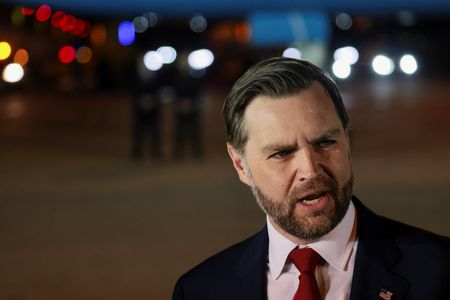
Vice President JD Vance departed the nation’s capital Friday afternoon bound for Pakistan, where he will engage in diplomatic discussions concerning Iran, delivering a stern message to Iranian leadership about negotiating honestly.
Speaking with members of the press before his departure from Washington, Vance expressed optimism about the upcoming diplomatic mission. “We’re looking forward to the negotiation. I think it’s going to be positive,” he stated.
The Vice President emphasized the administration’s willingness to engage constructively while making clear the consequences of dishonest negotiations. “As the president of the United States said, if the Iranians are willing to negotiate in good faith, we’re certainly willing to extend the open hand,” Vance explained. “If they’re going to try to play us, then they’re going to find the negotiating team is not that receptive.”
The diplomatic talks represent a significant moment in U.S.-Iran relations as both nations navigate complex regional tensions through dialogue.
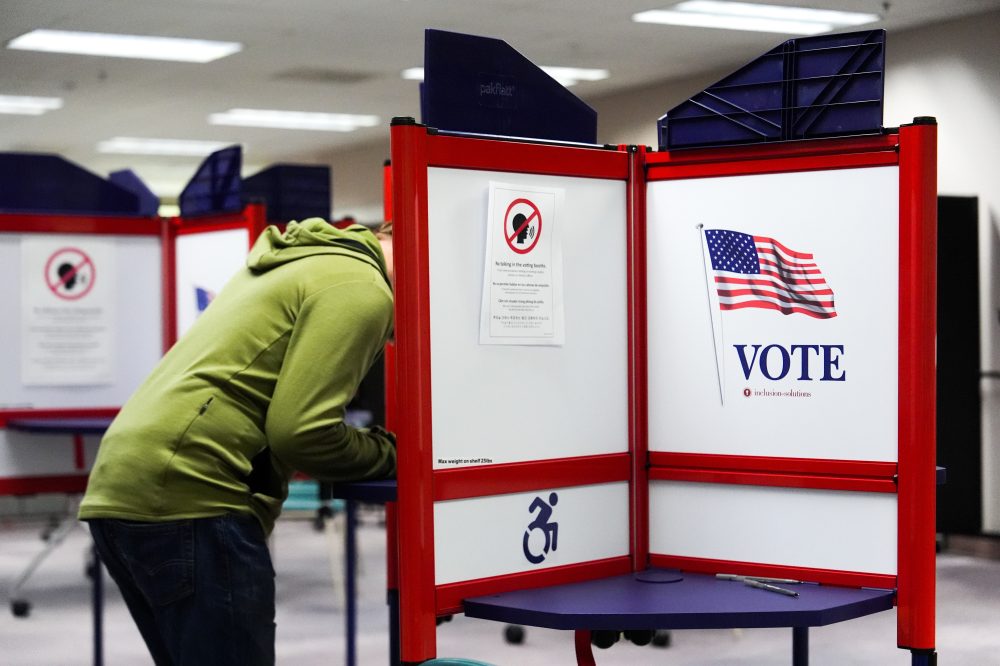
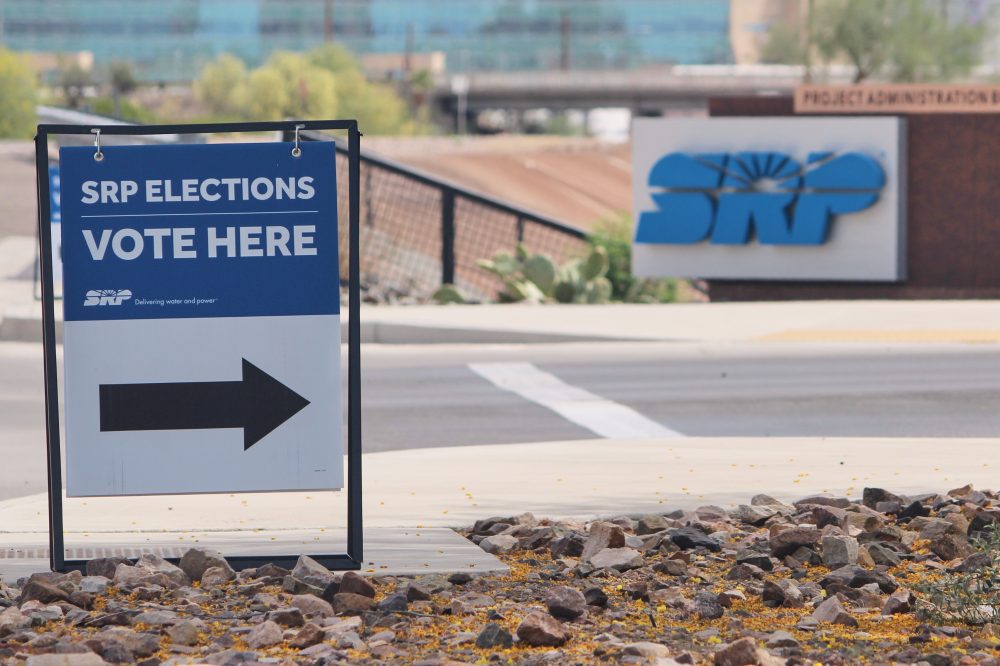
The Cecil County Board of Elections in Maryland has issued an official public notice to residents.
The announcement was posted on the county’s official website as part of their civic alerts system to keep the community informed about election-related developments.
Cecil County is located in northeastern Maryland, bordering Delaware and Pennsylvania.
WASHINGTON — The Democratic Party finds itself overwhelmed as external organizations pour unprecedented amounts of money into their midterm primary contests.
While Democrats work to reclaim congressional control, groups connected to the American Israel Public Affairs Committee, along with cryptocurrency and artificial intelligence organizations, have taken over television advertising, often pushing actual candidates to the margins of their own races.
“These primaries have become proxy wars, and the candidates are almost afterthoughts in larger skirmishes,” explained Democratic pollster Zac McCrary.
The Democratic National Committee is now moving forward with a resolution during their New Orleans spring gathering to criticize this spending surge that has disrupted their primaries and heightened internal party divisions. The final vote is scheduled for Friday.
Defeated candidates have blamed special interest groups for destroying their campaigns. Current contenders are appealing to voters by criticizing wealthy outside organizations. Even those who received benefits from the spending have voiced concerns.
“It’s definitely a brave new world,” McCrary noted.
“We’re not talking about doubling of campaign expenditures,” he continued. “We’re talking about 10 times or 20 times more.”
Dan Sena, who previously served as executive director at the Democratic Congressional Campaign Committee, explained that party organizations no longer hold the influence to promote their preferred candidates.
“All that’s been completely smashed now,” Sena stated. He cautioned that even if Democrats recapture the U.S. House, outside spending could harm the party’s future.
Speaking about House Minority Leader Hakeem Jeffries, he warned, “You’re going to hand Jeffries a caucus that is divided.”
During this election cycle, external funding in U.S. House contests has primarily focused on districts strongly favoring Democrats, indicating the primaries will probably decide November’s general election winners. Following a record number of House retirements this year, numerous seats became available for the first time in years, attracting many Democratic candidates.
Illinois witnessed over $125 million in outside expenditures across five open Democratic primaries. In nearly every congressional race, external spending surpassed what candidates themselves spent.
Though the election calendar is still early, signs point to significant spending in many additional races. Nearly 40 seats have already experienced more than $1 million in outside expenditures, based on Federal Election Commission records.
In Illinois, AIPAC-affiliated groups topped the spending list for U.S. House races, according to AdImpact, which monitors political advertising purchases, with cryptocurrency-linked Fairshake following behind.
AIPAC was established to promote robust U.S.-Israel relations, a particularly divisive topic as Democratic opposition to Israel grows due to the Gaza conflict. Some DNC members sought to specifically address AIPAC’s primary involvement, but the final resolution avoided this.
“We had various resolutions that focused on different industries and groups, and instead of going one-by-one, we passed a blanket repudiation,” stated DNC Chair Ken Martin.
This recent DNC gathering represents another installment in ongoing conflicts between progressives and party leadership.
Progressive members want the party to establish official language requiring all Democratic presidential candidates to reject funding from dark-money organizations, or super PACs that don’t need to reveal their donors.
“It’s necessary that we actually have the party do something on this issue, not just say something,” said Larry Cohen, co-chair of Our Revolution, a progressive organization created by independent Sen. Bernie Sanders of Vermont, who aligns with Democrats.
Progressives view the New Orleans DNC resolution as progress toward their objective. However, some Democrats caution against weakening their candidates when confronting a well-funded Republican Party.
“Provided that we don’t handcuff ourselves in the general elections — because if the Republicans are going to use dark money in general elections, we should be using our money in general elections, too — if you provide an even playing field, I think then that’s fine,” explained Sen. Ruben Gallego, an Arizona Democrat. “But we just can’t be handcuffing ourselves in the general to lose races.”
DNC resolutions wouldn’t prevent outside groups from injecting funds into primary or general election contests. But some Democrats consider this issue fundamental to party principles.
“We should eliminate any super PAC in a Democratic primary. And I think every presidential candidate in 2028 should pledge that they will not have any super PAC spending in a Democratic primary,” said Rep. Ro Khanna, a progressive and potential Democratic presidential candidate who co-chaired Sanders’ 2020 presidential campaign.
“That should be a litmus test,” Khanna maintained. “If you’re not willing to take that pledge, then you’re part of the problem.”
In an unusual move, former First Lady Melania Trump released a public statement Thursday addressing speculation about her connection to convicted sex offender Jeffrey Epstein. Trump categorically denied maintaining a friendship with Epstein and disputed assertions that the disgraced financier facilitated her introduction to former President Donald Trump.
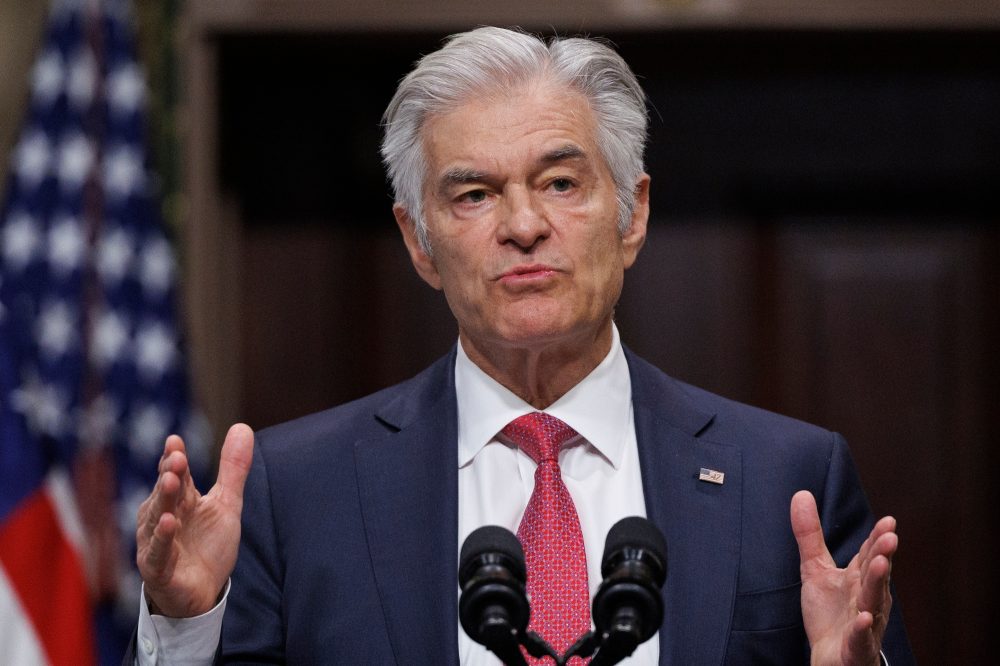
Federal health officials have conceded they made a major data error when launching a fraud investigation into New York’s Medicaid program, raising questions about the accuracy of similar probes targeting other states across the country.
The mistake involved wildly inflated numbers that Dr. Mehmet Oz, who leads the Centers for Medicare & Medicaid Services, used to justify the investigation. In a social media video and official correspondence to New York’s governor last month, Oz stated that approximately 5 million New Yorkers received personal care services through Medicaid in the previous year.
“That level of utilization is unheard of,” Oz declared in his video, demanding that New York “come clean about its Medicaid program.”
However, federal officials now admit the actual figure was roughly 450,000 people, representing just 6% to 7% of the state’s total Medicaid recipients rather than the three-quarters that the original claim suggested.
CMS spokesperson Chris Krepich explained this week that the agency incorrectly interpreted New York’s billing code system and has since updated its analysis methods. “CMS is committed to ensuring its analyses fully reflect state-specific billing practices and will continue to work closely with New York to validate data and strengthen program integrity oversight,” Krepich stated in an email.
The blunder has drawn criticism from policy experts who question the thoroughness of the administration’s anti-fraud initiatives. “These numbers could have been cleared up in a phone call, so it’s really slapdash,” commented Michael Kinnucan, a senior health policy adviser at the Fiscal Policy Institute who first highlighted the administration’s incorrect figures.
Despite acknowledging the error, federal officials say their investigation continues, citing other concerns about New York’s Medicaid spending and oversight practices. They point to higher-than-average costs per beneficiary and the state’s substantial investment in personal care aide positions.
New York health officials have pushed back against the characterizations. Cadence Acquaviva from the state Department of Health described Oz’s original statements as “a targeted attempt to obscure the facts.” She emphasized that “New York State remains committed to protecting and preserving vital Medicaid programs that deliver high-quality services to New Yorkers who depend on them.”
Governor Kathy Hochul’s office welcomed the federal admission of error. “The initial claim by CMS was patently false, and we are glad they now admit it,” said spokesperson Nicolette Simmonds. She added that Hochul “has been clear that New York has zero tolerance for waste, fraud and abuse in Medicaid, or any other state programs.”
The New York investigation is part of a broader federal effort targeting potential healthcare fraud in multiple states, including California, Florida, Maine, and Minnesota. President Trump recently established an anti-fraud task force headed by Vice President JD Vance, which has already moved to suspend $243 million in Minnesota Medicaid funding over fraud allegations.
Critics argue this approach creates unnecessary confrontation in what should be collaborative oversight efforts. “We want to think collaboratively among all the stakeholders in the program about how we can actually fix it,” Kinnucan explained. “We don’t want to have fraud be this political football.”
Beyond the numerical error, advocates say Oz made additional misleading claims about New York’s program. He suggested the state had relaxed eligibility requirements to include conditions like being “easily distracted” as grounds for personal care assistance.
Rebecca Antar, who directs the health law unit at the Legal Aid Society, contradicted this assertion, explaining that New York actually tightened its requirements in September and that “easily distracted” doesn’t appear in the criteria.
Oz also characterized personal care services as tasks “that our families would normally do for us, like carrying groceries,” a description that upset program participants like Kathleen Downes, a 33-year-old Nassau County resident with quadriplegic cerebral palsy.
Downes, who requires assistance with basic activities like bathing and eating, said the comment overlooks the reality that many people lack family members who can provide such intensive care. “He’s assuming that everybody wants to and can just do it for free forever,” she noted. “And that’s not feasible for a lot of people.”
NEW YORK (AP) — During his opening 100 days as New York City’s mayor, Zohran Mamdani has transformed municipal leadership with an unprecedented level of celebrity influence rarely witnessed in local politics.
Large gatherings of supporters regularly attend his public announcements. Standard city operations have gained fresh energy and public attention. High-profile entertainers actively promote his policy initiatives.
Through this approach, he has secured several significant early accomplishments. He has also established a working relationship — temporarily at least — with President Donald Trump, an unpredictable leader who appreciates celebrity culture.
However, as the Democratic mayor reaches this early benchmark in his administration, questions remain about whether his public prominence can translate into successful implementation of the progressive policies that helped him win election.
While facing determined opposition, particularly from those who continue to criticize his previous statements about law enforcement and Israel, the mayor has managed to reduce concerns among some former doubters.
Jay Jacobs, who leads the state Democratic Party and notably declined to support Mamdani during the campaign, said: “It’s early but so far, so good. We may not agree on everything philosophically, but he is getting the job done.”
As his administration reached the 100-day mark — traditionally used to evaluate new leadership — his staff has emphasized their focus on fundamental municipal responsibilities.
Although these tasks represent standard mayoral duties — waste collection, snow removal and road maintenance — the 34-year-old leader has utilized his talent for creating viral online content to generate public engagement with government services.
When winter weather threatened the city, Mamdani’s social media appeals for additional snow removal volunteers successfully recruited thousands of new workers. A separate online video from the mayor promoting the city’s emergency notification system attracted over 50,000 new participants within one week, according to his administration.
Working with WNBA player Natasha Cloud from the New York Liberty, Mamdani launched a tournament-style voting system allowing residents to select minor infrastructure repairs they wanted the mayor to personally address in their communities. Within several weeks, the initiative received more than 21,000 votes.
To generate excitement for his childcare initiative serving 2-year-olds, Mamdani enlisted rapper Cardi B to help evaluate a musical competition that will select the program’s official theme song.
Speaking to journalists on his 99th day in office this week, Mamdani stated: “The challenge that we set out for ourselves was to work as hard and as fast as New Yorkers do.”
The celebrity attention, however, can create negative reactions. His unexpected guest spot on “Tonight Show With Jimmy Fallon” during an extreme cold period drew criticism as inappropriate timing while homeless deaths were increasing throughout the city.
Curtis Sliwa, a Republican candidate who opposed Mamdani in last year’s election, criticized what he called “Too much styling and profiling,” pointing to persistent issues with street homelessness, public housing conditions and infrastructure problems.
Nevertheless, Sliwa, who strongly criticized Mamdani during the campaign but recently joined the mayor in a comedic performance at the City Hall press corps’ annual event, seemed to offer qualified praise.
“We just had Eric Adams, swagger man who’d party to the break of dawn, and now we have a guy who seems like he’s got a normal working schedule,” Sliwa said, referring to the previous mayor. “So having Zohran as the alternative, I think for a lot of people even if they disagree with him, there’s some stability.”
Mamdani has also directed his significant public following toward another standard aspect of municipal leadership: budget planning.
Earlier this year, Mamdani conducted an unusually serious news conference at City Hall regarding a substantial budget shortfall, stating that either the state would need to impose higher taxes on wealthy residents or he would be forced to raise local property taxes to achieve budget balance.
The mayor’s public strategy was widely interpreted as an attempt to pressure New York Governor Kathy Hochul into supporting a millionaires tax, a central priority for Mamdani and his political supporters. Hochul, a centrist Democrat facing reelection this year, has firmly rejected such legislation.
When the City Council presented an alternative budget proposal using different methods to address the deficit, Mamdani criticized the plan and produced a video targeting Council Speaker Julie Menin, which led to online harassment of the speaker by some of his supporters.
The city’s financial difficulties, which remain unresolved, may present a significant obstacle for Mamdani as he works to advance his policy agenda.
Andrew Rein, who heads the fiscally conservative Citizens Budget Commission, described Mamdani as facing an “extra challenging” budget process, but noted that the mayor’s communication abilities could help him manage difficult circumstances.
“What we’ve seen is him bringing his newer strategies and tools to communications but in a very practical, old-school problem,” Rein explained. “When he uses his communications skills to get people more invested and to improve the functioning of government and to help New Yorkers the trade offs that have to be made, that is going to be a great win.”
On the evening of Mamdani’s victory celebration, hundreds filled the streets, many arriving spontaneously, hoping to catch sight of the mayor-elect as he departed the event. Departing campaign workers received cheers by name well past midnight. One observer compared the street celebration to Beatlemania.
Medhavie Agnihotri, a 25-year-old technology consultant, remarked: “I feel like I’m at a presidential inauguration. This is the first time in a while I’ve felt this hope.”
His celebrity appeal has remained strong among certain groups since taking office.
Around City Hall, New Yorkers and visitors regularly request photographs, looking through the metal fencing hoping to spot the mayor.
This week, during the mayor’s 97th day in office, a large crowd assembled in the main area of Manhattan’s busy Bellevue Hospital, observing as Mamdani announced the city would begin transferring certain individuals with severe medical conditions from the notorious Rikers Island detention facility to the hospital.
He arrived to cheers and applause from the substantial gathering, many appearing to be hospital employees who raised their phones to record the mayor’s remarks. Additional spectators watched from elevated walkways above.
Ricardo Granados, a 67-year-old retiree accompanying his son to a medical appointment, paused to investigate the commotion. He expressed enthusiasm upon learning Mamdani would appear, mentioning he had previously met Mamdani when the politician was campaigning in Granados’ neighborhood.
“I’m extremely fond of him. I think he’s going to make a real difference,” Granados said. “He wants to find out who needs what and he wants to help.”
Military service personnel are expressing mounting concerns about how the Trump administration has utilized the armed forces since the president returned to office for his second term, based on conversations with active duty members and military advocacy groups.
The unrest within military ranks has intensified following the administration’s military engagement in Iran, according to interviews conducted by NPR with various service members and those who represent their interests.
The growing dissatisfaction among military personnel highlights tensions between the administration’s military policies and the comfort level of those tasked with carrying out orders within the armed services.
Members of Congress are pushing for formal investigations into the prediction betting website Polymarket following reports of suspicious trading activity related to recent geopolitical developments involving Iran.
The controversy centers around anonymous users who allegedly placed strategic wagers on Iranian military actions just hours before those events actually took place, raising questions about potential insider information.
This marks the latest incident where groups of unidentified bettors have made precisely-timed predictions on significant world events through the platform, prompting increased scrutiny from federal lawmakers.
The timing of these bets has sparked concerns among congressional representatives about the integrity of prediction markets and whether some users may have access to classified or privileged information about international affairs.
Polymarket operates as a platform where users can place monetary bets on the outcomes of future events, ranging from political elections to major news developments.
A federal immigration board has rejected the most recent legal challenge by Palestinian activist Mahmoud Khalil to halt his deportation proceedings.
The Board of Immigration Appeals turned down Khalil’s petition to have his removal case dismissed, marking another setback in his ongoing legal battle to remain in the United States.
The adverse ruling moves the activist closer to potential deportation as his legal options continue to narrow. Khalil has been fighting removal proceedings while advocating for Palestinian causes.
The immigration board’s decision represents the latest development in what has become a prolonged legal fight over Khalil’s immigration status and his efforts to avoid being sent out of the country.
WASHINGTON — President Donald Trump’s attempts to find a way out of the Iranian conflict are creating friction within GOP ranks.
The Republican Party hasn’t faced this kind of internal testing since Trump’s “America First” philosophy gained prominence a decade ago by opposing overseas military engagements. His current strategy — combining threats of destruction with a shaky ceasefire agreement — has failed to mask divisions that have grown over the six weeks since hostilities began.
Conservative activist Laura Loomer, typically one of Trump’s strongest advocates, criticized the idea of making any agreement with Iran. She also questioned Vice President JD Vance’s leadership role in negotiations scheduled to begin Saturday in Pakistan, as Vance positions himself for a possible 2028 presidential campaign.
“I support President Trump,” Loomer said in an interview. “I just don’t believe in negotiating with Islamic terrorists.”
Vance’s office did not respond to a request for comment.
Former Georgia Representative Marjorie Taylor Greene, who has shifted from Trump supporter to critic, demanded the president’s removal under the 25th Amendment following his recent statement that a “whole civilization will die tonight” without an Iranian agreement. Podcaster Megyn Kelly, formerly with Fox News, delivered a harsh rebuke of Trump and questioned, “Can’t he just behave like a normal human?”
On a recent episode of “The Charlie Kirk Show,” the host joked about whether their program or the ceasefire would conclude first.
Congressional Republican leadership has remained mostly quiet despite mounting criticism. Many privately worry about Trump’s social media threats and the war’s potential impact during an election year. With Congress in recess through early April, House Speaker Mike Johnson of Louisiana and Senate Majority Leader John Thune of South Dakota have provided minimal public response to Trump’s actions.
Some lawmakers cited the rapidly changing situation as a reason for their silence.
“How do you go up and give a presentation or speech in a situation where every 12 hours, the baseline story has a new gradient?” said Rep. Dave Schweikert, an Arizona Republican running for governor. “In many ways, it is the sin of arrogance thinking you can go out and talk about something when the story is still unfolding.”
This uncertainty leaves Republicans in a precarious position, mirroring the war’s unstable status. The party already confronts challenging prospects for November’s midterm elections, with some hoping voters will have moved past Iran by then.
“My hope is that it will be long behind us by the time votes are cast,” said veteran Republican strategist Chris Wilson. “Fortunately for the GOP, foreign policy flare-ups rarely decide midterm elections on their own, especially when voters are far more focused on the economy and prices at home.”
Currently, Trump and his administration project confidence. The president celebrated a “big day for World Peace” when the ceasefire was initially announced. White House press secretary Karoline Leavitt called it a “victory for the United States of America that the president and our incredible military made happen.”
Trump responded to critics on social media, calling detractors like Kelly “stupid people” who will “say anything necessary for some ‘free’ and cheap publicity.”
Several congressional supporters defend Trump against claims he’s become too involved overseas while neglecting domestic issues.
“Part of America First is making sure that the homeland stays safe and Iran is a factor in our safety,” said Rep. David Kustoff of Tennessee. “We are all hopeful that the ceasefire does hold and that Iran lives up to their side of the agreement.”
Historically, the president’s party loses congressional seats during midterm years, and recent election results provide additional GOP concerns.
Republican Clay Fuller captured Greene’s former district by approximately 12 percentage points, compared to her 29-point victory two years prior and Trump’s nearly 37-point district win. In Wisconsin, the liberal state Supreme Court majority expanded when a Democratic-backed candidate won decisively.
This continues a pattern of strong Democratic performances in recent contests, including in the Florida legislative district containing Trump’s Mar-a-Lago property.
According to Associated Press-NORC Center polling from last month, only about 40% of Americans approve of Trump’s presidential performance. This figure has remained steady since his January 2025 return to office but matches his standing during his first term when Democrats gained 40 House seats in 2018.
While Trump maintains solid Republican support, there are indications he could alienate supporters if America becomes mired in extended warfare. Though 63% of Republicans support airstrikes on Iranian military installations according to the March survey, only 20% favor deploying American ground forces. Rising fuel costs present another challenge, with roughly 60% of Republicans expressing concern about affording gasoline in coming months, though they’re less worried than other Americans.
Republicans who have engaged with constituents during recess believe the party has political space to manage the war situation.
Kustoff reported that voters throughout his rural northwestern Tennessee district appeared “generally supportive” of Trump’s Iran policies, even amid higher gas prices.
“My takeaway is that people are willing to endure some short-term pain as it relates to gas prices if the situation with Iran is resolved,” he explained.
However, returning lawmakers face several challenging decisions next week.
When the war started, some GOP members said Trump would need congressional authorization if fighting continued beyond 60 days, a deadline approaching late April if the ceasefire collapses. The administration wants billions in additional war funding, creating a vote that could complicate budget-conscious Republicans’ fall campaigns.
Democrats plan to force another vote on a war powers resolution limiting Trump’s Iran options. While a similar measure failed last month, another vote could pressure Republicans depending on ceasefire developments.
Schweikert characterized the war powers vote as the “dance of parties.”
“Their job is to try to embarrass us and our job as the majority is to try to make things work,” he said. “It’s just the job.”
A federal immigration appeals board has rejected the latest challenge by Palestinian activist Mahmoud Khalil to stop his deportation proceedings, moving the former Columbia University graduate student closer to potential removal from the United States.
The Board of Immigration Appeals delivered its final removal order Thursday, Khalil’s legal team confirmed. The board’s decisions remain confidential, and the U.S. Department of Justice has not responded to requests for comment.
Khalil expressed no shock at the outcome, describing the decision as “biased and politically motivated.” His legal representatives maintain he cannot be legally held or removed while his separate federal court case continues.
“The only thing I am guilty of is speaking out against the genocide in Palestine — and this administration has weaponized the immigration system to punish me for it,” Khalil stated.
The immigration appeals board establishes legal precedent within the complex immigration court framework, which operates under Department of Justice oversight and faces growing Trump administration influence.
The 31-year-old permanent resident became the first publicly identified individual arrested during federal enforcement actions targeting non-citizens who voiced criticism of Israel and its Gaza operations.
Federal authorities allege Khalil’s leadership role in Columbia’s pro-Palestinian demonstrations was “aligned to Hamas.” However, no evidence linking him to the designated terrorist organization has been disclosed, and Khalil strongly rejects any antisemitism accusations.
Following his March arrest, Khalil remained in immigration detention for 104 days, causing him to miss his first child’s birth, until a New Jersey federal judge ordered his release.
Khalil’s federal case suffered a major blow this year when a U.S. appeals court ruled the New Jersey judge exceeded his jurisdiction by ordering the release. The 2-1 panel decision determined that immigration court proceedings must conclude before federal court challenges can proceed.
His attorneys have petitioned the complete appeals panel to review that ruling. This month, they also requested one appellate judge’s recusal due to his former position as a senior Justice Department official who participated in student protest investigations.
Born in Syria to Palestinian parents, Khalil obtained Algerian citizenship through family connections. He warns that deportation could expose him to persecution and potentially fatal consequences.
A federal court has rejected the Department of Justice’s attempt to obtain Massachusetts voter registration records on Thursday, delivering another blow to the Trump administration’s nationwide campaign to gather comprehensive voter information.
U.S. District Court Judge Leo Sorokin ruled that federal prosecutors failed to meet legal requirements for accessing state voter databases under federal law. The Obama-appointed judge determined that the attorney general’s office did not provide adequate justification for demanding the records.
“Put simply, the statute requires a statement of why the Attorney General demands production of the requested records,” Sorokin wrote. That statement has to be factual, “not just a conceivable or possible basis.”
The Justice Department declined to comment on the decision, stating in an email that it “does not comment on ongoing litigation.”
Federal officials claim they need the voter information to strengthen election security measures, but state leaders from both parties across the country have pushed back, arguing the requests breach state and federal privacy protections. Many officials worry the government plans to use the sensitive information for alternative purposes, including identifying potential non-citizens on voter rolls.
At a Rhode Island court proceeding last month, a Justice Department lawyer revealed that officials want unredacted voter data to share with the Department of Homeland Security for citizenship verification purposes. DHS has recently expanded its Systematic Alien Verification for Entitlements (SAVE) program for this specific goal.
“Our intention is to run this against the DHS SAVE database,” DOJ attorney Eric Neff told U.S. District Judge Mary McElroy during a March 26 hearing challenging the federal government’s authority to access the voter data.
Federal prosecutors have filed lawsuits against at least 30 states plus Washington D.C., demanding access to voter data that includes birth dates, home addresses, driver’s license numbers, and partial Social Security numbers.
According to the Brennan Center, at least 12 states have either delivered or agreed to provide their complete voter registration databases to the department: Alaska, Arkansas, Indiana, Louisiana, Mississippi, Nebraska, Ohio, Oklahoma, South Dakota, Tennessee, Texas and Wyoming.
In the Massachusetts decision, Judge Sorokin determined that the Justice Department ignored procedural requirements established by a 1960 civil rights statute for requesting voter records.
This legislation, created to combat racial discrimination in voting, mandates that state voter files be accessible to the U.S. attorney general only when officials provide a detailed explanation of why the information is needed and how it will be utilized.
The department’s request for Massachusetts voter data contained no reference to the Civil Rights Act and failed to cite specific concerns about Massachusetts’ compliance with federal voting regulations, the judge noted. Most critically, it lacked any factual foundation for the demand, Sorokin determined.
In legal filings, the Justice Department argued it needed the data to examine “Massachusetts’ possible lack of compliance” with federal voter registration requirements. Officials also contended that the Civil Rights Act serves as an investigative tool for identifying federal election law violations and maintained that the attorney general shouldn’t be required to prove violations before seeking evidence.
“These arguments miss the point,” Sorokin wrote.
Massachusetts Attorney General Andrea Joy Campbell praised the decision as a significant victory for voters and legal principles.
“The privacy of our voters is not up for negotiation, and I will continue to defend the integrity and security of our elections from the Trump Administration’s cruel and harmful agenda,” she said in a news release.
Four other federal judges in different states have rejected similar Justice Department lawsuits.
A Michigan federal judge ruled that laws referenced by the Justice Department don’t mandate disclosure of the voter records requested by federal officials. A California federal judge stated the administration “may not unilaterally usurp the authority over elections,” which the Constitution grants to states and Congress. An Oregon federal judge concluded the federal government wasn’t entitled to unredacted voter registration lists containing sensitive information.
A Georgia federal judge dismissed a DOJ lawsuit due to improper filing location. Federal officials then refiled the case in the correct jurisdiction, where it remains pending.
The Justice Department has filed appeals challenging the Oregon, California and Michigan dismissals.
WASHINGTON — The Trump administration announced Thursday that tax refunds have surged 24% when compared to the four-year average from before Trump assumed the presidency, attributing the boost to the Republican tax reform package enacted in recent years.
While the White House had initially projected that average refund amounts would climb by no less than $1,000 when this tax filing season launched in January, the most recent Internal Revenue Service figures show the current average refund sits at $3,521. This represents an 11% jump from the previous tax year’s average of $3,170.
Speaking anonymously to preview the data analysis, a Trump administration official attributed the refund increases to various tax relief measures and spending reductions affecting taxpayers at different income levels. These include eliminating taxes on tips and overtime pay, allowing deductions for auto loan interest, and providing certain deductions for senior citizens.
The official would not identify which specific tax deduction generated the most significant savings for filers. The administration’s analysis drew from daily Treasury Department statements covering the 2021-2026 timeframe.
When questioned about whether potential economic gains from larger tax refunds might be negated by rising fuel costs stemming from conflict in Iran and disruptions in the Strait of Hormuz, the official emphasized that the enhanced refunds are putting more money directly into Americans’ wallets.
The nonpartisan Congressional Budget Office projects that the Republican tax and spending legislation will contribute $4.2 trillion to the federal debt by fiscal year 2034, based on their most recent Budget and Economic Outlook report.
The current tax filing period opened in January, and taxpayers face an April 15 deadline to submit their returns or file for an extension.
WASHINGTON — The Trump administration has achieved numerous victories through the Supreme Court’s emergency appeals process, with Justice Sonia Sotomayor explaining that conservative justices often view halting executive actions as causing irreversible damage.
Speaking at the University of Alabama School of Law on Thursday, Sotomayor described the surge in emergency requests from Trump’s team as “unprecedented in the court’s history.”
The nation’s highest court ruled in favor of the Trump administration in approximately 24 cases during the previous year, frequently overturning lower court rulings that had deemed various policies potentially unlawful. These decisions covered topics ranging from immigration enforcement to significant reductions in federal funding.
Although intended as temporary measures, these rulings have effectively enabled Trump to advance major components of his policy agenda in the near term.
The emergency appeals process, which involves requests for swift Supreme Court intervention in ongoing lower court cases, has become a point of contention among the justices themselves. This tension became visible when Justice Ketanji Brown Jackson and Justice Brett Kavanaugh engaged in a rare public disagreement about the emergency docket last month.
While Sotomayor has opposed many rulings favoring Trump, she explained that the court’s conservative majority frequently argues that stopping executive policies or congressional legislation creates legal damage that cannot be undone. This creates a difficult standard for opponents to meet, even when plaintiffs include immigrants facing potential deportation or states experiencing cuts to educational funding.
“If you start with the presumption that there is irreparable harm to one side, then you’re going to have more grants of emergency relief. Because the other side is going to have a much harder time,” she said. “It has changed the paradigm on the court.”
Sotomayor’s remarks offered insight into Supreme Court decisions that typically receive minimal public explanation. Despite numerous emergency victories for Trump, the court did reject his comprehensive tariff policies following complete legal briefs and oral arguments.
Former First Lady Melania Trump issued an uncommon public statement Wednesday from the White House Grand Foyer, firmly rejecting claims that she maintained a personal relationship with convicted sex trafficker Jeffrey Epstein or his associate Ghislaine Maxwell.
Trump also made a direct appeal to Congress, requesting that lawmakers organize public hearings where Epstein’s victims could provide sworn testimony to officially document their experiences.
In her remarks, Trump confronted persistent speculation head-on, stating: “The lies linking me with the disgraceful Jeffrey Epstein need to end today.” She emphasized that she maintained no connection to either Epstein or Maxwell.
“I never been friends with Epstein,” Trump stated, acknowledging that she and Donald Trump sometimes attended the same social gatherings as Epstein in New York City and Palm Beach, but stressed this did not constitute a personal bond. “To be clear, I never had a relationship with Epstein or his accomplice, Maxwell.”
Epstein, a financier, faced federal sex trafficking charges involving minors when he was taken into custody in 2019. He died in jail while his trial was pending. Maxwell, who worked with him, received a 20-year prison sentence in 2021 after being found guilty of helping to recruit and abuse underage victims.
Regarding a previously disclosed email correspondence with Maxwell, Trump characterized it as ordinary communication. “My email reply to Maxwell cannot be categorized as anything more than casual correspondence,” she explained, noting it did not indicate any significant relationship.
Trump revealed she first met Epstein in 2000 at an event where she accompanied Donald Trump, stressing she had no awareness of his criminal behavior at that time. She dismissed online allegations, saying: “Numerous fake images and statements about Epstein and me have been calculating on social media for years now,” and cautioned: “Be cautious about what you believe. These images and stories are completely false.”
She confirmed her name has not surfaced in legal cases connected to Epstein and rejected any involvement in his illegal activities. “I was not a participant, was never on Epstein’s plane, and never visited his private island,” she declared.
Trump mentioned that she and her legal team have contested what she termed “unfound and baseless lies,” pointing out that multiple individuals and organizations, including Daily Beast, James Carville, and HarperCollins UK, had issued apologies or corrections.
A federal court has halted the Trump administration’s move to eliminate immigration protections for more than 5,000 Ethiopian nationals, preventing their potential deportation and preserving their ability to remain and work in America.
U.S. District Judge Brian Murphy in Massachusetts ruled Wednesday that the Trump administration ended the Temporary Protected Status program for Ethiopians while ignoring proper procedures established by Congress.
The ruling adds to mounting legal challenges as hundreds of thousands of protected immigrants from various nations fight the cancellation of their status in federal courtrooms nationwide. This marks another judicial obstacle to Trump’s efforts to eliminate TPS programs as part of his strict immigration policies.
During the Biden presidency, over 1 million immigrants from 17 nations received TPS protection. However, the Department of Homeland Security has revoked protections for 13 of those countries since Trump began his second term in January 2025.
Venezuelan nationals represented the biggest group of beneficiaries, with Haitians and Salvadorans following in size.
The U.S. Supreme Court is scheduled to consider arguments on April 29 regarding the administration’s attempts to end TPS for 6,100 Syrian nationals and 350,000 Haitian immigrants.
Congress established TPS in 1990 to halt deportations to nations experiencing natural disasters or civil conflict, providing work authorization in periods lasting up to 18 months.
The Biden administration provided TPS to Ethiopians in the U.S. during 2022, citing the necessity to shield them from armed violence and humanitarian crisis. Officials extended the protection in April 2024.
The Trump administration’s Department of Homeland Security cancelled Ethiopia’s TPS designation in December 2025, claiming the nation no longer qualified for the protection.
Judge Murphy determined that DHS ignored the legal procedures Congress created to govern TPS decisions.
“Fundamental to this case — and indeed to our constitutional system — is the principle that the will of the President does not supersede that of Congress,” Murphy, who was appointed by Biden, said in his decision. “Presidential whims do not and cannot supplant agencies’ statutory obligations.”
Following Murphy’s ruling, DHS emphasized that TPS remains a temporary program.
DHS spokeswoman Lauren Bis said the ruling “is just the latest example of judicial activists trying to prevent President Trump from restoring integrity to America’s legal immigration system.”
WASHINGTON — A federal judge ruled Thursday that the Defense Department continues to defy his previous court order requiring the restoration of journalist access to the Pentagon.
U.S. District Judge Paul Friedman previously supported The New York Times this month when he determined that the Pentagon’s updated credentialing rules infringed upon reporters’ First Amendment free speech rights and constitutional due process protections. Friedman again backed the Times’ position, finding that Pentagon officials attempted to circumvent his ruling by implementing new regulations that effectively ban all journalists from the facility without mandatory escort supervision.
“The department simply cannot reinstate an unlawful policy under the guise of taking ‘new’ action and expect the court to look the other way,” Friedman wrote.
Friedman’s original ruling required Pentagon leadership to restore press credentials for seven Times journalists and emphasized that his decision covers “all regulated parties.”
Pentagon representatives did not immediately provide comment when contacted. The Pentagon facility functions as the central command center for American military operations.
Last October, journalists from major news organizations departed the building rather than accept the new requirements. The Times filed a lawsuit against the Pentagon and Defense Secretary Pete Hegseth in December challenging the policy changes.
Legal representatives for the Times claimed the Pentagon violated both “the letter and spirit” of the judge’s March 20 ruling through its modified policy. The newspaper also alleged that Pentagon officials were attempting to establish unprecedented guidelines controlling when journalists may grant anonymity to their sources.
Friedman stated that the access currently provided to credential holders “is not even close to as meaningful as the broad access” they previously enjoyed.
Government attorneys argued that the Pentagon’s updated policy completely follows the judge’s instructions. Pentagon spokesperson Sean Parnell previously announced the administration’s intention to appeal Friedman’s March 20 ruling.
The Pentagon Press Association, which represents AP journalists, stated that the Pentagon’s temporary policy maintains elements that Friedman ruled unconstitutional while introducing additional limitations on credentialed reporters.
“In effect, Plaintiffs ask this Court to expand the Order to prohibit the Department from ever addressing the security of the Pentagon through a press credentialing policy with conditions that may address similar topics or concerns as the enjoined conditions. The Order does not say that, and this Court should not read it to say that,” Justice Department attorneys wrote.
The existing Pentagon press corps consists primarily of conservative media organizations that accepted the policy changes. Reporters from outlets that rejected the new requirements, including The Associated Press, have maintained their military coverage from locations outside the Pentagon.
Friedman, who received his judicial appointment from Democratic President Bill Clinton, referenced recent U.S. military actions in Venezuela and Iran as examples highlighting the importance of public access to government information.
“Those who drafted the First Amendment believed that the nation’s security requires a free press and an informed people and that such security is endangered by governmental suppression of political speech. That principle has preserved the nation’s security for almost 250 years. It must not be abandoned now,” the judge wrote.
Friedman concluded that the disputed policy clearly aims to eliminate “disfavored journalists” and substitute them with those who are “on board and willing to serve” the administration.
“That,” he wrote, “is viewpoint discrimination, full stop.”
The former Slovenian model who became America’s First Lady has consistently maintained her position in the White House on her own terms, rarely engaging directly with the press or taking public stances on political matters.
Thursday’s media appearance where Melania Trump firmly rejected any suggestion of ties to convicted sex offender Jeffrey Epstein stands out as one of her uncommon direct addresses to journalists during her tenure.
The 55-year-old First Lady has maintained an exceptionally low public profile for someone in such a prominent position. During 2017, her husband’s initial year in the presidency, she delivered just eight public addresses. This contrasts sharply with Michelle Obama, who gave 74 speeches during Barack Obama’s first presidential year in 2009.
Kate Andersen Brower, who authored “First Women: The Grace and Power of America’s Modern First Ladies,” described her to Britain’s The Times in 2024, saying: “She is very unknowable.”
Despite her typically reserved approach, the First Lady has occasionally generated significant public attention. Following the 2020 election, she supported her husband’s unfounded claims of electoral victory, stating: “Every legal – not illegal – vote should be counted,” using similar rhetoric to allegations of voting irregularities.
A particularly memorable moment occurred in 2018 when she sparked widespread media attention by choosing to wear a jacket displaying “I REALLY DON’T CARE, DO YOU?” during her flight to Texas for a visit with migrant children who had been separated from their families. She later explained the jacket was her response to media criticism.
Earlier this year, she produced a documentary film called “Melania” that followed her activities during the 20 days before her husband’s second presidential inauguration. While promoted as providing unprecedented behind-the-scenes access, reviewers noted it offered limited fresh perspectives.
As Donald Trump’s third spouse, she holds the distinction of being the first naturalized citizen to serve as First Lady. Her modeling career began at age 16, eventually taking her to fashion capitals Paris and Milan before she relocated to New York in 1996.
She encountered her future husband at a Manhattan social event two years after arriving in the city, and they wed in January 2005.
President Trump has drawn comparisons between his wife and the iconic Jackie Kennedy, later known as Jackie Onassis. During a 2019 appearance on Fox News’ “Fox and Friends,” he stated: “We have our own Jackie O today. It’s called Melania. We’ll call it Melania T.”
“People love her. She gets no credit from the media, but she gets credit from the people,” Trump added.
A legal conflict centered around artwork at a Kansas burger restaurant may ultimately reach the nation’s highest court. The case’s final determination could have significant ramifications for municipal governments throughout the United States.
WASHINGTON — Two major organizations successfully reached a settlement agreement with the Justice Department on Thursday, reversing budget cuts that threatened library funding nationwide through the Institute of Museum and Library Sciences.
The American Library Association and the American Federation of State, County and Municipal Employees announced their legal agreement will restore the IMLS’s ability to distribute grants and maintain programs supporting libraries and museums across the country.
Justice Department officials have not yet provided comment on the settlement, while White House representatives directed inquiries to the Justice Department’s Civil Division.
Democracy Forward led the legal challenge filed in May, seeking to prevent the administration from dismantling the IMLS following President Donald Trump’s March 14 executive order labeling the agency and others as “unnecessary.”
The cost-cutting initiative represented part of a wider government effort to reduce federal spending by eliminating staff positions, grant programs, and various services.
Following the executive order, agency employees were placed on administrative leave and received termination letters. The acting director proceeded to cancel existing grants and contracts while dismissing all National Museum and Library Services Board members.
“When the administration began shuttering IMLS last year, it set off a chain reaction. Libraries across the country started cutting hours, staff and services people rely on – after-school programs, support for job seekers and connection for older adults,” stated American Library Association president Sam Helmick.
According to settlement terms, all 2025 staff reduction orders have been canceled, allowing affected employees to resume their positions. The IMLS has agreed not to implement additional workforce reductions related to the executive order’s objectives.
American Federation of State, County and Municipal Employees president Lee Saunders described the settlement as a win for communities nationwide that rely on library and museum services.
The organizations will formally dismiss their lawsuit within seven days, provided the government fulfills all agreement conditions.
This settlement follows a Rhode Island federal judge’s approval three days earlier of the administration’s request to withdraw its appeal in a separate case brought by 21 state attorneys general.
Established in 1996 under Republican congressional leadership, the IMLS serves as the sole federal agency dedicated to library funding. Its mission focuses on advancing and supporting America’s museums and libraries through grants, research, and policy initiatives.
The institute merged operations from earlier government entities, including the National Commission on Libraries and Information Science and the Institute of Museum Services.
Annual IMLS grant distribution reaches thousands of recipients nationwide, totaling over $200 million in recent years.
In an unusual public declaration on Thursday, First Lady Melania Trump firmly rejected suggestions that she maintained a friendship with Jeffrey Epstein, the deceased convicted sex offender.
The first lady’s statement also addressed speculation about how she met her husband, clarifying that Epstein did not play a role in introducing her to President Donald Trump.
The public statement represents a rare occasion where the first lady has directly addressed controversial topics in the media spotlight.
WASHINGTON – Federal communications regulators announced Tuesday they are weighing restrictions that could prevent three prominent Chinese telecommunications firms from establishing data center operations on American soil while also blocking domestic carriers from establishing connections with these companies.
The Federal Communications Commission revealed it has reached a preliminary determination to stop American telecommunications providers and other carriers operating within US borders from establishing interconnections with entities included on what officials call the “Covered List” – companies deemed to present national security risks. This list includes China Mobile, China Telecom and China Unicom.
The potential restrictions represent the latest effort by federal authorities to limit Chinese telecommunications companies’ presence in American infrastructure networks over concerns about possible security threats.
PHOENIX — Environmental advocates achieved significant victories in Arizona’s utility board elections, gaining control over decisions at the country’s largest public power company as it faces mounting electricity demands from expanding data centers.
Tuesday’s election results from the Salt River Project in the Phoenix area show that competing groups will need to find middle ground on critical issues including potential rate hikes and the choice between natural gas versus renewable energy sources to satisfy growing power needs.
The electoral contest concluded amid heightened voter engagement driven by climbing household energy costs and community resistance to large-scale data centers throughout this swing state and beyond, as national political dynamics energize previously obscure utility board races.
The campaign also attracted involvement from Turning Point Action — primarily recognized for rallying young conservative voters for President Donald Trump — which labeled the environmental advocates as “radical environmentalists.”
Clean energy supporters secured two additional positions on the 14-member board, establishing an 8-to-6 voting advantage. Nevertheless, candidates supported by construction companies and data center developers maintained control of the president and vice president roles, preserving their authority to determine which issues reach the board for consideration.
“We’re a little disappointed by not winning president and vice president, but now we have a majority, so we’re going to have to do a little negotiating,” said Randy Miller, a renewable energy advocate on the board.
The power company estimates it must expand its generating capacity by 100% over the next ten years while facing mounting pressure to decrease dependence on fossil fuels such as coal and natural gas that produce climate-warming emissions.
Supporters of the incumbent president and vice president caution about potential energy shortages and power outages without maintaining some reliance on natural gas-powered generating facilities.
The group campaigning under the “clean energy” banner argued that current board leadership shows excessive willingness to connect to natural gas infrastructure, implement rate increases, and welcome data center development. These candidates have previously opposed significant natural gas initiatives by the Salt River Project and last year’s rate increase proposal.
MADISON, Wis. — Governor Tony Evers put his signature on legislation Thursday that authorizes online sports wagering in Wisconsin, bringing the state into a group of 33 that permit the activity.
However, Wisconsin residents shouldn’t expect to place legal online bets anytime soon. The legislation, which received support from both parties in the state legislature, mandates that Wisconsin must first hammer out fresh agreements with Native American tribes who will operate the sports wagering platforms.
The governor emphasized his commitment to fair treatment across all tribal nations in the negotiation process.
“The real work begins today,” Evers stated. “Each of the 11 Tribes must now work diligently-and together-to shape the future of sports betting in Wisconsin. … An approach that exacerbates long-standing inequalities among Tribal Nations is not good for Wisconsinites or Wisconsin. I will not entertain it as governor.”
Currently, Wisconsin permits gambling exclusively on tribal territory through special agreements between the state and tribal governments. Sports wagering is restricted to specific tribal gaming facilities, while online betting remains prohibited.
The newly enacted legislation would permit online sports wagering only when the technological infrastructure managing the bets, including computer servers, operates from tribal lands within Wisconsin. This system, called the “hub-and-spoke” approach, has already been implemented in Florida.
Wisconsin’s tribal agreements require tribes to share a portion of their gambling profits with the state government. During 2024, tribal casinos contributed more than $66 million to state coffers.
Evers highlighted that the new legislation creates opportunities “to support mental health programs and to combat the opioid crisis, two issues that I know plague both Tribal Nations and communities across our state.”
The legislation gained backing from multiple Wisconsin tribes and the Milwaukee Brewers. Advocates argue that residents are already wagering through overseas betting sites, prediction platforms, or by traveling to neighboring states like Illinois where it’s permitted.
Opposition came from the Sports Betting Alliance, representing major companies including FanDuel, DraftKings, bet365, BetMGM and Fanatics. These companies claimed partnering with Wisconsin tribes wouldn’t be financially viable since federal regulations require tribes to receive 60% of gambling revenues. They favored a state constitutional amendment that would open sports betting to all operators.
Evers, who won’t seek a third term this year, initially pledged to sign the bill if Wisconsin’s 11 federally recognized tribes supported it. He later expressed reservations when some tribes remained uncommitted. On Thursday, the governor confirmed that all 11 tribes are now actively discussing implementation details.
Nationwide, regulated sportsbooks processed approximately $167 billion in wagers last year, producing nearly $17 billion in revenue after paying customer winnings, according to the American Gaming Association. This represented almost a 23% jump from the prior year.
NEW ORLEANS — An individual who spent almost three decades behind bars before his conviction was overturned achieved a historic electoral victory in New Orleans, vowing to repair the court system that wronged him. However, Louisiana Governor Jeff Landry and Republican lawmakers are now working quickly to abolish his position before his inauguration.
Calvin Duncan secured 68% of voter support this past November to claim the Orleans Parish criminal court clerk position, campaigning on judicial reform based on his personal struggles to obtain court documents while incarcerated in maximum security facilities.
Duncan reconstructed his life partly through seeking and winning the clerk position. However, Louisiana Senate Republicans voted Wednesday to eliminate Duncan’s newly won role as part of broader GOP initiatives to reorganize New Orleans’ court system — a Democratic stronghold with a majority Black population. The state’s Legislature remains predominantly Republican and white, with the conservative state leading challenges to voting rights protections.
Duncan’s inauguration is set for May 4.
Speaking to The Associated Press, he expressed belief that Louisiana officials are targeting him in retaliation, despite his name appearing on the National Registry of Exonerations, because they have consistently rejected his claims of innocence.
Republican leaders deny personal motivations and characterize their actions as promoting governmental efficiency.
“The citizens of New Orleans overwhelmingly said: ‘I want to give this person a chance, he can make a difference,’” Duncan, a Democrat, told lawmakers during a March committee hearing. “What this bill does, it says: ‘Thank you but you wasted your time.’ It disenfranchises everybody.”
Duncan’s legal troubles began with David Yeager’s 1981 murder when the victim was 23 years old, resulting in Duncan’s imprisonment for over 28 years. In 2011, facing a hearing on new evidence, prosecutors offered to reduce Duncan’s sentence to time already served if he accepted guilt for manslaughter and armed robbery charges. Though Duncan gained freedom, he continued fighting to clear his reputation.
Eventually, in 2021, a judge determined Duncan had been wrongfully convicted and completely dismissed his sentence.
During his 2023 tenure as state attorney general, Landry fought against Duncan’s request for wrongful conviction compensation. Duncan abandoned his petition when Landry’s replacement, Liz Murrill, threatened action against Duncan’s state law license. During Duncan’s clerk campaign, Murrill promised “further action” if he continued describing himself as “exonerated.”
Both Landry and Murrill have referenced Duncan’s acceptance of the 2011 plea agreement for manslaughter and armed robbery.
“The Attorney General made it clear during the election that if I continued to accurately speak about my innocence and exoneration that I would face consequences from her office,” Duncan told The Associated Press. “We are seeing those consequences today as she and the Governor try to undo the will of 68% of voters in New Orleans.”
Murrill stated she had “no involvement” in efforts to eliminate the office.
Landry informed the AP that removing Duncan’s elected position focused on enhancing “government efficiency” and “cleaning up a system in Orleans Parish that has been plagued by dysfunction and corruption for years.”
Supporters of merging the criminal clerk position with the civil clerk role note that other parishes have combined these offices. Eliminating the criminal clerk position would save approximately $27,300 annually, according to legislative auditor estimates, though consolidation costs remain “unknown.”
The legislation’s Republican sponsor, Sen. Jay Morris from north Louisiana, admitted that eliminating Duncan’s elected role might overwhelm the civil clerk with additional cases. His proposed solution involves “hiring someone.”
While other New Orleans judicial officials facing potential future job elimination would complete their current terms, Duncan would not receive this consideration.
Morris informed lawmakers that the legislation aims to pass in time to prevent Duncan from assuming office before his four-year term begins.
The measure, expected to pass the GOP-controlled House and receive Landry’s approval, would take immediate effect upon the governor’s signature.
“I have never seen something so barbaric,” Sen. Royce Duplessis, a Democrat representing New Orleans said on the Senate floor. “I understand politics and I know you all are going to vote how you are going to vote. But just know, when we are all done here, history has a record.”
Duncan, age 62, led efforts resulting in a 2020 U.S. Supreme Court ruling that eliminated non-unanimous jury convictions. He also established a nonprofit organization focused on improving incarcerated individuals’ court system access. He has described winning the clerk’s office as his life’s greatest achievement.
After more than a year of public deliberation, Rehoboth Beach commissioners voted Monday, April 6, to approve significant revisions to the city charter that will now advance to the Delaware General Assembly for final authorization.
City officials emphasize that the approved modifications do not authorize any property tax increases. All future tax adjustments would require additional public discussion, community input sessions, and formal votes by the mayor and commission members.
A key provision changes how property tax caps are calculated, shifting from a set dollar figure to a percentage based on the city’s total property values. This adjustment ensures that three newly approved hotels and 31 residences planned for Oceanside Reserve (formerly the Baymart site) contribute appropriate tax amounts. The change also addresses situations where expensive new construction replaces demolished older properties. City records show 34 demolition permits were issued in 2025, with an average of 28 annually over the past decade.
Officials also clarified that the charter revisions do not authorize increased municipal spending. Budget decisions remain part of the separate annual budget process, with the FY 2027 budget having undergone five public sessions in January, February, and March before final approval on March 20.
The approved charter language includes two modifications from earlier versions. First, the section addressing commissioner qualifications now specifies that prohibited financial interests apply to property “in the City of Rehoboth Beach” when defining conflicts that would prevent spouses or partners from serving together on the board.
Second, commissioners removed restrictions that would have prevented household members of current commissioners from seeking office, as long as they are not spouses or romantic partners.
City leadership addressed criticism about insufficient public participation, noting that charter discussions have occurred in open meetings for well over a year with numerous opportunities for resident feedback through written comments, meeting testimony, and other communications.
The Environmental Protection Agency announced Thursday its intention to relax regulations governing coal ash waste disposal, reversing stricter standards implemented during the previous administration’s environmental initiatives targeting coal-fired power facilities.
Under the Trump administration’s new proposal, oversight requirements for groundwater monitoring near coal ash storage locations would be reduced, and companies would no longer face mandates to clean up entire coal facility properties – only specific areas where ash was deposited. The changes would also streamline processes for repurposing coal ash materials.
EPA Administrator Lee Zeldin defended the proposal, stating it demonstrates the agency’s “commitment to restoring American energy dominance, strengthening cooperative federalism, and accommodating unique circumstances at certain (coal ash) facilities.”
Coal combustion generates massive quantities of ash waste containing dangerous heavy metals. Without proper containment, this material can seep into underground water supplies. Many coal facilities are located along rivers and waterways, with ash storage sites positioned in close proximity.
Initial coal ash regulations were established during the Obama era, mandating protective linings for new storage areas, water quality testing, and closure of leaking containment ponds – often requiring ash relocation. The Biden administration removed exemptions for older coal ash sites in 2024.
This regulatory rollback represents another step in the Trump administration’s broader campaign to reduce environmental restrictions as part of relief measures for fossil fuel companies. The action aligns with President Trump’s agenda to revitalize America’s coal sector while limiting cleaner energy alternatives.
“The toxic metals and pollutants leach out into the surrounding waters,” warned Nicholas Torrey, an attorney with the Southern Environmental Law Center, a nonprofit organization. “That’s the pollution threat that’s happening every day.”
Environmental organizations and community activists cautioned that these modifications will increase dangerous contaminants in water sources and heighten exposure risks for residents living near coal facilities.
Coal industry representatives have maintained that extensive regulations increase operational costs and force premature plant shutdowns. The sector has previously petitioned the EPA for regulatory adjustments.
A coalition of coal and energy trade groups stated last year: “EPA’s recent unprecedented expansion of the federal (coal ash) regulations has needlessly diverted funds from the power sector’s efforts to meet the Nation’s growing energy needs; increased costs for power companies and consumers without corresponding benefits to public health or the environment.”
Major environmental disasters initially spurred EPA action on coal ash oversight. Federal attention began following a 2008 Tennessee containment failure that scattered coal ash across 300 acres, requiring extensive remediation. Cleanup workers later reported cancer cases linked to ash exposure. A similar incident occurred in North Carolina in 2014, releasing tens of thousands of tons of material.
Congressional leaders are demanding federal investigations into the prediction betting platform Polymarket following suspicious trading activity that occurred just before President Donald Trump announced a U.S.-Iran ceasefire this week.
According to reports, more than 50 newly created accounts on Polymarket wagered significant amounts on a ceasefire agreement in the hours and minutes leading up to Trump’s Tuesday night social media announcement. These accounts had no previous betting history on the platform.
This marks the third major instance of questionable timing on Polymarket trades. Earlier this month, an unidentified user earned $400,000 by betting Venezuelan President Nicolas Maduro would lose power, placing the wager just hours before Maduro’s capture. Another trader made approximately $550,000 betting on U.S. military action against Iran and the removal of Ayatollah Ali Khamenei shortly before hostilities began.
Harvard University researchers published findings last month suggesting the problem extends far beyond geopolitical events. Using blockchain data analysis, they calculated that traders with possible insider knowledge have generated $143 million in profits on Polymarket, betting on everything from Taylor Swift’s personal life to Nobel Peace Prize winners.
Representative Ritchie Torres, a New York Democrat serving on the House Financial Services Committee, sent correspondence Thursday to the Commodity Futures Trading Commission requesting a thorough review of these suspicious trades.
“This pattern raises serious concerns that certain market participants may have had access to material nonpublic information regarding a market-moving geopolitical event,” Torres stated in his letter, which was exclusively shared with news outlets.
During a media interview, Torres questioned the odds of legitimate trading. “What is the statistical likelihood that of anyone other than an insider trader placing a winning bet 12 minutes before a market-moving presidential announcement,” Torres said. “There are two answers: God, or an insider trader. And something tells me that God it not placing bets around Donald Trump’s posts on Truth Social.”
Platforms like Polymarket and Kalshi enable users to place wagers on diverse events, from local weather forecasts in Phoenix to Federal Reserve interest rate decisions. While federal regulations prohibit U.S. residents from using Polymarket, the platform’s cryptocurrency foundation and minimal identity verification make enforcement challenging.
Connecticut Senator Richard Blumenthal also sent demands to Polymarket Thursday, seeking explanations for why the company continues permitting bets on warfare and violence, and questioning their efforts to prevent insider trading.
“Polymarket has become an illicit market to sell and exploit national security secrets unlike any in history, and by extension a potential honeypot for foreign intelligence services watching for those same suspicious bets and wagers,” Blumenthal wrote.
Bipartisan criticism has emerged from Republican lawmakers as well, with pending legislation in both chambers aimed at restricting these betting markets.
“We don’t want to imagine a world where America’s adversaries use prediction markets to anticipate our next move,” stated Representative Blake Moore, a Utah Republican, responding to the ceasefire betting revelations.
Polymarket has not responded to requests for comment regarding these allegations.
Both Polymarket and Kalshi face significant pressure as they pursue expanded U.S. operations, particularly in the profitable sports betting sector.
After being prohibited from U.S. operations in 2022, Polymarket is attempting reentry by purchasing a CFTC-licensed exchange and clearinghouse. The company has started limited domestic operations while maintaining its separate offshore cryptocurrency platform beyond U.S. regulatory reach.
Kalshi, already operating under U.S. regulation, aims to become America’s leading prediction market. The company has expanded heavily into sports betting, leading critics to characterize it as primarily a sports gambling platform with secondary event-based contracts. Both companies have formed partnerships with sports franchises and media organizations to expand their market presence.
The rivalry includes political connections, with Donald Trump Jr. holding investment stakes in Polymarket through his 1789 Capital venture fund while simultaneously serving as a paid strategic consultant for Kalshi.
Anti-abortion advocates across the nation are expressing mounting impatience with the Trump administration’s handling of abortion pill regulations, seeking swifter action to limit online prescriptions they believe are weakening state-level abortion prohibitions.
This week’s federal court decision in Louisiana highlighted growing tensions over the issue. U.S. District Judge David Joseph, a Trump appointee, indicated the state presented compelling arguments while choosing not to immediately halt telehealth prescriptions for the abortion medication mifepristone.
Organizations opposing abortion are urging the Food and Drug Administration to expedite its ongoing review, hoping for new limitations on mifepristone access, particularly through online medical consultations. Federal officials maintain that comprehensive reviews require adequate time.
These advocacy groups have concentrated their pressure primarily on the FDA rather than directly criticizing the Republican president, whose three Supreme Court nominees helped enable the 2022 decision that eliminated Roe v. Wade protections and permitted current state prohibitions. However, the administration’s court filings requesting delays until completing its review have angered some activists.
“The stall tactics are beyond frustrating,” said Kristi Hamrick, speaking for Students for Life of America. Hamrick suggested the administration could also prevent pill distribution through mail by reinterpreting and enforcing a 19th-century statute.
Judge Joseph delivered a split decision Tuesday in litigation initiated by Louisiana Attorney General Liz Murrill alongside a woman claiming her partner forced her to use mifepristone to terminate her pregnancy.
The broader objective involves reversing FDA policies that have expanded pill accessibility. Murrill and officials from other states filing comparable lawsuits argue that online medication availability undermines prohibition effectiveness in the 13 states banning abortion throughout pregnancy, with narrow exceptions.
Provider surveys indicate telehealth availability helps explain why U.S. abortion numbers haven’t declined following Roe’s reversal. Although state bans include medication abortion restrictions, some Democratic-led states have enacted protective legislation for healthcare providers prescribing pills via telehealth and mailing them to ban states. These protective statutes face testing through various legal proceedings.
In Louisiana’s case, Joseph rejected Murrill’s request for immediate telehealth prescription blocking during ongoing litigation. However, he indicated eventual action remains possible and plaintiffs would likely prevail because the state demonstrated “irreparable harm.”
The judge also mandated FDA reporting on its drug review progress within six months.
Wednesday brought Murrill’s appeal filing to the U.S. 5th Circuit Court of Appeals, seeking accelerated action.
Family Research Council President Tony Perkins, an influential conservative voice and former Louisiana legislator, praised Murrill’s appeal.
Perkins noted public surprise upon learning abortion numbers haven’t decreased since the 2022 Supreme Court ruling.
“Bewilderment sets in,” he explained. “We’re already seeing an enthusiasm gap between the parties. What the Republicans do not need is a dampening of enthusiasm in their base.”
He hopes the administration will impose pill restrictions rather than risk losing conservative, anti-abortion voter support in November’s elections.
Some organizations adopt more cautious approaches.
National Right to Life’s federal affairs director Madison LaClare expressed confidence in the administration’s mifepristone review process. SBA Pro-Life America president Marjorie Dannenfelser avoided presidential criticism, stating: “The Trump-Vance administration has an important opportunity right now to prioritize women’s safety.”
Nevertheless, recent voting patterns suggest abortion-rights supporters maintain political advantage. Since Roe’s overturn, abortion questions have appeared on ballots in 17 states, with abortion-rights positions winning in 14 instances.
“There seems to be an emerging consensus in the country that people don’t want to ban abortion,” observed Rachel Rebouche, a University of Texas School of Law professor studying abortion issues.
Wednesday’s FDA statement to The Associated Press confirmed ongoing mifepristone safety evaluation, “including the collection of robust and timely data, evaluation of data integrity, and implementation of the analyses, validation, and peer-review.”
Following completion, the agency will determine whether prescription rule modifications are warranted.
The FDA noted such academic studies typically require over a year but the agency aims for faster completion. Spokespersons declined specifying when work commenced.
Mifepristone has remained a key focus for anti-abortion activists and congressional allies since Trump’s return to office. During January 2025 confirmation proceedings, Health and Human Services Secretary Robert F. Kennedy Jr. faced repeated Republican questioning about the medication and confirmed presidential safety review requests.
Frustration over perceived FDA inaction intensified last fall when the agency approved an additional generic mifepristone version.
The medication typically combines with another drug, misoprostol, for abortion procedures.
Originally approved in 2000 as safe and effective for early pregnancy termination, mifepristone initially carried strict prescribing and distribution limitations due to rare excessive bleeding cases. Only specially certified physicians could prescribe it, requiring in-person appointments for pill dispensing.
Both requirements ended during COVID-19. FDA officials explained that over 20 years of monitoring and reviewing numerous studies involving thousands of women demonstrated safe unsupervised usage.
President Trump’s administration has once again proposed eliminating federal support for tribal colleges and universities, marking the second consecutive year such cuts have been suggested.
The fiscal year 2027 budget blueprint includes a massive $1.5 trillion boost for defense programs while simultaneously removing billions in funding that supports the government’s obligations to tribal communities through treaties and trust agreements. Among the most significant cuts would be the complete elimination of support for the Institute for American Indian Arts, which stands as the nation’s sole federally-supported institution dedicated to contemporary Native American arts education.
The spending plan unveiled recently also targets funding reductions for tribal colleges and universities, along with two educational institutions managed by the Bureau of Indian Education: Kansas-based Haskell Indian Nations University and New Mexico’s Southwestern Indian Polytechnic Institute. Both schools became involved in legal action against the BIE in the previous year due to funding reductions and staffing cuts implemented by the current administration.
“If this budget was to pass, our TCUs would be forced to close within a year,” said Ahniwake Rose, president of the American Indian Higher Education Consortium, which represents the interests of tribal colleges and universities.
The proposed budget extends beyond educational institutions, also eliminating billions in federal support for housing programs, business development initiatives, and infrastructure projects that serve Native American populations.
Approximately three dozen tribal colleges and universities currently operate under tribal nation management across the United States, delivering educational opportunities to predominantly rural communities while offering substantial tuition savings for tribal members. The majority of these institutions depend heavily on federal funding, which represents a financial obligation rooted in the nation’s treaty commitments and trust responsibilities to tribal governments.
The previous year saw similar cuts to tribal college funding under Trump’s leadership, including various grant programs through agencies such as the USDA that support tribal education initiatives. Additionally, funding for minority-serving educational institutions was reduced, with some resources redirected toward Historically Black Colleges and Universities and tribal colleges.
Administrators at tribal educational institutions indicate they do not anticipate receiving those redistributed funds during the current cycle.
Rose emphasized that, similar to last year’s situation, Congress now holds the responsibility for protecting federal support for tribal colleges and universities.
“These cuts are unacceptable, and I will fight relentlessly to protect IAIA and secure the federal funding they need,” Senator Ben Ray Luján, a Democrat from New Mexico and a member of the Senate Indian Affairs Committee, said in a statement. “President Trump’s budget proposal to eliminate IAIA’s federal funding is a direct attack on Native communities and yet another example of how the administration is turning its back on Native communities.”
A new nationwide survey shows that nearly two-thirds of Americans continue to back legal marriage rights for same-sex couples, though support has dipped from previous highs. According to the Public Religion Research Institute poll, 65% of those surveyed believe gay and lesbian couples should have the legal right to marry.
The findings reveal a stark partisan divide on the issue. While 83% of Democratic respondents expressed support for marriage equality, only 49% of Republicans shared that view.
Geographically, support varies significantly across the country. According to PRRI, “The only states without majority support for same-sex marriage are Mississippi and Arkansas. The highest support is in Massachusetts and Rhode Island.”
WASHINGTON — Prior to Donald Trump’s return to office, the Biden administration and numerous electric companies had been constructing a renewable energy-focused future. Their plan involved eliminating coal power to cut greenhouse gas emissions and decrease air pollution responsible for over 1,000 annual deaths.
Multiple coal facilities — generating pollution equivalent to 27 million vehicles — were scheduled for closure during Trump’s second presidency. However, according to officials and energy analysis firm Enverus, coal plant shutdowns may cease entirely while Trump remains in office.
America is experiencing a significant energy policy transformation as Trump exercises extensive governmental authority to support coal while hindering cleaner energy options. An Associated Press analysis of government information and expert interviews suggests this could result in costlier electricity, increased air pollution, and delayed climate action.
Trump administration officials are utilizing emergency authority to block five coal facilities from shutting down. This decision is increasing customer bills: maintaining one Michigan facility operational for approximately seven months required $135 million. Officials are spending millions in taxpayer funds on repairs and life extensions for additional coal plants while reducing pollution standards to help facilities continue operating without expensive improvements.
Interior Secretary Doug Burgum stated the objective for coal facilities “is 100% stay open, no more retirements, no more shutting down.”
These measures surpass Trump’s coal support during his initial presidency, when he eased certain environmental rules for temporary assistance. The administration contends that coal provides essential electricity even during severe weather conditions, offering advantages over renewables that they claim the Biden administration foolishly subsidized for climate purposes.
“The Trump administration this time around is much more organized and strategic in trying to bring about a revival of coal,” explained Robert Lifset, a University of Oklahoma energy history professor. “You’re seeing almost like a whole-of-government approach.”
This occurs while electricity consumption increases due to massive data center expansion. One Indiana community supervised extensive solar panel construction on agricultural land before the anticipated closure of the Schahfer Generating Station, a coal facility in Wheatfield, Indiana. The Trump administration now maintains this plant’s operation, declaring its power essential.
“I was really emotional about it because finally they weren’t going to be a threat to our air and to our water anymore,” expressed Barbara Deardorff, an activist raised approximately 2 miles from the facility. “Since then, everything’s gone upside down.”
Following World War II, American electricity consumption increased with economic expansion. These patterns diverged after the 2008 recession: economic growth resumed while electricity demand remained stable, partly due to enhanced efficiency, according to Seth Feaster from the Institute for Energy Economics and Financial Analysis, which advocates renewable energy.
Power companies extensively retired expensive older facilities, substituting them with more efficient natural gas and renewable sources. Coal’s portion of American electricity generation fell by over half.
Schahfer’s smokestacks had provided a recognizable presence among northern Indiana’s farmland since construction in the 1970s. In 2023, its operator envisioned a different future: the Northern Indiana Public Service Company announced plans to eliminate coal from 73% of energy production to zero while pursuing renewables. Schahfer would close.
As closure approached, the surrounding area was changing. Solar installations appeared on hundreds of agricultural acres nearby, representing a local character shift some mourned while others welcomed for cleaner energy and additional tax income.
In December, the Trump administration issued emergency directives to maintain Schahfer’s operation, claiming its coal-generated electricity was vital for meeting extreme weather demand.
“Today, the policies that get in the way of a reasonable energy development and mess up the math are things focused around climate change,” stated Energy Secretary Chris Wright during a February news conference regarding electric grid reliability.
The coal facility continues operating while Amazon has proposed a multi-billion-dollar data center complex nearby powered by gas generators producing more than double the former coal facility’s output. NIPSCO indicated an Amazon agreement would safeguard customers.
“It’s been a complete 180,” said Deardorff, noting her family can no longer farm land they’ve long leased near the plant.
Completely halting retirements, as Burgum suggested, would maintain approximately 34 gigawatts of coal power scheduled for retirement before 2029. This threatens to halt decades of declining coal pollution that significantly reduced deaths through plant closures or new equipment installations. Coal plants designated for retirement under Trump produced over 130 million tons of carbon dioxide annually, plus tens of thousands of tons of harmful sulfur dioxide and nitrogen oxides.
“If we retire all the coal plants we could avoid those 2,000 deaths per year from coal. And if we keep the plants online and they keep burning coal, then we’re going to get those emissions and see those same health impacts,” explained Lucas Henneman, a George Mason University environmental engineer who directed a government study on coal pollution deaths.
Beyond five facilities ordered to remain operational, the administration allocated $175 million in taxpayer money for upgrades extending seven other plants’ lifespans. Officials are reviewing applications for $350 million in similar expenditures.
Maintaining America’s aging coal plant fleet could ultimately cost approximately $1 billion yearly, according to Michelle Bloodworth from industry organization America’s Power. She justified the spending in an interview, noting “billions and billions” previously supported renewables.
The administration possesses broad authority in determining emergency situations and can “order almost any change in operation of the electricity system,” the Congressional Research Service reported in February.
This hasn’t prevented legal challenges from five Democratic-controlled states — Washington, Illinois, Minnesota, Michigan and Colorado.
Colorado Attorney General Phil Weiser argued Trump administration orders burden consumers with increased costs and obstruct sustainable energy development.
“We are going from a trajectory where we were going to lead the world on clean energy to one where we are becoming an isolated petrostate,” said Bob Keefe from renewable energy monitoring organization E2. “It’s costing jobs, it is costing investments, it is hurting us in the global marketplace and by the way it is resulting in higher electricity prices.”
Economists doubt coal’s resurgence will endure. No major American coal plant has been constructed since 2013, though one is planned for Alaska. Aging coal facilities don’t make economic sense when solar costs remain low, according to Tufts University associate professor Steve Cicala.
Portions of Trump’s agenda have already stumbled. The largest federal coal lease auction in over ten years failed, and courts have rejected some Trump efforts to block wind energy projects.
Industry leaders remain optimistic.
“It’s our time,” declared CEO Jimmy Brock from Core Natural Resources, among America’s largest coal mining companies.
WASHINGTON – Following President Trump’s aggressive statements threatening Iran and its entire population, Democratic lawmakers have abandoned their previous restraint regarding discussions of presidential removal from office during his second term.
Numerous Democratic representatives have publicly stated that Trump should be ousted from the White House, either via impeachment proceedings or through the 25th Amendment, which permits the vice president and Cabinet to determine a president is incapable of fulfilling presidential duties.
Although Trump later stepped back from his threatening language and agreed to a two-week ceasefire arrangement with Iran, the incident has amplified Democratic demands for the strongest possible opposition to the Republican commander-in-chief. Lawmakers report their offices have been inundated with Iran-related calls from constituents.
The widespread Democratic response reflects the seriousness of Trump’s catastrophic threats against a nation with over 91 million citizens. It has also elevated the domestic political implications of an ongoing conflict. The Trump administration now confronts increasing pressure to provide congressional testimony about the military action and explain requests for hundreds of billions in additional defense funding.
“A commander in chief who is truly in control would have never gotten into this colossal mess to begin with,” Senate Democratic leader Chuck Schumer stated during a Wednesday press conference in New York.
For now, both Schumer and House Democratic leader Hakeem Jeffries are avoiding impeachment discussions, instead urging Republicans to support legislation requiring Trump to obtain congressional authorization before launching additional Iranian strikes. Any removal effort would likely fail while Republicans maintain congressional control.
House Democrats intend to use Thursday’s brief session to push for rapid passage of war powers legislation, though Republican leadership is anticipated to block the effort.
“We will continue to unleash maximum pressure on Republicans to put patriotic duty over party loyalty and join Democrats in stopping the madness,” Jeffries wrote to Democratic members Wednesday.
White House press secretary Karoline Leavitt defended Trump’s language as successful strategy.
“I think it was a very, very strong threat from the president of the United States that led the Iranian regime to cave to their knees and ask for a ceasefire and agree to reopening the Strait of Hormuz,” she stated during a White House briefing.
As Democrats advance their opposition to Trump, they’re addressing concerns from their supporters and voters. Congressional offices experienced heavy contact from constituents this week, primarily from individuals disturbed by presidential rhetoric.
Rep. Suzan DelBene’s Washington state office received numerous calls and emails Monday and Tuesday, mostly regarding Iran but also concerning Trump’s impeachment or 25th Amendment removal, according to an anonymous aide.
District staff discovered 75 Iran-related voicemails after a one-hour Tuesday break, the aide reported.
“My office phones have not stopped ringing,” Rep. Maxine Dexter of Oregon said at a Portland press conference, calling for House members to immediately return to Washington.
Dexter’s office logged 257 Tuesday calls, exceeding any previous 24-hour period since the freshman representative’s team started tracking.
The citizen response appears spontaneous rather than coordinated pressure campaign.
While advocacy organizations have shared some talking points, including 25th Amendment legal specifics, no organized effort has targeted congressional offices with strategic messaging, according to an anonymous Democratic strategist familiar with the situation.
The “horror” of Trump’s statements and the magnitude of presidential threats apparently triggered the citizen mobilization, the strategist explained.
Several prominent conservative figures, including former Rep. Marjorie Taylor Greene of Georgia, have also suggested Trump’s removal through the 25th Amendment.
Democrats previously impeached Trump twice for first-term actions, though he was acquitted both times. They’ve avoided such discussions for 16 months while focusing midterm messaging on everyday economic concerns rather than opposing a president who narrowly secured the popular vote.
Then Trump issued Tuesday morning’s threat to eliminate “an entire civilization.”
“Whether by his Cabinet or Congress, the President must be removed from office. We are playing with the brink,” Rep. Alexandria Ocasio-Cortez of New York posted on social media.
Removal demands continued even after the ceasefire announcement.
“Temporary ceasefire or not, Trump already committed an impeachable offense. Congress needs to get back to work and remove him from office before he does more damage to our country and the world,” said Rep. Seth Moulton of Massachusetts, an Iraq War veteran.
Republicans hold the House majority and have successfully defeated two previous second-term Trump impeachment attempts. They may face another challenge as Rep. John Larson of Connecticut has filed a resolution containing 13 impeachment articles against Trump.
Last June, 128 Democrats joined all Republicans to table Rep. Al Green’s Texas-sponsored impeachment resolution charging abuse of power after Trump conducted Iranian military strikes without congressional authorization.
Green’s December impeachment resolution generated a 237-140 vote, but showed shifting dynamics with 47 Democrats voting “present” instead of outright opposition. Jeffries and other leaders argued proper impeachment groundwork hadn’t been established and they would vote “present” while maintaining focus on American affordability issues.
Jeffries’ approach to new impeachment pressure remains uncertain. However, Democratic leaders scheduled a Friday call with House Judiciary Committee members focusing on “Trump administration accountability and the 25th Amendment.”
Other Democrats have targeted Defense Secretary Pete Hegseth for removal. Hegseth has supported U.S. Iranian actions, claiming American and Israeli forces achieved “capital V military victory” and that Iranian military no longer significantly threatens U.S. forces or regional stability.
Democratic Rep. Yassamin Ansari, whose family emigrated from Iran, joined calls for Hegseth’s dismissal. She expressed being “momentarily relieved” that Iranian civilians would escape Trump’s widespread destruction threats.
“We need urgent action for the sake of our national security and the safety and security of the rest of the world,” Ansari stated.
WASHINGTON – A Chinese pharmaceutical company secured a significant victory against an American startup by employing a lobbying firm with close ties to Donald Trump Jr., according to federal documents reviewed by news outlets.
Grand Pharmaceutical Group hired Checkmate, a lobbying company led by Ches McDowell, who maintains a personal friendship and business relationship with the former president’s eldest son. The Chinese firm paid $30,000 for two weeks of lobbying work in December.
The lobbying effort helped Grand Pharma’s attorney secure a crucial meeting with Chris Pilkerton, who heads the Committee on Foreign Investment in the U.S. (CFIUS), in early January. During that meeting, the lawyer contended the dispute was purely commercial without national security concerns, sources familiar with the discussion revealed.
By the end of January, CFIUS denied Minnesota-based FastWave’s petition for a national security review of Grand Pharma’s investment, citing reasons unrelated to national security matters. FastWave had only managed to arrange calls with lower-level CFIUS staff members during the same period.
The rejection has brought FastWave to the edge of financial collapse, the company informed CFIUS officials.
While it remains unclear whether Checkmate’s lobbying directly influenced the CFIUS determination, the situation has raised eyebrows among China policy experts and Democratic legislators who learned of the circumstances.
Tim LaPira, a political science professor at James Madison University, described such lobbying as “very typical.” He explained, “If you want to speak to the party in power, you are going to need to hire somebody that has those partisan connections.”
However, six China specialists and three Democratic lawmakers expressed concern that Chinese companies might leverage lobbyists with Trump administration connections to gain influence.
Michael Sobolik from the Hudson Institute, a conservative research organization, characterized the situation critically. He stated that if a Chinese company can lobby the U.S. government into supporting it against an American firm on national security issues, “that is the height of the swamp.”
The White House dismissed such criticism. Spokesman Kush Desai said, “Nothing has changed with CFIUS’s diligence, investigation, or enforcement operations, which continue to robustly and vigilantly safeguard America’s national security interests.” He called any suggestion that the Trump administration would compromise CFIUS at special interests’ request “categorically false.”
McDowell, who leads Checkmate, has appeared in social media photographs hunting alongside Trump Jr. and co-owns property with him. A Checkmate representative clarified that while McDowell appears on Grand Pharma’s lobbying records, he didn’t personally handle the matter.
Grand Pharma’s lawyer, Jeff Bialos, characterized the process as “a lengthy fact-based investigation” with an outcome that wasn’t “politically driven.” He described the situation as “a private commercial dispute… being squeezed into the CFIUS box.”
FastWave CEO Scott Nelson criticized “the opaque and highly irregular procedural decisions” from CFIUS, saying they hampered his company’s ability to protect critical technology from a Chinese investor.
The dispute stems from Grand Pharma’s $12 million investment in FastWave in 2021. The American company later began producing specialized catheters for treating arterial calcium buildup using laser technology.
U.S. regulations control shipments of that laser technology to China because of potential military applications for enhancing warfare capabilities.
Initially welcoming Grand Pharma’s investment, FastWave later asked CFIUS in 2025 to review the arrangement. The company hoped officials would require Grand Pharma to sell its 40% ownership or become a passive investor, fearing intellectual property theft and blocked fundraising efforts.
FastWave’s concerns intensified after discovering a press release on Grand Pharma’s website announcing a partnership with Jiangsu Zhenyi Medical Technology Co., Ltd, a Chinese competitor.
CFIUS rejected FastWave’s filing, citing “material misstatements” in the company’s responses. The committee pointed to contradictory statements about Grand Pharma’s involvement in FastWave’s fundraising negotiations between July and August 2025.
FastWave defended itself in February 2026, arguing that Grand Pharma’s feedback consisted of minor termsheet edits that weren’t substantive and came after their July statement to CFIUS.
Notably, CFIUS didn’t address potential national security risks in its rejection.
CFIUS attorney Tatiana Sullivan called the committee’s rejection letter unusual, explaining that CFIUS typically collaborates with companies to resolve misunderstandings and only rejects filings outright for “serious inaccuracies” related to national security.
Nelson criticized the timing, noting the rejection came “months after the underlying statements were made” and that CFIUS “never informed us of these concerns, and gave us no opportunity to clarify or correct them before rejecting the filing on the very last day of an extensive review period that lasted over 200 days and included 29 question sets.”
McDowell met Trump Jr. at a conservative event in 2016 and developed their friendship by offering a superior hunting experience. The two have jointly owned North Carolina property since 2021, according to property records.
Social media posts show McDowell appearing with Trump Jr. and Health Secretary Robert F. Kennedy holding falcons in October 2024, and posing with rifles alongside Trump Jr. and Eric Trump over hunting trophies in January 2024.
ANN ARBOR, Mich. — Hundreds of young people lined up in the cold outside a University of Michigan lecture hall Tuesday evening, creating a scene that caught the attention of veteran Democratic Representative Debbie Dingell, who observed from the back of the crowded room.
The longtime congresswoman watched as progressive Senate hopeful Abdul El-Sayed held a campaign event alongside Hasan Piker, a well-known but polarizing internet personality. Students filled the lecture hall, creating an energetic atmosphere with desk-banging and foot-stomping.
Dingell, known for her accurate political predictions including Trump’s Michigan victories in 2016 and 2024, was studying the evolving political environment. The turnout impressed her significantly.
“Quite frankly, I haven’t seen that many people outside an event yet this year,” Dingell remarked, emphasizing her presence wasn’t an endorsement of the candidate.
The crowd extending down the street represented more than just progressive politics. Many attendees carried backpacks from classes, while others had traveled considerable distances to attend. What united them wasn’t strict ideology but rather deep disappointment with America’s two-party system.
This dissatisfaction reflects broader anger permeating contemporary American politics, now emerging among younger voters before crucial midterm elections that will decide congressional control.
High school senior Liam Koenig, who was just eight years old when Trump first won the presidency, described how that pivotal moment influenced his generation’s political perspective.
“It’s just become increasingly more inflammatory,” Koenig explained.
Living in Oakland County, Michigan’s traditional political barometer, Koenig characterized current times as filled with ongoing conflict and worry. He said his classmates frequently feel discouraged and angry.
“I think a lot of us have lost hope in, like, tangible change,” he stated.
February polling by AP-NORC shows younger Americans hold more negative opinions of both major parties compared to older citizens.
Despite his pessimism, Koenig remained politically engaged, waiting hours to attend El-Sayed’s rally. He praised the campaign’s fresh approach, comparing it to Zohran Mamdani’s victorious New York City mayoral campaign and hoping for similar momentum in Michigan.
“You’re not going to get people out with business as usual,” Koenig observed.
Artist Karol Molina, recently relocated from New York City, said she sought candidates similar to Mamdani when she moved to Michigan. She chose to support El-Sayed, who faces U.S. Representative Haley Stevens and state Senator Mallory McMorrow in the Democratic primary.
“We want to be able to live and, like, afford life without constantly scraping by,” Molina explained.
Molina advocated for completely abandoning past political approaches.
“I think the Democratic Party is losing because they’re not really listening to what the people really want,” she said. “They’re trying to keep a party that existed before Donald Trump. And that party doesn’t exist anymore.”
University of Michigan junior Ethan Schneider characterized modern politics as “a little unserious.”
“It’s difficult to remain positive or not be jaded at a young age,” Schneider noted.
Though Schneider supported Democrat Kamala Harris two years ago, he joined many rally attendees in criticizing her and the Democratic Party.
“Hate them,” he said regarding Democrats. “They feel very complicit, in terms of all the issues going on now. If not complicit, they’re just doing nothing.”
Recent Gallup research confirms younger Americans reject both parties at significantly higher rates than older generations. Over half of Generation Z and Millennials consider themselves political independents, while most older Americans align with a party.
The polling indicates these growing independent voters are primarily driven by dissatisfaction with whoever holds power — potentially helping Democrats this election cycle without guaranteeing future support.
University of Michigan undergraduate Jacob Abbott believes the Democratic Party has shifted toward “corporate interest politics.”
Abbott dismissed concerns about El-Sayed appearing with Piker, despite the 34-year-old streamer’s controversial statements. Piker, who has 3.1 million Twitch followers and 1.8 million YouTube subscribers, previously said “Hamas is a thousand times better” than Israel, called some Orthodox Jews “inbred,” and claimed “America deserved 9/11.”
For Abbott, the controversy highlights American politics’ broader problem — few people can capture attention and address young voters’ concerns, even imperfect ones.
“So is Hasan perfect? Probably not,” Abbott acknowledged. “But he’s much better than the alternative the Democratic Party has had.”
Drawing on decades of political experience, Dingell has witnessed large crowds and packed venues before. She wanted to determine whether El-Sayed and Piker’s event represented something more lasting.
Progressive candidates have historically generated enthusiasm without achieving electoral success. El-Sayed himself placed second in Michigan’s 2018 Democratic gubernatorial primary. Additionally, independent Vermont Senator Bernie Sanders, a prominent progressive leader, lost two Democratic presidential campaigns.
However, some Democrats believe this moment differs, citing recent wins by Mamdani in New York and Analilia Mejia, who won a competitive Democratic primary in a New Jersey special House election.
“There should be a progressive running everywhere that one exists,” said Pennsylvania Representative Summer Lee, who also appeared with El-Sayed.
“Every year, every race,” she continued. “We might not be victorious, but every single time we have to call the question.”
Dingell said she plans to monitor future developments.
“Is it something for the kids to do, or is it going to connect?” she wondered.
Political campaigns are spending dramatically more money on protection as threats against candidates and elected officials continue to escalate nationwide, according to new research published Thursday.
A study by the Public Service Alliance reveals that federal political committees allocated more than $40 million for security-related expenses during the 2023-24 election cycle – marking a five-fold increase compared to spending levels from ten years ago.
The nonpartisan organization, which specializes in public official safety issues, analyzed publicly available Federal Election Commission records to compile their findings. However, the research did not identify specific candidates with the highest security expenditures.
Report author Justin Sherman emphasized the troubling nature of these trends. “This is not a good place to be as a country,” Sherman stated.
The escalating security investments come following a series of violent incidents targeting political figures over recent years. These include the 2017 Alexandria, Virginia shooting during Republican congressional baseball practice, the 2022 hammer attack on Democratic then-House Speaker Nancy Pelosi’s husband in California, and the 2024 Pennsylvania rally assassination attempt against Republican then-candidate Donald Trump. Additional tragedies occurred last year with the killings of Minnesota Democratic state lawmaker Melissa Hortman and her spouse, plus conservative commentator Charlie Kirk in Utah.
Digital protection services represent one of the fastest-growing security categories. Spending on cybersecurity and online threat monitoring surged from just $50,000 during the 2015-16 campaign season to $900,000 in the most recent cycle.
Perhaps most concerning, campaigns invested nearly $1 million on residential security measures over the past decade after spending zero dollars in this category during 2015-16. These expenses cover response service contracts, window reinforcements, and surveillance equipment installation.
Sherman highlighted how home-based threats represent a disturbing new development. Critics increasingly publish elected officials’ residential addresses on social platforms – a practice called doxing – leading to attacks like those against Pelosi’s husband in San Francisco and the Minnesota lawmaker at their homes.
“It’s expected that, say, a GOTV event or a campaign rally is going to have metal detectors and security,” Sherman explained. However, targeting candidates’ and officeholders’ residences creates an unprecedented challenge.
The researcher noted that while current Congress members receive office budget allocations for security purposes, prospective candidates must now consider home protection costs when deciding whether to seek office.
“It’s a troubling time when the security spend is becoming a greater barrier for someone running for office,” Sherman concluded.
The report’s calculations focused only on explicitly labeled security expenses in FEC filings, meaning actual protection costs likely exceed the documented totals. These security expenditures remain a relatively small portion of the billions spent each election cycle, but Sherman believes the figures represent conservative estimates of true campaign security investments.
Texas state Representative James Talarico secured the Democratic nomination for U.S. Senate last month with strong backing from white college graduates and Hispanic voters. However, his path to victory in November’s general election may depend on winning over a demographic that largely didn’t support him during the primary: Black voters.
The white Presbyterian seminary student, who has made his Christian beliefs central to his campaign, prevailed over U.S. Representative Jasmine Crockett, an African American congresswoman known for her forceful attacks on former President Donald Trump and GOP lawmakers.
Since no Democrat has won a statewide Texas race since 1994, Talarico must build bridges with many of Crockett’s supporters, some of whom were offended when his backers questioned whether she could defeat a Republican opponent in the fall.
Though Crockett entered the race late and lacked her rival’s campaign organization and fundraising strength, many of her supporters viewed suggestions that a white state legislator was more electable than a Black member of Congress as evidence of racial and gender bias.
“A lot of people took offense to that. Me personally included,” said state Representative Lauren Ashley Simmons, whose Houston district includes several historically Black neighborhoods. “They have to do the work to invest resources in reaching Black voters and making them feel centered and a part of this campaign.”
Primary results showed Talarico earning 1.21 million votes versus Crockett’s 1.07 million. However, in Texas’s 15 counties where at least 20% of eligible voters are Black, Crockett dominated with 57% support compared to Talarico’s 42%, according to Reuters data analysis.
Texas Democratic strategist Dallas Jones believes Talarico doesn’t require an “overwhelming surge” from Black voters, but must ensure they participate on Election Day.
“He cannot win this state without the support of Black Texans,” Jones said.
The GOP currently controls the U.S. Senate 53-47, and while Texas isn’t central to national Democratic plans for retaking the chamber, an upset victory would create additional opportunities for November gains. Even a competitive race could force Republicans to redirect crucial resources from swing states to defend what might become the nation’s most expensive Senate contest.
A spokesperson for Senate Democrats’ campaign organization said candidates aren’t assuming any voter support.
At 36 years old, Talarico built his primary campaign around broadening appeal beyond traditional Democratic constituencies. Now he must balance courting swing voters while earning Black community trust.
“We have to remember Black voters are the base of the party,” said Democratic strategist Bakari Sellers.
Talarico’s team informed Reuters they’re investing in grassroots outreach across Harris and Dallas counties, which have substantial Black populations, plus rural Black areas like Sand Branch, where they’re volunteering for clean water delivery and attending small community events.
“It’s on me to ensure Black Texans feel welcomed in, represented by, and proud of this campaign. That’s why we’re out doing the work right now to build the coalition we need to win in November: showing up everywhere to listen and to learn,” Talarico said in a statement to Reuters.
Community organizers say Talarico must address Black voter priorities including joblessness, expensive housing, and healthcare affordability over the coming months.
“When it comes to Talarico, they are talking about what is he going to do to help those Black women who lost their federal jobs regain employment?” said Brianna Brown, executive director of the Texas Organizing Project, a nonpartisan organization that endorsed Crockett. “They’re talking about good-paying jobs — we’re still at a $7.25 minimum wage in Texas.”
Pearline Harper, a 72-year-old Dallas resident who voted for Crockett, said she believes the healthcare system has “neglected elders.” She holds Republicans, who control the White House and both chambers of Congress, responsible for her increasing medical expenses.
“I just want it to go back to when doctors were taking care of patients because they were sick, not because … insurance companies tell them what they can do,” Harper said.
Talarico has been meeting with religious leaders to connect with Black Christian communities.
“We’re working to get him scheduled to come preach at our church. There’s been feedback from pastors that he’s genuine and humble,” said Pastor Richie Butler, who organized a roundtable discussion for Talarico in north Texas last month.
Butler originally backed Crockett but plans to support Talarico in November and will organize voter mobilization activities to increase Black participation.
Harris County Commissioner Rodney Ellis, who initially endorsed Crockett, threw his support behind Talarico after the nominee reached out via text message.
During their conversation, Ellis advised Talarico that victory would require engaging inconsistent Harris County voters and energizing Crockett supporters in East Texas for Election Day turnout.
“I’ve told him you’ve got to figure out a way to get her involved,” he said. “There’s a difference between someone endorsing you and being for you.”
Political analysts warn Talarico’s challenge is just starting, with either Republican emerging from the May 26 runoff — U.S. Senator John Cornyn or Attorney General Ken Paxton — favored for November. Trump hasn’t endorsed either GOP candidate.
“James Talarico is the underdog. He can’t make the assumption that he’s destined to get somewhere around 90% of the Black vote,” said Andra Gillespie, an associate professor at Emory University.
Simmons, the state representative who supported Crockett, praised Talarico’s team for early outreach to Black officials and community leaders but told his campaign, “Y’all have a lot of work to do to get support and trust and rebuild some bonds in the Black community.”
“It’s not enough for people like me that have served with him and know him to go out in our communities and say, ‘Vote blue, no matter who,’” she told Reuters. “It can’t be assumed that we’re just going to support whoever’s on the ticket.”
The captivating sight of Artemis II completing its lunar orbit and beginning the trip back to Earth has mesmerized countless observers worldwide. However, President Trump appears notably absent from those expressing excitement about the milestone achievement, leading some political analysts to question his motives.
According to critics, Trump’s restrained public reaction to the groundbreaking space mission appears to be a deliberate political strategy rather than genuine disinterest in the historic accomplishment.
President Trump’s military engagement with Iran has created unexpected fractures within his political base, with prominent MAGA movement leaders now turning their criticism toward the president himself.
The Iranian conflict has caused divisions among Trump’s typically loyal supporters, but instead of defending the administration’s foreign policy approach, several high-profile figures within the Make America Great Again movement have chosen to publicly oppose the president’s actions.
MADISON, Wisconsin — A frank evaluation of Republican setbacks in this week’s elections came directly from within the party’s own ranks.
“We got our butts kicked,” stated U.S. Rep. Tom Tiffany, who is seeking the governor’s office.
Tiffany’s comments addressed Democratic wins in Wisconsin’s Supreme Court race and the mayoral contest in Waukesha, a traditionally conservative Milwaukee suburb. Republicans also expressed concern about a Georgia special congressional election, where their nominee won by a significantly narrower margin than the party has historically achieved.
These electoral shifts from Republican to Democratic control provide additional evidence of building Democratic energy as November’s midterm elections approach, with control of both chambers of Congress and numerous state governments at stake.
“In rural, urban, red, blue, Democrats have overperformed everywhere,” stated Jared Leopold, a Democratic consultant whose clients include Keisha Lance Bottoms, a candidate for Georgia governor. “That is a significant canary in the coal mine about what November of ’26 is going to look like.”
While some Republicans maintained there was no cause for alarm, noting their fundraising advantages over Democrats, others acknowledged challenges. Georgia strategist Stephen Lawson said “the sky is not falling.”
However, Lawson also acknowledged his party is trailing historical performance levels and Republicans must be “looking at these results carefully.”
Although special elections are often unreliable political indicators, Democrats have repeatedly shown unexpected strength. They captured a Texas state Senate district and secured a Florida state House seat in an area that encompasses President Donald Trump’s Mar-a-Lago resort in Palm Beach.
Tuesday’s results in the race to fill Greene’s seat, who left Congress in January following disagreements with Trump, showed continued Democratic gains.
Republican candidate Clay Fuller won by 12 points. In comparison, Greene had secured victory by 29 points two years earlier, and Trump carried the same district by nearly 37 points.
“That’s a red alarm for Republicans,” stated Democratic strategist Meredith Brasher.
Fuller defeated Shawn Harris, who intends to challenge him again in November.
Jackie Harling, the district’s Republican chairwoman, attributed Greene’s departure to energizing Democrats while her party experiences “election fatigue.”
“Marjorie Taylor Greene was like a freight train that you couldn’t stop, and when she pulled out, it gave Democrats hope and it gave them a shot at winning something they believed was unwinnable,” Harling stated.
Georgia faces important races this year, including an open gubernatorial contest. Democratic Sen. Jon Ossoff is also defending his seat.
There are indications that brewing dissatisfaction could work against Republicans just two years after Trump channeled voter frustration in his presidential comeback campaign.
In November, Democrats ousted two Republican incumbents in statewide Public Service Commission races, which oversee utility regulation. Increasing electricity costs have become a campaign issue, particularly as massive data centers are constructed to support artificial intelligence.
Georgia Democratic Party Chair Charlie Bailey is working to keep expectations realistic.
“We could cement ourselves, put ourselves, on the slightly bluer side of purple,” he stated. “We’re not going to overnight turn into Colorado.”
Wisconsin conducts statewide supreme court elections, and liberals increased their majority with a decisive 20-point victory Tuesday.
Democrats made gains across red, blue and purple counties compared to last year’s judicial race, which was also won by the liberal candidate.
“This to me was a very clear sign of momentum and enthusiasm for Democrats in the fall,” stated Wisconsin Democratic Party Chairman Devin Remiker.
The state has its own open gubernatorial race this year, with Democrats hoping to gain legislative control and defeat Republican U.S. Rep. Derrick Van Orden.
“It’s time for us to put this thing in overdrive,” stated Mandela Barnes, a Democratic former lieutenant governor seeking the governor’s office.
Milwaukee County Executive David Crowley, another Democratic gubernatorial candidate, said it’s evident that “people are really upset with the Republican Party and their brand right now.”
“But that doesn’t mean that they’re automatically going to come over to the Democrats,” Crowley stated. “And that’s why we have to continue to focus on the issues and speak to the values of all the voters here in the state of Wisconsin.”
Tiffany, the Republican gubernatorial candidate in Wisconsin, warned against overinterpreting Tuesday’s outcomes.
He stated “every election is unique,” and wasn’t modifying his campaign strategy. He said winning requires painting “that clear contrast of how we are going to help everyday Wisconsinites.”
Democrats appeared to be gaining ground, including in Waukesha. The city sits outside Milwaukee in the Republican stronghold of Waukesha County.
Democrat Alicia Halvensleben, president of the city’s Common Council, defeated Republican Scott Allen, among the state Assembly’s most conservative members.
She noted Trump came up “a lot” during her campaigning, though she believes her victory centered on local issues and the state legislature’s failure to address them.
“There’s so much uncertainty at the national level,” Halvensleben stated. “I think that level of uncertainty is causing people a lot of anxiety, all the way down to the local level.”
NEW YORK — A parade of Democratic politicians eyeing potential 2028 presidential bids are making their pitch to Black activists this week at Rev. Al Sharpton’s National Action Network gathering in New York.
Pennsylvania Governor Josh Shapiro kicked off the four-day event by launching sharp attacks against President Donald Trump’s administration, arguing that Trump’s leadership has made “everyone is less safe” and pointing to rising levels of antisemitism, Islamophobia, racism and bigotry across the country.
“There’s more chaos, there’s more cruelty in our world,” Shapiro told the audience. “Even if we disagree on health care policy or tax policy or whatever, we should at least, at a baseline, have an honorable president of the United States. We do not have that right now.”
The Pennsylvania governor, widely viewed as a leading contender for the next Democratic presidential nomination and positioned for reelection in his swing state this year, used his opening-day address to deliver harsh critiques of the Republican president. More than six potential White House hopefuls are addressing the conference to build relationships with Black community leaders, a crucial Democratic constituency.
While the next presidential primary cycle won’t gain momentum until after this November’s midterm contests, this week’s gathering is highlighting a group of Democrats already positioning themselves for what’s expected to be a competitive primary battle.
Currently, no obvious frontrunner has emerged.
“Everybody’s talking about who may run for president,” said Sharpton, who founded and leads the National Action Network. “I want to first know what their vision is now, and what they’re doing now. So I’ve invited all of the people that could run.”
Beyond Shapiro, the speaker lineup includes Maryland Governor Wes Moore, Illinois Governor JB Pritzker, former Transportation Secretary Pete Buttigieg, Kentucky Governor Andy Beshear, California Representative Ro Khanna, and Arizona Senators Mark Kelly and Ruben Gallego.
Former Vice President Kamala Harris, who was the Democratic Party’s 2024 nominee, is also set to address the gathering. California Governor Gavin Newsom, another potential candidate, will skip the event due to a family obligation, though his team noted he met with Sharpton earlier this year.
The significant role of Black voters in Democratic primaries is well-documented.
During the 2020 race, Buttigieg performed well in Iowa’s caucus and finished second in New Hampshire — states with predominantly white populations — before Joe Biden swept South Carolina thanks to strong African American support.
Biden’s established connections within the Black community, combined with perceptions of his general election viability, ultimately helped him overcome a strong challenge from progressive candidate Senator Bernie Sanders.
While all the 2028 hopefuls are eager to criticize Trump, there’s widespread consensus that Democrats must also articulate their own positive agenda rather than simply opposing the current administration.
The White House declined to comment on the conference.
Khanna, a Sanders supporter who also spoke Wednesday, told The Associated Press that progressive candidates in 2028 could strengthen their appeal to Black voters “by speaking to the Civil Rights tradition and offering a vision rooted in Black history.”
“A 2028 contender needs to articulate and run on a new moral vision for America,” Khanna explained. He added that any presidential candidate’s agenda “must be as much inspired by the greats of Douglass and King” — referencing abolitionist Frederick Douglass and Civil Rights icon Martin Luther King Jr. — while “offering a new vision for racial justice, economic justice, peace in the world, against militarism, against racism, against wealth inequality.”
Shapiro, who was among Harris’ finalists for vice president in 2024, emphasized both his electoral prospects and dedication to African American issues during his appearance.
He characterized Pennsylvania as “the ultimate swing state,” while supporting diversity, equity and inclusion initiatives and maintaining that law enforcement officers must be “held to account” for misconduct.
He repeatedly targeted Trump, arguing that the upcoming midterm elections should serve as “a national referendum on Donald Trump and on what is happening in Washington, D.C.”
Ashley Sharpton, Rev. Sharpton’s youngest daughter, expressed surprise at how engaged and energetic the audience was during Shapiro and Khanna’s presentations on the conference’s opening day. She said she’s anticipating speeches from Moore, Harris and Buttigieg.
“That’s why people come,” she explained. “They want to get some of that energy, that consistency, that base.”
The Department of Homeland Security is reassessing a controversial initiative to turn commercial warehouses nationwide into immigration detention facilities, following widespread community pushback and infrastructure challenges.
Secretary Markwayne Mullin has put new warehouse purchases on hold while reviewing contracts worth $1.074 billion for 11 facilities that were approved under his predecessor, Kristi Noem. The ambitious plan has encountered significant resistance from local officials and residents across multiple states.
In Arizona, federal agents purchased a massive 418,000-square-foot facility in Surprise for $70 million without informing local authorities, according to state prosecutor Kris Mayes in correspondence to former Secretary Noem. Initial plans called for housing 1,000 to 1,500 people daily with a renovation contract exceeding $313.4 million. Current proposals have been scaled back to accommodate 250 weekly arrivals with a maximum capacity of 542 beds, Mayor Kevin Sartor reported.
Florida officials discovered federal interest when a television crew observed contractors and government representatives touring a 439,945-square-foot industrial building in Orlando during January. ICE senior adviser David Venturella characterized the visit as “exploratory” when questioned by WFTV. City representatives confirmed they received no official communication about the facility through April.
Georgia has become a focal point for opposition after ICE acquired a warehouse in Social Circle for $128.6 million, intended to detain between 7,500 and 10,000 individuals. Water supply concerns prompted city officials to physically lock the facility’s water meter. Federal proposals to transport drinking water and waste by truck were criticized as impractical by Democratic Senators Raphael Warnock and Jon Ossoff. A second Georgia purchase in Oakwood cost $68.2 million for a 540,408-square-foot facility, with City Manager B.R. White learning of the federal acquisition only when a warehouse supervisor informed a city inspector about clearing the site for new government ownership.
Indiana warehouse owner Opus Holding LLC issued a statement denying negotiations with federal officials after Merrillville raised concerns about ICE representatives touring their 275,000-square-foot facility, citing legal restrictions on disclosure.
Maryland’s attorney general filed suit to halt work on a $102.4 million warehouse purchase in Washington County, approximately 60 miles northwest of Baltimore, despite a $113 million renovation contract. The facility has created community division, with county commissioners voting to support ICE operations during a heated public meeting.
Michigan officials in Romulus filed litigation after DHS spent $34.7 million on a 250,000-square-foot warehouse, arguing the location sits in a flood zone with inadequate sewage capacity for 500 detainees. The lawsuit also criticized federal officials for bypassing available state prison facilities and failing to consult local authorities.
Minnesota warehouse owners in Woodbury and Shakopee suburbs withdrew from potential ICE agreements following public opposition, according to local officials.
Mississippi plans were abandoned after Republican Senator Roger Wicker announced that Noem agreed to seek alternative locations following opposition from Byhalia elected officials and zoning authorities.
Missouri developers Platform Ventures canceled the sale of a Kansas City warehouse after sustained public pressure.
New Hampshire Governor Kelly Ayotte, a Republican, successfully opposed a proposed $158 million conversion of a Merrimack warehouse into a 500-bed processing center. Tensions escalated when an ICE official testified that DHS “has worked with Gov. Ayotte” and provided economic impact analysis, though Ayotte stated the document arrived hours after the testimony. The analysis contained errors referencing “ripple effects to the Oklahoma economy” and mentioned state sales and income taxes that don’t exist in New Hampshire.
New Jersey faced dual lawsuits after DHS purchased a 470,044-square-foot Roxbury warehouse for $129.3 million, with state and township officials alleging they were kept uninformed. “State and local officials might not have a veto over DHS’s decisions, but this utter lack of communication and consultation flies in the face of federal law,” the lawsuit stated. ICE acknowledged an error regarding a Chester warehouse announcement, with Assemblyman Brian Maher confirming the facility was no longer under consideration.
Oklahoma City Mayor David Holt announced in January that property owners informed him they ended discussions with DHS about potential warehouse acquisition or leasing.
Pennsylvania acquisitions include warehouses in Tremont Township for $119.5 million and Upper Bern Township for $87.4 million. Democratic Governor Josh Shapiro pledged to fight the federal plans, with the state’s Department of Environmental Protection temporarily blocking water and sewage services to both facilities.
Tennessee officials successfully opposed plans after ICE mistakenly announced completing a Lebanon warehouse purchase. Sheriff Robert Bryan warned that a facility housing 14,000 to 16,000 detainees would “significantly impact local law enforcement resources.” Mayor Rick Bell, identifying as a conservative Republican supporting border security, stated his town “is not the place” for such a facility. Republican Senator Marsha Blackburn later confirmed the deal was terminated.
Texas has seen mixed results, with ICE spending $122.8 million on three Socorro warehouses totaling 826,780 square feet and $66.1 million on a 639,595-square-foot San Antonio facility. Both mayors oppose the projects, with Socorro officials questioning water availability and San Antonio receiving no federal communication through April. However, community resistance killed a Dallas suburb deal when Hutchins-area property company Majestic Realty Co. confirmed contact about their buildings but refused to sell or lease to DHS for detention purposes, providing no explanation.
Utah officials were blindsided by a $145.4 million purchase of an 833,280-square-foot Salt Lake City warehouse, with no notification to Democratic city leaders or Republican state officials. Mayor Erin Mendenhall revealed that ICE later disclosed plans to house 7,500 to 10,000 people. The city responded by restricting water usage to a fraction of detention facility requirements. This purchase occurred two months after another Salt Lake City warehouse owner withdrew from federal negotiations amid protests.
Virginia saw Jim Pattison Developments cancel a planned Richmond suburb warehouse sale in January following boycott threats, stating they were unaware of the intended detention use until after agreeing to the transaction.
HAGERSTOWN, Md. — Car horns echoed and demonstrators chanted “Stop ICE!” outside a Washington County meeting where officials discussed routine matters including waste management budgets.
The protests have become a regular occurrence since the Department of Homeland Security acquired a massive 825,000-square-foot warehouse in Washington County as part of a nationwide initiative to convert commercial buildings into immigrant detention centers.
“This is a facility built for packages, not people,” said Patrick Dattilio, who leads Hagerstown Rapid Response, an organization opposing Immigration and Customs Enforcement, as he demonstrated outside the county commission session.
Federal authorities have encountered strong resistance in communities where they spent $1.074 billion purchasing 11 warehouses under a program now being evaluated by Homeland Security Secretary Markwayne Mullin. Washington County stands out as the most cooperative location — where local leaders expressed backing for ICE despite public outcry with whistles and shouting. The processing center was planned to be among the first operational facilities in a project initiated under Mullin’s predecessor, Kristi Noem.
However, DHS plans for the Washington County property are currently suspended — caught up in legal proceedings similar to other warehouse conversion projects nationwide. Uncertainty remains about whether Mullin will proceed with the facilities initiative or pursue alternative strategies as he implements President Donald Trump’s large-scale deportation program.
The massive blue-and-white warehouse in Washington County has generated significant controversy partly due to how commissioners expressed their ICE support.
While consistently stating their limited options since the federal government had already purchased the property, commissioners also passed a resolution during their February 10 session declaring their “unwavering support” for DHS and ICE.
The resolution, which didn’t directly reference the warehouse acquisition, prompted such intense booing and shouting that the commission president emptied the chamber.
The county also had its own interests. Officials sent the resolution to Noem the following day along with an email outlining hundreds of millions of dollars in sewer, airport and highway improvements they claimed were necessary, according to public records obtained by local resident Ethan Wechtaluk, who is seeking Congress in the district containing the warehouse.
ICE, backed by substantial congressional funding, has signed a $113 million contract to modify the building for 500 to 1,500 detainees, but a judge temporarily stopped construction after Maryland’s attorney general filed suit. A court hearing is set for April 15.
County commissioners ignored email and phone requests for comment. County administrator Michelle Gordon issued a statement saying commissioners were refusing all interview requests.
Numerous county residents — in an area Civil War enthusiasts visit to see the Antietam battlefield before traveling to nearby Gettysburg — are angry both due to ethical concerns about the facility and because they learned about the purchase after the fact.
“We have had no voice in this,” said Carroll Sager amid the noise of protesters and honking vehicles. Behind her, the sheriff’s department had blocked off part of the county building with crime scene tape to keep protesters away. Two deputies monitored the crowd.
Inside the meeting, Sager sat silently, displaying a sign reading: “Disenfranchised in Washington County.”
Resistance in other locations has included a New Jersey legal challenge alleging an “utter lack of communication” and a Michigan lawsuit questioning why DHS didn’t consider using vacant state prisons. Authorities in Salt Lake City and Pennsylvania have threatened to restrict or cut off water service. In Georgia, the town of Social Circle placed a lock on the water meter at a DHS-purchased warehouse.
Additionally, concerns have emerged about DHS payment amounts for some warehouses. The agency paid twice the tax-assessed value for the New Jersey warehouse and nearly five times the assessed value of the Social Circle warehouse.
During his confirmation hearing, Mullin faced questions about whether he would continue Noem’s warehouse-to-detention policy. Without making specific commitments, Mullin said the department wanted to “be good partners” with communities.
Shortly after taking office, DHS suspended new warehouse purchases intended for immigrant housing. The agency is reviewing all contracts executed under Noem.
Federal officials also stated in a recent Maryland lawsuit filing that “ICE is reconsidering the plans and scope of the warehouse.”
When asked about potential changes for the Maryland facility, DHS responded in a statement: “As with any transition, we are reviewing agency policies and proposals.”
The strategy involved converting the Maryland warehouse into an ICE processing center that would temporarily house recently detained immigrants before transferring them to other facilities for extended detention.
ICE representatives have indicated the Washington County warehouse would address detention space requirements for the Baltimore ICE office. State legislators have raised concerns about the George H. Fallon Federal Building housing ICE detainees in downtown Baltimore, partly because bacteria causing Legionnaires’ disease was discovered in the water system.
Activists and residents living near the Washington County warehouse continue monitoring developments.
For almost thirty years, Nica Sutch has owned a home in western Maryland’s rolling hills, where she raised children and hosted grandchildren.
When the warehouse was constructed several years ago to meet distribution center demand driven by online shopping growth, she convinced herself it could benefit the region economically.
Now that ICE has acquired the building, she’s considering relocating.
“I love the area,” she said during a backyard interview. “I love everything. This has been my home for 28 years.”
Former President Donald Trump declared Wednesday that American military forces will continue their deployment in and around Iran until the country meets the terms of what he called a “real agreement.”
In a Wednesday post on his Truth Social platform, Trump stated: “All U.S. Ships, Aircraft, and Military Personnel, with additional Ammunition, Weaponry, and anything else that is appropriate and necessary for the lethal prosecution and destruction of an already substantially degraded Enemy, will remain in place in, and around, Iran, until such time as the REAL AGREEMENT reached is fully complied with.”
The former president’s announcement came without additional details about the specific agreement he referenced or the current status of military deployments in the region.
WASHINGTON — A federal appeals court in Washington D.C. on Wednesday declined to prevent the Pentagon from placing artificial intelligence company Anthropic on a blacklist, creating conflicting legal decisions on the same matter.
The D.C. Court of Appeals turned down Anthropic’s emergency request to halt Pentagon restrictions against the San Francisco-based AI firm while the court continues gathering evidence in the ongoing case. The company had sought protection from penalties related to a disagreement over military use of its Claude chatbot technology for autonomous weapons and potential domestic surveillance.
However, this legal defeat follows a victory for Anthropic in a separate San Francisco federal court case addressing identical issues. In that proceeding, a judge compelled President Donald Trump’s administration to eliminate a designation marking the company as a national security threat.
Last month, Anthropic initiated both lawsuits in San Francisco and Washington, claiming the Trump administration was conducting an “unlawful campaign of retaliation” due to the company’s efforts to restrict how its AI systems could be used militarily. The administration characterized Anthropic as a liberal organization attempting to control U.S. defense policy.
In the San Francisco proceeding, U.S. District Judge Rita Lin determined the Trump administration exceeded its authority by categorizing Anthropic as a supply chain threat unable to collaborate with defense contractors and implementing other measures that could damage a company competing for AI dominance against competitors like OpenAI’s ChatGPT and Google.
Following that ruling, the Trump administration eliminated the negative classifications from Anthropic and took additional actions allowing government workers and contractors to continue utilizing Claude and other AI chatbots, based on court documents filed in San Francisco this week.
The Washington appeals court reached a different conclusion, despite acknowledging the company would “likely suffer some degree of irreparable harm” from being labeled a supply chain risk. The appeals court found insufficient justification to issue its own directive reversing the administration’s actions, partially because “the precise amount of Anthropic’s financial harm is not fully clear.”
Additional evidence in the case will be presented during a hearing scheduled for May 19 before the appeals court.
“We’re grateful the court recognized these issues need to be resolved quickly and remain confident the courts will ultimately agree that these supply chain designations were unlawful,” Anthropic said in a statement.
Matt Schruers, CEO of the Computer & Communications Industry Association technology trade group, voiced concerns that the contradictory court rulings in the dispute between Anthropic and the Trump administration will create confusion in the business environment during a crucial period.
“The Pentagon’s actions and the DC Circuit’s ruling create substantial business uncertainty at a time when U.S. companies are competing with global counterparts to lead in AI,” Schruers said.
White House Press Secretary Karoline Leavitt announced Wednesday that federal authorities have secured their first conviction under the Take It Down Act, legislation supported by First Lady Melania Trump that targets the creation and distribution of non-consensual explicit imagery created with artificial intelligence.
“This is a huge achievement for the first lady [Melania Trump], and I know the President is very proud of his wife’s efforts in getting this critical legislation passed to protect America’s youth. So, we thank the first lady for her efforts,” Leavitt said.
James Strahler II, a 37-year-old Ohio resident, entered guilty pleas Tuesday to charges including cyberstalking, creating obscene child sexual abuse material, and distributing digital forgeries—the legal terminology for deepfake content, according to a Justice Department announcement released Tuesday. Federal investigators say Strahler employed artificial intelligence technology to produce non-consensual imagery targeting both adults and children.
Law enforcement officials report that Strahler’s arrest occurred in June 2025, and their investigation uncovered thousands of digitally manipulated images where children’s faces were superimposed onto adult or other children’s bodies for sexual exploitation purposes.
The White House press secretary characterized this prosecution as a landmark moment for the new federal legislation, which makes it a federal crime to distribute non-consensual sexual content, including artificially generated material and violent threats.
First Lady Melania Trump acknowledged the conviction through a social media post on X, stating: “Today marks the first conviction under the Take It Down Act–protecting victims from non-consensual AI-generated sexually explicit images, cyberstalking, and threats of violence.”
“Thank you US Attorney Dominick S. Gerace II for protecting Americans from cybercrimes in this new digital age,” she added.
The First Lady personally visited Capitol Hill last year to lobby for the legislation, which specifically addresses revenge pornography and artificially generated child sexual abuse content. The measure received overwhelming bipartisan support, passing the House of Representatives with a 409-2 margin and receiving unanimous approval in the Senate.
According to Leavitt, this conviction marks an important milestone in combating online exploitation and safeguarding victims amid what she characterized as an increasingly dangerous digital landscape.
Microsoft co-founder Bill Gates is set to appear before congressional investigators examining connections to Jeffrey Epstein, according to new developments in the House probe.
The House Oversight Committee has scheduled Gates to provide testimony in June as part of their continuing investigation into the disgraced financier’s network of associates.
In a separate development announced Wednesday, the Justice Department revealed that planned testimony from former Attorney General Pam Bondi has been postponed indefinitely. Officials did not provide a specific reason for the delay or indicate when Bondi might appear before the committee.
The congressional investigation continues to examine various individuals who had contact with Epstein before his death in federal custody in 2019 while awaiting trial on sex trafficking charges.
NEW YORK (AP) — Dozens of freshly opened accounts on prediction platform Polymarket earned massive profits by wagering on a U.S.-Iran ceasefire deal just hours before President Trump made his announcement, raising fresh concerns about potential insider information being used for financial gain.
The wagering activity occurred despite Trump’s increasingly aggressive rhetoric throughout Tuesday, including a social media warning that “a whole civilization will die tonight” unless Iran opened the Strait of Hormuz by his 8 p.m. Eastern deadline. Few public indicators suggested a peaceful resolution was approaching.
Blockchain data analysis using crypto platform Dune reveals that no fewer than 50 accounts placed substantial “Yes” wagers on Tuesday before Trump revealed the ceasefire agreement via Truth Social around 6:30 p.m. Eastern. Each of these accounts was making their inaugural bets on the platform.
One account established Tuesday morning around 10 a.m. Eastern invested approximately $72,000 in bets at an average cost of 8.8 cents per share. Betting shares range from $0 to $1, representing users’ assessment of outcome probability from 0% to 100%. This trader ultimately collected $200,000 in winnings.
A separate account that joined April 6th and focused exclusively on this event recorded gains of $125,500.
Another wallet, established just 12 minutes prior to Trump’s announcement, invested $31,908 in “Yes” positions at 33.7 cents per share, ultimately earning an estimated $48,500 profit. The elevated share price at that time may have reflected Pakistan’s late-day diplomatic efforts to secure a two-week extension of Trump’s deadline.
Some observers suggest these Polymarket participants may have anticipated Trump would retreat from his threats, following a pattern during his second presidency where bold ultimatums are followed by reversals — a trend critics have labeled “Trump Always Chickens Out,” or TACO.
While certain traders collected substantial winnings, others remain in limbo as Polymarket has designated the April 7 Iran-U.S. ceasefire contract as “disputed.” The designation stems from continued Iranian restrictions on Strait of Hormuz shipping and ongoing regional missile strikes. Resolution of the dispute may require up to 48 hours.
Public blockchain records cannot reveal the identity of wallet owners. Polymarket employs proxy smart contract wallets, allowing individual users to operate multiple accounts. Only Polymarket possesses internal data necessary to distinguish between new users and existing users opening additional wallets.
Polymarket declined to provide comment when contacted.
This pattern of newly established Polymarket accounts making strategic, precisely-timed wagers echoes previous incidents on the platform. Fresh accounts placed significant bets hours ahead of Venezuelan President Nicolás Maduro’s January capture, earning hundreds of thousands in profits. Similar account clusters have consistently profited from well-timed wagers on Iranian military actions.
These betting patterns have sparked ongoing questions from both the public and Congressional members regarding whether certain traders exploit insider information for prediction market profits. Bipartisan groups of senators and representatives have proposed legislation expanding insider trading definitions to encompass prediction markets.
Both leading industry platforms, Kalshi and Polymarket, have acknowledged the need for broader insider trading definitions on their services.
“This is why these markets need regulation,” stated Todd Philips, a Georgia State University professor who has researched prediction markets and industry regulations. “We can’t have people trading with inside information and expect other traders are going to be OK being in these markets.”
ST. PAUL, Minn. — Legal representatives for two Minnesota school systems and the state’s primary educators union appeared in federal court Wednesday, requesting a judge halt Trump administration policy modifications that expanded immigration officials’ authority to conduct operations at and around educational facilities.
Last year, the Department of Homeland Security eliminated decades-old national guidelines that restricted immigration enforcement activities at designated “sensitive locations” including educational institutions, bus stops, religious facilities, and medical centers, which had previously made these areas largely protected except under extraordinary conditions.
The Fridley and Duluth school systems, along with Education Minnesota union, filed legal action to challenge this policy shift in February, coinciding with the Department of Homeland Security’s deployment of approximately 3,000 federal agents to the state for Operation Metro Surge. Two citizens were fatally shot by federal agents during the enforcement operation in Minneapolis during January.
The legal petitioners requested the court Wednesday to issue either a temporary stay or preliminary injunction to reinstate the former protective measures.
Legal counsel Amanda Cialkowski, representing the districts and union, informed media following the hearing that the potential scope of a favorable decision remained uncertain regarding its application beyond Minnesota’s borders or to other protected sites such as religious institutions and medical facilities.
“We’ll just have to wait and see what the judge does,” she said.
Educators nationwide have documented how Trump’s immigration enforcement efforts have affected their professional duties and student welfare. Court documents from an active lawsuit filed by national teachers organizations in Oregon federal court include accounts from teachers describing raid rumors that frightened students away, immigrant families who completely withdrew their children from school, and incidents of arrests occurring at bus stops involving parents and students.
Congressional Democrats’ insistence that federal agencies avoid enforcement activities around educational institutions, religious centers, and hospitals represents one of several unresolved disagreements in the ongoing legislative battle over Homeland Security funding.
Wednesday’s legal arguments before U.S. District Judge Laura Provinzino centered primarily on complex procedural questions regarding whether the school districts and union possessed proper legal standing to file suit, could demonstrate direct injury from the policy modification, and whether the new directives constituted the type of final administrative action subject to judicial review.
Department of Justice lawyer Jessica Lundberg argued that “swapping out” the current policy guidance for previous guidelines, as requested by plaintiffs, would not produce substantial practical changes. She noted that even under former regulations, enforcement activities near educational facilities remained possible.
Provinzino indicated she would deliver her decision “as quickly as I can … but also making sure I get it right.”
Both superintendents from the Fridley district in suburban Minneapolis and the Duluth district in northern Minnesota attended the courtroom proceedings.
Fridley Superintendent Brenda Lewis testified that the policy change “deeply impacted” student attendance as families felt unsafe sending children to school. She explained her schools needed to transition to remote learning for numerous students, creating additional resource demands.
Lewis also reported her district has lost 72 students since December, damaging funding tied to enrollment numbers and meal service. Some transferred to districts they perceived as safer, while others departed the country or are currently in detention facilities, she stated.
Although Operation Metro Surge officially concluded, meaning Fridley has not observed ICE officers on campus grounds for eight weeks, Lewis emphasized the consequences will persist for years.
Duluth Superintendent John Magas noted his district — located roughly 150 miles north of Minneapolis — lies well beyond the Twin Cities metropolitan region but began experiencing policy change effects long before the surge operation.
School systems throughout the Twin Cities region experienced dramatic absenteeism increases during the enforcement crackdown. St. Paul recorded over 9,000 absent students in mid-January, representing more than 25% of the district, based on attendance records obtained by The Associated Press.
Minneapolis Public Schools had over 8,000 students remain home on January’s final school day, approaching 30% of enrollment. Fridley witnessed attendance decline by nearly one-third, according to legal filings.
MADISON, Wis. — A Wisconsin mayor who physically hauled away an absentee ballot drop box prior to the 2024 election will not face criminal prosecution, a special prosecutor declared Wednesday.
Doug Diny, mayor of Wausau, was photographed sporting a hard hat and work gloves while personally removing the ballot collection container from in front of City Hall during September 2024. While city staff had not yet opened the box for use, absentee ballots had already been distributed to voters, city elections clerk Kaitlyn Bernarde reported.
The incident sparked heated debate about whether Wisconsin communities in this crucial swing state should permit absentee ballot collection boxes. Diny brought the container back one week afterward when Bernarde questioned the action’s impact on election security. The mayor maintained his innocence, explaining the container was not anchored to the ground and vulnerable to theft, prompting his decision to store it safely inside City Hall.
Wausau’s ethics board ruled in October 2024 that Diny had breached the city’s ethics standards. A Wisconsin Justice Department review concluded there were insufficient grounds for criminal charges.
While Wausau’s mayoral office is technically nonpartisan, Diny ran on a platform opposing absentee drop boxes and received Republican support during his campaign.
Eric Toney, the Fond du Lac County District Attorney who is a Republican challenging Democratic Attorney General Josh Kaul in the November 2026 race, conducted an additional investigation as special prosecutor. On Wednesday, Toney announced he could not establish any criminal charges beyond reasonable doubt. He explained that while Wisconsin statutes forbid breaking into ballot boxes and interfering with ballots inside them, the container Diny relocated stayed sealed and held no votes.
Toney further stated the drop box did not qualify as a ballot box under legal definitions because it was designed to collect various city materials, including both ballots and payments. He referenced the Wisconsin Elections Commission’s position that ballot boxes function within polling locations rather than for absentee ballot collection.
Diny has not responded to requests for comment regarding Toney’s findings.
President Donald Trump is demanding unrestricted passage through the Strait of Hormuz for oil tankers and commercial vessels, with no fees or other barriers, according to White House spokeswoman Karoline Leavitt.
Speaking to reporters Wednesday, Leavitt outlined the administration’s position on the strategically important waterway. “The immediate priority of the president is the reopening of the strait without any limitations, whether in the form of tolls or otherwise,” Leavitt said.
The White House noted increased vessel movement through the strait on Wednesday, though Leavitt refused to specify which entity currently oversees the waterway when questioned by reporters.
The narrow passage serves as a critical global shipping route, handling approximately 20% of worldwide seaborne oil and liquefied natural gas transportation, making it one of the planet’s most important maritime corridors.
As ceasefire negotiations continue involving the United States and Israel, Iran has been working to establish formal authority over the strait by proposing vessel fees for ships using the passage. Trump suggested Wednesday that both the U.S. and Iran might jointly collect such fees through a collaborative arrangement.
WASHINGTON – The White House announced Wednesday that President Donald Trump will send a diplomatic delegation to Pakistan for Iran negotiations, with Vice President JD Vance heading the mission.
White House Press Secretary Karoline Leavitt confirmed the initial discussions are scheduled for this Saturday in Pakistan.
The negotiating delegation will include U.S. Special Envoy Steve Witkoff along with Jared Kushner, Trump’s son-in-law, according to Leavitt’s briefing with reporters.
During the press conference, Leavitt emphasized that Vance has maintained an important and central position regarding Iran policy from the administration’s start. She also revealed that high-level discussions have occurred between senior U.S. officials and Chinese leadership.
NEW YORK (AP) — Health Secretary Robert F. Kennedy Jr. will debut a new government podcast next week designed to promote what he calls unprecedented openness in federal health policy, according to a preview video exclusively shared with The Associated Press.
“The Secretary Kennedy Podcast” will showcase discussions between Kennedy and medical professionals, researchers, and department personnel, officials from the U.S. Department of Health and Human Services confirmed to the AP before the official announcement. The preview footage shows Kennedy in a professionally designed HHS studio with dramatic background music, positioning the program as a vehicle to reveal corruption and deception affecting American health outcomes.
“We’re going to name the names of the forces that obstruct the paths to public health,” Kennedy states in the minute-and-a-half promotional clip.
This new messaging initiative from HHS emerges during a challenging period for the department, which has encountered significant obstacles including widespread pushback against modified vaccination policies, a federal court decision last month halting several policy changes, and opposition from influential Republican senators preventing President Donald Trump’s surgeon general nominee from assuming office. The podcast launch could represent part of a comprehensive image makeover as the agency shifts focus from vaccination programs toward less controversial initiatives around nutrition policy in preparation for November’s midterm elections.
However, the program, which has been under development since the early days of the second Trump presidency, also showcases Kennedy returning to a medium where he has demonstrated comfort. Prior to his government role, the former anti-vaccine advocate and lawyer operated his own podcast and participated in numerous extended interviews on various platforms, including appearances as recent as this week.
Tyler Burger, who serves as HHS digital communications manager and will produce the new podcast, noted that while Food and Drug Administration Commissioner Marty Makary operates a podcast, department officials believe Kennedy’s program will mark the first hosted by an active cabinet member.
“We’re kind of bringing podcasting into the government as an official form and arm of our messaging,” Burger explained. He mentioned the studio setup utilized mostly existing department resources and can accommodate up to four participants in group discussions.
“This is part of our larger strategy to bring the Make America Healthy Again message to as wide an audience as we can,” stated Liam Nahill, HHS digital director.
Since modern podcasts typically include both audio and video components, they are frequently edited into clips and distributed across social media networks, providing them with “massive” audience reach, according to Melina Much, a postdoctoral researcher at NYU’s Center for Social Media and Politics.
Much explained that podcasts generally create a more personal, discussion-based, and welcoming atmosphere compared to standard interviews, enabling government officials to promote their initiatives while encountering less challenging questioning.
Although Kennedy’s promotional material emphasizes revealing deception, HHS spokesperson Andrew Nixon indicated the program will address cost concerns and other issues that polling data shows resonate with American voters before the midterm elections.
“Americans are united on the need to urgently address chronic disease, improve nutrition, strengthen food quality, and lower health costs,” he stated. “The Secretary Kennedy Podcast will cover all those issues.”
Worcester County residents will have the opportunity to weigh in on potential increases to their water and sewer bills during a public hearing scheduled for May 5th.
County officials are seeking community input on proposed rate adjustments for water and wastewater services that would take effect in fiscal year 2027. The hearing provides an opportunity for residents to express their views and concerns about the potential changes to utility costs.
The public session represents part of the county’s process for reviewing and adjusting utility rates. Residents interested in participating in the discussion are encouraged to attend the May 5th hearing.
SACRAMENTO, Calif. — California’s highest court issued an order Wednesday directing a county sheriff to temporarily halt his investigation into alleged voting irregularities after he confiscated more than 500,000 election ballots.
The judicial intervention follows a request made last month by California Attorney General Rob Bonta, a Democrat, who asked the state’s top court to intervene. A voting rights organization has also filed a legal challenge against the ballot confiscation.
The controversy began in February and intensified last month when Riverside County Sheriff Chad Bianco confiscated 1,000 boxes containing election materials. The seizure was part of his investigation into allegations made by a local citizen organization questioning the ballot tally from a November 2025 special election concerning redistricting. County election administrators informed the Board of Supervisors last month that the citizen group’s allegations lacked merit. Despite Bonta’s directive to stop the investigation, Bianco proceeded to confiscate an additional 426 boxes of ballots just last week.
According to Bonta, Wednesday’s court ruling is crucial for stopping the sheriff’s investigation.
“What the Sheriff says and what he does are often two different things,” Bonta stated. “Today’s decision by the California Supreme Court reins in the destabilizing actions of a rogue Sheriff, prohibiting him from continuing this investigation while our litigation continues.”
Bianco’s office has not yet provided a response to requests for comment.
The sheriff, who is among two leading Republican contenders for governor in the state, has previously justified his investigation by pointing out that a county judge authorized it. Last week, Bianco announced he would suspend the investigation due to increasing legal opposition.
WASHINGTON — The Justice Department announced that Pam Bondi, the recently dismissed Attorney General, will skip her planned testimony before House investigators examining the government’s mishandling of Jeffrey Epstein case materials.
House Oversight Committee spokesperson Jessica Collins revealed Wednesday that Justice Department officials indicated Bondi would not attend her April 14 scheduled appearance “since she is no longer attorney general and was subpoenaed in her capacity as attorney general.” Committee staff will now reach out to Bondi’s private attorneys to arrange future testimony dates, Collins explained.
The former Attorney General has come under fire for the Justice Department’s problematic handling of what lawmakers call the Epstein files. Last month, the Republican-controlled committee issued a bipartisan subpoena for Bondi’s testimony. The department’s publication of millions of documents related to Epstein, the deceased financier who sexually exploited minors, included numerous mistakes and missed congressional deadlines.
Following President Trump’s April 2 announcement of Bondi’s dismissal, she posted on social media that she would spend the coming month “working tirelessly to transition the office.” However, Deputy Attorney General Todd Blanche has assumed the top position on an interim basis and is now handling the department’s chief responsibilities. As of Wednesday, the Justice Department’s official website continued showing Bondi as attorney general.
Republican lawmakers who previously joined Democrats in subpoenaing Bondi are now demanding her appearance before the committee.
Representative Nancy Mace, who originally proposed the motion requiring Bondi’s testimony, posted on social media Wednesday that “Bondi cannot escape accountability simply because she no longer holds the office of Attorney General.”
The South Carolina Republican emphasized that the motion targeted her “by name, not by title” and stated “we expect her to appear as soon as a new date is set.”
Committee ranking Democrat Representative Robert Garcia of California also vowed to pursue enforcement of the subpoena and warned of potential contempt of Congress charges if Bondi fails to testify.
Garcia stated, “Now that Pam Bondi has been fired, she’s trying to get out of her legal obligation to testify before the Oversight Committee about the Epstein files and the White House cover-up.”
Committee Chairman Republican Representative James Comer of Kentucky has previously enforced subpoenas against Bill and Hillary Clinton this year, making the former president and former secretary of state among the most senior ex-government officials ever compelled to testify before Congress.
Democratic candidates maintained their streak of stronger-than-expected electoral performance in Tuesday’s contests held in Wisconsin and Georgia, continuing a pattern that has emerged since President Trump began his second term.
The results mark another chapter in what has become a consistent trend for the Democratic Party throughout 2025, as candidates have repeatedly exceeded their performance margins compared to the 2024 presidential race.
Tuesday’s elections included a Wisconsin Supreme Court race that expanded the liberal-leaning majority on the state’s highest court, along with various contests in Georgia.
Political analysts have been tracking this phenomenon of Democratic overperformance since the start of 2025, noting that the party has consistently improved upon its showing in last year’s presidential contest across multiple states and election types.
WASHINGTON — Environmental Protection Agency Administrator Lee Zeldin on Wednesday justified his agency’s elimination of a key climate regulation, encouraging a room full of climate change doubters that they should “celebrate vindication.”
Speaking as the featured presenter at an event organized by the Heartland Institute, a right-leaning research organization that disputes widely accepted climate science and opposes what it terms “climate alarmism,” Zeldin argued that eliminating the 2009 “endangerment finding” corrected years of blind acceptance of liberal political figures and environmental advocates regarding climate change threats.
“Today is a day to celebrate. It is a day to celebrate vindication,” Zeldin stated. The former New York Republican congressman is reportedly being considered for potential advancement to attorney general following Pam Bondi’s recent forced exit.
Earlier this year, the EPA eliminated the endangerment finding, a scientific determination that had provided the primary legal foundation for controlling planet-warming pollution from power facilities, automobiles and other emission sources for 16 years. The Trump administration contended the finding damaged business and economic interests, alleging that previous Obama and Biden administrations manipulated scientific data to conclude that greenhouse gases pose public health dangers.
Zeldin’s high-profile participation at an event sponsored by an organization that questions established climate science demonstrates the dramatic policy shift President Donald Trump’s administration has implemented regarding traditional environmental protections. The EPA has eliminated numerous air and water safeguards and has declared it lacks legal power to address climate change.
“You were right there on the front lines against there being an endangerment finding in 2009,” Zeldin addressed the Heartland audience.
Environmental advocates condemned Zeldin’s participation at the conservative organization’s gathering, charging him with “rallying climate deniers” during a period when climate change is increasing threats from severe weather events, including more powerful hurricanes, deadlier flooding and more devastating wildfires.
Joe Bonfiglio, an Environmental Defense Fund executive, said Zeldin’s address “promotes disinformation” and represents carrying out the agenda of Heartland’s undisclosed financial backers.
“The Heartland Institute is not a serious scientific organization. It’s a disinformation factory,” Bonfiglio stated. “Having the EPA administrator serve as their opening act isn’t just embarrassing — it’s a signal of how completely the Trump administration has abandoned its obligation to protect the public from pollution.”
An EPA representative dismissed the criticism, stating “the era of EPA as a vehicle for radical ideology is over.”
Agency spokesman Carolyn Holran said Zeldin addresses a “wide variety of ideologically different groups and individuals to promote the agenda of the Trump EPA.”
She wrote in an email that Zeldin has redirected the agency’s mission to fulfill its legal responsibilities for protecting human health and the environment, “backed by gold standard science, not doomsday models designed to scare the public into compliance.”
Heartland Institute President James Taylor praised Zeldin’s address and declared Zeldin “the greatest EPA administrator ever.”
The 2009 endangerment finding concluded that carbon dioxide and additional greenhouse gases pose risks to public health and welfare. The Obama administration’s determination provided the legal foundation for virtually all climate regulations under the Clean Air Act covering automobiles, power facilities and other pollution sources contributing to planetary warming.
The elimination removes all greenhouse gas emission requirements for automobiles and trucks and may trigger broader dismantling of climate regulations affecting stationary pollution sources including power plants and oil and gas operations, according to experts. Nearly two dozen states have filed legal challenges alongside public health and environmental organizations.
Vice President JD Vance delivered sharp criticism Wednesday against Ukrainian President Volodymyr Zelenskyy, calling his recent statements about Hungarian Prime Minister Viktor Orban “scandalous” during a diplomatic visit to Budapest.
The vice president’s condemnation came as he supported Budapest’s claims that Ukraine is attempting to manipulate Hungary’s upcoming election through energy supply disruptions.
Vance made his remarks while visiting Budapest to strengthen ties with the nationalist Orban, who is confronting his most significant political challenge in 16 years of leadership. The April 12 election is being watched closely as a test of Donald Trump’s MAGA movement’s influence across Europe.
The controversy centers on Hungary’s deteriorating relationship with Ukraine, which has become a major issue in the election campaign. Hungarian officials claim Ukraine intentionally halted Russian oil deliveries through the Druzhba pipeline to interfere with their democratic process.
Ukraine maintains the pipeline suffered damage from a Russian drone strike in late January and repair work is proceeding as quickly as possible.
The dispute escalated when Hungary blocked a massive 90-billion-euro ($105 billion) European Union loan package for Ukraine. This prompted Zelenskyy to suggest he could provide the address of the responsible party to Ukrainian military forces, who could “speak with him in their own language.”
During his address at a Hungarian university, Vance revealed that Orban had briefed him on Zelenskyy’s threatening language.
“It’s completely scandalous,” Vance declared. “You should never have a foreign head of government… threatening the head of government of an allied nation.”
The vice president then criticized media outlets for applying inconsistent standards when covering foreign election interference, comparing the current situation to the 2016 U.S. presidential race.
“You saw this back in 2016 where a lot of the American media said that it was a true scandal that the Russian government bought like $500,000 of Facebook advertisements… That’s foreign influence,” he stated.
“But what’s not foreign influence is when the European Union threatens billions of dollars withheld from Hungary because you guys protect your borders… What’s not foreign influence is when the Ukrainians shut down pipelines, causing suffering among the Hungarian people in an effort to influence an election.”
Hungary has been locked in ongoing conflicts with the European Union over multiple issues, including judicial independence and immigration policies.
Vance had previously condemned what he characterized as EU interference in Hungary’s election during a Tuesday press conference. A European Commission spokesperson responded Wednesday that Brussels would use diplomatic channels “to convey our concerns to our U.S. counterparts” regarding those statements.
The Ukrainian presidency had not provided a response to requests for comment by Wednesday.
WASHINGTON – President Donald Trump declared Wednesday that any nation providing military weapons to Iran will immediately face 50% tariffs without exceptions, making the announcement via social media.
The tariff threat came just one day after Trump reached an agreement with Tehran for a two-week ceasefire arrangement.
Trump’s social media announcement did not specify which countries might be affected by the proposed trade penalties or provide additional details about implementation.
NATO’s top official is scheduled to sit down with President Donald Trump on Wednesday afternoon in an effort to ease tensions following the president’s threats to withdraw America from the military alliance over Iran conflict disputes.
Secretary-General Mark Rutte’s visit comes after Trump floated the possibility of the United States exiting the trans-Atlantic partnership when fellow NATO nations declined his request for assistance in reopening the Strait of Hormuz, a crucial shipping corridor that Iran had effectively blocked, causing fuel costs to spike.
The private White House meeting between Trump and Rutte, who previously enjoyed a positive working relationship, takes place just after the U.S. and Iran reached a temporary two-week truce late Tuesday that includes provisions for reopening the strategic waterway. This fragile agreement emerged following Trump’s stark warning that he would target Iran’s infrastructure, declaring that “a whole civilization will die tonight.”
Details surrounding the strait’s reopening remain uncertain and are anticipated to dominate Wednesday’s discussion. While the White House indicated the session would occur behind closed doors, such arrangements can shift unexpectedly in the current administration, potentially allowing press access.
Legislative action from 2023 requires congressional authorization before any president can withdraw the United States from NATO. Trump has consistently criticized the alliance throughout his political career and previously claimed during his initial presidency that he possessed unilateral authority to exit the organization, which formed in 1949 as a response to Soviet threats during the Cold War era.
The alliance’s foundation rests on a collective defense principle where an assault against one member constitutes an attack on all 32 nations. This provision has been invoked only once – in 2001 following the September 11 terrorist attacks on American soil.
Nevertheless, Trump has expressed frustration during the current Iran confrontation that NATO has demonstrated unwillingness to support the United States when needed.
Prior to Wednesday’s meeting, Kentucky Republican Senator Mitch McConnell released a statement Tuesday evening defending the alliance, emphasizing that “Following the September 11th attacks, NATO allies sent their young servicemembers to fight and die alongside America’s own in Afghanistan and Iraq.” McConnell, who serves on a defense spending oversight committee, encouraged Trump to remain “clear and consistent” and argued against spending more energy “nursing grudges with allies who share our interests than deterring adversaries who threaten us.”
Should Rutte fail to address Trump’s concerns during their discussion, uncertainty remains whether the administration would contest the congressional restriction on NATO withdrawal. The legislation received strong support from Marco Rubio, who now serves as Trump’s secretary of state but was a Florida senator when the measure passed.
NATO has faced significant strain over the past year as Trump resumed office, scaled back American military aid to Ukraine in its conflict with Russia, and made threats regarding Denmark’s control of Greenland.
Trump’s criticism of NATO escalated following the outbreak of the Iran war in late February, with the president maintaining that protecting the Strait of Hormuz fell outside America’s responsibilities and instead belonged to nations relying on oil shipments through the passage.
“Go to the strait and just take it,” Trump declared last week.
Additional friction arose when NATO members Spain and France either prohibited or limited American use of their airspace and joint military installations during the Iran conflict. These countries, along with other nations, have committed to participating in an international effort to secure the Strait of Hormuz once hostilities conclude.
British Prime Minister Keir Starmer, who has particularly frustrated Trump, planned to visit the Gulf region Wednesday to support ceasefire efforts. The United Kingdom has been developing post-conflict security arrangements for the narrow waterway between Iran and Oman, through which approximately 20 percent of global oil supplies flow.
Trump has repeatedly threatened NATO withdrawal and frequently stated he would abandon allies failing to meet military spending commitments. Former NATO Secretary-General Jens Stoltenberg revealed in his recent autobiography that he worried Trump might abandon the alliance in 2018 during his first presidential term.
President Donald Trump has turned to religious language and biblical references to shore up support for the Iran conflict among his evangelical base, as polling shows most Americans oppose the military action, according to political and religious analysts.
The president declared a two-week ceasefire on Tuesday amid declining public backing for the war, which has led to rising fuel costs, military casualties on both sides, and damaged Trump’s approval ratings with voters.
Trump has increasingly incorporated faith-based messaging into his war rhetoric, describing the recovery of a downed American pilot in Iran as an “Easter miracle” and implying divine approval for joint U.S.-Israeli military operations. Defense Secretary Pete Hegseth has taken this approach even further, referencing biblical passages to defend the use of “overwhelming violence” against adversaries he claims “deserve no mercy.”
Conservative Christian pastors across the country have echoed this messaging, from high-profile Trump allies like Texas pastor Robert Jeffress to local clergy in small communities. Many emphasize the religious importance of Israel in their sermons, which numerous evangelicals connect to biblical prophecies about Christ’s return.
Jackson Lahmeyer, a Tulsa, Oklahoma evangelical pastor seeking a congressional seat and Trump backer, explained his approach during an interview. He has addressed his congregation on Sundays about warfare as fundamentally a conflict between righteousness and wickedness, with Iran representing the latter.
“Evil people exist, and if you don’t deal with them, they’ll deal with you,” Lahmeyer stated. “Good and evil, that’s the story of the Bible. The good news is that at the end good always wins.”
White evangelical voters represent Trump’s most loyal constituency, with over 80% supporting him in 2024 elections based on exit polling data. Surveys indicate this demographic comprises roughly one-third of his overall support network.
Political analysts say this electoral math explains why Trump and his administration are increasingly adopting religious language when discussing the conflict.
“Look at Mr. Trump’s standing in the polls and recognize he only has a little more than a third of the public on his side. A big part of that constituency is made up of white evangelical Christians,” explained Jim Guth, a Furman University political science professor who researches religion’s role in American politics.
The White House declined to comment on Trump’s use of Christian messaging, but spokesperson Taylor Rogers issued a statement saying the president had acted decisively “to eliminate the threat of this terrorist regime, which will protect the American people for generations to come.”
While American presidents have historically referenced Christian faith during wartime, scholars interviewed say the Trump administration’s explicit religious justification for violence represents something unprecedented.
“It’s the same language as the crusades of the Middle Ages. You know, we must stop the infidel, we must defeat the wicked,” said John Fea, a Messiah University history professor who has authored books about evangelicals in politics. “We’ve never seen anything like this in American history.”
The religious messaging has faced pushback from Democratic politicians and progressive Christian voices, who view it as inappropriate use of faith to support an unpopular five-week conflict that has claimed 13 American military lives and thousands of Iranian casualties.
During Palm Sunday services at St. Peter’s Square before tens of thousands of Catholics worldwide, Pope Leo condemned the fighting as “atrocious” and declared that Jesus’ name should never be used to promote warfare.
Doug Pagitt, a progressive evangelical minister, believes the administration is employing “a very specific Christian narrative” to maintain evangelical loyalty and preserve Trump’s political coalition.
“What they are saying is Trump is on God’s side. You can rest easy at night,” Pagitt observed. “Because without the Christian coalition, the MAGA support base gets very fractured.”
A recent Reuters/Ipsos survey found 60% of Americans disapprove of military strikes against Iran, revealing sharp partisan divisions with 74% of Republicans supporting the war compared to just 22% of Democrats.
Prominent evangelist Franklin Graham has endorsed the Iranian strikes using biblical language and compared Trump to Queen Esther from scripture, a Jewish ruler who the Bible says God positioned to rescue her people from destruction in ancient Persia, the region now known as Iran.
Ken Peters, who leads the Patriot Church in Tennessee, shared this message with his congregation last Sunday, expressing hopes the war would create “a pro-Israel, pro-America Iran” — remarks that generated applause from attendees, according to video footage the pro-Trump minister provided.
“We see Trump as a man of the world that God is using to help us,” Peters said in an interview, adding his support for casting the conflict in religious terms.
Hegseth has been particularly vocal in using faith-based language about the war. Last Sunday, he compared the rescued American airman’s return to Jesus Christ’s resurrection on Easter.
“A pilot reborn, all home and accounted for, a nation rejoicing,” Hegseth declared. “God is good.”
Pentagon spokesperson Kingsley Wilson defended the approach, noting that wartime leaders have long invoked Christianity, citing former President Franklin D. Roosevelt’s distribution of Bibles to World War Two soldiers.
“Secretary Hegseth, along with millions of Americans, is a proud Christian. Encouraging the American people to pray for our troops is not controversial,” Wilson stated.
Religious leaders close to Trump used similar language during a White House Easter gathering last week. Televangelist Paula White-Cain, a senior adviser to the White House Faith Office, drew parallels between Trump and Jesus, saying both were “betrayed and arrested and falsely accused.”
Jeffress, the First Baptist Church pastor from Texas who participated in laying hands on Trump during the meeting, told reporters he doesn’t view the Iran war as targeting Islam or Muslims, but rather “a spiritual war between good and evil, between the kingdom of God and the kingdom of Satan.”
Universities across the country have been cut off from accessing important data about student voter participation due to an ongoing investigation by the Trump administration.
Higher education institutions had been depending on research tracking campus voter registration and participation numbers to develop effective strategies for encouraging more students to vote. This information helped colleges understand voting patterns among their student populations.
The administrative probe has now prevented schools from obtaining updated information, leaving them without the resources they previously used to enhance student civic engagement efforts.
The data freeze affects colleges’ ability to analyze how well their voter outreach programs are working and to identify areas where they need to improve their efforts to get students registered and participating in elections.
A federal lawsuit has been filed against President Donald Trump by historians and government transparency advocates seeking to enforce compliance with presidential records preservation requirements.
The American Historical Association joined forces with American Oversight to challenge the administration in Washington federal court on Monday, following the Justice Department’s recent declaration that the Presidential Records Act violates constitutional principles.
The organizations are requesting the court to affirm the legitimacy of the nearly five-decade-old records law and prevent federal agencies from following the Justice Department’s legal opinion that labeled the statute unconstitutional.
Court documents also seek a judicial order that would mandate Trump’s adherence to the records law once his presidency concludes.
According to the filing, “This case is about the preservation of records that document our nation’s history, and whether the American people are able to access and learn from that history.”
The White House responded with a statement saying: “President Trump is committed to preserving records from his historic Administration and he will maintain a rigorous records retention program.”
Chioma Chukwu, who leads American Oversight, criticized the Justice Department for “pushing a sweeping view of presidential power that would hand control of those records to the White House — a position the Supreme Court has already rejected.”
The 1978 Presidential Records Act establishes guidelines for managing and safeguarding presidential documents, including procedures for record disposal. These materials are transferred to the National Archives and Records Administration when each presidency ends.
On April 1, the Justice Department’s Office of Legal Counsel issued a memorandum stating the law interferes with executive branch “independence and autonomy,” concluding that presidents may ignore it as constitutionally invalid.
T. Elliot Gaiser, the Trump-appointed director of the legal counsel office, authored the memo arguing the records law “exceeds any preservation power because Congress cannot preserve presidential records merely for the sake of posterity.”
The plaintiffs contend this memorandum conflicts with a 1977 Supreme Court ruling that validated an earlier presidential records preservation statute, asserting the executive branch lacks power to override that judicial decision.
The legal filing notes that no presidential administration from either major political party, including Trump’s first term, had challenged the records law’s constitutional validity since its passage.
The case has been assigned number 1:26-cv-01169 in the U.S. District Court for the District of Columbia.
Legal representation for the plaintiffs includes Daniel Jacobson from Jacobson Lawyers Group and Loree Stark from American Oversight, while defense counsel has not yet been announced.
SACRAMENTO, Calif. — During a campaign rally in California’s capital city on Tuesday, Congressman Eric Swalwell outlined harsh measures he would take against federal immigration enforcement agents if voters elect him as the state’s next governor.
The Democratic lawmaker told supporters he would bar Immigration and Customs Enforcement officers from obtaining state employment and revoke their driving privileges if they refuse to remove face coverings while working. “They think they’re invincible. They’re not,” Swalwell declared to the enthusiastic audience, though he did not detail how such policies would be implemented or survive expected court battles.
The Sacramento gathering launched a statewide tour of campaign events as mail-in voting approaches for the June 2 primary election. With numerous candidates competing for position, Democrats worry about potentially being excluded from the November runoff, since California’s system advances the top two vote-getters regardless of political party.
Swalwell emphasized his congressional experience confronting former President Donald Trump, highlighting his role as an impeachment manager during Trump’s second trial. The congressman has called for completely dismantling ICE and cutting off the agency’s funding, positions he adopted after facing criticism from Democratic opponents who questioned his commitment to immigration reform.
Presenting himself as a champion of workers and progressive values, Swalwell proposed closing state budget shortfalls through new business taxes while expanding healthcare coverage to include low-income residents and undocumented immigrants. He also endorsed allowing government workers to continue remote employment arrangements.
“I will root for the success of anyone who invests and does business in California, if they work with me to lift the wages of hard-working Californians and expand the benefits,” he stated.
This gubernatorial contest represents the first time California’s “top two” primary system will operate without a clear frontrunner since voters approved the format over ten years ago. Political observers consider Swalwell among the leading Democratic contenders, along with wealthy businessman Tom Steyer and former Representative Katie Porter. On the Republican side, ex-Fox News personality Steve Hilton recently secured Trump’s backing, while Sheriff Chad Bianco represents another major GOP candidate.
Fellow Democrats have recently targeted Swalwell with accusations of missing congressional votes and questions about his California residency. The congressman dismissed these attacks Tuesday, saying he would not let them derail his campaign focus.
Originally from Iowa, Swalwell won his House seat in 2012 representing districts east of San Francisco and briefly sought the presidency in 2019. Current Governor Gavin Newsom, who cannot seek reelection due to term limits, has not announced support for any successor candidate.
Former President Donald Trump declared Tuesday that America secured a “total and complete victory” following the announcement of a two-week ceasefire agreement with Iran, according to AFP reports.
During a short phone conversation with AFP, Trump expressed confidence in the outcome when questioned about whether he considered the ceasefire a victory for the United States.
“Total and complete victory. 100 percent. No question about it,” Trump stated during the brief interview.
The comments came after news broke of the ceasefire arrangement between the two nations, though details of the agreement have not been fully disclosed.
Federal investigators alerted local police departments nationwide about heightened security concerns regarding Iran’s government targeting American interests, contradicting the White House’s public stance that minimized such risks, according to an intelligence document obtained by Reuters.
The March 20 intelligence bulletin, distributed by the FBI and federal security agencies, stated that Iran’s leadership “poses a persistent threat” to American military personnel, government facilities, Jewish and Israeli organizations, and Iranian opposition figures living in the United States. However, investigators noted they had not detected widespread dangers to ordinary citizens.
When reporters questioned President Donald Trump on March 11 about potential Iranian strikes within America’s borders, he responded, “No, I’m not” worried about such attacks.
The former president intensified his confrontational language this week, declaring Tuesday that “a whole civilization will die tonight” unless Iran complied with his ultimatum, though he subsequently postponed the threatened military action for two weeks.
The intelligence assessment, labeled “Public Safety Awareness Report,” emerged following earlier reports that the administration had prevented similar security briefings from reaching the public. Officials at that time claimed they were reviewing materials for accuracy before distribution.
“The entire Trump administration is working together to protect the homeland and the American people – as they always do,” stated White House spokeswoman Abigail Jackson. “Media outlets should not attempt to irresponsibly sow fear by reporting on individual law enforcement memorandums that may lack broader context.”
Neither the FBI nor the National Counterterrorism Center provided immediate responses to media inquiries. Ali Karimi Magham, representing Iran’s United Nations mission, refused to offer comments.
Public opinion polling reveals most Americans want swift conclusion to military involvement, with two-thirds supporting rapid disengagement according to recent Reuters/Ipsos surveys, making threat assessments particularly significant for policy decisions.
The transparency organization Property of the People secured the FBI document through freedom of information requests and provided it to Reuters.
The assessment emphasized “the potential for elevated physical threats” against American targets from Iranian operatives following recent conflict developments.
“Violent extremists with a variety of ideological backgrounds, including those who oppose the U.S. or Israel, also may see this conflict as a justification for violence,” investigators wrote.
According to the report, Iranian intelligence services have previously attempted kidnapping and assassination operations against Americans. While firearms represent the most common attack method on American soil, other documented tactics included “stabbings, vehicle rammings, bombings, poisoning, strangling, suffocation, and arson.”
Tehran typically recruits individuals already possessing legal American residency or entry privileges for such operations, the document revealed. Iranian authorities have previously monitored social media platforms, live video streams, and mapping software to identify targets and evaluate security vulnerabilities, while also employing cyber attacks including fraudulent email schemes.
The Iranian government “also has attempted to lure victims to other countries geographically closer to Iran, almost certainly for kidnapping and eventual executions,” the assessment warned.
The bulletin advised law enforcement personnel to maintain heightened awareness for suspicious activities and coordinate with federal investigators when concerns arise.
INDIANOLA, Iowa — Michigan Senator Elissa Slotkin engaged in a candid discussion with supporters of President Donald Trump during a Tuesday visit to Iowa, where she was campaigning for Democratic House candidates.
The senator, who is being mentioned as a possible 2028 presidential candidate, questioned five Iowa residents about political division in America and local concerns in their communities. Slotkin also inquired about their ideal candidate qualities and their reasons for choosing Trump over Vice President Kamala Harris in the recent election.
“What would have gotten you to actually consider a Democrat?” Slotkin asked as the discussion winded down.
She hadn’t told them yet she was one.
These conversations represent part of Slotkin’s broader effort to understand how Democrats might regain support in regions like Iowa, which supported President Barack Obama twice before backing Trump in the past three presidential contests.
“Frankly, sometimes the national party forgets about the middle of the country,” she told reporters, expressing her desire to be “a part of a new generation of Democrats” and push the party to be better.
“I think what works in the middle of the country can work on the coasts, but not the other way around. And I think we saw that in the last election.”
The Iowa visits also allowed the former CIA analyst to build name recognition beyond Michigan, as many voters — including those at Tuesday’s lunch — were unfamiliar with her background and positions.
After winning her Senate seat in 2024 following six years in the House, Slotkin was among six congressional Democrats with military or intelligence experience who created a video urging service members to refuse “illegal orders.” Trump labeled the lawmakers as seditious and threatened severe consequences, while the Justice Department opened an investigation into the video.
Slotkin explained Tuesday that they produced the video “for moments exactly like this,” speaking shortly before Trump temporarily suspended his threats against Iran’s “whole civilization.”
Her Iowa schedule also included a fundraising event and a county party gathering. She participated in a healthcare-focused town hall with state Senator Sarah Trone Garriott, a Democrat challenging U.S. Representative Zach Nunn in a highly competitive House race.
Slotkin delivered similar messages to both the Trump supporters and the Democratic audiences in Des Moines.
The senator expressed concern that political discourse has become so polarized that certain subjects are off-limits even in family conversations. She told both groups about hearing widespread frustration across party lines regarding healthcare costs and quality.
However, speaking alongside Trone Garriott, Slotkin articulated her own policy positions more clearly, advocating for a public health insurance option available to all ages. She offered guidance on persuading Republican neighbors to vote Democratic, arguing that Republican officials don’t support universal healthcare access.
“That is just the fundamental disagreement that we have between frankly Democrats and Republicans right now,” she said.
Iowa’s significance for Democratic presidential hopefuls has diminished since the party restructured its early primary calendar, removing Iowa from its traditional first-in-the-nation status. The state party eliminated its distinctive caucus system in 2024.
Iowa Democrats are now lobbying to reclaim an early primary position for 2028, competing with Michigan and other states for the first Midwest slot. The Democratic National Committee won’t determine the new order for several months.
“I’m not announcing anything,” Slotkin told reporters Tuesday, joking about the “cage match” between Iowa and Michigan for early primary placement.
Ed Klavins, a Trump supporter who attended the focus group, recognized Slotkin’s political aspirations.
“She’s trying to figure out what she can do differently to have a better chance of getting reelected and maybe higher office,” said Klavins, an Urbandale retiree who didn’t know Slotkin would be the featured guest and received $200 plus lunch for participating.
Klavins seeks politicians from both parties willing to challenge conventional thinking. He told Slotkin he wants candidates who avoid pandering to perceived voter preferences. He supports Trump’s approach to national security priorities, including border enforcement and addressing Iranian threats.
Despite their political differences, Klavins appreciated Slotkin’s willingness to listen, saying it “makes her a little more genuine in my eyes. I like her.”
WASHINGTON – President Donald Trump’s warning that he would obliterate Iran unless the nation met his conditions has triggered widespread condemnation internationally and created anxiety among some Republican supporters, while White House officials maintain the harsh language represents a strategic bargaining approach to pressure Tehran into submission.
“A whole civilization will die tonight, never to be brought back again. I don’t want that to happen, but it probably will,” Trump posted on social media early Tuesday morning, before his 8 p.m. Eastern Time ultimatum for Iran to reach an agreement with the United States.
At 6:32 p.m. Eastern Time, the president announced he had reached a two-week ceasefire agreement with Iran.
However, Trump’s warning had already generated severe criticism worldwide. Congressional Democrats labeled the president “completely unhinged,” while Iran’s United Nations representative described Trump’s threat as “deeply irresponsible” and “profoundly alarming.” Pope Leo declared that threats targeting Iran’s population are “unacceptable.”
Several Republicans, including former Representative and previous Trump supporter Marjorie Taylor Greene, publicly voiced their concerns, although many others supported his strategy.
“It’s about time we had a President willing to defend Americans,” the Senate Republican Conference posted on social media.
Two White House officials, speaking anonymously about internal discussions, indicated that Trump’s inflammatory language was viewed primarily as a negotiation strategy rather than a genuine plan to destroy Iran or deploy nuclear weapons.
“He’s creating leverage through unpredictability,” one official explained. “He wants Tehran to blink.”
The official revealed that multiple White House staff members helped develop Tuesday morning’s social media message, though the civilization-ending language originated from Trump personally.
Trump has insisted that Iran must reopen the Strait of Hormuz, a vital international shipping corridor that Iran blocked following U.S.-Israeli military actions, and cease supporting militant groups across the Middle East. Without Iranian cooperation, Trump has threatened that American forces would target Iran’s infrastructure including bridges and power facilities.
A second White House official acknowledged some internal concern regarding the high-pressure deadline. Both officials indicated the president might actually follow through on threats against Iranian bridges and power plants, which international law experts and world leaders have criticized as potentially illegal attacks on primarily civilian infrastructure.
“As President Trump has said, Iran can never have a nuclear weapon, and the Iranian people welcome the sound of bombs because it means their oppressors are losing,” White House spokesperson Anna Kelly stated. “Greater destruction can be avoided if the regime understands the seriousness of this moment and makes a deal with the United States.”
In his Tuesday evening announcement, Trump specified that the ceasefire agreement depends on Iran’s commitment to suspend its oil and gas supply blockade through the strait.
Senate Democratic leadership issued a Tuesday statement calling it “unconscionable” for the president to threaten Iranian civilization’s end, arguing such threats “makes Americans less safe, further destabilizes our nation and economy, and puts at greater risk U.S. service members.”
Trump originally characterized the conflict as a “short-term excursion” designed to quickly address American concerns, emphasizing preventing Iran from acquiring nuclear weapons as a primary objective. Recently, he has alternated between claiming the war is “ahead of schedule” and “we won” while simultaneously promising he will continue until Iran faces “decisive defeat.”
His rhetoric has become progressively more hostile, reflecting what aides described as his intention to conclude the unpopular conflict and reopen the Strait of Hormuz during a period of increasing fuel costs, economic uncertainty, and questions about Republican congressional control in November elections.
Another White House insider reported “substantial support” within the administration for the president’s messaging approach.
“Staffers are definitely cheering him on,” the source said.
Trump’s civilization threat has generated resistance from within his own party.
Senator Lisa Murkowski of Alaska, a regular Trump critic despite her Republican affiliation, posted on social media that Trump and Iran “must de-escalate their unprecedented saber-rattling before it is too late.”
Some prominent media figures influential with the president’s supporters, including conservative commentator Tucker Carlson, have criticized Trump’s rhetoric.
Carlson on Monday described the president’s Iran statements, including a profanity-laden Easter threat, as “vile” on “every level.”
Greene, a Georgia Republican who previously ranked among Trump’s strongest advocates, suggested potentially using the 25th Amendment to the Constitution. This amendment permits the vice president and cabinet members to attempt declaring a president incapable of fulfilling official duties.
This constitutional provision has never been implemented and would require congressional majorities, an improbable outcome with Republicans controlling both chambers.
“Not a single bomb has dropped on America. We cannot kill an entire civilization,” Greene posted on social media, adding, “This is evil and madness.”
A federal court in Louisiana has temporarily declined to halt the nationwide mail distribution of mifepristone, an abortion medication, dealing a short-term blow to state officials attempting to prevent these pills from reaching areas where abortion procedures are prohibited.
U.S. District Judge David Joseph, based in Lafayette, Louisiana, rejected a request from Louisiana Attorney General Liz Murrill on Tuesday to suspend Food and Drug Administration policies permitting mail delivery of the medication while legal challenges to the 2023 regulations proceed through the court system.
The judge agreed to temporarily suspend proceedings in the case, though he cautioned that this delay would not continue indefinitely and indicated he might rule in Louisiana’s favor at a later date.
In a public statement, Murrill announced plans to appeal the federal regulations to a higher court, emphasizing that the judge “concluded that Louisiana suffers irreparable harm every day” under current policies.
Judge Joseph, appointed by former President Donald Trump, indicated in his written decision that he would monitor an ongoing FDA evaluation of the medication. He directed the agency to provide updates on their investigation’s progress within six months.
“Should the agency fail to complete its review and make any necessary revisions” to current policies “within a reasonable time frame, the Court’s analysis – and the weight accorded to these factors – will inevitably change,” Joseph stated in his ruling.
The judge also noted his belief that the challengers are “likely to succeed on the merits” of their case.
Murrill argues that mail-delivered prescriptions weaken Louisiana’s abortion prohibition, as the state is among 13 that have banned the procedure throughout pregnancy. Similar legal challenges have been filed by Republican officials in other jurisdictions.
Abortion rights organizations emphasized that Tuesday’s decision is not final.
“From the courts to the Trump administration to state legislatures across the country, mifepristone and abortion access are very much still under attack,” stated Alexis McGill Johnson, President and CEO of Planned Parenthood Federation of America.
Mifepristone, typically used alongside misoprostol, has become central to abortion access litigation following the Supreme Court’s 2022 decision overturning Roe v. Wade, which enabled states to prohibit abortion procedures.
In 2024, the Supreme Court declined to block mail delivery of mifepristone prescriptions. That particular case differed because anti-abortion physicians brought it, and the court determined they lacked proper legal standing to challenge the regulations.
As conservative states have implemented abortion bans or restrictions, liberal states have enacted protections for access. Eight states now have legislation shielding healthcare providers who prescribe abortion medications through telehealth services and mail them to states with prohibitions.
Research indicates that by late 2024, approximately 25% of abortions were obtained through telehealth services—representing a five-fold increase over two years. Additional research showed that in 2025, women in states with abortion bans were more likely to obtain procedures through telehealth pill delivery than by traveling to other states.
Murrill is pursuing criminal charges against two physicians—one in California and one in New York—accused of mailing pills to Louisiana patients. Neither state has agreed to extradite the doctors to face these charges.
The lawsuit also includes a Louisiana woman who claims her boyfriend forced her to take mifepristone obtained from a California physician.
Coercion arguments, especially regarding abusive partners controlling reproductive decisions, became a significant element of the plaintiffs’ legal strategy. They contend that eliminating in-person requirements for abortion medication will increase intimate partner violence. However, some domestic violence advocates countered that telehealth services can provide crucial support for abuse survivors.
Anti-abortion organizations criticized the Trump administration last year when it authorized an additional generic version of mifepristone.
A Hawaii judge previously ruled that the FDA illegally imposed restrictions on mifepristone, which is also prescribed for miscarriage treatment.
WASHINGTON — The commander-in-chief who once pursued a Nobel Peace Prize and celebrated diplomatic breakthroughs has escalated to threatening total destruction as he grapples with finding an end to his chosen conflict with Iran.
On Tuesday, President Donald Trump delivered his most extreme warning yet in the Iranian standoff, declaring “A whole civilization will die tonight, never to be brought back again,” should Iran refuse to negotiate a deal that includes reopening the crucial Strait of Hormuz.
The GOP leader’s remarks drew immediate backlash from Democratic lawmakers, former MAGA allies who have distanced themselves from Trump, and the current American pontiff. Several Republican colleagues characterized his statements as negotiation strategy.
These latest comments build on recent days of escalating rhetoric where he promised to blast Iran “into oblivion” and “back to the Stone Ages!!!” He has vowed to target bridges and civilian electrical facilities, actions that military law specialists warn could qualify as war crimes. On Easter Sunday, he posted on social media: “Open the F——-in’ Strait, you crazy bastards, or you’ll be living in Hell.”
Trump’s escalating promises of massive and apparently random devastation mark a dramatic shift from his January message to Iranian citizens that “HELP IS ON ITS WAY” following violent suppression of demonstrations. These statements directly contradict the diplomatic persona he cultivated over the past year while pursuing Nobel recognition.
Most critically, his words raise concerns about whether the president is contemplating actions that might constitute war crimes, considering nuclear options, or simply engaging in empty posturing.
“The Iranian regime has until 8PM Eastern Time to meet the moment and make a deal with the United States. Only the President knows where things stand and what he will do,” White House press secretary Karoline Leavitt stated.
Addressing the backlash to Trump’s remarks, White House spokeswoman Anna Kelly responded: “As President Trump has said, Iran can never have a nuclear weapon, and the Iranian people welcome the sound of bombs because it means their oppressors are losing. The President will always stand with innocent civilians while annihilating the terrorists responsible for threatening our country and the entire world with a nuclear weapon. Greater destruction can be avoided if the regime understands the seriousness of this moment and makes a deal with the United States.”
The president’s remarkable ultimatum comes as tensions with Iran have reached a breaking point. Iran has dismissed the latest American ceasefire offer, while the Middle Eastern nation’s leader announced that 14 million citizens, including himself, have enlisted to fight. International voices are calling for de-escalation as diplomatic sources confirm ongoing negotiations.
Military law authorities note that Trump’s promises to destroy bridges and power facilities could constitute war crimes, depending on whether these installations serve legitimate military purposes, if attacks would be proportionate to Iranian actions, and whether civilian harm would be minimized.
While Trump has pushed back previous deadlines during the 5½-week conflict, he maintains Tuesday evening’s ultimatum is non-negotiable. Monday saw him justify his crude language as emphasis, while dismissing concerns about potential war crimes as unfounded.
Indiana Republican Senator Todd Young, a Marine veteran, believes Trump is “clearly trying to accomplish” ending “this whole effort” as “the best way to preserve lives and property and reduce suffering.”
“The president clearly, to me, wants to increase the amount of leverage he has immediately so that we can bring this conflict to a close and avoid further bloodshed or suffering from the Iranians, from the Americans or from any other people.”
Wisconsin Republican Senator Ron Johnson, typically a strong Trump supporter, expressed hope Monday that the president’s infrastructure threats were mere posturing.
“I am hoping and praying that President Trump is, this really is bluster. I do not want to see us start blowing up civilian infrastructure. I do not want to see that,” Johnson said during a podcast appearance. “We are not at war with the Iranian people. We are trying to liberate them.”
House Democratic leadership issued a joint statement condemning Trump’s “statement threatening to eradicate an entire civilization” as something that “shocks the conscience.” Senate Democrats called it “a betrayal of the values this nation was founded on, and a moral failure.”
Pope Leo XIV declared that any attacks on civilian infrastructure violate international law and labeled the president’s remarks “truly unacceptable.”
Former Georgia GOP Representative Marjorie Taylor Greene, previously a devoted MAGA supporter turned critic, proposed invoking the 25th Amendment to remove a president deemed unfit by the vice president and Cabinet majority.
“Not a single bomb has dropped on America. We cannot kill an entire civilization. This is evil and madness,” she posted on X.
Alaska Republican Senator Lisa Murkowski, who frequently opposes the president, called Trump’s newest threat “an affront to the ideals our nation has sought to uphold and promote around the world for nearly 250 years.”
Penn State University political science professor Roseanne McManus, whose work examines international security and how nations communicate intentions during conflicts, noted that presidential force threats traditionally included restraint and nuance.
However, Trump has abandoned these conventions since his initial presidency, she explained. This was most evident when he warned North Korea in 2017 of “fire and fury like the world has never seen” for continued U.S. threats, sparking nuclear escalation fears. He later claimed he and Kim Jong Un “fell in love,” ending most hostile rhetoric.
Since his White House return last year, his threats and actions have grown more inflammatory.
Last summer, he partnered with Israel in bombing Iran’s nuclear facilities before a self-imposed deadline expired. Earlier this year, he executed a bold operation capturing Venezuela’s dictator Nicolás Maduro for U.S. prosecution.
He has also proposed military action to seize Greenland and expressed confidence he’ll soon have “the honor of taking Cuba,” though these threats remain unfulfilled.
McManus noted that Trump views his unpredictability as advantageous, apparently embracing the “Madman Theory” associated with former President Nixon, designed to discourage enemies by convincing them of his willingness to take extreme measures.
His recent year of actions, combined with increasingly dramatic Iranian threats, suggest “he’s been leaning into the strategy to a greater extent in his second term.”
“I think the fact that Trump is willing to shatter these norms with his rhetoric could suggest that he is not restrained by the same sorts of things that would restrain a normal leader,” she concluded.
NEW ORLEANS — A young woman married to an active-duty U.S. Army staff sergeant walked free Tuesday after spending almost a week in federal immigration custody, following her arrest at a Louisiana military installation.
Annie Ramos, 22, who was born in Honduras but has lived in America since she was a toddler, had been held at an immigration detention center. Her detention sparked criticism of the current administration’s deportation policies, with opponents arguing such actions hurt military morale during wartime.
Both the Department of Homeland Security and Ramos’ mother-in-law, Jen Rickling, verified her release to news outlets. The New York Times was first to report the development.
Immigration officers arrested Ramos while she was trying to complete registration procedures at her husband’s military base to access spousal benefits and begin the process of obtaining permanent residency. She wed Staff Sgt. Matthew Blank this past March. Federal officials said a 2005 immigration court order called for her removal after her family missed a required court appearance.
Both Ramos and her spouse maintain they have been working to secure her legal immigration status, including submitting a DACA application in 2020 that has remained in limbo due to ongoing legal challenges to the program.
“All I have ever wanted is to live with dignity in the country I have called home since I was a baby,” Ramos said in a statement following her release. “I want to finish my degree, continue my education, and serve my community — just as my husband serves our country with honor.”
Arizona Democratic Senator Mark Kelly’s office confirmed the senator contacted DHS Secretary Markwayne Mullin about Ramos’ situation. Staff Sgt. Blank has relatives in Arizona.
“I’m happy Annie is back with her husband and family where she belongs,” Kelly stated. “They never should have gone through this painful process, but far too many families like theirs are because of this administration.”
DHS officials told reporters that Ramos was freed under electronic monitoring conditions as her deportation case moves forward through the courts.
“She will receive full due process,” the department stated.
The current administration has eliminated previous policies that provided immigration enforcement protections for military families and veterans’ relatives, despite the military’s use of family protection promises as a recruitment tool.
Ramos indicated she intends to resume her biochemistry studies while focusing on her new marriage.
“As Matthew continues preparing for his long career in the military, my focus now is on securing my status, continuing my studies, and building our life together,” she explained. “We want to create a home, a future, and a family. This experience has been incredibly difficult, but it has also reminded me of the power of faith, love, and community. I am hopeful for what comes next.”
Federal prosecutors informed a Maryland judge on Tuesday that immigration officials remain committed to sending Kilmar Abrego Garcia to Liberia, even though Costa Rica has reached a new arrangement to take in deportees who cannot return to their native countries.
The immigration case involving the Salvadoran citizen has drawn significant attention after authorities incorrectly sent him back to El Salvador in the previous year. Following his return to the United States, Abrego Garcia has been challenging a second removal attempt to various African nations that Department of Homeland Security officials have proposed.
Maryland U.S. District Judge Paula Xinis had previously prohibited Immigration and Customs Enforcement from removing or holding Abrego Garcia in detention. In February, she criticized the agency for lacking a realistic removal strategy, describing “one empty threat after another to remove him to countries in Africa with no real chance of success.”
While Abrego Garcia has maintained he should be sent to Costa Rica if deportation proceeds, given that country’s previous acceptance, Todd Lyons, the acting director of Immigration and Customs Enforcement, stated in a March memorandum that sending him there would be “prejudicial to the United States.” Lyons argued that Liberia remains the appropriate destination because federal officials have invested significant resources and diplomatic efforts in negotiations with the West African country to accept individuals from third countries.
During Tuesday’s court proceedings before Judge Xinis, Ernesto Molina, who leads the Justice Department’s Office of Immigration Litigation, suggested Abrego Garcia could “remove himself” to Costa Rica.
Judge Xinis noted that federal prosecutors are simultaneously pursuing human smuggling charges against him in Tennessee, calling it a “fantasy” to suggest self-removal while criminal proceedings remain active. The judge established deadlines for legal briefs on the issue and scheduled the next hearing for April 28.
The 30-year-old Abrego Garcia, who has an American spouse and child, has resided in Maryland for several years after entering the United States without authorization as a minor. In 2019, an immigration court determined he could not be returned to El Salvador due to gang threats against his family there. However, he was erroneously deported to that country last year anyway.
Under public scrutiny and judicial pressure, the Trump administration retrieved him in June, but only after obtaining a Tennessee indictment on human smuggling allegations. Abrego Garcia has entered a not guilty plea and requested dismissal of those charges.
A federal court has temporarily halted Louisiana’s legal effort to restrict nationwide access to the abortion medication mifepristone while President Donald Trump’s administration examines the drug’s safety protocols.
U.S. District Judge David Joseph, presiding in Lafayette, Louisiana, ruled Tuesday that the GOP-controlled state’s opposition to a 2023 federal regulation permitting mail delivery of mifepristone should be suspended until the Food and Drug Administration determines whether to withdraw the policy.
Judge Joseph rejected Louisiana’s request for an immediate injunction against the 2023 regulation but indicated the state may resubmit their request once proceedings continue.
“At this juncture, it is the completion of FDA’s promised good faith, evidence-based, and expeditious review [and] not ‘government by lawsuit’ that this Court finds to be in the public interest,” Joseph wrote.
The FDA initiated an examination of mifepristone last year, a medication initially authorized in 2000 that now accounts for 60% of pregnancy terminations in America. Reports suggest this review has been postponed until after November’s midterm elections.
Following the Supreme Court’s 2022 decision eliminating constitutional abortion protections, approximately half of all states have prohibited or significantly limited the procedure. This shift has increased demand for medication-based abortion methods, sparking numerous court battles over drug accessibility.
The medication abortion process involves two drugs – mifepristone followed by misoprostol – administered to end pregnancies within the first 10 weeks. The 2023 FDA regulation removed the previous mandate requiring in-person dispensing of these medications.
Republican Attorney General Liz Murrill’s office filed suit against the FDA in October, alleging the agency overlooked safety concerns when expanding mifepristone access. Five additional Republican-controlled states are pursuing more comprehensive legal challenges regarding mifepristone regulations, including the drug’s original 2000 approval.
The FDA requested the case suspension pending their review and has additionally contended that Louisiana lacks proper legal grounds to file the lawsuit.
Both Louisiana and Texas have initiated legal action or criminal charges against healthcare providers from other states who prescribe mifepristone to their residents, challenging protective “shield laws” in states like New York and California that safeguard providers from external investigations and prosecutions.
Pharmaceutical companies GenBioPro and Danco Laboratories have joined Louisiana’s case to support the FDA regulation. These companies stated in legal documents that no scientific data justifies overturning the FDA’s 2023 decision eliminating in-person dispensing requirements for mifepristone.
Danco Laboratories produces only the brand-name mifepristone product Mifeprex, while GenBioPro generates most of its income from the generic alternative, according to their court submissions.
DOVER — Delaware Governor Matt Meyer has selected Brenda Wise to serve on the state’s Economic and Financial Advisory Council, his office announced today.
Meyer highlighted Wise’s experience and qualifications for the role. “Brenda Wise brings a strong record of public service and thoughtful leadership that will benefit DEFAC and all Delaware taxpayers,” the governor stated. “I’m thankful for her willingness to serve, and look forward to her providing strong,” Meyer added.
CHIMNEY ROCK, N.C. — During his inaugural official visit as Homeland Security Secretary, Markwayne Mullin traveled to North Carolina communities still recovering from Hurricane Helene’s 2024 destruction, announcing his commitment to fast-track disaster relief efforts following concerns about federal emergency response under his predecessor Kristi Noem.
Beyond emergency management discussions, Mullin addressed immigration enforcement—a key Trump administration priority under his department’s oversight. He indicated potential plans to suspend customs operations at airports in cities where local governments oppose the administration’s immigration agenda, reflecting his predecessor’s aggressive stance.
During last month’s confirmation proceedings, Mullin attempted to present a more moderate position on immigration enforcement following public criticism of high-profile raids and incidents involving federal officers that resulted in two American deaths. He also indicated plans to reform the Federal Emergency Management Agency after widespread disapproval of Noem’s approach.
During Tuesday’s roundtable meeting, Mullin explained FEMA’s current focus on addressing accumulated disaster response work and eliminating the backlog that developed under previous leadership before the Atlantic hurricane season starts June 1.
“Disasters are happening constantly,” Mullin stated, noting he would update President Donald Trump on Tuesday regarding 22 outstanding major disaster declaration requests from states and tribal nations nationwide. “We’re trying to push this stuff forward as fast as possible.”
Mullin revealed he “may have identified” a potential permanent FEMA administrator candidate, though the agency currently operates under its third temporary leader since Trump assumed office, but refused to reveal their identity.
When questioned about Trump’s previous threats to eliminate FEMA entirely, Mullin responded that “reforming FEMA would be a better term.”
The secretary’s visit occurred days after he reversed Noem’s policy requiring his personal authorization for all DHS spending exceeding $100,000—a requirement that critics argued created bottlenecks in FEMA reimbursements and hindered disaster response efforts.
Though Mullin has begun addressing disaster response improvements, he hasn’t outlined specific immigration enforcement plans, though alignment with presidential priorities seems likely. This became evident in his remarks about potentially removing Customs and Border Protection personnel from airports in designated “sanctuary cities.”
“If they’re not enforcing immigration laws, then why would I be processing immigration in their city?” Mullin questioned, describing the concept as under review and something he might discuss with Trump.
Mullin provided no additional specifics. However, removing CBP officers from airports could significantly impact international travel and commerce, as these officers process all incoming travelers and oversee billions in trade flowing through airports and land crossings.
The Trump administration has previously threatened funding cuts to Democratic municipalities and states deemed uncooperative with immigration enforcement efforts.
North Carolina experienced particularly severe impacts from FEMA’s recent operational challenges, with approximately $1.6 billion in public assistance funds allocated and roughly 2,000 projects remaining in various FEMA approval phases, according to correspondence from North Carolina Governor Josh Stein to Mullin following his confirmation.
North Carolina Senator Thom Tillis harshly criticized Noem for reimbursement delays affecting his state just before her dismissal, declaring during a Senate hearing that she had “failed” regarding FEMA management.
During the roundtable discussion, Mullin shared that Trump specifically requested North Carolina as his first destination and expressed his desire that “North Carolina to love him.”
North Carolina holds particular political importance this year. With Tillis retiring from his Senate seat, Democrats see a potential opportunity. The competitive race between Democrat Roy Cooper, the state’s former governor, and Michael Whatley, former Republican National Committee chairman, will likely attract substantial campaign investment.
Hurricane Helene, spanning 350 miles in width, devastated multiple southeastern states during September 2024.
The storm killed 108 North Carolina residents and caused $60 billion in property damage. It obliterated residences, commercial buildings, and power infrastructure. Isolated communities required helicopter evacuations after flooding destroyed roads and bridges.
Hurricane destruction remains evident today, with vehicles and home debris scattered along riverbanks, damaged bridge remnants, and massive piles of trees and branches swept downstream during the flooding.
Representative Chuck Edwards, a Republican representing affected regions who lost his own business in the storm, expressed Tuesday his frustration with FEMA’s “bureaucracy” and the challenges communities faced securing payments.
“Still plenty of bureaucracy there,” Edwards commented, while praising Mullin’s elimination of the $100,000 approval requirement.
FEMA’s North Carolina operations began tensely as affected residents grew suspicious, partly due to then-candidate Trump’s false claims about the Biden administration and FEMA’s response in the swing state.
Edwards found himself correcting FEMA-related misinformation after the hurricane, releasing a public statement clarifying that FEMA wasn’t redirecting donations to border operations or confiscating property, among other false allegations.
Following an armed individual’s arrest in Lake Lure for threatening FEMA personnel, the agency temporarily halted door-to-door home assessments in affected regions.
Governor Stein, a Democrat, expressed support for Mullin’s visit. “It is encouraging that Secretary Mullin is getting down to business,” he stated to The Associated Press on Tuesday.
Monday brought FEMA approval of $26 million for purchasing damaged and destroyed North Carolina properties, with the agency noting that Mullin urged them to “redouble its efforts” supporting survivors.
Mullin’s statements contrasted sharply with predecessor Noem, who consistently advocated eliminating FEMA “as it exists today.” Trump suggested completely abolishing FEMA during a North Carolina visit early in his second term, calling the agency a “very big disappointment.”
Trump has repeatedly advocated transferring greater disaster responsibility to individual states, and a presidentially-appointed FEMA Review Council will soon release recommendations for comprehensive reforms regarding federal disaster community support.
While most FEMA employees continue receiving pay during the ongoing partial government shutdown, many offices received orders to reduce or halt operations after the February 14 shutdown began.
Additionally, the agency’s Disaster Relief Fund approaches depletion with approximately $3.6 billion remaining. The pending DHS appropriations legislation would restore the fund with over $26 billion.
Sussex County officials are alerting residents about an upcoming multi-day shutdown of critical computer systems that will disrupt many county services.
County administrators announced they will take their financial and permitting systems offline for upgrades aimed at boosting performance, security, and reliability. The extensive maintenance work will affect operations across most county departments.
The system shutdown is scheduled to begin Sunday, April 19, 2026 at 8:00 PM and continue through Wednesday, April 22, 2026 at 4:30 PM.
During the nearly four-day maintenance window, residents will lose access to several essential services including all payment processing capabilities, permit applications and related transactions, and the county’s self-service website.
County officials are urging residents to prepare for the service interruption and handle any urgent business before the shutdown begins. Those who have appointments with county departments during the maintenance period should contact their specific department or staff member directly to discuss alternative arrangements.
The county expressed regret for any inconvenience the extended downtime may cause while emphasizing the improvements will ultimately benefit residents through better system performance.
WASHINGTON, April 7 – The White House confirmed Tuesday that President Donald Trump has received Pakistan’s request for a two-week extension regarding a deadline the administration set for Iran, with officials promising a forthcoming response.
White House press secretary Karoline Leavitt addressed the Pakistani proposal during Tuesday’s briefing, confirming the president’s awareness of the matter.
“The President has been made aware of the proposal, and a response will come,” Leavitt stated.
The statement comes as diplomatic discussions continue between the nations regarding the Iran-related timeline established by the Trump administration.
Municipal leaders in Ocean City, Maryland have announced a new date for their special election following the unexpected departure of a city council member.
The Town of Ocean City confirmed on April 7, 2026 that the special municipal election has been moved to Friday, May 8, 2026. The schedule change comes after Councilman Larry Yates stepped down from his position effective immediately, citing health-related reasons for his departure.
Voters will be able to cast their ballots at the Roland E. Powell Convention Center during a 13-hour window, with polls opening at 7 a.m. and closing at 8 p.m.
WASHINGTON — The acting head of the Justice Department stated Tuesday that only President Donald Trump understands the reasoning behind last week’s removal of Pam Bondi from her position as attorney general.
Todd Blanche addressed reporters during an unrelated press briefing, explaining that when it comes to why Bondi no longer holds the attorney general position and why he now serves as acting attorney general, “nobody has any idea” except for Trump himself. This response came when journalists questioned whether Bondi’s departure resulted from her inability to successfully pursue criminal charges against individuals the Republican president views as opponents.
After serving as deputy attorney general for a year, Blanche received his promotion to the acting role following Trump’s decision to replace Bondi. During Tuesday’s remarks, he stated he doesn’t experience any “pressure” in his current position, despite the president’s publicly known desire for retribution. However, Blanche also acknowledged Trump’s entitlement to request investigations into former government officials he believes have acted against him.
“We have thousands of ongoing investigations and prosecutions going on in this country right now. And it is true that some of them involve men, women and entities that the president in the past has had issues with and believes should be investigated. That is his right, and indeed it is his duty to do that — meaning to lead this country,” Blanche explained.
When reporters asked about his interest in receiving a formal nomination for the attorney general role, Blanche avoided giving a direct answer.
“If President Trump chooses to keep me as DAG,” Blanche said, using the acronym for deputy attorney general, “that’s an honor. If he chooses to nominate me, that’s an honor. If he chooses to nominate somebody else and I go back to being the DAG, that’s an honor. If he chooses to nominate somebody else and asks me to do something else, I will say, ‘Thank you very much. I love you, sir.’”
During his inaugural press conference as acting attorney general, Blanche highlighted intensified efforts to combat fraud, providing information about a newly created fraud enforcement division that will incorporate prosecutors from offices nationwide. The Senate recently confirmed veteran prosecutor and Blanche associate Colin McDonald to oversee this division.
During his inaugural press conference as Acting Attorney General, Todd Blanche defended President Trump’s involvement in federal investigations on Tuesday, stating the commander-in-chief possesses both the authority and responsibility to direct such inquiries.
Blanche, who assumed the role last week, pushed back against criticism that the Justice Department has inappropriately pursued Trump’s political opponents while simultaneously supporting the president’s prerogative to guide investigations.
“We have thousands of ongoing investigations and prosecutions going on in this country right now. It is true that some of them involve men, women and entities that the president in the past has had issues with and believes should be investigated. That is his right and indeed it is his duty to do that, meaning to lead this country,” Blanche stated during the Washington press briefing.
The appointment comes after Trump dismissed former Attorney General Pam Bondi last Thursday, reportedly due to frustration with the speed and results of cases the president had requested.
Under Trump’s administration, the Justice Department has launched numerous investigations targeting the president’s critics, including intelligence officials who determined Russia meddled in the 2016 election to benefit Trump’s candidacy, Democratic Congress members who encouraged military personnel to disobey illegal orders, and progressive donors along with their fundraising organizations.
Many of these investigations have faced significant hurdles from judges and grand juries. Last year, a federal judge threw out cases against two Trump investigators, James Comey and Letitia James.
Blanche, who served as Trump’s defense attorney in three of four criminal cases during his time out of office, referenced those prosecutions when explaining that Trump “wants justice” for individuals he believes wrongfully weaponized the legal system against him.
When asked about his interest in being permanently nominated for the attorney general position, Blanche avoided giving a direct answer, saying the choice belongs to Trump. He added that if the president selected another candidate and requested his departure from the Justice Department, “I will say, ‘thank you very much, I love you, sir.’”