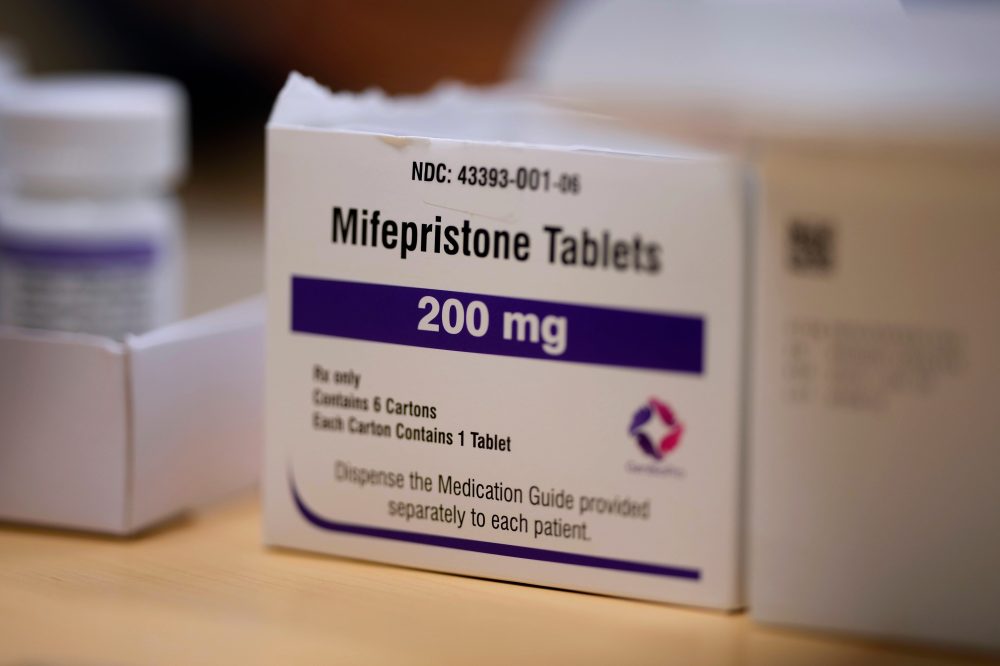

A federal court in Louisiana has temporarily declined to halt the nationwide mail distribution of mifepristone, an abortion medication, dealing a short-term blow to state officials attempting to prevent these pills from reaching areas where abortion procedures are prohibited.
U.S. District Judge David Joseph, based in Lafayette, Louisiana, rejected a request from Louisiana Attorney General Liz Murrill on Tuesday to suspend Food and Drug Administration policies permitting mail delivery of the medication while legal challenges to the 2023 regulations proceed through the court system.
The judge agreed to temporarily suspend proceedings in the case, though he cautioned that this delay would not continue indefinitely and indicated he might rule in Louisiana’s favor at a later date.
In a public statement, Murrill announced plans to appeal the federal regulations to a higher court, emphasizing that the judge “concluded that Louisiana suffers irreparable harm every day” under current policies.
Judge Joseph, appointed by former President Donald Trump, indicated in his written decision that he would monitor an ongoing FDA evaluation of the medication. He directed the agency to provide updates on their investigation’s progress within six months.
“Should the agency fail to complete its review and make any necessary revisions” to current policies “within a reasonable time frame, the Court’s analysis – and the weight accorded to these factors – will inevitably change,” Joseph stated in his ruling.
The judge also noted his belief that the challengers are “likely to succeed on the merits” of their case.
Murrill argues that mail-delivered prescriptions weaken Louisiana’s abortion prohibition, as the state is among 13 that have banned the procedure throughout pregnancy. Similar legal challenges have been filed by Republican officials in other jurisdictions.
Abortion rights organizations emphasized that Tuesday’s decision is not final.
“From the courts to the Trump administration to state legislatures across the country, mifepristone and abortion access are very much still under attack,” stated Alexis McGill Johnson, President and CEO of Planned Parenthood Federation of America.
Mifepristone, typically used alongside misoprostol, has become central to abortion access litigation following the Supreme Court’s 2022 decision overturning Roe v. Wade, which enabled states to prohibit abortion procedures.
In 2024, the Supreme Court declined to block mail delivery of mifepristone prescriptions. That particular case differed because anti-abortion physicians brought it, and the court determined they lacked proper legal standing to challenge the regulations.
As conservative states have implemented abortion bans or restrictions, liberal states have enacted protections for access. Eight states now have legislation shielding healthcare providers who prescribe abortion medications through telehealth services and mail them to states with prohibitions.
Research indicates that by late 2024, approximately 25% of abortions were obtained through telehealth services—representing a five-fold increase over two years. Additional research showed that in 2025, women in states with abortion bans were more likely to obtain procedures through telehealth pill delivery than by traveling to other states.
Murrill is pursuing criminal charges against two physicians—one in California and one in New York—accused of mailing pills to Louisiana patients. Neither state has agreed to extradite the doctors to face these charges.
The lawsuit also includes a Louisiana woman who claims her boyfriend forced her to take mifepristone obtained from a California physician.
Coercion arguments, especially regarding abusive partners controlling reproductive decisions, became a significant element of the plaintiffs’ legal strategy. They contend that eliminating in-person requirements for abortion medication will increase intimate partner violence. However, some domestic violence advocates countered that telehealth services can provide crucial support for abuse survivors.
Anti-abortion organizations criticized the Trump administration last year when it authorized an additional generic version of mifepristone.
A Hawaii judge previously ruled that the FDA illegally imposed restrictions on mifepristone, which is also prescribed for miscarriage treatment.