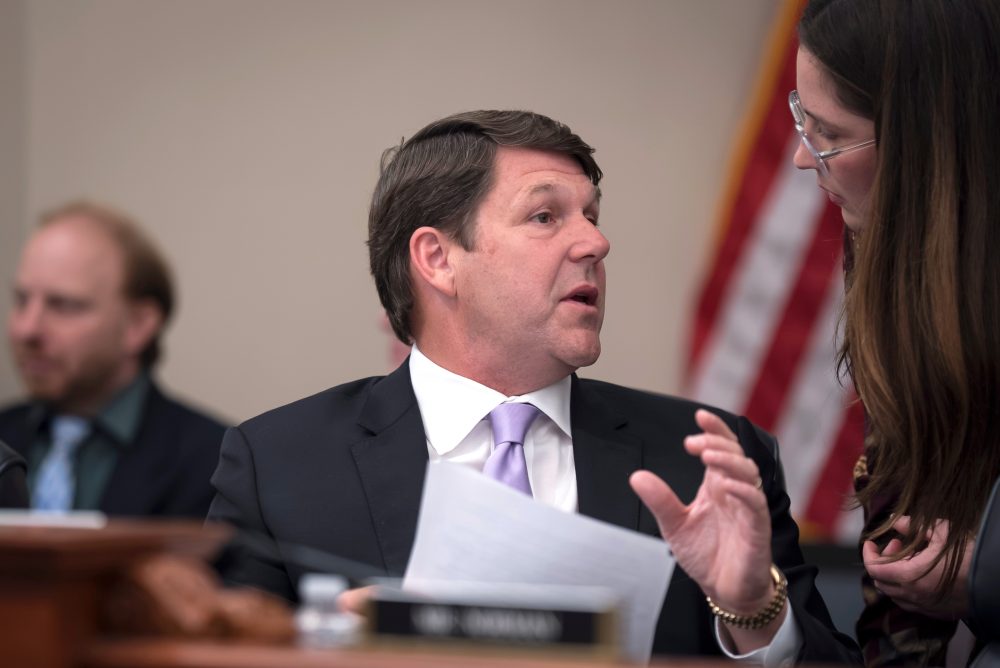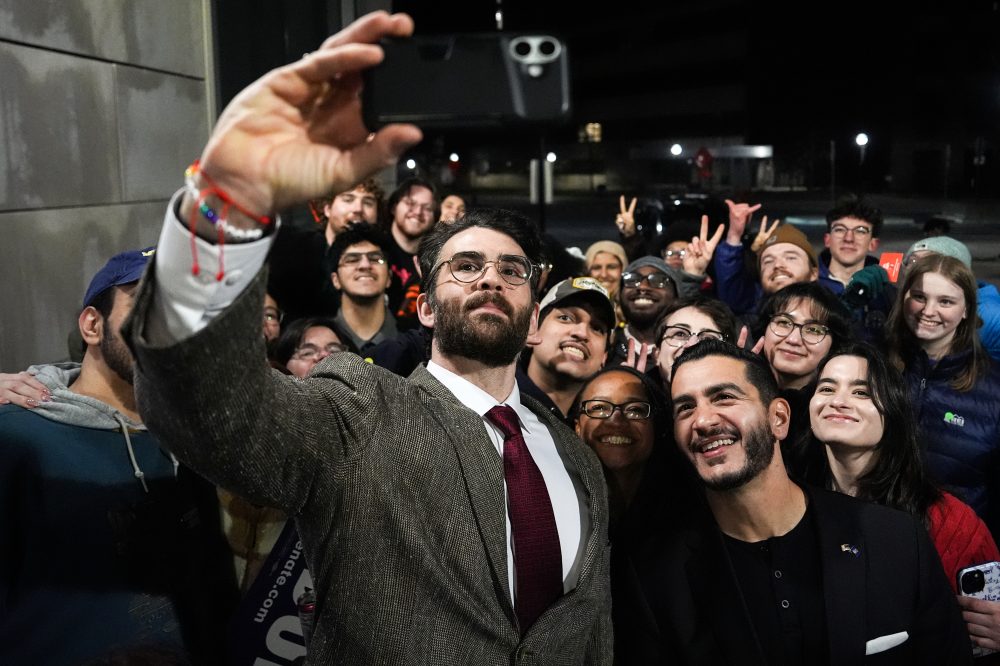

ANN ARBOR, Mich. — Hundreds of young people lined up in the cold outside a University of Michigan lecture hall Tuesday evening, creating a scene that caught the attention of veteran Democratic Representative Debbie Dingell, who observed from the back of the crowded room.
The longtime congresswoman watched as progressive Senate hopeful Abdul El-Sayed held a campaign event alongside Hasan Piker, a well-known but polarizing internet personality. Students filled the lecture hall, creating an energetic atmosphere with desk-banging and foot-stomping.
Dingell, known for her accurate political predictions including Trump’s Michigan victories in 2016 and 2024, was studying the evolving political environment. The turnout impressed her significantly.
“Quite frankly, I haven’t seen that many people outside an event yet this year,” Dingell remarked, emphasizing her presence wasn’t an endorsement of the candidate.
The crowd extending down the street represented more than just progressive politics. Many attendees carried backpacks from classes, while others had traveled considerable distances to attend. What united them wasn’t strict ideology but rather deep disappointment with America’s two-party system.
This dissatisfaction reflects broader anger permeating contemporary American politics, now emerging among younger voters before crucial midterm elections that will decide congressional control.
High school senior Liam Koenig, who was just eight years old when Trump first won the presidency, described how that pivotal moment influenced his generation’s political perspective.
“It’s just become increasingly more inflammatory,” Koenig explained.
Living in Oakland County, Michigan’s traditional political barometer, Koenig characterized current times as filled with ongoing conflict and worry. He said his classmates frequently feel discouraged and angry.
“I think a lot of us have lost hope in, like, tangible change,” he stated.
February polling by AP-NORC shows younger Americans hold more negative opinions of both major parties compared to older citizens.
Despite his pessimism, Koenig remained politically engaged, waiting hours to attend El-Sayed’s rally. He praised the campaign’s fresh approach, comparing it to Zohran Mamdani’s victorious New York City mayoral campaign and hoping for similar momentum in Michigan.
“You’re not going to get people out with business as usual,” Koenig observed.
Artist Karol Molina, recently relocated from New York City, said she sought candidates similar to Mamdani when she moved to Michigan. She chose to support El-Sayed, who faces U.S. Representative Haley Stevens and state Senator Mallory McMorrow in the Democratic primary.
“We want to be able to live and, like, afford life without constantly scraping by,” Molina explained.
Molina advocated for completely abandoning past political approaches.
“I think the Democratic Party is losing because they’re not really listening to what the people really want,” she said. “They’re trying to keep a party that existed before Donald Trump. And that party doesn’t exist anymore.”
University of Michigan junior Ethan Schneider characterized modern politics as “a little unserious.”
“It’s difficult to remain positive or not be jaded at a young age,” Schneider noted.
Though Schneider supported Democrat Kamala Harris two years ago, he joined many rally attendees in criticizing her and the Democratic Party.
“Hate them,” he said regarding Democrats. “They feel very complicit, in terms of all the issues going on now. If not complicit, they’re just doing nothing.”
Recent Gallup research confirms younger Americans reject both parties at significantly higher rates than older generations. Over half of Generation Z and Millennials consider themselves political independents, while most older Americans align with a party.
The polling indicates these growing independent voters are primarily driven by dissatisfaction with whoever holds power — potentially helping Democrats this election cycle without guaranteeing future support.
University of Michigan undergraduate Jacob Abbott believes the Democratic Party has shifted toward “corporate interest politics.”
Abbott dismissed concerns about El-Sayed appearing with Piker, despite the 34-year-old streamer’s controversial statements. Piker, who has 3.1 million Twitch followers and 1.8 million YouTube subscribers, previously said “Hamas is a thousand times better” than Israel, called some Orthodox Jews “inbred,” and claimed “America deserved 9/11.”
For Abbott, the controversy highlights American politics’ broader problem — few people can capture attention and address young voters’ concerns, even imperfect ones.
“So is Hasan perfect? Probably not,” Abbott acknowledged. “But he’s much better than the alternative the Democratic Party has had.”
Drawing on decades of political experience, Dingell has witnessed large crowds and packed venues before. She wanted to determine whether El-Sayed and Piker’s event represented something more lasting.
Progressive candidates have historically generated enthusiasm without achieving electoral success. El-Sayed himself placed second in Michigan’s 2018 Democratic gubernatorial primary. Additionally, independent Vermont Senator Bernie Sanders, a prominent progressive leader, lost two Democratic presidential campaigns.
However, some Democrats believe this moment differs, citing recent wins by Mamdani in New York and Analilia Mejia, who won a competitive Democratic primary in a New Jersey special House election.
“There should be a progressive running everywhere that one exists,” said Pennsylvania Representative Summer Lee, who also appeared with El-Sayed.
“Every year, every race,” she continued. “We might not be victorious, but every single time we have to call the question.”
Dingell said she plans to monitor future developments.
“Is it something for the kids to do, or is it going to connect?” she wondered.