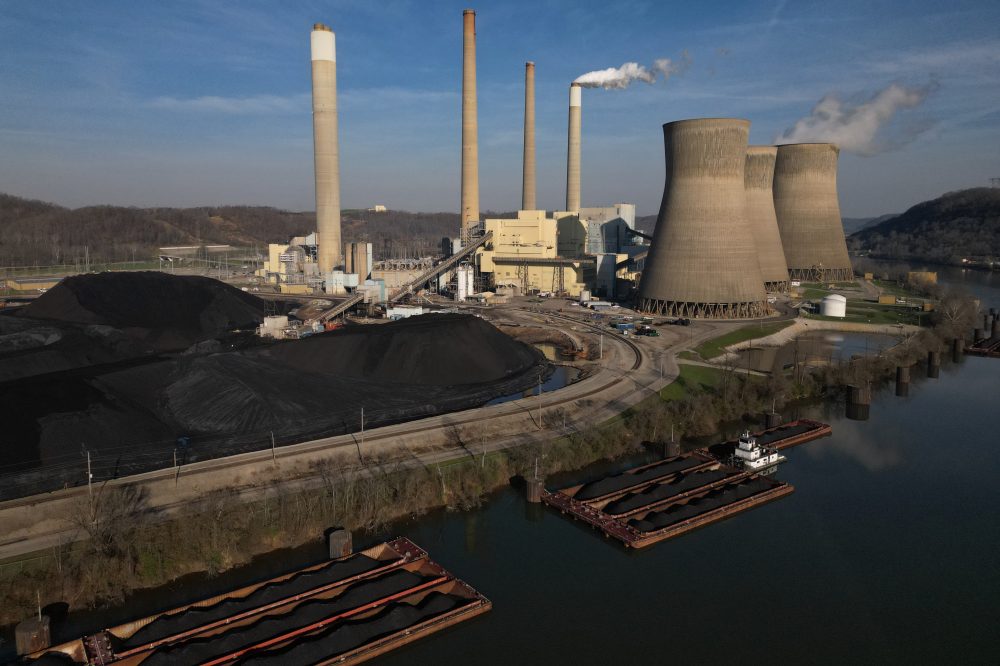

WASHINGTON — Prior to Donald Trump’s return to office, the Biden administration and numerous electric companies had been constructing a renewable energy-focused future. Their plan involved eliminating coal power to cut greenhouse gas emissions and decrease air pollution responsible for over 1,000 annual deaths.
Multiple coal facilities — generating pollution equivalent to 27 million vehicles — were scheduled for closure during Trump’s second presidency. However, according to officials and energy analysis firm Enverus, coal plant shutdowns may cease entirely while Trump remains in office.
America is experiencing a significant energy policy transformation as Trump exercises extensive governmental authority to support coal while hindering cleaner energy options. An Associated Press analysis of government information and expert interviews suggests this could result in costlier electricity, increased air pollution, and delayed climate action.
Trump administration officials are utilizing emergency authority to block five coal facilities from shutting down. This decision is increasing customer bills: maintaining one Michigan facility operational for approximately seven months required $135 million. Officials are spending millions in taxpayer funds on repairs and life extensions for additional coal plants while reducing pollution standards to help facilities continue operating without expensive improvements.
Interior Secretary Doug Burgum stated the objective for coal facilities “is 100% stay open, no more retirements, no more shutting down.”
These measures surpass Trump’s coal support during his initial presidency, when he eased certain environmental rules for temporary assistance. The administration contends that coal provides essential electricity even during severe weather conditions, offering advantages over renewables that they claim the Biden administration foolishly subsidized for climate purposes.
“The Trump administration this time around is much more organized and strategic in trying to bring about a revival of coal,” explained Robert Lifset, a University of Oklahoma energy history professor. “You’re seeing almost like a whole-of-government approach.”
This occurs while electricity consumption increases due to massive data center expansion. One Indiana community supervised extensive solar panel construction on agricultural land before the anticipated closure of the Schahfer Generating Station, a coal facility in Wheatfield, Indiana. The Trump administration now maintains this plant’s operation, declaring its power essential.
“I was really emotional about it because finally they weren’t going to be a threat to our air and to our water anymore,” expressed Barbara Deardorff, an activist raised approximately 2 miles from the facility. “Since then, everything’s gone upside down.”
Following World War II, American electricity consumption increased with economic expansion. These patterns diverged after the 2008 recession: economic growth resumed while electricity demand remained stable, partly due to enhanced efficiency, according to Seth Feaster from the Institute for Energy Economics and Financial Analysis, which advocates renewable energy.
Power companies extensively retired expensive older facilities, substituting them with more efficient natural gas and renewable sources. Coal’s portion of American electricity generation fell by over half.
Schahfer’s smokestacks had provided a recognizable presence among northern Indiana’s farmland since construction in the 1970s. In 2023, its operator envisioned a different future: the Northern Indiana Public Service Company announced plans to eliminate coal from 73% of energy production to zero while pursuing renewables. Schahfer would close.
As closure approached, the surrounding area was changing. Solar installations appeared on hundreds of agricultural acres nearby, representing a local character shift some mourned while others welcomed for cleaner energy and additional tax income.
In December, the Trump administration issued emergency directives to maintain Schahfer’s operation, claiming its coal-generated electricity was vital for meeting extreme weather demand.
“Today, the policies that get in the way of a reasonable energy development and mess up the math are things focused around climate change,” stated Energy Secretary Chris Wright during a February news conference regarding electric grid reliability.
The coal facility continues operating while Amazon has proposed a multi-billion-dollar data center complex nearby powered by gas generators producing more than double the former coal facility’s output. NIPSCO indicated an Amazon agreement would safeguard customers.
“It’s been a complete 180,” said Deardorff, noting her family can no longer farm land they’ve long leased near the plant.
Completely halting retirements, as Burgum suggested, would maintain approximately 34 gigawatts of coal power scheduled for retirement before 2029. This threatens to halt decades of declining coal pollution that significantly reduced deaths through plant closures or new equipment installations. Coal plants designated for retirement under Trump produced over 130 million tons of carbon dioxide annually, plus tens of thousands of tons of harmful sulfur dioxide and nitrogen oxides.
“If we retire all the coal plants we could avoid those 2,000 deaths per year from coal. And if we keep the plants online and they keep burning coal, then we’re going to get those emissions and see those same health impacts,” explained Lucas Henneman, a George Mason University environmental engineer who directed a government study on coal pollution deaths.
Beyond five facilities ordered to remain operational, the administration allocated $175 million in taxpayer money for upgrades extending seven other plants’ lifespans. Officials are reviewing applications for $350 million in similar expenditures.
Maintaining America’s aging coal plant fleet could ultimately cost approximately $1 billion yearly, according to Michelle Bloodworth from industry organization America’s Power. She justified the spending in an interview, noting “billions and billions” previously supported renewables.
The administration possesses broad authority in determining emergency situations and can “order almost any change in operation of the electricity system,” the Congressional Research Service reported in February.
This hasn’t prevented legal challenges from five Democratic-controlled states — Washington, Illinois, Minnesota, Michigan and Colorado.
Colorado Attorney General Phil Weiser argued Trump administration orders burden consumers with increased costs and obstruct sustainable energy development.
“We are going from a trajectory where we were going to lead the world on clean energy to one where we are becoming an isolated petrostate,” said Bob Keefe from renewable energy monitoring organization E2. “It’s costing jobs, it is costing investments, it is hurting us in the global marketplace and by the way it is resulting in higher electricity prices.”
Economists doubt coal’s resurgence will endure. No major American coal plant has been constructed since 2013, though one is planned for Alaska. Aging coal facilities don’t make economic sense when solar costs remain low, according to Tufts University associate professor Steve Cicala.
Portions of Trump’s agenda have already stumbled. The largest federal coal lease auction in over ten years failed, and courts have rejected some Trump efforts to block wind energy projects.
Industry leaders remain optimistic.
“It’s our time,” declared CEO Jimmy Brock from Core Natural Resources, among America’s largest coal mining companies.