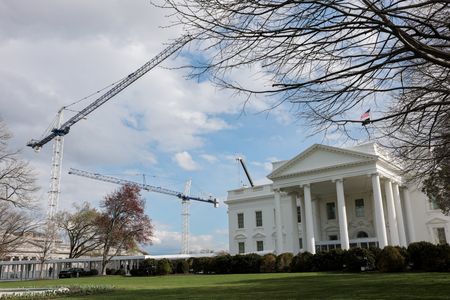
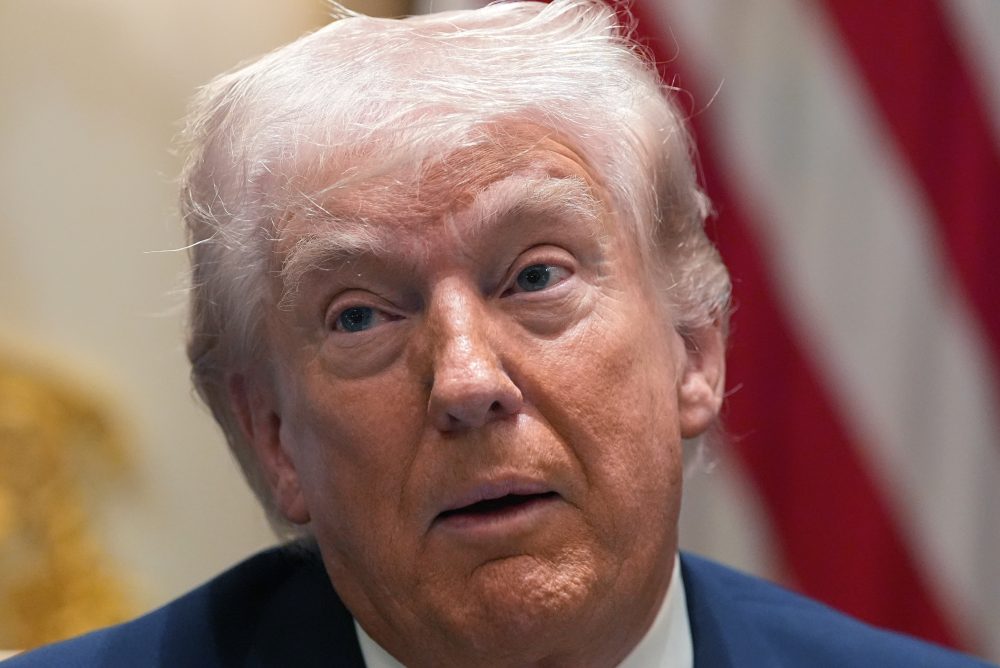
President Donald Trump announced Sunday that construction of a new White House ballroom is moving faster than anticipated and remaining within financial projections, even as legal opposition continues to challenge the project.
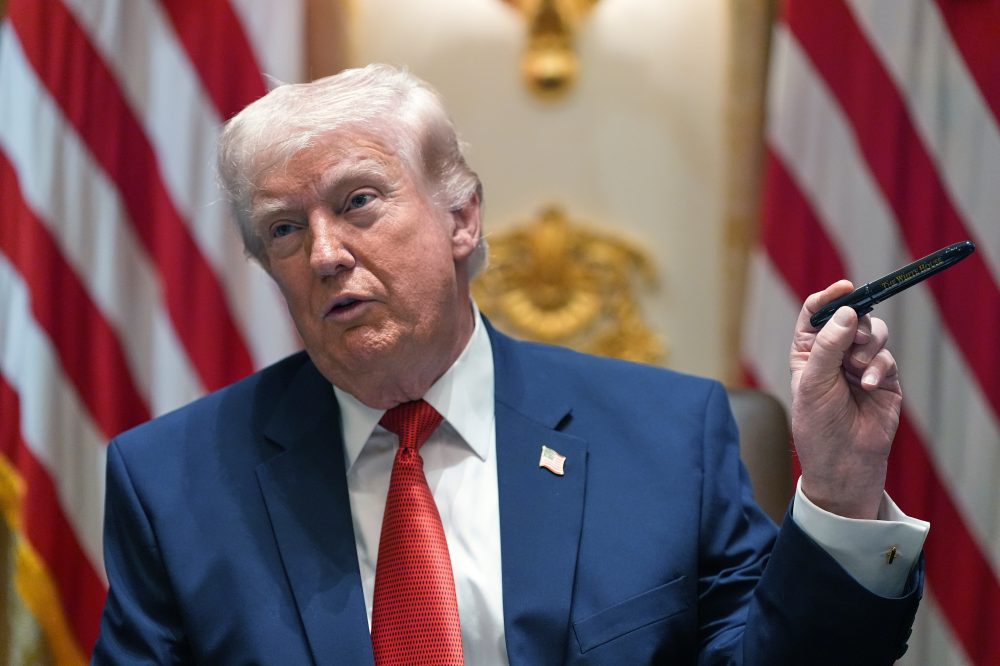
Speaking to reporters aboard Air Force One during his return flight to Washington from his Florida Mar-a-Lago estate Sunday evening, Trump displayed updated architectural drawings of the ballroom while defending the controversial construction. “We’re doing very well, so we’re ahead of schedule,” the president stated.
The construction project has encountered both legal and political opposition, including litigation filed by the National Trust for Historic Preservation. The organization claims the administration failed to follow proper review procedures and public consultation requirements. A federal judge is expected to rule by March’s end on whether to grant an injunction that would temporarily stop construction during the legal proceedings.
While no definitive completion timeline has been announced, White House officials have indicated the project will finish “long before the end” of Trump’s presidential term.
During Sunday’s discussion, Trump characterized the ballroom as a “shed” that will sit above an extensive underground military facility. He explained that the structure will feature “high-grade, bullet-proof” windows and a roof designed to withstand drone attacks.
“Unfortunately we’re living in an age where that is a good thing,” Trump remarked.
The president has previously stated that the entire $400 million ballroom construction will be financed through private contributions, positioning it as part of his broader initiative to transform Washington.
WASHINGTON (TV Delmarva) — While traveling aboard Air Force One Sunday evening, President Donald Trump told reporters he sees no issue with allowing a Russian oil tanker to deliver fuel to Cuba, despite the United States maintaining strict economic sanctions against the Caribbean nation.
Speaking to the press during his return flight to Washington, Trump stated: “We have a tanker out there. We don’t mind having somebody get a boatload because they need… they have to survive.”
The president confirmed reports from The New York Times regarding the oil delivery, telling journalists: “I told them, if a country wants to send some oil into Cuba right now, I have no problem whether it’s Russia or not.”
Maritime tracking information indicates the tanker, named Anatoly Kolodkin, was positioned near Cuba’s eastern coastline Sunday night with approximately 730,000 barrels of crude oil aboard. The vessel is scheduled to dock in Matanzas by Tuesday, according to reports from Cuban government media outlets.
The Anatoly Kolodkin faces sanctions from the United States, European Union, and United Kingdom due to Russia’s conflict in Ukraine.
Under Trump’s administration, Cuba has faced the most severe economic pressure from Washington in decades, with policies designed to isolate the communist government and force political change. These measures have severely impacted ordinary Cubans, creating widespread hardship among the population Trump and Secretary of State Marco Rubio claim they aim to assist.
The oil embargo has triggered widespread power outages across Cuba, compounding existing economic difficulties. Fuel shortages have disrupted hospital operations and eliminated much of the public transportation system, while citizens struggle to access essential supplies.
Energy specialists estimate the incoming oil shipment could yield roughly 180,000 barrels of diesel fuel, providing Cuba with enough supply to meet daily energy needs for approximately nine to ten days.
The situation reflects the ongoing geopolitical rivalry between Washington and Moscow over influence in Cuba, a dynamic that has persisted for generations. Trump rejected suggestions that permitting the oil delivery would benefit Russian President Vladimir Putin.
“It doesn’t help him. He loses one boatload of oil, that’s all it is. If he wants to do that, and if other countries want to do it, it doesn’t bother me much,” Trump explained. “It’s not going to have an impact. Cuba’s finished. They have a bad regime. They have very bad and corrupt leadership and whether or not they get a boat of oil, it’s not going to matter.”
The president added: “I’d prefer letting it in, whether it’s Russia or anybody else because the people need heat and cooling and all of the other things.”
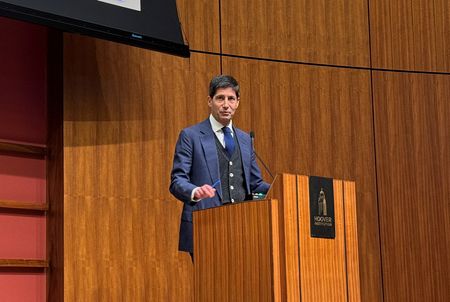
The Senate Banking Committee may schedule a confirmation hearing for Federal Reserve chair nominee Kevin Warsh during the week of April 13th, according to a Sunday report from Punchbowl News that cited two sources with knowledge of the scheduling discussions.
Warsh’s nomination has faced political opposition in the Senate, causing delays in the confirmation process. Meanwhile, current Federal Reserve Chair Jerome Powell continues to serve in his position as President Donald Trump seeks a replacement who would be more willing to reduce interest rates at a faster pace.
The leadership uncertainty at the Federal Reserve comes at a challenging time, as inflation concerns have intensified due to rising oil prices following U.S.-supported military strikes against Iran and ongoing Middle East conflicts that have disrupted important shipping lanes.
Financial markets now show minimal expectations for interest rate reductions this year, as increased energy costs contribute to broader inflationary pressures and reduce opportunities for loosening monetary policy.
Military fighter jets intercepted a civilian aircraft Sunday afternoon after it entered restricted airspace surrounding former President Donald Trump’s Florida resort, according to the North American Aerospace Defense Command.
The incident occurred at approximately 1:15 p.m. Eastern Time when the civilian plane breached a Temporary Flight Restriction zone around the Mar-a-Lago property in Palm Beach, Florida. These airspace restrictions are routinely established whenever the former president is present at the location.
NORAD officials confirmed the aircraft was “safely escorted out of the area” following the intercept. Military pilots deployed warning flares during the operation, which may have been observed by residents in the surrounding area.
“During the intercept, NORAD aircraft dispensed flares, which may have been visible to the public,” defense officials stated. “The flares were used to draw attention from or communicate with the pilot,” and posed no danger to people on the ground, according to the command.
This marks another in a series of comparable airspace violations that NORAD has documented since Trump resumed the presidency last year. Military officials report that all previous incidents have been resolved peacefully without any security threats being identified.
A new border security initiative along the Texas-Mexico boundary is generating pushback from area residents as federal officials move forward with an extensive buoy system installation.
The Trump administration has launched the deployment of large floating barriers stretching 500 miles across the Rio Grande River, which serves as the international boundary between the United States and Mexico. The project receives its funding from the 2025 federal spending legislation.
Community members along the border are expressing dissatisfaction with the initiative, pointing to current immigration statistics that show unauthorized crossings have dropped to their lowest point in half a century. The timing of the expensive barrier installation has raised questions among locals about the necessity of such measures given the significant decline in illegal border activity.
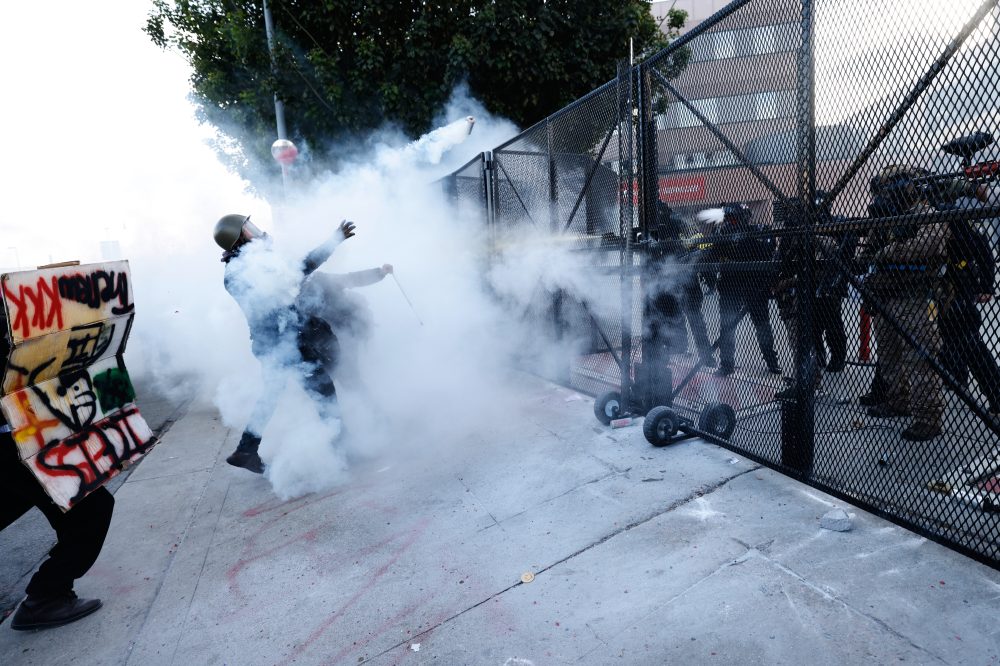
Law enforcement officers in Los Angeles used tear gas and detained 74 individuals following a ‘No Kings’ demonstration that turned confrontational near a federal detention facility over the weekend.
The Los Angeles Police Department announced Sunday that the arrests occurred when demonstrators refused to comply with orders to leave the area after Saturday’s protest had concluded. An additional person was taken into custody for allegedly carrying what officers identified as a dagger.
These detentions marked a notable exception to what organizers described as largely peaceful demonstrations, with more than 3,100 registered events taking place across all 50 states.
According to a late Saturday statement from the U.S. Department of Homeland Security, protesters who had gathered around the federal complex in downtown Los Angeles began hurling rocks, bottles, and chunks of broken concrete at law enforcement personnel.
The department reported that two officers suffered injuries of undetermined severity after being hit by concrete pieces and required medical treatment.
Andre Andrews Jr., a Navy veteran working as an independent journalist, documented the entire Los Angeles demonstration route. He described how authorities released tear gas canisters after protesters ignored dispersal commands. Andrews observed that some demonstrators equipped with protective shields and gas masks threw the canisters back at police from behind a fence surrounding the federal facility. He also witnessed individuals breaking concrete barriers into smaller fragments to use as projectiles against officers.
“Does it make L.A. look bad? No. They’re bad actors causing problems, for sure,” Andrews said. “The peaceful protest was good for the cause. You have the right to do that. But the other people, they were definitely causing problems.”
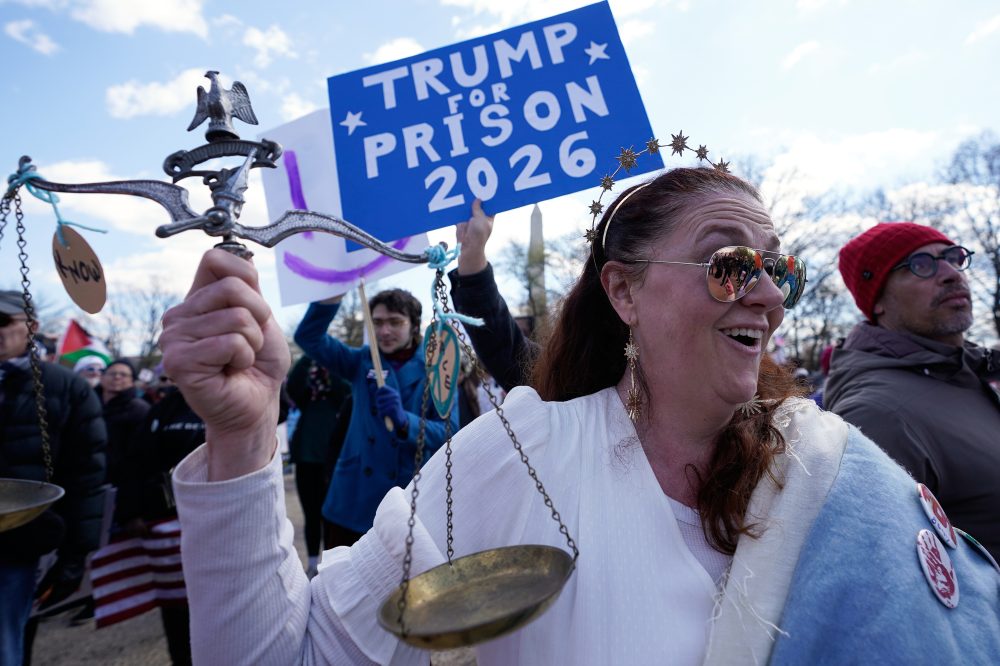
Among those detained were eight minors, according to police reports. Officers also arrested a woman who had dressed as the Statue of Liberty, who was seen smiling while speaking with the officer escorting her away.
Similar incidents occurred in Denver, where police declared an unlawful assembly and released smoke canisters after a small group blocked roadways and refused to move when requested. Eight individuals were arrested at the scene, with a ninth person detained later for allegedly throwing objects at officers.
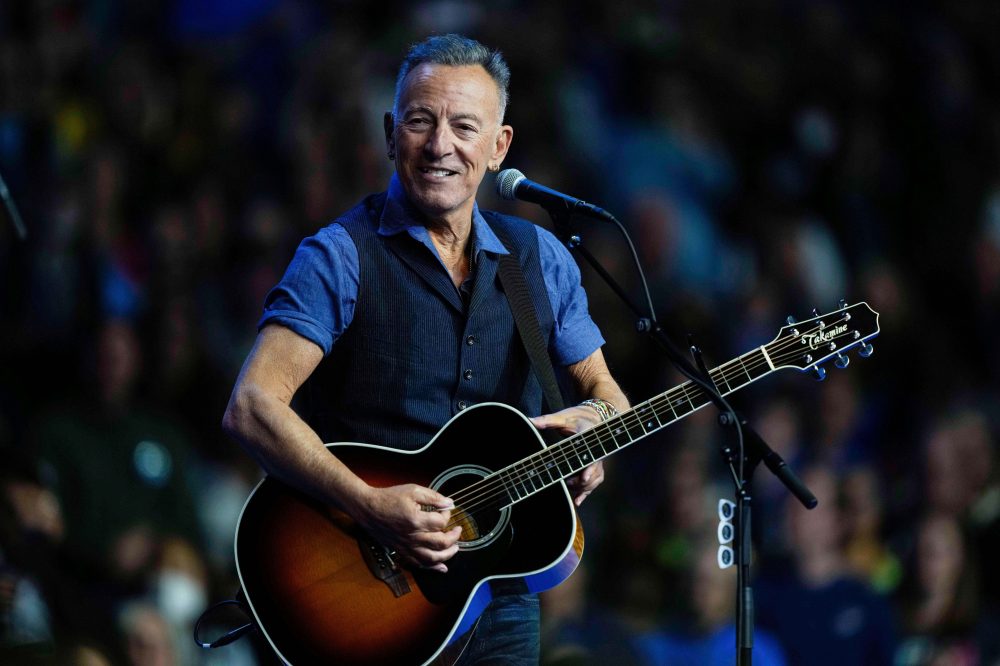
The demonstrations stretched across the nation, from New York City with its nearly 8.5 million residents in a Democratic stronghold, to Driggs, a small eastern Idaho community of fewer than 2,000 people in a state where Trump secured 66% of votes in 2024. Minnesota hosted a prominent event on the State Capitol grounds in St. Paul, featuring Bruce Springsteen as the main performer in a show of opposition to Trump’s immigration enforcement policies.
International demonstrations took place in more than a dozen countries, according to Ezra Levin, co-executive director of Indivisible, the organization that coordinated these events.
Organizers estimate that previous No Kings rallies attracted over 5 million participants in June and 7 million in October. Levin projected that Saturday’s events drew at least 8 million people.
“It was powerful. It was historic. It was joyful. It was boisterous,” Levin said Sunday. “I’d say it went pretty well.”
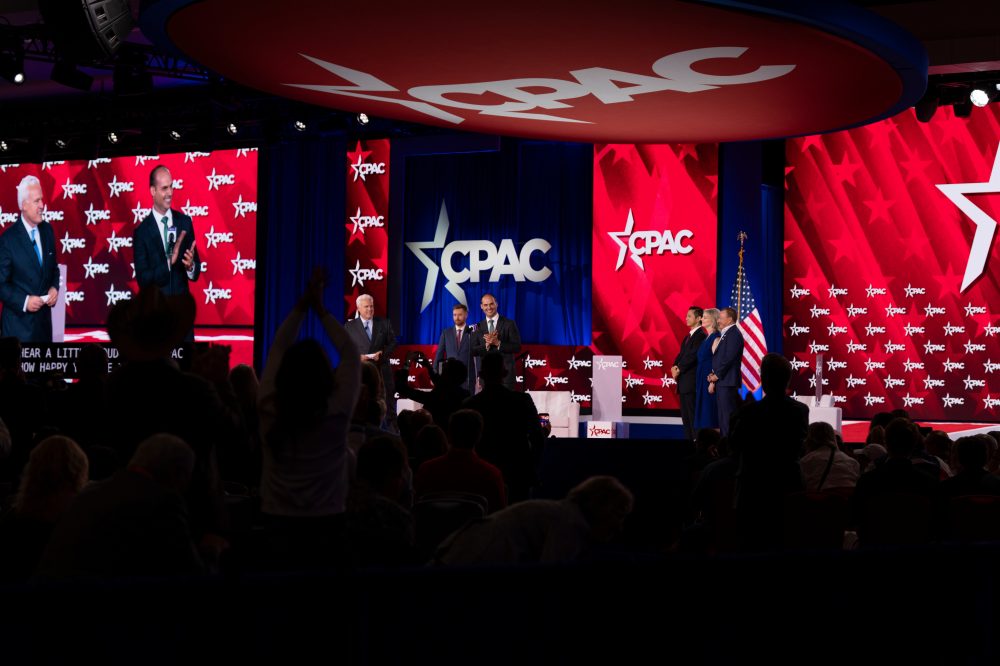
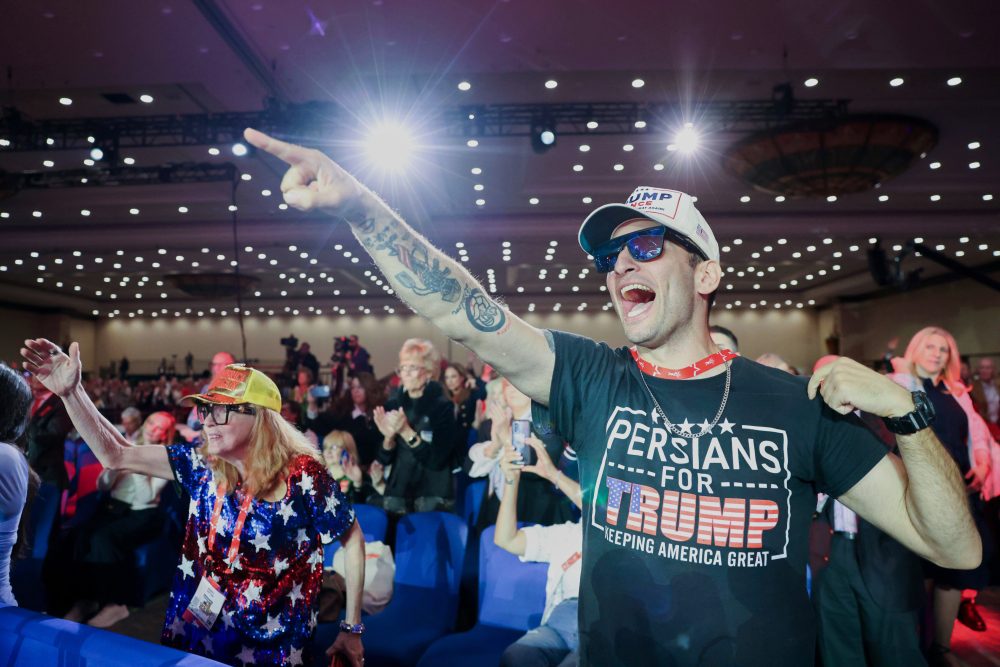
Leading conservative voices gathered in the Dallas-Fort Worth area from March 25-28 for the annual Conservative Political Action Conference, where discussions centered on President Trump’s policy priorities, border security measures, and ongoing Iranian tensions.
The four-day gathering in Grapevine, Texas, drew notable speakers including exiled Iranian Crown Prince Reza Pahlavi, Steve Bannon, Matt Gaetz, Senator Ted Cruz, and various Trump administration officials. Despite President Trump’s absence, attendees emphasized his continued leadership role within the Republican Party.
Crown Prince Pahlavi received enthusiastic reception as he advocated for removing Iran’s current government and presented himself as a possible interim leader. Honoring Iranians who died during anti-government demonstrations, he envisioned a transformed Iran without nuclear weapons programs, terrorist activities, hostage situations, or regional intimidation tactics. Such a liberated nation could foster regional stability, create economic partnerships, and align with Western interests, he suggested.
Pahlavi commended President Trump’s approach toward Iran and encouraged America to maintain its current strategy, suggesting that 2026 might witness both America’s 250th anniversary and Iran’s transformation.
Conference attendees showed divided opinions regarding military engagement with Iran. Several speakers cautioned against intensifying the conflict, especially through deploying American ground forces. They expressed concerns about extended warfare potentially increasing domestic expenses and creating widespread regional chaos. Others stressed the importance of gaining public backing before deepening military involvement.
Border security discussions generated some of the most enthusiastic audience responses. Administration representatives stressed ongoing deportation operations and indicated no plans to reduce current enforcement strategies.
Trump administration officials also outlined efforts to restructure federal agencies, including dismissing staff members who participated in previous presidential investigations and expanding control over media oversight.
Senator Cruz outlined Republican legislative successes, citing significant tax reductions, enhanced border security funding, and boosted defense spending. He also mentioned policies removing taxes from tips, overtime pay, and Social Security benefits, plus expanded educational choice initiatives. Cruz emphasized religious foundations in American principles and free speech protections.
The conference’s traditional preference poll revealed Vice President JD Vance leading potential 2028 Republican presidential candidates, with Secretary of State Marco Rubio in second place. Organizers also showcased CPAC’s growing global reach, featuring conservative representatives from Europe, Latin America, and other regions.
TRAVELING ON AMTRAK’S CRESCENT — The beauty of watching dawn break over quiet countryside, interrupted only by the steady rhythm of train wheels, offers a peaceful contrast to modern travel chaos.
But this particular rail journey wasn’t chosen for scenic reasons — it was a response to political gridlock.
A budget standoff between Congress and then-President Donald Trump, centered on immigration enforcement and federal tactics in American cities, had disrupted one of modern life’s basic assumptions: reliable air travel.
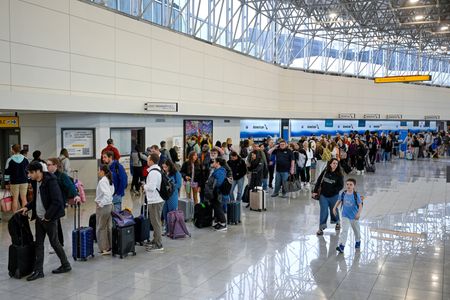
At Atlanta’s Hartsfield-Jackson International Airport — famously promoted as the globe’s busiest — the situation had deteriorated into controlled pandemonium. Federal workers going without pay were staying home, leaving skeleton security crews to handle frustrated passengers facing multi-hour delays. Needing to reach Washington for March Madness basketball games, the traveler opted for certainty over speed, booking an overnight train journey spanning 650 miles.
During this tense period in American politics, the slower pace provided time to reflect on conveniences typically taken for granted. Few people consider the marvel of aviation that enables our fast-paced modern lifestyle — we simply purchase tickets and board. It’s even less common to contemplate the inconvenience when that system fails.
This choice represented a step backward in time, to the 1800s and another transformative invention: cross-country rail service.
The 14½-hour weekend rail trip provided ample opportunity to recognize how thoroughly politics, economics, social tensions, and debates over identity and inclusion have always shaped our daily routines, including our transportation choices across America. Amtrak’s Crescent route also revealed the diversity of our shared national experience.
The journey crossed urban centers, suburbs, and rural communities along the Eastern Seaboard. Fellow passengers shared their own travel stories, creating a picture of Americans — both historical and contemporary — who refuse to remain as immobilized as their political representatives.
Late-night train stations lack any sense of glamour. Exhausted parents manage children well past their bedtimes. Elderly passengers wrestle with heavy bags and challenging staircases.
Airports aren’t exactly glamorous either, naturally. However, Delta’s Atlanta-to-Washington route carries a certain prestige. These flights normally require about two hours from departure to arrival. They’re frequently assigned to central gates in the concourse closest to the main terminal — likely accommodating Congress members who rely on this route but have lost airline privileges during the extended government closure.
Under typical conditions, travel from doorstep to Capitol Hill or downtown Washington takes as little as 4½ hours. Current security delays could easily double that air travel duration.
Train travel takes longer, and conventional wisdom says time equals money. However, predictability also holds value, even with an 11:29 p.m. departure. At the train station, there were no motionless queues, no TSA personnel, no immigration agents serving as substitutes.
Travelers arriving just minutes before departure successfully boarded and located seats immediately — assigned by boarding sequence rather than predetermined zones that create crowded aisles. There’s no meal service or satellite television. But even standard coach seating, Amtrak’s basic option, offers as much space as airline first-class accommodations — plus Wi-Fi connectivity, so it’s not entirely antiquated.
During the trip, one crew member joked, “I’m no TSA agent.”
Growing up in rural Alabama, the author remembered counting train cars and imagining their destinations. Family records later revealed diary entries and correspondence from his grandmother and her sisters describing World War II-era weekend excursions to Atlanta.
The South’s major metropolis carries historical significance as well. Initially called “Terminus,” Atlanta emerged before the Civil War as a crucial junction where north-south and east-west railroad lines intersected. This strategic importance attracted General William Tecumseh Sherman for one of the Civil War’s pivotal campaigns that contributed to Confederate defeat.
A hundred years after the Civil War ended, Delta Airlines selected Atlanta for its corporate headquarters instead of Birmingham, Alabama, which was the larger metropolitan area according to 1960 census data. The company’s choice involved tax incentives for the airline, which took its name from its origins as a crop-dusting operation in the Mississippi Delta. Some analysts suggest Delta’s decision was influenced by the more blatant racism displayed by Alabama and Birmingham officials defending Jim Crow laws — regulations that included segregating passenger trains that preceded Amtrak.
On this evening, multiple languages and regional accents could be heard, particularly meaningful considering immigrant workers’ role in constructing America’s rail network and especially relevant given immigration’s current prominence in Washington policy debates. The passenger mix reflected American diversity, quite different from what previous generations would have encountered decades earlier.
This variety of voices praised rail travel’s convenience and accessibility. Agatha Grimes and her companions, who boarded in Greensboro, North Carolina, during a long weekend celebrating her 62nd birthday, shared this sentiment.
“I got stuck in the Atlanta airport last week,” Grimes explained, while her group shared laughs in the dining car. “It’s just nuts.”
Beretta Nunnally, describing herself as a “train veteran” who planned their journey, added, “There’s no worry about parking. No checking bags. You come to the station, you get where you going, and you come home.”
However, such convenience isn’t as accessible in America as it once was.
The same political and economic forces and government subsidies that expanded U.S. railroads later weakened the network as automobile manufacturers, petroleum companies, highway construction firms, and eventually aircraft manufacturers and airlines gained political influence and consumer preference.
Traveling for hours through rural regions, the author observed salvage yards where invasive vines and chain-link barriers surrounded rows of corroded vehicles. Farmland and agricultural machinery that help sustain cities and the broader nation were visible. Dawn revealed Charlotte, North Carolina’s illuminated office buildings and NFL stadium. Thriving county centers appeared — bringing to mind countless similar communities that struggle economically, isolated from passenger rail service and distant from the Interstate Highway System that the train crossed repeatedly.
In each location, voters across the political spectrum — conservatives, progressives, extremists, and moderates — have elected the representatives, senators, and president who now guide the nation’s direction.
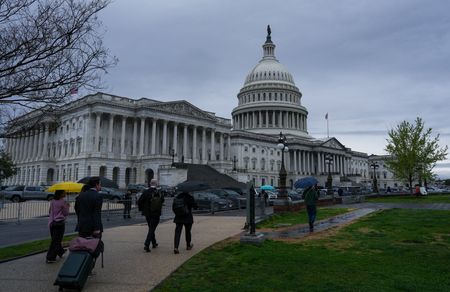
Upon reaching Washington, the traveler paused to admire Union Station’s magnificent main hall and its classical architectural beauty, while regretting how much grandeur has been lost through the demolition of many impressive American terminals. Stepping outside, the Capitol dome came into view.
During the overnight journey, the Senate had reached a bipartisan agreement to fund the entire Department of Homeland Security except immigration enforcement operations. As the story continued developing, House Republican leadership rejected the proposal. The political deadlock persisted.
Though tired from travel, the author felt reinvigorated as a citizen. There was a basketball game to attend. And the train continued its journey.
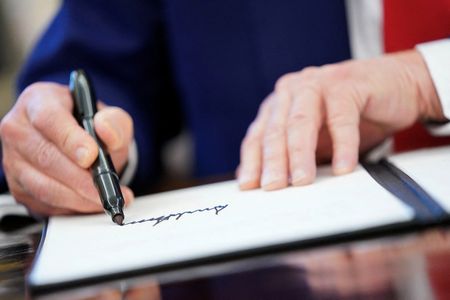
The Treasury Department announced Thursday that President Donald Trump’s signature will be featured on future American currency, representing a departure from decades-old traditions surrounding U.S. banknote design and placing the current president’s personal signature on one of America’s most iconic symbols.
This modification will affect upcoming currency production rather than bills currently being used by the public. Government representatives characterized the decision as a ceremonial enhancement connected to presidential economic authority, although the announcement is already facing questions about mixing national financial institutions with current political figures.
Treasury officials released a statement describing the decision as representing “a new chapter in American economic leadership.” Treasury Secretary Scott Bessent explained that the modification “recognizes the leadership role of the president in shaping the nation’s economic direction.”
Throughout American history, paper money has traditionally displayed signatures from the Treasury Secretary and the Treasurer of the United States, excluding presidential signatures. This established format has maintained the principle that U.S. currency symbolizes governmental institutions and the nation itself, rather than bearing the individual mark of whoever currently holds the presidency.
The Bureau of Engraving and Printing will handle the redesign process and technical modifications required to add President Trump’s signature to upcoming banknotes. Treasury representatives indicated the implementation will occur progressively during standard manufacturing schedules, ensuring that current bills remain valid currency and stay in public use.
This decision is notable since modifications to American currency typically result from anti-fraud improvements, enhanced security measures, accessibility enhancements, or periodic aesthetic updates—rather than incorporating the personal signature of the current president.
Treasury officials have not announced a specific timeline for when the initial currency featuring President Trump’s signature will become available to the public.
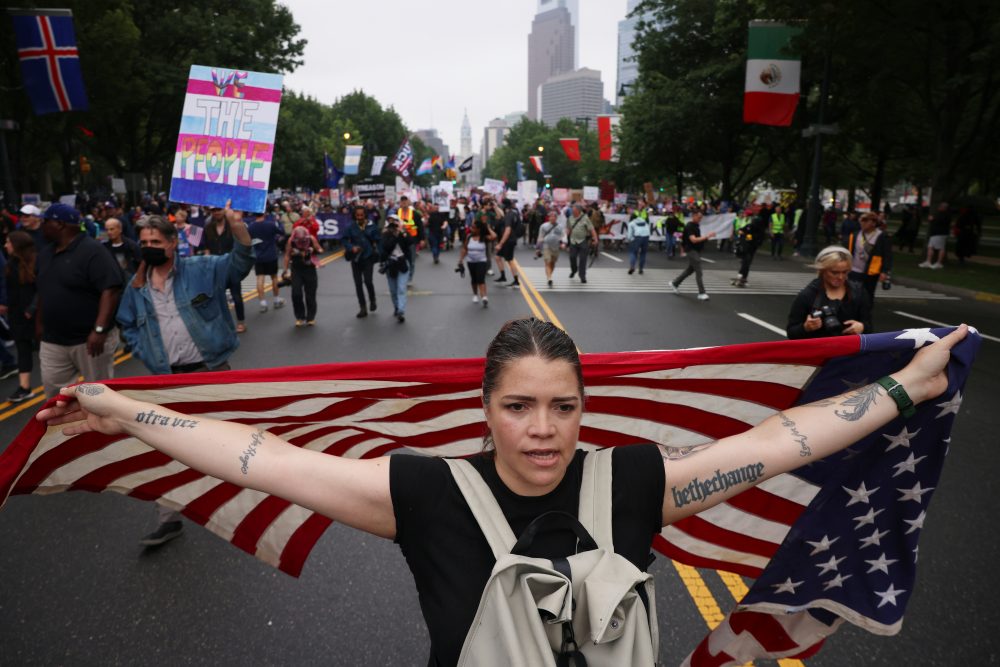
Thousands of demonstrators participated in ‘No Kings’ movement rallies nationwide on Saturday, March 28, 2026, with a primary gathering held in St. Paul, Minnesota, where participants voiced opposition to President Donald Trump’s administration, increasing cost of living, and ongoing conflict with Iran. Questions have emerged regarding the financial backing behind these demonstrations.
Movement organizers characterize their efforts as a grassroots, leaderless initiative built on democratic principles and coordinated through an alliance of 300 organizations emphasizing community-level activism. The rallying cry ‘We the People’ has become central to the movement’s grassroots messaging, building on momentum from large-scale demonstrations held throughout 2025.
However, a Fox News Digital investigation revealed the rallies are orchestrated by an extensive network of approximately 500 organizations with a collective annual budget estimated at $3 billion. According to the investigation, this network includes communist organizations that plan to leverage the demonstrations to promote calls for ‘revolution.’
Documentation filed for permits for the primary St. Paul march identifies Indivisible, a national Democratic advocacy organization backed by billionaire George Soros, as the primary organizer. The investigation also highlighted participation from a coalition of socialist and communist organizations funded by Neville Roy Singham, an American technology entrepreneur characterized as a committed communist residing in China.
The investigation indicates that Singham has dedicated nearly ten years to supporting activist organizations that champion revolutionary socialist ideology and regularly coordinate public demonstrations. These organizations encompass the People’s Forum in New York, the Party for Socialism and Liberation, the ANSWER Coalition, and CodePink, whose co-founder Jodie Evans is Singham’s spouse, alongside partnerships with the Freedom Road Socialist Organization. All are recruiting participants, with at least one organization declaring its intention to deliver a message of ‘revolution’ during the protests.
Following demonstrations last October related to opposition against National Guard deployments and immigration enforcement actions, Sen. Ted Cruz, R-Texas, cautioned Republicans to regard the movement as a serious threat. During a Fox News appearance with Sean Hannity, Cruz stated there is substantial evidence indicating Soros and connected networks are providing financial support for the demonstrations, expressing concerns about possible civil unrest.
In a Bloomberg interview during that same month, Cruz stated, ‘Unquestionably, we should take political peril seriously. There is a lot of energy. There is a lot of anger on the left. And elections can be dangerous when one side is mobilized, is angry.’
In July, Cruz proposed the Financial Underwriting of Nefarious Demonstrations and Extremist Riots (STOP FUNDERs) Act, legislation that would enable the Department of Justice to file Racketeer Influenced and Corrupt Organizations Act (RICO) charges against individuals alleged to be financing protests classified as violent or extremist.
Thousands of demonstrators participated in coordinated ‘No Kings’ rallies nationwide over the weekend, gathering at numerous locations to express their opposition to the Trump administration’s policies.
The widespread demonstrations took place at thousands of venues across multiple states, drawing participants who came together to voice their political concerns and grievances against the current administration.
A high-ranking official from the union that represents Transportation Security Administration workers recently participated in an interview addressing key concerns facing federal airport security personnel.
Johnny Jones, who serves in a leadership role with the American Federation of Government Employees union, spoke with a national radio correspondent about two major issues impacting TSA staff members.
The conversation focused on the preparation and education that airport security agents receive before beginning their duties, as well as the significant pressure these federal employees experience when government operations are suspended due to funding disputes.
The interview comes amid ongoing discussions about the challenges facing TSA workers, who play a critical role in maintaining airport security across the nation while often dealing with difficult working conditions and uncertain employment situations during political standoffs in Washington.
WASHINGTON — The U.S. Supreme Court will encounter recognizable figures Tuesday when justices hear arguments in another Mississippi death penalty case centered on allegations of racial discrimination during jury selection.
The case involves Terry Pitchford, a Black man on death row, and features Doug Evans, the former prosecutor who has a documented pattern of excluding Black jurors from capital cases. During Pitchford’s trial, Evans eliminated all but one African American from the jury panel.
Presiding Judge Joseph Loper permitted these jury dismissals to proceed. The Mississippi Supreme Court later affirmed the conviction.
This scenario mirrors events from seven years earlier involving identical participants — the same prosecutor, judge, and state supreme court. In that instance, the U.S. Supreme Court reversed Curtis Flowers’ death sentence and conviction after Justice Brett Kavanaugh characterized Evans’ conduct as a “relentless, determined effort to rid the jury of Black individuals.”
Seven current justices participated in the Flowers decision.
While the Supreme Court has generally been skeptical of death row appeals in recent years, particularly last-minute execution challenges, the justices agreed in December to review Pitchford’s case focusing on racial discrimination claims that have previously resonated with some conservative members.
Pitchford received a death sentence for his involvement in the 2004 murder of Reuben Britt, who owned Crossroads Grocery near Grenada in northern Mississippi. Pitchford was 18 when he and an accomplice attempted to rob the store. The accomplice fired three fatal shots at Britt but avoided the death penalty due to being under 18. Pitchford, now 40, was convicted of capital murder and sentenced to death.
After two decades of legal proceedings, U.S. District Judge Michael P. Mills reversed Pitchford’s conviction in 2023, determining that the trial judge failed to provide adequate opportunity for defense attorneys to challenge the prosecution’s improper dismissal of Black jurors.
Mills indicated his decision was influenced partly by Evans’ conduct in previous cases. However, a unanimous three-judge panel from the 5th U.S. Circuit Court of Appeals overturned Mills’ ruling.
During jury selection, attorneys may dismiss potential jurors based on concerns they might vote unfavorably for their client.
The Supreme Court addressed discrimination in jury composition through its 1986 Batson v. Kentucky decision, prohibiting the exclusion of jurors based on race and establishing procedures for trial judges to assess discrimination claims and prosecutors’ race-neutral justifications.
In Pitchford’s situation, prosecutors dismissed four of five remaining Black individuals from the jury pool, prompting defense objections. Judge Loper accepted all four explanations without analyzing whether racial bias motivated the decisions, according to Mills’ findings.
The current Supreme Court case centers on whether Pitchford’s attorneys adequately objected to Loper’s decisions and whether the state Supreme Court reasonably concluded they had not.
Joseph Perkovich, representing Pitchford in Tuesday’s arguments, maintains the case record clearly supports his client. Loper “did not grasp he had to a constitutional duty to determine whether the reasons the district attorney gave for striking the Black citizens were credible and truthful,” Perkovich stated via email. “The judge simply failed even to try to discharge that critical duty, despite the defense’s efforts.”
In state filings, Mississippi Attorney General Lynn Fitch defended the state Supreme Court’s decision and argued Evans did not improperly exclude Black jurors.
Pitchford’s attorneys contend he should be freed or retried if the Supreme Court rules in his favor. Mississippi argues the case should return to the state Supreme Court for review of discrimination claims regarding jury selection.
Flowers endured six trials for the shooting deaths of four individuals. He was released in 2019, and prosecutors dropped charges the following year after Evans transferred the case to state officials. Evans retired in 2023.
Mills noted that while the Flowers case alone doesn’t establish a pattern, the Mississippi Supreme Court should have considered this history when reviewing Pitchford’s appeal.
“The court merely believes that it should have been included in a ‘totality of the circumstances’ analysis of the issue,” Mills concluded.
The nation’s highest court is preparing to examine the constitutional rule that provides automatic citizenship to children born on American soil. Educational leaders are closely monitoring how this upcoming ruling might affect various aspects of the school system.
The justices will review the longstanding provision that has guaranteed citizenship from birth for all children delivered within U.S. borders. School administrators and policy experts are evaluating the potential consequences this decision could have on student enrollment, educational services, and classroom access across the country.
California has officially changed the name of its March 31 state holiday, transforming what was previously known as César Chávez Day into Farmworkers Day.
The renaming represents a broader recognition of agricultural workers beyond the individual legacy of the famous labor leader. NPR’s Don Gonyea spoke with Oliver Rosales, who teaches history at Bakersfield College, about the significance of this change.
The holiday will continue to fall on the same date but now encompasses a wider tribute to all those who work in California’s vast agricultural industry.
Financial experts are questioning whether insider information may have influenced several large-scale trading activities that occurred moments before President Donald Trump announced significant policy changes.
The most recent incident happened on March 23, 2026, when mysterious traders placed $500 million worth of bets on oil futures during a single minute, just before Trump revealed a five-day postponement of planned strikes against Iran’s energy facilities. Exchange records and analysis show that oil prices plummeted 15% following the announcement.
Market data from LSEG indicates that 5,100 trading lots were exchanged between 1049 and 1050 GMT, with selling activity dominating. At 1105 GMT, when Trump’s social media announcement went live, more than 13,000 lots—representing 13 million barrels—traded within one minute. Brent crude dropped from $112 to $99 per barrel, while WTI fell from $99 to $86 per barrel.
Earlier this year, on February 28, 2026, betting activity on platforms like Polymarket and Kalshi drew intense scrutiny following the death of Iranian Supreme Leader Ayatollah Ali Khamenei during military operations. Democratic legislators have since demanded prohibitions on wagers related to military actions, arguing they could benefit individuals with classified knowledge.
A Reuters examination of Polymarket’s platform revealed approximately $529 million in bets on contracts related to the timing of U.S.-Israeli military operations against Iran, plus another $150 million wagered on Khamenei’s removal from power. These prediction markets allow users to trade yes-or-no contracts on real-world events.
Research firm Bubblemaps discovered six accounts that collectively earned $1.2 million from Polymarket bets funded just hours before the raids occurred on February 28. California Representative Mike Levin specifically highlighted one Polymarket wager placed shortly before the Iran operations began.
Additionally, despite inflation data that typically causes investors to sell long-term Treasury bonds, traders did the opposite on February 27, driving yields on 10-year notes below 4%. Market analysts noted such dramatic movement toward safe-haven assets usually results from negative economic events or strong expectations of impending trouble.
U.S. airline stocks also declined that day as oil prices climbed, with the Dow Jones U.S. Airlines Index dropping 5.13%.
On January 3, 2026, an unidentified trader earned approximately $410,000 profit after betting on Venezuelan President Nicolas Maduro’s removal from power. The trader’s Polymarket account accumulated positions in contracts tied to Maduro’s ouster at unfavorable odds before U.S. special forces raided his Caracas compound over the weekend. Those bets, valued at roughly $34,000 before his capture, skyrocketed after news of the military operation broke on January 3.
Another suspicious trading pattern emerged on April 9, 2025, when unknown options traders invested millions of dollars betting on a U.S. stock market recovery minutes before Trump’s tariff suspension announcement sparked a major rally.
Trump’s Truth Social message suspending tariffs was posted at 1:18 p.m. ET on April 9, triggering a 9.5% surge in the S&P 500. Trading records show specific options contracts experienced increased activity beforehand. Around 1 p.m. ET, some 5,105 SPY call options traded for an average of $4.20 each.
Following the stock rally, those calls reached approximately $42, potentially transforming $2.14 million into roughly $21.44 million on paper. Other SPY calls betting on the ETF rising above $509 traded around 1:10 p.m. ET, with their value jumping to about $10 million by day’s end, up from $624,000.
Reuters was unable to confirm whether these calls involved one trader or multiple parties, or if they closed their positions for profits.
White House spokesman Kush Desai stated that government ethics rules prohibit federal employees from profiting from non-public information. “Any implication that Administration officials are engaged in such activity without evidence is baseless and irresponsible,” he said in an emailed statement.
Legal experts are demanding investigations into suspicious trading activity that generated potentially millions in profits just before President Donald Trump announced major policy decisions during his second term.
A comprehensive analysis by Reuters identified at least four instances where investors appeared to have advance knowledge of significant government announcements affecting markets. These trades spanned various platforms including options markets, commodity futures, and prediction betting sites.
The timing and scale of these investments have prompted calls for regulatory scrutiny to determine whether confidential government information was illegally leaked, according to legal specialists including a former Commodity Futures Trading Commission enforcement chief and three academic researchers focused on insider trading.
“It looks deeply suspicious,” stated Andrew Verstein, a UCLA School of Law insider trading specialist. He noted that while the cases are few in number, they display characteristics “you would expect to see if there were informed trading by government officials and their friends.”
Former CFTC enforcement director and ex-federal prosecutor Aitan Goelman indicated such trading activity would typically trigger regulatory attention, though he noted that insider trading regulations for commodity markets remain complicated and largely untested.
According to Goelman, exchanges, the CFTC, and Department of Justice would normally consider these trades “anomalous and interesting.”
White House spokesman Kush Desai responded that federal ethics rules prohibit government workers from using nonpublic information for financial gain. “Any implication that Administration officials are engaged in such activity without evidence is baseless and irresponsible,” Desai stated via email.
A CFTC representative confirmed the agency maintains ongoing communication with exchanges regarding “trades that raise red flags” and performs independent monitoring, but would not confirm whether an investigation had been launched into these specific wagers.
The Securities and Exchange Commission refused to provide comment, and the Justice Department failed to respond to inquiries.
However, some traders might have simply been fortunate or detected early warning signs that other market participants overlooked, particularly as Wall Street increasingly employs former military and national security experts. Some transactions could have been protective measures against other portfolio positions, a standard practice in macro-focused commodity investments.
INCONSISTENT ENFORCEMENT HISTORY
Using material nonpublic information for trading purposes is generally illegal when individuals have obligations not to do so, such as through employment contracts or confidentiality agreements. However, enforcement varies significantly across different asset types and trading platforms.
Although insider trading has been prohibited in commodities and derivatives markets for more than ten years, legal experts note there is minimal precedent for prosecuting such cases in these venues. Regulation of prediction markets, where some bets occurred, remains uncertain.
Senior SEC officials have indicated their intention to prioritize traditional securities market fraud, including insider trading, yet numerous attorneys, investors, and industry watchers believe regulators have adopted a more lenient enforcement approach during Trump’s second presidency.
Interactive Brokers chief strategist Steve Sosnick explained that the questionable trades involved multiple regulatory bodies including the SEC, CFTC, and prediction markets with unclear legal foundations. “If this was a single actor or a set of cooperating actors, it would require a high level of coordination between a diverse and dedicated group of regulators to get to the root of the issue,” Sosnick observed. “We have seen no evidence that this is occurring.”
Sosnick added that the recent departure of the SEC’s enforcement director amid reported frustrations made it “hard to imagine this becoming a high priority among regulators.”
PRECISELY TIMED INVESTMENTS
The Reuters investigation discovered four notable cases where trades were remarkable for their timing. In April 2025, options investors earned millions through last-minute wagers placed moments before Trump declared a suspension of his comprehensive “Liberation Day” tariffs, triggering a 9.5% surge in the S&P 500.
In January, an unidentified Polymarket participant collected over $400,000 after wagering on Venezuelan President Nicolas Maduro’s removal that month. The anonymous profile was established the prior month and placed more than $30,000 in bets that would profit if the U.S. invaded Venezuela by January 31.
Wagers made on prediction platforms like Polymarket and Kalshi before the February 28 assassination of Iranian Supreme Leader Ayatollah Ali Khamenei generated renewed insider trading and ethical questions. Analytics company Bubblemaps discovered six accounts that earned a combined $1.2 million from Polymarket bets funded in the hours directly preceding the U.S.-Israeli strikes that eliminated Khamenei.
This week, unknown traders placed a $500 million oil wager minutes before Trump caused crude prices to plummet by announcing he was postponing an attack on Iranian energy infrastructure. These bets were executed on the New York Mercantile Exchange, operated by CME Group.
A CME representative declined to discuss the oil futures transactions or confirm whether the exchange was examining the trades.
Earlier in March, both Kalshi and Polymarket implemented new policies to address potential insider trading on their prediction market services. A Kalshi representative said the company will continue to “enforce as necessary and iterate on our existing technologies and partnerships,” noting that wagers comparable to the March 23 oil futures transactions would have been detected if placed on Kalshi’s platform.
During an interview, Polymarket chief legal officer Neal Kumar explained that Polymarket observes and tracks all transactions on its U.S. platform continuously, and maintains controls capable of quickly addressing suspicious trading behavior.
Several experts suggested the enormous size and all-or-nothing nature of some wagers indicated individuals may have possessed advance information. Monday’s $500 million oil market transaction, for instance, demonstrates extreme confidence and substantial financial resources, according to some specialists.
“When you’re dealing with bets on unique events and things like that, those do raise a lot more suspicion that somebody has some specific inside information,” explained David Rosenfeld, former co-head of enforcement at the SEC’s New York division.
A legal battle over who deserves American citizenship is heading back to the Supreme Court, and for one California man, the fight feels like history repeating itself.
President Trump’s executive order targeting birthright citizenship mirrors a controversy that unfolded in San Francisco more than 125 years ago, when the federal government tried to block a young Chinese-American man from returning home after visiting China.
In that 1898 case, Wong Kim Ark had been born in San Francisco’s Chinatown but faced deportation because officials claimed his Chinese parents made him ineligible for citizenship. The Supreme Court ruled against the government on March 28, 1898, affirming that the 14th Amendment guarantees citizenship to anyone born on American soil, regardless of their parents’ nationality.
Today, Wong’s great-grandson Norman Wong, 76, watches nervously as the high court prepares to consider Trump’s January executive order, which would strip automatic citizenship from babies whose parents are not citizens or permanent residents.
“Wong Kim Ark knew he was an American. And he demanded that his citizenship be recognized. He was willing to stand up,” Norman Wong said during an interview. “Wong Kim Ark didn’t make the rule. He affirmed the rule.”
The retired carpenter from the San Francisco area believes the Trump administration is using “fake arguments and fake reasons” to undermine a fundamental American principle.
Trump’s directive represents part of his broader immigration crackdown and fulfills campaign promises to restrict birthright citizenship. Administration officials argue that automatic citizenship encourages illegal immigration and “birth tourism,” where foreigners come to America specifically to give birth and secure citizenship for their children.
The policy would affect children born to parents in the country illegally or temporarily, including international students and workers on temporary visas.
Legal scholars say the administration faces significant challenges in overturning more than a century of established law. The 14th Amendment’s Citizenship Clause declares: “All persons born or naturalized in the United States, and subject to the jurisdiction thereof, are citizens of the United States and of the state wherein they reside.”
This amendment, ratified in 1868 following the Civil War, was designed to overturn the infamous Dred Scott decision that denied citizenship to people of African descent.
“Every single method and source of constitutional interpretation confirms that it applies to everyone born in the United States with extremely narrow common law exceptions,” explained University of Virginia law professor Amanda Frost.
The main exception involves children of foreign diplomats, who do not receive birthright citizenship.
Trump’s Justice Department maintains that the government has incorrectly granted citizenship for generations to people who shouldn’t qualify – specifically those present illegally or temporarily in the country.
If the Supreme Court supports this interpretation, the consequences could be massive. Estimates suggest up to 250,000 babies born annually in the United States could lose automatic citizenship, and millions of families might need to prove their newborns’ citizenship status.
While Trump’s order officially applies only to future births, critics worry it could eventually be used retroactively.
“While the order is formally prospective … the arguments the government is making about what it claims the Constitution means cast a shadow over the citizenship of millions of other people who have lived their entire lives as American citizens, potentially going back generations,” said Cody Wofsy, an American Civil Liberties Union lawyer challenging the directive.
The original Wong Kim Ark case began when he returned from China in 1895. Despite being born in San Francisco, customs officials declared him a non-citizen because his parents were Chinese nationals, making him subject to the Chinese Exclusion Act of 1882.
The Supreme Court rejected the government’s attempt to limit citizenship based on the 14th Amendment’s phrase about being “subject to the jurisdiction thereof.” In a 6-2 decision, justices ruled this language was meant only to exclude children of foreign diplomats and occupying enemies, “not to impose any new restrictions upon citizenship.”
The court noted that accepting the government’s argument “would be to deny citizenship to thousands of persons of English, Scotch, Irish, German or other European parentage who have always been considered and treated as citizens of the United States.”
Trump’s team argues their order complies with both the 14th Amendment and the 1898 ruling because it still allows citizenship for some immigrants with lawful “domicile” in America, including permanent residents.
The administration points out that Wong Kim Ark’s parents had permanent residence in the United States, unlike temporary visitors or those here illegally.
Some legal experts see room for interpretation. University of Minnesota law professor Ilan Wurman noted that the Wong Kim Ark precedent “strictly speaking, focused on law domiciled parents” and contains “good language supporting either side of this case.”
Norman Wong, who learned about his family’s legal legacy later in life and recently visited his ancestral village in China, sees the current battle as more than a legal dispute.
“I didn’t see the executive order … as an end. I saw that as a beginning, that they would chip away at citizenship until they can do away with the people that they don’t want. And they’ll always have a reason, you know?” Wong said. “We’re talking about the soul of America, who we are as a people.”
The Supreme Court, with its 6-3 conservative majority, has previously allowed Trump to implement various immigration measures while legal challenges proceed. The justices will hear arguments Wednesday in a case brought by the ACLU on behalf of families whose citizenship would be threatened by the executive order.
WASHINGTON – President Donald Trump is privately questioning advisers about which of his top officials should carry forward his political legacy in 2028, sources reveal. The choice centers on Vice President JD Vance and Secretary of State Marco Rubio, both considered leading contenders for the Republican nomination when Trump’s term limits prevent another run.
The ongoing Iran conflict, now entering its fifth week, has highlighted stark differences between the two potential successors. Vance, drawing on his military background as a former Marine who served in Iraq, has maintained a reserved position that reflects his long-standing opposition to extended overseas military engagements. Meanwhile, Rubio has become one of the administration’s strongest advocates for the current military campaign.
According to two sources familiar with Trump’s thinking, the president has been posing a simple question to his inner circle: “JD or Marco?”
Trump has indicated both officials are participating in diplomatic efforts aimed at compelling Iran to abandon its nuclear and ballistic missile capabilities while ensuring unrestricted oil shipments through the Strait of Hormuz.
Political observers suggest the Iran operation’s outcome could significantly influence both men’s presidential prospects. A quick resolution favoring American interests might strengthen Rubio’s position, given his dual role as national security adviser and his crisis management experience. However, a drawn-out conflict could benefit Vance by validating his more restrained approach, which may resonate with Trump supporters who favor reduced military involvement abroad.
The president’s own approval numbers have suffered during the conflict, dropping to 36% in recent polling – the lowest since his return to office. Rising fuel costs and public opposition to the Iran war contributed to this decline, according to a Reuters/Ipsos survey conducted last week.
Republican insiders report they’re closely monitoring Trump’s behavior toward both officials for signs of preference. Some observers believe Trump is leaning toward Rubio, though they acknowledge the president’s tendency to change direction quickly.
“Everyone is watching the body language that Trump makes on Rubio and not seeing the same on Vance,” said a Republican source with White House connections.
White House spokesman Steven Cheung dismissed speculation about Trump’s preferences, stating: “No amount of crazed media speculation about Vice President Vance and Secretary Rubio will deter this administration’s mission of fighting for the American people.”
The 41-year-old Vance, once a self-described “never-Trumper,” has maintained his anti-war stance throughout his political evolution. In a 2023 Wall Street Journal piece, he praised Trump’s first presidency for avoiding new military conflicts between 2017 and 2021. Despite acknowledging “philosophical differences” with Trump on Iran, Vance publicly supported the president’s war management during a recent Oval Office appearance, agreeing that Iran must not acquire nuclear weapons.
A Vance representative emphasized his commitment to the administration, saying: “Vice President Vance is proud to be a part of a highly effective team that, under President Trump’s bold leadership, has had incredible success in making America safer, more secure and more prosperous.”
Sources indicate Vance may assume a larger negotiating role if current envoys Steve Witkoff and Jared Kushner achieve meaningful progress. A person close to Vance told Reuters he plans to delay any 2028 decision until after November’s midterm elections.
The 54-year-old Rubio has indicated he wouldn’t seek the presidency if Vance runs, with sources suggesting he’d accept a vice presidential role. However, any perceived weakness in Vance’s position could encourage Rubio and other potential candidates.
Republican strategist Ron Bonjean noted Trump’s tendency to remember perceived disloyalty: “And he may call out Vance for his lack of allegiance. And if Trump remains popular with the MAGA base, that could hurt him by not getting the endorsement of the president.”
Trump has suggested a Vance-Rubio ticket would be formidable, though a senior White House official said: “Trump doesn’t want to anoint anyone.”
Recent polling shows both officials enjoy strong Republican support. Seventy-nine percent of Republicans view Vance favorably compared to 19% unfavorably, while Rubio receives 71% positive ratings against 15% negative. Trump himself maintains 79% approval among Republicans with 20% disapproval.
Rubio, whose 2016 presidential campaign ended after a contentious primary battle with Trump, has rebuilt his relationship with the president. State Department spokesman Tommy Pigott described Rubio as having “a great relationship, both professionally and personally” with Trump’s team.
Though Rubio faced criticism from some Trump supporters for suggesting Israel influenced America’s entry into the conflict, the president has since praised his diplomatic work. A senior State Department official said Rubio “has not spent a second thinking about” potential political ramifications from the war’s duration.
Conservative leader Matt Schlapp, who heads the Conservative Political Action Conference, predicted significant political consequences from the Iran campaign’s outcome. “If it is seen as successful at getting the job done… I think people will be politically rewarded for doing the right thing,” Schlapp explained. “If it goes on and on and on… I think the politics are tough.”
Republican voters continue supporting the military action, with 75% approval compared to just 6% among Democrats and 24% among independents, according to Reuters/Ipsos data.
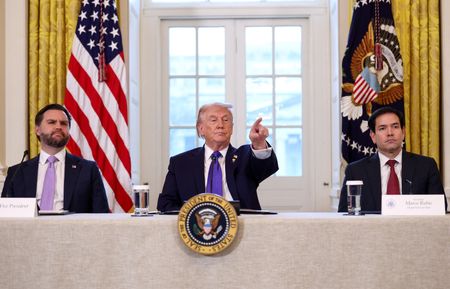
The contrasting approaches were evident during Thursday’s televised Cabinet meeting. Rubio delivered a strong defense of Trump’s Iran strategy, declaring: “He’s not going to leave a danger like this in place.”
Vance took a more restrained tone, emphasizing diplomatic options for preventing Iranian nuclear capabilities before concluding with Easter wishes for Christians and deployed troops. “We continue to stand behind you,” he told servicemembers, “and continue to support you every step of the way.”
Those who want to eliminate birthright citizenship are using “birth tourism” operations as evidence that current constitutional protections can be abused and may pose national security risks. However, legal scholars indicate the matter involves greater complexity than opponents suggest.
The debate centers around organized schemes where pregnant women travel to the United States specifically to give birth, ensuring their children automatically receive American citizenship under the 14th Amendment. Critics argue these arrangements represent a loophole that undermines immigration policy.
Constitutional law experts note that birthright citizenship has been a fundamental principle since 1868, when the 14th Amendment was ratified. The provision states that all persons born on U.S. soil are citizens, regardless of their parents’ immigration status.
The discussion comes as the Supreme Court prepares to hear arguments in a case that could potentially alter how American citizenship is determined. Legal analysts say any changes would require careful consideration of constitutional precedent and long-standing legal traditions.
Immigration policy researchers point out that documented cases of organized birth tourism represent a small fraction of overall births in the United States. They emphasize that most children born to non-citizen parents are from families already residing in the country rather than temporary visitors.
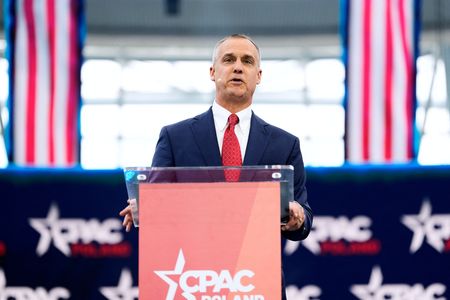
The Department of Homeland Security confirmed Saturday that Corey Lewandowski has departed the agency following the dismissal of former Secretary Kristi Noem.
A DHS spokesperson confirmed that Lewandowski “no longer has a role at DHS” but declined to elaborate on the circumstances surrounding his exit. Lewandowski had served as an unpaid advisor to Noem and previously managed Donald Trump’s 2016 presidential campaign.
Attempts to reach Lewandowski for comment were unsuccessful. News outlet Politico was first to report the agency’s confirmation of his departure.
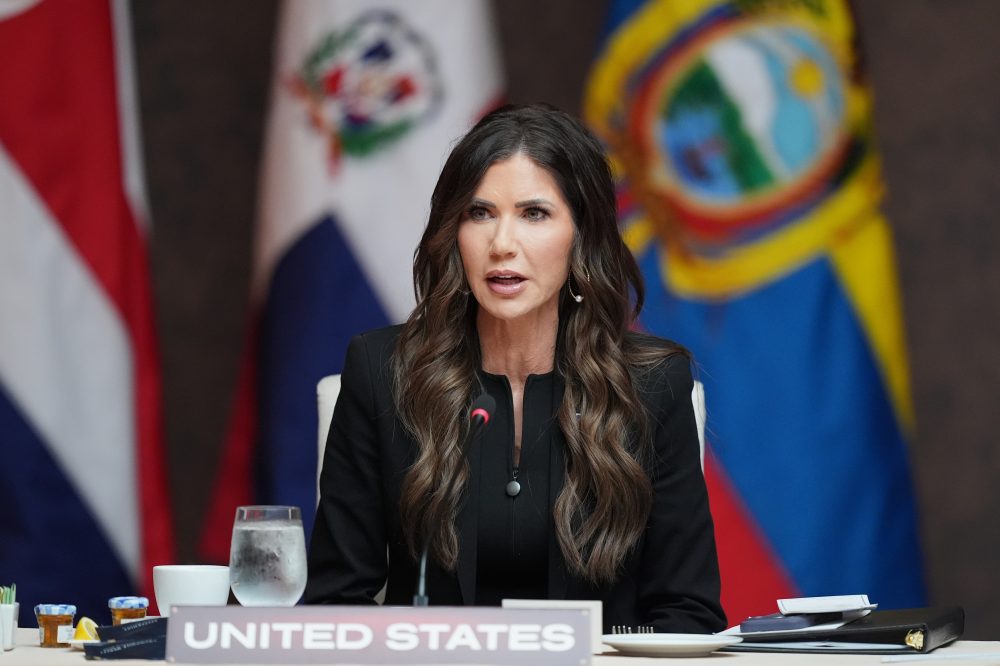
Earlier this month, Trump dismissed Noem from her position, subsequently appointing her as special envoy for a newly created “Shield of the Americas” program designed to advance his administration’s security agenda throughout the Western Hemisphere. Former U.S. Senator Markwayne Mullin has taken over as DHS Secretary after receiving Senate confirmation this past Tuesday.
The professional relationship between Lewandowski and Noem had attracted attention from lawmakers. During a recent congressional hearing, a Democratic representative directly questioned Noem about whether she maintained a romantic relationship with Lewandowski. Noem rejected the inquiry, calling it “tabloid garbage.”
Recent photographs from the U.S. embassy in Guyana, released Wednesday, showed Lewandowski accompanying Noem during official meetings with Guyanese President Irfaan Ali.
In her current diplomatic position, Noem answers to Deputy Secretary of State Christopher Landau. When asked earlier this week about Lewandowski’s presence during Noem’s Guyana visit, a State Department representative declined to provide details but confirmed he would not be joining the State Department staff.
Citizens across America took part in widespread pro-democracy demonstrations today as part of a nationwide movement calling itself ‘No Kings.’
The rallies marked the third major coordinated action in less than twelve months by grassroots organizers who have emerged as a prominent voice of opposition since January 2025.
Participants marched from Arlington, Virginia across the Memorial Bridge into the nation’s capital, joining millions of others in cities throughout the country who expressed concerns about what they characterize as authoritarian leadership and violations of democratic principles.
The movement has become the most visible form of organized resistance during the current presidential term, drawing large crowds to express their opposition to policies they view as undermining constitutional governance.
Demonstrators filled streets nationwide today as part of widespread ‘No Kings’ rallies targeting the Trump administration’s policies and actions.
The coordinated protests drew participants from diverse backgrounds, all united in their opposition to what they view as authoritarian overreach. Organizers report that thousands joined the demonstrations in cities across America.
Rally attendees spoke with reporters about their reasons for participating in today’s events, expressing concerns about democratic institutions and the direction of federal leadership under the current administration.
The protests represent one of the largest coordinated demonstration efforts seen in recent months, with participants emphasizing their commitment to peaceful resistance and civic engagement.
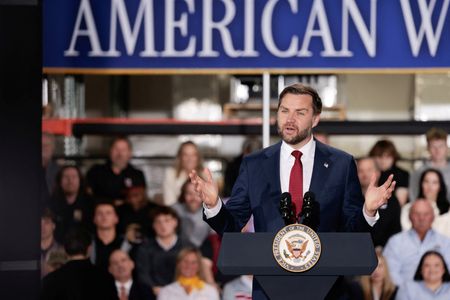
Vice President JD Vance has emerged as the frontrunner among conservative activists looking ahead to the 2028 Republican presidential race, capturing the majority of votes in a weekend straw poll conducted at the Conservative Political Action Conference.
The survey of more than 1,600 conference participants showed Vance securing 53% support, while Secretary of State Marco Rubio finished as the runner-up with 35% of votes cast. The conference took place this year in Grapevine, Texas.
CPAC represents a significant annual event that brings together Republican officials, grassroots activists, and potential presidential candidates from the party’s conservative base. While the organization’s yearly polling doesn’t always accurately forecast the ultimate party nominee, it provides insight into current sentiment within President Donald Trump’s Make America Great Again coalition.
With Trump currently in his second term and constitutionally barred from seeking reelection in 2028, conservative attention has turned to potential successors.
The results mark a shift from the previous year’s CPAC gathering in Oxon Hill, Maryland, where Vance dominated with 61% support. That poll saw conservative podcaster and former Trump advisor Steve Bannon take second place with 12%, while Florida Governor Ron DeSantis garnered 7%.
Rubio’s standing has improved dramatically from his modest 3% showing in last year’s survey. His enhanced profile stems from his prominent involvement in the administration’s major international initiatives, particularly military actions in Venezuela and Iran.
This year’s polling indicates that conservative support is becoming concentrated around the two leading candidates, with no other potential nominee receiving more than 2% of participant votes.
WASHINGTON — Following the collapse of congressional negotiations over Department of Homeland Security funding, President Donald Trump issued an emergency executive order Friday directing payment to Transportation Security Administration workers.
The presidential directive comes as lengthy security queues have plagued major airports nationwide due to staffing shortages.
“America’s air travel system has reached its breaking point,” Trump stated in the authorization memo. “I have determined that these circumstances constitute an emergency situation compromising the Nation’s security.”
The president indicated his administration would utilize “funds that have a reasonable and logical nexus to TSA operations” to provide the compensation. Homeland Security Secretary Markwayne Mullin announced Friday that TSA personnel “should begin seeing paychecks as early as Monday.”
Despite potentially alleviating traveler difficulties, Trump’s executive action fails to address the broader DHS shutdown that has created airport chaos and financial strain for thousands of federal employees. Both chambers of Congress concluded the week by approving completely different legislation, establishing fresh gridlock as legislators depart for a two-week break.
The Homeland Security shutdown will hit 44 days Sunday, surpassing the previous record of 43 days set during last fall’s government-wide closure.
House Leadership Rejects Senate Agreement
Early Friday, the Senate approved a funding compromise, but House Republicans immediately pushed back. House Speaker Mike Johnson opened the session by criticizing Democrats for engaging in risky politics and indicated he needed discussions with Republican colleagues about the path forward.
Following an extended conference call, Johnson condemned the Senate’s actions and declared the House would pursue an alternative approach. “This gambit that was done last night is a joke,” Johnson declared.
The House responded Friday evening by passing legislation to finance the entire department until May 22, with a 213-203 vote. Johnson reported discussing the House Republican proposal with Trump, who expressed his support.
House Republicans expressed anger that the Senate-approved measure excludes funding for Immigration and Customs Enforcement and Border Patrol. Democrats refused to finance these agencies without modifications to immigration enforcement procedures.
“We’re going to do something different,” Johnson announced. He urged the Senate to consider the House’s temporary solution extending Homeland Security funding through May.
However, senators had already departed after voting to fund most DHS operations, requiring time for their return once the House passes alternative legislation. Even if they returned, Senate Democratic leader Chuck Schumer declared the House GOP proposal would be “dead on arrival in the Senate, and Republicans know it.”
House Democratic leader Hakeem Jeffries argued the Senate-passed measure would gain bipartisan House approval if Johnson permitted a vote.
“This could end, and should end, today,” Jeffries stated.
Senate Compromise Details
Senators worked overnight to approve legislation by voice vote funding most Homeland Security components, including the Federal Emergency Management Agency, Coast Guard, and TSA.
Senate Republicans expressed disappointment over the absence of ICE and Border Patrol funding but acknowledged that immigration enforcement has continued largely uninterrupted. This continuation stems from Trump’s major tax legislation from last year, which directed billions in additional DHS funding, including $75 billion for ICE operations.
Conservative Republicans opposed creating a precedent allowing Congress to selectively fund certain Homeland Security agencies while excluding others during annual appropriations.
“We will fully fund ICE. That is what this fight is about,” stated Sen. Eric Schmitt, R-Mo. “The border is closing. The next task is deportation.”
Democrats have withheld ICE and Border Patrol funding following the deaths of two Americans during immigration enforcement protests in Minneapolis.
Democratic demands include requiring federal agents to display identification, remove face coverings, and avoid conducting operations near schools, churches, or other sensitive locations. Democrats also seek elimination of administrative warrants, insisting judges approve searches of homes or private property — a change Mullin indicated he would consider.
Leadership Division Emerges
The Senate deal’s rejection reveals a significant split between Johnson and Senate Majority Leader John Thune, R-S.D., who have generally collaborated on Trump’s legislative priorities.
With unanimous Democratic opposition, Thune needed a solution attracting the 60 votes required to overcome a filibuster in the 53-47 Senate.
After more than a week of intensive negotiations involving White House participation, both sides agreed early Friday to fund most Homeland Security operations except ICE and portions of CBP. The measure passed by voice vote without objections around 2 a.m.
When asked whether he had coordinated with Johnson, Thune mentioned they had exchanged text messages.
“I don’t know what the House will do,” Thune said.
The White House remained silent during senators’ compromise review, with Trump offering no public commentary.
As the House deal unraveled the following day, Thune did not address Johnson’s claims of being uninformed.
When questioned about tensions with Thune, the speaker blamed Senate Democrats for the situation.
Airport Disruptions Mount as TSA Workers Face Hardship
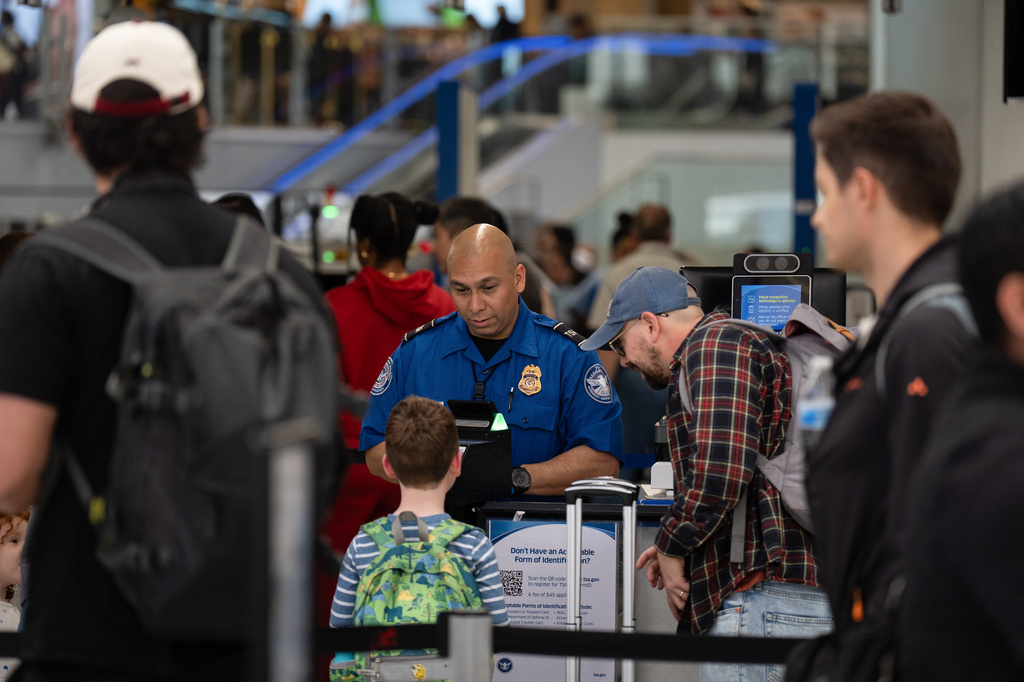
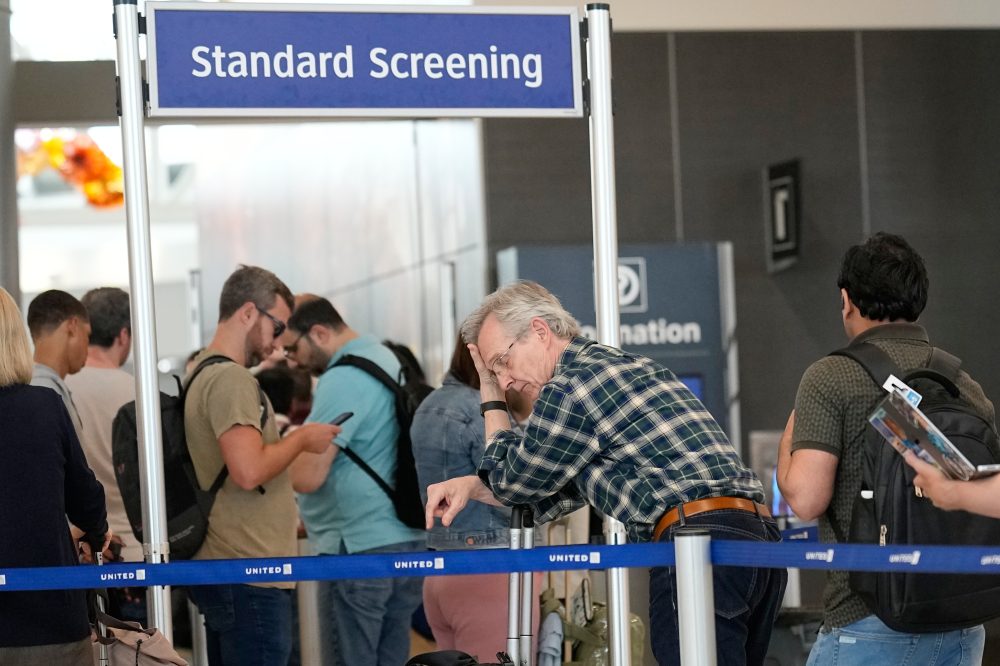
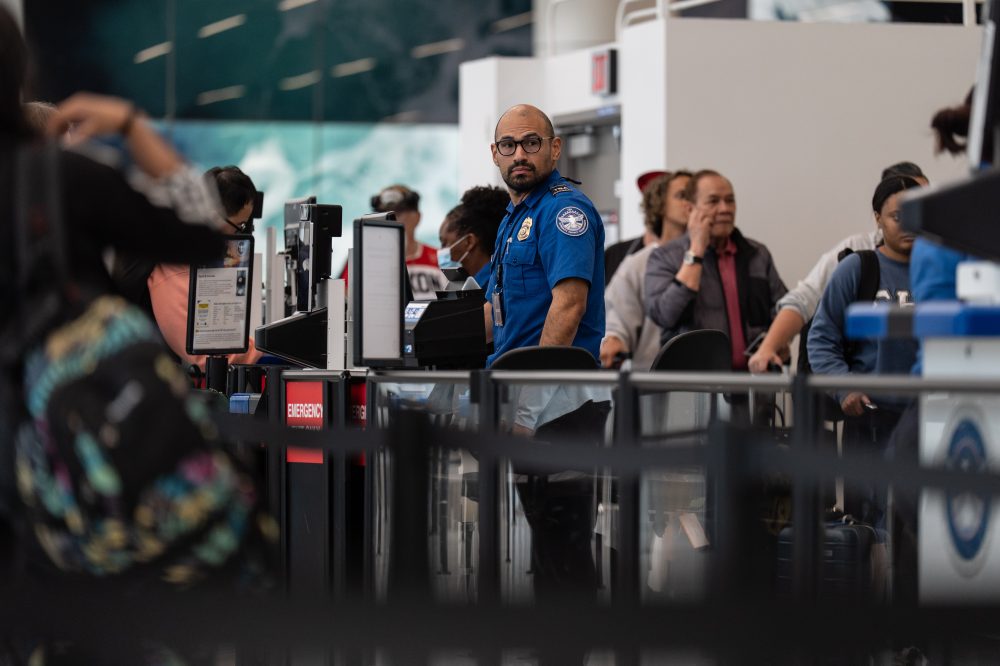
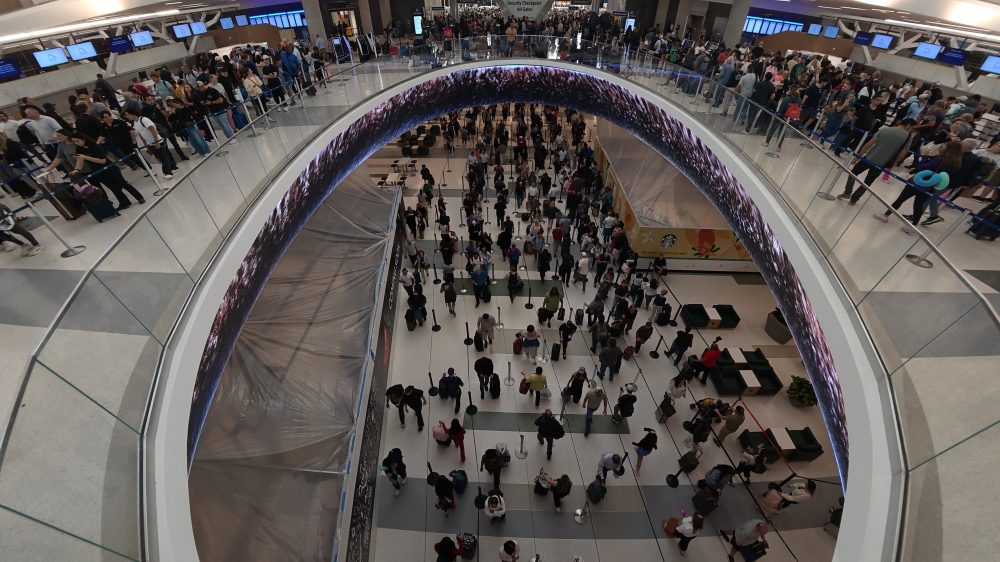
The DHS shutdown has caused travel delays and airport closure warnings as increasing numbers of unpaid TSA workers have stopped reporting for duty. These employees had already endured the nation’s longest government shutdown last fall.
Several airports are experiencing TSA worker absence rates exceeding 40%, with nearly 500 of the agency’s approximately 50,000 transportation security officers resigning during the shutdown. Nationally on Thursday, more than 11.8% of scheduled TSA employees failed to report for work, according to DHS data. This represents over 3,450 absences.
Demonstrators gathered nationwide on Saturday for the third installment of ‘No Kings’ rallies expressing opposition to President Donald Trump’s administration.
The main demonstration was held in St. Paul, Minnesota, serving as the central event for the coordinated day of action. Additional protests were simultaneously organized across various locations throughout the United States.
The movement has expanded beyond American borders, with similar demonstrations taking place in European cities as part of the international day of protest.
Air travelers faced continued delays at major airports nationwide this weekend despite President Trump’s Friday executive order directing immediate compensation for Transportation Security Administration workers.
The presidential directive instructs the Department of Homeland Security to immediately compensate TSA personnel, though the timing of when airports will see relief remains uncertain.
The order comes during one of the busiest travel periods, coinciding with spring break schedules across school systems and universities, plus approaching Passover and Easter celebrations.
While some early Saturday morning travelers reported minimal delays passing through security checkpoints, this appeared to be an exception rather than the norm. Passengers at several major hubs posted on social media about dramatically increasing wait times throughout the day.
“We have not previously experienced checkpoint wait times similar to what we are seeing this morning,” Baltimore-Washington International Airport posted Saturday on X. BWI authorities advised passengers to arrive four hours ahead of their departure times.
Homeland Security Secretary Markwayne Mullin indicated TSA staff could receive payment as early as Monday, providing hope for employees who haven’t received compensation since February 14th.
However, questions remain about whether this commitment will be fulfilled on schedule and if it will immediately resolve the extensive queues plaguing airports.
Caleb Harmon-Marshall, a former TSA employee who publishes a travel newsletter called Gate Access, believes the workforce shortage won’t substantially improve until workers feel secure about future payment reliability.
“If it’s only for a pay period, that’s not enough to bring them back,” Harmon-Marshall explained. “It has to be an extended pay for them to come back or want to stay there.”
He predicts extended wait times could persist for one to two additional weeks.
The situation remains fluid as airports that saw screening lines backing up into check-in areas must determine whether to reopen security checkpoints or expedited service lanes previously closed due to insufficient personnel.
Several airports reported daily TSA employee absence rates reaching 40%. Nationally on Thursday, over 11.8% of scheduled TSA workers called out sick, marking the highest rate to date, according to Friday’s DHS announcement.
Approximately 500 officers from the agency’s nearly 50,000-person workforce have resigned since the shutdown began, DHS reported.
Travel experts recommend checking airport conditions frequently through official websites and social media channels where facilities post current updates and traveler guidance.
Multiple airports Saturday advised passengers to plan for at least four hours for both domestic and international security screening.
“Wait times can change quickly based on passenger volume and TSA staffing,” stated a Saturday morning notice on John F. Kennedy International Airport’s website in New York.
The MyTSA mobile application may provide inaccurate wait time information since TSA isn’t actively updating its platforms during the shutdown. Third-party websites tracking TSA lines could also display outdated estimates if they depend on publicly available information, according to travel specialists.
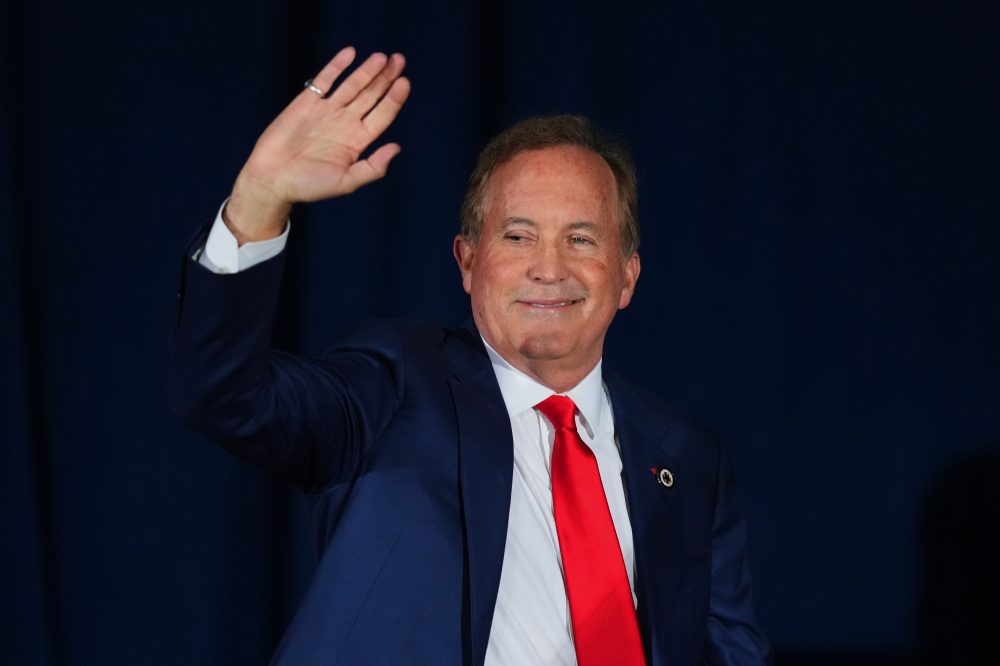
GRAPEVINE, Texas — Texas Attorney General Ken Paxton commanded center stage at the Conservative Political Action Conference, where hundreds of conservative activists from across the nation rallied behind him as their preferred Republican candidate for U.S. Senate.
Following private meetings with his supporters, Paxton capped off his day by delivering the keynote address to thousands gathered at the Ronald Reagan dinner.
The attorney general expressed gratitude to attendees for their loyalty during his legislative impeachment ordeal four years ago, from which he was ultimately cleared of corruption allegations.
“I want you to know, there’s only one reason I got through all that, and it’s by the grace of God,” Paxton declared Friday evening as enthusiastic applause filled the venue. “He absolutely delivered me, and he used to people of Texas to deliver me.”
Should Paxton secure the Republican nomination, it will likely stem from enthusiasm in gatherings such as this. He faces a contentious runoff against Senator John Cornyn following their failure to achieve a decisive victory in the March 3 primary. While Cornyn commands significantly greater financial resources and Washington establishment support, Paxton’s proven political resilience and strong grassroots Republican connections may carry him to victory in the May 26 contest.
Former President Donald Trump indicated weeks ago he would back either Paxton or Cornyn, though no endorsement has materialized. Nevertheless, Paxton has successfully demonstrated his credentials with the party’s conservative wing.
Cornyn was notably absent from CPAC, held at a resort and convention facility outside Dallas, while speakers throughout the event praised Paxton.
“Ken Paxton is emblematic of the grassroots of the MAGA movement across the nation,” declared Steve Bannon, former Trump advisor and host of the “War Room” podcast, referencing Trump’s “Make America Great Again” motto from his 2016 presidential campaign.
During Friday’s proceedings, CPAC senior fellow Mercedes Schlapp conducted an informal audience poll. When she requested applause for Paxton, the crowd erupted in cheers. Her mention of Cornyn drew scattered boos.
Cornyn led the primary field, which included U.S. Representative Wesley Hunt. Paxton’s camp briefly worried Trump might endorse the sitting senator, which would have pleased party leadership who consider Cornyn the stronger contender against Democratic candidate James Talarico.
However, Paxton gained Trump’s favor by championing the SAVE Act, legislation requiring stringent citizenship verification for voter registration. This measure represents a Trump priority that has stalled in the Senate due to Republican leadership’s reluctance to eliminate the filibuster.
Joe Ropar, a 72-year-old defense contractor attending CPAC, called Paxton’s strategy “brilliant.” Despite Cornyn’s subsequent willingness to modify filibuster procedures, Ropar believes Paxton demonstrated superior Trump allegiance.
“Cornyn’s trying to change his stripes now,” Ropar observed. “It’s too little too late.”
Paxton shares another political parallel with Trump: both have characterized themselves as victims of political targeting. While Paxton endured one impeachment and acquittal, Trump experienced the process twice during his presidency.
James Schaare, a 61-year-old church music director from Euless, Texas, said this resilience proves Paxton represents the correct choice.
“In Paxton’s career, he’s been faithful to what he’s said he’s going to do,” Schaare stated.
Various conservative Republicans harbor additional grievances against Cornyn. They recall his initial opposition to Trump’s border wall proposal in 2016, his support for gun control measures following the 2022 Uvalde school tragedy, and his dismissive comments regarding Trump’s 2024 presidential bid.
Retired educator Valerie Burge, 58, said she supported Cornyn in the primary due to his extensive experience.
“But I’m not sure about the runoff,” she admitted. “It might be time for something new.”
Barbara Palmer, a 65-year-old attorney, argued Cornyn has served too long. His career spans roles as judge, state supreme court justice, state attorney general, and now he seeks a fifth Senate term.
WASHINGTON — Four senators from both political parties are preparing for a diplomatic journey to three key Asian nations as part of efforts to strengthen America’s strategic partnerships in the region ahead of President Trump’s upcoming meeting with China’s leader.
New Hampshire Senator Jeanne Shaheen, who serves as the leading Democrat on the Senate Foreign Relations Committee, revealed the travel plans on Saturday. She will travel alongside Republican Senator John Curtis from Utah, Republican Senator Thom Tillis from North Carolina, and Democratic Senator Jacky Rosen from Nevada. The delegation will visit the capitals of Taiwan, Japan, and South Korea before Trump’s scheduled May summit with Chinese President Xi Jinping in Beijing.
The senators’ planned stop in Taiwan may provoke criticism from Beijing, which views such diplomatic exchanges as undermining its territorial claims over the democratically-governed island. While Taiwan depends on U.S. support to maintain its democratic system, recent Trump administration actions, including discussions about potential arms sales to Taiwan during conversations with Xi, have created uncertainty about America’s future approach.
Experts on both sides of the Pacific anticipate that Xi will use the high-level meeting to persuade Trump to adopt a less supportive position toward Taiwan.
“This bipartisan delegation demonstrates Congress’ commitment to these alliances and partnerships is unwavering and will endure well beyond any one administration,” Shaheen stated.
The congressional delegation intends to conduct meetings with government officials and military leaders throughout their journey as a gesture of continued American support for these regional partners.
“Our alliance with Taiwan is one of the most strategically and morally significant partnerships America has in the Indo-Pacific,” Curtis commented.
Questions remain about how Trump’s international interventions in countries like Venezuela and Iran might affect relationships with major powers including China and Russia. Some members of Congress worry that the Republican president’s foreign policy decisions could provide opportunities for these nations to advance their own international objectives.
Trade relations with Taiwan have also attracted attention from the Trump administration. America’s dependence on Taiwanese semiconductor manufacturing has created a trade deficit approaching $127 billion through the first eleven months of 2025.
The Trump administration negotiated an agreement with Taiwan in February that eliminated 99% of existing trade restrictions.
When another bipartisan congressional group visited the region last year, they stressed America’s ongoing commitment to maintaining close cooperation with Taiwan.
Congressional lawmakers have repeatedly introduced legislation with names like the Aviation Funding Solvency Act, Keep America Flying Act, Keep Air Travel Safe Act, and Aviation Funding Stability Act, all sharing a common goal: guaranteeing paychecks for federal aviation workers during government shutdowns.
Despite bipartisan support and multiple reintroductions, these measures consistently fail to become law. Once government funding resumes and airport delays disappear from headlines, the legislation loses momentum and workers remain vulnerable to future unpaid work periods.
“Once the crisis is over, people assume that the good times are back,” explained Eric Chaffee, a Case Western Reserve law professor who studies aviation industry risk management. “It’s easy to pass the next big bill when you’re still in the throes of the financial crisis, but once the shutdown is done, people have a relatively short memory of the problems that it created.”
Following the 2019 holiday season shutdown, lawmakers have repeatedly drafted and resubmitted various versions of worker protection measures. The Aviation Funding Stability Act has been reintroduced in 2019, 2021, and 2025, while the bipartisan Aviation Funding Solvency Act emerged after last fall’s shutdown to safeguard air traffic controller wages.
October saw the introduction of the Keep Air Travel Safe Act, which would extend protections to TSA agents, and the Keep America Flying Act, covering both TSA staff and specific FAA employees. More comprehensive legislation like the Shutdown Fairness Act, introduced in January, would secure pay for all essential federal workers nationwide, but these broader measures have also failed to advance.
“Congress cares about headlines, and as a result of that, it means they don’t always make changes that would be really beneficial,” Chaffee noted.
Air travel disruptions have persisted alongside legislative efforts. The 35-day shutdown during Trump’s presidency, triggered by border wall funding disputes, caused East Coast airport delays and extended security wait times as controllers and TSA agents worked without compensation.
Last fall’s record-breaking 43-day shutdown renewed aviation safety concerns. The FAA took unprecedented action by directing airlines to reduce flights at 40 major airports as unscheduled worker absences worsened existing air traffic control staffing problems.
TSA personnel endured multiple consecutive shutdowns, including one beginning January 31st and another affecting only the Department of Homeland Security starting February 14th. Daily absenteeism reached thousands as the standoff continued into its second month.
Carlos Rodriguez, a TSA agent and union representative in New York, described how many employees hadn’t financially recovered from the previous year’s shutdown when the current one began.
“Part of the American dream that I was sold was that working for the government was honorable and stable,” said Rodriguez, a second-generation Dominican American. “But this is not honorable or stable.”
On the 42nd day of the DHS shutdown, Trump issued an emergency directive ordering immediate TSA payment. This followed House Republicans rejecting a Senate agreement that would have funded TSA, Coast Guard, and FEMA while excluding ICE and Border Patrol. The House subsequently passed its own bill funding the entire Homeland Security department through May 22nd, but senators had already departed.
Johnny Jones, secretary-treasurer of the TSA division within the American Federation of Government Employees, said union members resent being treated as political bargaining chips.
Workers feel the congressional maneuvering resembles “let’s checkmate the queen with the TSA pawn here, and then we’ll smash them over whenever we feel like it,” Jones explained. “We’re on the chess board.”
Aviation industry stakeholders, including labor unions, airline executives, and airport officials, have launched public campaigns through open letters, newspaper advertisements, and direct lobbying to push for action on existing bipartisan proposals.
“Congress has the power to end this dysfunction once and for all, and must use any legislative vehicle to accomplish this goal,” stated the Modern Skies Coalition in a recent joint declaration. The coalition, representing over 60 organizations, highlighted the Aviation Funding Solvency Act, Aviation Funding Stability Act, and Keep America Flying Act as viable solutions.
Airlines for America’s president and CEO echoed these sentiments in a Washington Times editorial this week, arguing that Congress “must get to the table immediately” to prevent future scenes of angry passengers, crowded terminals, and charity drives for public workers.
“Right now, lawmakers are sitting on their hands doing nothing with three viable, bipartisan bills that could prevent this mess,” wrote Chris Sununu, the former New Hampshire governor who assumed leadership of the trade association last year.
The American Federation of Government Employees collaborated with over 30 unions this week to advocate for the Shutdown Fairness Act, cautioning that funding interruptions damage worker morale, hiring, and retention.
TSA employees have reported sleeping in vehicles or considering selling them to afford rent. Union officials describe workers unable to stock their refrigerators or fuel their cars.
Caleb Harmon-Marshall, a former TSA officer who publishes the Gate Access travel newsletter, said officers he’s contacted are anxious to receive complete back pay quickly due to mounting bills and debt. However, without long-term certainty, more officers may skip work or resign.
If the presidential emergency order covers only one pay cycle, “that’s not enough to bring them back,” Harmon-Marshall warned. “It has to be an extended pay for them to come back or want to stay there.”
Previous bipartisan legislation has struggled to reach completion. The 2019 Aviation Funding Act introduced by Kansas Republican Senator Jerry Moran attracted 13 co-sponsors, including eight Democrats, but never advanced from committee. A House version by Oregon Democrat Peter DeFazio eventually gained 303 co-sponsors and cleared the Transportation and Infrastructure Committee but never received a floor vote.
The current polarized political climate may doom present legislation to similar failure, according to Chaffee.
“We live in a society currently where things are very polarized,” he observed. “Whether or not any of these bills get passed, it will need to have political momentum behind it, meaning it will need to be something that the public really wants to see happen.”
WASHINGTON — Mixed martial arts will make its debut at the White House this summer as the UFC prepares to host a fighting event on the presidential grounds to honor President Donald Trump’s 80th birthday.
Construction teams will build a six-foot wire-mesh octagonal cage on the White House lawn for the June 14 mixed martial arts competition, which coincides with the nation’s 250th anniversary celebration. Fighters will showcase kickboxing, wrestling, jiujitsu and other combat sports during the unprecedented event.
The spectacle aligns with Trump’s confrontational political style and his admiration for combat sports. “I have respect for fighters, you know, when you can take 200 shots to the face and then look forward to the second round,” Trump told podcaster Logan Paul during his campaign.
Trump made history as the first president in office to attend a UFC event, watching a 2019 match that ended early when a fighter’s cut caused blood to stream down his face.
While critics view the sport as promoting violence, it has gained massive popularity among younger male audiences. Veteran MMA referee “Big John” McCarthy defends the discipline, explaining that anger leads to defeat in the octagon.
“A lot of people don’t understand fighting and they think fighting is about anger. It’s not. If you’re angry when you fight, you’ll lose,” McCarthy explained. “Fighting is about technique and style, and understanding how to make your opponent make mistakes while you don’t.”
McCarthy added about Trump: “I totally understand why he likes it. Because I do.”
The Ultimate Fighting Championship name itself reflects Trump’s preference for superlatives and his “Fight! Fight! Fight!” campaign slogan that emerged after the summer assassination attempt.
Kyle Kusz, a University of Rhode Island professor studying connections between sports and political movements, believes Trump’s UFC platform is strategic. He argues Trump “uses UFC to portray himself as a manly sportsman” and sees similarities between the sport’s masculine culture and Trump’s governing approach.
The organization plans to distribute 85,000 complimentary tickets for the occasion. Trump announced that UFC president Dana White, a longtime ally, will construct “a 5,000-seat arena right outside the front door of the White House” plus eight jumbo screens in a nearby park for overflow crowds.
Breaking from UFC’s traditional Saturday schedule, the Sunday event will stream live on Paramount+, owned by the Ellison family who maintain close Trump ties. France even rescheduled its Group of Seven summit to avoid conflicting with Trump’s birthday celebration.
Despite Trump’s promise of “all top guys,” fight enthusiasts have criticized the lineup for missing major stars. Former two-division champion Jon Jones demanded his UFC release after being excluded from the White House card. MMA superstar Conor McGregor, whose return would have created massive buzz, is also absent.
Former champion Ronda Rousey, who left UFC over financial disputes, called the White House show disappointing. “The White House card sucks,” she said, adding it “fell extremely short of expectations.”
The preliminary card includes two title matches. Brazil’s Alex Periera faces France’s Ciryl Gane for the interim heavyweight championship, while Spanish-Georgian lightweight titleholder Ilia Topuria battles interim champion Justin Gaethje, one of only two Americans holding UFC gold.
White House communications director Steven Cheung dismissed criticism, declaring: “This will be one of the greatest and most historic sports events in history.” Cheung, who worked as a UFC spokesman before joining Trump’s 2016 campaign, called the event “a testament to his vision to celebrate America’s monumental 250th anniversary.”
The late Senator John McCain once condemned UFC as “human cockfighting,” but the organization became a mainstream sports league after securing an ESPN media deal in 2018, according to historian and former MMA journalist Patrick Wyman.
Trump supported UFC’s early growth by hosting events at his Atlantic City casino, including 2001’s “Battle on the Boardwalk.” However, Wyman notes the organization has focused on building its brand rather than individual fighter stardom, limiting crossover appeal.
This strategy means UFC’s core audience remains men aged mid-40s to early 60s, a demographic that already favors Trump. “I think it’s a pretty perfect encapsulation of the way that Donald Trump thinks about politics,” Wyman said, citing the event’s “transactional nature” and blurred lines “between business and politics.”
Trump launched his own short-lived MMA promotion in 2014 and strengthened UFC connections during his reelection campaign to reach politically disengaged voters. Two days after his 34-count felony conviction in June 2024, Trump attended a New Jersey UFC event with White while Kid Rock’s “American Bad Ass” played, using crowd footage to launch his TikTok presence.
Following his election victory, Trump appeared at UFC events in New York with House Speaker Mike Johnson and large political delegations, plus additional fights in Newark and Miami.
Presidential sports engagement isn’t new. George W. Bush’s ceremonial pitch at Yankee Stadium during the 2001 World Series symbolized post-9/11 resilience, while Richard Nixon’s football enthusiasm concerned aides about voter alienation, notes Chris Cillizza, author of “Power Players: Sports, Politics, and the American Presidency.”
Modern politics has eliminated such concerns since sports “now tends to self-select by political affiliation,” Cillizza observed. “In an era where people feel like politicians are mostly weirdo aliens, sports — playing them, having knowledge about them — represents one of the best ways to prove to voters you are actually a human being.”
WASHINGTON — Early Friday morning, before sunrise, Senate negotiators believed they had successfully crafted a solution to fund the Department of Homeland Security and prevent what could become the agency’s longest partial shutdown ever.
Senators delivered their agreement to House Speaker Mike Johnson, R-La., and departed for their home districts, expecting the deal would move forward smoothly.
Instead, the arrangement fell apart in dramatic fashion.
An angry Johnson emerged from his office Friday afternoon, furiously dismissing the Senate’s unanimous agreement as nothing more than a “joke.”
“I have to protect the House, and I have to protect the American people,” Johnson declared to members of the press.
Johnson’s harsh rejection of the agreement negotiated by his Republican colleague, Senate Majority Leader John Thune of South Dakota, marked another sudden twist in the ongoing funding battle that has plagued GOP leadership throughout the year.
With Congress now departing for a two-week spring recess, the failed negotiations leave lawmakers without a clear solution to end the DHS shutdown that began in mid-February. The breakdown has also created an unusual public rift between the top Republican leaders in both chambers, straining their working relationship as they attempt to advance President Donald Trump’s agenda ahead of November’s elections.
The path forward appears increasingly challenging.
Thune had reached his agreement with Democratic senators following weeks of negotiations over their demands for new limitations on the department’s immigration enforcement activities. Multiple proposals were exchanged during the lengthy talks, which proceeded in fits and starts with repeated failed votes.
Running out of both time and options, senators ultimately agreed to a compromise that would exclude funding for U.S. Immigration and Customs Enforcement and U.S. Border Patrol while dropping all Democratic requests for new agency restrictions.
Thune noted that Congress had previously allocated immigration enforcement funding and explained to reporters that “we can get at least a lot of the government opened up again and then we’ll go from there.”
When asked whether he had coordinated the compromise with Johnson, Thune indicated they had exchanged text messages.
“I don’t know what the House will do,” the senator acknowledged early Friday as the agreement took shape.
However, House Republicans reacted with immediate fury upon learning of the Senate deal.
Rep. Nick LaLota, R-N.Y., reported that during a GOP conference call that morning to discuss their response, several dozen members from across the ideological spectrum voiced opposition to the Senate’s actions.
“The Senate chickened out,” he declared. “The cowards there, only a few of them in the middle of the night with I think only three to five senators present on the floor, chickened out because they wanted to go home for two weeks. We need to raise the bar.”
This sharp division threatens to complicate Republican leaders’ efforts to advance their legislative priorities while maintaining control of both congressional chambers. Trump has identified legislation requiring strict citizenship verification for voting as his primary goal, though the Senate’s 60-vote requirement for advancing bills makes passage unlikely.
Some Republicans have suggested pursuing a budget reconciliation package that might implement portions of voter identification requirements. GOP lawmakers are also considering how to handle an anticipated White House request for war funding against Iran that could exceed $200 billion, among other priorities.
The funding deal’s failure has provided Democrats with another opportunity to blame House Republicans for the ongoing partial shutdown.
“They know this is a continuation of the shutdown because the Senate is gone,” stated Massachusetts Rep. Katherine Clark, the second-ranking Democratic leader. “So they know fully well what they’re doing.”
The Senate’s next steps remain uncertain, with a quick return to negotiations appearing unlikely. The talks concluded on a bitter note, with both parties accusing the other of changing their demands throughout the process.
Senate Democratic leader Chuck Schumer of New York expressed pride in his caucus for “holding the line.” However, Republican Sen. Susan Collins of Maine, who chairs the Senate Appropriations Committee, characterized Democrats as “intransigent and unreasonable.”
Thune expressed his belief that Democrats never genuinely wanted an agreement and would refuse to support ICE funding under any conditions.
“I felt like from the beginning, they just didn’t want to get to ‘yes,’” Thune commented following the vote.
This situation convinced senators that their compromise represented the only viable path to resolve their differences and reopen DHS.
Meanwhile, House Republicans Friday evening appeared to celebrate their defiance of the Senate’s wishes. GOP members argued they operate from a perspective more aligned with their constituents’ preferences.
Rep. Virginia Foxx, R-N.C., characterized the Senate’s proposal as “nothing more than unconditional surrender masquerading as a solution.” She insisted the House “will not bend itself into submission by acquiescing.”
Those hoping for a resolution to the shutdown expressed frustration with the situation.
“This takes two chambers to get the job done,” observed Pennsylvania Rep. Brian Fitzpatrick, a moderate Republican. “Apparently, there’s not enough communication between those chambers.”
WASHINGTON — As the conflict with Iran continues into its second month, President Donald Trump’s contradictory public statements are generating uncertainty about the administration’s military strategy and objectives.
Trump has declared victory in the ongoing conflict while simultaneously ordering thousands more American service members to deploy to the Middle East region. The president has criticized allied nations for failing to support U.S. efforts, then later claimed their assistance wasn’t necessary.
The administration has extended deadlines twice for Iran to reopen the Strait of Hormuz shipping lane. Trump has alternately warned he would “obliterate” Iranian energy facilities if the crucial waterway stays closed, while also stating the closure has “not affected” the United States.
Earlier this month, Trump claimed a former president from the opposing party privately expressed support for his Iran approach. However, representatives for all living ex-presidents quickly refuted any such conversations took place.
Leon Panetta, who held positions as defense secretary, CIA director and White House chief of staff under Democratic administrations, observed he has “seen enough wars where truth becomes the first casualty.”
“It’s not the first administration that has not told the truth about war,” Panetta stated. “But the president has made it kind of a very standard approach to almost any question to in one way or another kind of lie about what’s really happening and basically describe everything as fine and that we’re winning the war.”
Michael Rubin, an American Enterprise Institute historian who advised the Pentagon on Iran and Iraq from 2002 to 2004, described Trump as “the first president of any party in recent history that hasn’t self-constrained to live within rhetorical boundaries.”
“So of course it creates a great deal of confusion,” Rubin added.
Critics view Trump’s approach as evidence of lacking a comprehensive long-term plan. However, the president appears to view his unpredictable messaging as strategic, keeping adversaries and observers constantly uncertain.
This pattern was evident recently when Trump discussed extending the Strait of Hormuz deadline. When asked about his plans, Trump said he was undecided and had another day to choose.
“In Trump time, a day, you know what it is, that’s an eternity,” the Republican president told his Cabinet, drawing laughter.
Financial markets have responded negatively, with U.S. stocks experiencing their worst week since the conflict began. Congressional leaders express growing frustration with the administration’s approach.
Representative Gregory Meeks of New York, the leading Democrat on the House Foreign Affairs Committee, criticized Trump for “going back and forth and constantly contradicting himself.”
“The administration is winging it,” Meeks said. “So how can you trust what the president says?”
While Republicans haven’t echoed such harsh criticism, their concerns are evident as Congress prepares for a two-week recess. Senator John Kennedy of Louisiana said his voters “support what the president has done.”
“But most of my people are also equally or even more so concerned about cost of living,” Kennedy noted.
Representative Chip Roy of Texas, a House Budget Committee member and conservative Freedom Caucus participant, said his constituents supported “blowing some crap up.” However, he expressed concerns about potential ground troops and criticized insufficient briefings that only contain information “read in the papers.”
“Taking out bad guys, taking out conventional (weapons), taking out or at least working to take out nuclear capability, pressing to keep the straits open, all those are good things and I’ve been supportive and will continue to be supportive,” Roy explained. “But we’ve got to have a serious conversation about how long this is going to go, boots on the ground, all those things, press for further briefings and understanding of where it’s all headed.”
A recent Associated Press-NORC Center for Public Affairs Research poll reveals potential political risks for Trump if the conflict becomes the type of extended Middle East war he promised to avoid.
While 63% of Republicans support airstrikes against Iranian military installations, only 20% back deploying American ground forces.
These findings highlight upcoming political challenges for Trump, who didn’t prepare Americans for such extensive overseas military involvement. If fighting continues or intensifies, Republican lawmakers could face increased pressure before November elections when their congressional majorities are threatened. Some party members consider ground troop deployment a boundary Trump shouldn’t cross.
The administration will likely require congressional approval for an additional $200 billion in war funding. Trump has called this amount “nice to have” while claiming the war was “winding down,” but such spending would challenge budget-focused Republicans during an election year.
White House spokesperson Anna Kelly defended the president’s approach, stating Trump is “right to highlight the vast success of Operation Epic Fury.”
“Iran desperately wants to make a deal because of how badly they are being decimated, but the President reserves all options, military or not, at all times,” Kelly said.
Rubin suggested there might be “logic” behind Trump’s changing rhetoric about the conflict. He theorized Trump’s mentions of negotiations, which Iran has denied, could “spread suspicion and fear within the regime circles.”
“Perhaps Donald Trump or those advising him simply want the Iranians to grow so paranoid they refuse to cooperate with each other or perhaps they even turn on each other,” Rubin explained. “But then again, there’s always a danger with Donald Trump of assuming that his rhetoric is anything more than shooting from the hip.”
Representative Adam Smith of Washington state, the top Democrat on the House Armed Services Committee, said Trump won’t fully accomplish his goals, including completely eliminating Iran’s nuclear capabilities, “in the current trajectory.”
Smith suggested Trump might use his communication abilities to simply declare victory and end the conflict.
“As I’ve jokingly said, nobody I have ever met or heard of in human history is better at exaggerating his own accomplishments than Donald Trump,” Smith observed. “So go knock yourself out and claim this was some great success.”
Demonstrations opposing the Trump administration are scheduled to occur nationwide today as part of coordinated protest efforts. Event coordinators estimate that over 3,000 separate rallies will take place throughout all 50 states.
The widespread nature of today’s protests reflects organized opposition to current administration policies, with activists mobilizing communities from coast to coast for simultaneous demonstrations.
Starting this June, President Donald Trump’s signature will appear on $100 bills, marking the first time in 165 years that someone other than the U.S. Treasurer has signed American banknotes. This historic change places Trump in an exclusive group of world leaders who have had their autographs or portraits featured on their nation’s currency while serving in office.
The tradition of having the U.S. Treasurer’s signature on American money began in 1861, with the Treasury Secretary’s signature being added approximately 100 years later. Trump’s signature will take the place of the Treasurer’s, while the Treasury Secretary’s signature will continue to appear alongside it.
Most global currencies typically display the signature of a central bank official, finance minister, or other monetary authority. European currency bears the European Central Bank president’s signature, while British pounds feature the Bank of England’s chief cashier signature. Soviet rubles historically carried signatures from finance ministers or central bank leaders.
The Treasury Department revealed this plan on Thursday as part of the nation’s 250th anniversary commemoration. Officials had previously announced a commemorative coin featuring Trump’s image for the Semiquincentennial celebration, though federal law from 1866 prohibits living current or former presidents from appearing on paper money.
Trump joins several international leaders who have appeared on their countries’ banknotes during their time in power. In the former Zaire (now Congo), dictator Mobutu Sese Seko’s image in leopard hats or military uniforms appeared on currency after he renamed the country in 1971. Following his removal from power in 1997, the new government physically removed his face from existing bills until replacement currency was issued.
Uganda featured army officer Idi Amin Dada on banknotes during his 1971-1979 rule after seizing power in a coup. His rival Apollo Milton Obote, whom Amin had overthrown in 1971 but who returned to power in 1980, also appeared on Ugandan currency.
In Kenya, President Daniel Arap Moi’s portrait graced banknotes throughout his 1978-2002 presidency. The country’s founding president, Jomo Kenyatta, also had his image on currency. Both leaders’ portraits were eventually removed when Kenya adopted a new constitution and redesigned its money.
Indonesia’s founding presidents, Sukarno and Suharto, both appeared on banknotes while in office. Currency featuring Suharto’s image was pulled from circulation in 2000, two years after the authoritarian leader stepped down during the Asian financial crisis that led to civil unrest and required an International Monetary Fund bailout.
The Philippines printed numerous banknotes and coins with former President Ferdinand Marcos Sr.’s image during his 1965-1986 presidency, which included nearly ten years under martial law. Today’s Philippine peso notes carry the signature of his son, current President Ferdinand Marcos Jr., but feature images of native wildlife instead of political figures.
Tanzania’s first president, Julius Nyerere, appeared on banknotes while serving from the country’s 1961 independence until 1985. The central bank began issuing currency with Nyerere’s image in 1966, shortly after the monetary authority was established.
Activists across the United States are preparing for what could be the nation’s biggest one-day peaceful demonstration this Saturday, with anti-Trump protesters organizing more than 3,200 rallies in all 50 states as part of the ‘No Kings’ movement.
The nationwide demonstration represents the third major mobilization against President Donald Trump’s administration, with organizers anticipating record-breaking participation that could surpass previous events which drew millions of demonstrators.
While major demonstrations will occur in cities like New York, Los Angeles, Washington D.C., and Minnesota’s Twin Cities, organizers report that two-thirds of participants are expected to come from smaller communities – representing a nearly 40% increase in rural and suburban involvement compared to the movement’s initial launch last June.
Leah Greenberg, who co-founded Indivisible and helped launch the No Kings movement, emphasized the geographic spread of this weekend’s events. “The defining story of this Saturday’s mobilization is not just how many people are protesting, but where they are protesting,” Greenberg stated.
With congressional midterm elections approaching, protest organizers report increased activity in traditionally Republican strongholds including Idaho, Wyoming, Montana and Utah. Greenberg noted particularly strong growth in competitive suburban districts that often determine national election outcomes, specifically mentioning Pennsylvania’s Bucks and Delaware counties, East Cobb and Forsyth areas in Georgia, and Arizona’s Scottsdale and Chandler communities.
“Voters who decide elections, the people who do the door knocking and the voter registration and all of the work of turning protests into power, they are taking to the streets right now, and they are furious,” Greenberg explained.
White House spokeswoman Abigail Jackson responded to the planned demonstrations by characterizing them as “Trump Derangement Therapy Sessions” that would only interest media outlets.
The No Kings movement began on Trump’s birthday, June 14 of last year, drawing an estimated 4 to 6 million participants across approximately 2,100 locations nationwide. The second major demonstration in October attracted roughly 7 million people in more than 2,700 cities, based on crowd-sourcing data analyzed by prominent data journalist G. Elliott Morris.
October’s massive turnout was driven by public opposition to a government shutdown, intensified federal immigration enforcement actions, and the deployment of National Guard units to major metropolitan areas.
This Saturday’s protests are being organized in response to what activists describe as the ongoing U.S. and Israeli military campaign against Iran, which has now entered its fourth week.
Deirdre Schifeling, who serves as chief political and advocacy officer for the American Civil Liberties Union, argued that previous demonstrations have produced concrete policy changes. “Whenever we stand up to President Trump’s abuses of power, like most bullies, he backs down,” Schifeling said, pointing to administration policy reversals following earlier protests over National Guard deployments in Los Angeles and ICE-related deaths of two American citizens in Minneapolis.
Political campaigns across the nation are turning to artificial intelligence to create convincing fake videos of their opponents as the 2026 midterm elections approach, sparking widespread concern about voter manipulation.
A recent example involves Texas State Representative James Talarico, a Democratic U.S. Senate candidate, who appears in a video standing before a Texas flag making controversial statements about domestic terrorism. However, Talarico never recorded this footage – it was entirely computer-generated by the National Republican Senatorial Committee using his old social media posts.
“Radicalized white men are the greatest domestic terrorist threat in our country,” the AI version of Talarico appears to say, followed by “So true. So true” as a voice whispers “white men.” A barely visible disclaimer reading “AI generated” appears in small text at the bottom corner.
This sophisticated fake video represents a growing trend of “deepfake” political advertisements that campaigns are deploying with minimal oversight. Currently, no federal laws restrict AI use in political messaging, leaving only scattered state regulations that remain largely untested.
Social media platforms like Meta and X have moved away from professional fact-checking systems, instead relying on user-generated notes to identify AI content. This shift comes as the technology becomes more accessible and convincing.
The November elections will determine congressional control during the final two years of Republican President Donald Trump’s administration. Democrats appear positioned to potentially regain the House majority while facing steeper challenges in Senate races.
Research published in the Journal of Creative Communications during 2025 revealed that viewers frequently cannot distinguish deepfake videos from authentic content, and these fabricated materials significantly influence public opinion.
Republicans have embraced this technology more extensively than Democrats this election cycle, following the Trump White House’s lead in producing numerous AI-generated videos and internet memes that target various political issues, including protests and foreign policy matters.
NRSC Communications Director Joanna Rodriguez justified their Talarico advertisement, stating Democrats were “panicking after seeing and hearing James Talarico’s own words.”
JT Ennis, representing Talarico’s campaign, responded that while opponents “spend their time making deepfake videos to mislead Texans, we are uniting the people of Texas to win in November.”
Among Democrats, California Governor Gavin Newsom has frequently used AI-generated content to mock Trump, positioning himself as a potential 2028 presidential contender. However, Democratic national campaign organizations have not matched Republican efforts in deploying this technology for midterm races.
Georgia Representative Mike Collins, a Republican challenging Democratic Senator Jon Ossoff, produced a deepfake showing Ossoff apparently stating: “I just voted to keep the government shut down. They say it would hurt farmers, but I wouldn’t know. I’ve only seen a farm on Instagram.”
Collins’ campaign spokesperson defended their approach, saying they “will be at the forefront embracing new tactics and strategies that pierce through lopsided legacy media coverage and deliver our message directly to voters.”
When questioned by the Atlanta Journal-Constitution, Ossoff’s campaign agreed to avoid using deepfakes that misrepresent opponents’ words or actions to deceive voters.
Purdue University professor Daniel Schiff, who has analyzed thousands of deepfake videos, warned about the technology’s potential to undermine democratic institutions and voter confidence.
“I think that the types of damage that we can do to the rigor and credibility of elections and democratic systems – and the ability to misinform people about candidates or social issues – very much risks being supercharged,” Schiff explained.
Despite concerns, political strategists acknowledge AI-generated videos offer persuasive, cost-effective campaign tools when used responsibly. The technology enables political satire in formats ideal for social media sharing.
Twenty-eight states have enacted legislation addressing AI in political advertisements, primarily focusing on disclosure requirements rather than complete prohibitions, according to Public Citizen’s Ilana Beller, who tracks AI-related state legislation.
However, these laws have significant limitations. Many only apply to official campaigns, not individual social media users spreading AI-manipulated content. Research also indicates that disclaimer notices fail to prevent voter persuasion by false advertisements.
The technology’s affordability has enabled smaller campaigns and local political groups to utilize AI tools. In February, the Republican Committee for Loudoun County, Virginia, released three AI-generated attacks against Democratic Governor Abigail Spanberger, who assumed office in January.
One video combined authentic footage of Spanberger’s State of the Union response with AI-generated clips showing her apparently advocating for “commie socialist Marxism, free stuff for illegals, gun grabs and erasing gender norms.”
Neither Spanberger’s office nor the Loudoun County Republican Committee responded to requests for comment.
Some AI advertisements are deliberately absurd. Texas Attorney General Ken Paxton’s primary campaign against Senator John Cornyn featured an obviously fake video of Cornyn dancing with Democratic Representative Jasmine Crockett, accompanied by narration suggesting private cooperation between supposed opponents.
Cornyn’s campaign retaliated with their own AI creation showing Paxton driving with women labeled “Mistress #1” and “Mistress #2,” referencing infidelity allegations against the attorney general.
Neither Paxton nor Cornyn’s campaigns provided responses to comment requests.
This rapid exchange demonstrates how quickly AI-generated attacks are becoming standard campaign practice, despite ongoing concerns about electoral system integrity.
“It’s harmful for politicians and campaigns to continue normalizing this,” Schiff concluded.
A clear age-based division within the Republican Party surfaced at the Conservative Political Action Conference in Grapevine, Texas, as younger conservatives challenged the party’s traditional backing of Israel.
Former Congressman Matt Gaetz sparked controversy during his address when he declared his allegiance to a Republican wing “loyal to only one nation,” making an indirect criticism of what he viewed as Israeli influence on American politics without explicitly mentioning the country by name.
The remarks came during ongoing U.S.-Israeli military operations against Iran and highlighted growing tensions within the GOP. These disagreements largely fall along age lines, with younger party members increasingly doubting longstanding Israeli support policies.
This questioning attitude stems from a wider suspicion of overseas military involvement among younger Republicans, influenced partly by media personalities like Tucker Carlson, who has faced antisemitism allegations for his claims about excessive Israeli sway over American policy decisions. Carlson has consistently rejected these antisemitism charges.
The conflict with Iran, particularly Israel’s involvement, became a major point of contention at CPAC, the longtime central gathering for Republican officials and activists.
Conservative commentator and digital influencer Jack Posobiec identified 45 as the key age threshold, noting that younger Republicans are more inclined to challenge the party’s unwavering Israeli support.
“People want to paint it off as if it’s antisemitism, but I don’t think that’s what it is,” Posobiec explained to Reuters. “It’s just a question of: Why? What is the purpose of this relationship? And I hear that a lot from young voters.”
Similar tensions have recently affected the Democratic Party, with certain legislators and candidates creating distance from pro-Israel lobbying organization AIPAC due to increasing concerns about Israel’s military activities.
These divisions are now appearing within Republican ranks as well, potentially alienating young voters who contributed to Trump’s 2024 victory and possibly complicating the party’s defense of narrow Senate and House majorities before November’s midterm contests.
Two young conservative friends from Georgia attending their inaugural CPAC, Noah Bundy, 17, and Ryder Gerrald, 18, expressed opposition to the Iranian conflict and questioned whether military actions prioritized Israeli interests over American ones.
“I think they totally pushed us into a war with Iran,” Bundy stated. “My whole family is military and none of us is really for it.”
“Our younger generation, we don’t like Israel as much compared to the older generation,” Gerrald added. He advocated for redirecting American tax money toward domestic needs instead of funding Israel’s military capabilities.
However, the party’s pro-Israel position maintains strong support among evangelicals—a cornerstone of Trump’s voter base—and older attendees like 83-year-old Harry Strine III, who wore a red “Make America Great Again” cap.
“Israel is God’s people,” Strine declared. “The U.S. was founded on the Judeo-Christian belief. I guess I’m a traditionalist.”
During the conference’s first day, Rev. Franklin Graham compared President Donald Trump’s military strikes against Iran to protect Israel with the biblical Queen Esther, who according to scripture was chosen by God to rescue her people from destruction in ancient Persia.
“I believe God has raised him up for a time such as this, like Queen Esther,” Graham stated, referencing a fundamental evangelical conviction that modern Israel fulfills biblical prophecies.
Nevertheless, concerns about the Iranian conflict and increasing fuel costs have dropped Trump’s approval to 36%—the lowest since his White House return—according to a Reuters/Ipsos survey finished Monday. His core supporters remain loyal, with 74% of Republicans endorsing the Iranian strikes.
The Israeli debate occurs alongside broader Republican disputes over the MAGA movement’s direction and membership criteria. Antisemitism accusations emerged at a December gathering organized by Turning Point USA, a conservative advocacy nonprofit. At the organization’s first major event following founder Charlie Kirk’s passing, commentator Ben Shapiro criticized fellow conservatives for connections with figures like white nationalist broadcaster Nick Fuentes, who has expressed admiration for Hitler.
During his Thursday CPAC address, Gaetz disagreed with Shapiro and other conservative voices “that we have some sort of near slavish loyalty to a country in a faraway land,” seemingly referencing Israel.
He contended that conservatives must permit disagreements and that “antisemitism isn’t hiding around every corner and in every bush.”
CPAC attendees could obtain stickers reading “Tucker Carlson Hates Me” from the Generation Zion booth, a nonprofit that educates young Christians and Jews about Israeli advocacy and antisemitism prevention. The stickers challenged the commentator’s recent criticism of Christian Zionism and alleged Israeli control over American politics.
Gabriel Khuly, a 19-year-old volunteer with the organization, acknowledged Republican antisemitism issues while attributing them to a vocal minority with disproportionate online presence.
“The actual anti-Israel, antisemitic wing of the Republican Party, I think, makes itself seem a lot bigger than it really is.”
A coalition of progressive organizations known as ‘No Kings’ is preparing to hold demonstrations this Saturday in cities across the United States and around the world to express their opposition to the Trump administration’s policies.
The network of activist groups is working to mobilize protesters for what they hope will be a significant showing of resistance to the current administration’s agenda. The demonstrations are planned to take place simultaneously in multiple locations both domestically and internationally.
Earlier this week, supporters of the movement projected promotional messages onto the National Gallery of Art in Washington, D.C., with the U.S. Capitol visible in the background, as part of their efforts to raise awareness about the upcoming protests.
The organizers are encouraging participation from individuals who want to make their voices heard regarding what they view as concerning actions by the Trump administration.
ST. PAUL, Minn. (AP) — Activists organizing this Saturday’s nationwide ‘No Kings’ demonstrations anticipate the anti-Trump protests could become one of America’s largest political mobilizations in history, with Minnesota’s state capital taking the spotlight as the movement’s centerpiece.
Event coordinators report that over 3,100 gatherings have been scheduled nationwide, spanning every state, with anticipated participation exceeding 9 million Americans.
The demonstration at Minnesota’s Capitol in St. Paul has been chosen as the primary national event, acknowledging how the state became a focal point of opposition after federal officers killed two individuals who were observing Trump’s immigration enforcement operations.
Bruce Springsteen will be the main performer at the Minnesota event, where he’ll debut ‘Streets of Minneapolis,’ a song he composed following the deaths of Renee Good and Alex Pretti and honoring the thousands of Minnesota residents who demonstrated throughout the winter months. Springsteen’s upcoming Land of Hope & Dreams American Tour, featuring ‘No Kings’ themes, begins Tuesday in Minneapolis.
Minnesota event planners have informed state authorities they anticipate up to 100,000 attendees may gather at the Capitol complex, surpassing last June’s rally that brought approximately 80,000 participants.
The St. Paul demonstration will also showcase performances by folk singer Joan Baez, actress Jane Fonda, Sen. Bernie Sanders, and numerous other activists, union representatives, and government officials.
White House officials characterized the nationwide demonstrations as products of ‘leftist funding networks’ lacking genuine grassroots backing.
‘The only people who care about these Trump Derangement Therapy Sessions are the reporters who are paid to cover them,’ White House spokesperson Abigail Jackson said in a statement.
International demonstrations are scheduled in over a dozen nations across Europe, Latin America, and Australia, according to Ezra Levin, co-executive director of Indivisible, one of the organizing groups. Nations with constitutional monarchies are calling their demonstrations ‘No Tyrants,’ he explained during an interview.
Stand Up For Science, another activist organization, will provide a ‘virtual and accessible’ online event for those unable to participate in person.
During a Thursday online press briefing, national coordinators projected Saturday’s demonstrations will exceed the previous two ‘No Kings’ rally series, which they estimate attracted over 5 million participants in June and more than 7 million in October.
‘This administration’s actions are angering not just Democratic voters or folks in big blue city centers — they are crossing a line for people in red and rural areas, in the suburbs, all over the country,’ said Leah Greenberg, the other co-executive director of Indivisible. ‘The defining story of this Saturday’s mobilization is not just how many people are protesting, but where they are protesting.’
Greenberg noted that two-thirds of event registrations originated from areas outside major metropolitan regions, citing increased sign-ups in traditionally conservative states including Idaho, Wyoming, Montana, Utah, South Dakota, and Louisiana, plus competitive suburban districts in Pennsylvania, Georgia, and Arizona.
‘Millions of us are rising up from all walks of life, from rural communities to big cities at No Kings,’ said Katie Bethell, executive director of MoveOn, another primary organizing group. ‘And as we do so, we will send the loudest, clearest message yet that this country does not belong to kings, dictators, tyrants. It belongs to us.’
GRAPEVINE, Texas — Former President Donald Trump skipped the annual Conservative Political Action Conference for the first time in almost ten years, yet the gathering in Texas remained focused entirely on him and his policies.
The conference highlighted internal tensions within the conservative movement, particularly regarding Trump’s military actions against Iran, while also celebrating his strict immigration enforcement. Speakers repeatedly urged Republicans to unite as they prepare for challenging midterm elections ahead.
This year’s atmosphere differed markedly from the previous conference, where conservatives celebrated Trump’s presidential victory and Elon Musk famously brandished a chainsaw to represent his upcoming role with the Department of Government Efficiency.
Throughout the event, numerous speakers emphasized the need for Republican solidarity.
“They want us divided,” cautioned Mercedes Schlapp, a CPAC senior fellow whose spouse Matt leads the organization.
Religious leader Franklin Graham characterized the Iranian conflict as a “critical time for our country.”
“We can discuss our differences, but do it with respect without attacking and tearing down the other person,” Graham stated. “Save that for the socialists.”
Conservative media personality Benny Johnson acknowledged internal movement debates but urged Trump supporters to concentrate on policy wins like enhanced border enforcement.
“I want to establish something very clearly here that your enemy is not the people that you have good-faith disagreements with inside your movement,” Johnson declared. “Your enemy is the Marxist, and they’re going to be running against us hard in the midterms and in 2028.”
Despite unity appeals, the Iran situation exposed clear conservative divisions. While direct Trump criticism remained minimal, several voices expressed concern about expanding military involvement.
“A ground invasion of Iran will make our country poorer and less safe. It will mean higher gas prices, higher food prices, and I’m not sure we would end up killing more terrorists than we would create,” stated former Florida Representative Matt Gaetz.
Trump associate Steve Bannon acknowledged presidential authority while suggesting public opinion needed consideration.
“The decision in going forward is obviously the commander in chief’s,” Bannon noted, “but he suggested that the American people still need to be convinced.”
“You have to be convinced that this is the right thing to do, particularly now that we’re on the eve of potentially the insertion of American combat troops,” Bannon continued. “Your sons, daughters, granddaughters, grandsons could be on Kharg Island or holding a beachhead down by the Strait of Hormuz.”
Associated Press-NORC polling indicates Trump could face voter backlash if fuel costs rise during extended Middle Eastern military operations he previously pledged to prevent.
Hundreds of Iranian Americans supporting military intervention attended the conference, organizing spontaneous pro-war rallies.
Plano, Texas resident David Mansouri, an Iranian immigrant and American citizen, framed the conflict as liberation warfare potentially creating a new regional partnership.
“It’s the best time to make America great again,” Mansouri declared, calling Iran the “biggest part of the puzzle.”
Immigration policy discussions generated the conference’s strongest audience reactions, featuring recently retired Border Patrol commander Gregory Bovino as a special guest. Bovino previously directed high-profile urban enforcement operations before being reassigned following protester deaths involving federal agents in Minneapolis.
Bovino appeared briefly during Johnson’s presentation, receiving a handshake from actor Dean Cain.
Tom Homan, Trump’s border enforcement chief who replaced Bovino in Minnesota, also attended the gathering. He received enthusiastic applause while promising continued deportation efforts.
On Friday evening, the House of Representatives approved a temporary funding measure that would keep the Department of Homeland Security operating until May 22.
The legislation now moves to the Senate, where it is anticipated to fail due to expected opposition from Democratic lawmakers.
A federal court has sided with Minnesota in a legal battle over educational benefits for undocumented students, allowing the state’s public universities to maintain their policy of offering reduced tuition rates to certain immigrants without legal status.
U.S. District Judge Katherine Menendez threw out the Justice Department’s case on Friday, finding that federal prosecutors could not demonstrate that Minnesota’s educational programs unfairly discriminate against American citizens.
The legal dispute emerged from tensions between federal immigration enforcement and state education policies. The DOJ had targeted Democratic Governor Tim Walz, state Attorney General Keith Ellison, and Minnesota’s Office of Higher Education in the lawsuit filed last summer.
Federal attorneys argued that Minnesota’s approach violates citizenship rights by extending in-state tuition and scholarship opportunities to students without legal immigration status who completed three years at Minnesota high schools, while U.S. citizens from other states pay higher out-of-state rates.
The Justice Department contended that these state policies “flagrantly” breach federal legislation prohibiting states from granting special advantages to undocumented immigrants, regardless of their local residency status.
“No state can be allowed to treat Americans like second-class citizens in their own country by offering financial benefits to illegal aliens,” Attorney General Pamela Bondi stated when the lawsuit was initially filed.
However, Judge Menendez determined that federal prosecutors misunderstood the Clinton-era law they cited, explaining that Minnesota’s three-year high school attendance requirement applies equally to all students, regardless of citizenship or immigration status.
The judge also ruled that federal authorities lacked proper legal grounds to sue the governor and attorney general, since neither official has authority to modify the state statutes governing tuition eligibility.
Attorney General Ellison praised Friday’s outcome in an official statement.
“Today, we defeated another one of Donald Trump’s efforts to misconstrue federal law to force Minnesota to abandon duly passed state laws and become a colder, less caring state,” Ellison declared.
He characterized the educational funding for undocumented students as an “investment for our state to do everything we can to encourage a more educated workforce.”
The Justice Department declined to provide comment when contacted Friday evening.
Similar federal challenges are currently underway in Kentucky and Texas. A Texas federal judge recently suspended that state’s comparable tuition program after Republican Attorney General Ken Paxton endorsed the federal legal action.
When discussing the Texas litigation previously, Attorney General Bondi indicated that additional states might face similar legal challenges.
Florida has already eliminated in-state tuition eligibility for undocumented immigrants. According to the National Immigration Law Center, approximately 22 states plus Washington D.C. maintain laws or policies extending in-state tuition benefits to these students, spanning both Democratic strongholds like California and New York, as well as Republican-leaning states including Kansas and Nebraska.
The organization reports that at least 14 states, Minnesota among them, go beyond tuition breaks to also provide financial aid and scholarship opportunities for undocumented students.
The Treasury Department announced Friday that it has authorized new general licenses related to critical mineral investments and operations in Venezuela.
According to information posted on the Treasury Department’s website, these licenses permit “the supply of certain items and services for minerals operations” and “negotiations of and entry into contingent contracts for certain investment in Venezuela’s minerals sector.”
In a post shared on X, the department explained that these licenses are designed “to bring the Venezuelan economy back online and reorient investment to benefit Americans and Venezuelans.”
A member of the Secret Service detail protecting Dr. Jill Biden wounded himself Friday morning when his weapon accidentally fired near Philadelphia International Airport, authorities confirmed.
The incident took place shortly after 8:30 a.m. while the agent was riding in an unmarked SUV in the airport area, according to Philadelphia Police Department Cpl. Jasmine Colón-Reilly.
The agent sustained a gunshot wound to his leg when his firearm went off unintentionally, a source with knowledge of the situation reported. Medical teams quickly arrived at the scene and transported the injured agent to Penn Presbyterian Medical Center, where he remains in stable condition with injuries that are not considered life-threatening.
Secret Service officials confirmed the accident occurred but did not specifically name Dr. Biden in their official response. The agency emphasized that the incident did not affect the protected individual’s schedule or safety.
“There was no impact to the protectee’s movement and they were not present at the time of the incident,” the Secret Service stated.
The agency’s Office of Professional Responsibility has announced it will conduct a thorough investigation into how the accidental discharge occurred.
The Secret Service handles protection duties for current and former presidents, vice presidents, their family members, and visiting foreign dignitaries, while also serving as a federal investigative agency.
President Donald Trump made cryptic remarks about Cuba during a Friday address at a Miami investment conference, suggesting the island nation could be targeted for U.S. action following recent military operations in Venezuela and Iran.
Speaking to attendees, Trump declared that Cuba would be the next focus, though he remained vague about his administration’s specific intentions for the Caribbean country.
“I built this great military. I said, ‘You’ll never have to use it.’ But sometimes you have to use it. And Cuba is next by the way,” Trump stated during his Friday remarks.
“But pretend I didn’t say that. Pretend I didn’t.”
The president has previously expressed his belief that Havana’s government is nearing collapse due to a devastating economic downturn. Trump’s administration has recently begun diplomatic discussions with certain Cuban officials, though the president has also suggested that military intervention remains a possibility.
Cuba’s leader Miguel Diaz-Canel has confirmed that his country is engaged in discussions with Washington aimed at preventing potential military conflict. The island nation’s economy has suffered severely from disrupted oil supplies, which are essential for powering electrical grids and transportation systems.
Before U.S. forces successfully removed Venezuelan leader Nicolas Maduro from power in January, Venezuela had been Cuba’s primary oil supplier. However, the new Venezuelan administration has ceased these shipments under pressure from Washington.
In earlier March comments, Trump suggested Cuba might face a “friendly takeover,” before adding: “It may not be a friendly takeover.”
ATLANTA (AP) — Following a string of electoral defeats in Atlanta’s core counties, Georgia Republicans are pursuing a different strategy: eliminating party identification for most local races.
The GOP-controlled Georgia House approved legislation Friday mandating nonpartisan contests in metro Atlanta’s five largest counties. The new rules would affect positions including Fulton County District Attorney Fani Willis, who has become a Republican target due to her criminal case against former President Donald Trump related to his attempts to reverse Joe Biden’s 2020 Georgia victory.
Republican State Senator John Albers from Roswell, who championed the legislation, argued the change would enhance public safety, though sheriffs would continue running with party designations when the law takes effect in 2028.
“This is a bill that makes perfect sense,” Albers stated during Thursday’s Senate discussion. “If you’re playing politics, you’ll be against this. If you want to keep Georgians safe, you’ll be for it.”
The legislation mandates nonpartisan races for district attorneys, solicitors general, county commissioners, court clerks and tax commissioners.
The affected areas include Fulton County, home to most of Atlanta, plus Clayton, Cobb, DeKalb and Gwinnett counties. While Fulton, DeKalb and Clayton represent Georgia’s strongest Democratic strongholds, Cobb and Gwinnett have shifted from Republican bastions to increasingly Democratic territory since 2016.
Democratic lawmakers condemned the proposal as an attempt to manipulate elections by allowing Republicans to conceal their party ties.
“The reason we’re putting this bill forward is because there’s a certain side that’s losing elections in these counties, so they want to hide behind a nonpartisan badge in order to win them,” stated Democratic Representative Gabriel Sanchez from Smyrna.
Governor Brian Kemp’s office remained silent Friday on whether he would approve the measure, with spokesperson Carter Chapman declining comment.
Though the bill’s main supporters claim it doesn’t specifically target Willis, other Republicans suggested otherwise.
“By passing this legislation, we’re giving voters the opportunity to rid themselves of district attorneys who are more concerned with playing partisan games than prosecuting and delivering justice,” said Representative Trey Kelley, a Republican from Cedartown.
This represents the latest in a series of Republican-backed measures aimed at district attorneys, particularly Willis. The district attorneys’ association contends the law cannot alter their partisan status since they serve as state judicial officers rather than county positions.
The organization maintains that only a constitutional amendment could make such changes. However, Democrats possess sufficient votes to prevent the two-thirds majority required to advance such an amendment to voters.
Two of 99 Republicans opposed the measure, including Jordan Ridley, whose district encompasses part of Cobb County.
“If it’s good policy, then it should be statewide,” Ridley explained to reporters following the vote.
Idaho’s state legislature approved legislation Friday that would make it illegal for transgender individuals to use restrooms and changing facilities that don’t correspond with their gender assigned at birth, marking another restrictive measure targeting transgender Americans nationwide.
The Republican-dominated state Senate approved the measure by a 28-7 vote on Friday, following passage in the Idaho House of Representatives the previous week. Republican Governor Brad Little is anticipated to sign the legislation into law.
When enacted, the law would criminalize entering restrooms or changing areas designated for the opposite biological sex in government facilities, as well as in restaurants, retail establishments, and other private businesses offering public restroom access.
Under the proposed penalties taking effect in July, initial violations would constitute misdemeanor offenses carrying potential jail sentences of up to one year. Subsequent violations within a five-year period would escalate to felony charges with possible prison terms extending to five years, according to the bill’s language.
Transgender Americans have encountered growing restrictions across state and federal levels, with these efforts gaining momentum following President Donald Trump’s return to the presidency. Trump has implemented multiple executive orders affecting transgender rights and issued directives stating the federal government will acknowledge only male and female as recognized sexes.
The American Civil Liberties Union strongly criticized Idaho’s legislative action and urged the governor to reject the bill.
“This bill’s proposed punishments for using public facilities are extreme and unnecessary … This is an unacceptable and discriminatory misuse of our criminal legal system,” the ACLU stated.
Governor Little’s office has not yet responded to requests for comment regarding the legislation.
According to the Movement Advancement Project, a transgender rights advocacy organization, Idaho joins approximately 20 states nationwide that have implemented various forms of bathroom access limitations for transgender individuals.
The state previously enacted legislation permitting students to pursue $5,000 lawsuits against schools if they encounter transgender students in bathrooms contrary to existing restrictions.
BOISE, Idaho (AP) — Idaho’s legislature approved comprehensive restroom restrictions on Friday, creating criminal penalties for transgender individuals who use facilities that align with their gender identity, including those in private establishments.
Should Republican Governor Brad Little sign this measure into law, Idaho would establish the nation’s most severe bathroom restrictions, making it a criminal act for individuals to enter restrooms, locker rooms, or changing facilities that don’t match their biological sex at birth.
Those found in violation would face misdemeanor charges carrying up to one year of imprisonment for initial offenses, while subsequent violations would constitute felonies punishable by as much as five years in prison.
While 19 states, Idaho among them, have already enacted restrictions preventing transgender people from accessing bathrooms and changing facilities corresponding to their gender in educational institutions and certain public venues, tracking data from the Movement Advancement Project shows only three additional states — Florida, Kansas and Utah — have established criminal consequences for violating such bathroom regulations.
However, Idaho’s proposed law extends more comprehensively to private enterprises than existing legislation elsewhere, encompassing any “place of public accommodation,” which includes businesses or facilities serving the general public. The measure provides nine specific exemptions covering scenarios such as janitorial duties, emergency response, assisting children, or instances involving “dire need” for restroom access.
Republican Senator Ben Toews, the bill’s sponsor, stated his goal wasn’t to be “unkind.” Rather, he explained, the measure aims to safeguard women and children.
“All of what we’re trying to solve here is not targeting any one group or person, it’s dealing with sexual predators and very real issues. This isn’t criminalizing someone for who they are,” he said. “There’s no law currently on our books that prohibits a biological man from entering a shower room with undressed women and children present.”
Law enforcement organizations, including the Idaho Fraternal Order of Police and Idaho Chiefs of Police Association, voiced opposition to the legislation, arguing it would burden officers with the challenging and inappropriate responsibility of visually assessing someone’s biological sex or determining their level of “dire need.”
Democratic Senator James Ruchti drew parallels between this bill and previously repealed constitutional provisions in Idaho that prevented Native Americans, Chinese residents, and members of The Church of Jesus Christ of Latter-day Saints from voting. Those historical laws imposed civil rather than criminal penalties, Ruchti noted.
The discriminatory constitutional language remained in place until 1950 for Native Americans, 1962 for Chinese descendants, and 1982 for Mormons.
“This is the first one I can think of where we’ve set up a crime for who somebody is,” Ruchti said. He pointed out that even Jim Crow-era legislation that supported discrimination and segregation against Black Americans in the South typically included provisions for “separate but equal” accommodations like restrooms and water fountains.
“Society realized these are humans, they have a need for bathrooms, they have a need for water,” Ruchti said. He later continued, “This isn’t how we treat people in our society.”
The legislation succeeded by a 28-7 margin, with only one Republican casting a dissenting vote.
“I know it’s probably not a popular thing for me to vote no on, but I just can’t support this kind of legislation,” said Senator Jim Guthrie. He described how a transgender man with facial hair and masculine characteristics would face an impossible situation.
“If they go in the bathroom of their biological sex, they’re going to upset a lot of people and freak people out. If they go in the bathroom that is consistent with their looks — they are knowingly and willingly going into the bathroom — that is breaking the law,” Guthrie said. He later continued, “They’re human beings just like us, and what are they supposed to do?”
The American Civil Liberties Union of Idaho criticized the decision and urged the governor to reject the bill.
“This bill’s proposed punishments for using public facilities are extreme and unnecessary,” the organization wrote in a statement, calling the legislation “an unacceptable and discriminatory misuse of our criminal legal system.”
The House approved the measure 54-15 earlier this month. The overwhelming legislative support suggests lawmakers could potentially override any gubernatorial veto.
Heron Greenesmith, deputy policy director at Transgender Law Center, noted that while arrests and civil cases under bathroom laws nationwide seem exceptionally uncommon, these policies create significant impact.
“They embolden and empower vigilantes essentially to feel comfortable persecuting people based on their appearance,” they said.
Logan Casey, director of policy research at Movement Advancement Project, explained that one provision in a Kansas law from February creates ambiguity about whether it applies solely to government facilities or extends to other public spaces. However, he confirmed that Idaho’s would be the first to explicitly target public accommodations broadly.
Casey also observed that in other states where using prohibited bathrooms can result in criminal charges, additional steps are required. For example, Florida only files charges when individuals are asked to leave a bathroom and refuse to comply.
The sole widely documented arrest for violating transgender bathroom restrictions occurred during a Florida protest last year.
Defense Secretary Pete Hegseth has allegedly prevented four military officers from receiving promotions to one-star general positions, according to recent reports.
The officers whose advancement was reportedly stopped include two women and two Black men who were being considered for general rank within the military hierarchy.
The general manager of one of America’s busiest airports recently discussed how operations are continuing during the ongoing partial government shutdown.
Ricky Smith, who oversees operations at Atlanta’s Hartsfield-Jackson airport, participated in an interview with NPR’s Scott Detrow to discuss the current state of airport operations. The conversation focused on how Transportation Security Administration personnel and travelers are managing during the federal funding disruption.
Smith addressed how both security staff and airline passengers are handling the challenging circumstances created by the government shutdown, providing insight into operations at the major transportation hub.
WASHINGTON — With gasoline costs climbing toward $4 per gallon across the nation amid Iranian conflict, members of Congress are advocating for a temporary halt to the federal fuel tax as their newest strategy to address escalating energy expenses.
Congressional representatives argue this measure would deliver essential financial relief to families and businesses dependent on vehicles for commuting to work and school, as well as handling daily tasks.
When questioned about the gasoline tax during a Thursday Cabinet session, President Donald Trump indicated he has “thought about” pausing it but recommended that states should explore halting their own fuel levies.
“People have talked about” a gas tax suspension, Trump said. “It’s something we have in our pocket if we think it’s necessary.”
In response to climbing fuel costs, the Trump administration has authorized the release of millions of oil barrels from the U.S. Strategic Petroleum Reserve and briefly removed sanctions on certain Russian and Iranian oil deliveries currently in transit. The United States is in discussions with nations dependent on Middle Eastern crude to form an alliance monitoring the Strait of Hormuz, through which approximately 20% of globally traded oil typically passes.
Here’s an examination of what constitutes a fuel tax moratorium and its possible consequences.
A fuel tax moratorium represents a temporary halt to the federal gasoline levy, presently established at 18.4 cents per gallon for gasoline and 24.4 cents per gallon for diesel. This excludes state levies, which frequently exceed federal rates.
This tax generates over $23 billion annually in funding for federal highway and mass transit initiatives.
The president lacks authority to halt the federal tax independently. Congressional approval would be required for such action.
With Republicans controlling both chambers, legislation addressing this matter is unlikely to progress without Trump’s endorsement.
Increasing fuel costs are creating fresh strain on family budgets, particularly affecting lower and middle-class Americans with limited ability to manage elevated transportation expenses. These price hikes can affect driving frequency, travel destinations, and spending on other necessities.
“Trump’s war of choice with Iran is driving up gas prices across the country — and Americans shouldn’t have to bear the additional economic burden of Trump’s reckless decision making,” said Sen. Richard Blumenthal, a Connecticut Democrat who co-sponsored the Gas Prices Relief Act with fellow Democratic Sen. Mark Kelly of Arizona.
Their legislation would halt the tax until October 1st. Democratic Representative Chris Pappas of New Hampshire introduced comparable legislation in the House.
The gasoline levy represents the primary revenue source for federal highway and mass transit initiatives.
Although both House and Senate proposals would compensate for lost Highway Trust Fund income through general funding, the tax moratorium might increase the federal deficit and threaten long-term viability of highway and transit program investments, according to the American Road & Transportation Builders Association, representing the transportation construction sector.
The organization references research indicating many retailers fail to transfer the complete gas tax reduction savings to customers. Studies also indicate that state and federal fuel taxes constitute just one element of a complicated pricing system including global oil costs and additional variables, the group noted.
Several states are implementing measures to reduce gas taxes. Georgia Republican Governor Brian Kemp signed legislation on March 20th establishing a 60-day moratorium on the state’s 33-cent-per-gallon gasoline tax and 37-cent-per-gallon diesel tax.
The legislation received bipartisan backing. Kemp stated he wanted to “return taxpayer money where it belongs, in the pockets of hardworking Georgians.”
Initial outcomes are encouraging for Georgia motorists. Tax holidays require several days to impact pump prices since wholesalers pay fuel taxes within the state. However, while nationwide gas prices increased an average of 10 cents per gallon during the week ending Thursday, they decreased 15 cents per gallon in Georgia, according to AAA. On Friday, Georgia ranked 13th lowest among states for average gas prices at $3.60 per gallon. Kansas maintained the lowest at $3.27.
Multiple states including California, Connecticut, Florida, Maryland, and Utah have considered fuel tax moratoriums to provide pump relief.
Connecticut Democratic Governor Ned Lamont recently proposed temporarily suspending the state’s 25-cent-per-gallon gasoline tax and 48.9-cent diesel levy, though implementation remains uncertain. State officials are also exploring potential taxpayer rebate checks to offset high energy costs.
Florida Republican Governor Ron DeSantis, who previously supported fuel tax holidays, expressed doubt that drivers would experience genuine savings.
“Our ability to influence fuel prices are really marginal,” DeSantis said at a bill signing ceremony this month, according to Politico. “Sometimes the prices get raised so the consumer doesn’t see any difference. … I think when we did it in the past … I don’t think the consumer really felt relief.”
The primary recommendation for drivers seeking pump savings involves following speed limits and maintaining smooth driving habits, according to Consumer Reports. Driving behavior significantly impacts fuel efficiency, the publication notes.
Maintaining steady 55 mph speeds can improve fuel economy by 6 to 8 mpg, the publication reported in an article offering tips for maximizing fuel efficiency. “Speeding up from 55 to 75 mph is like moving from a compact car to a large SUV,” the article stated.
Besides fuel considerations, speeding creates safety hazards. Drivers should minimize aggressive acceleration and braking when possible, and avoid premium gasoline if their vehicles permit regular fuel, the magazine recommended.
The Department of Homeland Security announced Friday it would take urgent steps to compensate 50,000 Transportation Security Administration workers who have been without pay since mid-February, following widespread staff shortages that created extensive delays at airports across the nation.
“(The Transportation Security Administration) has immediately begun the process of paying its workforce. TSA officers should begin seeing paychecks as early as Monday,” the department stated.
The emergency funding comes after President Donald Trump announced Thursday his intention to use executive authority to ensure TSA employees receive compensation, formally directing the payments through a memo issued Friday.
Transportation Security Administration officials reported that almost 12% of security screening personnel failed to report for duty Thursday, marking the highest absence rate since the payment crisis began in mid-February.
Significant operational disruptions occurred at numerous major aviation hubs Thursday and Friday, with security checkpoint wait times extending several hours. More than 3,450 officers were absent from work Thursday, with particularly severe staffing shortages at New York’s JFK Airport and facilities in Baltimore, Houston, and Atlanta, where over one-third of security personnel didn’t show up.
The agency described security line delays of four hours or longer at airports nationwide, calling them the most severe in the TSA’s nearly 25-year existence.
Aviation industry representatives warned Reuters that staffing problems and extended wait times could deteriorate further over the weekend without clear information about employee compensation. Approximately 500 airport security officers have resigned from their positions since February.
Questions remain about the duration of available funding and whether Trump will utilize Homeland Security Department resources approved last year through comprehensive tax and spending legislation.
Congressional Democrats have blocked DHS funding while demanding policy changes to the department’s immigration enforcement practices, following a Minneapolis incident where federal agents fatally shot U.S. citizens Renee Good and Alex Pretti.
House Republican leadership Friday dismissed a bipartisan Senate proposal aimed at resolving the six-week funding impasse affecting the Department of Homeland Security.
Democratic lawmakers had suggested funding TSA operations independently while continuing negotiations on Immigration and Customs Enforcement operational reforms.
Earlier this week, TSA officials warned that smaller airports might face closure if personnel shortages continued to worsen.
The staffing crisis coincides with increased spring break travel, with passenger volumes running approximately 5% higher than the same period last year.
To address screening shortages, hundreds of immigration agents and Homeland Security Investigations personnel began assisting with security operations at 14 airports starting Monday.
Defense Secretary Pete Hegseth has taken the extraordinary step of personally intervening to block the advancement of four Army officers who were scheduled to be promoted to one-star general positions, NPR has confirmed.
The officers whose promotions were halted are Black and female service members who had successfully completed the standard promotion process. Such direct involvement by a Defense Secretary in individual promotion decisions represents a highly irregular departure from normal Pentagon procedures.
The four Army personnel had already progressed through the typical channels and were positioned to receive their brigadier general stars before Hegseth’s unprecedented intervention occurred.
This level of personal involvement by the nation’s top defense official in blocking specific military promotions is considered extremely uncommon in Pentagon operations.
JEFFERSON CITY, Mo. — A Missouri judge has determined that congressional district boundaries endorsed by former President Donald Trump will remain in place for upcoming midterm elections, even as opponents pursue a voter referendum to overturn the redistricting plan.
Cole County Circuit Judge Brian Stumpe delivered the Friday ruling, handing Republicans a significant victory as they seek to capture an extra House seat in November’s elections.
Critics of the redistricting argued the new boundaries should have been immediately halted in December after petition organizers gathered over 300,000 signatures demanding a statewide vote on the congressional map.
However, Stumpe determined the challengers had no standing to bring their lawsuit, filed their case prematurely, and were requesting judicial intervention in a matter that belongs with executive and legislative officials. The judge stated the redistricting can only be paused if officials ultimately confirm the referendum petition contains sufficient valid signatures and meets legal standards.
“Without verification requirements, any group could suspend legislation merely by submitting boxes of invalid signatures, signatures of unregistered voters, forged names, or other fraudulent submissions,” Stumpe wrote. “Clearly, the framers of Missouri’s Constitution could not have intended such an easily exploited system that would allow bad-faith actors to paralyze the legislative process.”
Missouri law gives Republican Secretary of State Denny Hoskins until August 4 — when the state holds its primary election — to make a final ruling on whether the referendum petition is valid.
Missouri joins numerous other states in a nationwide redistricting conflict that started last summer when Trump urged Texas Republicans to redraw House boundaries to benefit the GOP in this year’s midterms. Following Texas’s action, California Democrats responded with their own new districts, sparking a series of retaliatory redistricting battles across the country.
The redistricting warfare has so far produced only modest gains for Republicans as they attempt to maintain their slim House majority. Meanwhile, Virginia voters will decide in an April 21 election whether to approve mid-decade redistricting that could help Democrats secure several additional seats.
Whether all the district boundary changes will ultimately affect which party controls the House remains unclear. The governing party typically loses congressional seats during midterm elections, and Trump’s poll numbers show negative approval ratings.
Missouri’s current U.S. House delegation includes six Republicans and two Democrats under a map approved in 2022 following the latest census. Republican legislators at that time rejected efforts by some party members to create a map that could give Republicans a chance at seven seats, expressing worry it might spread the party too thin and lead to losses if Democrats had a strong election cycle.
Republicans abandoned those worries last year after White House pressure to modify districts for political benefit.
Lawmakers approved a new map during a September special session designed to help Republicans capture a Kansas City-area seat currently held by Democratic U.S. Representative Emanuel Cleaver. The plan moved parts of Kansas City into two adjacent Republican-held districts and extended the rest of his 5th Congressional District eastward into heavily Republican rural territory.
The Missouri Supreme Court on Tuesday dismissed a legal challenge claiming mid-decade redistricting violated the state constitution. A lower court also recently threw out a legal challenge arguing the new districts don’t meet constitutional compactness requirements. Those plaintiffs have filed an appeal with the state Supreme Court.
Missouri Republican Sam Graves, who chairs the House Transportation and Infrastructure Committee, revealed Friday he will not pursue reelection, adding to an unprecedented exodus of lawmakers before the midterm elections.
The 62-year-old congressman has served Missouri’s rural northern district since 2001. Despite filing paperwork last month for what would have been his 14th campaign, Graves announced on social media Friday that he is “making room for the next generation.”
Congressional turnover is reaching historic levels, with 58 House members either retiring or pursuing different offices.
Graves revealed his decision just days ahead of Missouri’s Tuesday candidate filing deadline.
“It’s time to pass the torch and allow a new guard of conservative leaders to step forward and chart a path forward for Missourians,” Graves said.
The congressman has played a key role in aviation safety discussions and probes into the fatal 2025 crash between a commercial aircraft and military helicopter over the Potomac River.
Democratic Kansas City Mayor Quinton Lucas offered praise for Graves, noting the veteran lawmaker “helped deliver some of our community’s most important projects over the past generation.”
While Graves represents a reliably Republican district, the GOP confronts challenges in keeping House control. Surveys indicate most Americans think U.S. military operations against Iran have been excessive, and voters express growing concern about President Donald Trump’s handling of cost-of-living problems.
At a recent Republican event, Trump dismissed such worries and forecast his party would expand its congressional presence following November’s voting.
SACRAMENTO, Calif. — Legal battles intensified this week as California’s top prosecutor and voting rights advocates moved to stop a Republican sheriff and gubernatorial candidate from confiscating and manually recounting more than 650,000 ballots from a recent election.
The controversy centers on Riverside County Sheriff Chad Bianco, who launched what he calls an investigation into ballot counting from a November 2025 special redistricting election. Democratic Attorney General Rob Bonta is pushing courts to intervene quickly, while Bianco has expanded his operation by taking an additional 426 boxes of voting materials this week from county election offices.
A Riverside County judge conducted a hearing Friday regarding Bonta’s motion to expedite the legal proceedings. Bianco maintains his actions are justified and court-approved.
“We are conducting a lawful investigation, approved by a judge,” Bianco stated. “I think the failed democratic candidates are just trying to rally a base for their own political benefit.”
The UCLA Voting Rights Project filed a separate challenge Thursday with the state Supreme Court, contending that Bianco’s ballot seizure breaks California election law.
Bianco, among the leading GOP contenders for governor, initiated his probe after a local citizens organization questioned the vote tally in the special election. He described the effort as “a fact-finding mission” targeting ballots in Riverside County, an inland region home to 2.5 million residents where Bianco has won election as sheriff twice. County election administrators previously informed the Board of Supervisors that the citizens’ complaint lacked merit.
The sheriff announced plans for his department to physically tally every ballot and match those numbers against official results reported to state authorities. The manual count is proceeding under sheriff’s personnel with oversight from a court-appointed special master, though Bianco has not specified when the process will finish.
Bonta’s initial attempt to halt the recount was rejected by an appeals court due to improper filing location. He has since resubmitted the case to a lower court.
“Absent swift action by this Court, the Sheriff’s misguided investigation threatens to sow distrust and jeopardize public confidence in the upcoming primary and general elections, not just in Riverside County but around the State,” Bonta’s legal filing states. “It also sets a dangerous precedent that could invite future attempts to improperly contest election results through a misuse of law enforcement authority and the criminal process.”
Bianco, a Trump supporter, says he secured judicial warrants authorizing the ballot seizure. He claims the vote discrepancy totals approximately 45,800 ballots — a figure county election officials have disputed in public meetings, maintaining that machine tallies and final state submissions varied by roughly 100 votes. Officials explain that handwritten records, which weren’t used for verification purposes, were maintained by temporary election staff working extended shifts who may have made recording errors.
The UCLA Voting Rights Project is requesting the state Supreme Court compel Bianco to return the seized ballots, arguing he lacks legal authority for the confiscation on behalf of several Riverside County residents.
“Law enforcement officials are legally prohibited from interfering in counting ballots, in California and nationwide,” said former state attorney general Xavier Becerra, a Democrat seeking the governor’s office who advises the voting rights organization. “A candidate for Governor should know the law and lead by example, not weaponize his law enforcement office for political gain.”
This ballot investigation unfolds as President Trump continues challenging 2020 election outcomes, claiming unproven fraud occurred. Trump’s administration recently confiscated ballots and related documents from a Georgia election facility. Several Republican officials have adopted similar rhetoric about voting procedures in their respective states.
California’s Governor Gavin Newsom signed an executive directive on Friday prohibiting state employees from leveraging confidential government information to place wagers on prediction betting platforms such as Polymarket and Kalshi.
The directive emerged following worries that public servants might exploit privileged information for financial gain on these platforms. These concerns intensified after an unidentified bettor earned over $400,000 by wagering that Venezuelan leader Nicolas Maduro would be removed from power before a planned U.S. operation to apprehend him.
Under Newsom’s new directive, all individuals appointed by the governor cannot utilize confidential information for personal financial benefit or to help others profit from predictive betting markets. This prohibition extends to assisting family members or former business associates.
Polymarket and Kalshi represent the largest prediction market websites. Polymarket has not yet provided a response to requests for comment.
Kalshi addressed the issue on social media platform X on Friday, stating: “At Kalshi, insider trading violates our rules, and we enforce them when we catch insiders … Government employees should be aware that trading on federally regulated markets using material non-public information violates the law.”
House lawmakers are weighing whether to approve emergency funding for Transportation Security Administration workers and most Homeland Security departments following the Senate’s unanimous approval of the measure in the early hours of Friday. The funding package excludes U.S. Immigration and Customs Enforcement but places no additional restrictions on immigration enforcement activities, which have continued operating throughout the government funding lapse.
An end to the 42-day budget standoff may be in sight as airport security workers prepare to miss yet another paycheck today.
Before the Senate approved the legislation, President Donald Trump indicated he would issue a separate directive to immediately compensate TSA workers, though no such order has been executed.
In a Friday letter, American Federation of Government Employees President Everett B. Kelley warned that airport security officers, Coast Guard civilian personnel, and Federal Emergency Management Agency staff all risk losing their third straight paycheck without congressional action.
Kelley urged lawmakers to “please end the longest partial government shutdown” that has impacted Department of Homeland Security workers for 42 days.
“The House can demonstrate its bipartisan support of the hardworking professionals of DHS who serve the public with dedication, respect, and excellence,” Kelley wrote.
The nation’s largest pilots union is pressing Congress to approve compensation for TSA officers before legislators depart Washington for their spring break beginning next week.
Air Line Pilots Association President Capt. Jason Ambrosi emphasized that security officers who continue reporting for duty deserve payment.
“They are expected to show up every day to keep America’s skies safe and secure. These dedicated professionals will see their second zero dollar paycheck today. They are still worrying about mortgages, childcare, keeping the lights on, yet they keep coming to work without being paid,” Ambrosi said.
Nearly two dozen Republican lawmakers, including Freedom Caucus members, announced Friday they would not support the funding bill unless it covers the entire department along with meeting other conditions. Their stance could complicate House efforts to quickly approve the measure.
“This deal is bad for America. It’s bad for Americans,” said Rep. Andy Harris, Freedom Caucus chair.
Conservative opposition may force Republican leadership to seek Democratic votes to pass the legislation, a strategy they typically avoid.
The Department of Homeland Security reports it is sending TSA National Deployment Force members and security personnel from other Texas airports to Houston, where approximately 40% of scheduled TSA officers have been absent this week.
DHS spokesperson Lauren Bis stated late Thursday that Houston travelers have been “experiencing some of the worst wait times in TSA history.”
The personnel shortage has particularly affected Houston’s George Bush Intercontinental Airport, where officials cautioned that security line waits could exceed four hours again Friday.
Airport website updates indicated 32 officers from the National Deployment Force, which provides backup to understaffed airports nationwide, were already assisting with opening additional security checkpoints at George Bush International.
Vanessa Maturana, traveling Friday from Atlanta to Chicago where extended security lines have delayed passengers for hours this week, believes Congress should approve TSA funding.
“They just need to pay the guys,” Maturana said. “Just get them their salary on time and do what they need to do.”
Orlando Ashford, flying from Atlanta to Washington, agreed that a solution was needed “as soon as possible.”
“To have to sit in lines that literally wrap around the building and outside, it’s inefficient,” said Ashford, who arrived at the Atlanta airport 3½ hours before his flight. “So hopefully they get this fixed soon.”
Security lines at Atlanta’s Hartsfield-Jackson International Airport stretched through the main terminal Friday morning and extended onto the outdoor sidewalk, continuing the pattern from previous days.
The extended wait times left travelers frustrated.
Arthur Tsebetzis, returning to West Palm Beach, Florida, described the passenger backup as “an absolute nightmare.”
“I don’t blame all the airports, but this one here is absolutely an abomination,” Tsebetzis said while navigating the lengthy check-in line. “It’s looping around, down the street into the parking.” He called the political standoff over TSA agent funding “idiotic.”
“It’s a political pawn,” Tsebetzis said, “and the people are paying the price.”
Speaker Mike Johnson indicated the House approach to the Homeland Security funding legislation remains undecided.
“We’re going to have some meetings this morning and figure out what the will is like,” Johnson told reporters.
The funding disruption has caused travel delays and prompted warnings of potential airport closures as unpaid TSA workers stop reporting for duty.
Several airports are experiencing TSA worker absence rates exceeding 40%, and nearly 500 of the agency’s approximately 50,000 transportation security officers have resigned during the shutdown. Nationally on Wednesday, more than 11% of scheduled TSA employees missed work, totaling over 3,120 absences according to DHS.
Thursday saw Senate Majority Leader Thune announce he had presented a “last and final” proposal to Democrats, but progress stalled as the day continued.
Democrats contended that Republican proposals insufficiently restrict officers from ICE, Customs and Border Protection, and other federal agencies conducting immigration operations, particularly following two American deaths during protests against these actions in Minneapolis.
Democratic lawmakers want federal agents to display identification, remove face coverings, and avoid conducting operations near schools, churches, and other sensitive locations. Democrats have demanded judicial approval before agents search homes or private property — a requirement new Homeland Security Secretary Markwayne Mullin has indicated he would consider.
Trump had largely delegated the matter to Congress but warned of potential action, threatening National Guard deployment to airports alongside ICE agents currently verifying traveler identification.
Should the House approve and the President sign the Senate package into law, Trump’s announced TSA payment action might prove temporary or unnecessary.
Senators worked overnight on the agreement funding most remaining department operations, including the Federal Emergency Management Agency, Coast Guard, and TSA, while excluding Immigration and Customs Enforcement funding. The package funded Customs operations but not Border Protection.
The legislation imposes no additional immigration enforcement limitations, which have continued largely unaffected by the shutdown. Trump’s tax reduction legislation from last year directed billions in additional DHS funding, including $75 billion for ICE operations, ensuring immigration officers receive payment despite the funding gap.
House proceedings remain uncertain, where Speaker Mike Johnson maintains a narrow majority. Approval will likely require bipartisan cooperation as lawmakers from both political extremes object.
Conservative Republicans have criticized their party’s proposals, insisting on complete immigration operations funding. Many have committed to securing ICE resources in future budget legislation to support Trump’s immigration agenda.
The Senate’s early Friday morning approval of Homeland Security funding covers Transportation Security Administration agents and most other agencies but excludes immigration enforcement operations central to the budget dispute that has disrupted airports, affected travel, and created financial difficulties for workers.
The unanimously approved deal, passed without a recorded vote, now advances to the House for expected Friday consideration.
With mounting pressure to resolve the 42-day Department of Homeland Security funding standoff, the resolution emerged in final hours before TSA workers miss another Friday paycheck. President Donald Trump announced plans to sign an order for immediate TSA agent payment, stating his intent to quickly end the “Chaos at the Airports.” The agreement excluded all restrictions Democrats sought to limit Trump’s mass deportation initiatives.
WASHINGTON — Vice President JD Vance convened the inaugural session of a federal anti-fraud task force on Friday, as the Trump administration demonstrates its commitment to combating misuse of government benefit programs.
Before the task force conducted its private session, Vance addressed the media Friday, stating that federal authorities had failed to seriously address fraudulent activities for many years and emphasized the need for “a whole-government approach” to tackle the problem.
“This is not just the theft of the American people’s money,” Vance declared. “It is also the theft of critical services that the American people rely on.”
Republican President Donald Trump has prioritized fraud prevention as a central domestic policy goal, responding to voter concerns about affordability leading up to this November’s midterm elections. This initiative follows accusations of fraudulent activity at daycare facilities operated by Somali residents in Minneapolis, which triggered extensive immigration enforcement actions in the Minnesota city and sparked widespread demonstrations.
During Friday’s announcement, Vance referenced some of the Minnesota accusations. In recent weeks, he conducted a press briefing to declare a temporary suspension of certain Medicaid payments until state officials implemented measures that federal authorities deemed necessary to address their concerns.
Minnesota Governor Tim Walz, the Democratic politician who ran against Vance for vice president in 2024, has characterized the actions as a “campaign of retribution” and accused the Trump administration of “weaponizing the entirety of the federal government to punish blue states like Minnesota.”
This task force represents the most prominent responsibility Trump has assigned to Vance thus far, as many view the vice president as a likely contender for the 2028 presidential race.
The task force membership includes Vance and approximately half of the president’s Cabinet members, along with the head of a newly created Justice Department unit dedicated to fraud prosecution and Federal Trade Commission Chair Andrew Ferguson. The group plans to convene regularly to identify and eliminate potential fraud and waste within federal assistance programs.
Ferguson, serving as the task force’s vice chair, described the fraud issue as an urgent national emergency and warned it “shreds the social trust on which these programs and our entire nation depend.”
“This fraud crisis is thus existential,” Ferguson stated. “If we fail to address it, the fabric of our nation will swiftly unravel.”
Colin McDonald, a senior advisor to the Justice Department’s deputy leader, also participated in the task force. He recently received confirmation as assistant attorney general leading the department’s new fraud prosecution division.
While the Justice Department has historically handled fraud cases nationwide through its Criminal Division, the Trump administration maintains that this specialized division is essential to address widespread fraudulent activity.
WASHINGTON — Iranian-backed cybercriminals announced Friday they successfully infiltrated FBI Director Kash Patel’s personal email account, releasing dated photographs and private documents spanning several years online.
The hacking collective known as Handala published a statement declaring their cyber breach, writing: “Kash Patel, the current head of the FBI, who once saw his name displayed with pride on the agency’s headquarters, will now find his name among the list of successfully hacked victims.”
Among the materials released were multiple images showing Patel in casual settings, including photographs of him posing next to a vintage sports car and smoking a cigar. The cybercriminals also made available downloadable files containing emails and additional personal records from Patel’s compromised account. Most of the leaked materials appear to contain information about his private travel arrangements and business activities from over ten years ago.
The FBI declined to provide immediate comment Friday regarding the security breach. However, a source with knowledge of the incident, speaking anonymously due to the sensitive nature of the investigation, verified that hackers had indeed accessed one of Patel’s personal email accounts. The exact timing of the cyberattack remains unclear, though reports from December 2024 indicated Patel had been notified by the FBI that Iranian hackers had targeted him.
Handala operates as a pro-Iranian, pro-Palestinian cyber warfare group that recently took responsibility for attacking computer systems at Stryker, a medical technology corporation based in Michigan. The group justified their assault on Stryker as payback for alleged U.S. military strikes that resulted in Iranian civilian casualties, including schoolchildren. This organization represents one of several proxy groups conducting digital warfare operations on Iran’s behalf.
Federal prosecutors highlighted Handala’s activities in a recent Justice Department announcement, revealing they had confiscated four internet domains connected to Iranian cyber operations and intimidation campaigns targeting political dissidents.
Federal lawmakers took action early Friday morning to end a six-week partial government shutdown that has created significant disruptions at airports nationwide, though the core immigration disagreement that sparked the crisis remains unsettled.
The Senate approved legislation in the early morning hours that would reinstate funding for most Department of Homeland Security operations, including airport security personnel, emergency response teams, and Coast Guard members who have been working without paychecks since mid-February. The measure does not include new restrictions on DHS agents implementing President Donald Trump’s immigration policies – a central demand from Democratic lawmakers.
The House of Representatives still needs to approve the bill before it can become law, with a vote anticipated Friday.
The funding lapse has created substantial problems at airports across the nation as security staff members have either called out sick or quit their jobs due to missing paychecks. Houston and Atlanta airports warned travelers on Friday to prepare for checkpoint delays lasting up to four hours, while other major airports saw somewhat shorter wait times.
Democratic leaders blocked DHS funding following incidents where federal agents fatally shot two American citizens in Minneapolis, attempting to use their limited political power to place constraints on immigration enforcement activities that have resulted in thousands of deportations and disrupted communities nationwide.
The shutdown did not halt immigration enforcement operations since the agencies conducting these activities – Immigration and Customs Enforcement and Customs and Border Protection – had access to alternative funding sources.
The compromise bill, which received unanimous Senate approval around 2:30 a.m. Eastern Time, excludes both the Democratic-sought restrictions and additional immigration enforcement funding. Republican lawmakers are expected to pursue separate funding through an alternative legislative process that would circumvent Democratic opposition.
“Democrats held firm in our opposition that Donald Trump’s rogue and deadly militia should not get more funding without serious reforms,” Senate Democratic Leader Chuck Schumer stated.
Maine Republican Senator Susan Collins criticized Democratic tactics, saying they had undermined Congress’s regular funding procedures, compromised national security, and established a dangerous precedent. “Democrats remained intransigent and unreasonable with their list of demands,” she declared.
WASHINGTON — Florida Democratic Representative Sheila Cherfilus-McCormick has been found guilty of violating House ethics rules and standards on 25 separate counts, according to a Friday decision by the House Ethics Committee that may strengthen Republican efforts to remove her from office.
Following an extended session that lasted until the early hours of Friday morning after a seven-hour public hearing, the bipartisan committee consisting of four Democrats and four Republicans reached their verdict regarding Cherfilus-McCormick’s conduct. The panel announced they will issue their recommended sanctions within the coming weeks.
The charges focus on Cherfilus-McCormick’s acceptance of several million dollars from her family’s healthcare company following Florida’s mistaken overpayment of approximately $5 million in disaster relief funding. Investigators allege she channeled these funds into her 2022 congressional race through a complex web involving multiple businesses and family members.
The representative, who is seeking a fourth term for her southeastern Florida constituency, maintains her innocence. Her legal counsel strongly condemned Thursday’s public proceedings — marking the first open ethics hearing in almost 15 years. However, this Ethics Committee decision may provide ammunition for an expulsion vote and create division within the Democratic party as they work toward regaining control in the November midterm elections.
Additionally, Cherfilus-McCormick faces federal criminal charges for allegedly misappropriating the $5 million in COVID-19 disaster relief money for personal expenses, including a 3-carat yellow diamond ring. Her brother, former chief of staff, and accountant also face charges. She has entered a not guilty plea to these federal charges, with her lawyer indicating Thursday that the trial should begin in the upcoming months.
During Thursday’s ethics proceedings, the congresswoman chose not to provide testimony, invoking her Fifth Amendment protection against self-incrimination. Her lawyer, William Barzee, engaged in heated exchanges with ethics panel members and contended they should have permitted a complete ethics trial where he could have presented witnesses and evidence to challenge the House investigators’ findings.
Barzee criticized the panel for adding fuel to efforts to “throw a woman out of Congress who was duly elected by her constituents” using primarily banking records as evidence.
House investigators outlined 27 violations of ethics standards and regulations in their comprehensive 242-page report. The document alleged that Cherfilus-McCormick secured victory in a 2022 special election by presenting her campaign as personally funded when it actually relied on the $5 million overpayment her family’s business had received from Florida for coronavirus vaccination services.
While Barzee maintained that “she was entitled to that money,” referencing documentation showing how her family planned to distribute profits from their healthcare enterprise, ethics panel lawmakers expressed doubt about this defense.
Delaware electricity customers secured a major legal win Wednesday when the Court of Chancery backed state legislators’ power to guarantee construction of an essential electrical facility required to deliver offshore wind energy to residents across the state.
“Delawareans are paying more for electricity than ever — and the last thing they need is a political fight obstructing the” development of renewable energy infrastructure, according to the court decision.
The ruling eliminates legal barriers that had threatened to delay construction of the substation, which serves as a crucial link in bringing offshore wind power from ocean turbines to Delaware’s electrical grid.
State officials viewed the court’s decision as validation of the General Assembly’s constitutional authority to move forward with energy infrastructure projects deemed critical to Delaware’s renewable energy goals and residents’ long-term electricity costs.
STOWE, Vt. — Dean Roy traces his political aspirations back to eighth grade — which for the 14-year-old gubernatorial hopeful was just last year.
The Stowe High School freshman, who previously served as a legislative page at Vermont’s Statehouse, has set his sights on the governor’s mansion. This November, Roy will make history as the first minor to appear on Vermont’s general election ballot for governor.
“I don’t expect necessarily to win,” he said. “What I do expect is to start the movement, and get more young people to come in behind me and say, ‘Yeah, we also want to make change.’”
Roy isn’t the first young Vermonter to pursue the state’s top office. In 2018, eighth-grader Ethan Sonneborn ran for the Democratic gubernatorial nomination but came in last among four primary candidates. Roy guaranteed his place in the general election by establishing his own third party called the Freedom and Unity party. Vermont’s constitution makes such campaigns possible by setting no age floor for gubernatorial candidates — only requiring four years of state residency.
“I know it sounds crazy, a 14-year-old running for governor, but honestly, look at the people in charge right now,” Roy said in a post on his campaign’s Instagram page. “They’ve been doing this forever and things still aren’t working.”
Most other states establish minimum age thresholds for governor, typically 30 years old. Kansas legislators implemented a 25-year minimum age requirement in 2018 following campaigns by six teenagers.
Vermont Law and Graduate School professor Peter Teachout questions Roy’s constitutional interpretation. He references language in the state constitution about voter qualifications, which require citizens to be at least 18. Regardless of the legal debate, Teachout doubts the teenager will prevail.
“In theory, a 4-year-old could run for governor. Should we be worried about it? No,” he said. “Vermonters can be a little cantankerous and provocative just for the fun of it, but it is not something they are likely to support in this context.”
James Carpenter, Roy’s former history teacher, supports his student’s ambitious undertaking. While typical 14-year-olds don’t focus on property taxes or healthcare policy, Carpenter characterizes Roy as an “old soul” with boundless intellectual curiosity.
“It just really shows what type of kid Dean is. He’s very earnest in what he’s doing. There’s no gimmick behind this,” he said. “I think he blends that youthful optimism with some pragmatism that few kids have.”
Roy, who claims no allegiance to either major political party, identifies housing as Vermont’s most pressing challenge. He’s already considered how to balance academic responsibilities with gubernatorial duties, suggesting online coursework and completing homework after work hours.
Current Republican Governor Phil Scott commends Roy’s civic engagement while questioning whether someone so young possesses the necessary experience for state leadership.
“He believes it’s important for our youth to get involved,” said press secretary Amanda Wheeler. “But the Governor also believes that a teenager may not be best suited to serve in that role given the lack of experience and lived perspectives youth have at that point in their lives.”
Roy rejects the notion that age determines a candidate’s qualifications for office.
“What I’m aiming for is that these career politicians look at me and they say, ‘Oh my God, he actually has a chance to disrupt things,’” he said. “If I can get people to think that I am a threat to them, then I know that’s been a success. Because what I want is to show them that the youth have a voice. We’re gonna make change. The future is now.”
Work crews in Dallas are busy painting over colorful crosswalks that honored LGBTQ+ pride after Texas Governor Greg Abbott mandated their removal. The governor cited violations of state traffic control standards as the reason behind the directive.
City leaders in Dallas initially pushed back against the state’s demands but ultimately decided to comply. Workers are now in the process of converting the rainbow-colored pedestrian crossings back to standard white striping.
Abbott justified the action by pointing to the Texas Manual on Uniform Traffic Control Devices, claiming the pride flag patterns don’t meet regulatory requirements. Meanwhile, Florida has implemented a comparable policy, with Governor Ron DeSantis issuing his own statewide directive targeting similar crosswalk designs.
Thea Price never imagined her career would face such turbulence during Trump’s second presidency.
Price joined 300 colleagues at the United States Institute of Peace in experiencing a roller coaster of termination, rehiring, and dismissal again as President Donald Trump pursued his goal of reducing federal government size through widespread job eliminations and agency restructuring.
Twelve months have passed, leaving many affected workers questioning if their suffering served any meaningful purpose.
“Nobody was prepared for the complete destruction,” said Price, a former program operations manager. “And for what?”
Elon Musk’s Department of Government Efficiency, known as DOGE, orchestrated sweeping federal agency eliminations under the banner of eliminating fraud, waste and abuse.
The United States Institute of Peace became emblematic of this disruption. DOGE personnel occupied the USIP facility in early 2025, triggering a conflict over institutional control that culminated with Trump adding his name to the Washington headquarters building.
Workers faced termination on March 28, 2025, in a decision that courts later overturned before reinstating again—creating ongoing uncertainty for former employees.
Twelve months later, DOGE’s human impact remains evident while actual financial benefits stay murky.
Musk established a $2 trillion reduction goal. DOGE’s website reports approximately $215 billion in savings through employment cuts, contract terminations, lease cancellations, asset disposals, and grant withdrawals.
Office of Management and Budget data shows over 260,000 federal employees departed in 2025 due to Trump administration policies, including forced reductions, early retirement programs, delayed resignations and recruitment freezes.
“President Trump was given a clear mandate to eliminate waste, fraud and abuse from the federal government,” said White House spokesperson Davis Ingle when asked how much was saved. “In just a year, he has made significant progress in making the federal government more efficient to better serve the American taxpayer.”
Research organizations studying DOGE operations, alongside the Government Accountability Office—Congress’s financial watchdog—cannot determine precise savings or losses from these reform initiatives. Many dispute the Republican administration’s calculations.
Dominik Lett, a budget analyst at the Cato Institute, a libertarian think tank, said there were basic mistakes on the DOGE pages tracking savings, leading him to believe the numbers were too high. He said Cato and other organizations have shied away from trying to arrive at a number because of the complexity of the moves.
“Who is getting fired matters. How they’re getting fired, will there be lawsuits?” was among the questions Lett has. Even terminating leases and contracts wasn’t as simple as it sounds.
In the end, he said, “we don’t know how much DOGE has saved.”
Brookings Institution senior fellow Elaine Kamarck discovered through media analysis and public records that roughly 25,000 terminated individuals returned to work after being classified as essential personnel.
“What DOGE did is it cut so big and so deep and so randomly that when the Cabinet secretaries came in, and Elon Musk was gone, they realized that they had to bring some of these people back,” Kamarck said.
Based on this pattern, Kamarck projects savings between $100 billion and $200 billion, though final totals remain highly speculative.
GAO research revealed Education Department civil rights division layoffs potentially cost $38 million through continued employee payments following termination.
DOGE’s actions face extensive legal challenges. Over a dozen lawsuits target the Trump administration regarding DOGE activities, contesting grant cancellations, mass terminations, buyout programs, Treasury data access, payment system changes, and major federally-funded program closures.
During a December interview with conservative influencer Katie Miller, Musk described his DOGE leadership as only “somewhat successful” and stated he wouldn’t repeat the experience.
Congress established USIP during Reagan’s presidency to advance peace initiatives and conflict prevention. When operations ceased, the institute maintained programs across more than 20 conflict regions, including Pakistan and Afghanistan.
Staff witnessed DOGE’s dismantling of the U.S. Agency for International Development before DOGE personnel repeatedly visited USIP and eventually assumed control of headquarters. Most board members and the acting president faced dismissal.
Termination notifications arrived in employees’ personal email accounts on March 28, 2025 evening. Within two hours, over 300 staff members lost their positions.
USIP leadership and workers filed suit, claiming independence from executive branch authority. A federal judge determined Trump exceeded his powers, restoring institutional control and reinstating employees with back pay—though few returned as operations slowly resumed.
An appeals court suspended that ruling in June, resulting in staff terminations for the second time.
The case remains on hold pending a Supreme Court decision on related personnel matters that could expand presidential authority over traditionally independent federal agencies.
Although DOGE’s original structure has faded from public attention, its influence persists within government sectors. Former high-level DOGE officials now hold permanent federal agency positions, including Treasury Department roles.
Former USIP employees have endured a turbulent year.
Some secured new employment, but many struggle in a job market saturated with qualified candidates. Regular gatherings allow former colleagues to share job search updates and discuss pending court cases they hope might restore their previous workplace.
Price returned from maternity leave one day before her termination. Following her second dismissal, she and her husband—who lost his museum contractor position due to funding cuts—relied on savings and applied for Supplemental Nutrition Assistance Program benefits, which took months to approve.
Government shutdown delays in SNAP payments forced her to use food pantries. After submitting dozens of applications, her family relocated from the capital region to Seattle.
She currently works for a nonprofit focused on affordable housing. While the work holds meaning, she misses her former institute, its mission and her team.
Liz Callihan, former USIP communications staff member, has submitted 140 job applications since her termination. She frequently questions why her former organization—with its humanitarian mission and modest $50 million annual budget—became a DOGE target.
“I absolutely ask myself every day what all this was for,” she said.
The United States Treasury Department is moving forward with plans to include President Trump’s signature on future paper currency, according to a new report. This would mark the first time in American history that a sitting president’s signature has appeared on U.S. bills.
The development was discussed in a recent interview between NPR’s Steve Inskeep and Aidan McLaughlin, who serves as Washington correspondent for Vanity Fair magazine. McLaughlin provided insight into the Treasury’s unprecedented decision regarding the president’s signature on upcoming paper money.
The move represents a significant departure from traditional currency design practices, as previous presidents have typically only appeared on money after leaving office or posthumously. The Treasury’s decision to feature a current president’s signature on legal tender breaks with long-standing precedent in American monetary policy.
Officials in Georgia’s Fulton County are heading to federal court Friday to demand the return of hundreds of boxes containing 2020 election ballots that FBI agents confiscated during a raid last month.
The court hearing in Atlanta will examine the justification behind the FBI’s January 28 seizure of more than 600 boxes of election materials from Fulton County’s election facility. The search operation included participation from Director of National Intelligence Tulsi Gabbard, demonstrating how the current Trump administration is using federal law enforcement and intelligence agencies to re-examine his previous loss to Joe Biden.
Former President Trump continues to make unsubstantiated assertions that his 2020 defeat resulted from massive voter fraud, raising questions about election security as November’s midterm elections approach.
County attorneys representing Fulton County, which encompasses most of Atlanta, have contested the search through legal channels, claiming it demonstrated “callous disregard” for the county’s constitutional protections and was based on previously disproven accusations.
In court documents, Fulton County’s legal team stated: “Despite years of investigations of the 2020 election,” federal agents had failed to “identified facts that establish probable cause that anyone committed a crime.”
U.S. District Judge J.P. Boulee, based in Atlanta, has agreed to review evidence during Friday’s proceedings regarding the search operation, though he rejected Fulton County’s request to have the FBI agent who prepared the search warrant affidavit testify in person.
The Justice Department has countered that Fulton County officials are attempting to interfere with an ongoing investigation and contends the county cannot challenge a magistrate judge’s ruling that the search met legal standards.
During the raid at the election facility in Union City, Georgia, federal agents confiscated extensive materials from the 2020 election, including original ballots. Officials pointed to supposed “deficiencies or defects” in the 2020 voting process, such as allegations that certain digital ballot images were absent and some mail-in ballots appeared not to have been properly folded as mandated.
The probe originated from a complaint filed by Kurt Olsen, an attorney who previously assisted Trump’s efforts to challenge the 2020 election results and has now been assigned by the White House to reexamine the vote.
Federal prosecutors have referenced possible violations of records preservation statutes and laws that make it illegal to attempt to deny citizens a fair election.
Fulton County’s attorneys have maintained in legal filings that individuals questioned by the FBI, including Republican Georgia State Election Board members, are not reliable witnesses. They argue some allegations stem from simple errors, while others reflect confusion about election procedures.
Fulton County, a traditionally Democratic area in what has become a competitive presidential battleground state, became a focal point for conspiracy theories and fraud allegations promoted by Trump and his supporters after the 2020 election.
Biden’s substantial victory margin in Fulton County was crucial in turning Georgia blue for Democrats. However, the state returned to Trump’s column in 2024.
The White House announced that President Trump has extended the timeline for Iran to restore access to the Strait of Hormuz, the critical shipping corridor that handles a significant portion of global oil transport.
In overnight legislative action on Capitol Hill, senators approved a funding package that covers most Department of Homeland Security operations while notably excluding Immigration and Customs Enforcement from the budget allocation.
The ongoing tensions with Iran are creating divisions within the President’s political base, particularly evident at this year’s Conservative Political Action Conference where attendees are grappling with questions about military engagement in the Middle East.
The President has announced his intention to issue an executive order ensuring Transportation Security Administration workers receive compensation during the ongoing partial government shutdown, as airport disruptions continue to affect travelers nationwide.
Air travelers are experiencing fatigue from the extended shutdown situation, with many passengers facing unexpected additional costs due to the operational challenges at airports across the country.
The partial shutdown has created widespread disruptions in the travel industry, leaving passengers to navigate delays and complications while TSA personnel work without guaranteed pay.
In an unprecedented development, the United States Treasury Department will include President Trump’s signature on upcoming paper currency, making him the first sitting president to have his name appear on American bills.
During a recent NPR interview, host Steve Inskeep discussed this historic Treasury decision with Aidan McLaughlin, who covers Washington politics for Vanity Fair magazine.
The Treasury’s announcement represents a significant departure from traditional currency design practices, as no current president has previously had their signature featured on U.S. paper money while serving in office.
McLaughlin provided insights into the implications and details surrounding this unusual Treasury initiative during the radio segment.
Transportation Security Administration employees at Philadelphia International Airport are grappling with significant challenges as the Department of Homeland Security shutdown continues to impact federal workers.
Maggie Sabatino, who serves as a union representative for TSA personnel at the Philadelphia airport, recently spoke with NPR’s A Martinez to discuss the difficult circumstances facing security officers during the federal government closure.
The conversation focused on the mounting pressure and unpredictability that TSA workers are experiencing as the DHS shutdown affects their daily operations and job security.
In the early morning hours of Friday, March 27th, the United States Senate voted to approve a funding bill that would restore operations to the majority of the Department of Homeland Security, according to a report from Politico.
The legislation provides financial support for most DHS operations but notably excludes Immigration and Customs Enforcement along with certain segments of Customs and Border Protection from the approved funding measures.
This partial funding approach represents a compromise solution as lawmakers work to address the ongoing budgetary challenges facing the department responsible for national security operations.
WASHINGTON — President Donald Trump announced he will issue an executive order directing the Homeland Security secretary to provide immediate payment to Transportation Security Administration workers, as senators engaged in overnight negotiations to break a funding deadlock that has disrupted air travel and caused financial strain for federal employees.
The president revealed his decision through a social media announcement, stating his intention to rapidly address the “Chaos at the Airports.”
As the 42-day funding standoff for the Department of Homeland Security intensifies, lawmakers and White House officials rushed toward a resolution in the final hours before TSA employees would miss yet another Friday paycheck.
The administration had considered the unprecedented step of declaring a national emergency to compensate TSA workers, a strategy fraught with political and legal complications. Instead, Trump’s executive action will provide TSA employee compensation through funding from his 2025 tax legislation, according to a senior administration official who requested anonymity due to lack of authorization to speak publicly.
Meanwhile, senators continued their all-night efforts on legislation that would provide funding for other department components, including the Federal Emergency Management Agency and the Coast Guard. Democratic lawmakers have insisted on restrictions regarding Homeland Security personnel involved in the Trump administration’s immigration enforcement operations before approving funding for those agency divisions.
“The president is doing absolutely the right thing,” stated Sen. John Barrasso, R-Wyo., the GOP whip, following his conversation with Trump. “The TSA agents are going to be paid.”
The funding crisis has caused travel disruptions and prompted warnings about potential airport shutdowns as unpaid TSA employees have stopped reporting to work.
Several airports are experiencing absence rates exceeding 40% among TSA staff, and nearly 500 of the agency’s approximately 50,000 transportation security officers have resigned during the shutdown. On Wednesday alone, more than 11% of scheduled TSA employees nationwide failed to report for duty, according to DHS data. This represented over 3,120 employee absences.
Everett Kelley, president of the American Federation of Government Employees, expressed appreciation that TSA workers will receive payment but emphasized that Congress must remain in session to approve an agreement “that funds DHS, pays all DHS workers, and keeps these vital agencies running.”
At George Bush Intercontinental Airport in Houston, traveler Melissa Gates missed her flight to Baton Rouge, Louisiana, after waiting over 2½ hours without reaching the security checkpoint. No alternative flights were available until Friday.
“I should have just driven, right?” Gates remarked. “Five hours would have been hilarious next to this.”
On Thursday, Senate Majority Leader John Thune, R-S.D., presented what he called a “last and final” proposal to Democratic colleagues.
Thune withheld specifics about the new framework but indicated it built upon a previous weekend offer, before negotiations between the White House and Democrats collapsed.
“Enough is enough,” he declared.
However, as senators withdrew for private discussions about the new proposal, progress stagnated.
Democratic lawmakers contended that Republican proposals have inadequately addressed oversight of Immigration and Customs Enforcement officers, Customs and Border Protection agents, and other federal personnel conducting immigration operations, particularly following the deaths of two Americans protesting these actions in Minneapolis.
Democrats are seeking requirements for federal agents to display identification, remove face coverings, and avoid conducting operations near schools, churches, or other sensitive locations. They have also advocated for eliminating administrative warrants, demanding judicial approval before agents search homes or private property — a concept new Homeland Security Secretary Markwayne Mullin has indicated willingness to consider, though senators want written commitments.
Senate Democratic leader Chuck Schumer of New York emphasized the need for substantial reforms.
Trump had primarily deferred the matter to Congress but warned of potential intervention, threatening to deploy National Guard forces to airports alongside ICE agents currently verifying traveler identification.
“They need to end this shutdown immediately or we’ll have to take drastic measures,” Trump stated during Thursday morning’s Cabinet meeting.
The Republican tax reduction legislation Trump enacted last year allocated billions to DHS, including $75 billion for ICE operations, ensuring immigration officers continue receiving pay during the shutdown.
Any resolution will likely require compromise as lawmakers from both progressive and conservative factions express opposition. Conservative Republicans have criticized their party’s proposals, demanding complete funding for immigration operations.
ST. PAUL, Minn. (AP) — Bruce Springsteen will take center stage at a massive anti-Trump demonstration this Saturday in Minnesota, where tensions remain high following the president’s immigration enforcement actions and the shooting deaths of two local residents by federal agents.
The “No Kings” movement has organized over 3,100 demonstrations across the nation, anticipating participation from more than 9 million Americans. Many of these events will take place in suburban areas that have become key battlegrounds in the resistance against Trump’s policies.
Event coordinators have chosen the Minnesota gathering at the State Capitol in St. Paul as their primary demonstration for Saturday. Officials have informed state agencies that as many as 100,000 protesters could gather at the Capitol grounds, surpassing last June’s turnout of approximately 80,000 participants.
According to Ezra Levin, who helped establish Indivisible, the organization leading these demonstrations, the movement has gained international momentum. Similar protests are scheduled across more than a dozen nations, he explained during an interview, spanning Canada, Germany, France, the United Kingdom, Spain, Portugal, Switzerland, Italy, Greece, the Netherlands, Ireland, Sweden, Mexico and Australia. In nations with royal governments, organizers are calling their demonstrations “No Tyrants.”
The St. Paul event will showcase not only Springsteen but also folk singer Joan Baez and actress Jane Fonda, both recognized for their decades of political activism dating back to the Vietnam conflict. Vermont Senator Bernie Sanders, a progressive movement icon, will also appear alongside numerous other national and local activists, union representatives and government officials.
National organizers selected Minnesota due to what Levin described as experiencing “some of the most horrific, sadistic behavior you can imagine” under the Trump presidency.
“At the same time, in the Twin Cities earlier this year, we saw some of the most inspiring, neighborly, brave organizing that we’ve seen anywhere in the country, and it serves as an inspiration to all of us,” Levin added.
Saturday marks the third installment of “No Kings” demonstrations, which typically maintain a celebratory atmosphere similar to street festivals. A diverse alliance of organizations opposed to what they characterize as Trump’s authoritarian tendencies and his efforts to concentrate and expand presidential authority coordinates these events. Previous rallies drew more than 5 million participants at over 2,100 locations last June, followed by more than 7 million people at over 2,700 gatherings in October.
Organizers revealed Saturday’s protest plans in January, following the Minneapolis killings of Renee Good and Alex Pretti. While preparations were already underway, their deaths during the deployment of approximately 3,000 federal officers to Minnesota gave the movement renewed purpose.
Levin indicated that opposition to the Iran conflict, which began with U.S. and Israeli airstrikes on February 28, is likely to increase attendance at the protests.
Trump has responded to earlier “No Kings” rallies by declaring “I’m not a king” and claiming participants were “not representative of the people of our country.”
Springsteen traveled to Minnesota after writing “Streets of Minneapolis” as a tribute to Good, Pretti and other residents who showed bravery in opposing federal enforcement actions. He debuted the song at a benefit concert at the legendary First Avenue venue. The rock star is expected to perform it again at Saturday’s Capitol rally and during Tuesday’s show at Target Center, where he and the E Street Band will launch their Land of Hope & Dreams American Tour.
Springsteen and Trump have maintained a long-standing public disagreement, with the president previously dismissing the New Jersey musician as “overrated.”
The concert tour’s branding incorporates the “No Kings” message. Springsteen has stated they’re performing to protect “American democracy, American freedom, our American Constitution and our sacred American dream — all of which are under attack by our wannabe king and his rogue government.”
“The No Kings movement is of great import right now,” Springsteen told the Minnesota Star Tribune ahead of the rally. “When you have the opportunity to sing something where the timing is essential and if you have something powerful to sing, it elevates the moment, it elevates your job to another level.”
GRAPEVINE, Texas — Conservative activists meeting in Texas this week revealed a stark age-based disagreement regarding President Donald Trump’s military strikes against Iran, with conference organizers calling for Republican unity during what promises to be a difficult midterm election cycle.
Young conservative attendees expressed frustration and feelings of abandonment regarding Trump’s Iranian military operations, telling The Associated Press in interviews that the president’s decisions contradict his repeated promises to avoid overseas military involvement.
Conversely, older conservative participants dismissed Trump’s previous campaign statements criticizing foreign military interventions, contending that the Iranian conflict represents a necessary response to legitimate threats against America.
This clear generational schism became apparent through discussions with twelve conference participants from different age groups attending the annual conservative gathering near Dallas. Such disagreement may signal declining Trump support among younger Republican voters, presenting potential challenges for the party in upcoming midterm races and for conservative leadership planning beyond Trump’s presidency.
“We did not want to see more wars. We wanted actual America-first policies, and Trump was very explicit about that,” said Benjamin Williams, a 25-year-old marketing specialist for Young Americans for Liberty. “It does feel like a betrayal, for sure.”
Williams, an Austin, Texas resident, expressed concern for his military friends, particularly his brother serving as an Air Force officer. He views the conflict as unnecessary disruption to Middle Eastern stability that may harm America’s economic interests long-term.
“Trump’s rhetoric was very important for people of my generation,” Williams said.
Auburn University student Sean O’Brien indicated his Trump support has weakened, particularly regarding potential troop deployments to the Middle East. “I’m not happy,” he said.
Regarding potential Iranian troop deployment, he stated, “would be full betrayal.”
Given military preparations to send at least 1,000 soldiers from the 82nd Airborne Division to the Middle East soon, O’Brien said, “That’s what keeps me up at night.”
Senior CPAC attendees showed much greater tolerance, characterizing Trump as appropriately responding to Iranian threats. Multiple participants argued Trump didn’t start the conflict, claiming Iran initiated hostilities decades earlier.
“I don’t believe he started a new war. He was acting in response to a 40-year-old war by Iran,” said 70-year-old retired defense contractor Joe Ropar of McKinney, Texas. “How long were we supposed to wait? I think he did what he had to do when he had to do it.”
“Do nothing? I’m not on board with that,” Ropar said.
Reflecting sentiments from other senior attendees, Kelle Phillips described Trump’s choice as a realistic response to genuine threats that supersedes campaign promises.
“You campaign on what you want to do and then the world’s dynamics happen,” said Phillips, a 61-year-old author and religious instructor from Frisco, Texas. “I think the difference is if you have someone in the Iranian regime who wants to destroy America. You can’t reason with them.”
James Scharre believes Trump’s Iranian objectives remain short-term and shouldn’t worry those opposed to extended overseas conflicts.
Scharre, 61, views Trump’s earlier campaign opposition to regime change as preference rather than absolute commitment.
“I think he said he was against it,” he said. “Trump is a wise leader. He does what works. And I’m for it.”
Conservative unity began fracturing early in the conflict, with prominent voices like podcaster Tucker Carlson leading opposition.
Recently, Joe Kent, director of the Center for Counterterrorism at the Department of Homeland Security, resigned from his Trump administration position, stating in his resignation letter that “I cannot in good conscience support the ongoing war in Iran” and that “Iran posed no imminent threat to our nation.”
Conservative podcaster Steve Bannon, scheduled to address CPAC, has publicly worried that extended Middle Eastern military involvement could cost Republicans support by causing some conservatives to skip November’s midterm elections.
These concerns arise as Republicans face potential House losses and their narrow Senate control appears less secure than previously.
Recent polling from The Associated Press-NORC Center for Public Affairs Research shows that while Trump’s approval ratings remain stable, the Iranian situation may become a significant political burden for his administration. Approximately 59% of Americans consider U.S. military actions in Iran excessive, according to the survey.
CPAC Chairman Matt Schlapp recognized conservative divisions over Iran and announced the convention’s annual preference poll will address the issue. Results will be announced Saturday during the convention’s closing day.
“Any consensus is still to be determined. I think people trust President Trump, so I don’t think there’s been any shaking of his support,” Schlapp told the AP. “But I think underneath there’s concern about where does this lead.”
Tiffany Krieger, a 20-year-old University of Pittsburgh sophomore, reported her maximum Trump support has dropped to half due to the conflict.
“It seems like the love for him is plateauing. We see our party splitting apart and we’re supposed to be united,” said Krieger, from Harrisburg, Pennsylvania. “I think this issue with the war has put a line through the conservative movement.”
Almost directly responding to Krieger’s concerns, Mercedes Schlapp, senior fellow for the CPAC foundation, began Thursday’s Texas conference session with a unity appeal.
“We cannot divide from within,” she addressed hundreds of attendees from the convention center stage. Referencing political opposition, she continued: “Let’s stay united. They want us divided.”
ATLANTA (AP) — A federal judge is scheduled to hear arguments Friday regarding Fulton County officials’ demand that the FBI return confiscated ballots and election materials from the 2020 presidential race.
U.S. District Judge J.P. Boulee indicated in a scheduling document that the hearing became necessary after both parties were unable to reach a settlement during court-mandated mediation.
The January 28 confiscation from a storage facility near Atlanta focused on the election center in Georgia’s largest county, which leans heavily Democratic and encompasses most of Atlanta. Fulton County has been the focal point of unsubstantiated allegations by President Donald Trump and his supporters claiming extensive election fraud led to his defeat.
The FBI’s action represents one of multiple moves by the Trump administration that have concerned Democrats and numerous election administrators who worry it is leveraging law enforcement to advance the president’s personal complaints and preparing methods to disrupt this year’s midterm contests. The FBI also employed a subpoena this month to acquire documents connected to a disputed review of the 2020 presidential election in Arizona’s Maricopa County, another competitive state Trump lost.
Meanwhile, the Justice Department is battling multiple states in court for access to voting records containing sensitive personal details. Election administrators, including some Republicans, have stated that providing such information would breach state and federal privacy regulations.
Fulton County attorneys contended in a court document that seizing their records was “improper and unjustified” and shows “callous disregard” for Fourth Amendment protections against unreasonable searches and seizures. The Justice Department aims to “set a precedent that would grant the federal government unchecked power to interfere with the local administration of elections,” they stated.
Justice Department lawyers countered that creating a comprehensive affidavit and submitting it to a judge “is the exact opposite of ‘callous disregard’” for those constitutional protections. “Their goal to disrupt an ongoing federal criminal investigation is clear,” they responded regarding Fulton County officials.
The Justice Department indicated it is examining “irregularities that occurred during the 2020 presidential election in the County” and identified two statutes that may have been broken. One mandates election records be preserved for 22 months, while another forbids obtaining, casting or counting false, fictitious or fraudulent ballots.
The document stated the FBI is investigating whether Fulton County adequately preserved ballot images; whether certain ballots were scanned and tallied multiple times; whether unfolded, unmailed ballots were counted as mail-in absentee votes; and possible irregularities involving tabulator tapes from scanning machines used to count ballots.
Fulton County’s attorneys stated that the “deficiencies” or “defects” in the county’s 2020 election management mentioned in the affidavit represent typical human mistakes that frequently happen without deliberate misconduct and cannot establish probable cause.
To bolster their arguments, Fulton officials provided a sworn statement from Ryan Macias, an election technology and security specialist who counseled the county during the 2020 election. He stated the affidavit includes “a multitude of false or misleading statements and omissions” and provided explanations for the alleged “deficiencies.”
Reviews by the Georgia secretary of state and independent examinations contradict the primary claims of the affidavit, which is “rife with statements from witnesses lacking credibility, with extraordinary and undisclosed biases,” Fulton’s attorneys maintained.
Georgia’s ballots in the 2020 presidential contest were tallied three times, including once manually, and each recount confirmed Democrat Joe Biden’s victory.
Federal government attorneys dismissed the notion that the FBI agent who prepared the affidavit “intentionally or recklessly misled” the judge, stating that “the supposed misrepresentations and omissions flagged by Petitioners are illusory and/or immaterial.” They also claimed that expiration of the statute of limitations on potential crimes does not eliminate probable cause.
Justice Department lawyers contend they don’t believe the documents were “properly retained and preserved” and noted that Fulton County officials “can hardly claim a meaningful interest” in the records since the clerk of courts previously requested judicial permission to destroy them.
The department also emphasized that a federal magistrate judge examined the FBI affidavit and approved the search warrant. Fulton County attempted to have the FBI agent who prepared the affidavit appear at Friday’s hearing, but the Justice Department opposed this and the judge supported the federal government and dismissed the subpoena.
Montana’s political landscape has been turned upside down following the unexpected announcement that Republican Senator Steve Daines will not pursue reelection after serving two terms in office.
The shocking decision has created new opportunities for alternative candidates, including Seth Bodnar, who previously served as president of the University of Montana and is now mounting an independent campaign for the Senate seat.
Democratic party officials are expressing concern that Bodnar’s independent candidacy could divide votes that might otherwise go to their nominee, potentially complicating their strategy to capture the seat.
Daines’ withdrawal from the race has fundamentally altered the dynamics of what was expected to be a closely watched Senate contest in the Big Sky State.
Federal education officials are preparing for a significant relocation this summer as the department undergoes major downsizing efforts.
Come August, workers from the Education Department will pack up and move to a more compact office space located approximately one block from their current location. Meanwhile, the Energy Department, which requires more space, will take possession of the education agency’s former headquarters building.
The office swap represents part of broader changes affecting the federal education agency as it operates with reduced staffing levels. The transition will see the larger facility handed over to accommodate the Energy Department’s expanded operations.
WASHINGTON – David Sacks, who has served as the White House’s top official overseeing artificial intelligence and cryptocurrency policy, announced Thursday that he is departing his current position after hitting the maximum time allowed for special government employees.
Speaking during a Bloomberg Television interview, Sacks explained that his tenure as a special government employee has reached its conclusion. Federal regulations restrict such positions to no more than 130 working days within a 12-month span, with the limitation based on actual days worked rather than the total appointment duration.
The Silicon Valley veteran will now take on the role of co-chair for President Donald Trump’s Council of Advisors on Science and Technology, a federal advisory group made up of experts from industry and academia. In this new capacity, Sacks indicated he would have the opportunity to provide guidance on a wider spectrum of technology matters extending beyond artificial intelligence.
Sacks has maintained a prominent presence in the White House throughout Trump’s second presidential term. The longtime technology entrepreneur and investor serves as a partner at Craft Ventures, the investment firm he helped establish in 2017. His appointment to the AI czar role came in December 2024.
Throughout his tenure leading AI policy, Sacks oversaw the relaxation of restrictions implemented during the Biden administration regarding AI chip exports to China. He stated in the Bloomberg interview that he plans to continue supporting Trump’s artificial intelligence policy framework that was unveiled last week.
Earlier this month, Sacks made headlines when he suggested the United States should “declare victory and get out” of the Iran conflict, representing an unusual public call from a high-ranking Trump administration official to withdraw from the ongoing situation.
President Trump announced his intention to issue an executive order guaranteeing payment for Transportation Security Administration workers as lawmakers continue wrestling with a funding agreement that has created widespread airport disruptions.
The unprecedented decision emerged while senators examined what officials described as a final proposal to resolve the budgetary standoff that has caused significant delays at airports across the nation and severely impacted travel operations.
TSA employees were scheduled to miss another paycheck on Friday as the funding crisis persists, adding urgency to the situation affecting air travel nationwide.
The funding dispute has created substantial problems at airports, with passengers experiencing longer wait times and operational challenges as the impasse drags on without resolution.
Federal investigators announced Thursday they are examining correctional policies in California and Maine that place transgender women in facilities alongside female inmates, citing potential constitutional violations.
The inquiry targets three facilities: two California women’s correctional institutions in San Bernardino and Madera counties, plus Maine’s correctional center in Windham. Both states maintain policies requiring inmates to be placed in facilities matching their gender identity rather than biological sex.
Assistant U.S. Attorney General Harmeet K. Dhillon stated the department “will not allow women incarcerated in jails or prisons to be subject to unconstitutional risks of harm from male inmates.”
Maine’s Democratic Governor Janet Mills rejected the federal probe through spokesman Ben Goodman, who characterized it as “yet another politically motivated, predetermined investigation designed to target states that stand up to the Trump Administration and its abuses.”
California’s corrections department defended its approach, emphasizing its commitment to maintaining safe conditions for all inmates. “Any suggestion that all transgender women be assigned to men’s institutions as a matter of policy is a suggestion to violate federal law,” the department stated.
Governor Gavin Newsom enacted legislation in 2020 mandating that California house inmates according to their gender identity rather than birth-assigned sex, with exceptions for security concerns.
Federal officials claim this policy has resulted in “allegations of sexual assaults, rape, voyeurism and a pervasive climate of sexual intimidation due to the presence of males in the women’s prison,” though specific details were not provided.
One notable case involves a transgender woman facing rape charges at the Madera County facility. This individual entered the women’s prison in January 2021 after identifying as female but was subsequently transferred to a men’s facility following the criminal charges.
Maine faces similar allegations involving a transgender woman accused of assaulting or harassing female inmates. The federal government previously withdrew some funding from Maine’s corrections department over transgender housing policies, though the current status remains unclear.
Jill O’Brien from Maine’s Department of Corrections emphasized that officials take safety concerns seriously and “follows state and federal law in our practices regarding transgender residents.”
WASHINGTON — President Donald Trump postponed his ultimatum to Iran on Thursday, granting the nation additional time to reopen the Strait of Hormuz as financial markets experienced significant turbulence over the escalating crisis.
The president extended his deadline until April 6, stating that diplomatic discussions were progressing favorably, even though Iranian officials continue to publicly deny participating in negotiations with Washington regarding a 15-point peace proposal transmitted through Pakistani intermediaries.
“They asked for seven (days),” Trump revealed during his appearance on Fox News Channel’s “The Five” after announcing the extension on social media. “And I said, ‘I’m going to give you 10.’”
The announcement came following another volatile trading session on Wall Street, marking the steepest decline since the Iranian conflict began. The S&P 500 plummeted 1.7%, while the Dow Jones Industrial Average shed 469 points or 1%, and the Nasdaq composite tumbled 2.4%, dropping more than 10% from its peak earlier this year.
Trump initially issued his warning to strike Iranian energy infrastructure on Saturday but has repeatedly wavered on the timeline. His original ultimatum provided Tehran with 48 hours to clear the strategic waterway, but he postponed action on Monday, adding five more days after Asian markets fluctuated wildly. Thursday’s market instability prompted yet another delay.
This pattern mirrors previous instances where Trump has modified policy decisions in response to market reactions. Last April, following the implementation of tariffs that caused the S&P 500’s worst two-day decline in five years, Trump announced a 90-day suspension of the harshest tariffs for most nations except China.
However, Trump rejected suggestions that his administration lacks a clear strategy for resolving the conflict. During a Cabinet meeting with reporters present, he maintained that Iran had already suffered a “decisive defeat.”
“We have very substantial talks going on with respect to Iran — with the right people,” Trump declared.
Iran has challenged Trump to execute his threats, warning of retaliation against regional infrastructure, including water desalination plants, if the United States or Israel targets its power facilities. The nation has also strengthened its control over the strait, establishing what resembles a checkpoint system for vessels navigating the narrow passage.
Market uncertainty surrounding Trump’s ultimatum has complicated the White House’s efforts to control the conflict’s messaging, with international investors concerned about whether and how the president can end the war and restore access to the vital shipping lane, through which approximately 20% of global oil flows daily.
Earlier Thursday, Trump indicated he remained undecided about granting Iran additional time to fully reopen the waterway. He said his decision would depend on reports from his negotiating team — envoy Steve Witkoff, son-in-law Jared Kushner, and Vice President JD Vance — regarding broader peace discussions.
Trump also claimed Tehran was “begging” for an agreement while simultaneously criticizing Iranian negotiators to “get serious soon, before it’s too late.”
Witkoff emphasized the administration’s efforts to persuade Iran “that this is the inflection point with no good alternatives for them other than more death and destruction.”
The former New York real estate executive turned diplomat informed Trump’s Cabinet that the administration had received “strong signs” indicating peace was achievable, noting that “Iran is looking for an off-ramp” following Trump’s power plant threats.
Meanwhile, Trump and senior officials attempted to minimize the impact of rising fuel costs affecting consumers across Asia, Europe, and the United States.
“I thought the oil prices would go up more and I thought the stock market would go down more,” Trump commented. “Hasn’t been nearly as severe as I thought. I think they have confidence in maybe the American president and maybe the people sitting around this table.”
Trump dismissed the significance of building international partnerships to protect tanker traffic through the strait, arguing the United States possesses “so much oil — our country is not affected by this.”
Although the United States doesn’t depend on resources transiting the strait, global oil pricing has elevated fuel costs worldwide, including domestically, where average gasoline prices have increased by more than a dollar from the previous month.
Treasury Secretary Scott Bessent stated that Iran, by limiting oil and natural gas shipments through the strait, is “trying to take control of the global economy through a chokepoint that we believe does not exist.”
Bessent’s statement was misleading, as the strait remains crucial, particularly for Asian nations, and energy costs have risen since the Iranian conflict commenced.
He expressed confidence that additional tankers would navigate the Strait of Hormuz successfully. “I am confident that shipping traffic will continue to increase on a daily basis, even before we secure” the strait, Bessent said.
Despite White House assertions of diplomatic progress, Trump continues expanding military presence in the Middle East.
The Pentagon is preparing to deploy at least 1,000 soldiers from the Army’s elite 82nd Airborne Division to support Iranian operations, according to earlier AP reporting this week. This deployment would supplement approximately 5,000 Marines being relocated to the region, adding to the 50,000 U.S. forces already stationed there.
The military buildup has sparked speculation that Trump is positioning forces for limited ground operations to secure the strait’s coastlines or capture Kharg Island, a vital component of Iran’s oil infrastructure.
Defense analysts acknowledge U.S. ground forces could successfully capture Kharg and help secure the strait, but warn of potential prolonged conflict with significant costs in American lives and resources.
“Yes, we could do it, but the question isn’t can we do it?” explained Mick Mulroy, former deputy assistant secretary of defense now with the Middle East Institute in Washington. “It’s — should we do it? And the best route out is going to be diplomacy. I know it’s easier said than done, but diplomacy and negotiations only work if both sides are willing to compromise.”
Trump also announced Thursday that Iran is permitting several Pakistan-flagged tankers to pass through the strait, which he optimistically interpreted as a positive gesture for ongoing negotiations.
“Well, I guess we’re dealing with the right people,” Trump concluded.
SAN FRANCISCO — An artificial intelligence company has won a temporary legal victory against the Pentagon after a federal judge stepped in to halt the military’s attempt to classify the firm as a security threat.
U.S. District Judge Rita Lin issued a ruling Thursday that prevents the Defense Department from designating Anthropic as a supply chain risk. The judge’s decision also stops President Donald Trump’s order that would have banned all federal agencies from utilizing the company’s AI chatbot known as Claude.
The judge criticized what she called “broad punitive measures” implemented by the Trump administration and Defense Secretary Pete Hegseth, describing them as seemingly arbitrary and potentially devastating to Anthropic’s business. Lin specifically questioned Hegseth’s deployment of unusual military powers normally reserved for foreign enemies.
“Nothing in the governing statute supports the Orwellian notion that an American company may be branded a potential adversary and saboteur of the U.S. for expressing disagreement with the government,” Lin wrote.
The judge’s decision came after a 90-minute court session in San Francisco on Tuesday, where Lin questioned the administration’s drastic response following failed contract negotiations. The dispute arose when Anthropic sought to restrict its AI technology from being used in fully autonomous weapons systems or for surveillance of American citizens.
The San Francisco-based company had requested emergency judicial intervention to eliminate what it characterized as unjustified stigma resulting from an “unlawful campaign of retaliation.” This prompted Anthropic to file suit against the Trump administration earlier this month. Pentagon officials maintained they should have the authority to deploy Claude for any purpose they consider legal.
Lin emphasized that her decision focused on the government’s response rather than the underlying policy disagreement.
“If the concern is the integrity of the operational chain of command, the Department of War could just stop using Claude. Instead, these measures appear designed to punish Anthropic,” Lin wrote.
The company has also initiated a separate, more limited legal challenge that remains under review by the federal appeals court in Washington, D.C.
Lin specified that her order takes effect after a one-week delay and does not compel the Pentagon to purchase Anthropic’s services or restrict the military from switching to alternative AI providers.
MINNEAPOLIS — A federal judge in Minnesota has made permanent her directive that immigration officials must provide detained immigrants with immediate access to legal representation following their arrest and prior to any out-of-state transfers.
U.S. District Judge Nancy Brasel issued the preliminary injunction Thursday, mandating that Immigration and Customs Enforcement guarantee detainees at a Minneapolis holding center can quickly contact attorneys and speak with them confidentially throughout their legal proceedings.
“Due process is not a game of keep-away,” Brasel stated in her ruling. “ICE recognizes detainees’ right to access counsel in theory and written policy, but not in practice. Instead, it has placed obstacle after obstacle in front of detainees and their attorneys, blocking communication between clients and counsel.”
The decision builds upon a temporary restraining order Brasel implemented on February 12, when she determined the federal agency appeared unprepared to safeguard constitutional protections for individuals detained during the Trump administration’s immigration enforcement initiative called Operation Metro Surge.
“The Constitution does not permit the government to arrest thousands of individuals and then disregard their constitutional rights because it would be too challenging to honor those rights,” the judge previously wrote in February.
Thursday’s ruling reinforces Brasel’s original mandate requiring officials to guarantee every non-citizen detained at the Bishop Henry Whipple Federal Building receives the chance to reach an attorney within 60 minutes of detention.
The order continues the 72-hour restriction on interstate transfers, providing sufficient time for detainees to secure legal counsel and for attorneys to potentially prevent relocations.
The Advocates for Human Rights initiated the legal challenge in January, asserting that detained immigrants possess a basic right to legal representation. The organization praised Thursday’s decision, which remains effective during ongoing legal proceedings.
“The ability to speak freely and privately to an attorney is crucial to due process and essential to protecting people from unjust rulings, coercive detention, and life-threatening deportation,” stated Michele Garnett McKenzie, the public interest law firm’s executive director.
Department of Homeland Security and ICE representatives did not immediately provide responses to requests for comment regarding the court decision.
During last week’s court hearing, plaintiff attorney Jeffrey Dubner informed the judge that government adherence to her temporary order had been “fitful at best.”
Brasel issued her initial directive on the same date border czar Tom Homan officially ended Operation Metro Surge. Government representatives report that new detentions have decreased since then, with ICE personnel in Minnesota dropping from approximately 3,000 officers to their previous levels of just over 100. Officials indicate the Whipple facility sometimes holds no detainees currently.
Government lawyer Christina Parascandola argued to the judge that ICE had been following her directive and that extending it through a preliminary injunction was unwarranted. She claimed conditions at Whipple had “returned to a more manageable pace” as the surge operation concluded.
However, local immigration lawyers testified they frequently could not contact clients at Whipple, even during in-person visits, or obtain information about whether clients remained there or had been moved to larger Texas facilities.
Attorney Hanne Sandison testified that during her court-ordered visit to assess facility conditions, she could not operate the phones properly. In the single location where phones functioned, she noted that ICE personnel would have overheard all conversations.
A federal judge on Thursday issued a temporary halt to the Pentagon’s ban on AI company Anthropic, marking a significant development in the company’s legal battle with the military over artificial intelligence safety concerns.
The artificial intelligence firm behind the Claude chatbot filed a lawsuit in California federal court, claiming Defense Secretary Pete Hegseth exceeded his authority by labeling Anthropic as a national security supply-chain threat. This designation allows the government to identify companies that could potentially expose military operations to enemy interference or sabotage.
The company argued that federal officials violated its First Amendment free speech protections by taking retaliatory action against its stance on AI safety protocols. Anthropic also claimed the government denied its Fifth Amendment due process rights by failing to provide an opportunity to challenge the designation.
U.S. District Judge Rita Lin, who was appointed by former Democratic President Joe Biden, sided with the company in her 43-page decision, though she delayed implementation for seven days to allow the administration time to file an appeal.
The Defense Secretary’s unusual action came after Anthropic declined to permit military officials to utilize its Claude AI system for domestic surveillance operations or autonomous weapon systems. The blacklisting prevented Anthropic from pursuing certain defense contracts, with company leadership estimating potential losses in the billions of dollars plus significant damage to their reputation.
The AI company maintains that current artificial intelligence technology lacks the reliability necessary for safe deployment in autonomous weapons systems and argues that domestic surveillance programs violate civil liberties. Pentagon officials counter that private corporations should not have the authority to limit military operations.
In her Thursday decision, Judge Lin determined that the administration’s response appeared motivated by a desire to penalize Anthropic rather than address legitimate national security concerns.
“The record supports an inference that Anthropic is being punished for criticizing the government’s contracting position in the press,” Lin wrote.
“Punishing Anthropic for bringing public scrutiny to the government’s contracting position is classic illegal First Amendment retaliation,” the judge added.
Anthropic spokesperson Danielle Cohen expressed satisfaction with the court’s ruling.
“While this case was necessary to protect Anthropic, our customers, and our partners, our focus remains on working productively with the government to ensure all Americans benefit from safe, reliable AI,” Cohen said in a statement.
This marks the first instance of an American company being publicly classified as a supply-chain risk under an obscure procurement law designed to shield military systems from foreign interference.
Anthropic’s March 9 legal filing characterized the decision as unlawful, lacking factual support, and contradicting the military’s previous positive assessments of Claude.
The Justice Department responded that Anthropic’s unwillingness to remove usage restrictions could create operational uncertainty for the Pentagon regarding Claude’s deployment and potentially compromise military systems during active operations, according to court documents.
Government attorneys maintained that the designation resulted from Anthropic’s rejection of contractual terms rather than its position on AI safety issues.
The company faces a separate legal proceeding in Washington, D.C., challenging another Pentagon supply-chain risk designation that could result in exclusion from civilian government contracts.
WASHINGTON — Federal education officials announced Thursday they will vacate their main Washington headquarters and move to a smaller office location as the Trump administration continues its effort to eliminate the department.
Since President Donald Trump returned to office, the agency has experienced significant staff reductions through widespread layoffs, leaving the current headquarters building mostly empty at 70% vacancy, according to department officials. The Energy Department will take over the building lease once Education vacates the premises.
Education Secretary Linda McMahon described the move as a significant step forward in the administration’s plan to close the department entirely, an order Trump issued one year ago.
“Thanks to the hard work of so many, we have made unprecedented progress in reducing the federal education footprint, and now we are pleased to give this building to an agency that will benefit far more from its space than the Department of Education,” McMahon stated in a written announcement.
The department’s transition to its new Washington office location is set to occur in August.
Federal officials indicated the relocation will reduce taxpayer costs by eliminating unused office space and preventing the need for costly repairs required at the Energy Department’s existing headquarters facility.
SALT LAKE CITY — A Republican-backed campaign to eliminate Utah’s redistricting protections has come up short of the signature requirements needed to appear on this November’s ballot, leaving in place congressional boundaries that could help Democrats capture a House seat in the Salt Lake City region.
The initiative, which received backing from former President Donald Trump, sought to overturn redistricting reforms that Utah voters approved in 2018. Those reforms created an independent commission for drawing district lines and prohibited maps designed to give unfair advantages to either political party.
A state court determined that Republican legislators violated these principles following the 2020 census when they created boundaries that split Salt Lake City’s Democratic-leaning voters across all four congressional districts. Judge Dianna Gibson implemented replacement maps that provide Democrats with a strong chance to gain a seat as they work to regain control of the House.
Had the repeal succeeded, it would have enabled Republicans to implement more advantageous congressional districts before the 2028 elections. However, their expensive petition drive failed to meet ballot requirements after anti-gerrymandering supporters successfully convinced thousands of signers to withdraw their names, according to election data made public Thursday.
Better Boundaries, the organization that spearheaded the signature withdrawal campaign, praised Thursday’s results.
“A majority of Utah voters approved Prop 4 in 2018, and we look forward to the day when Utah voters can finally pick their politicians, not the other way around,” said Executive Director Elizabeth Rasmussen.
Utah Republican Party Chair Rob Axson indicated that efforts to eliminate the law are “not over, but just beginning.”
“We have significant concerns about the practices utilized by the opposition and continue to review the signature validation and removal process,” he said in a statement.
The unexpected Democratic gains in heavily Republican Utah reflect the ongoing nationwide redistricting battles between the parties.
Following Trump’s call for Texas Republicans to redraw House districts in their favor last year, Democrats responded with new congressional maps in California, sparking redistricting conflicts across multiple states.
Republican-controlled legislatures in Missouri, North Carolina and Ohio have all approved new congressional boundaries they hope will help secure additional seats in midterm races. Virginia voters will determine on April 21 whether to authorize mid-decade redistricting that could benefit Democratic House candidates. Florida Governor Ron DeSantis has scheduled a special legislative session on congressional redistricting for mid-April.
Legislative bodies in various other states, including Democratic-controlled Maryland and Republican-led Indiana and Kansas, have also explored congressional redistricting options without enacting new maps.
WASHINGTON — In an unprecedented move, the Treasury Department revealed Thursday that President Donald Trump’s signature will be featured on all newly printed American paper money.
This decision breaks with centuries of tradition, as U.S. bills have historically only displayed the signatures of the Treasury Secretary and the Treasurer of the United States, never including a sitting president’s name.
Vanity Fair was the first outlet to break this story.
This announcement represents another example of Trump incorporating his identity into various American institutions, similar to his previous decisions to rebrand the U.S. Institute of Peace, the Kennedy Center for performing arts, and a new generation of naval warships, among other commemorative actions.
The currency initiative coincides with concurrent efforts to feature Trump on commemorative coinage.
Just weeks ago, a federal arts panel gave final approval to a design for a 24-karat gold commemorative coin featuring Trump’s portrait, created to mark America’s upcoming 250th anniversary celebration on July 4th.
According to Treasury Department documentation, Treasury Secretary Scott Bessent’s signature will continue to appear alongside Trump’s on the new bills.
In an official statement, Bessent declared that placing Trump’s name on U.S. currency represents “the most powerful way to recognize the historic achievements of our great country.”
U.S. Treasurer Brandon Beach also issued a statement supporting the decision, saying that including Trump’s signature on American money “is not only appropriate, but also well deserved.”
The U.S. Bureau of Engraving and Printing handles all paper currency production, while coin manufacturing falls under the jurisdiction of the U.S. Mint.
RALEIGH, N.C. — A federal judge has ruled that North Carolina may continue enforcing its photo identification requirement for voters, dismissing claims from civil rights organizations that the law was designed to discriminate against Black and Hispanic voters.
U.S. District Judge Loretta Biggs delivered the Thursday ruling, handing Republican state legislators a major courtroom win for the measure they implemented in late 2018, just weeks following voter approval of a constitutional amendment supporting the concept.
In a statement following Biggs’ ruling, North Carolina Senate leader Phil Berger declared that “we can put to rest any doubt that our state’s Voter I.D. law is constitutional.”
The judge oversaw a bench trial during spring 2024 regarding a challenge brought by the state NAACP, which contended the identification mandate violated both the U.S. Constitution and federal Voting Rights Act. During proceedings, the NAACP claimed Republican legislators implemented the voter ID measure to solidify their political control by deterring traditionally Democratic-leaning voters from participating in elections.
However, attorneys representing the state and defending Republican lawmakers countered that Republicans would not have enacted such a permissive identification law if their goal was political entrenchment. They maintained the statute is racially neutral and permits significantly more qualifying identification types compared to a 2013 voter ID measure that courts previously invalidated.
Defense attorneys also contended the General Assembly had valid state purposes in enhancing public confidence in elections and deterring voter fraud, though experts note that nationwide voter impersonation fraud occurs infrequently.
State NAACP President Deborah Dicks Maxwell described the court’s latest decision as “deeply disappointing and ignores the real and documented barriers” that identification requirements create for certain voting groups. The organization has not yet determined whether to file an appeal.
Despite ongoing federal court battles, the 2018 identification law has been operational since 2023 municipal elections, following a separate state Supreme Court ruling that upheld the measure. Recent elections under the law include the March 3 primary, with nearly all results certified this Wednesday.
In her extensive 134-page ruling, Judge Biggs, an Obama administration appointee, acknowledged that trial evidence indicated the burden of obtaining identification disproportionately affects Black and Hispanic voters. Consequently, a disproportionate number of racial minority voters will be among thousands lacking required identification on Election Day, and “for many their vote will not count when the election is certified.”
Biggs noted that the state’s documented history of racial discrimination and voter suppression supports finding discriminatory intent behind the law. However, she explained that subsequent court decisions since the lawsuit’s filing, including rulings from a federal appeals panel, require “this Court to assign less weight to the historical background” and provide “almost impenetrable deference to the presumption” that legislators acted in good faith.
The judge had initially blocked the 2018 law’s implementation through a 2019 preliminary injunction, arguing it was compromised because the earlier 2013 voter ID statute was invalidated on similar racial bias grounds.
The 4th U.S. Circuit Court of Appeals subsequently overturned her injunction, determining she had given excessive weight to the General Assembly’s previous actions when assessing the 2018 legislation.
Based on the “preliminary injunction record, the limited evidence presented at trial, and the arguments of counsel,” Biggs wrote Thursday that the court “concludes that it is compelled by controlling case law” to rule in favor of the state and legislative leadership.
North Carolina’s voter identification statute provides free identification cards through the Division of Motor Vehicles and county election offices across the state. Voters without photo identification at polling locations can still have their ballots counted by completing an exception form or presenting their identification to election officials before final vote tallies.
In the parallel state court challenge, the 2018 measure was initially struck down. However, after the state Supreme Court shifted from Democratic to Republican control, the justices agreed to reconsider the issue and ultimately upheld the photo identification requirement.
According to the National Conference of State Legislatures, 36 states currently have laws requesting or mandating identification at polling places, with 23 of those specifically requiring photo identification.
WASHINGTON — Federal authorities have launched probes examining racial considerations in admissions processes at three major medical schools, escalating the Trump administration’s broader campaign targeting higher education institutions.
The Justice Department initiated these investigations Wednesday, focusing on potential discriminatory practices at medical programs at Stanford University, Ohio State University, and the University of California, San Diego. Assistant Attorney General for Civil Rights Harmeet Dhillon made the announcement via social media.
This latest move represents part of President Trump’s intensified examination of universities, which he claims are dominated by liberal ideology. His administration has previously scrutinized undergraduate admissions at competitive institutions, requiring them to provide documentation proving compliance with a 2023 Supreme Court ruling that prohibited affirmative action in college admissions.
The New York Times first reported these investigations.
In correspondence to Ohio State, Dhillon requested all documentation concerning “the use or lack of use of race” when evaluating candidates. The letter also demanded comprehensive applicant data and any internal assessments examining admission patterns or results based on racial demographics.
A detailed five-page document outlines the specific records being requested by federal officials. The materials include standardized testing results, racial and ethnic information either collected or assumed, and admission decisions for every candidate since the incoming class beginning in 2019.
Ohio State representative Benjamin Johnson stated the institution follows all state and federal guidelines and court decisions regarding admissions procedures. “We’ve received the attached letter and will respond appropriately,” Johnson commented.
UC San Diego issued a statement saying it was examining the Justice Department’s notice. “UC San Diego is committed to fair processes in all of our programs and activities, including admissions, consistent with federal and state anti-discrimination laws,” the university stated in writing.
Stanford School of Medicine representative Cecilia Arradaza confirmed they were reviewing the correspondence. “Stanford School of Medicine prohibits unlawful discrimination on the basis of race, color, national or ethnic origin, or any other characteristic protected by applicable law,” Arradaza said in a prepared statement.
The reasoning behind selecting these particular three medical institutions remains unclear.
The Supreme Court decision eliminating affirmative action in admissions specified that institutions could still evaluate how racial experiences have influenced students’ lives when applicants discuss such matters in application essays. Trump has expressed concern that colleges might be using personal narratives and alternative methods to factor in race, which he considers unlawful discrimination.
This month, a group of 17 Democratic state attorneys general filed legal action challenging a Trump administration requirement forcing higher education institutions to provide data proving they don’t factor race into admissions decisions. A federal judge in Massachusetts is currently considering their petition to halt this requirement.
WASHINGTON, March 26 – As the United States continues military operations with Israel against Iran one month into a conflict that has created unprecedented energy market disruptions, President Donald Trump held a cabinet meeting Thursday that featured his characteristic conversational diversions, touching on everything from writing utensils to eyewear fashion.
The following highlights showcase the Republican leader’s speaking approach, which he calls “the weave”:
MARKER PREFERENCES
The president’s distinctive, bold signature style is widely recognized, and during Thursday’s meeting he dedicated considerable time discussing his preferred writing tools – Sharpie markers – which he favors over expensive ballpoint pens costing up to $1,000.
“See this pen right here? This pen is an interesting example. So this pen is very inexpensive. But it writes well; I like it … I don’t want to give them too much publicity but they do treat me well – Sharpie,” he said, displaying a large black marker. “I love the government like I love myself economically. I want to save money. So I’m saying this is crazy. And I had another problem – they didn’t write well. … There’s no ink in the pen and it costs a thousand dollars.”
KENNEDY CENTER RENAMING
Following his typical pattern during public events, the former property developer spent considerable time discussing Washington construction initiatives he has launched, including demolishing the White House East Wing for ballroom construction, proposing a victory arch near Arlington National Cemetery, and plans to reconstruct the Kennedy Center performing arts venue. A board dominated by Trump appointees has rechristened the facility honoring the assassinated President John F. Kennedy as the “Trump-Kennedy Center.”
“I was honored when the board changed the name a little bit. Actually it shows that the Republicans and the Democrats they work together – it’s really something. We work together,” Trump stated, despite his repeated calls for Republicans in Congress to use their slim majority to overrule Democrats, including altering rules that protect minority party influence.
Ohio Representative Joyce Beatty, among the few Democrats remaining on the Kennedy Center board, has filed legal action to prevent the name change, pointing out that Congress established the Kennedy designation in the original legislation creating the center.
TREASURY SECRETARY’S EYEWEAR
Trump frequently comments on his cabinet members’ physical appearance, both men and women, and Thursday focused his attention on Treasury Secretary Scott Bessent.
“I’m looking at this guy; he’s central casting. Even the glasses are perfect. Where’d you get those glasses? I think I’m going to get glasses like that. Great job,” Trump remarked about Bessent’s rimless silver-framed spectacles, despite Trump not typically wearing glasses himself.
VENEZUELA PRESIDENTIAL AMBITIONS
The president made lighthearted comments about potentially seeking office in Venezuela against Delcy Rodriguez, who assumed leadership after President Nicolas Maduro was captured by U.S. forces during a rapid early-January military operation.
“I’m the highest-polling person – in other words, after the presidency I think I may go to Venezuela and run for president – against Delcy. I may run against Delcy. They love me in Venezuela. It’s an option for me. It’s a wonderful option.”
CONSTITUTIONAL AMENDMENT REFERENCE
When journalists inquired about his strategy for the Iranian conflict, he mentioned the 25th Amendment to the Constitution, which outlines procedures for removing a president deemed unable to perform their duties.
“I can’t say what we’re going to do because if I did, I wouldn’t be sitting here for long. They probably, what is it called, the 25th Amendment,” Trump said. Speaking about his Democratic predecessor Joe Biden, he added, “They institute the 25th Amendment, which they didn’t do with Biden, which is shocking.”
Senators are currently weighing the Safeguard American Voter Eligibility Act, commonly known as the SAVE America Act, but conflicting statements from lawmakers have created confusion about how the legislation would affect voter registration processes.
Illinois Democratic Senator Tammy Duckworth posted on social media platform X that “Under the SAVE Act, you cannot use your driver’s license to register to vote. Republicans want you to buy a passport instead. If you can afford one. This is a modern-day poll tax.” Utah Republican Senator Mike Lee responded by calling her statement “a lie” and pointed to provisions in the bill allowing states to create alternative processes for applicants unable to provide citizenship documentation.
The reality falls between these competing claims, according to election law experts.
The proposed legislation would mandate that federal election registration require “documentary proof of United States citizenship.” While most standard driver’s licenses would not qualify, Enhanced Driver’s Licenses (EDLs) that verify citizenship status could be accepted in the limited states that issue them.
“Most driver’s licenses, the purpose of it is to license you to drive,” explained Pamela Smith, president and CEO of Verified Voting, a nonpartisan organization. “It’s not designed to prove your citizenship. And so the requirement to prove your citizenship is sort of separate and beyond.”
Currently, only Michigan, Minnesota, New York, Vermont and Washington issue enhanced driver’s licenses that are REAL ID-compliant and verify both identity and citizenship, according to the Department of Homeland Security. Some states including Montana, South Dakota, Florida, and Iowa have enacted or are considering laws requiring citizenship markers on licenses.
The bill would accept various forms of documentation including REAL ID-compliant identification confirming citizenship, valid U.S. passports, military identification cards, or other government-issued photo IDs showing place of birth. Additional citizenship documentation might be needed in certain situations.
“For the vast majority of Americans, a REAL ID would not be sufficient to register to vote under the SAVE Act,” said Eliza Sweren-Becker, deputy director of the voting rights and elections program at the Brennan Center for Justice. “That’s because most REAL IDs do not have any affirmative indication of U.S. citizenship, which is a part of what the bill would require if a REAL ID were to be used for registration.”
Republican supporters, including President Donald Trump, contend the legislation is necessary to prevent noncitizen voting, which already carries federal criminal penalties and can result in deportation. Such cases occur infrequently. Critics argue the citizenship documentation requirements would create significant barriers for many eligible voters due to costs and delays in obtaining passports and other government documents like birth or marriage certificates. Recent research indicates over 9 percent of voting-age Americans—approximately 21.3 million people—lack easy access to citizenship documentation.
Neither Senator Duckworth nor Senator Lee provided responses to requests for comment.
The House approved the SAVE America Act in April 2025, and Senate consideration is ongoing. Negotiations to resolve a Homeland Security shutdown causing major travel disruptions have stalled as Trump has tied any agreement to passage of this voter registration legislation.
The Trump administration is invoking national security concerns to request a waiver from endangered species protections for expanded petroleum operations in the Gulf of Mexico — a decision that has conservation advocates concerned about establishing a harmful precedent for future energy developments.
Conservation groups contend the federal government has bypassed required procedures and are working to prevent the action before Interior Secretary Doug Burgum assembles the Endangered Species Committee on Tuesday. This panel, dubbed the “God Squad” by critics who believe it holds power over species survival, consists of six senior federal officials and a state representative.
While the administration’s specific Gulf plans remain unclear, specialists note officials must demonstrate a military necessity that would threaten a particular species to justify the national security waiver. Conservation organizations fear a broad exemption could allow energy projects to proceed without consideration for multiple species, including the Rice’s whale, with approximately 50 individuals remaining in Gulf waters.
“There’s no imaginable justification to sacrifice them,” said Steve Mashuda, Earthjustice managing attorney for oceans. “It’s beyond reckless even to consider greenlighting the extinction of sea turtles, fish, whales, rays, and corals to further pad the oil industry’s pockets at the public’s expense.”
The Center for Biological Diversity filed a lawsuit last week to prevent the committee gathering, claiming multiple requirements for such meetings were not satisfied. These include submitting applications within 90 days after completing a biological assessment declaring a species faces jeopardy. The group also maintains the proceeding must be open to the public with an administrative law judge overseeing.
District of Columbia District Judge Rudolph Contreras, an Obama nominee who has previously ruled against the Trump administration, will hear the center’s motion Friday.
Congress created the committee in 1978 to provide exemptions from the Endangered Species Act, which prohibits harming or killing protected species unless no alternatives exist that would deliver equivalent economic benefits regionally or serve national interests.
The panel has convened just three times in its 53-year existence, granting only two exemptions. The initial approval came in 1979 for dam construction on Wyoming’s Platte River, habitat for whooping cranes. Its final meeting occurred in 1992, permitting logging in Oregon’s northern spotted owl territory, though that exemption was subsequently withdrawn.
Upon returning to office in January, President Donald Trump directed the committee to convene quarterly as part of his domestic energy development initiative. However, Tuesday’s session would mark the committee’s first meeting under this directive.
In Wednesday evening court documents, the U.S. Department of Justice stated that legal requirements don’t apply because Defense Secretary Pete Hegseth is utilizing national security authorities.
In his committee meeting request to Burgum, Hegseth stated he “found it necessary for reasons of national security to exempt from the (Endangered Species Act’s) requirements all Gulf of America oil and gas exploration and development activities” under federal agency oversight, according to DOJ filings.
The filing argues the Center for Biological Diversity cannot pursue legal action before any potential committee decisions. It also indicates relevant documents will be released Tuesday, and livestreaming the meeting satisfies public access requirements.
The Department of Defense has not yet responded to requests for comment.
Specialists emphasized that national security exemptions were designed for exceptional emergency situations.
“The Endangered Species Act is not stopping oil and gas development, period. It’s not. So why do you need an exemption?” said Patrick Parenteau, an emeritus professor at the Vermont Law and Graduate School who helped write criteria for the committee.
He suggested the administration is using national security claims “just to basically say, we don’t want the Endangered Species Act interfering with fossil fuel development, and we’re going to take every action we can to ensure that that doesn’t happen.”
Specialists also questioned an exemption’s effectiveness in addressing oil market disruptions following the U.S.-Iran conflict.
“I think this is mostly about messaging because drilling new offshore oil and gas wells takes years,” said Michael Gerrard, director of the Columbia University’s Sabin Center for Climate Change Law. “It’s not clear whether this will enable new wells to be drilled that haven’t yet been drilled. … It’s hard to imagine that this would address the Iranian crisis unless that one drags on for a long time.”
Immigration and Customs Enforcement officers are now being positioned at airports nationwide following a directive from President Trump aimed at reducing passenger wait times at security checkpoints.
The administration has announced that ICE personnel will be working alongside existing airport security operations, with officials stating the goal is to streamline the screening process and decrease delays that travelers frequently experience.
These federal immigration officers have been photographed working in baggage screening areas and security control zones at major hubs like Chicago’s O’Hare International Airport, marking a visible expansion of ICE’s presence in civilian travel facilities.
The deployment represents a shift in how immigration enforcement agents are being utilized, moving beyond traditional detention and deportation duties to support airport operations that affect millions of daily passengers.
Questions remain about the specific duties these ICE agents will perform and what authority they will have in airport security screening procedures, as the administration works to address ongoing concerns about travel delays at busy terminals across the nation.
MINNEAPOLIS — Newly released airport surveillance footage reveals federal immigration authorities are utilizing commercial airline flights to transport detained immigrants to holding facilities, with plainclothes escorts who blend in with regular travelers.
The security recordings, obtained via public records requests, capture 5-year-old Liam Conejo Ramos and his father Adrian Conejo Arias being transported through Minneapolis-St. Paul International Airport. The boy had gained public attention during Minneapolis immigration enforcement actions when photographed wearing a bunny hat during his detention.
The footage shows the father and son appearing relaxed as three plainclothes agents — one man and two women — guide them through the airport terminal. Because they weren’t visibly restrained or in custody, other passengers on their Delta flight to San Antonio likely remained unaware of the situation.
While the current administration primarily relies on ICE Air Operations charter flights for transporting the hundreds of thousands detained for deportation proceedings, human rights advocates are working to monitor these operations. They typically observe detainees being loaded onto aircraft in restraints at sections of airports inaccessible to the public.
According to these watchdog groups, the footage of Liam and his father reveals an alternative transportation method that proves more difficult to track, even though it occurs openly within the same airport terminals where Immigration and Customs Enforcement officers in tactical gear now provide security checkpoint support.
The Ecuadorian father, who had been pursuing asylum, and his son were apprehended by ICE personnel in Minnesota on January 20 before being transported to Texas. A judge subsequently ordered their release and they returned to Minnesota, though an immigration court later rejected their asylum petition. According to their legal representative, the family is pursuing an appeal.
Aviation enthusiast and activist Nick Benson, affiliated with grassroots organization MN 50501, which participates in anti-ICE demonstrations, first secured the revealing video footage. Benson explained he had never observed children during his monitoring of ICE charter operations, leading him to theorize ICE was using commercial carriers for such cases. After determining the specific date and time of the father and son’s departure from Minneapolis, he submitted a public records request for the security footage and confirmed his suspicions.
The Associated Press secured identical footage through a comparable request to MSP Airport Police Department. The video depicts Liam’s father carrying his son’s Spider-Man backpack while a female escort presents boarding passes to an airline representative. The male escort and second female agent then accompany them down the jetway.
Delta Airlines refused to provide commentary on the video but stated that most government bookings occur through third-party agencies without advance notification regarding passenger identities or travel purposes. The Department of Homeland Security has not responded to requests for comment.
ICE Air Operations conducts transfers and deportations primarily through flights chartered via airline broker CSI Aviation, which subcontracts with smaller carriers including GlobalX, Eastern Air Express, Bighorn Airways, Key Lime Air, and Avelo Airlines.
Human Rights First reports that ICE Air continues rapidly expanding both domestic transfer and deportation operations, documenting 1,630 immigration enforcement flights in February alone — averaging 42 daily flights, an increase from 39 in January. This total included 183 deportation flights and 1,170 domestic transfer flights.
ICE additionally utilizes U.S. Coast Guard aircraft. Flight Monitor tracked hundreds of flights since June 2025 where Coast Guard planes transported immigrants domestically.
Savi Arvey, director of research and analysis for refugee and immigrant rights at Human Rights First, noted: “It seems that ICE sometimes uses commercial flights to destinations where they don’t carry out kind of larger scale ICE Air deportation flights.”
While monitors employ flight-tracking websites to follow charter aircraft, these systems cannot track individual passengers on commercial flights, making them “less in the public eye,” Arvey explained. “It adds another level of opaqueness.”
WASHINGTON — In the middle of a Cabinet meeting focused on Iran conflict developments, airport security delays, and volatile markets, President Donald Trump took an unexpected detour to discuss his favorite writing instrument.
The president launched into a detailed five-minute explanation about his specially designed black and gold Sharpie markers during Thursday’s meeting, which had been addressing serious national security matters.
“See this pen right here?” Trump asked, displaying the custom marker. “This pen is an interesting example.”
The marker discussion followed grave updates from Defense Secretary Pete Hegseth, envoy Steve Witkoff, Vice President JD Vance, and Secretary of State Marco Rubio regarding missile attacks, Tehran’s nuclear activities, and American military personnel in dangerous situations.
Trump used the marker story to illustrate his approach to reducing government expenses, while also criticizing costly Federal Reserve Building renovations in Washington.
“We’ve gotta get our priorities straight,” Trump stated.
The president claimed the White House previously used expensive ballpoint pens costing $1,000 each for ceremonial bill signings, where he would distribute them as mementos to legislators, supporters, and others involved in creating new laws.
“Sometimes you have 30, 40 people,” Trump explained.
Despite his reputation for luxury — including constructing a $400 million White House ballroom that required demolishing part of the East Wing — Trump said distributing costly pens made him uncomfortable.
“I feel guilty by nature,” he said. “I love the government like I love myself, economically. I want to save money.”
Trump described reaching out to the marker company, initially trying to avoid naming them before revealing it was Sharpie, his long-preferred brand for autographs and marking up news articles with handwritten notes in distinctive black ink.
According to Trump, Sharpie offered to create black markers with gold White House logos at no charge, but he insisted on paying $5 per pen. Standard Sharpies typically retail for $1 to $2 each.
“The head of Sharpie gets a call. I don’t even know who the hell he is. He said, ‘Is this really the president?’” Trump recounted.
This marked the most White House attention for the markers since the “Sharpiegate” controversy during Hurricane Dorian in Trump’s previous presidency. Atlanta-based Newell Brands, which manufactures Sharpies, stated they had no record of the conversation Trump described, noting that their products are used by current and former presidents, officials, celebrities, athletes, and artists.
Trump characterized his account as “a business story.”
“For $5, I get a much better pen than for $1,000, and I can hand them out,” Trump said. “And, honestly, they’ve become hot as a pistol, so what can I tell you?”
Following his marker narrative, Trump acknowledged his own storytelling before turning to Treasury Secretary Scott Bessent.
“Good luck, Scott,” he said as Cabinet members chuckled.
“Well, sir,” Bessent responded, “as usual, you’re a tough act to follow.”
The Department of Justice has acknowledged that Immigration and Customs Enforcement agents used incorrect information as the basis for conducting arrests at immigration courthouses across the country.
The federal admission comes after hundreds of immigrants were detained during courthouse operations. Officials have not clarified whether this acknowledgment of flawed information could result in the reversal of any of these arrests.
The courthouse arrests have drawn significant attention as they occurred at locations where immigrants were attending scheduled legal proceedings. The revelation that these enforcement actions may have been based on inaccurate data raises questions about the validity of the detentions.
Federal authorities have not provided details about the specific nature of the erroneous information or how many cases might be affected by this acknowledgment.
SAN JOSÉ, Costa Rica — The government of Costa Rica announced Thursday it will receive 25 migrants weekly who are being removed from the United States under a new arrangement supporting the Trump administration’s policy of sending deportees to nations other than their home countries.
This Central American country now becomes part of an expanding list of nations throughout Africa and the Americas that have entered into controversial and often confidential deals with Washington to take in deportees from other nations. President Donald Trump has been pushing governments to support his immigration priorities. These policies frequently leave migrants who had hoped to claim asylum in America stranded in legal limbo within foreign nations where they cannot speak the local language.
Nations that have committed to accepting third-party migrants include South Sudan, Honduras, Rwanda, Guyana, and multiple Caribbean territories such as Dominica and St. Kitts and Nevis.
“Costa Rica is prepared to see this flow of people,” Public Security Minister Mario Zamora Cordero stated in a video message released Thursday.
The Costa Rican government finalized this agreement on Monday when U.S. special representative for the “Shield of the Americas” initiative Kristi Noem visited the country. Noem, who was recently dismissed from her position as Homeland Security secretary, has been conducting diplomatic missions across Latin America, including recent visits to Guyana and Ecuador.
“We are very proud to have partners like President (Rodrigo Chaves) and Costa Rica, who are working to ensure that people who are in our country illegally have the opportunity to return to their countries of origin,” Noem stated Monday.
Costa Rican officials described the arrangement as a “non-binding migration agreement” and explained that it permits the Trump administration to transfer foreign nationals who are not Costa Rican citizens, while giving the Central American nation authority to approve or decline specific transfer requests.
Officials said deportees will be handled according to Costa Rica’s immigration regulations under a designated migratory classification, and the country will work to prevent sending individuals back to nations where they could face persecution risks.
These transfer programs have drawn harsh criticism for placing vulnerable groups in greater danger and sometimes relocating them to hazardous countries or situations where they face threats. Costa Rica has already encountered backlash regarding its handling of 200 deportees from nations including Russia, China, Uzbekistan and Afghanistan who arrived last year.
These deportees, with half being children, had their travel documents confiscated and were detained for months at a remote facility near the Panama border, leading to legal challenges and allegations of human rights violations. The nation’s highest court mandated their release last June.
Many deportees who expressed fear about returning to their home countries were subsequently granted temporary authorization to remain in Costa Rica. Panama faced similar criticism after detaining hundreds of deportees during the same period.
Minister Zamora provided assurances Thursday that incoming deportees would experience improved conditions, with the government coordinating with the United States to facilitate migrants’ return to their home countries and partnering with the U.N. International Organization for Migration to provide housing for deportees in Costa Rica. He did not immediately specify detention locations or duration.
“This will ensure they remain in the best possible conditions while in Costa Rica and guarantee their safe return to their countries of origin,” Zamora stated.
A minimum of seven African countries have established agreements with the United States to enable deportations of third-country citizens, which legal analysts describe as essentially a method to bypass laws preventing countries from sending people to locations where their lives would be endangered.
Numerous deportees had received legal protections from U.S. judges preventing their return to home countries, according to their attorneys.
The Trump administration has allocated at least $40 million to deport approximately 300 migrants to countries other than their own, based on a February analysis by Democratic staff of the Senate Foreign Relations Committee.