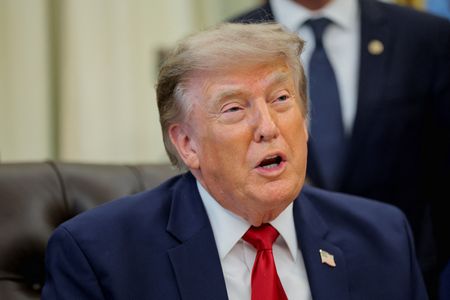

President Trump’s administration has once again proposed eliminating federal support for tribal colleges and universities, marking the second consecutive year such cuts have been suggested.
The fiscal year 2027 budget blueprint includes a massive $1.5 trillion boost for defense programs while simultaneously removing billions in funding that supports the government’s obligations to tribal communities through treaties and trust agreements. Among the most significant cuts would be the complete elimination of support for the Institute for American Indian Arts, which stands as the nation’s sole federally-supported institution dedicated to contemporary Native American arts education.
The spending plan unveiled recently also targets funding reductions for tribal colleges and universities, along with two educational institutions managed by the Bureau of Indian Education: Kansas-based Haskell Indian Nations University and New Mexico’s Southwestern Indian Polytechnic Institute. Both schools became involved in legal action against the BIE in the previous year due to funding reductions and staffing cuts implemented by the current administration.
“If this budget was to pass, our TCUs would be forced to close within a year,” said Ahniwake Rose, president of the American Indian Higher Education Consortium, which represents the interests of tribal colleges and universities.
The proposed budget extends beyond educational institutions, also eliminating billions in federal support for housing programs, business development initiatives, and infrastructure projects that serve Native American populations.
Approximately three dozen tribal colleges and universities currently operate under tribal nation management across the United States, delivering educational opportunities to predominantly rural communities while offering substantial tuition savings for tribal members. The majority of these institutions depend heavily on federal funding, which represents a financial obligation rooted in the nation’s treaty commitments and trust responsibilities to tribal governments.
The previous year saw similar cuts to tribal college funding under Trump’s leadership, including various grant programs through agencies such as the USDA that support tribal education initiatives. Additionally, funding for minority-serving educational institutions was reduced, with some resources redirected toward Historically Black Colleges and Universities and tribal colleges.
Administrators at tribal educational institutions indicate they do not anticipate receiving those redistributed funds during the current cycle.
Rose emphasized that, similar to last year’s situation, Congress now holds the responsibility for protecting federal support for tribal colleges and universities.
“These cuts are unacceptable, and I will fight relentlessly to protect IAIA and secure the federal funding they need,” Senator Ben Ray Luján, a Democrat from New Mexico and a member of the Senate Indian Affairs Committee, said in a statement. “President Trump’s budget proposal to eliminate IAIA’s federal funding is a direct attack on Native communities and yet another example of how the administration is turning its back on Native communities.”