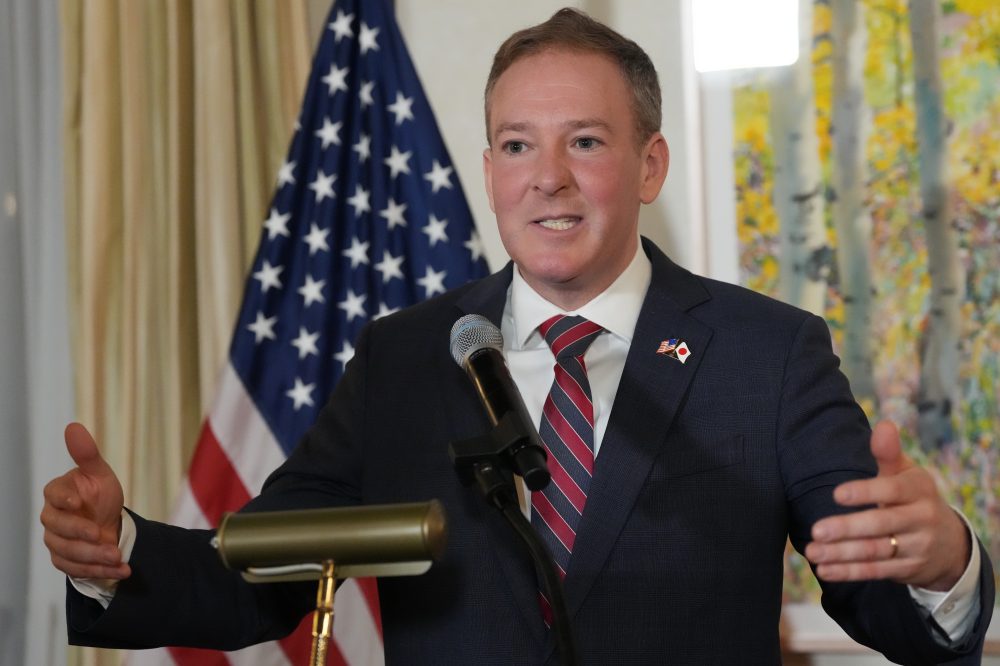

WASHINGTON — Environmental Protection Agency Administrator Lee Zeldin on Wednesday justified his agency’s elimination of a key climate regulation, encouraging a room full of climate change doubters that they should “celebrate vindication.”
Speaking as the featured presenter at an event organized by the Heartland Institute, a right-leaning research organization that disputes widely accepted climate science and opposes what it terms “climate alarmism,” Zeldin argued that eliminating the 2009 “endangerment finding” corrected years of blind acceptance of liberal political figures and environmental advocates regarding climate change threats.
“Today is a day to celebrate. It is a day to celebrate vindication,” Zeldin stated. The former New York Republican congressman is reportedly being considered for potential advancement to attorney general following Pam Bondi’s recent forced exit.
Earlier this year, the EPA eliminated the endangerment finding, a scientific determination that had provided the primary legal foundation for controlling planet-warming pollution from power facilities, automobiles and other emission sources for 16 years. The Trump administration contended the finding damaged business and economic interests, alleging that previous Obama and Biden administrations manipulated scientific data to conclude that greenhouse gases pose public health dangers.
Zeldin’s high-profile participation at an event sponsored by an organization that questions established climate science demonstrates the dramatic policy shift President Donald Trump’s administration has implemented regarding traditional environmental protections. The EPA has eliminated numerous air and water safeguards and has declared it lacks legal power to address climate change.
“You were right there on the front lines against there being an endangerment finding in 2009,” Zeldin addressed the Heartland audience.
Environmental advocates condemned Zeldin’s participation at the conservative organization’s gathering, charging him with “rallying climate deniers” during a period when climate change is increasing threats from severe weather events, including more powerful hurricanes, deadlier flooding and more devastating wildfires.
Joe Bonfiglio, an Environmental Defense Fund executive, said Zeldin’s address “promotes disinformation” and represents carrying out the agenda of Heartland’s undisclosed financial backers.
“The Heartland Institute is not a serious scientific organization. It’s a disinformation factory,” Bonfiglio stated. “Having the EPA administrator serve as their opening act isn’t just embarrassing — it’s a signal of how completely the Trump administration has abandoned its obligation to protect the public from pollution.”
An EPA representative dismissed the criticism, stating “the era of EPA as a vehicle for radical ideology is over.”
Agency spokesman Carolyn Holran said Zeldin addresses a “wide variety of ideologically different groups and individuals to promote the agenda of the Trump EPA.”
She wrote in an email that Zeldin has redirected the agency’s mission to fulfill its legal responsibilities for protecting human health and the environment, “backed by gold standard science, not doomsday models designed to scare the public into compliance.”
Heartland Institute President James Taylor praised Zeldin’s address and declared Zeldin “the greatest EPA administrator ever.”
The 2009 endangerment finding concluded that carbon dioxide and additional greenhouse gases pose risks to public health and welfare. The Obama administration’s determination provided the legal foundation for virtually all climate regulations under the Clean Air Act covering automobiles, power facilities and other pollution sources contributing to planetary warming.
The elimination removes all greenhouse gas emission requirements for automobiles and trucks and may trigger broader dismantling of climate regulations affecting stationary pollution sources including power plants and oil and gas operations, according to experts. Nearly two dozen states have filed legal challenges alongside public health and environmental organizations.