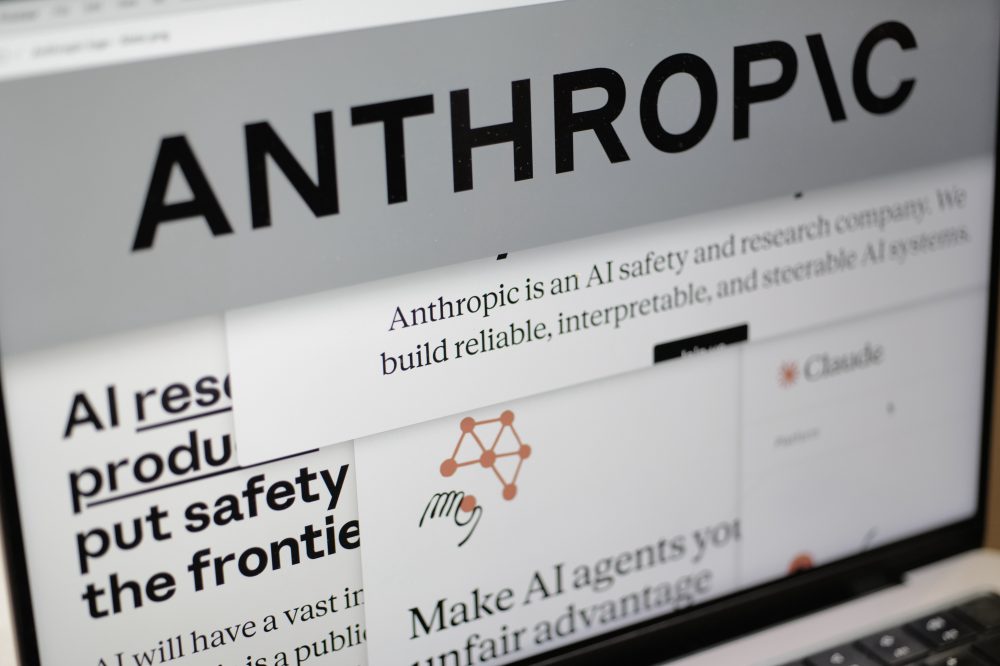

WASHINGTON — A federal appeals court in Washington D.C. on Wednesday declined to prevent the Pentagon from placing artificial intelligence company Anthropic on a blacklist, creating conflicting legal decisions on the same matter.
The D.C. Court of Appeals turned down Anthropic’s emergency request to halt Pentagon restrictions against the San Francisco-based AI firm while the court continues gathering evidence in the ongoing case. The company had sought protection from penalties related to a disagreement over military use of its Claude chatbot technology for autonomous weapons and potential domestic surveillance.
However, this legal defeat follows a victory for Anthropic in a separate San Francisco federal court case addressing identical issues. In that proceeding, a judge compelled President Donald Trump’s administration to eliminate a designation marking the company as a national security threat.
Last month, Anthropic initiated both lawsuits in San Francisco and Washington, claiming the Trump administration was conducting an “unlawful campaign of retaliation” due to the company’s efforts to restrict how its AI systems could be used militarily. The administration characterized Anthropic as a liberal organization attempting to control U.S. defense policy.
In the San Francisco proceeding, U.S. District Judge Rita Lin determined the Trump administration exceeded its authority by categorizing Anthropic as a supply chain threat unable to collaborate with defense contractors and implementing other measures that could damage a company competing for AI dominance against competitors like OpenAI’s ChatGPT and Google.
Following that ruling, the Trump administration eliminated the negative classifications from Anthropic and took additional actions allowing government workers and contractors to continue utilizing Claude and other AI chatbots, based on court documents filed in San Francisco this week.
The Washington appeals court reached a different conclusion, despite acknowledging the company would “likely suffer some degree of irreparable harm” from being labeled a supply chain risk. The appeals court found insufficient justification to issue its own directive reversing the administration’s actions, partially because “the precise amount of Anthropic’s financial harm is not fully clear.”
Additional evidence in the case will be presented during a hearing scheduled for May 19 before the appeals court.
“We’re grateful the court recognized these issues need to be resolved quickly and remain confident the courts will ultimately agree that these supply chain designations were unlawful,” Anthropic said in a statement.
Matt Schruers, CEO of the Computer & Communications Industry Association technology trade group, voiced concerns that the contradictory court rulings in the dispute between Anthropic and the Trump administration will create confusion in the business environment during a crucial period.
“The Pentagon’s actions and the DC Circuit’s ruling create substantial business uncertainty at a time when U.S. companies are competing with global counterparts to lead in AI,” Schruers said.